-
10 Wendell Ave Extension Pittsfield, MA 01201
-
210 Columbia St., Lee, MA 01238

3 tab shingle repair is one of the most common roofing fixes homeowners in Berkshire County face — and catching it early can save you from far more costly water damage down the road.
Here’s a quick overview of how the repair process works:
Most spot repairs take 1–3 hours and are best done on a dry day when temperatures are between 50–70°F.
3-tab shingles have been a staple on New England homes since the mid-20th century. They’re affordable, relatively simple to repair, and still found on thousands of roofs across Pittsfield, Dalton, and Lenox. But they do have real vulnerabilities — especially here in Massachusetts, where harsh winters, ice dams, and nor’easters put even well-maintained roofs under serious stress. A single missing or cracked shingle can let water into your roof deck faster than you’d expect, leading to mold, rot, and structural damage that turns a simple fix into a major project.
I’m Christopher Battaini, owner of Chris Battaini Roofing & Seamless Gutters, and I’ve spent over two decades repairing and replacing 3-tab shingle roofs across the North Shore and Greater Boston area, including communities throughout Berkshire County. In this guide, I’ll walk you through everything you need to know about 3 tab shingle repair — from spotting the damage to deciding whether a patch or a full replacement makes more sense for your home.
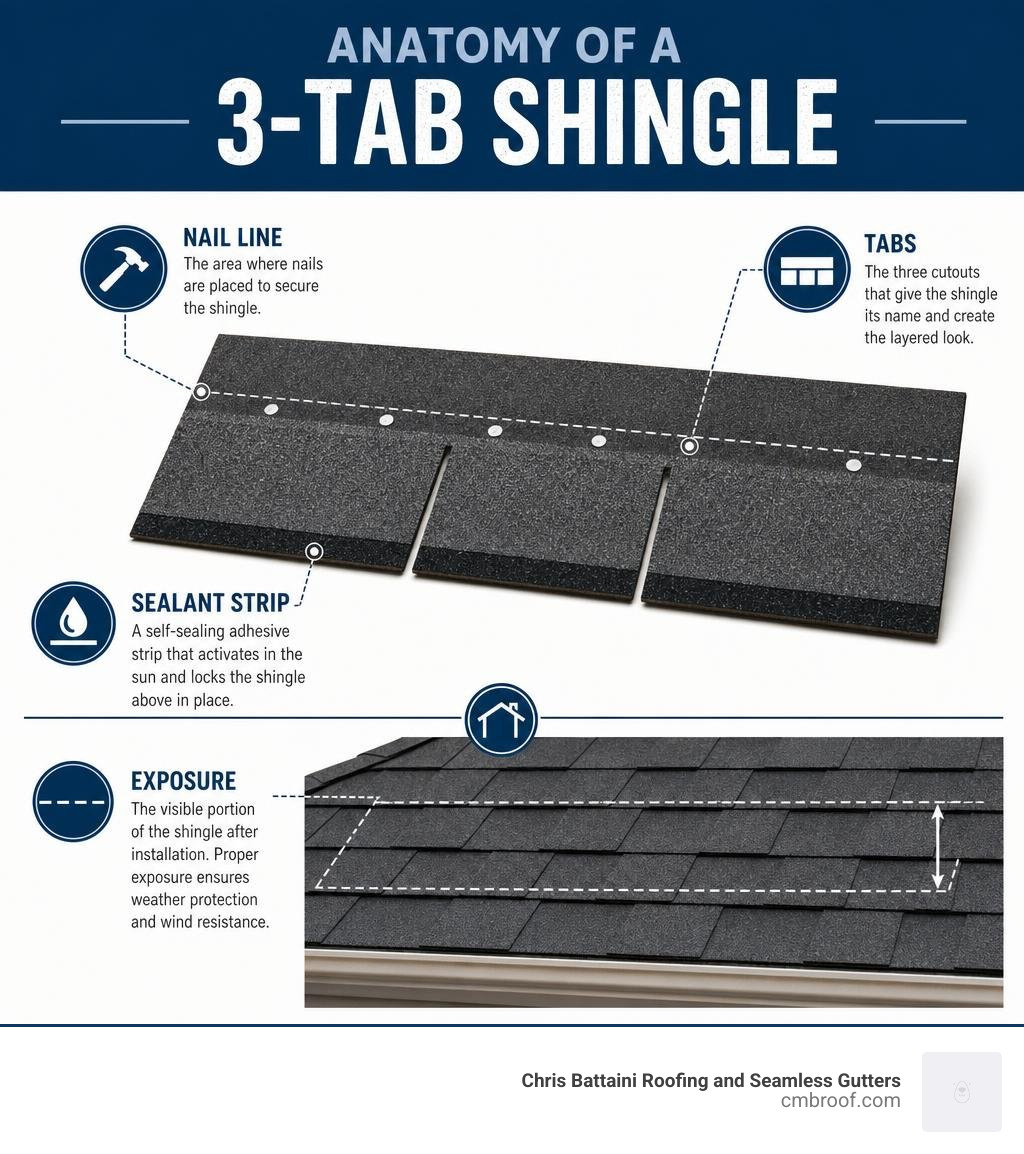
To understand how to approach a 3 tab shingle repair, it helps to understand exactly what is on your roof. First introduced commercially in the early 1900s to replace wood shakes, 3-tab shingles became the dominant residential roofing material in the United States for most of the 20th century.
A 3-tab shingle is manufactured as a single flat layer of asphalt-saturated fiberglass. The bottom half of the shingle strip is cut into three distinct tabs, creating the appearance of three separate, smaller shingles when installed. They are lightweight, weighing approximately 200 to 250 pounds per square (100 square feet), which makes them an excellent choice for older homes with lighter roof framing, such as those built in the mid-1900s in Lanesborough MA.
Architectural shingles (also known as dimensional or laminate shingles), on the other hand, are constructed from multiple layers of asphalt laminated together. This multi-layered design creates a thicker, textured, three-dimensional profile that mimics the look of wood shakes or slate.

Beyond aesthetics, there are significant performance differences between the two styles:
| Feature | 3-Tab Shingles | Architectural Shingles |
|---|---|---|
| Structure | Single layer, flat profile | Multi-layered, dimensional profile |
| Wind Rating | Up to 60 mph | 110 to 130 mph |
| Average Lifespan in MA | 15 to 20 years | 25 to 30+ years |
| Weight per Square | ~240 lbs | 300+ lbs |
| Aesthetic Style | Uniform, traditional grid | Textured, shadow-lined depth |
While we specialize in modern, high-durability roofing systems, we recognize that thousands of homes in Pittsfield MA and surrounding towns still rely on traditional 3-tab systems. If you want to dive deeper into how these materials are designed and installed from scratch, check out our asphalt shingle roofing complete guide.
Because of their lightweight construction and lower wind rating, 3-tab shingles are susceptible to several common types of damage. In places like Dalton MA, our roofs bear the brunt of heavy snow loads, freezing-and-thawing cycles, and sudden windstorms.
Understanding what causes shingle failure can help you catch issues before they turn into major leaks:
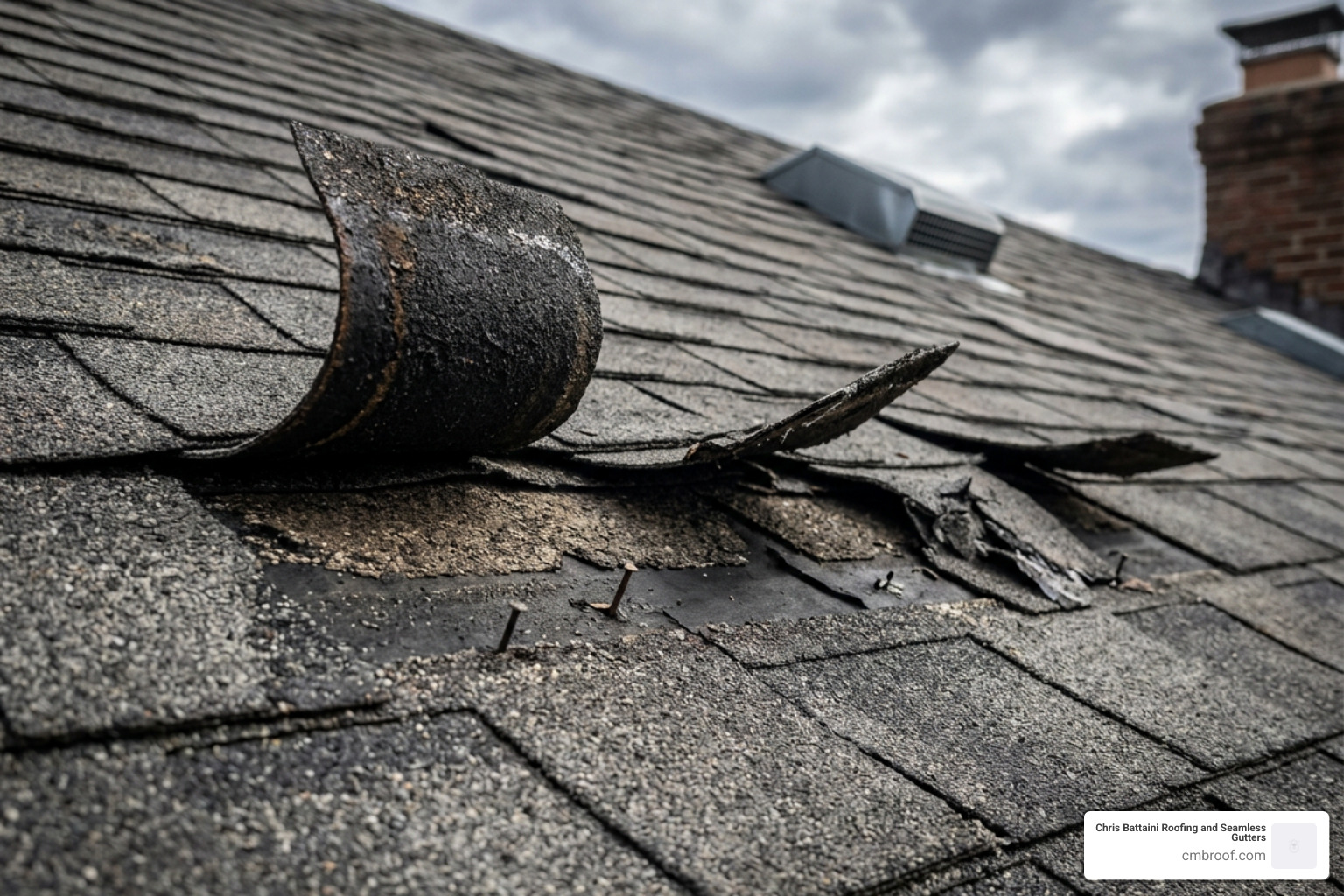
When you notice these issues, you must decide whether a spot repair is sufficient or if a larger intervention is required. A localized 3 tab shingle repair is the ideal choice when the damage is isolated to a specific area — such as a few shingles torn by a fallen branch or a single section lifted by a localized gust of wind.
If the surrounding shingles are still flexible, have plenty of granules left, and are under 15 years old, a prompt repair will successfully extend the lifespan of your roof. However, if you are dealing with widespread curling, brittle shingles, or recurring leaks across multiple slopes, spot patching is only a temporary band-aid. In those cases, you should consult our experts on asphalt shingle roof leak repair to address the systemic issues.
While replacing a damaged shingle might seem like a simple weekend project, working on a roof carries inherent risks. Roof pitches in Berkshire County are often steep, and safety must always be your absolute top priority.
Before any work begins, proper safety equipment is mandatory. This includes a fully rated fall protection harness secured to a certified roof anchor, heavy-duty slip-resistant footwear, and protective eyewear. Working on a roof in towns like Lenox MA requires constant situational awareness, and if you lack the specialized safety gear or feel uncomfortable working at heights, we strongly recommend calling our professional roof repair services team.
If you do choose to proceed with a repair, timing is everything. You should only perform shingle repairs on a dry day when temperatures are between 50°F and 70°F. If the weather is too cold (below 40°F), asphalt shingles become incredibly brittle and will crack or snap when you try to lift them. Conversely, if you attempt repairs on a hot summer afternoon, the asphalt will soften, making the shingles highly vulnerable to tearing, and you risk scuffing away the protective surface granules just by walking on them.
For those who want to understand the physical mechanics of a professional 3 tab shingle repair, the process requires precision and patience to avoid damaging the surrounding healthy shingles.
One of the biggest hurdles in any 3 tab shingle repair project is achieving a clean, seamless visual match. Asphalt shingles fade over time due to constant UV exposure and weathering. If you place a brand-new shingle next to a 10-year-old roof, the difference can be jarring. As one of our customers once put it, a mismatched repair can make your roof look like “a chocolate chip cookie dropped on a vanilla wafer.”
Furthermore, manufacturers are steadily phasing out 3-tab shingles in favor of architectural styles. This means finding an exact color match in local suppliers can be incredibly difficult.
To make matters more complicated, you may run into sizing discrepancies. While traditional American 3-tab shingles measure 36 inches by 12 inches, many modern replacement packs sold today are metric-sized, measuring 39.4 inches by 13.1 inches. Trying to force a metric shingle into a standard-sized course will throw off your keyway alignment, creating vertical “zipper lines” that allow water to penetrate.
If you cannot find a matching shingle, a professional trick is to “harvest” a matching shingle from an inconspicuous area of your home — such as behind a chimney or over a low porch roof — and use that weathered shingle for the highly visible repair, placing the new, slightly mismatched shingle in the hidden spot. If you find yourself struggling with material sourcing or sizing, our team specializes in seamless asphalt shingle roof repair and can help you find the best aesthetic solution.
When dealing with an aging 3-tab roof, you must weigh the short-term savings of a spot repair against the long-term value of a complete replacement.
One of the best ways to test your roof’s condition is the brittleness test. Go to an inconspicuous area of your roof, gently lift the bottom edge of a shingle tab, and bend it upward slightly. If the shingle feels pliable and bends without cracking, your roof is still healthy enough to support spot repairs. However, if the shingle cracks or snaps with minimal flex, the asphalt has reached the end of its life. Attempting to repair a brittle roof will only cause more damage, as the process of pulling nails and lifting adjacent shingles will crack the surrounding area.
As a general rule, if you need to replace more than 10% to 15% of the shingles on a single roof slope, you have crossed the threshold where spot repairs are no longer cost-effective. At that point, a full replacement is the smarter investment.
To help you plan, we have gathered average cost ranges based on publicly available online data.
Please note: All prices mentioned below are average costs sourced from public internet data and do not represent the actual pricing of Chris Battaini Roofing & Seamless Gutters. Every roof is unique, and actual costs vary based on pitch, accessibility, and local code requirements.
While a spot repair can extend your roof’s life by 1 to 5 years, a complete replacement provides a brand-new water barrier and a fresh manufacturer warranty lasting 20 to 50 years. If you suspect your roof is approaching its retirement age, we encourage you to read our complete asphalt shingle replacement guide to explore your options.
A professionally executed spot repair can last for the remaining lifespan of the surrounding roof. However, if the rest of your shingles are approaching 15 to 20 years of age, you should expect the repair to buy you only 2 to 5 additional years before systemic wear requires a full roof replacement.
Technically, you can use a utility knife to cut out a single damaged tab and seal a new one in its place, but this is strongly discouraged. Cutting individual tabs creates additional seams and joints in your water barrier. Over time, water will find its way through these extra seams, leading to hidden wood rot and deck damage beneath. It is always best to replace the entire 36-inch shingle strip to preserve the roof’s structural integrity.
According to general online data and industry averages, spot repairs for a few damaged shingles typically range from $200 to $1,500. The final cost is heavily influenced by the height of your home, the steepness of the roof pitch, and how difficult it is to safely access the damaged area.
Taking care of your roof is one of the most important steps you can take to protect your home’s value and keep your family safe. While a minor 3 tab shingle repair might look like a simple project on paper, the physical demands, material matching challenges, and safety risks make it a task that is often best left to the professionals.
At Chris Battaini Roofing and Seamless Gutters, we pride ourselves on delivering exceptional workmanship and peace of mind to our neighbors throughout Berkshire County. Whether you are in Pittsfield MA, Dalton MA, Lanesborough MA, or Lenox MA, we provide owner-led, on-site service with outstanding warranties that ensure your roof is built to last.
If you have noticed missing shingles, curling tabs, or water stains on your ceiling, don’t wait for the next New England storm to turn a minor repair into an expensive emergency.
Contact our expert team today or visit our contact page to schedule your professional roof inspection!
Need a reliable roofer? CMB Roofing provides licensed, insured, and professional roofing services for homeowners and businesses.
We stand by a simple promise: Clear estimates. Quality workmanship. Clean job sites.
From roof repairs and full replacements to storm damage restoration, our team delivers dependable results with durable materials, expert installation, and complete site cleanup.