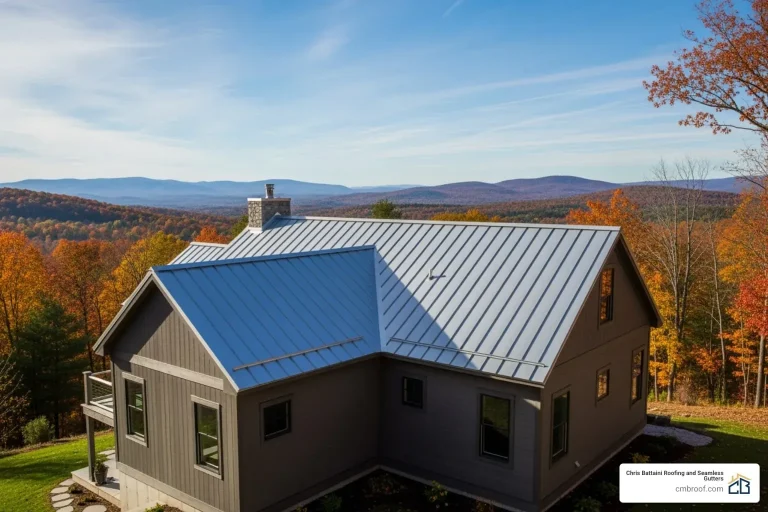


Metal Roof vs. Asphalt Shingles for Berkshire County Homes
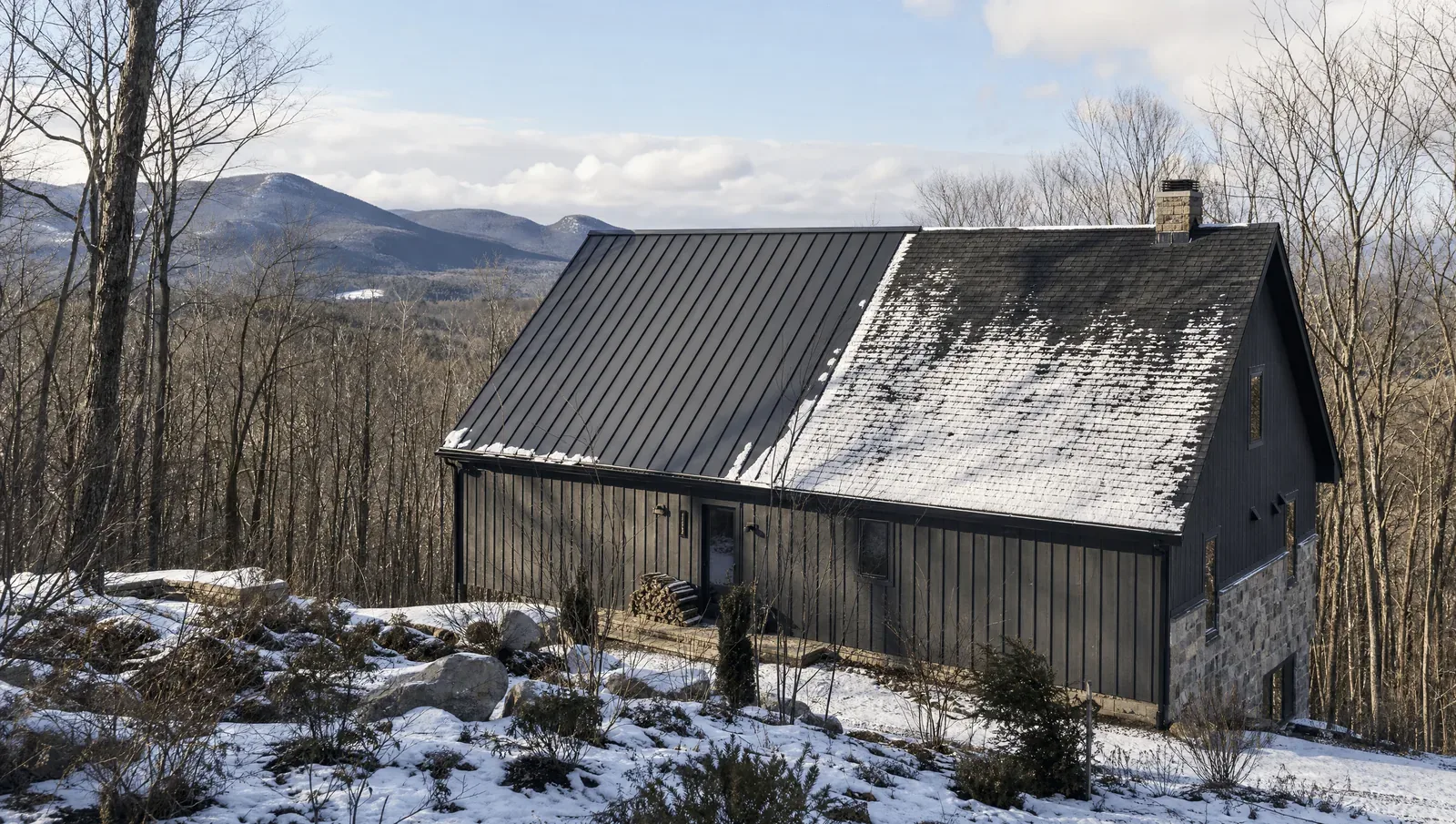
Metal roofing and asphalt shingles can both work on Berkshire County homes, but they differ in project cost, appearance, snow behavior, roof detailing, repair strategy, and long-term planning. The comparison should use the exact systems proposed for the actual house rather than broad material stereotypes.
Compare complete assemblies
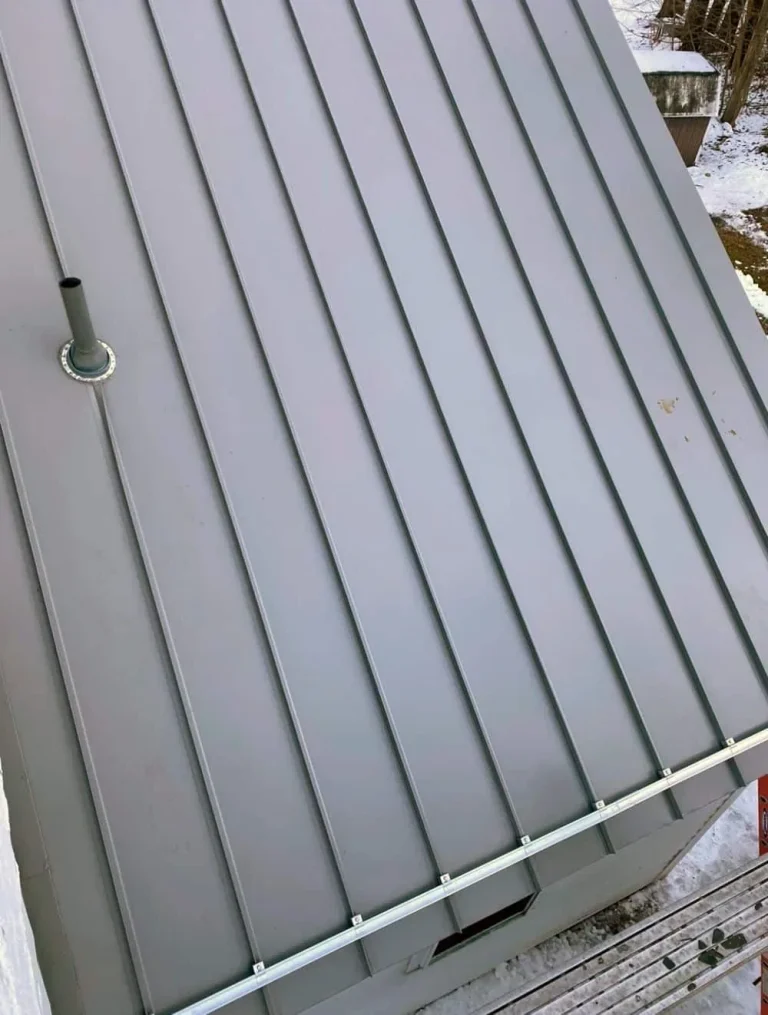
A metal proposal should name panel profile, metal, finish, seam and attachment system, underlayment, ventilation approach, trim, flashing, and snow-management details. A shingle proposal should identify product class, underlayment, eave protection, ventilation, starter, flashing, and ridge components.
| Factor | Metal roofing | Asphalt shingles |
|---|---|---|
| Initial budget | Often higher because of material, fabrication, and specialized labor | Often lower within familiar residential replacement scopes |
| Appearance | Defined panel lines and metal-specific trim | Familiar granular texture with many blends and profiles |
| Snow movement | Smooth surfaces may release snow in concentrated slides | Textured surface tends to retain and melt snow differently |
| Complex geometry | More field fabrication at valleys, dormers, and short planes | Smaller units adapt readily, though transitions still require careful flashing |
| Repair planning | Panel, finish, seam, and system matching matter | Individual shingles may be replaceable, subject to product and color availability |
| Ownership horizon | Often considered for longer-term planning | Can align with lower initial cost and future replacement cycles |
Plan for Berkshire snow and occupied areas
Metal changes how snow can move from the roof. Entrances, walkways, decks, lower roofs, driveways, and equipment below eaves should be mapped before choosing snow-retention details. Asphalt shingles behave differently, but ice-dam risk still depends heavily on heat loss, insulation, ventilation, roof shape, and weather.
Let roof geometry influence the decision
A simple gable is a different metal project from a roof with dormers, intersecting additions, skylights, and short valleys. Every transition needs a water-shedding detail. Ask each bidder to walk through the difficult areas instead of discussing only the large open planes.
Separate material life from roof performance
Published material life does not guarantee the installed roof’s outcome. Deck condition, ventilation, underlayment, fasteners or clips, flashing, workmanship, exposure, maintenance, and penetrations all influence performance. Compare manufacturer requirements and written proposal details, not a single lifespan claim.
Questions for both proposals
- What exact products and complete assembly are included?
- Will existing roofing be removed, and how will decking be evaluated?
- How are eaves, valleys, walls, chimneys, vents, and transitions detailed?
- How will attic ventilation and current insulation conditions be considered?
- Does the metal design need snow retention at occupied areas?
- What maintenance and inspection does the system require?
- What product and workmanship warranties apply?
- Which exclusions or allowances could change the final scope?
Chris Battaini Roofing installs metal roofing and asphalt shingle roofing in the Berkshires. A roof-specific comparison can connect material choice to geometry, snow management, detailing, budget, and ownership plans.