-
10 Wendell Ave Extension Pittsfield, MA 01201
-
210 Columbia St., Lee, MA 01238

The average roofing cost in the US sits around $15,000–$25,000 for a typical home — but the real number depends heavily on your roof size, materials, and location. Here’s a quick snapshot to answer the most common question right away:
| Home Size | Asphalt Shingles | Metal Roofing | Tile / Slate |
|---|---|---|---|
| 1,000–1,500 sq ft | $6,500–$15,000 | $10,000–$22,000 | $15,000–$40,000 |
| 1,500–2,000 sq ft | $10,000–$20,000 | $15,000–$35,000 | $20,000–$55,000 |
| 2,000–2,500 sq ft | $14,000–$25,000 | $20,000–$50,000 | $30,000–$70,000+ |
These figures are average costs based on publicly available internet data and represent national ranges. They do not reflect the specific pricing of Chris Battaini Roofing and Seamless Gutters. Actual project totals can range from $8,500 to over $65,000 depending on your specific variables.
If your roof is leaking, aging, or just plain tired, you’re probably wondering what a replacement is actually going to cost you. It’s a fair question — and an important one. A roof replacement is one of the biggest investments a homeowner makes, and getting a clear picture of the numbers before you talk to a contractor puts you in a much stronger position.
The challenge is that roofing prices aren’t simple. Materials, labor, your roof’s pitch, your location, and a handful of hidden costs all pull the final number in different directions. In 2026, those numbers are also trending higher — roofing projects are estimated to cost roughly 15–20% more than they did just a year or two ago, driven by material price increases, labor demand, and updated building codes.
This guide breaks all of it down in plain language so you know exactly what you’re looking at — and what to watch out for.
I’m Christopher Battaini, owner of Chris Battaini Roofing and Seamless Gutters, with over two decades of hands-on experience helping North Shore and Greater Boston homeowners navigate the true average roofing cost for their specific homes. In the sections ahead, I’ll walk you through everything from material pricing to hidden expenses so you can budget with confidence.
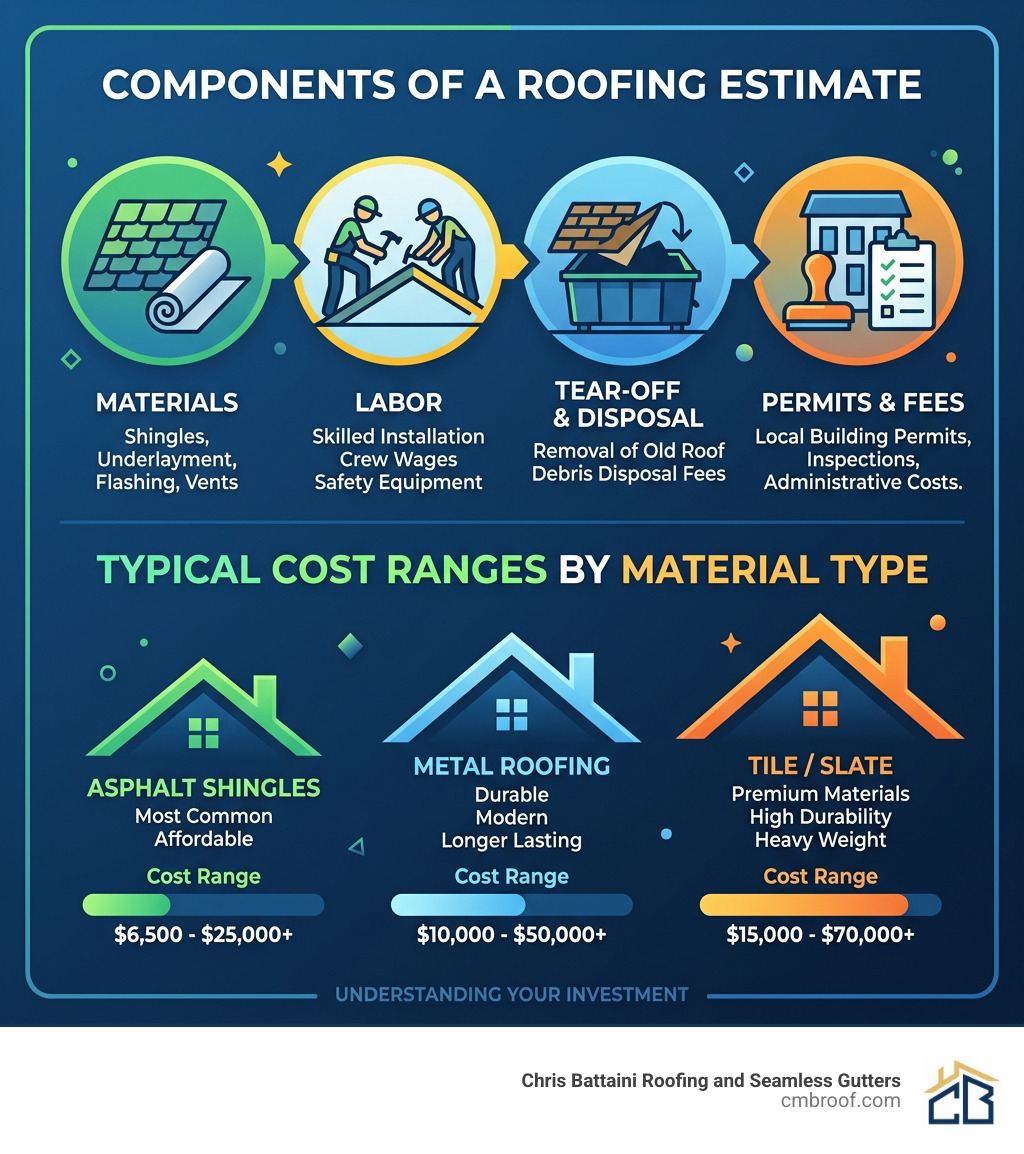
Average roofing cost terms to remember:
When we look at the average roofing cost across the country, we have to acknowledge that the market is in a state of flux. In 2026, several factors are pushing estimates higher than in previous years. Inflation has impacted the cost of raw materials like petroleum (used in asphalt shingles) and steel, while supply chain ripples continue to affect availability.
According to the 2025 Journal of Light Construction Cost vs. Value report, a new roof remains one of the smartest investments a homeowner can make, often seeing a return on investment (ROI) of 60–70% or higher at the time of resale. However, getting to that finish line requires a clear understanding of the new roof cost estimate process.
| Material Type | Avg. Cost Per Sq. Ft. (Installed) | Expected Lifespan |
|---|---|---|
| 3-Tab Asphalt Shingles | $3.00 – $6.00 | 15–20 Years |
| Architectural Shingles | $5.00 – $9.50 | 25–40 Years |
| Standing Seam Metal | $12.00 – $25.00 | 50–75 Years |
| Slate or Clay Tile | $20.00 – $45.00 | 75–100+ Years |
Note: All pricing discussed is based on publicly available internet data and represents average costs across the US; these figures do not reflect the specific pricing of the client. Homeowners may see project totals ranging from $8,500 to over $65,000 depending on specific variables.
In the roofing world, we don’t usually talk in square feet; we talk in “squares.” One roofing square equals 100 square feet of roof surface area. It is vital to understand that your roof’s surface area is always larger than your home’s interior square footage. Between the pitch (slope) of the roof and the overhangs at the eaves, a 2,000-square-foot house might actually require 24 to 28 squares of material.
When looking at an asphalt shingle roof price per square foot, contractors also factor in a waste factor. This accounts for the shingles that must be cut to fit valleys, hips, and gables. A standard gable roof might have a 10% waste factor, while a complex roof with many peaks and valleys could reach 15–20%.
Not all roofs are created equal. A “walkable” roof with a low pitch is much easier and safer to work on than a steep-slope roof that requires specialized harness equipment and scaffolding. If your home features a flat section, you’ll want to consult a residential flat roof guide because these require entirely different materials like EPDM or TPO, which come with their own pricing structures.
Complexity adds time, and time is money. Every dormer, chimney, and skylight requires custom flashing to prevent leaks. These architectural features increase labor intensity significantly. For example, a roof with four valleys and three skylights can cost $2,000–$4,500 more in labor and flashing materials than a simple “up-and-over” roof of the same size.

Choosing the right material is a balancing act between your current budget and how long you plan to stay in your home. While the asphalt shingle cost guide shows that shingles are the most affordable upfront, they have a shorter lifespan than premium options.
Asphalt shingles remain the most common choice in North America, covering roughly 75–80% of homes. Architectural shingles, in particular, offer a fantastic balance of durability and curb appeal. They are thicker and more wind-resistant than traditional 3-tab shingles, often lasting twice as long for only a marginal increase in the average roofing cost.
If you are looking for a “forever roof,” metal roofing options are gaining massive popularity. While the initial cost can be 2–3 times higher than asphalt, the lifespan often exceeds 50 years. Furthermore, the U.S. Department of Energy cool roof technology highlights how reflective metal surfaces can reduce cooling costs by 10–25% in the summer months.
For those with historic homes or high-end budgets, slate and clay tiles offer unmatched longevity (often 100+ years) but require a reinforced roof structure due to their extreme weight. Synthetic slate and composite shingles have emerged as a middle-ground alternative, offering the look of premium materials with a lighter weight and a lower price tag.
When you receive a quote, the “sticker price” usually includes materials and basic labor. However, there are several “hidden” factors that can cause the average roofing cost to climb once the project begins.
In Berkshire County, our climate plays a huge role in these costs. We deal with heavy snow loads and ice dams, meaning we must use high-quality ice and water shields and ensure proper attic ventilation to meet local energy codes and protect the structure.
This is the age-old question. Generally, if your roof is over 20 years old and showing signs of widespread shingle granule loss or curling, a replacement is more cost-effective than constant patching. If you are experiencing frequent leaks in multiple areas, the structural integrity of the decking may be at risk, making a full replacement the safer choice.
Standard homeowners insurance is designed to cover “sudden and accidental” damage. This includes hail impact, wind-blown shingles from a storm, or a tree falling on the house. It almost never covers “wear and tear” or neglect. If your roof is simply old and leaking because the shingles have reached the end of their life, you will likely be paying out of pocket.
Several factors are converging this year. Beyond simple inflation, there is a significant shortage of skilled roofing labor nationwide, which drives up wages. Additionally, 2026 building regulations have introduced new requirements for higher R-value insulation and specific ventilation standards, adding both material and labor hours to the typical project.
Navigating the average roofing cost doesn’t have to be an overwhelming experience. By understanding the variables—from the “squares” of your roof to the complexity of its pitch—you can approach your project with a realistic budget and clear expectations. Whether you are considering the affordability of architectural shingles or the long-term value of a metal system, the key is choosing a partner who prioritizes quality and transparency.
At Chris Battaini Roofing and Seamless Gutters, we believe in doing the job right the first time. We provide an owner-led, on-site service model that ensures every detail of your comprehensive roof replacement guide is followed to the letter. Protecting your home is our top priority, and we back our work with exceptional warranties that give you peace of mind for decades to come.
Chris Battaini Roofing and Seamless Gutters is an Owens Corning Platinum Preferred Contractor. This earned, elite designation is limited to the top tier of roofing professionals nationwide.
The company services Berkshire County, Massachusetts.
Follow us on Facebook — https://www.facebook.com/chrisbattainiroofing
Need a reliable roofer? CMB Roofing provides licensed, insured, and professional roofing services for homeowners and businesses.
We stand by a simple promise: Clear estimates. Quality workmanship. Clean job sites.
From roof repairs and full replacements to storm damage restoration, our team delivers dependable results with durable materials, expert installation, and complete site cleanup.