-
10 Wendell Ave Extension Pittsfield, MA 01201
-
210 Columbia St., Lee, MA 01238

Asbestos shingle replacement is a critical home improvement project requiring professional expertise, safety protocols, and regulatory compliance. If your home was built before the 1990s and has original siding or roofing, it likely contains asbestos-containing materials (ACM).
Quick Answer: Replacing Asbestos Shingles Safely
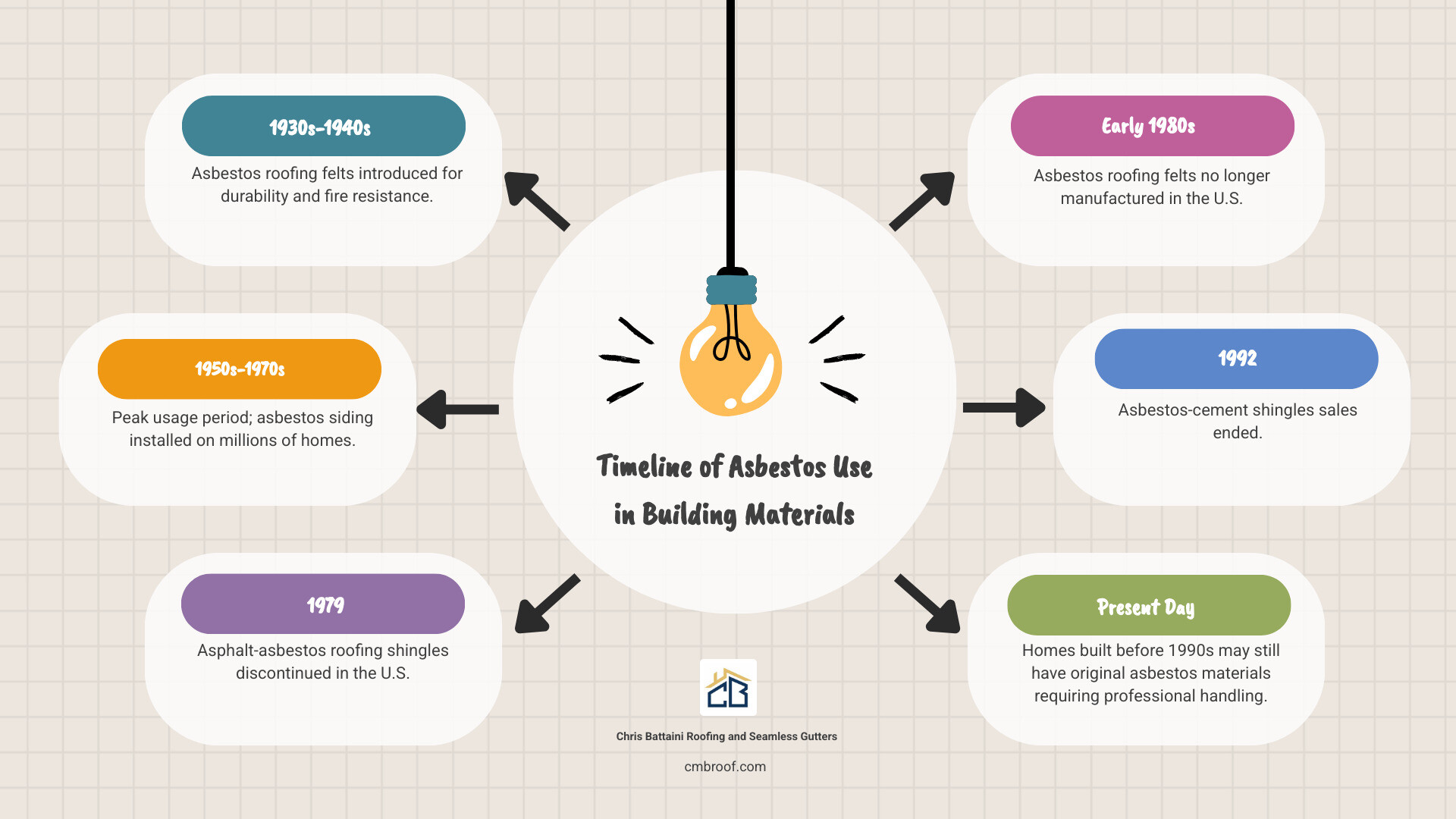
Asbestos-cement shingles were popular from the 1930s through 1992 because they were durable, fire-resistant, and long-lasting—often 30 to 50 years. When these shingles crack, break, or deteriorate, they release microscopic fibers that cause serious lung diseases like mesothelioma and asbestosis.
The key is this: intact, undamaged asbestos shingles generally aren’t dangerous. The problem occurs when they’re disturbed during renovation, repair, or removal.
As Christopher Battaini, owner of Chris Battaini Roofing and Seamless Gutters, I’ve helped countless Berkshire County homeowners manage asbestos shingle replacement projects safely. Our team understands the health risks and regulatory requirements, so we work exclusively with certified asbestos abatement professionals when these materials are present.
Explore more about asbestos shingle replacement:
Asbestos-cement (A/C) shingles were once a homeowner’s dream, offering incredible durability (lasting 30-50 years) and impressive fire-resistance. This made them a popular choice for homes built from the 1930s to the early 1990s. However, the asbestos fibers that gave these shingles their strength are also their greatest danger. Asbestos is a regulated carcinogen, and when its fibers become airborne and are inhaled, they can cause serious lung diseases like mesothelioma and asbestosis.
The risk depends on the material’s condition, which is classified as either friable or non-friable.
While roofing material is typically less friable than other forms of asbestos, the risk still exists as it ages or gets damaged. This is why understanding the signs of deterioration is crucial.
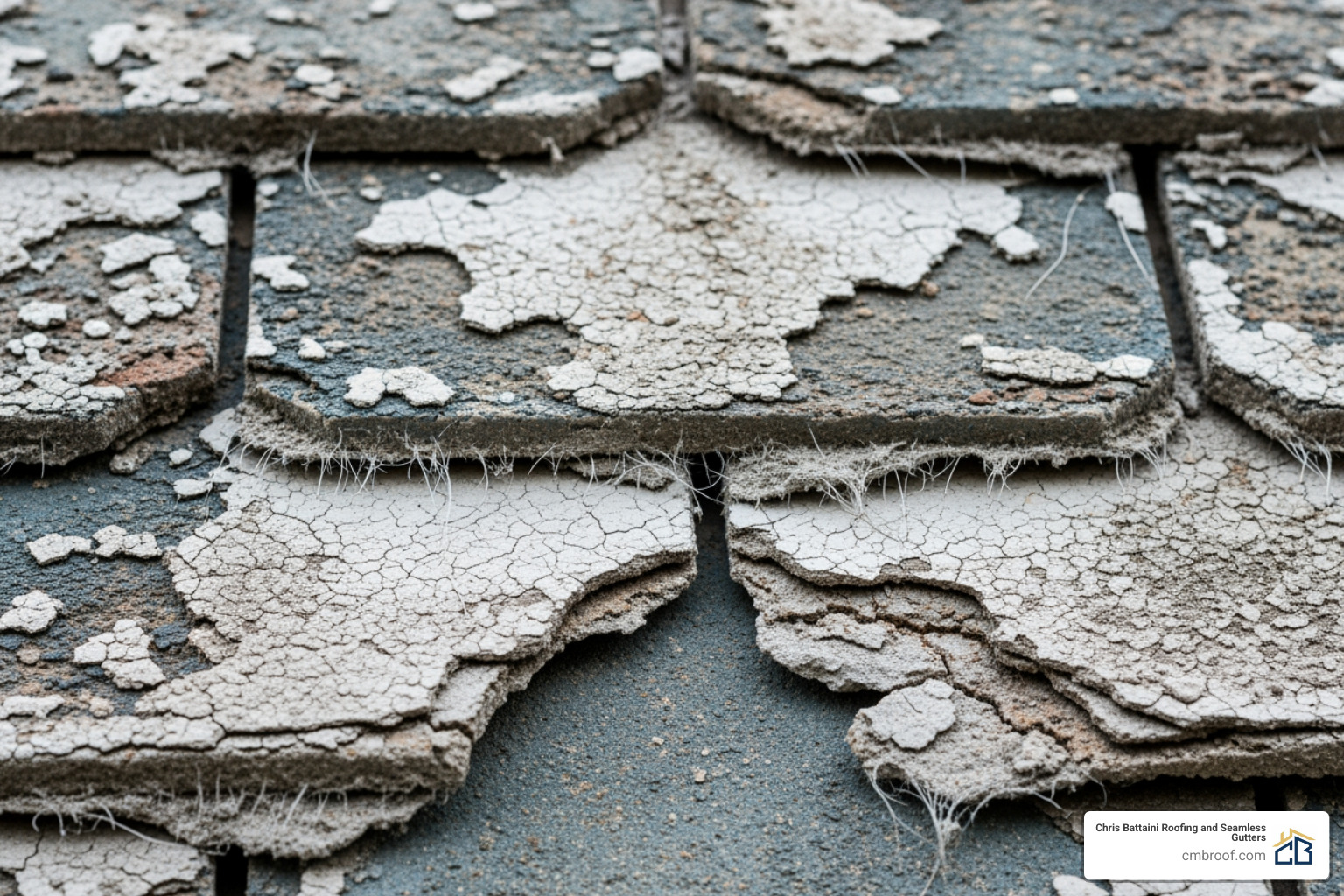
It’s important to regularly inspect your roof and siding for signs of wear. Here are key indicators that your asbestos shingles might need professional attention:
If you observe any of these signs, it’s time to consider a professional assessment. For a thorough evaluation of your roof’s condition, including potential asbestos concerns, consider our Roof Inspection Services.
When faced with asbestos shingles, homeowners in Berkshire County must decide between repair, encapsulation, or full replacement. Each option has different considerations for cost, longevity, and safety.
Let’s break down the differences:
Here’s a comparison to help illustrate the differences:
| Feature | Abatement (Full Replacement) | Encapsulation | Repair |
|---|---|---|---|
| Cost | Highest (due to specialized removal and disposal) | Moderate (sealing agents, labor) | Lowest (for very minor issues) |
| Longevity | Permanent solution (asbestos is removed) | Temporary (coating can wear, underlying material can still degrade) | Short-term (addresses only isolated damage, not overall material age) |
| Safety | Highest long-term safety (source eliminated), highest short-term risk during removal | Good (fibers bound), but risk if coating is damaged | Variable (risk of fiber release during repair, limited effectiveness) |
| When to Use | Extensive damage, major renovation, peace of mind, selling home | Intact, stable shingles; budget constraints; temporary solution | Very minor, isolated damage on otherwise healthy shingles |
When repair is an option, it’s usually for an intact shingle with a small, localized issue. For example, if you have old asbestos siding in good condition but want to update your home’s exterior, covering it with new vinyl siding is a common and less expensive solution than full removal. This method, called enclosure, traps the asbestos material beneath a new, safe layer.
The best decision depends on your shingles’ condition, your budget, and your long-term plans. We always recommend consulting a qualified professional to assess your specific situation. For comprehensive information on replacing your roof, visit our Roof Replacement Complete Guide.
Handling asbestos is a matter of public health and legal compliance. Federal, state, and local regulations are in place to ensure asbestos shingle replacement is performed safely.
At the federal level, the Environmental Protection Agency (EPA) enforces the National Emission Standards for Hazardous Air Pollutants (NESHAP) for asbestos. This regulation aims to minimize fiber release during renovations or demolitions. For roofing, NESHAP applies when removing over 160 square feet of friable material or when non-friable materials could become friable. You can find detailed guidance on this in the Applicability of the Asbestos NESHAP to Asbestos Roofing Removal Operations.
The Occupational Safety and Health Administration (OSHA) also sets strict standards to protect workers. OSHA’s Asbestos Construction Standard (29 CFR 1926.1101) classifies asbestos roofing removal as ‘Class II Asbestos Work,’ requiring specific training, equipment, and work practices to prevent worker exposure.
In Massachusetts, state and local laws govern asbestos removal, dictating contractor licensing, project notifications, work practices, and disposal protocols. Since regulations can vary within Berkshire County, it’s crucial to check with local authorities for specific permits and requirements before starting any asbestos shingle replacement project.
Professional certifications and licenses are mandatory for anyone conducting asbestos abatement. This ensures they are trained in safe handling, removal, and disposal.
We cannot stress this enough: Never attempt to remove asbestos shingles yourself. The dangers are significant and can have severe, long-lasting health and property consequences.
For your safety and peace of mind, always hire certified professionals to handle asbestos. They will also know the proper disposal rules. For more information on why professional abatement is crucial, refer to hiring a professional to abate the asbestos.
Successfully navigating an asbestos shingle replacement project hinges on hiring the right professionals and understanding their process. At Chris Battaini Roofing and Seamless Gutters, we prioritize safety and compliance by partnering with certified asbestos abatement specialists.
Choosing a qualified contractor for asbestos shingle replacement is the most critical step. Here’s what to look for:
Here’s the typical professional asbestos shingle replacement process:
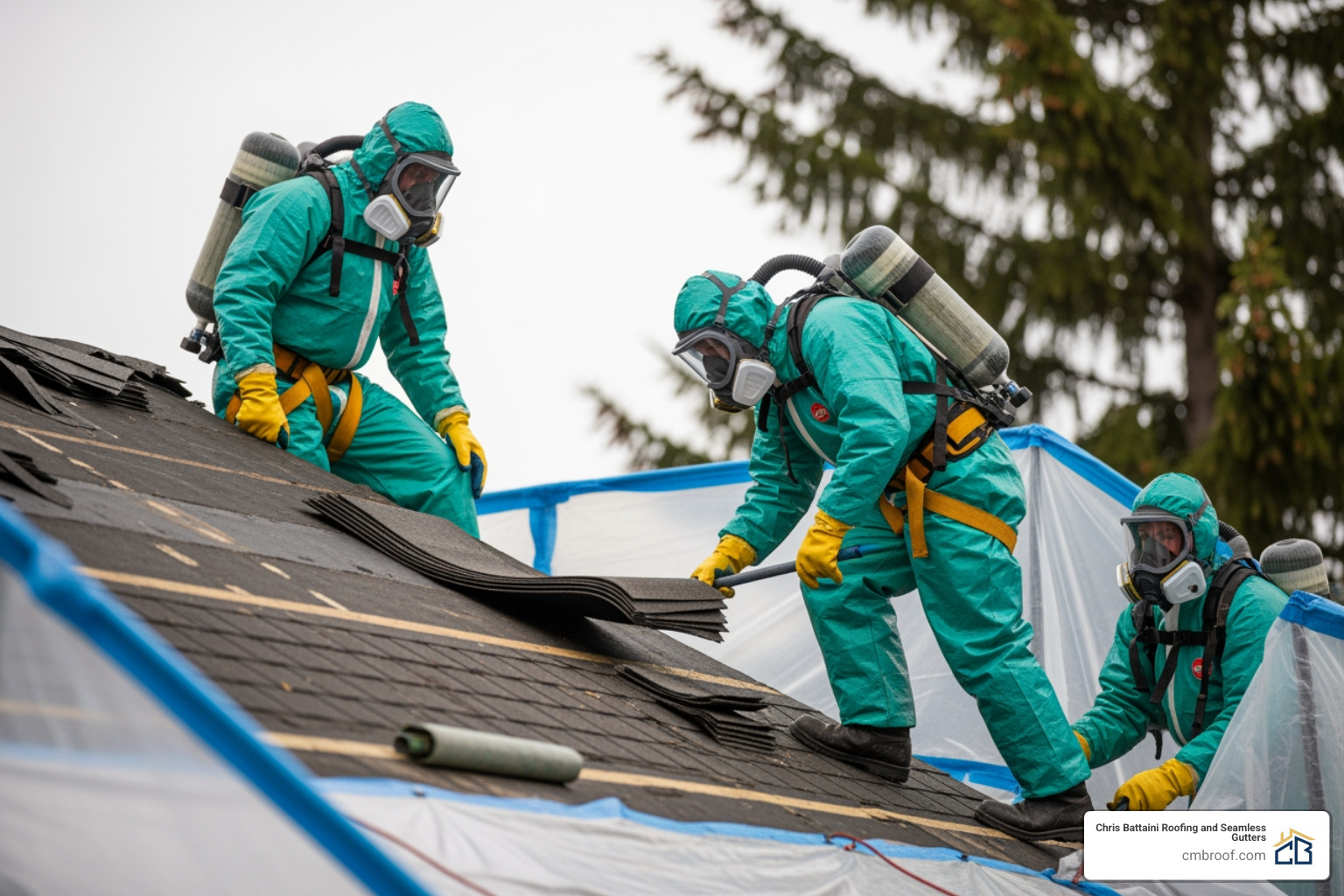
Proper disposal is as critical as safe removal.
Once the asbestos abatement is complete, our team at Chris Battaini Roofing and Seamless Gutters can then proceed with your new roof installation, confident that the underlying hazards have been safely addressed. Learn more about our Residential Roof Replacement Service.
After safe removal, you can choose new, modern roofing materials that offer superior performance, energy efficiency, and a range of styles.
Here are some popular modern alternatives we work with in Berkshire County:
When selecting new material, consider your home’s style, local climate, budget, and desired longevity. Our team can guide you through the options. You can find more information on various Roofing Materials on our website.
Undertaking asbestos shingle replacement involves financial considerations and finding the right partner.
The cost of asbestos shingle replacement is typically higher than a standard roof replacement due to specialized abatement. Several factors influence the overall cost:
Disclaimer on Pricing: Please note that the following are average costs based on publicly available internet data and are not the actual pricing of Chris Battaini Roofing and Seamless Gutters. Actual costs can vary widely depending on the scope of work, material choices, and specific site conditions.
Current average costs for professional asbestos shingle removal can range from $5 to $20 per square foot or more, depending on material friability, accessibility, and local regulations. This means a full asbestos shingle replacement project, including new materials and installation, could easily range from $15,000 to $50,000+ for an average-sized home in Berkshire County.
We understand this is a significant investment. That’s why we always provide transparent estimates.
Removing asbestos can positively impact your home insurance. Insurers consider asbestos a material risk, which can lead to higher premiums or difficulty getting coverage. Once safely removed and documented, your insurance premiums may decrease as the property’s perceived risk is reduced. It’s always a good idea to discuss this with your insurance provider before and after the project.
Finding a qualified contractor for asbestos shingle replacement is paramount. You need a roofer who excels at installation and understands working with asbestos abatement specialists.
When you choose Chris Battaini Roofing and Seamless Gutters, you’re partnering with an Owens Corning Platinum Preferred Contractor, a distinction earned by only the top tier of roofing professionals in the country. This means we meet stringent standards for reliability, customer service, and craftsmanship. We have established relationships with certified asbestos abatement professionals in Berkshire County, ensuring that your project is handled safely and compliantly from start to finish.
We offer owner-led, on-site service and exceptional workmanship warranties, giving you peace of mind throughout the entire process. Don’t hesitate to reach out to us for a consultation and Estimates.
Here are common questions about asbestos shingles from Berkshire County homeowners:
Absolutely not. Do not attempt to remove asbestos shingles yourself. DIY removal is extremely dangerous because disturbing the material without proper training and equipment releases microscopic fibers. Inhaling these fibers can cause fatal lung diseases like mesothelioma and asbestosis.
Furthermore, state and local regulations in Massachusetts and Berkshire County restrict who can remove asbestos and how it must be disposed of. OSHA’s standards require specific training for removing any asbestos roofing products. Professional abatement contractors are licensed and equipped to handle these materials safely, protecting your health and property from contamination.
The safety of living in a house with asbestos shingles depends entirely on their condition.
Therefore, regular Roof Inspections are crucial to monitor the condition of your asbestos shingles. If deterioration is observed, professional assessment is necessary.
The most common indicator is the age of your home. If your house was built or renovated between the 1930s and the early 1990s, the original shingles likely contain asbestos. Asbestos-cement shingles often have a distinct texture and were typically 12×24 inches in size.
However, visual characteristics alone are not definitive. You cannot definitively identify asbestos by sight. The only way to confirm asbestos is through professional lab testing. A certified inspector can safely collect a sample and send it to a lab for analysis.
It is critical that you do not attempt to collect samples yourself. Disturbing the material to get a sample can release dangerous fibers. Always rely on a qualified professional for asbestos testing.
An asbestos shingle replacement is a significant project, but with the right knowledge and professional support, it can be managed safely. Asbestos poses serious health risks when disturbed, so understanding the signs of deterioration, your options, and the legal requirements is crucial for your safety.
For homeowners in Berkshire County, Massachusetts, professional handling of asbestos is non-negotiable. Chris Battaini Roofing and Seamless Gutters is your trusted partner for a safe and compliant asbestos shingle replacement. As an Owens Corning Platinum Preferred Contractor, we uphold the highest standards of quality and safety in every project. We work with certified asbestos abatement specialists to ensure materials are removed and disposed of according to all federal, state, and local regulations.
Don’t let asbestos compromise your family’s health or your home’s integrity. For a safe and compliant roof replacement, schedule your professional roof installation today.
Chris Battaini Roofing and Seamless Gutters is proud to serve homeowners and businesses throughout Berkshire County, Massachusetts.
Follow us on Facebook — https://www.facebook.com/chrisbattainiroofing
Need a reliable roofer? CMB Roofing provides licensed, insured, and professional roofing services for homeowners and businesses.
We stand by a simple promise: Clear estimates. Quality workmanship. Clean job sites.
From roof repairs and full replacements to storm damage restoration, our team delivers dependable results with durable materials, expert installation, and complete site cleanup.