-
10 Wendell Ave Extension Pittsfield, MA 01201
-
210 Columbia St., Lee, MA 01238

Roof shingles are overlapping elements installed in courses from the bottom edge upward to protect your home from weather elements. They’re the most common roofing material in the United States, with several options to match your needs, budget, and climate.
Here’s a quick guide to the main types of roof shingles:
| Shingle Type | Lifespan | Cost Per Sq Ft | Best For |
|---|---|---|---|
| Asphalt | 15-30 years | $3-$9 | Budget-conscious homeowners |
| Wood | 15-40 years | $4-$13 | Natural aesthetics, moderate climates |
| Metal | 50-75+ years | $8-$24 | Durability, energy efficiency |
| Slate | 50-100+ years | $10-$30 | Premium appearance, extreme longevity |
| Clay/Concrete | 50-100 years | $8-$25 | Mediterranean styles, hot climates |
| Synthetic/Composite | 30-50 years | $7-$21 | Mimicking premium materials at lower weight |
| Rubber | 15-30 years | $4-$13 | Recycled content, impact resistance |
| Solar | 25-30 years | $18-$60 | Energy production, tech-forward homes |
When you walk through a home improvement store or talk with a roofing contractor, the sheer number of options can be overwhelming. Each type offers different benefits in terms of appearance, durability, cost, and performance.
Your roof isn’t just about looks – it’s your home’s shield against rain, snow, wind, and sun. The right shingles can boost your property value, lower energy bills, and provide decades of protection.
Most homeowners replace their roof only once or twice in their lifetime. Making an informed choice now can save you thousands in repairs and premature replacement down the road.
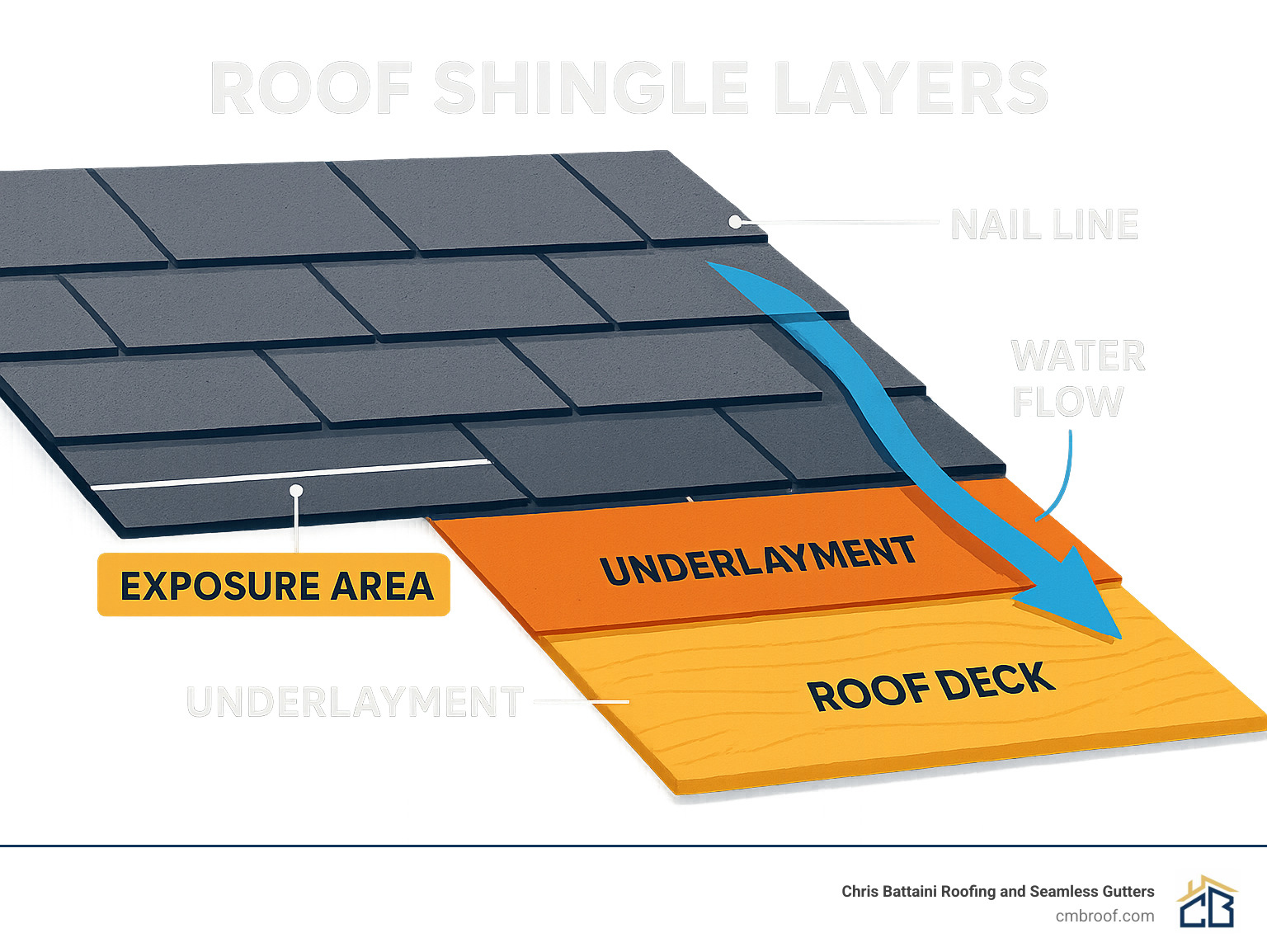
When you look up at your roof, you might just see shingles, but there’s actually an intricate system working together to protect your home. Understanding the basics of how your roof functions helps you make smarter decisions when it’s time for repairs or replacement.
Roof shingles are the stars of the show, but they’re supported by an entire cast of components. Think of your roof as a team where each member has a specific job:
Your shingles overlap in rows (called “courses”) to create a water-shedding surface. Beneath them lies the underlayment, a water-resistant barrier that provides a second line of defense against moisture. At the bottom edge of your roof, special starter strips prevent wind from lifting your shingles during storms.
Where your roof planes meet at peaks, hip and ridge caps provide both protection and a finished look. Around chimneys, vents, and valleys, metal flashing prevents water from seeping into vulnerable joints. Proper ventilation components allow your attic to breathe, preventing moisture buildup and extending shingle life. And supporting it all is your roof deck – typically plywood sheets attached to your home’s structural frame.
“Many homeowners focus only on shingle color and style, but it’s the entire system working together that protects your home,” explains Chris Battaini, owner of Chris Battaini Roofing and Seamless Gutters. “A beautiful shingle won’t perform well if the underlayment is poor or the ventilation is inadequate.”
When measuring for a new roof, we use “squares” instead of square feet – one square equals 100 square feet of roof area. A typical home might be 25-35 squares. Asphalt shingles usually come in bundles, with three bundles covering one square. This measurement system helps us accurately estimate materials needed for your project.
For a deeper look at asphalt options specifically, visit our Asphalt Shingle Roofing page.
How long will your new roof last? That depends on several factors, including the material you choose and the quality of installation.
Basic 3-tab asphalt shingles typically last 15-20 years, while architectural asphalt (with a dimensional, layered look) extends that to 20-30+ years. Wood shingles and shakes offer 15-40 years depending on maintenance, while metal shingles can protect your home for 50-75+ years. Premium materials like slate and clay/concrete tile often last 50-100+ years, becoming a once-in-a-lifetime investment. Modern synthetic and composite shingles split the difference at 30-50 years.
Manufacturer warranties typically match these lifespans, though it’s important to understand what’s covered. Material warranties protect against manufacturing defects but usually don’t cover labor costs for replacement. Some premium shingles offer “lifetime” coverage (usually defined as 50 years).
Wind ratings vary significantly too. Basic 3-tab shingles might be rated for 60 mph winds, while premium architectural products can withstand gusts up to 130-150 mph – an important consideration in storm-prone areas. Many manufacturers also include algae protection warranties, particularly valuable in humid New England climates where those black streaks can affect your home’s appearance.
When budgeting for a new roof, several factors influence the final price tag:
The size of your roof (measured in squares) is the starting point, but complexity adds cost. A simple gable roof is less expensive to shingle than one with multiple dormers, valleys, and steep pitches. Removing existing layers (tear-off) adds labor and disposal costs, while any needed deck repairs create additional expenses.
Material choice dramatically impacts price – premium materials cost more upfront but often deliver longer service life. Even within a single material type like asphalt, there’s a significant difference between basic 3-tab and premium architectural products.
Based on internet data (not actual costs from Chris Battaini Roofing and Seamless Gutters), a complete asphalt roof replacement might range from $5,000 to $25,000 for an average home, while premium materials like slate could range from $15,000 to $75,000 or more.
“The cheapest bid rarely delivers the best value,” Chris Battaini notes. “Quality installation prevents costly problems down the road. When we provide estimates, we’re transparent about all factors affecting your specific project.”
At Chris Battaini Roofing and Seamless Gutters, we believe in educating homeowners about their options rather than pushing the most expensive solution. Our goal is finding the right roof system for your home, budget, and long-term plans.
When it comes to protecting your home, asphalt shingles remain America’s sweetheart of roofing materials. Their widespread popularity isn’t just a happy accident – these versatile performers deliver remarkable value while keeping your wallet happy.
“Most homeowners I talk with are surprised by how far asphalt technology has come,” says Chris Battaini. “Today’s shingles offer impressive durability and curb appeal that would have been unimaginable just a decade ago.”
Asphalt shingles come in three main varieties, each with distinct advantages:
Three-tab shingles represent the classic, budget-friendly option. With their flat appearance and uniform cutouts along the lower edge, they provide reliable protection for homes in moderate climates. They’re particularly well-suited for rental properties or homes where budget considerations are paramount.
Architectural shingles (sometimes called dimensional shingles) have become the new standard for many homeowners. Their multi-layered construction creates beautiful shadow lines and texture that mimic more expensive materials. The added thickness translates to longer lifespans and better wind resistance – a worthwhile upgrade for most homes.
Luxury designer shingles take asphalt to its highest expression. These premium products convincingly replicate the look of slate tiles or cedar shakes while delivering improved durability and weather resistance. For homeowners who want distinctive curb appeal without the maintenance headaches of natural materials, these offer a compelling middle ground.
Modern roof shingles in the asphalt category typically feature a fiberglass mat base coated with asphalt and topped with ceramic granules. These granules serve double duty – adding color while providing crucial UV protection. Self-sealing adhesive strips activate in warm weather, creating a bond that resists wind uplift in all but the most extreme conditions.
From a safety perspective, most asphalt products earn a Class A fire rating (the highest possible), making them appropriate even in wildfire-prone regions. Wind resistance varies from 60 mph for basic three-tabs to an impressive 130-150 mph for premium architectural varieties – sufficient for all but the most hurricane-prone locations.
Today’s manufacturers offer improved versions with specialized features worth considering:
Impact-resistant shingles earn a Class 4 rating (the highest available) by withstanding simulated hailstones hurled at up to 90 mph without cracking. In hail-prone regions, these reinforced shingles might even qualify for insurance premium discounts.
Algae-resistant technology incorporates copper-containing granules that inhibit the growth of those unsightly black streaks common in humid regions like parts of Massachusetts. This feature proves particularly valuable for north-facing roof sections that receive less direct sunlight.
UV-reflective granules in “cool roof” varieties bounce more sunlight away from your home rather than absorbing it as heat. During hot Massachusetts summers, this technology can help reduce cooling costs and attic temperatures while extending shingle life.
Many premium shingles now come with improved wind warranties up to 150 mph when installed using manufacturer-specified methods – peace of mind for homes in exposed locations or areas that experience strong seasonal storms.
Asphalt shingles shine brightest for:
– First-time homebuyers balancing quality with budget
– Most standard residential applications
– Homes in New England’s varied climate
– Projects requiring quick completion
– Investment properties where value matters
– Homes where future resale appeal is important
Based on internet averages (not actual costs from Chris Battaini Roofing and Seamless Gutters), you can generally expect to invest:
– Three-tab: $3-$5 per square foot installed ($300-$500 per square)
– Architectural: $4-$7 per square foot installed ($400-$700 per square)
– Luxury: $5-$9 per square foot installed ($500-$900 per square)
With proper installation by experienced professionals like our team, typical lifespans reach:
– Three-tab: 15-20 years
– Architectural: 25-30+ years
– Luxury: 30-40+ years
For homeowners considering this popular option, we recommend exploring our detailed Asphalt Roof Replacement guide or browsing the latest innovations from leading manufacturers like Owens Corning, whose products we frequently install throughout Berkshire County.
When you think of metal roofing, you might picture barns with corrugated panels. But today’s metal shingles offer something completely different – the legendary durability of metal combined with the classic beauty of traditional roofing materials.
Metal shingles come in several varieties to match your home’s style and your local climate:
Today’s metal shingles feature clever interlocking panel designs that dramatically improve wind resistance while creating a seamless appearance. Many products contain significant recycled content and are 100% recyclable when they eventually need replacement – something that might not happen for half a century or more!

Metal shingles earn top marks for safety with Class A fire ratings. They’re also energy champions – their naturally reflective surfaces bounce back the sun’s heat instead of absorbing it, potentially reducing your summer cooling bills by 10-25%.
The longevity of metal shingles is truly impressive:
Steel shingles will protect your home for 50+ years, while aluminum shingles offer similar performance. Copper shingles take durability to another level, easily lasting 70+ years and sometimes exceeding a century with minimal maintenance.
Most manufacturers stand behind their products with warranties ranging from 30 to 50 years. Many of these warranties are transferable to future homeowners – a significant selling point when it’s time to move.
“A quality metal roof is likely the last roof you’ll ever need to install on your home,” explains Chris Battaini. “While the upfront investment is higher, many of our customers appreciate knowing they won’t face another replacement in their lifetime.”
Metal shingles also excel at resisting common roofing enemies. They shrug off hail (though severe impacts may cause cosmetic denting), stand strong against hurricane-force winds (many systems rated for 120+ mph), and never worry about rot, insects, or mold growth.
The advantages of metal shingles are substantial. They offer exceptional longevity with minimal maintenance requirements. Their energy efficiency can make a noticeable difference in your cooling bills. They’re environmentally friendly since they’re recyclable and often made with recycled content. With excellent fire resistance and availability in countless styles and colors, they can complement any home architecture. Their lightweight nature (typically 1-2 lbs per square foot) means they won’t stress your home’s structure.
There are some considerations, however. The initial cost is higher than asphalt shingles, though the long-term value often makes up for it. Some homeowners worry about noise during heavy rain, but proper insulation and underlayment can effectively minimize this. While extremely durable, metal can sustain cosmetic denting from severe hail, though this rarely affects performance. Finally, installation requires specialized expertise – not every roofing company has the necessary skills and experience.
Based on internet averages (not actual costs from Chris Battaini Roofing and Seamless Gutters), metal shingles typically cost:
– Steel: $8-$14 per square foot installed ($800-$1,400 per square)
– Aluminum: $9-$16 per square foot installed ($900-$1,600 per square)
– Copper: $14-$24 per square foot installed ($1,400-$2,400 per square)
“Metal shingles make the most financial sense for homeowners who plan to stay put for a while,” notes Chris Battaini. “When you spread the cost over the decades of service you’ll get, metal often becomes the more economical choice compared to replacing an asphalt roof multiple times.”
For those interested in exploring metal roofing options for their home, our Residential Roofing services include expert installation of various metal shingle systems designed to provide decades of protection and curb appeal.
There’s something undeniably captivating about a wood roof that modern materials simply can’t replicate. For centuries, homeowners have chosen wood for its organic warmth and character that seems to improve with age, telling a story with every weathered grain.
Wood roofing comes in two distinct varieties, each offering its own aesthetic appeal:
Cedar remains the gold standard for wood roofing, thanks to its natural oils that resist moisture damage and deter insects. Redwood offers similar benefits as a premium alternative, though at a higher price point.
“There’s nothing quite like the way a cedar roof ages,” explains Chris Battaini. “It starts with that warm honey color and naturally weathers to a distinguished silver-gray that gives a home such character, especially on historic New England properties.”
Modern wood roofing typically undergoes fire-retardant treatment to improve safety, though even treated wood usually achieves only a Class C fire rating. This treatment is crucial but doesn’t eliminate the need for proper installation techniques, including adequate spacing between shingles to allow for natural expansion and contraction with moisture changes.
Before falling in love with wood roofing, consider whether your location is compatible with this material:
Wildfire zones often restrict or prohibit wood roofing entirely, regardless of fire-retardant treatments. Local building codes in high-risk areas may require higher fire ratings than wood can provide.
Humid regions like parts of New England present challenges for wood roofing. The moisture-rich air can accelerate moss and algae growth, making regular maintenance essential. Cedar’s natural resistance helps, but doesn’t eliminate these concerns completely.
Insect resistance varies by wood species and treatment. While cedar and redwood naturally repel many pests, additional treatments may be necessary in areas with aggressive termite activity or other wood-boring insects.
Proper ventilation beneath wood roofing is critical to prevent moisture buildup that can lead to premature deterioration. Our installation process always accounts for these ventilation requirements to maximize your roof’s lifespan.
Wood roofing represents a commitment to both beauty and maintenance. Homeowners should be prepared for:
Regular cleaning to remove debris that can trap moisture against the wood surface. This typically means clearing leaves, pine needles, and other organic matter at least twice yearly.
Periodic treatments to prevent moss, algae, and fungal growth, particularly in shaded areas. These treatments may need to be applied every 2-3 years in humid climates.
Individual shingle replacement as damage occurs. The ability to replace just the affected shingles rather than entire sections is actually an advantage of wood roofing.
Resealing considerations every 5-10 years, depending on exposure and climate conditions, to maintain water resistance and appearance.
Based on internet averages (not actual costs from Chris Battaini Roofing and Seamless Gutters), wood roofing typically costs:
– Wood shingles: $4-$9 per square foot installed ($400-$900 per square)
– Wood shakes: $6-$13 per square foot installed ($600-$1,300 per square)
With proper installation and diligent maintenance, you can expect:
– Wood shingles: 20-30 years
– Wood shakes: 20-40 years
For homeowners seeking detailed guidance on maintaining wood roofing, the USDA Forest Products Laboratory offers an excellent resource: Installation, Care & Maintenance of Wood Shakes.
At Chris Battaini Roofing and Seamless Gutters, we specialize in proper cedar shake installation techniques that maximize your roof’s beauty and longevity, bringing traditional craftsmanship to modern applications.
There’s something truly majestic about homes crowned with tile or slate roofs. These premium materials have graced buildings for centuries, offering not just protection but a statement of permanence and architectural distinction that few other materials can match.
“When I install slate or tile on a home, I know I’m creating something that will likely outlast me,” says Chris Battaini. “These aren’t just roofs—they’re legacies.”
Clay tiles trace their history back thousands of years, bringing Mediterranean warmth to Spanish Colonial, Mission, and Southwestern homes. Their distinctive S-curve profile (Spanish tiles) or flatter appearance (Mission tiles) instantly lifts a home’s curb appeal.
Concrete tiles emerged in the early 1900s as a more budget-friendly alternative. Today’s versions can convincingly mimic clay, slate, or even wood shakes while offering impressive durability and fire resistance.
Both roof shingles options deliver exceptional benefits:
– Class A fire protection (the highest possible rating)
– Incredible longevity spanning 50-100+ years
– Superior thermal mass that naturally regulates home temperatures
– Complete resistance to insects and rot
– Excellent wind resistance when properly installed
Natural slate stands as perhaps the most enduring roofing material humans have ever created. These thin sheets of natural stone have protected European castles and churches for centuries—with some installations surpassing 200 years of continuous service. Beyond its remarkable lifespan, slate offers best elegance with its clean lines and subtle color variations ranging from deep blacks and grays to purples, greens, and reds depending on the quarry source.
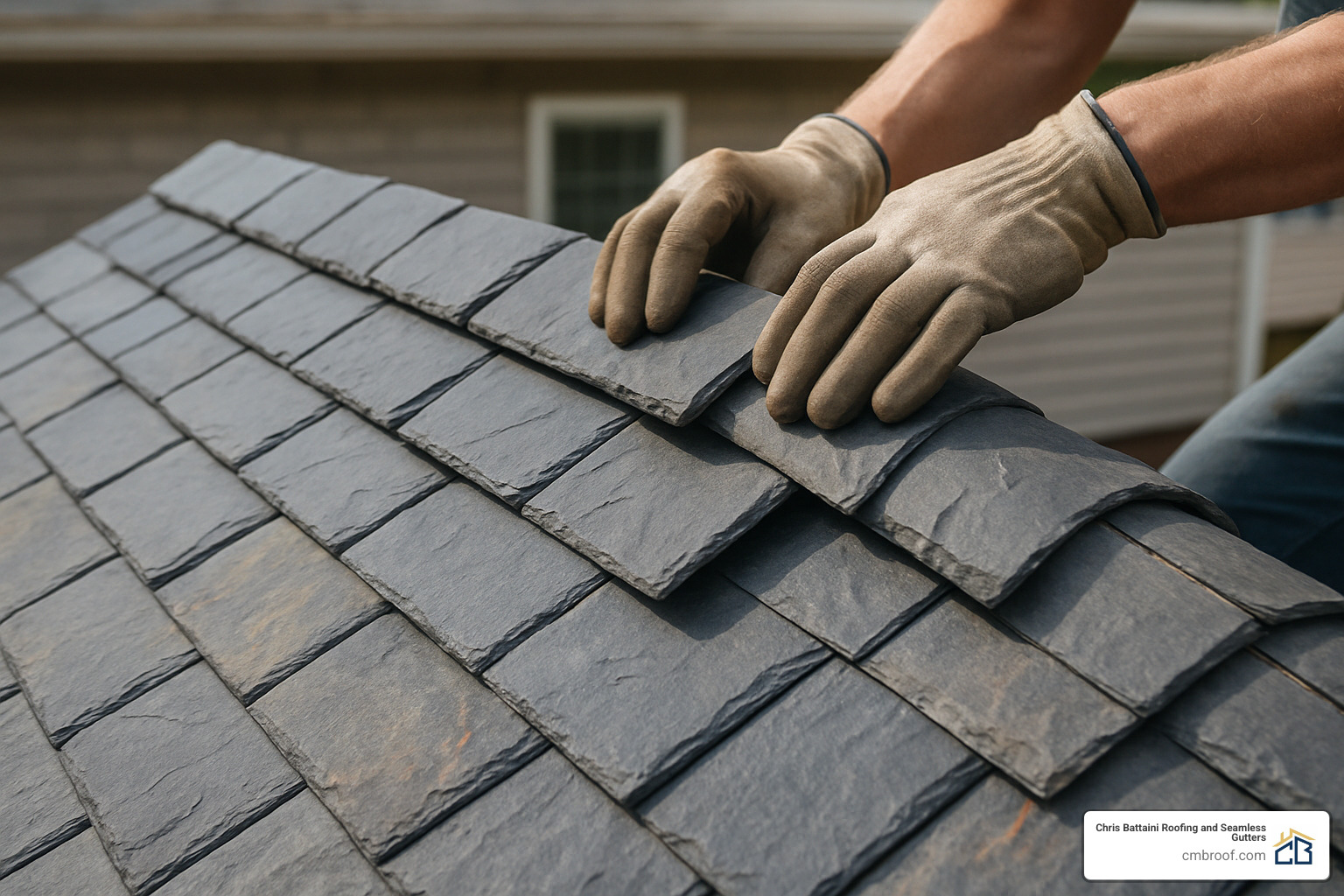
The extraordinary durability of tile and slate comes with one significant consideration: weight. Clay tiles typically weigh around 600 pounds per square (100 square feet), while concrete tiles can exceed 1,000 pounds. Natural slate weighs between 800-1,500 pounds per square—up to ten times heavier than asphalt shingles.
This substantial weight means your home’s structure must be up to the task. Before installing these materials:
“Many older homes simply weren’t built to support these heavyweight champions,” explains Chris Battaini. “But with proper engineering and reinforcement, we can transform almost any home to accommodate these premium materials.”
The investment pays dividends in ice dam resistance (particularly important in Massachusetts winters) and exceptional freeze-thaw durability. For homeowners dealing with broken slate tiles, our How to Repair a Broken Roof Slate guide offers helpful tips.
Tile and slate represent the premium tier of roofing materials, with costs reflecting their exceptional performance and lifespan:
Based on internet averages (not actual costs from Chris Battaini Roofing and Seamless Gutters):
– Clay tiles: $10-$18 per square foot installed ($1,000-$1,800 per square)
– Concrete tiles: $8-$16 per square foot installed ($800-$1,600 per square)
– Natural slate: $15-$35 per square foot installed ($1,500-$3,500 per square)
While the initial investment is substantial, the long-term value proposition becomes clear when you consider their extraordinary lifespans:
– Clay tiles: 50-100+ years
– Concrete tiles: 50-75+ years
– Natural slate: 75-200+ years
These materials typically offer the highest resale value benefit among roofing options. Homeowners often recoup 70-80% of their investment when selling, with real estate listings proudly highlighting “lifetime slate roof” as a premium feature.
“I always tell homeowners to think of tile and slate as the last roof they’ll ever need to buy,” says Chris Battaini. “When you amortize the cost over its lifespan, it often becomes the most economical option in the very long run.”
For homeowners seeking the perfect balance of timeless beauty and generational durability, few options can match the majesty of tile and slate roof shingles.
When traditional roofing materials don’t quite fit your needs, modern synthetic options offer impressive alternatives that combine beauty with cutting-edge performance. These innovative roof shingles deliver the aesthetic appeal of classic materials while solving many of their drawbacks.
Composite polymers and recycled rubber have revolutionized the roofing industry, providing homeowners with durable, lightweight alternatives that often outperform the materials they mimic. These high-tech options are particularly valuable in regions with challenging weather conditions.
“Many of my customers are amazed by how realistic today’s synthetic shingles look,” says Chris Battaini. “Unless you’re on the roof with a sample of the real thing for comparison, it’s getting harder to tell the difference.”
Synthetic roof shingles are manufactured with UV-stable pigments that resist fading, ensuring your roof maintains its appearance for decades. Many products feature cool-color technology that reflects more sunlight than traditional materials, potentially reducing cooling costs during Massachusetts summers.
For environmentally conscious homeowners, recycled rubber shingles offer an appealing option. Typically made from 95% recycled materials (primarily old tires), these shingles give new life to products that would otherwise end up in landfills. Their rubber composition provides natural flexibility and resilience against impacts, making them an excellent choice for areas prone to hailstorms.
Synthetic roof shingles shine in several specific scenarios. They’re perfect for historic homes where maintaining period-appropriate aesthetics matters but the weight or cost of authentic materials is prohibitive. Many historic districts even approve certain synthetic products because they so convincingly replicate traditional materials.
In storm-prone regions, Class 4 impact-resistant synthetic shingles can withstand severe weather better than many natural materials. Their resistance to cracking, breaking, and moisture absorption makes them particularly valuable in areas with freeze-thaw cycles like New England.
For sustainability-focused homeowners, synthetic options often incorporate recycled content and require less environmental impact to produce than quarrying slate or harvesting old-growth cedar. Many are also fully recyclable at the end of their service life.
The installation process for synthetic materials is typically less complex than for the natural materials they imitate. This can translate to faster installation times and lower labor costs, though finding contractors experienced with these newer materials can sometimes be challenging.
Based on internet averages (not actual costs from Chris Battaini Roofing and Seamless Gutters), you can expect to invest:
While the initial investment is higher than basic asphalt, these materials offer impressive longevity. Most synthetic roof shingles come with warranties ranging from 30 to 50 years, and actual lifespans often match those estimates when properly installed.
One challenge with newer roofing materials is finding qualified installers. At Chris Battaini Roofing and Seamless Gutters, we’ve invested in specialized training to properly install these innovative products, ensuring you receive the full performance benefits they offer.
“The synthetic market continues to evolve rapidly,” notes Chris Battaini. “Each year brings improvements in appearance, durability, and environmental benefits. For homeowners who want exceptional performance without the maintenance headaches of natural materials, these products offer compelling advantages.”
Today’s homeowners aren’t just looking for protection from the elements – many want their roofs to work harder by generating power or reducing energy costs. Solar shingles and cool roof technology represent the cutting edge of roofing innovation, offering both protection and efficiency.
Unlike traditional rack-mounted solar panels that sit above your roof, solar shingles (also called Building-Integrated Photovoltaics or BIPV) seamlessly integrate into your roofing system. These innovative products serve double duty – protecting your home while generating clean electricity.
“Solar shingles represent a game-changer for homeowners who want solar power without compromising their home’s appearance,” explains Chris Battaini. “They look much more like traditional roofing materials while using the sun’s energy.”
Modern solar shingles have come a long way in recent years. They now closely resemble conventional asphalt or slate shingles while containing photovoltaic cells that convert sunlight into electricity. This power integrates with your home’s electrical system, potentially reducing or eliminating monthly electric bills.
Many solar roofing systems qualify for federal tax credits, which can significantly offset the initial investment. Some states and utility companies offer additional rebates or incentives, making the financial picture even more attractive.
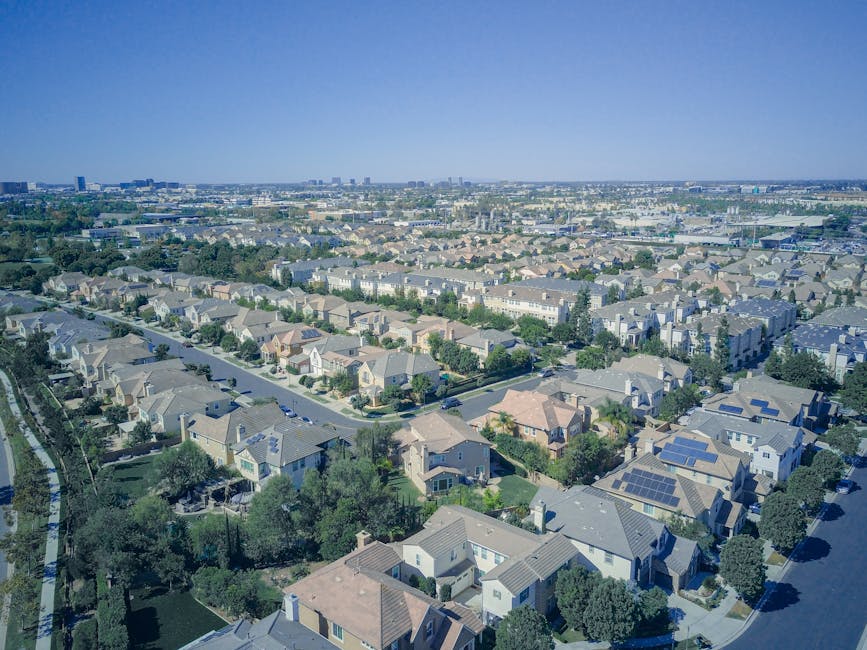
Installation requires specialized expertise, combining both roofing and electrical knowledge. That’s why many homeowners choose contractors who have specific training in these systems or who partner with solar specialists.
If you’re not ready for solar but still want energy benefits, cool roof technology offers an excellent alternative. These innovative roof shingles are designed to reflect more sunlight and absorb less heat than standard materials.
Cool roof benefits work through several mechanisms:
– Reflective granules on asphalt shingles bounce sunlight away
– Lighter color palettes naturally reflect more solar radiation
– Specially engineered surfaces reflect infrared heat while maintaining attractive colors
The results can be impressive. Cool roofs can run 50-60°F cooler than conventional roofs during hot summer days. This translates to reduced cooling costs (potentially 15-30% in hot climates), less strain on your air conditioning system, and greater indoor comfort.
Many cool roof products earn Energy Star certification, and some utility companies offer rebates for their installation. Beyond energy savings, these materials often last longer because they experience less thermal expansion and contraction.
Some manufacturers have even developed smog-reducing granules that help neutralize air pollutants – providing environmental benefits beyond energy savings.
The financial return on energy-producing or energy-saving roof shingles depends on several key factors.
For solar shingles, your ROI is influenced by local electricity rates, the amount of direct sunlight your roof receives, and your roof’s orientation. Southern-facing roof sections with unobstructed sun exposure produce the most power. Local net metering policies also matter – these determine how much credit you receive for excess electricity your system feeds back to the grid.
Typical payback periods for solar shingles range from 8-12 years. After that point, you’re essentially generating free electricity for the remainder of the system’s life, which can span 20-30 years.
Cool roof economics work differently. Your savings depend heavily on your local climate (with greater benefits in hot, sunny regions), your home’s current insulation levels, and your typical cooling costs. While the payback isn’t as dramatic as with solar, the initial investment is much lower, and you’ll see immediate benefits in comfort and reduced cooling bills.
“Even in our variable New England climate, energy-efficient roofing makes sense,” notes Chris Battaini. “Summer temperatures routinely climb into the 80s and 90s, making cool roof technology a worthwhile investment for many homeowners.”
Based on internet averages (not actual costs from Chris Battaini Roofing and Seamless Gutters), energy-producing and energy-saving roofing options represent a premium investment:
The warranty coverage for these products typically includes:
– 20-30 year product warranty covering manufacturing defects
– 20-25 year power output guarantee for solar shingles (ensuring they continue to produce at near-rated capacity)
– Installation warranty (varies by contractor)
“Energy-producing and energy-saving roofing represents where the industry is heading,” says Chris Battaini. “While the upfront investment is higher than conventional roofing, the long-term benefits to both your wallet and the environment can make these options extremely attractive, especially for homeowners planning to stay put for many years.”
Your roof speaks to you through various symptoms long before it starts leaking into your living room. Being attentive to these early warning signs can save you thousands in potential structural repairs.
Granule loss is often the first red flag – those tiny protective particles don’t just disappear for no reason. Check your gutters and downspouts after rainstorms; if they’re collecting what looks like coarse black sand, your shingles are deteriorating.
Curling or buckling shingles signal that your roof is aging poorly. Whether the edges are turning up (cupping) or the middle sections are bulging (clawing), these deformations create pathways for water to penetrate beneath your roof shingles.
“Don’t wait until you have active leaks to consider roof replacement,” advises Chris Battaini. “By that point, you may already have structural damage that will increase the overall cost of the project.”
Missing shingles create vulnerable bare spots, while visible cracks, tears, or holes compromise your roof’s water-shedding ability. If your attic inspection reveals daylight peeking through roof boards or worse – a sagging roof deck – you’re looking at potentially serious structural issues.
Even subtle signs like unexplained increases in your energy bills might indicate that your roof’s insulating properties have degraded. A failing roof lets heat escape in winter and invade in summer, forcing your HVAC system to work overtime.
Age alone can be reason enough for replacement. If your asphalt roof is approaching 20-25 years, you’re living on borrowed time – even without visible symptoms.
Your perfect roof isn’t just about personal preference – local regulations and Mother Nature have significant votes in the decision.
Building codes establish minimum requirements that vary widely by location. Fire-prone areas typically mandate Class A fire ratings, while coastal regions demand higher wind resistance ratings (often 110+ mph). Some forward-thinking municipalities have adopted cool roof requirements to reduce urban heat islands, and historical districts frequently restrict both materials and colors to maintain neighborhood character.
Climate factors play an equally important role in your roofing decisions. In Berkshire County and surrounding areas, we experience dramatic seasonal variations that put roofing materials through their paces:
Our heavy winter snow demands durable materials that can bear significant weight while shedding snow effectively. Those same materials must withstand occasional high winds, summer humidity that encourages algae growth, and the freeze-thaw cycles that can crack lesser materials.
“What works perfectly in Arizona might fail prematurely in New England,” Chris Battaini explains. “Our local climate requires thoughtful material selection and installation techniques specifically adapted to our regional challenges.”
For humid environments like parts of Massachusetts, roof shingles with algae-resistant copper granules prevent those unsightly black streaks that can make a new roof look neglected within just a few years. If you’re in an area prone to thunderstorms with hail, impact-resistant (Class 4) products might save you from premature replacement.
The tempting shortcut of installing new shingles over existing ones (known as an “overlay” or “recover”) seems like an easy way to save on labor and disposal costs. While technically possible in some situations, this approach comes with significant compromises.
Most building codes draw a hard line at two layers maximum, with many jurisdictions now requiring complete removal regardless of existing layers. There’s sound reasoning behind these limitations.
Weight becomes a genuine concern with multiple layers. Each layer of asphalt shingles adds approximately 2-3 pounds per square foot – that’s several tons across an entire roof. Many older homes simply weren’t built to support this additional load, especially when snow accumulation adds even more weight.
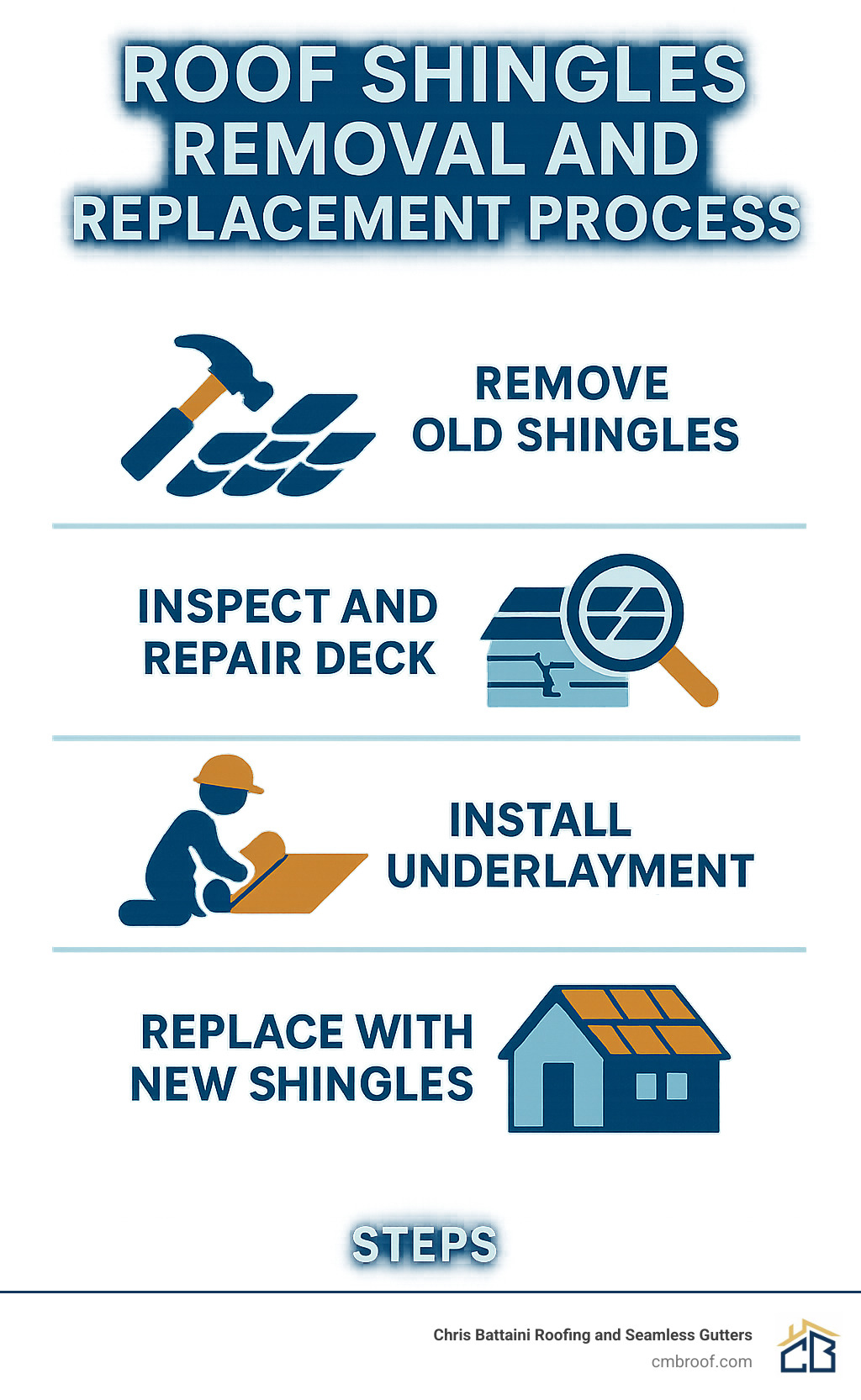
Installation quality inevitably suffers with overlays. New roof shingles can’t lay as flat over the irregular surface of existing materials, creating potential water traps. Proper flashing installation becomes challenging, and any underlying deck problems remain hidden, potentially festering until they cause major damage.
Perhaps most importantly, manufacturers have taken notice of the problems with overlay installations. Many reduce or void warranties for these applications, while others require specific underlayments that simply can’t be properly installed over existing shingles.
“While an overlay might save money in the short term, we generally recommend complete removal of existing materials,” says Chris Battaini. “This allows us to inspect and repair the roof deck, ensure proper underlayment installation, and provide the full manufacturer’s warranty.”
The modest upfront savings rarely justify the reduced lifespan, potential structural issues, and compromised warranties that come with overlay installations. A clean slate simply provides the best foundation for a roof that will protect your home for decades.
Chris Battaini Roofing and Seamless Gutters services Berkshire, Hampden, Hampshire, and Franklin Counties in Massachusetts.
Selecting the perfect roof shingles for your home isn’t just about picking a color you like. It’s about finding the right balance between your budget, the demands of your local climate, your home’s architectural style, and the structural capabilities of your roof.
Each roofing material brings its own unique strengths to the table:
Asphalt shingles remain America’s most popular choice for good reason – they offer excellent value, versatility, and performance that works beautifully for most homes. They’re the dependable, budget-friendly option that still delivers quality protection.
Metal shingles stand out when longevity matters. Yes, they cost more upfront, but their exceptional lifespan and minimal maintenance requirements often make them more economical in the long run. Plus, their environmental benefits and recyclability make them a forward-thinking choice.
Wood shingles and shakes simply can’t be beaten when it comes to natural beauty and character. While they do require more TLC than other options, many homeowners find the warm, organic aesthetic worth the extra maintenance.
Tile and slate represent the premium end of the spectrum – these are truly multi-generational investments. When properly installed and maintained, these materials can protect and beautify your home for a century or more, often outlasting several owners.
Synthetic and rubber options offer an exciting middle ground, combining the classic aesthetics of traditional materials with modern performance benefits like improved impact resistance and reduced weight.
Solar and cool roof technologies take roofing to the next level, addressing energy concerns while still providing reliable protection. These innovative options can actually pay you back over time through energy savings or production.
“I’ve installed every type of roofing material over my career, and I can honestly say there’s no single ‘best’ option for everyone,” says Chris Battaini. “The right roof for your home depends on your specific needs, goals, and budget. What matters most is finding that sweet spot where performance meets value for your particular situation.”
At Chris Battaini Roofing and Seamless Gutters, we firmly believe that even the highest quality materials can fail if poorly installed. That’s why we’re committed to owner-led, on-site service for every project. When Chris is personally overseeing your installation, you can rest assured that every nail, every flashing, and every shingle is placed with precision and care.
While initial cost is certainly an important consideration, we encourage homeowners to think about the true value of their roof – measured not just in dollars spent today, but in decades of reliable protection, efficiency, and peace of mind. A properly installed, quality roofing system isn’t just an expense; it’s an investment in your home’s long-term health and value.
Chris Battaini Roofing and Seamless Gutters proudly services Berkshire, Hampden, Hampshire, and Franklin Counties in Massachusetts, providing expert roofing solutions specifically custom to our region’s unique climate challenges.
Need a reliable roofer? CMB Roofing provides licensed, insured, and professional roofing services for homeowners and businesses.
We stand by a simple promise: Clear estimates. Quality workmanship. Clean job sites.
From roof repairs and full replacements to storm damage restoration, our team delivers dependable results with durable materials, expert installation, and complete site cleanup.