• 10 Wendell Ave Extension Pittsfield, MA 01201
  • 210 Columbia St., Lee, MA 01238

Shingle & Shake: Uncovering the Beauty of Natural Wood Roofing

Chris Battaini Roofing in Berkshire County, Massachusetts and Beyond

Why Natural Wood Roofing Remains a Timeless Choice

Wood shingle roofing has been a trusted building material for centuries, offering a blend of natural beauty, versatility, and durability. If you’re considering this classic option, here’s what you need to know.

What is a Wood Shingle?

  • Wood shingles are thin, tapered pieces of wood sawn from blocks for a smooth, uniform look.
  • Wood shakes are split from wood blocks, resulting in a thicker, more rustic texture.
  • Both are installed in overlapping layers on sloped roofs.
  • Common wood species include Western Red Cedar, California Redwood, and Atlantic White Cedar.
  • A typical lifespan is 30-50 years with proper maintenance.
  • Shingles offer a refined look, while shakes provide a rugged, traditional aesthetic.

Key Differences at a Glance:

Feature Wood Shingles Wood Shakes
Production Machine-sawn Hand-split or machine-split
Appearance Smooth, uniform Rough, textured
Thickness Thinner (3/8″ to 5/8″) Thicker (1/2″ to 1 1/4″)
Cost Lower 50-100% more expensive

Before asphalt shingles appeared in 1901, “shingle” meant a wood roof. Today, wood roofing remains a popular choice for homeowners who value authenticity, natural insulation, and the unique character of real wood.

However, wood roofing requires more maintenance than modern alternatives. These roofs are susceptible to moisture issues like moss and rot and can pose a fire risk without proper treatment. Understanding these trade-offs is essential before investing.

As Christopher Battaini, owner of Chris Battaini Roofing and Seamless Gutters, I’ve helped many homeowners in the North Shore and Greater Boston area with wood shingle roofing. With over two decades of experience, I know that proper installation and maintenance can significantly extend the life of these beautiful roofs.
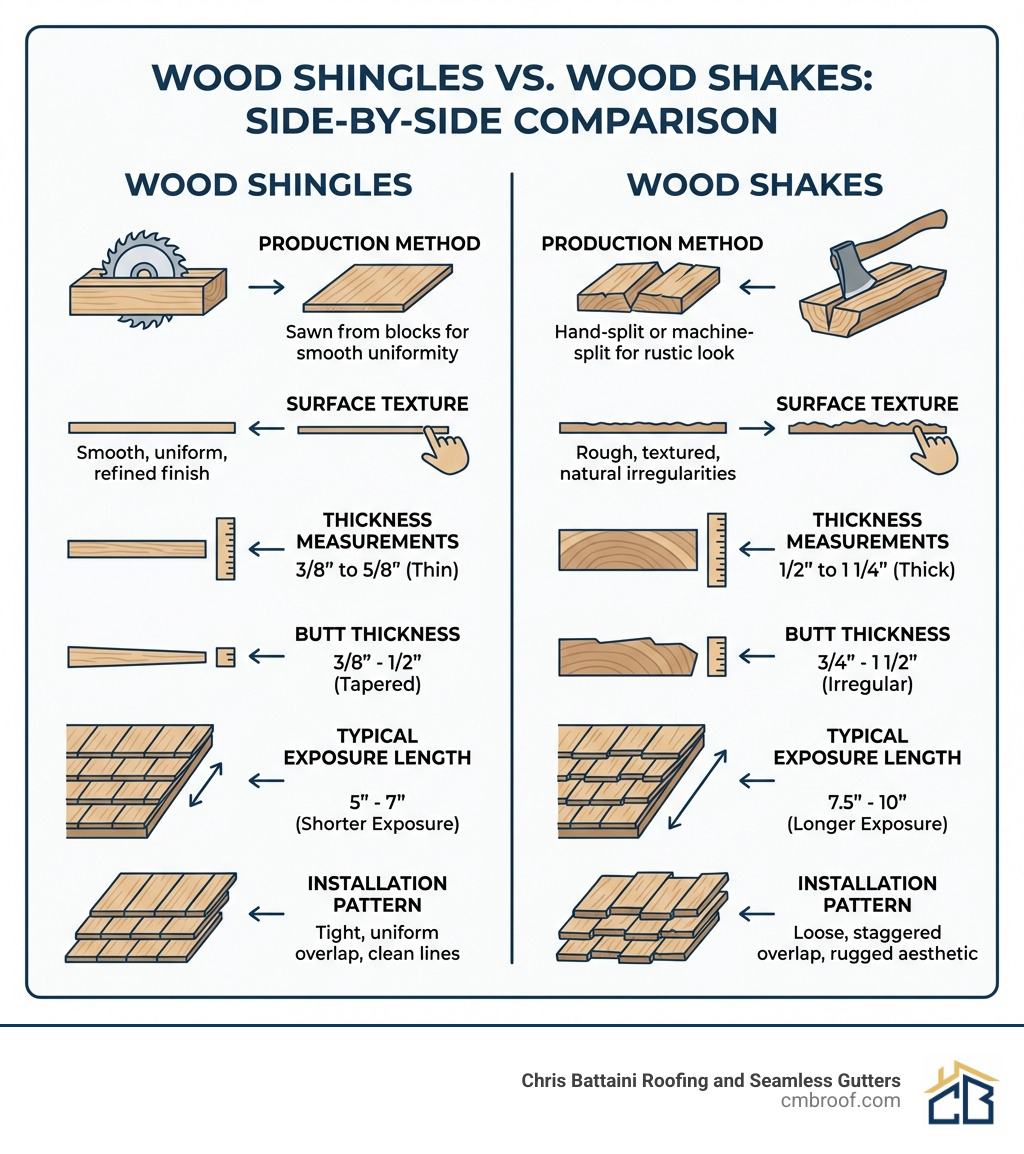
infographic showing side-by-side comparison of wood shingles versus wood shakes, including production method (sawn vs split), thickness measurements, surface texture (smooth vs rough), typical exposure length, butt thickness, and installation pattern differences - wood shingle infographic

Wood shingle further reading:

What Are Wood Shingles and Shakes?

While often used interchangeably, wood shingles and wood shakes have distinct differences that impact their appearance, performance, and character.

Wood shingles are precisely sawn from a block, giving them a smooth surface, consistent thickness, and uniform dimensions. Modern machine-manufacturing improves this uniformity and adds a taper for easier installation. This sleek design makes them a popular choice for a refined, classic look.

In contrast, wood shakes are traditionally split from a log. This process creates a rustic, textured appearance by following the wood’s natural grain. Modern shakes are generally thicker than their historic hand-split counterparts, with a rough, corrugated surface that contributes to their rugged charm.

The evolution of wood roofing has a rich history. Early American buildings predominantly used wood for roofing, with shingles being hand-split from straight-grained wood. This manual process changed in the early 19th century when steam-powered sawmills revolutionized fabrication, allowing for the mass production of uniform shingles.
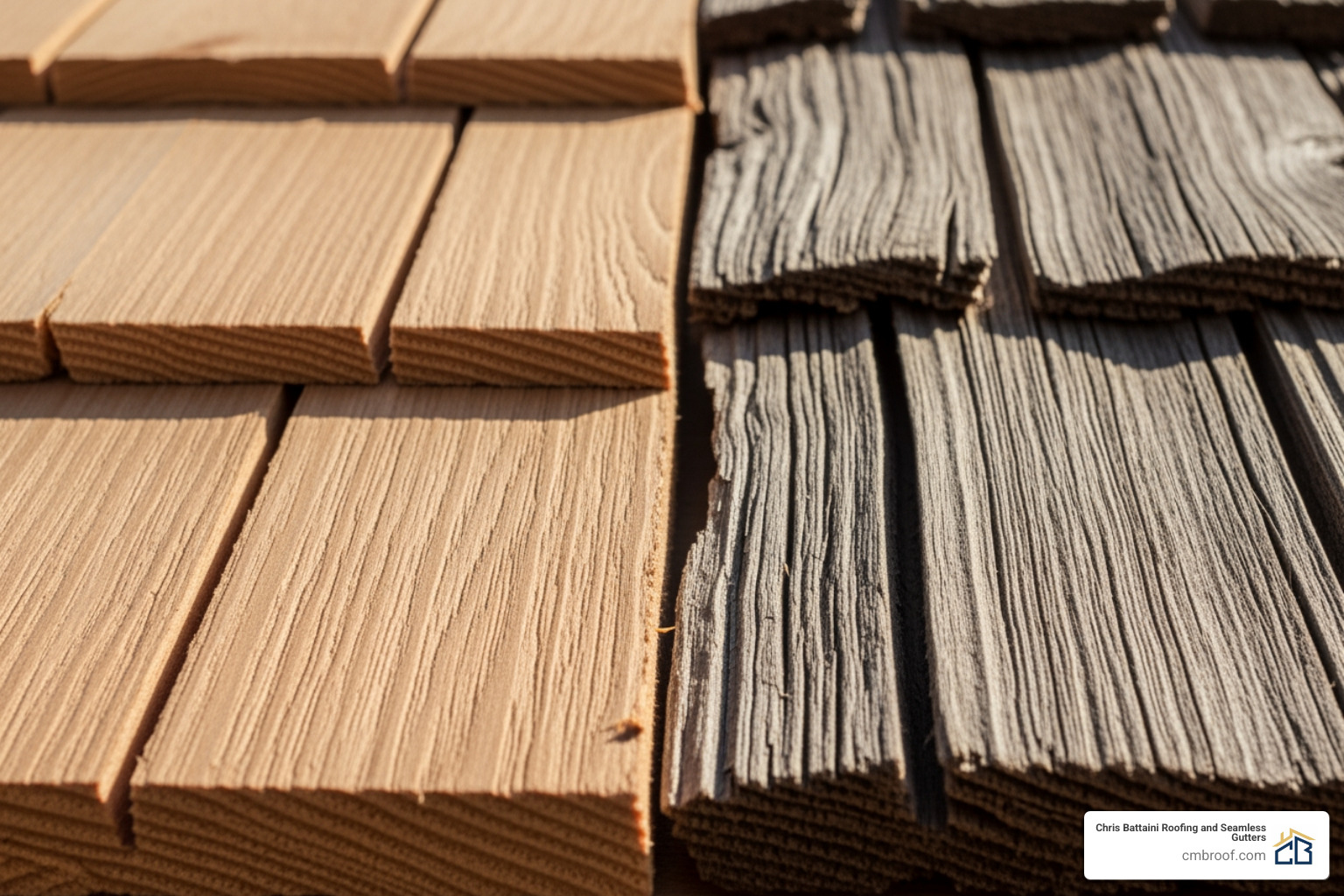
texture difference between a sawn shingle and a split shake side-by-side - wood shingle

Shingles vs. Shakes: The Core Differences

The primary distinction between wood shingles and shakes is their manufacturing, which dictates their appearance, thickness, and installation.

Manufacturing Process:

  • Wood shingles are sawn on all sides from a wood block, ensuring uniformity and a smooth finish.
  • Wood shakes are split from a log, following the natural grain for a rougher, more irregular surface.

Appearance:

  • Wood shingles present a clean, smooth aesthetic with consistent lines for a refined look.
  • Wood shakes offer a rugged, rustic appearance with deep shadow lines, providing a natural, weathered look.

Thickness and Uniformity:

  • Wood shingles are thinner and more uniform, typically 3⁄8 to 5⁄8 inch at the butt.
  • Wood shakes are thicker, often 1/2 to 1 1/4 inches at the butt, contributing to a robust appearance.

Installation Differences:
Due to their uniformity, wood shingles can be installed with a tighter fit. The irregularities of wood shakes often require a different approach, sometimes including felt paper between courses for extra weather protection.

The History and Evolution of Wood Roofing

Wood has been a roofing material for centuries, and in North America, wood shingles were an essential building material from early colonial times. This led to unique regional patterns and installation techniques.

The early method of producing wood shingles was hand-splitting, a laborious process. The 19th century brought steam-powered sawmills, which revolutionized shingle fabrication by enabling mass production of uniform, machine-sawn shingles. This increased availability and reduced labor costs.

Despite the introduction of asphalt shingles in the early 1900s, wood shingles have remained popular. Today, modern production methods are balanced with a renewed appreciation for the rustic charm of hand-split shakes. The industry continues to evolve with new treatments and installation practices to improve the longevity of these timeless materials.

Types, Styles, and Materials of Wood Roofing

Choosing a wood roof involves selecting the wood species, grain cut, and shingle or shake style. These elements are crucial for the roof’s appearance, durability, and performance in Berkshire County.
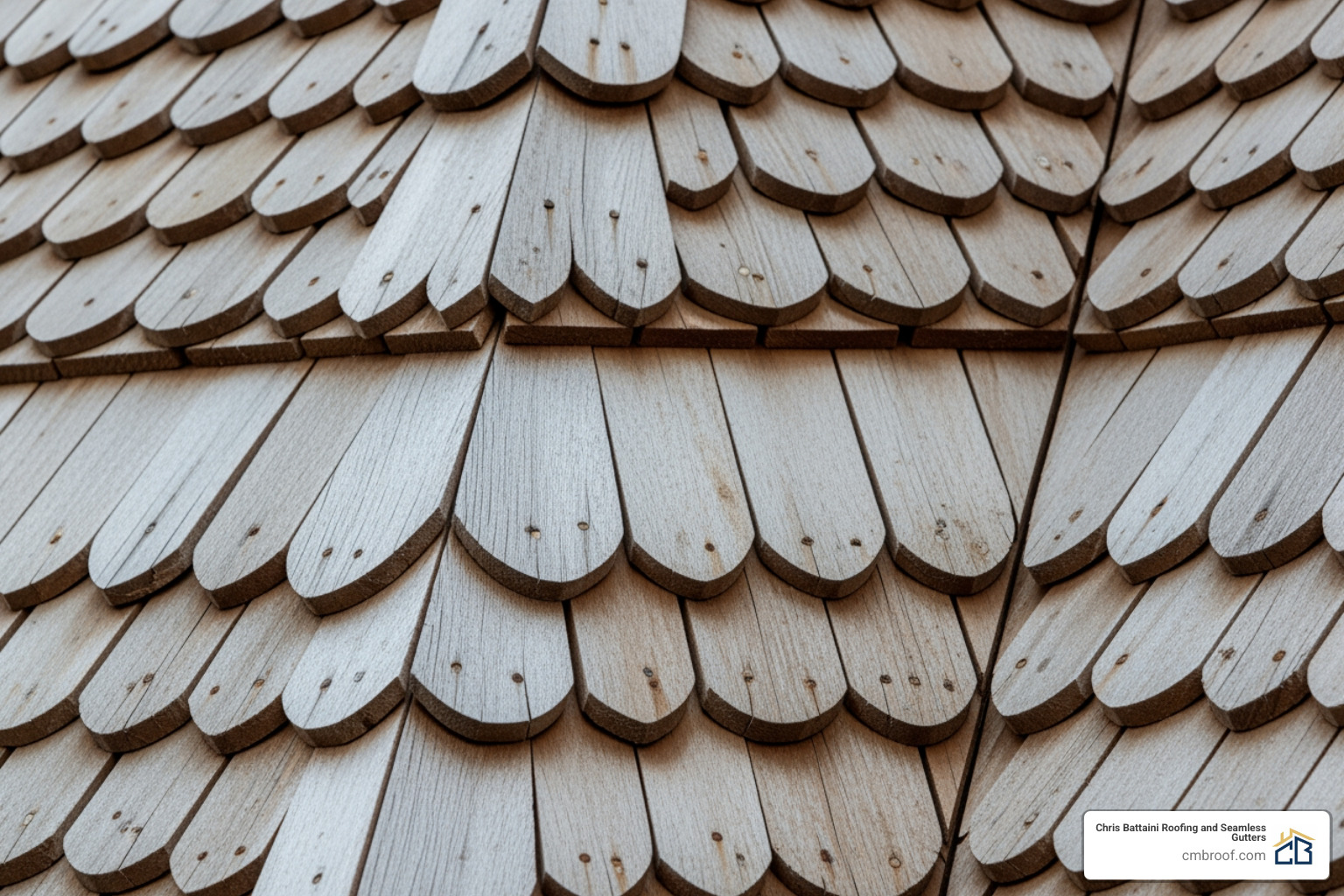
decorative "fancy butt" shingle pattern - wood shingle

Common Wood Species for Shingles and Shakes

The wood species impacts resistance to decay, insects, and weather.

  • Western Red Cedar: The most common choice in North America, its heartwood is extremely durable due to natural oils that resist moisture and pests. It weathers to a beautiful silvery-gray.
  • Alaska Yellow Cedar: Our team can help you explore Alaska Yellow Cedar Shingles, prized for exceptional durability and a fine, even grain.
  • California Redwood & Atlantic White Cedar: Also used for shakes in North America, these species offer good decay resistance.
  • Teak and Wallaba: These premium options offer exceptional longevity (up to 80 and 60 years, respectively) but at a significantly higher cost.

High-quality, old-growth heartwood is the most durable. Ensuring you receive appropriately sourced wood is paramount for longevity.

Understanding Wood Grains and Cuts

The way a log is cut affects the shingle’s stability and lifespan. There are three main cuts:

  • Edge Grain (Vertical Grain): This is the highest quality cut. The growth rings are perpendicular to the shingle’s face, making the wood stable and resistant to warping, cupping, or splitting. Grade 1 shingles must be edge-grained.
  • Flat Grain: The growth rings run parallel to the face, making the wood less stable and more prone to distortion from moisture.
  • Slash Grain: This is the least desirable cut due to poor durability and appearance.

For optimal performance, we recommend predominantly edge-grained wood shingles and shakes to withstand harsh New England weather.

Exploring Different Styles of Wood Roofing

Beyond species and grain, various styles offer unique aesthetics.

Shingle Styles:

  • Perfection Shingles: Uniform, smooth-sawn shingles for a clean, classic look.
  • Fancy Butt Shingles: Shingles with decorative ends (fishscale, diamond patterns) for added architectural character.
  • Steam-Bent Shingles: A custom option where shingles are bent to create unique, undulating patterns.

Shake Styles:

  • Heavy/Medium Split and Resawn Shakes: These offer a rugged, textured look with deep shadow lines. They are split and then sawn on the back for a flat laying surface.
  • Tapersawn Shakes: Sawn on both sides with a natural taper, they bridge the gap between the smooth look of shingles and the rustic appeal of shakes.
  • For more details on choosing a style, explore More on the different types of cedar shakes.

The Pros and Cons of a Wood Shingle Roof

For homeowners in Berkshire County, understanding the pros and cons of wood shingles is crucial to making an informed decision that fits your home’s style, budget, and maintenance commitment.

Advantages of a Natural Wood Shingle

A natural wood shingle or shake roof offers several key benefits:

  • Unparalleled Aesthetic Appeal: The timeless beauty and unique character of a natural wood roof are best. Its rich textures and warm tones weather gracefully, enhancing any architectural style.
  • Excellent Insulation Properties: As a natural insulator, a wood shingle roof helps regulate indoor temperatures, keeping your home warmer in winter and cooler in summer, which can improve energy efficiency.
  • Durability and Longevity: With proper installation and maintenance, a quality cedar roof can last 30 to 50 years. Exotic woods like Wallaba and Teak can last even longer. Read about the benefits of cedar shakes for more insights.
  • Sustainability: Wood is a renewable resource. When sourced from sustainably managed forests, it’s an environmentally conscious choice.

Disadvantages and Considerations for a Wood Shingle

It’s equally important to be aware of the potential drawbacks:

  • Higher Maintenance Needs: Wood shingles require regular cleaning of debris, moss removal, and periodic treatments to prevent fading, cupping, and splitting.
  • Vulnerability to Moisture and Pests: As an organic material, wood is susceptible to mold, rot, and pests if not properly maintained. Moss and lichens can trap moisture, accelerating deterioration.
  • Fire Risk Without Treatment: Untreated wood is flammable. Fire-retardant treatments are essential, and local building codes may mandate specific fire ratings.
  • Higher Initial Cost: Wood shingles and shakes have a higher upfront cost than materials like asphalt. Shakes can be 50-100% more expensive than shingles due to more complex manufacturing and installation.

Comparing Wood Shingles to Modern Roofing Alternatives

Here’s how wood shingles compare to other common roofing materials:

Feature Wood Shingles & Shakes Metal Roofing Other Traditional Roofing Materials (e.g., Asphalt)
Lifespan 30-50+ years (with care) 50-70+ years (2-3x longer than wood shingles) 15-30 years (generally less than wood)
Cost Higher (especially shakes) Higher initial, lower long-term Lower initial, higher long-term
Maintenance High (cleaning, treatments) Low Moderate
Fire Resistance Low (without treatment), flammable High (non-combustible) Moderate (Class A, B, or C ratings)
Energy Efficiency Good (natural insulator) Excellent (reflects solar radiant heat) Moderate
Home Value High (aesthetic appeal) High (can increase by up to 6%) Moderate

Note on pricing: The costs mentioned above are average estimates based on publicly available internet data for roofing materials and installation. Your specific costs may vary significantly based on the chosen material, roof complexity, and current market conditions. Chris Battaini Roofing and Seamless Gutters does not provide exact pricing without a comprehensive assessment.

Installation, Maintenance, and Longevity

The durability of a wood shingle or shake roof depends critically on expert installation and diligent maintenance. Protecting your investment means ensuring every step is handled with precision.

Proper Installation: The Key to a Lasting Roof

Professional installation is the most crucial factor for the lifespan of your wood shingle roof. Our owner-led, on-site service ensures exceptional workmanship.

  • Expert Craftsmanship: Wood shingles and shakes require specialized skills for proper installation, including correct shingle exposure, spacing for expansion, and staggering courses to prevent moisture infiltration.
  • Underlayment and Ventilation: Proper underlayment and ventilation are vital. An airspace between the shingles and sheathing improves drying, which is critical for preventing rot and extending service life.
  • Proper Nailing Techniques: Using the right fasteners is essential. We recommend corrosion-resistant, hot-dipped zinc-coated nails and advise against staples, which can damage the wood. For more specific guidance, learn about Can You Use Roofing Nails for Cedar Shakes?.
  • Safety Considerations: Our experienced roofers adhere to strict safety protocols, including using proper footwear, securing ladders, and employing safety lines on steep or high roofs.

Essential Maintenance for a Long-Lasting Roof

Consistent, proactive maintenance can help a wood shingle roof meet or exceed its 30-50 year lifespan.

  • Regular Cleaning of Debris: Routinely clean your roof of leaves and other debris to prevent trapped moisture, which encourages moss and fungi growth.
  • Moss and Lichen Removal: Moss and lichens hold moisture and accelerate wood decomposition. We can help with chemical treatments, or you can install zinc or copper strips along the ridge to inhibit growth.
  • Gutter Maintenance: Clean gutters are crucial for proper water drainage, preventing water from backing up under shingles.
  • Periodic Inspections: We recommend periodic inspections to identify and address loose, damaged, or rotting shingles early, preventing costly repairs. Replacement should be considered if over 20% of shingles on a surface are damaged.
  • Preservative Treatments: Applying penetrating oil-based stains with a wood preservative and water repellent protects the wood from UV rays and moisture, extending its life. These treatments typically need renewal every one to three years.

For a comprehensive guide, consult The Care and Maintenance of Wood Shingle and Shake Roofs. Proactive care preserves the beauty and integrity of your roof.

Architectural Styles and Making the Right Choice

The choice between wood shingles and shakes, and their specific style, can profoundly influence your home’s architectural character. Understanding which styles fit different designs, along with cost and replacement timing, will help you make the best decision for your Berkshire County property.

Architectural Styles That Feature Wood Shingles

Wood shingles and shakes add charm and elegance to a wide array of architectural styles.

  • Cape Cod and Colonial Revival: These classic styles often feature smooth, uniform wood shingles on roofs and sidewalls for a quaint, traditional aesthetic.
  • Craftsman and Bungalow: These homes frequently use wood shingles or shakes to emphasize natural materials and an artisanal feel.
  • Tudor and Victorian Styles: The versatility of wood roofing complements the intricate detailing of these homes. Shake-styled roofs can emphasize traditional aspects, while steam-bent shingles can mimic the look of thatch.
  • Rustic Cabins and Modern Homes: The natural appearance of wood shakes is a perfect match for rustic cabins and can add warmth and texture to modern designs.

Cost and Replacement Considerations

While the initial investment for a wood roof is higher, it’s important to consider the long-term value.

  • Cost Difference Between Shingles and Shakes: Wood shakes are more expensive than wood shingles, often costing 50-100% more due to complex manufacturing and installation. Cedar is the most cost-effective wood option. For a detailed breakdown, review our Cedar Shingle Cost guide.
  • When to Plan for Replacement: A well-maintained cedar roof can last 30 to 50 years. We recommend considering replacement if over 20% of the shingles on any surface are eroded, cracked, cupped, or split. Regular professional inspections help you plan for future needs. For more insights, consult our Cedar Shake Replacement Guide 2025.
  • Signs of a Failing Roof: Watch for common signs of wear like significant fading, widespread cupping (curled edges), splitting, and vulnerability to wind. Persistent mold or bacterial growth can also indicate the roof is nearing the end of its life.

Conclusion: Is a Wood Roof Right for Your Home?

Choosing a wood shingle or shake roof for your home in Berkshire County is a decision that blends aesthetic aspiration with practical considerations. The unparalleled beauty, natural insulation properties, and the potential for long-term durability make wood roofing a compelling choice for many homeowners. It offers a timeless appeal that can significantly improve your home’s character and value, whether you’re in Alford, Great Barrington, or North Adams.

However, it’s a choice that comes with a commitment. A natural wood roof requires a higher level of maintenance than many modern alternatives, including regular cleaning, debris removal, and protective treatments to ward off moisture, moss, and potential fire risks. The initial cost can also be a significant investment.

The right choice depends on your priorities. If you value authentic beauty, natural materials, and are prepared for the necessary maintenance, a wood shingle or shake roof can be a source of enduring pride and protection for your home.

At Chris Battaini Roofing and Seamless Gutters, we understand the unique requirements of wood shingle and shake roofing. As an Owens Corning Platinum Preferred Contractor, a distinction earned by only the top tier of roofing professionals in the country, we are equipped with the expertise to guide you through every step, from selection to meticulous installation and ongoing maintenance advice. Our owner-led, on-site service ensures that every project meets our high standards of quality and craftsmanship.

For expert advice and installation of natural wood roofing, explore our Cedar Shake Roofing services.

Chris Battaini Roofing and Seamless Gutters proudly serves homeowners throughout Berkshire County, Massachusetts, including Adams, Cheshire, Clarksburg, Dalton, Drury, Florida, Hancock, Lanesborough, New Ashford, North Adams, Peru, Pittsfield, Savoy, Williamstown, Windsor, Washington, Alford, Ashley Falls, Becket, Berkshire, East Otis, Glendale, Great Barrington, Hinsdale, Housatonic, Lee, Lenox, Lenox Dale, Mill River, Monterey, North Egremont, Otis, Richmond, Sandisfield, Sheffield, South Egremont, Southfield, Stockbridge, Tyringham, and West Stockbridge.

Follow us on Facebook — https://www.facebook.com/chrisbattainiroofing

Get Your Free Estimate Today

Need a reliable roofer? CMB Roofing provides licensed, insured, and professional roofing services for homeowners and businesses.

We stand by a simple promise: Clear estimates. Quality workmanship. Clean job sites.

From roof repairs and full replacements to storm damage restoration, our team delivers dependable results with durable materials, expert installation, and complete site cleanup.


Shingle & Shake: Uncovering the Beauty of Natural Wood Roofing

Why Homeowners Trust Chris Battaini Roofing

  • Owens Corning Platinum Preferred Contractor
  • Licensed & Insured Roofing Company
  • Owner-Supervised Installations
  • Manufacturer-Backed Roofing Warranties
  • Workmanship Installation Guarantee
chris battaini roofing contractor berkshire county logo footer
  • 10 Wendell Ave Extension Pittsfield, MA 01201
  • 210 Columbia St., Lee, MA 01238
MA LIC #101201 / MA HIC #160959
Areas We Service
At Chris Battaini Roofing & Seamless Gutters, we specialize in residential and commercial roofing and gutter installation services across Southern and Northern Berkshire County in Massachusetts.
PPC Right Roof Right Roofer Proud black border Chris Battaini Roofing - BBB Accredited Business logo with A+ Rating displayed.