-
10 Wendell Ave Extension Pittsfield, MA 01201
-
210 Columbia St., Lee, MA 01238

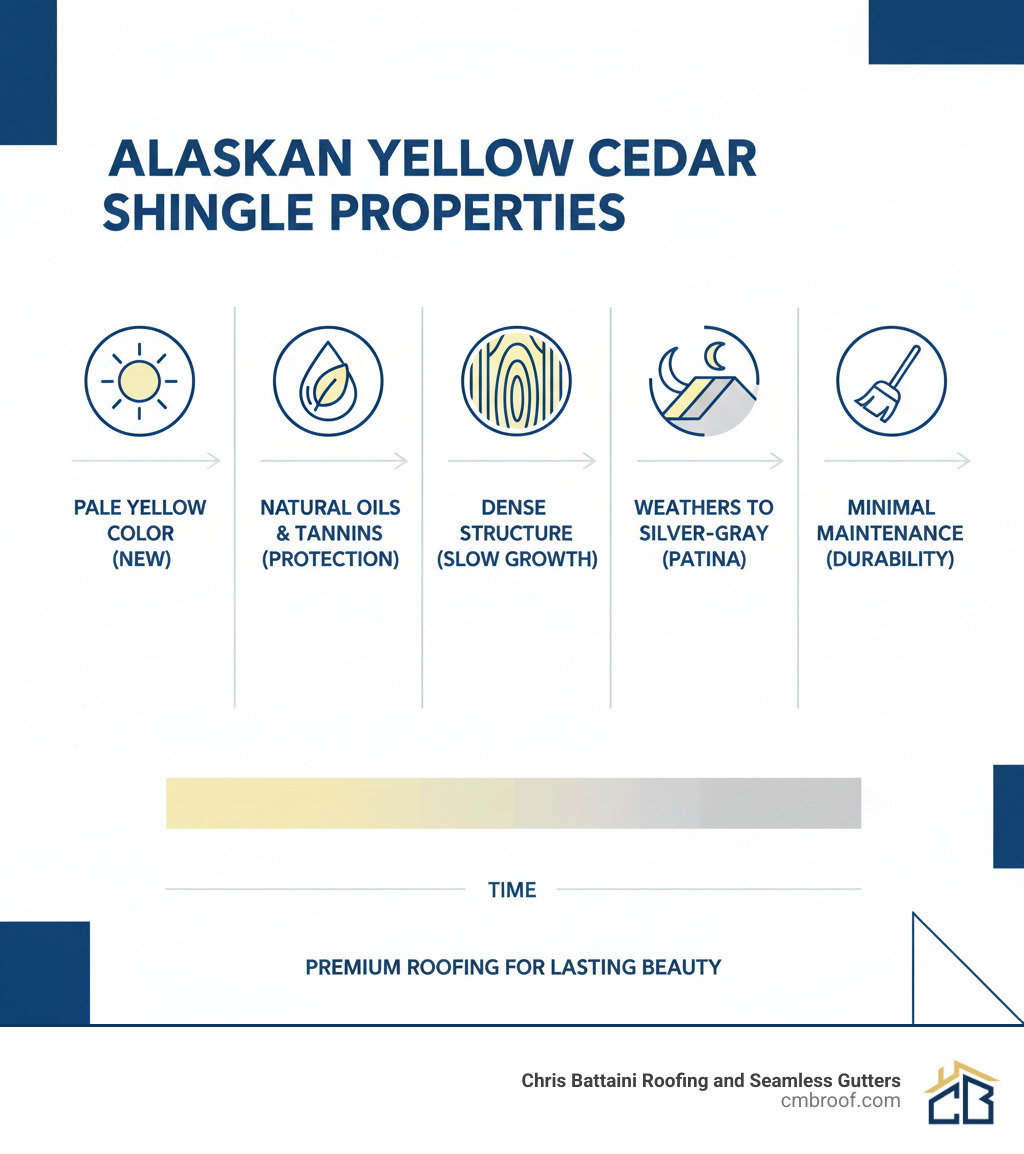
Alaskan yellow cedar shingles are a premium roofing material offering exceptional durability and a distinctive aesthetic. While many homeowners are familiar with Western Red or Eastern White Cedar, this third option provides superior performance. Here’s what makes it stand out:
Key Properties of Alaskan Yellow Cedar Shingles:
Despite its name, this wood is part of the cypress family. It grows slowly in the harsh coastal climates of the Pacific Northwest, developing incredibly dense wood with tight growth rings. This slow growth creates a roofing material that is harder, stronger, and more naturally resistant to the elements. The wood’s natural oils prevent mold and decay without chemical treatments. Prized by boat builders for its moisture tolerance, it is more than capable of protecting your home.
Surprisingly, Alaskan Yellow Cedar isn’t a true cedar. It belongs to the cypress family (Cupressus nootkatensis) and is also known as Nootka cypress or yellow cypress. This botanical distinction is key to its superior qualities for roofing.
Thriving in the harsh coastal regions of Alaska, British Columbia, and the Pacific Northwest, these trees grow incredibly slowly. Some live for over a thousand years, developing extremely dense wood with tight annual growth rings. This slow growth results in timber that is about one-third heavier and significantly harder than Western Red Cedar or Eastern White Cedar. This density provides natural resistance to wear and tear, ensuring the shingles maintain their structural integrity for decades.
When freshly milled, Alaskan yellow cedar shingles have a fine texture, straight grain, and a uniform pale yellow color. However, their most celebrated trait is the unique weathering process. Over time, exposure to the elements transforms the pale yellow hue into a distinguished, soft silver-gray patina that improves the home’s aesthetic.
Furthermore, these shingles exhibit very little shrinkage, preventing the warping or cupping common in other wood roofing materials. This dimensional stability ensures your roof remains beautiful and functional for decades, making it a top recommendation for homeowners seeking a long-lasting, high-performance roof.
While several cedar species are available for roofing, Alaskan Yellow Cedar consistently rises above the rest in quality and beauty.
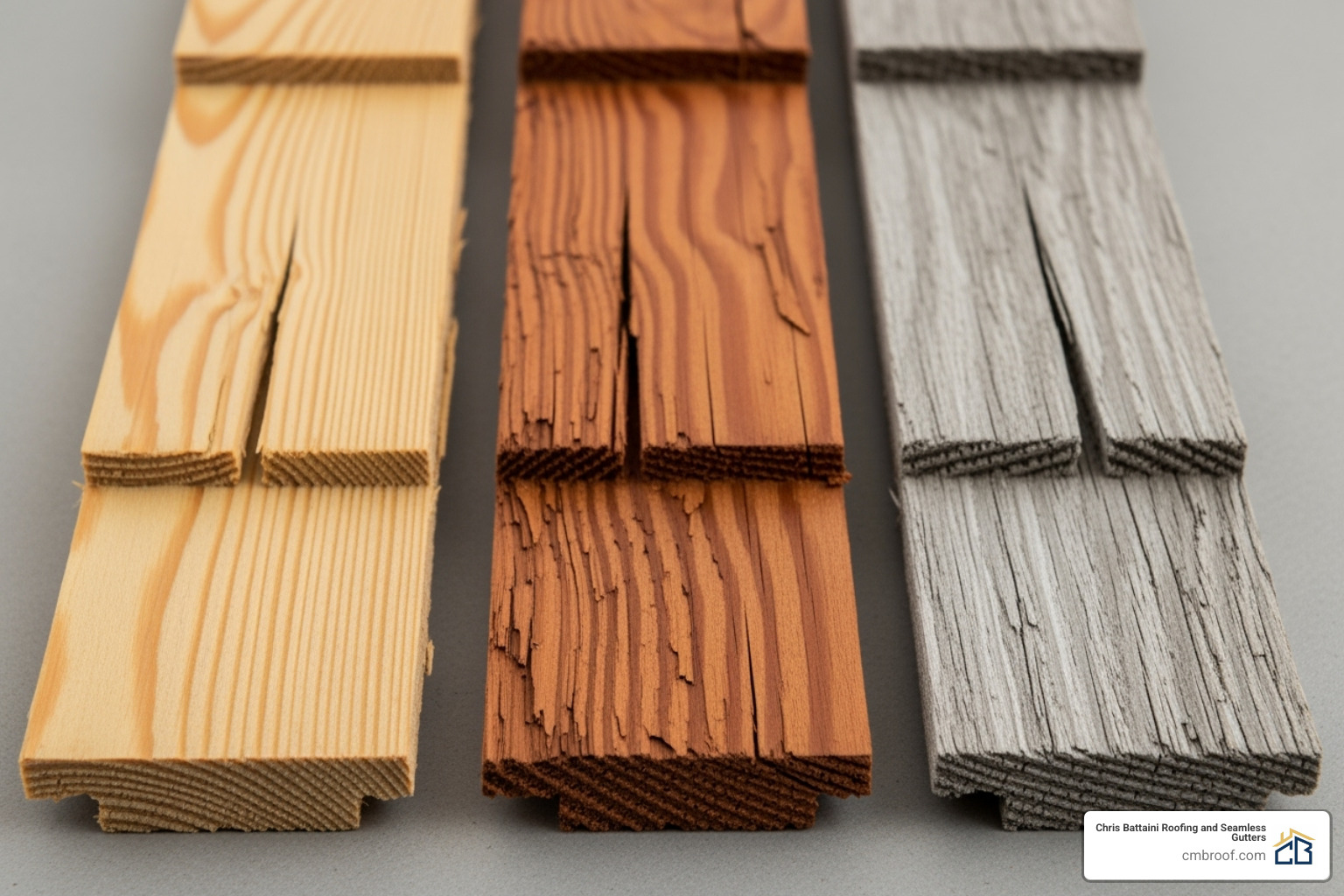
Western Red Cedar has familiar reddish-brown tones, and Eastern White Cedar is creamy white. Alaskan yellow cedar shingles offer something different. Freshly milled, they have a soft, pale yellow color. Over time, sun and weather transform them into a stunning, uniform silver-gray patina sought by architects for high-end projects.
A key advantage over Western Red Cedar is that Alaskan Yellow Cedar does not leach tannins that cause black stains on fascia or siding. The weathering process is clean and consistent, developing a character and depth that new shingles cannot match.
Alaskan Yellow Cedar weighs about one-third more than other cedars, a sign of its superior density and strength. The tight growth rings create a wood that is remarkably hard for a softwood, resisting splintering and maintaining its shape. While other cedar shingles may curl or erode, Alaska yellow cedar shingles remain stable with very little shrinkage. If you’re wondering about the overall performance of cedar shake roofs, our guide Are Cedar Shake Roofs Good? explores this topic in depth.
The true test of a roof is its performance over decades, and this is where Alaskan Yellow Cedar earns its premium status. The wood is exceptionally moisture-tolerant—so much so that boat builders have used it for centuries. This natural resistance to water translates directly to superior protection against decay, rot, and insect damage.
The wood’s natural oils act as built-in preservatives, keeping mold, mildew, and fungus at bay without chemical treatments. With proper installation, you can expect Alaskan yellow cedar shingles to last 30 to 50 years, and often longer. For more information about the lifespan and replacement considerations for cedar shake roofs, check out our Cedar Shake Replacement Guide 2025.
Choosing Alaska yellow cedar shingles is an investment in a roofing material with an impressive array of natural benefits that protect your home while being environmentally responsible.
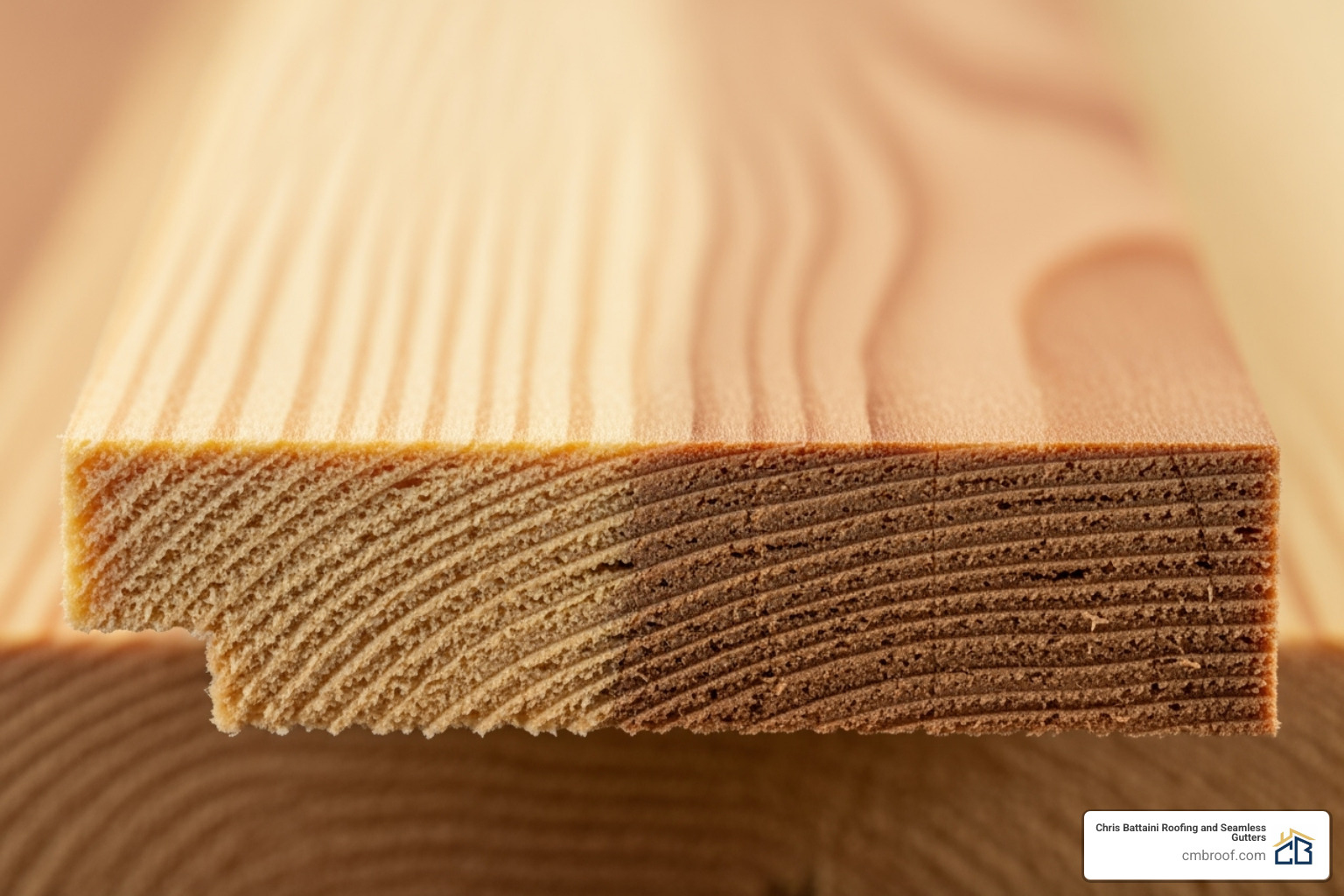
Alaskan Yellow Cedar’s dense structure is packed with natural defenses. The wood is naturally resistant to rot, decay, and insect damage, even in damp conditions. This protection is inherent to the wood, not a chemical treatment that wears off.
The wood’s natural oils and tannins discourage the growth of moss, mildew, and fungi, keeping your roof cleaner with minimal effort. This resilience means Alaskan yellow cedar shingles require less maintenance than other materials. While periodic inspections are always recommended, they don’t demand intensive annual treatments or constant cleaning.
While cedar roofs are generally fire-resistant, especially when treated, it’s worth understanding the specifics. Our article Are Cedar Shake Roofs a Fire Hazard? explores this topic in detail.
Alaskan Yellow Cedar is harvested from sustainably managed forests, supporting responsible resource management. At the end of its long life, the wood is completely biodegradable, unlike synthetic materials that clog landfills.
These shingles are also excellent natural insulators. The dense wood helps regulate your home’s temperature, keeping it warmer in winter and cooler in summer. This can lead to lower energy costs, making it an economically smart choice over the long term.
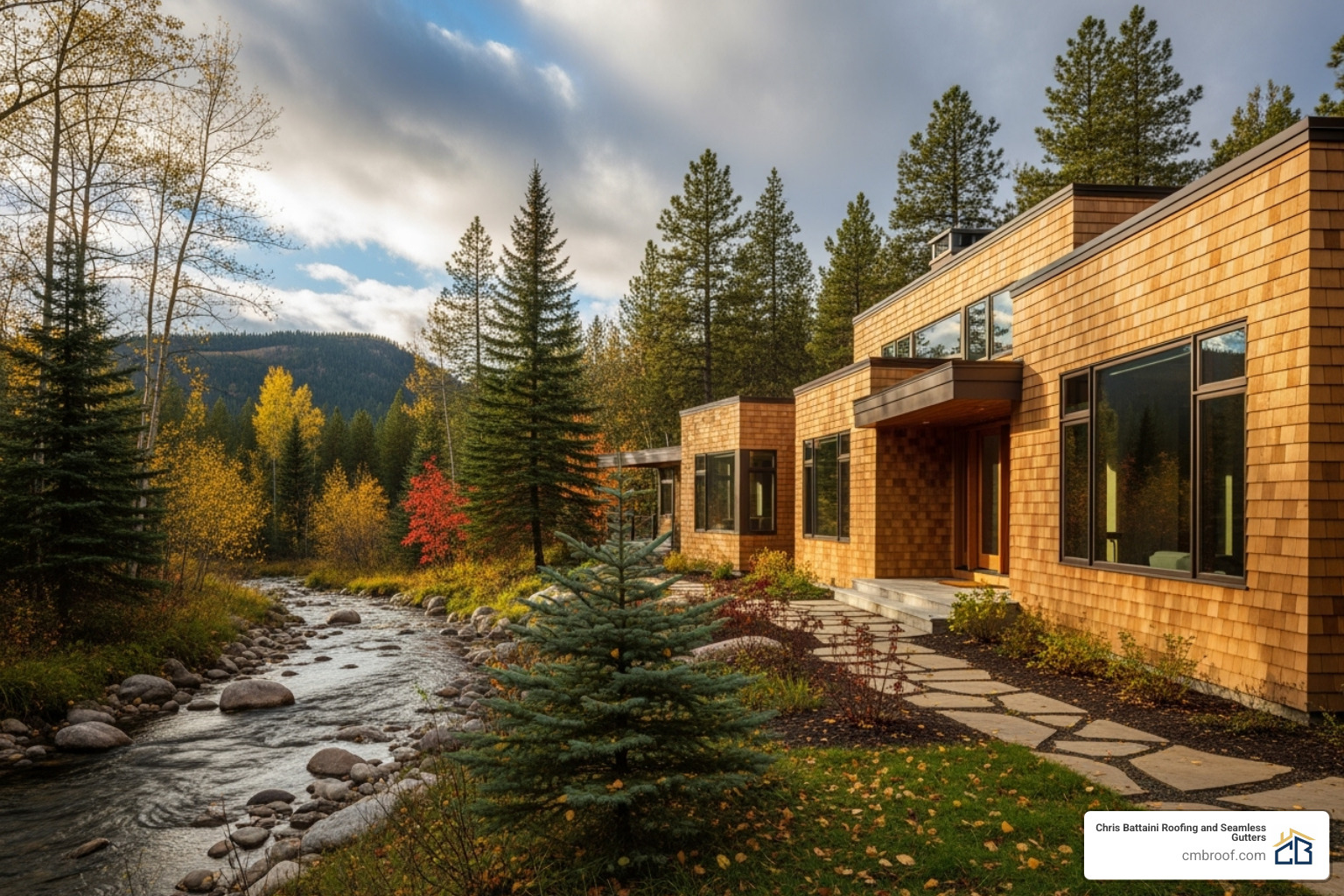
Alaskan yellow cedar shingles are as versatile as they are beautiful, perfect for both roofing and siding. On roofs with a slope of 4:12 or steeper, they provide exceptional protection and visual appeal. As siding, they add texture and character to exterior walls and gable ends, complementing architectural styles like Tudor, Colonial, and coastal cottages. The shingles bring an old-world elegance that ages gracefully into the coveted silver-gray patina.
Quality is assured through Certigrade® standards. The premium choice, Number 1 Grade (“Perfection”), is 100% heartwood, 100% clear (no knots), and 100% edge grain for maximum stability. Standard 18-inch Perfection shingles have a 5/2¼” thickness (five butts measure 2¼ inches) and come in random widths from 4 to 14 inches. This variation creates a beautiful, organic look that avoids the monotonous appearance of synthetic materials.
Proper installation is critical to achieving a 50-year lifespan. At Chris Battaini Roofing and Seamless Gutters, we adhere to best practices that maximize the performance of your Alaskan yellow cedar shingles.
Key installation principles include ensuring a minimum roof slope of 4:12, preparing a solid deck with quality underlayment, and providing proper attic ventilation to prevent moisture buildup. We use only corrosion-resistant fasteners, such as stainless steel or hot-dipped galvanized nails, which are essential for longevity. For coastal homes, Type 316 stainless steel is used to combat salt air. For more insights on choosing the right fasteners, check out our guide on Can You Use Roofing Nails For Cedar Shakes?.
Correct nailing techniques, proper spacing between shingles to allow for natural expansion, and appropriate side lap are crucial for water shedding. We begin with a double starter course and install metal flashing in valleys and correctly sized ridge caps to ensure a completely weather-tight system. These expert techniques are the difference between a good roof and a great one.
Follow us on Facebook to see examples of our work and stay updated on roofing tips and seasonal maintenance advice.
Every roofing material has its strengths and trade-offs. Here’s a balanced look at Alaskan yellow cedar shingles to help you decide if they are the right fit for your home.
The benefits of Alaskan Yellow Cedar are significant. Its key advantages include:
There are a few practical factors to consider. The initial cost reflects its premium quality. These are average costs based on internet data, not actual costs for Chris Battaini Roofing and Seamless Gutters, but prices can range widely from $150 to over $450 per bundle depending on grade, treatment, and supplier. While the upfront investment is higher than some alternatives, its longevity and low maintenance provide excellent long-term value. For more context on cedar shake costs, our article on Cedar Shake Roof Replacement Cost provides helpful insights.
Availability can sometimes be limited due to the wood’s specialized nature, so planning ahead is wise. The installation expertise required is also crucial; this premium material demands skilled professionals to ensure its longevity. Finally, its weight—about 1/3 heavier than Western Red Cedar—means your roof structure must be adequate, though this is rarely an issue for standard construction.
Follow us on Facebook to see examples of our cedar shake projects and learn more about what makes this material special.
Choosing a roofing material involves many questions. Here are answers to the most common inquiries we receive about Alaskan yellow cedar shingles.
With proper professional installation and minimal maintenance, Alaskan yellow cedar shingles have a remarkable lifespan of 30 to 50 years, with some well-maintained roofs lasting even longer. This longevity is due to the wood’s natural density, dimensional stability, and inherent resistance to decay, insects, and moisture. It’s a roof built to stand the test of time.
Yes, as a premium material, its initial cost is often comparable to other high-grade cedar options. These are average costs based on internet data, not actual costs for Chris Battaini Roofing and Seamless Gutters. Prices can range widely from $150 to over $450 per bundle depending on grade, thickness, treatment, and supplier. However, its exceptional durability, low maintenance needs, and potential energy savings offer significant long-term value, making it a wise investment. For a broader understanding of cedar shake costs, you might find our article on Cedar Shake Roof Replacement Cost helpful.
Yes. The wood’s fine texture and uniform color provide an excellent surface for stains and paints, with oil-based stains typically offering the best results. However, many homeowners prefer to leave Alaskan yellow cedar shingles unfinished. One of the material’s most beloved features is its natural weathering process, which transforms the wood to a beautiful, silvery-gray patina over time without any effort.
Chris Battaini Roofing and Seamless Gutters services Berkshire, Hampden, Hampshire, and Franklin Counties in Massachusetts. If you have more questions about Alaskan yellow cedar shingles or want to discuss whether they’re the right choice for your home, we’re here to help. Follow us on Facebook to stay updated on our latest projects and roofing tips.
After exploring its unique qualities, is Alaskan Yellow Cedar the right choice for your home? The evidence points to a material that delivers on all fronts: exceptional durability, a timeless aesthetic that improves with age, and high resistance to rot, insects, and moisture.
When you choose Alaskan yellow cedar shingles, you’re also selecting a sustainable, renewable material that offers natural insulation, potentially lowering your energy costs. With a lifespan of 30 to 50 years or more, it is an investment that truly lasts.
While the initial cost is higher and professional installation is a must, the long-term value and low-maintenance performance are undeniable. For homeowners in Berkshire County and Southern Vermont, Alaskan yellow cedar shingles represent a perfect marriage of form and function—a roof that protects with confidence and improves curb appeal with understated elegance.
At Chris Battaini Roofing and Seamless Gutters, we have the expertise required for premium materials like Alaskan Yellow Cedar. Our owner-led, on-site service ensures exceptional workmanship from start to finish. We don’t just install roofs; we create lasting protection for your most valuable asset.
For a durable and beautiful roof that stands the test of time, explore your Cedar Shake Roofing options with our team. Chris Battaini Roofing and Seamless Gutters services Berkshire, Hampden, Hampshire, and Franklin Counties in Massachusetts. Follow us on Facebook to see our latest projects and stay connected with our work.
Need a reliable roofer? CMB Roofing provides licensed, insured, and professional roofing services for homeowners and businesses.
We stand by a simple promise: Clear estimates. Quality workmanship. Clean job sites.
From roof repairs and full replacements to storm damage restoration, our team delivers dependable results with durable materials, expert installation, and complete site cleanup.