-
10 Wendell Ave Extension Pittsfield, MA 01201
-
210 Columbia St., Lee, MA 01238

Can you use roofing nails for cedar shakes? Yes, but only specific types are suitable. Using the wrong fasteners can cause rust stains, wood damage, and premature roof failure.
Quick Answer – Approved Cedar Shake Fasteners:
Avoid These:
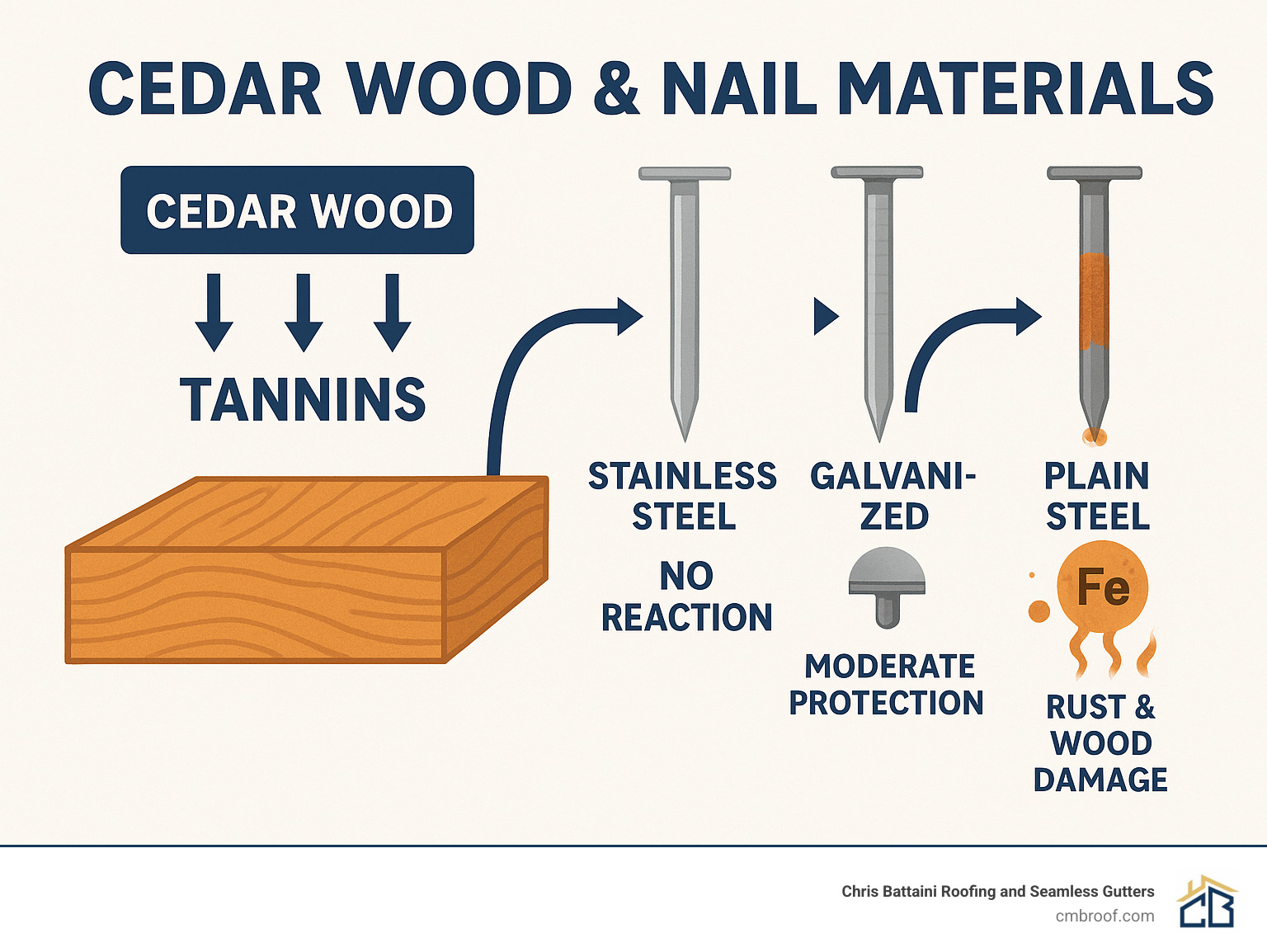
Cedar shakes are a premium roofing material that can last for decades, but they contain natural tannins and oils that are corrosive to certain metals. This chemical reaction causes ugly black streaks and can weaken your roof’s structure.
The Cedar Shake & Shingle Bureau (CSSB) sets strict guidelines for fasteners to prevent these issues. Many people mistakenly think “a nail is a nail,” but for cedar, the fastener you choose is as important as the quality of the shakes themselves.
This guide will show you exactly which roofing nails work with cedar shakes, proper installation techniques, and how to avoid costly mistakes that could damage your investment.
Handy can you use roofing nails for cedar shakes terms:
The question of can you use roofing nails for cedar shakes goes beyond simply holding the wood in place; it’s a matter of chemistry. Cedar, particularly Western Red Cedar, is rich in natural tannins. These compounds give cedar its beautiful color and natural resistance to rot and insects, but they also react corrosively with the wrong metals. When moisture from the wood’s natural oils meets an incompatible fastener, a chemical reaction begins. These materials react poorly with the moisture from natural oils in cedar wood, leading to significant problems.
This is why corrosion resistance is paramount. Nails that can’t withstand cedar’s chemistry will corrode, lose their grip, and allow shakes to loosen or lift in a storm. The right nail also prevents ugly black streaks—the permanent stains caused by this chemical reaction. Furthermore, proper fasteners are essential for:
Selecting the right fastener is key to maximizing the lifespan of your Cedar Shake Roofing. A properly fastened roof can last 30 to 50 years, while one with incorrect nails can fail in just a few.
Using the wrong fasteners leads to a cascade of expensive problems:
Skimping on fasteners undermines your entire roofing investment and guarantees costly repairs down the line.
The answer to can you use roofing nails for cedar shakes is yes, but only specific types. The term “roofing nail” is broad, and generic nails suitable for asphalt shingles are disastrous for cedar. Cedar’s natural tannins require fasteners made from specific, corrosion-resistant materials. Generic nails will corrode, stain the wood, and fail prematurely.
Environmental factors also play a role; a roof in a coastal area requires greater corrosion resistance than one in a dry climate. The difference between a suitable and unsuitable nail is the difference between a roof that lasts decades and one that fails in a few years.
Here are your approved options, with the real story on each:
| Nail Material | Pros | Cons | Best For | Corrosion Resistance |
|---|---|---|---|---|
| Stainless Steel | Highest corrosion resistance; No staining; Extremely durable; Longest lifespan; Ideal for treated wood. | Most expensive; Can be harder to find in some big box stores. | All applications; Coastal areas (Type 316); Fire-retardant/preservative-treated cedar; Long-term investment. | Excellent |
| Hot-Dipped Galvanized (HDG) | Good corrosion resistance; More affordable than stainless steel; Widely available. | Must meet specific ASTM standards (A153 Class D); Regular galvanized often inadequate; Can still stain if coating is compromised. | General use in non-coastal areas; Budget-conscious projects where SS is not mandatory. | Good |
| Copper | Excellent corrosion resistance; Unique aesthetic (patinas over time); Highly durable. | Very expensive; Can react with cedar tannins to cause dark staining if not desired; Limited availability. | High-end projects where copper aesthetic is desired; Specific architectural styles. | Excellent (but can react aesthetically) |
| Aluminum | Excellent corrosion resistance; Lightweight; Non-staining; More affordable than copper. | Softer metal, can bend or deform if mishandled; Less common for roofing shakes than SS or HDG. | Light-duty applications; Areas where very low weight is critical; Non-structural decorative elements. | Excellent |
Stainless Steel Nails are the gold standard for their superior corrosion resistance. For most applications, Type 304 stainless steel is sufficient. However, for coastal areas (within 15 miles of the ocean) or for fire-retardant treated shakes, the higher-grade Type 316 stainless steel is necessary. Type 316 is specifically designed for coastal areas with high salt and chemical exposure. While more expensive, stainless steel is the best long-term investment.
Hot-Dipped Galvanized (HDG) Nails offer a solid middle ground. The key is the “hot-dipped” process, which creates a thick, protective zinc coating. These nails must meet ASTM A153 Class D standards. Regular or electro-galvanized (EG) nails have a much thinner coating that fails quickly, which is why the Cedar Shake & Shingle Bureau explicitly bans them.
Copper and Aluminum Nails serve specialized purposes. Copper develops a green patina, which is ideal for certain architectural styles but can also react with tannins to create dark stains. Aluminum offers excellent corrosion resistance without staining and is lightweight. Both are less common for general roofing but have specific applications.
Beyond the metal type, the nail’s design is crucial for performance.
Getting the nail length right isn’t guesswork. The Cedar Shake & Shingle Bureau provides these minimums:
Important: Add 1/4″ to length if using a cedar breather. This mesh underlayment adds thickness that must be accounted for.
The golden rule is that the nail must penetrate the roof sheathing by at least 3/4″. This is non-negotiable for ensuring your roof stays attached in high winds. Always check manufacturer recommendations and local building codes for additional requirements.
Proper installation is as crucial as nail selection. Even the best stainless steel fasteners will fail if installed incorrectly. Following the industry standards set by the Cedar Shake & Shingle Bureau (CSSB) is essential for a successful Roof Installation. These guidelines are based on decades of research and are designed to prevent costly mistakes and ensure the longevity of your cedar roof. Every detail, from nail placement to depth, matters.
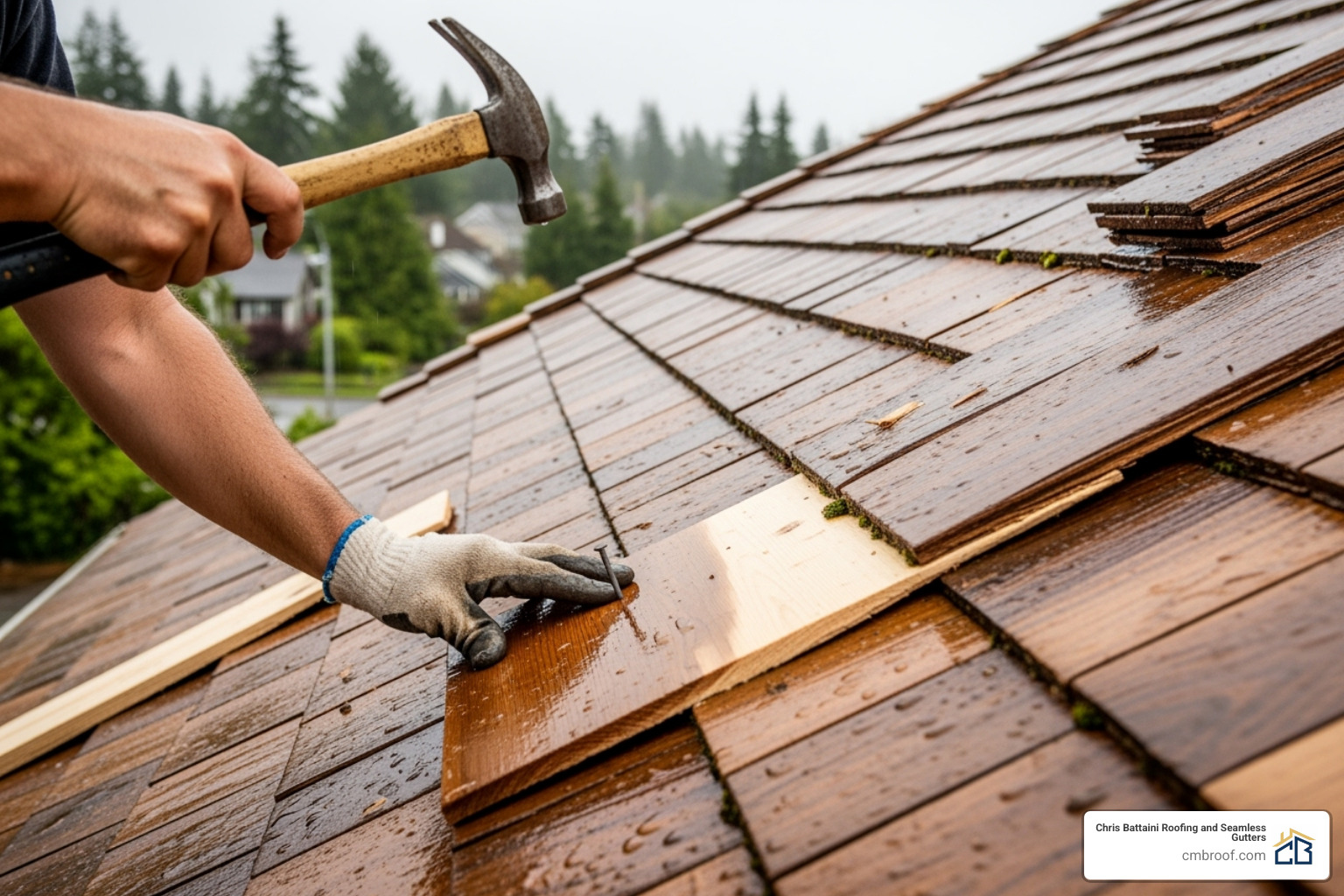
To answer can you use roofing nails for cedar shakes successfully, you must use the correct installation technique. Proper nailing secures the shakes in a way that maximizes their lifespan and performance.
A consistent nailing pattern ensures even holding power and a professional appearance. For complete details, we always refer to the Official CSSB Roof Nail Guide, the gold standard for cedar installation.
While other fasteners exist, most are unsuitable for cedar shake roofing and are discouraged by industry experts.
For cedar shake roofing, nails remain the industry-approved fastener. Focus on selecting the right nail and using proper installation techniques rather than seeking alternatives that compromise your roof’s integrity.
While fasteners are a small part of the overall cost of a cedar roof, they have a massive impact on your investment. Investing in the right Roofing Materials, including quality nails, is crucial for preventing future repairs and ensuring your roof lasts for decades. The choice of fastener determines whether your roof will perform flawlessly for 30 years or fail prematurely.
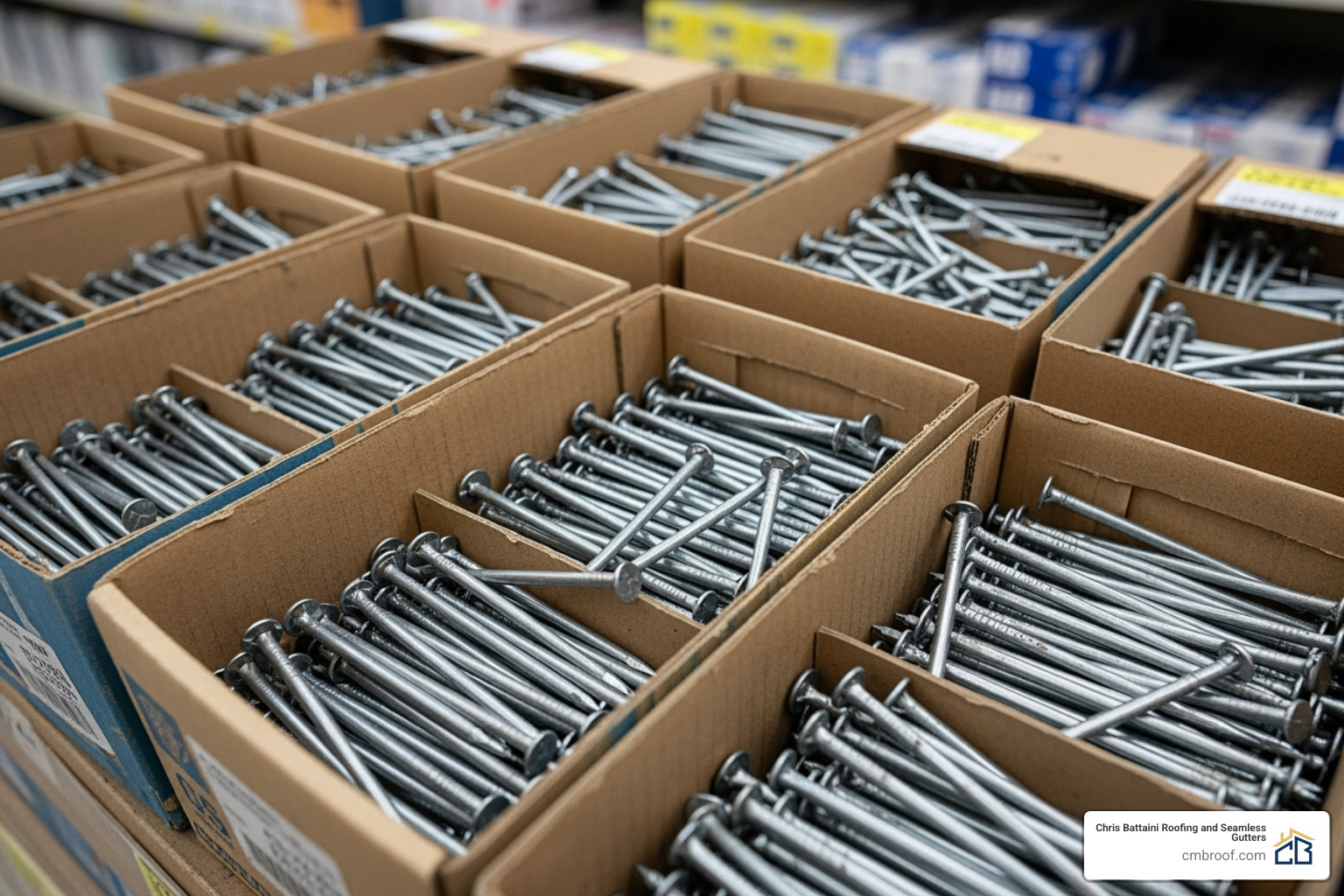
The cost of nails is less than 1% of your total cedar roof investment, yet their impact on its lifespan is immeasurable.
Price Disclaimer: These are average costs based on internet data from national suppliers and are not actual costs for Chris Battaini Roofing and Seamless Gutters. Prices vary significantly based on material, size, quantity, and market conditions.
In contrast, cheap electro-galvanized nails ($5 to $10 per pound) will ruin a cedar roof with rust and premature failure. Spending a few hundred dollars more on proper nails is essential to protect your investment.
Proper nail selection simplifies long-term maintenance. Instead of reacting to fastener failures, you can focus on preventive care.
We hope this guide has clarified that while you can use roofing nails for cedar shakes, selecting the correct type is a critical step in Everything You Need to Know About Roof Installations. However, knowledge is only half the battle. Executing a flawless cedar roof installation requires years of hands-on experience and a deep understanding of how cedar behaves in various conditions. This level of detail comes from professional expertise.
The devil is truly in the details when it comes to cedar shake roofing. We’ve seen too many beautiful cedar shakes ruined by installers who had the right materials but lacked the experience to use them properly.
At Chris Battaini Roofing and Seamless Gutters, cedar shake installation isn’t just another job for us – it’s a craft we’ve perfected. Our owner-led, on-site service means that Chris himself oversees every project, bringing decades of experience to your roof. We understand the subtle differences between various cedar grades and how to select and install the perfect fasteners for your specific situation.
Every detail matters when you’re investing in a premium roofing material like cedar shakes. From the initial inspection to the final cleanup, we handle each step with the precision and care that cedar demands. Our exceptional workmanship warranties back up our commitment to quality, giving you the confidence that your investment is protected.
Your cedar shake roof is more than just protection for your home – it’s a statement of quality and craftsmanship that should last for decades. Don’t leave this significant investment to chance. When you’re ready for a Cedar Shake Roofing project that combines the right materials with expert installation, we’re here to make it happen.
Contact us today and let’s discuss how we can bring the beauty and durability of properly installed cedar shakes to your home. We proudly serve Berkshire, Hampden, Hampshire, and Franklin Counties in Massachusetts.
Need a reliable roofer? CMB Roofing provides licensed, insured, and professional roofing services for homeowners and businesses.
We stand by a simple promise: Clear estimates. Quality workmanship. Clean job sites.
From roof repairs and full replacements to storm damage restoration, our team delivers dependable results with durable materials, expert installation, and complete site cleanup.