-
10 Wendell Ave Extension Pittsfield, MA 01201
-
210 Columbia St., Lee, MA 01238

Storm Damage & Insurance Claims can feel overwhelming when you’re standing in your home looking at water stains on the ceiling or missing shingles on your roof. When severe weather hits Berkshire County—whether it’s high winds, heavy rain, ice storms, or fallen trees—knowing how to document damage, file your claim correctly, and work with your insurance company can mean the difference between a smooth recovery and months of frustration.
Quick Overview: The Storm Damage Claim Process
Most homeowners policies cover wind damage, hail, fallen trees, and water entering through storm-created openings. However, flood damage requires separate insurance, and certain types of damage like maintenance-related wear or gradual leaks are typically excluded.
Storm deductibles often work differently than standard deductibles—many policies use a percentage (2-5%) of your home’s insured value rather than a flat dollar amount. On a home insured for $200,000, a 5% storm deductible means you’ll pay the first $10,000 out of pocket.
The most common mistakes homeowners make include failing to document damage thoroughly, making permanent repairs before the adjuster visits, not understanding their policy coverage, and falling victim to contractor scams that surge after severe weather events.
As Christopher Battaini, I’ve worked with countless Berkshire County homeowners navigating Storm Damage & Insurance Claims after severe weather, helping them understand what their policies cover and ensuring their roofs are properly restored. With over two decades of roofing experience, I’ve seen how proper documentation and working with qualified professionals makes the insurance process smoother and gets families back to normal faster.
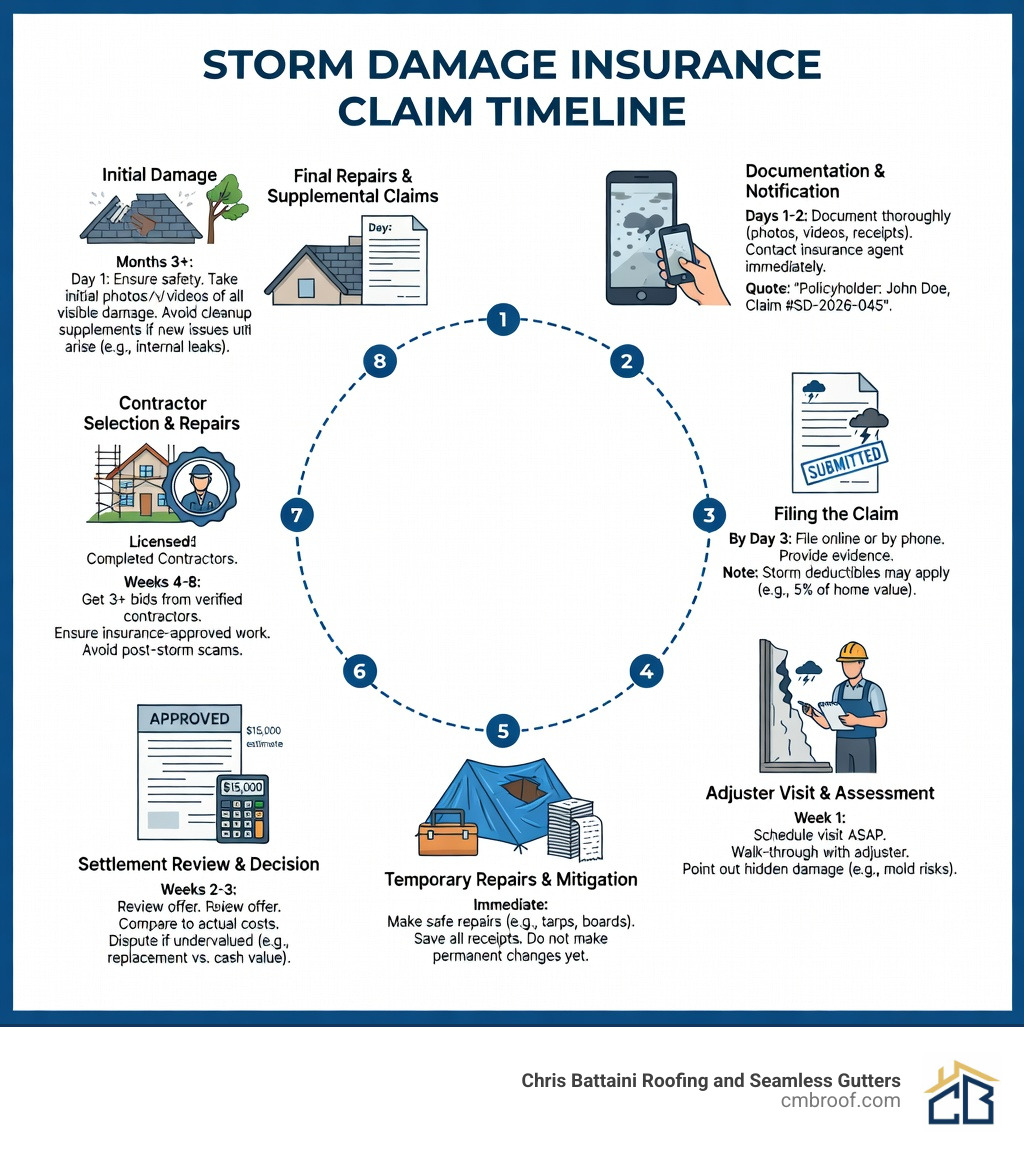
Easy Storm Damage & Insurance Claims word list:
Navigating the aftermath of a storm in Berkshire County requires a clear understanding of what your policy actually protects. Standard homeowners insurance is designed to cover “perils”—unexpected events that cause sudden damage. In our region, this often includes wind-perils like microbursts or the tail ends of hurricanes, hail-impact that bruises shingles, and the weight of heavy snow.
When a severe storm rolls through towns like Pittsfield or Great Barrington, the damage is rarely limited to just one area. You might see:
It is vital to distinguish between different types of water entry. Standard policies often cover water that enters through a hole created by the storm (like a branch through the roof). However, Learn more about water damage and flood protection to understand that “flooding”—meaning water rising from the ground up—is almost always a separate policy. Similarly, while rare in Massachusetts, Learn more about earthquake protection as these events also require specific endorsements.
Not every leak results in a successful claim. To successfully steer Storm Damage & Insurance Claims, you must understand the “sudden and accidental” rule.
To better prepare, you should Learn more about natural hazards to help you assess your risk. Knowing if your property is prone to specific wind patterns or runoff issues helps you choose the right coverage before the clouds turn grey.
One of the most common questions we hear in places like Lenox and Dalton involves property lines. If your neighbor’s tree falls on your house, whose insurance pays? Surprisingly, yours does. In the insurance world, it doesn’t matter where the tree started; it matters what it hit.
If the tree hits a “covered structure” (your home or garage), the policy typically pays for structural-damage and a portion of debris-removal. If the tree just falls in the yard without hitting anything, coverage for removal is often very limited or non-existent.
Shared fences can be a bit more complicated. Usually, liability-coverage and property limits are split. If a fence on the property line between two homes in Adams is destroyed, both neighbors may need to file claims with their respective insurers, often sharing the cost after their individual deductibles are met.
The moments immediately following a storm are critical. Your first priority is safety, but once the winds die down, documentation becomes your full-time job.
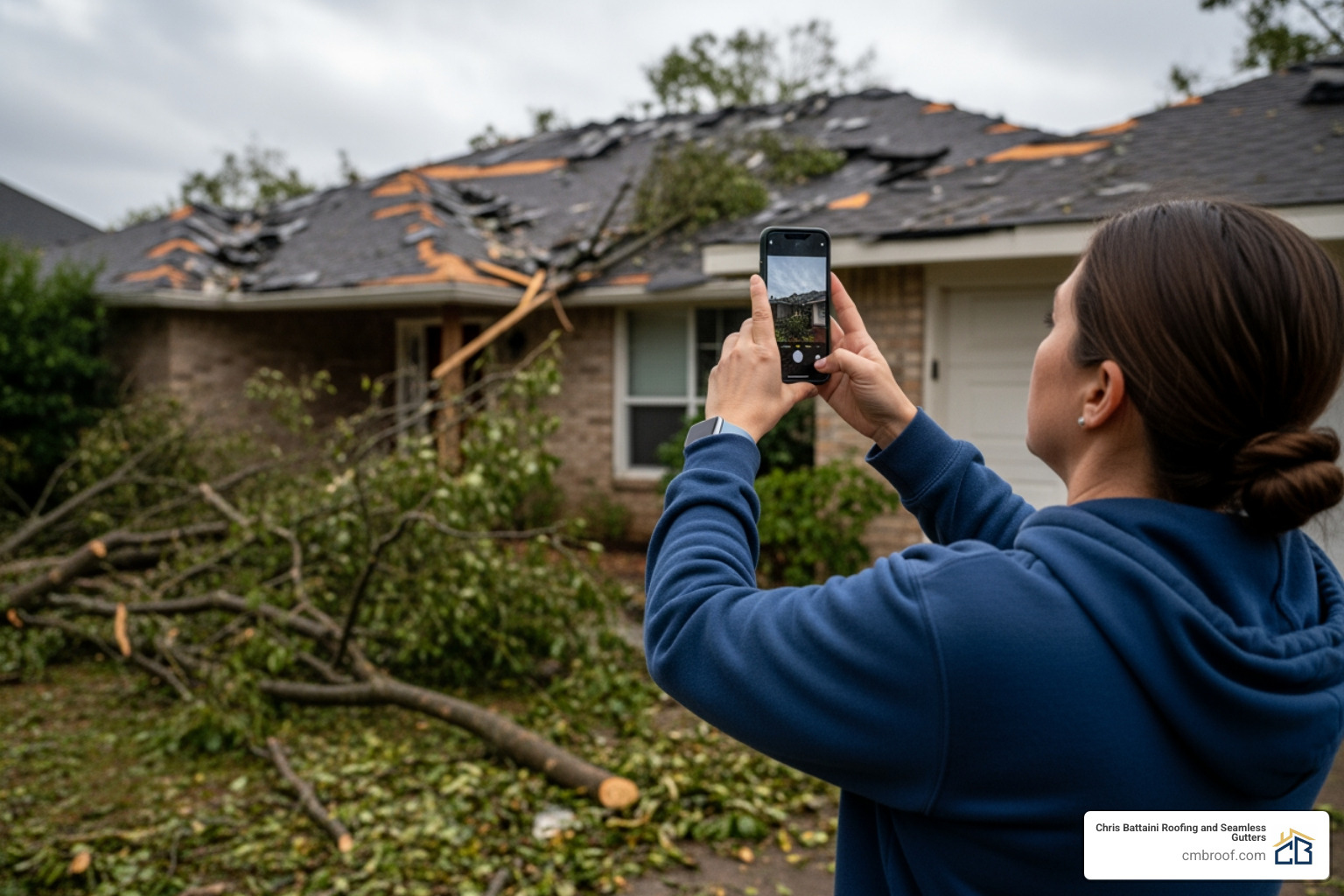
Start by gathering photo-evidence from every angle. Use your smartphone to take high-resolution photos and video-documentation of the roof (from the ground), the yard, and any interior leaks. To stay organized, many experts recommend using a home inventory app to keep a digital record of your belongings.
If you notice water actively dripping into your living room, you need to act fast. More info about roof leak repair services can help you understand the professional approach to stopping a leak before it ruins your drywall and flooring.
Your insurance policy actually requires you to “mitigate” further damage. This means you can’t just let the rain pour in while waiting for an adjuster.
Crucially, keep every single receipt. Receipt-tracking is essential because these emergency costs are usually reimbursable as part of your total claim settlement.
When you are ready to file, have your policy-numbers and the exact date of the storm handy. Be mindful of deadline-awareness; some policies require you to report damage within a specific window (often 30 to 60 days). For a deeper dive into the regulatory side, these Consumer Tips for Filing Storm Claims provide excellent guidance on staying protected during the process.
Understanding how you get paid is often the most confusing part of Storm Damage & Insurance Claims. Most policies fall into one of two categories:
| Feature | Replacement Cost Value (RCV) | Actual Cash Value (ACV) |
|---|---|---|
| Definition | Covers the cost to replace the item today | Covers the item’s value minus depreciation |
| Payout | Higher; covers the full repair bill | Lower; reflects the age of the roof |
| Out-of-pocket | Just your deductible | Deductible + the “lost” value of age |
Depreciation is the amount of value a roof loses over time. If you have an ACV policy on a 20-year-old roof, the insurer will only pay for what a 20-year-old roof is worth, leaving you with high out-of-pocket-costs.
If your repairs end up costing more than the initial estimate—perhaps the roofer finds rot under the shingles—you can file supplemental-claims. For those facing extreme financial hardship or FEMA assistance for high deductibles, there are federal resources available in major disaster scenarios.
The insurance adjuster is the person sent by the company to perform a damage-assessment. They will conduct site-inspections to create repair-estimates and define the scope-of-work. It is often helpful to have your own contractor present during this visit to ensure the adjuster doesn’t miss subtle signs of damage, like hail bruising that isn’t visible from the ground.
If your home in Williamstown or North Adams is rendered unlivable due to a fallen tree or major roof failure, your policy likely includes Additional Living Expenses (ALE). This covers displacement-costs, including:
This “loss-of-use” coverage is a lifesaver during long restoration projects. For immediate needs before insurance kicks in, the Red Cross emergency help can provide shelter and food.
Once the claim is approved, the focus shifts to rebuilding. This is where contractor-licensing becomes vital. In Massachusetts, any roofer you hire should be fully licensed and insured. For more information on what to look for in a provider, you can view More info about residential roofing services or More info about commercial roofing services.
Unfortunately, “storm chasers” often follow severe weather. These are out-of-state contractors who move into an area, do sub-par work, and disappear before the warranty can ever be used. Watching this video on How to avoid contractor scams after a disaster can save you thousands of dollars and a lot of heartache.
Be wary of door-to-door-solicitors who use high-pressure-tactics. A common red flag is a contractor offering to “waive your deductible.” In many states, deductible-waiving-illegal practices are strictly enforced, and insurance companies may require proof that you paid your share before releasing final funds. Always insist on written-contracts that detail the materials, timeline, and payment schedule. While we focus on Berkshire County, looking at resources like the Louisiana State Licensing Board for Contractors can show you just how seriously states take contractor verification.
When looking at the financial side, it helps to have a baseline. Based on publicly available internet data, average storm-related roof repairs can range from $1,200 to $4,500 or more depending on the severity of the damage. These figures are average costs and do not reflect the actual pricing of any specific provider.
Factors that influence the wide-range-estimates include:
If the offer feels too low, don’t sign it yet. You can invoke the “appraisal-clause” in your policy, which brings in independent appraisers to settle the dispute. You might also consider hiring public-adjusters (who work for you, not the insurer) or seeking legal-consultation. For a step-by-step guide on your rights, the Residential Property Claims Guide offers a comprehensive look at the dispute process.
Sometimes. If the power outage was caused by a covered peril (like a tree hitting the power line to your house), you might have limit-coverage for perishable-goods, often around $500. However, many policies require actual dwelling-damage to trigger this coverage. Check your policy-endorsements for “Food Spoilage” language.
Standard deductibles are usually a flat dollar amount (e.g., $1,000). Storm or hurricane deductibles are often percentage-based. They are calculated based on the home’s total insured-value. If your home is insured for $300,000 and you have a 2% storm deductible, you are responsible for the first $6,000 of the claim.
Recovering from severe weather is a journey, but you don’t have to walk it alone. By documenting the damage, acting quickly to prevent further leaks, and understanding the nuances of your insurance policy, you can ensure your home is restored to its pre-storm condition—or even better.
Chris Battaini Roofing and Seamless Gutters is an Owens Corning Platinum Preferred Contractor. This elite designation is earned and limited to the top tier of roofing professionals nationwide, ensuring exceptional workmanship and reliability for every restoration project.
Chris Battaini Roofing and Seamless Gutters services Berkshire County, Massachusetts.
Follow us on Facebook — https://www.facebook.com/chrisbattainiroofing
Need a reliable roofer? CMB Roofing provides licensed, insured, and professional roofing services for homeowners and businesses.
We stand by a simple promise: Clear estimates. Quality workmanship. Clean job sites.
From roof repairs and full replacements to storm damage restoration, our team delivers dependable results with durable materials, expert installation, and complete site cleanup.