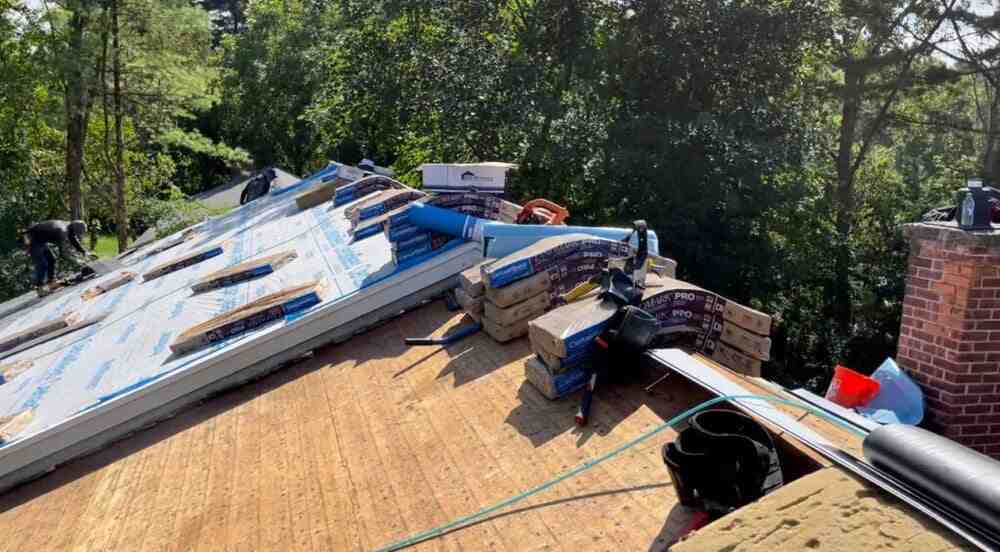

Why Choosing the Right Roofing Materials Matters for Your Home
Roofing materials are the foundation of your home’s protection system, and choosing the wrong one can cost you thousands in repairs down the road. Here’s what you need to know:
Most Common Roofing Materials (2024):
– Asphalt Shingles – $1.50-$4.50/sq ft, 15-30 years
– Metal Roofing – $5-$16/sq ft, 50+ years
– Clay/Concrete Tile – $10-$20/sq ft, 50-100+ years
– Natural Slate – $10-$30/sq ft, 75-150+ years
– Wood Shake/Shingles – $4.50-$14/sq ft, 20-40 years
– Synthetic Materials – $4-$12/sq ft, 30-50 years
Note: These are average costs based on internet data and not actual costs for Chris Battaini Roofing and Seamless Gutters.
Your roof makes up 50% or more of your home’s visible exterior. But looks aren’t everything. The material you choose affects your energy bills, insurance rates, and how often you’ll need repairs.
In New England, we face unique challenges. Heavy snow loads, ice dams, and hurricane-force winds can destroy the wrong roofing material in a single season. That’s why understanding your options matters more here than in milder climates.
As one industry expert puts it: “If you choose the contractor first, you’ll often end up with the product they know best or that’s most profitable for them, not necessarily the best fit for your home.”
The key is matching your material to your home’s needs, your budget, and our local weather patterns.
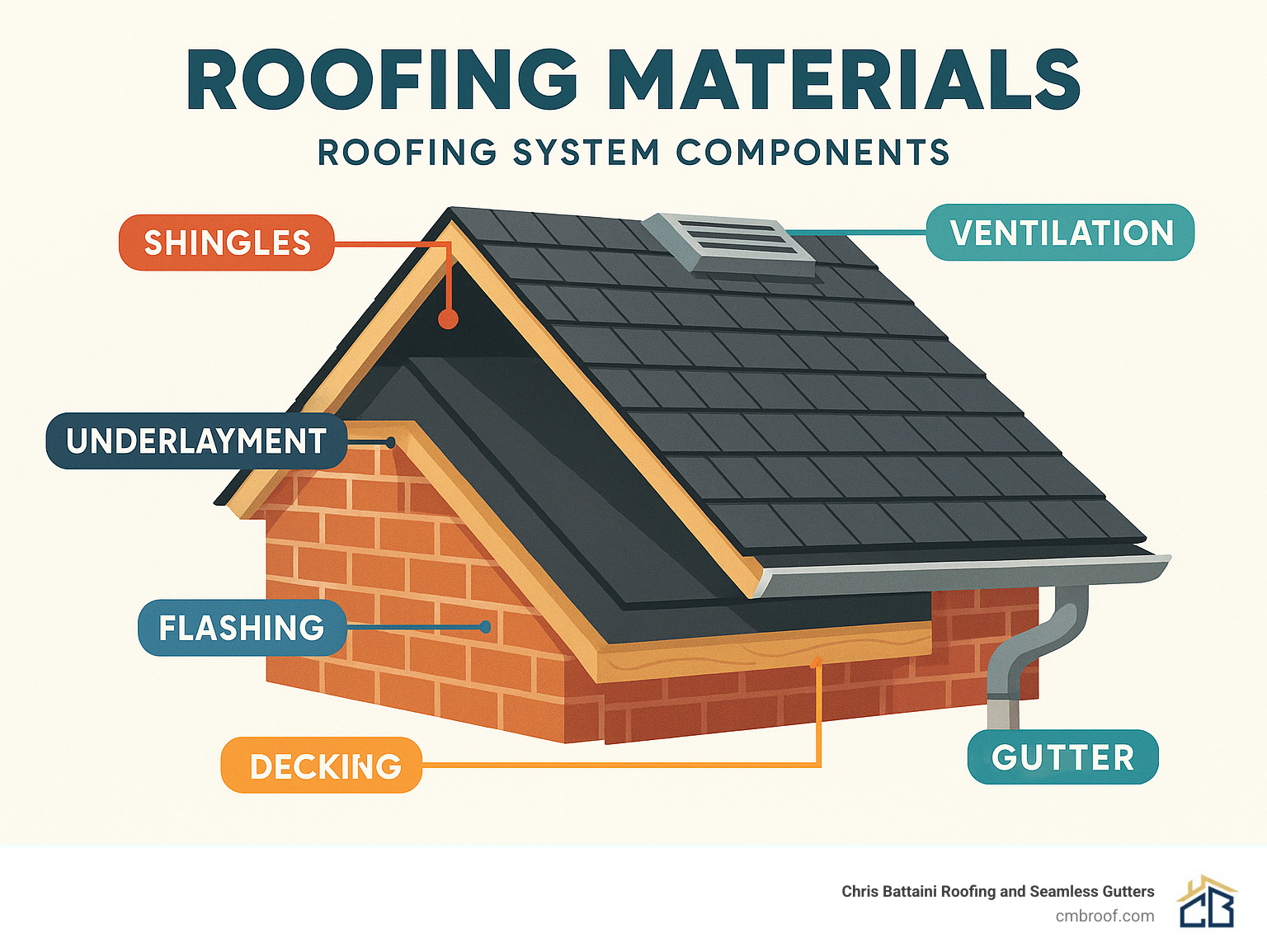
Roofing materials word roundup:
– roof inspection services
– roofing and guttering services
– roof shingles
Roofing Materials 101: What’s on the Market in 2024
Walk into any home improvement store today, and you’ll find roofing materials that your grandfather never dreamed of. The industry has transformed from a handful of basic options to an exciting array of high-tech, energy-efficient, and beautifully designed materials.
Asphalt shingles still rule the roost – they’re on about 80% of American homes for good reason. But metal roofing is gaining ground fast, especially here in New England where homeowners appreciate materials that laugh at winter storms. Synthetic materials are the new kids on the block, offering the looks of premium materials without the headaches.
The smart approach? Don’t just pick what looks good or costs least. Your roof needs to handle our brutal winters, summer heat waves, and everything Mother Nature throws at us.
Asphalt Shingles: The Budget Workhorse
Asphalt shingles aren’t glamorous, but they’re the reliable friend who shows up when you need them. You’ve got two main choices: 3-tab shingles are the basic model – flat, uniform, and budget-friendly. Architectural shingles add depth and visual interest to your roof.
Most modern fiberglass asphalt shingles earn Class A fire ratings and include algae-resistant granules with copper coating to prevent those ugly black streaks.
Cost-wise: 3-tab installations typically run $7,300-$22,000 for average homes, while architectural shingles range from $11,200-$35,000. Premium designer options expect $18,300-$60,000 or more.
These are average costs based on internet data and not actual costs for Chris Battaini Roofing and Seamless Gutters.
Expect 15-30 years from a quality asphalt roof, depending on the grade you choose and maintenance. They work beautifully in our New England climate.
For more details, check out our Asphalt Shingle Roofing services.
Metal Roofing: Longevity & Efficiency
Today’s metal roofing can look like traditional shingles, wood shake, or even slate – while outperforming all of them.

Standing seam panels are the premium choice with interlocking raised seams for maximum weather protection. Screw-down panels cost less but have exposed fasteners. Stone-coated steel gives you metal’s durability with traditional shingle looks.
Metal sheds snow like nothing else, preventing ice dams and roof collapses. In summer, metal reflects heat so well it can cut cooling costs by up to 25%.
Metal roofs handle winds up to 140+ mph, earn Class A fire ratings, and many have cool roof reflectance properties.
Costs: $16,500-$50,000 for screw-down systems, $27,500-$75,000 for standing seam, and $33,000-$100,000+ for premium stone-coated options.
These are average costs based on internet data and not actual costs for Chris Battaini Roofing and Seamless Gutters.
The payoff? 50+ years of protection, with some lasting over 70 years.
Learn more about our Metal Roofing Installation services.
Tile & Slate: The Centurions
When you want a roof that outlasts generations, tile and slate are in a league of their own.
Clay tiles bring Mediterranean charm and are naturally fire-resistant, handling high winds up to 125 mph. Concrete tiles offer similar durability at lower cost with better freeze-thaw performance.
Natural slate is the ultimate luxury – virtually indestructible, waterproof, fireproof, and naturally mold-resistant. Each piece is unique, creating roofs with character that improves with age.
Both materials are heavy – really heavy. Your home’s structure might need reinforcement, something we always check during assessment.
Expect to invest $35,200-$150,000 for clay tiles, $33,700-$120,000 for concrete tiles, and $49,500-$300,000+ for premium natural slate.
These are average costs based on internet data and not actual costs for Chris Battaini Roofing and Seamless Gutters.
Lifespan: 50-100+ years for tiles, 75-150+ years for slate. Some slate roofs from the 1800s still protect homes today.
If you have slate needing attention, our guide on How to Repair a Broken Roof Slate can help.
Wood & Cedar Shake: Natural Charm
Nothing matches the natural beauty of wood roofing. Cedar shakes are hand-split for rustic looks, while cedar shingles are machine-cut for uniformity. Both offer natural insulation and environmental benefits.
The beauty comes with responsibility. Wood roofs need regular maintenance to prevent moss, mold, and insect damage. Fire treatment is available but adds cost.
Costs: $30,000-$90,000 for wood shingles and $48,300-$120,000+ for premium cedar shake roofs.
These are average costs based on internet data and not actual costs for Chris Battaini Roofing and Seamless Gutters.
With proper care, expect 20-40 years of protection. The maintenance requirements make wood better suited to homeowners who enjoy hands-on care.
Explore our Cedar Shake Roofing services.
Synthetic & Solar Options: Future-Ready Roofing Materials
The newest roofing materials prove you don’t have to choose between beauty and performance.
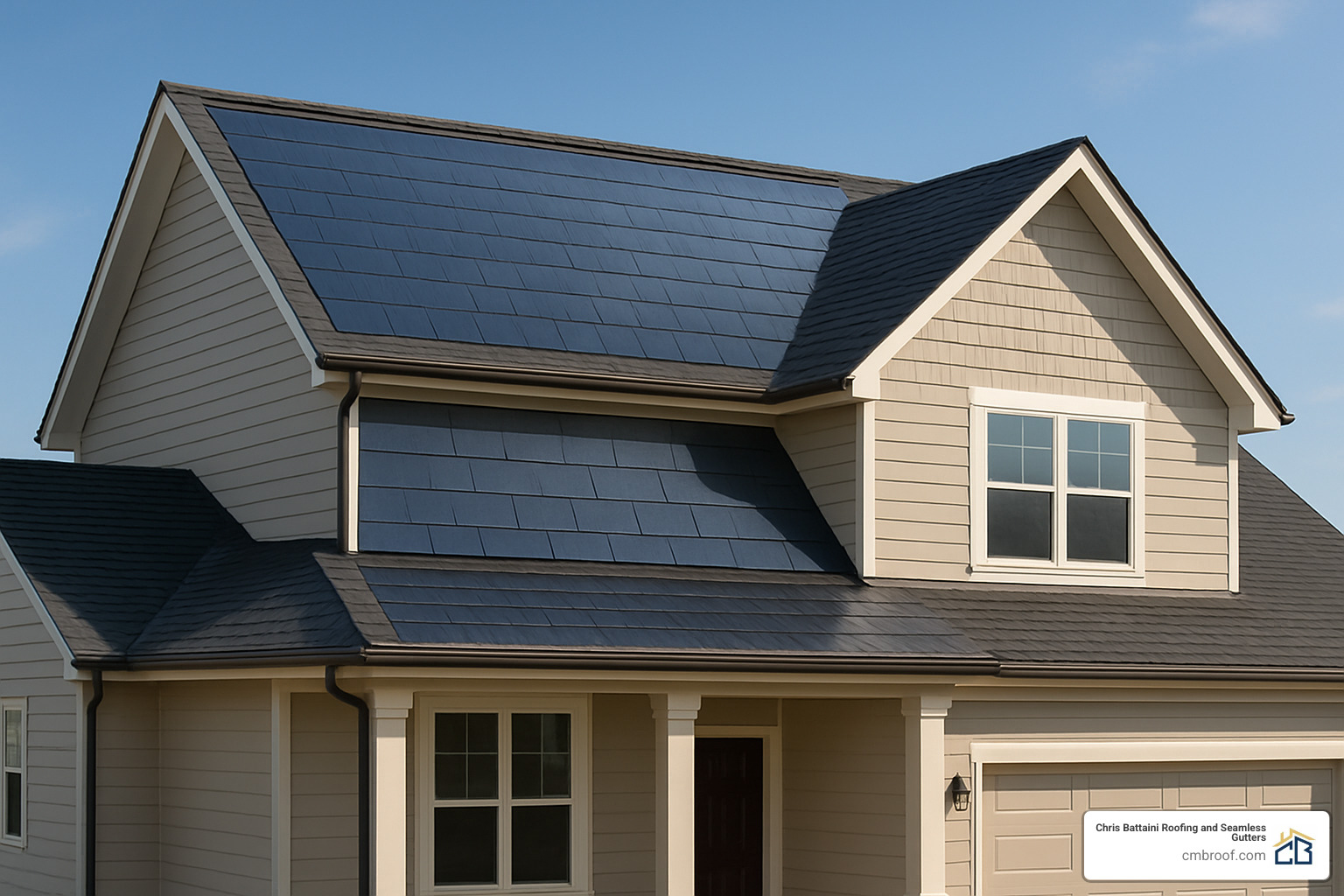
Synthetic slate gives you natural slate’s look at a fraction of the weight. It’s impact and weather-resistant with 30-50 year warranties. Composite cedar mimics wood’s beauty without fire risk or constant maintenance.
Solar shingles generate 13-63 watts per tile while blending seamlessly with your roof. Federal tax credits can offset much of the investment.
For flat areas, rubber membranes (EPDM) provide excellent waterproofing with 20-30 year lifespans.
Investment ranges: $49,500-$100,000 for synthetic slate, $51,000-$120,000 for synthetic wood, and $60,000-$150,000+ for solar systems.
These are average costs based on internet data and not actual costs for Chris Battaini Roofing and Seamless Gutters.
Learn about our Composite Cedar Shingles services.
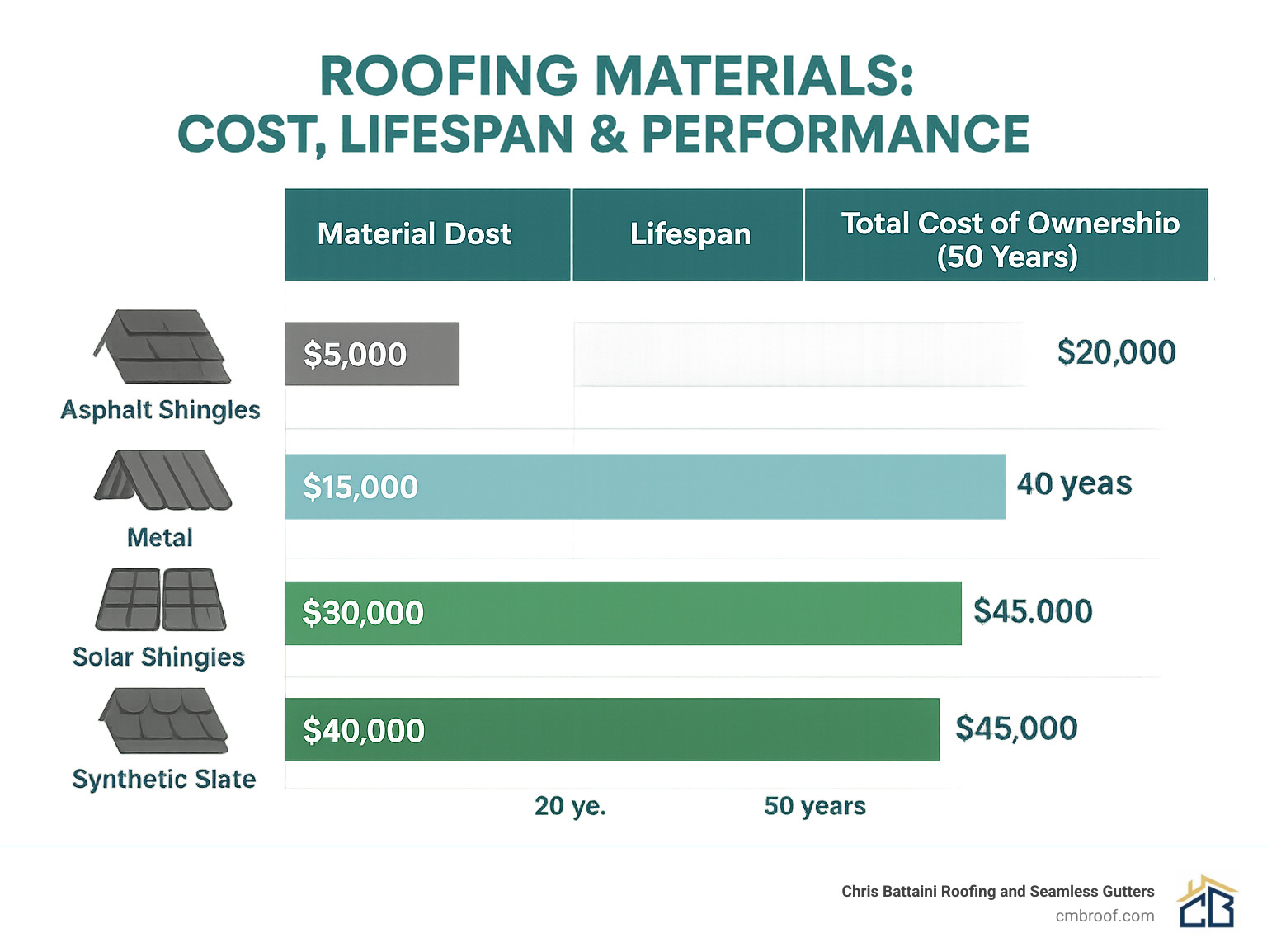
Cost, Lifespan & Performance at a Glance
Understanding the true cost of roofing materials requires looking beyond the initial price tag. The cheapest option upfront might cost more over time due to frequent repairs and earlier replacement.
Key Cost Factors:
1. Material Quality: Higher-grade materials cost more but last longer
2. Roof Complexity: Multiple angles, dormers, and features increase labor costs
3. Local Labor Rates: Vary significantly by region
4. Waste Management: Disposal of old materials adds to total cost
5. Structural Requirements: Some materials need additional support
Performance Comparison:
| Material | Initial Cost/Sq Ft | Lifespan | Maintenance | Energy Efficiency |
|---|---|---|---|---|
| 3-Tab Asphalt | $1.50-$4.50 | 15-25 years | Low | Fair |
| Architectural Asphalt | $2.00-$5.00 | 20-30 years | Low | Good |
| Metal (Standing Seam) | $10-$16 | 50+ years | Very Low | Excellent |
| Clay Tile | $10-$18 | 100+ years | Low | Excellent |
| Natural Slate | $10-$30 | 75-150+ years | Very Low | Good |
| Cedar Shake | $4.50-$14 | 20-40 years | High | Good |
| Synthetic | $4-$12 | 30-50 years | Low | Good-Excellent |
All costs are average internet data and not actual costs for Chris Battaini Roofing and Seamless Gutters.
Warranty Considerations:
– Material warranties: 25-50 years typical
– Workmanship warranties: Vary by contractor
– Algae protection: Up to 25 years on qualifying shingles
– Impact resistance: Class 4 ratings offer insurance discounts
Roofing Materials & Climate: Matchmaking Your Roof
Here in New England, Mother Nature doesn’t mess around. Your roofing materials need to handle everything from blizzards that dump three feet of snow to summer heat waves. Choose wrong, and you’ll be dealing with ice dams, wind damage, or sky-high energy bills.
Our Regional Weather Reality:
New England throws serious curveballs at your roof. Heavy snow loads can exceed 50 pounds per square foot. Ice dams form when snow melts and refreezes at your roof’s edge, potentially causing thousands in water damage. Hurricane-force winds can peel shingles right off, while rapid temperature swings make materials expand and contract constantly.
Snow Load Champions include metal roofing, which sheds snow excellently, and slate, which handles weight without breaking. Concrete tile also performs well under heavy loads with proper structural support.
For ice dam resistance, standing seam metal takes the crown with its smooth surface preventing ice buildup. Architectural shingles with proper ice barriers also perform well.
For wind resistance, metal panels handle winds up to 140+ mph. Stone-coated steel and concrete tile also excel in high-wind situations.
The EPA’s research on green roofs shows how roofing choices directly impact energy efficiency and environmental performance.
Best roofing materials for New England winters
Winter is when your roof earns its keep. Ice dams form when heat escapes through your roof, melting snow that refreezes at edges, potentially causing catastrophic water damage.
Standing seam metal is the winter warrior. Its smooth surface allows snow to slide off cleanly before ice dams form. Class 4 impact-rated shingles handle ice and hail damage far better than standard options.
The key isn’t just the material – it’s how everything works together. Steep-slope designs help shed snow naturally, while proper installation includes ice barriers, adequate ventilation, and sufficient insulation.
For metal roofs, snow guards over walkways are crucial safety features.
Energy-Efficient Roofing Materials for Hot Summers
New England summers regularly hit the 90s with high humidity. The right roofing materials can slash cooling costs and keep your home comfortable.
Light-colored metal roofing reflects up to 70% of solar heat back into the atmosphere. White or light-colored shingles work similarly – the lighter the color, the less heat absorbed.
Solar tiles generate power while providing shade. Concrete tiles offer thermal mass that naturally insulates by storing and slowly releasing heat.
Energy Star qualified roofing materials can reduce cooling costs by 10-15% during hot summers. Combined with proper attic ventilation and insulation, your roof becomes key to your home’s energy efficiency.
In New England, your roof needs year-round performance. Choose roofing materials that handle our unique climate challenges, and you’ll save money and headaches for decades.
Installation & Maintenance Essentials
Even the best roofing materials will fail if improperly installed or maintained. Installation quality matters just as much as material choice. We’ve seen expensive slate roofs leak within months due to poor installation, while properly installed asphalt shingles protect homes for decades.

Key Installation Decisions:
Tear-off vs. Overlay is often the first choice. While overlaying seems cheaper, it can hide deck problems and reduce roof lifespan. Most manufacturers void warranties on overlay installations.
Underlayment choices have expanded dramatically. Synthetic underlayment costs more than traditional felt but offers superior protection. Ice and water barriers at eaves aren’t optional in our climate.
Flashing and ventilation separate amateur from professional work. Proper flashing prevents 90% of roof leaks. Adequate ventilation prevents ice dams and extends shingle life.
Step-by-Step Roofing Materials Installation Process
Demo day begins with protecting your property and removing old materials, revealing the true deck condition.
Decking inspection checks every square foot for damage. Any damaged decking gets replaced – your entire roof system depends on a solid foundation.
Underlayment installation starts with ice and water barriers at eaves and valleys, then synthetic underlayment across the entire roof with proper overlap.
Field shingles go on following manufacturer specifications exactly. Proper nail placement and spacing aren’t suggestions – they’re warranty requirements.
Ridge cap installation completes the weather seal with ridge vents for crucial airflow.
Cleanup and safety wrap up each day. We use magnetic sweepers for nails and debris. Safety isn’t negotiable – OSHA-compliant fall protection and professional equipment protect our crew and your property.
Protect Your Investment: Warranties & Maintenance Schedules
Manufacturer warranties cover material defects for 25-50 years typically, but not installation problems. Workmanship coverage matters just as much.
We provide comprehensive workmanship warranties because we stand behind our installations.
Annual inspection schedules keep small problems from becoming big expenses. Spring inspections reveal winter damage, summer checks catch loose materials, fall preparation includes gutter cleaning, and winter monitoring watches for ice dams.
Moss control matters in our humid climate. Moss holds moisture against roofing materials, accelerating deterioration. Storm response protocols help minimize damage through prompt professional inspection.
The best maintenance investment? Keeping gutters clean. Clogged gutters cause ice dams, foundation problems, and premature roof failure.
When problems arise, quick action saves money. Our Roof leak repair guide walks you through emergency steps.
Regular maintenance extends material lifespan, maintains warranty coverage, and protects your investment.
Frequently Asked Questions About Roofing Materials
Let’s tackle the questions we hear most often from homeowners considering new roofing materials. These are the real concerns that keep people up at night – and rightfully so, since your roof is one of your biggest home investments.
How much does a new roof cost in 2024?
Here’s the honest answer: it depends on more factors than most people realize. The national average sits around $8,314, but we’ve seen everything from $5,500 for basic repairs to $50,000+ for premium installations.
Your biggest cost drivers include the material you choose (from $1.50 per square foot for basic shingles to $30+ for premium slate), your roof’s complexity, and local labor rates. A simple ranch house with a straightforward gable roof costs significantly less than a Victorian with multiple dormers, valleys, and architectural details.
Don’t forget about the “hidden” costs either. Waste disposal can add $500-$2,000 to your total, especially if you’re dealing with multiple layers of old materials. Structural repairs, permit fees, and seasonal demand all play a role in your final bill.
What really affects your price:
– Roof size and steepness – More square footage and steeper pitches mean higher costs
– Access challenges – Hard-to-reach roofs require more safety equipment and time
– Number of penetrations – Every chimney, vent, and skylight adds complexity
– Material quality – Premium materials cost more upfront but often save money long-term
These are average costs based on internet data and not actual costs for Chris Battaini Roofing and Seamless Gutters.
The key is getting a detailed estimate that breaks down material and labor costs separately. This helps you understand exactly what you’re paying for and where you might have options to adjust your budget.
How long do different roofing materials last?
This is where the “buy once, cry once” philosophy really applies. Roofing materials vary dramatically in lifespan, and the cheapest option upfront often costs more over time.
Basic asphalt shingles typically last 15-25 years in our New England climate. They’re affordable and reliable, but you’ll likely replace them at least twice during your time in the home. Premium architectural shingles push that to 25-30 years with better wind and impact resistance.
Metal roofing changes the game entirely. A quality standing seam installation can last 50-70 years with minimal maintenance. Yes, it costs more upfront, but you might never need another roof. The math often works in metal’s favor, especially when you factor in energy savings.
Tile and slate are the marathon runners of roofing. Clay and concrete tiles routinely hit 50-100+ years, while natural slate can protect your home for 75-150+ years. These materials often outlast the homes they’re protecting.
Wood shakes and synthetic materials fall somewhere in the middle. Cedar shake gives you 20-40 years of natural beauty but requires regular maintenance. Modern synthetic options offer 30-50 years with much less upkeep.
The lifespan multipliers that make the biggest difference are professional installation, regular maintenance, and prompt repairs. A well-maintained roof can exceed its expected lifespan by decades, while neglect can cut it short by years.
What signs show it’s time for roof replacement?
Some signs scream “emergency,” while others whisper “start planning.” Learning the difference can save you thousands and prevent water damage to your home’s interior.
Call us immediately if you see sagging roof sections, daylight through your roof boards, or multiple active leaks. These indicate structural problems that won’t wait for convenient timing. Missing shingles after storms, especially large sections, also need immediate attention.
Start planning replacement when you notice shingles curling or cupping, widespread granule loss, or cracked tiles. These are aging signs that give you time to research options and budget properly. Rising energy bills can also indicate your roof’s insulation and reflective properties are declining.
Age is just a number – but it’s an important one. If your asphalt shingles are approaching 20 years or your wood shake is showing significant weathering, it’s time for a professional assessment. Even if everything looks fine from the ground, problems often develop gradually.
The tricky part is that many apparent “replacement” needs can actually be handled with targeted repairs if caught early. Moss growth, minor leaks, or isolated damage might look scary but could be fixable at a fraction of replacement cost.
Our recommendation: annual professional inspections catch problems while they’re still manageable. It’s much easier to replace a few damaged shingles in spring than to deal with water damage during winter storms.
Your roof protects everything else you own. When in doubt, get a professional opinion rather than hoping problems will resolve themselves.
Chris Battaini Roofing and Seamless Gutters serves Berkshire, Hampden, Hampshire, and Franklin Counties in Massachusetts.
Conclusion
Selecting the right roofing materials for your home isn’t just about picking what looks nice or costs the least upfront. It’s about making a smart investment that will protect your family and your biggest asset for decades to come.
Throughout this guide, we’ve explored everything from budget-friendly asphalt shingles to century-lasting slate tiles. The truth is, there’s no single “best” material – only the best choice for your specific situation.
Your perfect roof balances four key factors: your budget, your home’s architectural style, our challenging New England climate, and your long-term goals. A young family might prioritize affordability with quality asphalt shingles, while empty nesters might invest in metal roofing that will never need replacement again.
Here’s what we’ve learned matters most: professional installation trumps everything else. The best materials in the world will fail if they’re not installed correctly. That’s why we bring owner-led, on-site service to every single project. When Chris Battaini shows up at your home, you’re getting decades of hands-on experience, not a sales pitch.
We’ve seen too many homeowners get burned by contractors who disappear after the check clears. Our comprehensive workmanship warranties mean we stand behind our work long after the last nail is driven. Because honestly, a roof is only as good as the team that installs it.
Energy efficiency isn’t just a buzzword – it’s money in your pocket every month. Whether you choose reflective metal roofing or high-performance synthetic materials, the right roof can significantly reduce your heating and cooling costs. In today’s economy, that matters more than ever.
Regular maintenance extends any roof’s lifespan significantly. We’ve seen well-maintained asphalt roofs outlast neglected premium materials. A little attention goes a long way toward protecting your investment.
If you’re dealing with storm damage, planning an upgrade, or just want an honest professional assessment, we’re here to help. No high-pressure sales tactics, no inflated estimates – just straight talk about what your home actually needs.
For comprehensive information about all our services, visit our residential roofing page.
Chris Battaini Roofing and Seamless Gutters serves Berkshire, Hampden, Hampshire, and Franklin Counties in Massachusetts.