-
10 Wendell Ave Extension Pittsfield, MA 01201
-
210 Columbia St., Lee, MA 01238

Educational facility roofing is more than a protective covering; it’s a critical investment impacting student safety, learning environments, and long-term operational costs. Schools face unique roofing challenges that demand specialized knowledge and strategic planning.
Quick Answer for Educational Facility Roofing:
As one facility manager noted, “A single roof leak can disrupt classes, campus events and more.” The stakes are high when protecting students, staff, and valuable educational resources.
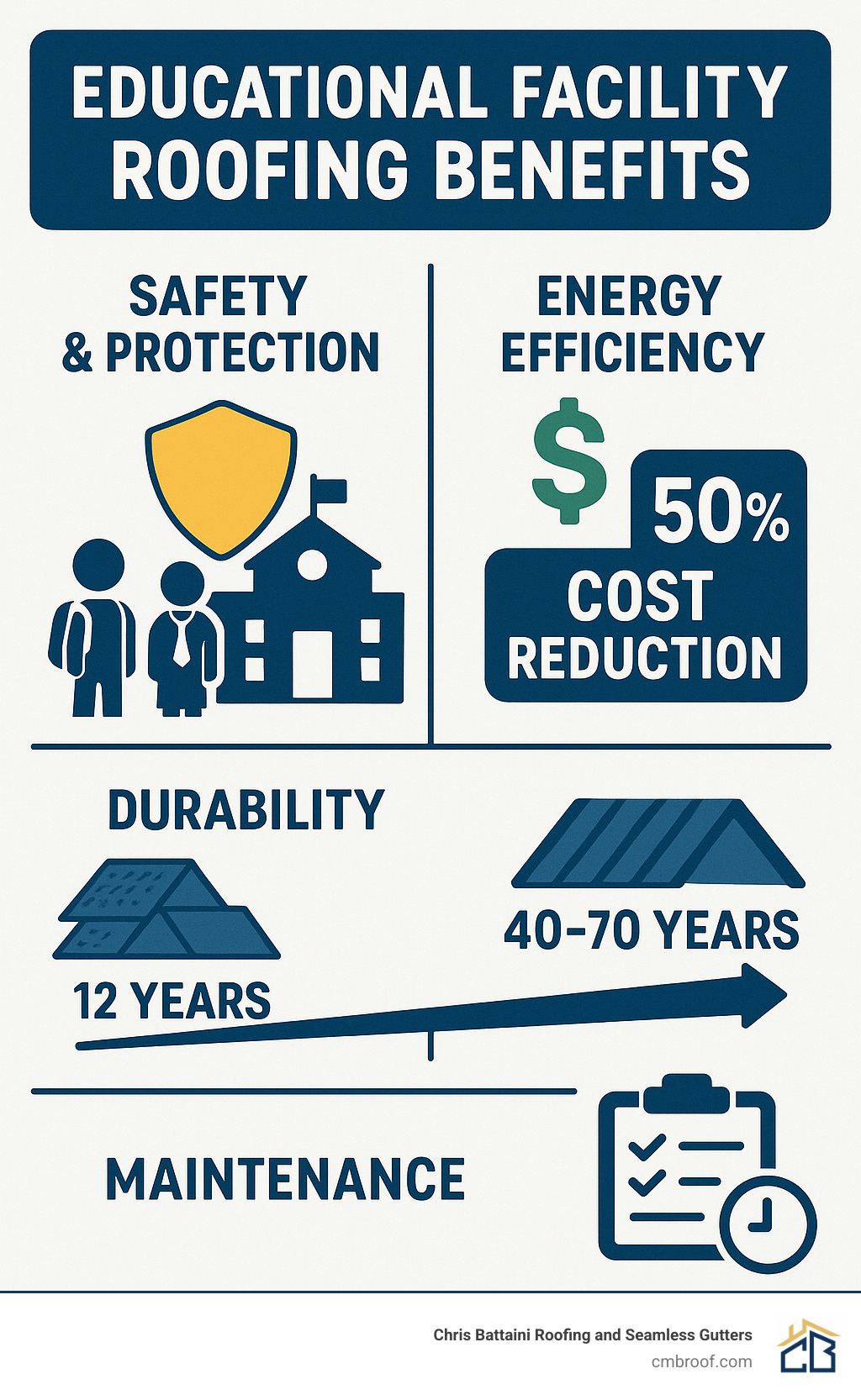
The right roofing system can reduce operational costs by as much as 50% while creating a safer, more comfortable learning environment. In contrast, poor roofing decisions lead to frequent repairs, energy waste, and potential safety hazards.
Educational facilities operate under strict budgets and unique scheduling constraints. They must balance durability with cost-effectiveness while ensuring minimal disruption, making informed roofing decisions absolutely critical.
Inadequate roofing extends beyond repair costs. Water damage can destroy technology, create mold problems that affect student health, and force classroom relocations. Metal roofing has saved educational facilities between 35% and 50% on upkeep and maintenance costs compared to traditional options.
Educational facility roofing terms to learn:
When you enter a bright, comfortable classroom, the roof overhead is performing one of the most critical jobs in the school. Educational facility roofing isn’t just about keeping the rain out—it’s the foundation of a well-functioning school.
A school’s roof is the ultimate multitasker. It protects students and teachers, keeps expensive equipment dry, and helps control energy costs. When a roof fails, the ripple effects are felt everywhere. Water damage can shut down computer labs, mold growth can make students sick, and emergency repairs can exhaust budgets.
A well-maintained roof does the opposite, creating a safe, healthy environment where learning can flourish. It protects valuable assets and gives everyone peace of mind. When problems arise, our Roof Leak Repair services get things back to normal quickly and effectively.
Structural integrity is paramount. A compromised roof creates real safety hazards, from falling debris to subtle risks like slip hazards from leaks. Moisture can weaken ceiling tiles or cause electrical problems that put everyone at risk.
A secure roof eliminates these worries. Students can focus on learning, teachers on teaching, and administrators on education instead of emergency repairs. Everything works better when you’re not worried about the ceiling.
Classroom air quality directly impacts how well students learn. Poor indoor air quality makes it harder to concentrate, and nothing compromises air quality faster than moisture.
When roofs leak, moisture infiltration creates the perfect breeding ground for mold and mildew. These health hazards can trigger allergies and asthma, causing students to miss school and struggle to focus. Mold prevention is about creating an environment where every student can breathe easily and learn effectively, ensuring uninterrupted learning.
School budgets are tight, and unexpected expenses can derail important plans. Protecting financial and physical assets is crucial for effective budgeting and managing operational costs.
Roof leaks are incredibly destructive. A single leak can destroy computers, projectors, library books, and even structural components. A quality roof not only prevents these disasters but can also save money. Studies show the right roofing system can reduce operational costs by as much as 50% through improved energy efficiency.
When schools avoid these unplanned expenditures, they can redirect funds toward protecting equipment and enhancing educational programs. It’s a perfect example of how smart facility management improves education.
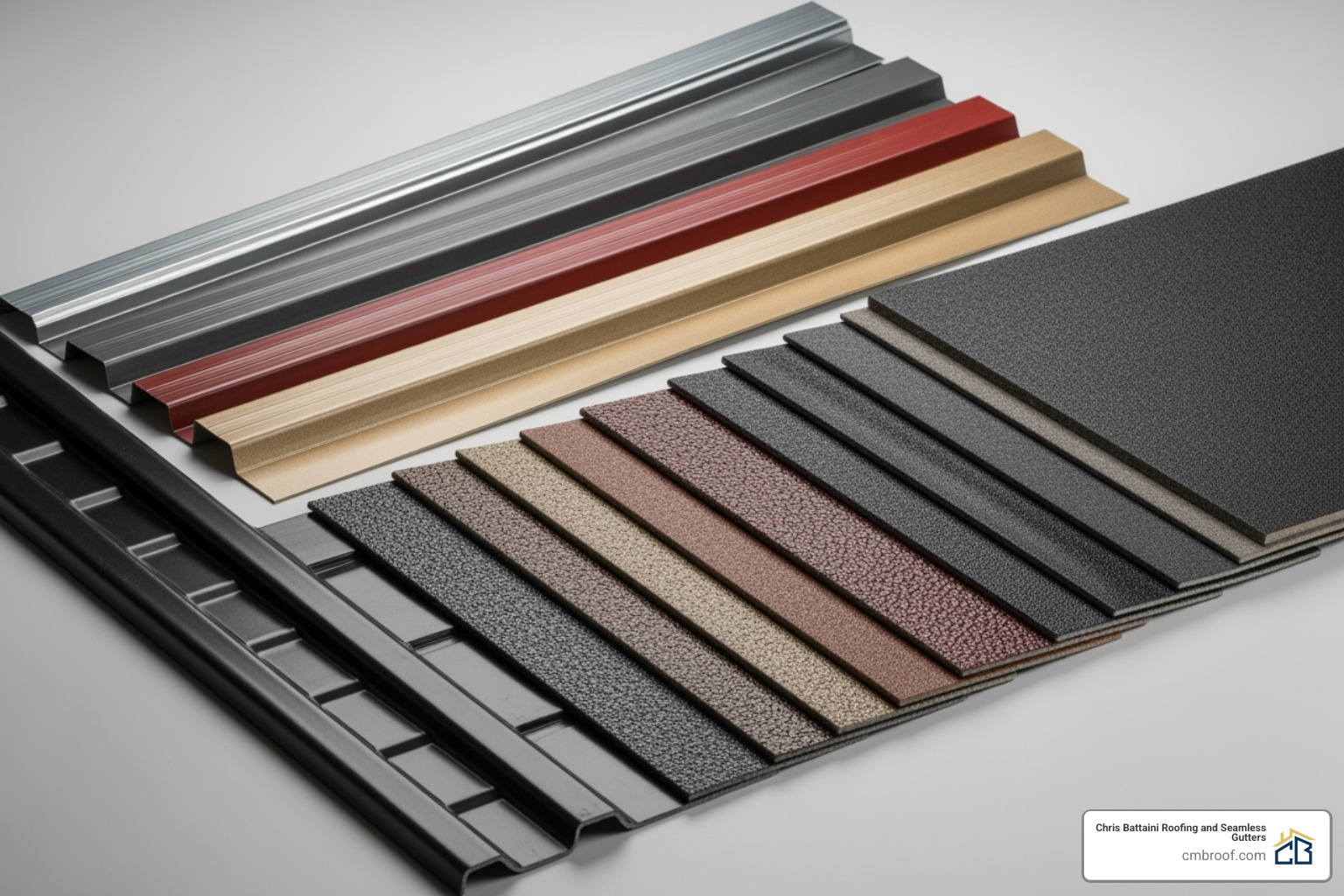
Selecting the right roofing system is a critical decision that will impact your maintenance budget, energy costs, and campus appearance for decades. Schools typically feature large Commercial Flat Roofing systems, though sloped roofs are also common.
Each roof type has unique considerations for material selection, durability, and aesthetics. There’s no one-size-fits-all solution, which is why understanding your options is crucial. Our expertise with various Roofing Materials helps guide you to the best choice for your facility.
Most schools use flat or low-slope roofing systems because they are practical and cost-effective for large buildings. These single-ply membranes have proven reliable in educational settings.
Thermoplastic Olefin (TPO) is popular for its energy efficiency. Its reflective surface makes it an excellent cool roof, resisting UV rays, chemicals, and punctures. While repairs are straightforward, seams can be weak points if not installed perfectly, and some older formulas could become brittle.
Ethylene Propylene Diene Monomer (EPDM), or “rubber roofing,” is the workhorse of flat roofing. This material handles weather extremes well, and its flexibility makes it resistant to hail and thermal shock. While its traditional dark color absorbs heat (white EPDM is available), its durability is a solid choice for harsh climates.
Polyvinyl Chloride (PVC) is known for its exceptional strength and resistance to chemicals, fire, and high winds, making it valuable for schools in severe weather areas. Its reflective colors contribute to energy efficiency, though the initial cost can be higher. While it can become brittle in extreme cold, it provides excellent long-term performance in most climates.
These systems typically last 20-30 years and are known for their UV resistance and ease of repair. You can learn more about the various Types of Flat Roofs available.
Note: The average cost for these systems can range from $4 to over $30 per square foot installed, depending on project complexity, location, and tear-off requirements. This is a general estimate based on industry data and not a quote.
For sloped roofs, the choice often comes down to balancing initial cost with long-term value.
Metal Roofing is the gold standard for durability, with a lifespan of 40-70 years. It offers superior fire and wind resistance and the highest ratings for hail impact. Metal’s 100% recyclability aligns with sustainability goals that 70% of prospective students consider important. Its versatility in colors and styles allows for architectural alignment, as shown by projects like a university library with a unique roof that used stone-coated metal to preserve historic architecture. While the upfront investment is higher, metal roofing can reduce operational costs by as much as 50% through energy savings and minimal maintenance.
Asphalt Shingles remain the cheapest roofing material upfront. However, this initial savings comes with trade-offs. Shingles often need replacement in as little as 12 years, leading to frequent, disruptive replacement cycles. Their shorter lifespan is also less compatible with solar panels, which can last for more than 25 years, complicating future sustainability initiatives.
When it comes to educational facility roofing, your roof is an active partner in your budget, working daily to save money and create a comfortable learning environment.
An energy-efficient roof is an investment that pays dividends. It lowers operational costs and demonstrates a commitment to sustainability—a factor that 70% of prospective students consider. Environmental consciousness is now an expectation.
The financial impact is remarkable. The right roofing choices can reduce operational costs by as much as 50%, freeing up budget dollars for educational programs, technology, or facility improvements that directly benefit students.
Studies show that 30% of a school’s energy is used inefficiently. The right roof can dramatically change this equation.
A reflective “cool roof” significantly lowers cooling costs by reflecting sunlight. These roofs use materials with high reflectivity and emissivity, bouncing solar heat away and releasing any absorbed heat quickly. This is like having a natural air conditioner built into your building.
Energy efficiency also requires proper insulation to prevent heat loss in winter and heat gain in summer. A well-insulated roof helps maintain stable indoor temperatures year-round, reducing the workload on your HVAC systems and leading to substantial energy savings.
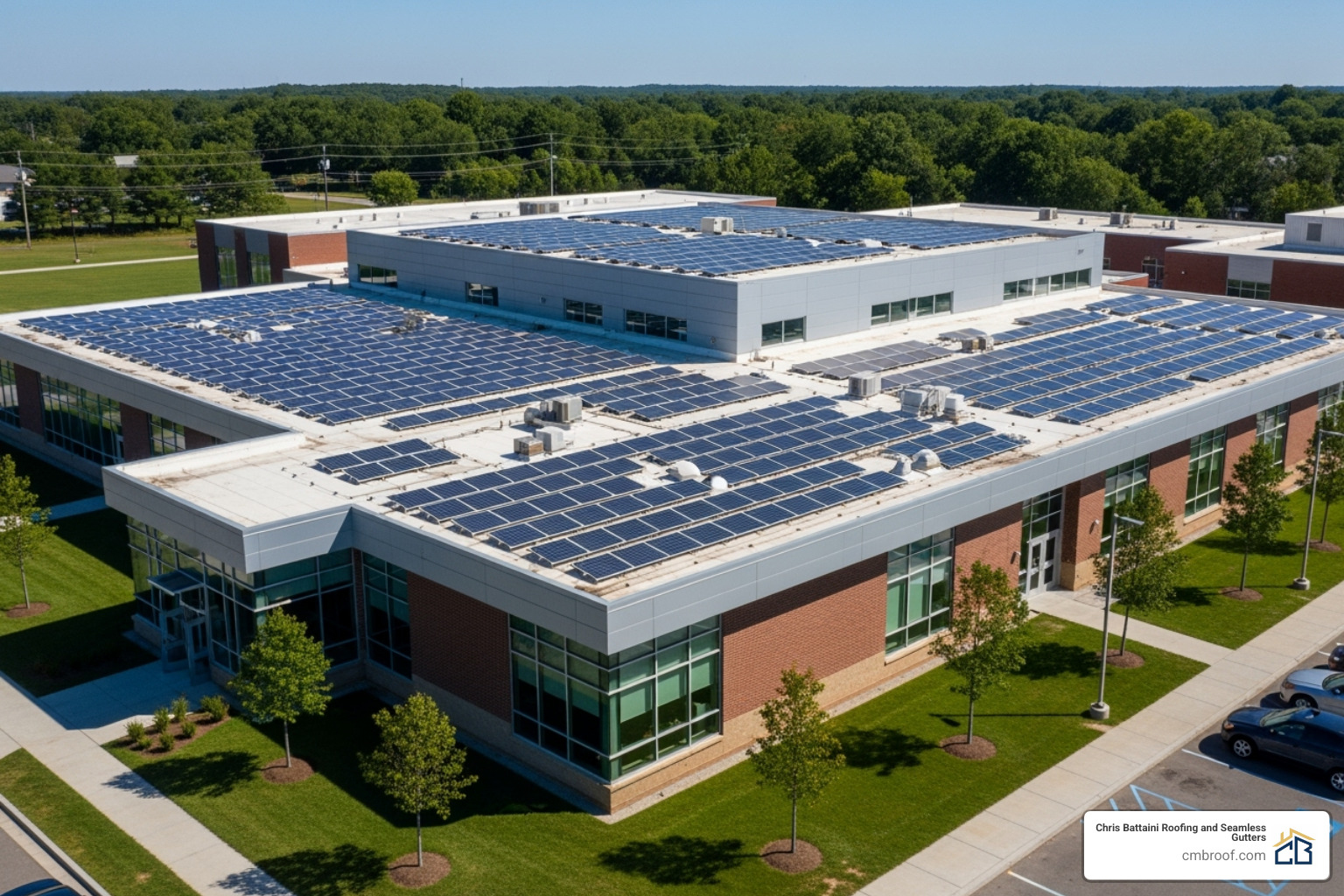
With over 7,300 schools and universities using solar power, solar readiness is a critical consideration for any roofing project.
Crucially, solar panels can last for more than 25 years. This means your roofing material’s lifespan must match or exceed your solar investment to avoid the costly process of removing panels just to replace a worn-out roof.
This is where long-lasting materials like metal roofing are an ideal partner for solar. With a 40-70 year lifespan, metal roofs can support solar panels for their entire productive life and beyond, ensuring your sustainable energy investment pays off for decades.
Planning for solar compatibility today gives your school the flexibility to adopt renewable energy when the time and budget are right. It’s a smart, long-term strategy that maximizes your roof’s return on investment.
Think of your educational facility roofing system like a car—it needs regular check-ups to run smoothly. A proactive approach to roof maintenance is the most effective way to maximize a roof’s lifespan and prevent small issues from becoming costly, disruptive emergencies.
A tiny roof issue can escalate quickly. Regular inspections and maintenance can significantly extend a roof’s life, protecting the school’s investment and ensuring long-term performance. Preventative maintenance is far less expensive than emergency repairs; fixing a small crack early costs a fraction of repairing a major leak and replacing damaged equipment later.
For optimal performance, school roofs should be professionally inspected at least twice a year, typically in the spring and fall. Spring inspections catch winter damage, while fall inspections prepare the roof for the harsh months ahead.
It’s also crucial to schedule an inspection after any major weather event, such as a hurricane or hailstorm. Our professional Roof Inspections are designed for early detection of issues like clogged drains, damaged flashing, or membrane punctures before they lead to costly repairs.
During these inspections, we look for subtle signs that untrained eyes might miss, like a lifted membrane edge or debris accumulation around drains. Catching these problems early can save you from major headaches and budget overruns.
Regular maintenance is the backbone of a long-lasting roof. Most maintenance tasks are straightforward and cost-effective when performed regularly.
Executing a roofing project on an active campus requires meticulous planning and a deep commitment to safety. The primary goals are to complete the project efficiently and on budget while ensuring the absolute safety of students and staff and minimizing disruption.
Educational facility roofing projects demand a contractor who understands the unique challenges of working in an active learning environment with students, tight schedules, and ongoing activities.
It’s crucial to work with a qualified contractor experienced with educational facilities. This requires a unique understanding of school schedules, safety protocols, and public budgets. Our Commercial Roof Installation services are designed to meet these specialized needs.
Contractor selection should focus on experience with schools. Look for contractors who understand background checks, insurance requirements, and strict safety guidelines around minors.
Budgeting for schools is unique. Many districts use cooperative purchasing agreements to streamline procurement. We are experienced in these frameworks and navigating local building codes to ensure a smooth, compliant project.
Project timing is critical. Summer breaks are ideal, but emergency repairs may require flexibility during the school year.
Student and staff safety is our top priority. Scheduling major roofing work during summer or school breaks is always the best practice to minimize disruption and maximize efficiency.
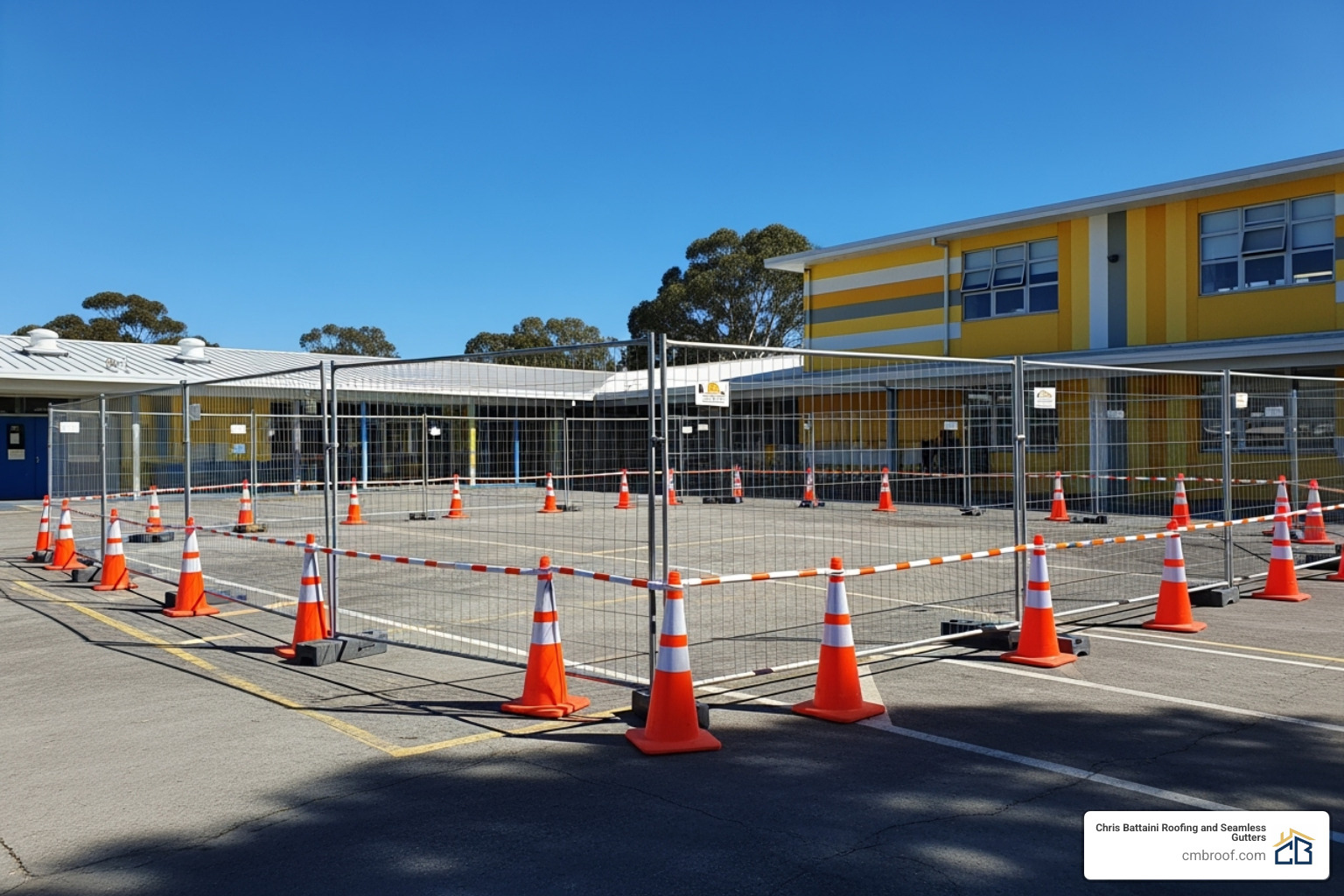
When work must occur during the school year, we implement strict safety protocols. This includes creating secure work zones with barriers and highly visible signage, controlled site access, and careful debris management.
We also prioritize noise control, scheduling louder activities outside of class hours whenever possible. Clear communication with school administration is essential. Our owner-led, on-site approach provides a direct line to decision-makers and ensures everyone is informed. The result is a project that protects your investment while keeping your educational environment safe and functional.
Educational facility roofing requires professional inspections at least twice a year, typically in spring and fall, to address seasonal wear and prepare for the months ahead. It’s also crucial to schedule an inspection immediately after a severe weather event like a hurricane or hailstorm to find hidden damage before it becomes a major problem.
While we prefer to work during summer break, we understand that emergencies and phased projects may require work during the school year. When this happens, safety is our top priority. We use secure work zones, schedule noisy work outside class hours, and maintain clear communication with staff. Our owner-led approach ensures immediate on-site decisions to minimize disruption.
Metal roofing systems are typically the most durable, lasting 40-70+ years with excellent resistance to fire, wind, and impact. It can also reduce maintenance costs by 35-50%. However, the “best” material depends on your building’s design, budget, and long-term goals.
For flat roofs, high-quality single-ply membranes like TPO and PVC are excellent choices. They typically last 20-30 years, offer great energy efficiency, and are often more budget-friendly upfront. We help you weigh all these factors to find the perfect roofing solution for your school’s unique needs.
Choosing, installing, and maintaining a roof for an educational facility is a significant responsibility. By prioritizing durable materials, energy efficiency, and proactive maintenance, you’re making a strategic investment that creates a safe, secure, and comfortable learning environment for decades.
A high-quality roof is not an expense—it’s a long-term investment in your school’s future. The right system pays dividends through reduced energy costs, fewer emergency repairs, and the peace of mind that comes from knowing your students and staff are protected.
While textbooks and technology become outdated, a well-chosen roof can serve your school for 40-70 years with proper maintenance, protecting multiple generations of students.
Educational facility roofing presents unique challenges that require specialized expertise. Navigating tight budgets, coordinating work around class schedules, and maintaining strict safety protocols requires a contractor who understands the education sector.
The stakes are too high to trust your school’s roofing needs to just anyone. Water damage, mold growth, and poor indoor air quality can affect student performance and health. You need a partner who understands these critical connections.
For expert guidance on your school’s roofing needs, explore our Commercial Roofing Services. The team at Chris Battaini Roofing and Seamless Gutters brings an owner-led, on-site commitment to every project, ensuring exceptional workmanship and peace of mind. We work closely with administrators and facility managers to develop solutions that fit your specific situation without compromising on quality or safety.
Chris Battaini Roofing and Seamless Gutters services Berkshire, Hampden, Hampshire, and Franklin Counties in Massachusetts.
Need a reliable roofer? CMB Roofing provides licensed, insured, and professional roofing services for homeowners and businesses.
We stand by a simple promise: Clear estimates. Quality workmanship. Clean job sites.
From roof repairs and full replacements to storm damage restoration, our team delivers dependable results with durable materials, expert installation, and complete site cleanup.