

Introduction to Modern Flat Roofing
Residential flat roofing has evolved from a purely commercial solution to a popular choice for modern homes, offering unique benefits that traditional sloped roofs simply can’t match. While flat roofs were historically created for commercial and industrial structures, residential applications have become increasingly common as materials and installation techniques have improved dramatically over the past two decades.
Key Features of Residential Flat Roofing:
- Not Actually Flat: Built with a slight slope of 1/8 to 1/4 inch per foot for proper drainage
- Multiple Material Options: TPO, EPDM, PVC, Modified Bitumen, and Built-Up Roofing systems
- Typical Lifespan: 20-30 years with proper installation and maintenance
- Cost Range: $4-$25+ per square foot (average costs based on internet data, not actual costs for Chris Battaini Roofing and Seamless Gutters)
- Key Benefits: Usable rooftop space, easier solar panel installation, lower initial costs
- Main Challenges: Requires proper drainage design and regular maintenance
The biggest misconception about flat roofs? They’re not truly flat at all. Modern residential flat roofs are built with a carefully engineered slope – typically between 5 and 15 degrees – to ensure water flows efficiently into drainage systems rather than pooling on the surface.
Today’s flat roofing materials carry warranties of up to 20 years and can last even longer with proper care. Whether you’re drawn to the sleek, modern aesthetic, the potential for rooftop gardens and patios, or the cost-effectiveness compared to complex sloped systems, understanding your options is crucial for making the right choice.
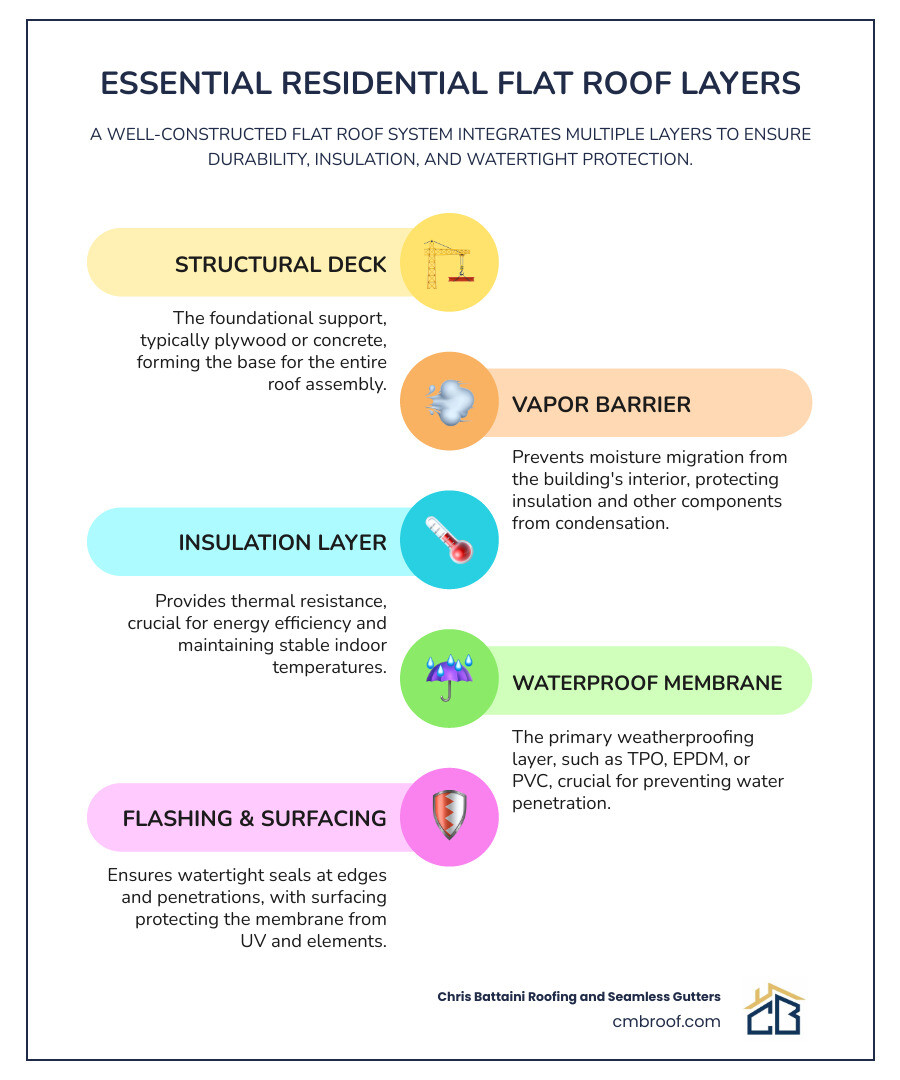
Basic residential flat roofing vocab:
Why Choose a Flat Roof? Weighing the Pros and Cons
Thinking about a flat roof for your home? You’re not alone! More homeowners are finding that residential flat roofing offers some pretty compelling advantages, especially if you love modern design or dream of having extra outdoor space.
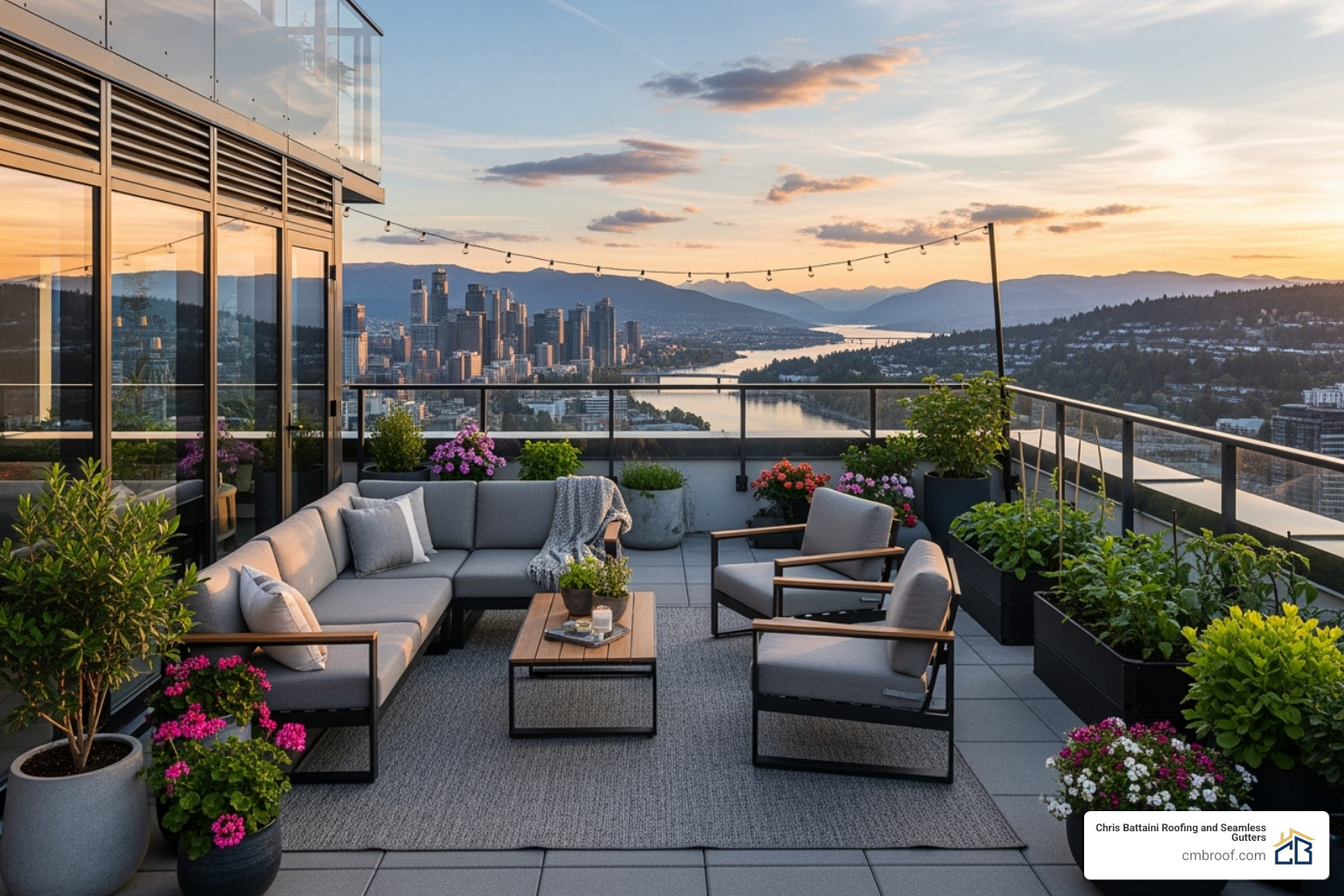
Let’s be honest – the biggest draw of a flat roof is the usable space it creates. Picture this: your morning coffee on a rooftop deck, a small garden where you can grow herbs and vegetables, or even just a quiet spot to watch the sunset. That’s square footage you simply can’t get with a traditional sloped roof, and it doesn’t add to your home’s footprint on the ground.
From a cost-effectiveness standpoint, flat roofs often make your wallet happier upfront. The simpler framing requirements and streamlined installation process typically mean lower labor costs. Plus, the materials themselves – those large membrane sheets – can cover a lot of ground quickly, which experienced roofers appreciate.
Speaking of installation, it’s generally easier for professionals to work on. No complex angles or tricky valleys to steer – just a straightforward surface that can be tackled efficiently. This simplicity often translates to faster project completion times.
If you’re considering solar panels, a flat roof is practically rolling out the red carpet for them. Solar installations are much more straightforward on flat surfaces, and panels can be positioned at the optimal angle for maximum energy production. Plus, they’re often less visible from street level, maintaining your home’s clean aesthetic while you’re solar panel friendly and saving on energy costs.
When it comes to maintenance access, flat roofs win hands down. Need to clean gutters, inspect for damage, or make minor repairs? Walking on a flat surface is infinitely safer and easier than scrambling around on a steep slope.
But let’s talk reality – residential flat roofing isn’t all sunshine and rooftop gardens. There are some genuine challenges you need to consider.
The biggest concern is the potential for leaks. Water naturally wants to find its way in, and when it sits on a surface longer (even with proper drainage), it has more opportunities to find weak spots. This isn’t meant to scare you, but it’s why proper installation and maintenance are absolutely critical.
Water pooling risk is closely related. Even though your flat roof will have a slight slope, clogged drains or inadequate drainage design can lead to standing water. When water sits for more than 48 hours after rainfall, it can start breaking down your roofing membrane and add serious weight stress to your home’s structure.
Here’s the truth about lifespan: flat roofs can last just as long as sloped roofs, but they have a shorter lifespan without maintenance. Skip those regular inspections and cleaning sessions, and you’re asking for trouble. According to home inspection experts, regularly inspect the integrity of the top layer of protection. Stay on top of maintenance, though, and you’ll get decades of reliable service.
Weather susceptibility varies by location, but flat roofs can be more vulnerable to heavy snow loads and severe weather. In areas with harsh winters or frequent storms, your flat roof needs to be designed and built with these conditions in mind.
The bottom line? Residential flat roofing can be an excellent choice when properly installed and maintained. The key is working with experienced professionals who understand local climate challenges and building codes.
More info about Flat Roofing services.
A Deep Dive into Residential Flat Roofing Materials
Selecting the perfect material for your residential flat roofing system can feel overwhelming, but it’s honestly one of the most important decisions you’ll make for your home. Think of it this way – your roof material determines everything from how long your roof will last to how much you’ll spend on energy bills each month.
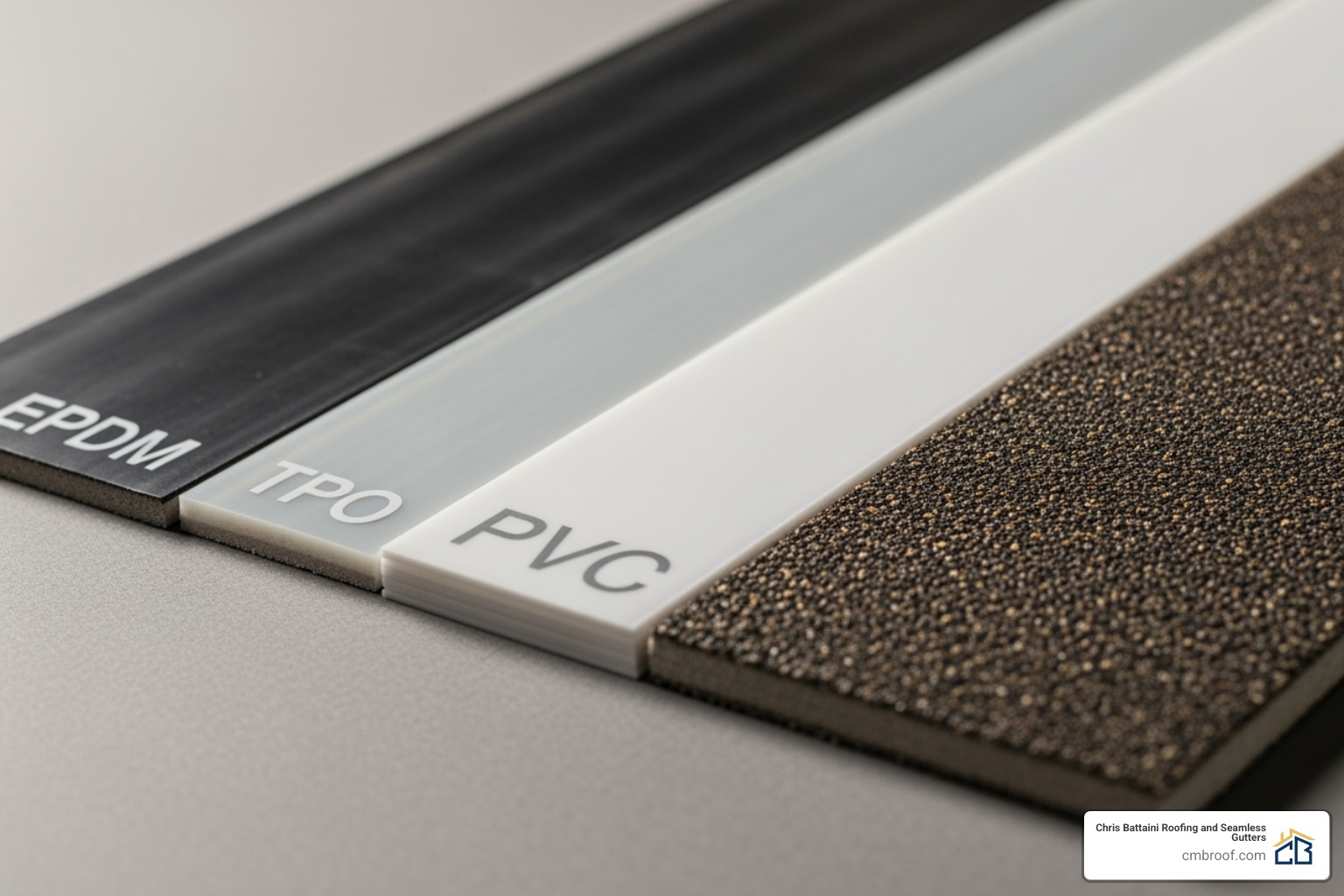
Before diving into specific materials, let’s talk about what really matters when making your choice. Climate is your biggest consideration – if you live in an area with brutal summers, you’ll want something that reflects heat. If you’re dealing with harsh winters and freeze-thaw cycles, flexibility becomes crucial.
Budget plays a huge role too, but here’s the thing – don’t just look at upfront costs. That cheaper option might cost you more in repairs and energy bills down the road. Average costs based on internet data range anywhere from $4 to $25+ per square foot, but remember, these aren’t actual costs for Chris Battaini Roofing and Seamless Gutters.
Aesthetics might seem less important for a flat roof, but if your roof is visible from the street or you’re planning to use it as outdoor space, the look definitely matters.
| Material | Typical Lifespan (Years) | Average Cost (per sq. ft. installed) | Key Features & Considerations |
|---|---|---|---|
| TPO | 20-30 | $6-$18+ | Energy-efficient white membrane, excellent UV reflection, heat-welded seams, great for hot climates, lightweight installation |
| EPDM | 20-50 | $4-$15+ | Black rubber membrane, incredibly flexible, handles temperature changes well, proven track record, easiest repairs |
| PVC | 20-30+ | $7-$20+ | Chemical and fire resistant, strongest seam welds, excellent for commercial kitchens or pools, higher upfront cost but great durability |
| Modified Bitumen | 20-30 | $5-$16+ | Polymer-improved asphalt, torch-down or peel-and-stick application, excellent puncture resistance, familiar to most contractors |
Single-Ply Membranes: TPO, EPDM, and PVC
Single-ply membranes are like the modern workhorses of residential flat roofing. They’re installed in large sheets, which means fewer seams and fewer potential leak points – always a good thing!
TPO roofing has become incredibly popular, and for good reason. That bright white surface reflects sunlight like nobody’s business, which can seriously cut your cooling costs during hot summers. The material is also surprisingly durable and handles UV exposure beautifully. Installation involves heat-welding the seams together, creating watertight bonds that can last decades.
EPDM roofing is the tried-and-true option that’s been protecting homes for over 50 years. This black rubber membrane might not reflect heat like TPO, but it’s incredibly flexible and forgiving. When temperatures swing from freezing to scorching, EPDM just rolls with it. Plus, if you ever need repairs, they’re typically straightforward and affordable.
PVC roofing is the premium choice, especially if you have specific challenges like chemical exposure or fire resistance requirements. The seam strength on PVC is best – those welds are often stronger than the membrane itself. While it costs more upfront, many homeowners find the peace of mind worth every penny.
More info about Flat Roofing Materials.
Multi-Ply Systems: BUR and Modified Bitumen
Sometimes, more layers really do mean better protection. Multi-ply systems have been protecting buildings for over a century, and they’re still going strong.
Built-Up Roofing (BUR) is the classic “tar and gravel” roof your grandfather might remember. Multiple layers of bitumen and reinforcing fabric create an incredibly tough, puncture-resistant surface. The gravel on top provides UV protection and helps with fire resistance. While installation takes longer, the result is a roof that can handle serious abuse.
Modified Bitumen takes traditional asphalt and boosts it with polymers, creating a material that’s both flexible and durable. You’ll typically see this installed with a torch-down method (don’t worry – professional installation is key here) or as peel-and-stick sheets. The polymer modification helps it handle temperature extremes much better than old-school asphalt.
Alternative Flat Roof Options
Want to think outside the box? Metal roofing can work beautifully on flat applications, offering incredible durability and a sleek, modern look. While the upfront cost is higher, metal roofs can last 40+ years with minimal maintenance.
Green roofing is gaining popularity for good reason. A living roof provides amazing insulation, helps manage stormwater, and creates habitat for wildlife. The environmental benefits are impressive, though the structural requirements and maintenance needs are definitely more complex.
More info about Metal Roofing.
The bottom line? There’s no single “best” material for every situation. The perfect choice depends on your specific home, climate, budget, and priorities. That’s why working with experienced professionals who understand your local conditions makes all the difference in getting a roof that’ll protect your home for decades to come.
Conclusion
Well, we’ve certainly covered a lot of ground today, haven’t we? From busting the myth of the “truly flat” roof to exploring the exciting potential of rooftop living spaces, it’s clear that residential flat roofing offers a world of possibilities for modern homeowners. We’ve weighed the many advantages, like cost-effectiveness and solar panel readiness, against the considerations of drainage and maintenance. And we’ve taken a deep dive into the fantastic range of materials available, understanding how each one can best suit your home, climate, and budget.
The beauty and longevity of your flat roof come down to two very important things: getting it installed right the first time, and giving it the loving care it deserves over the years. This isn’t just about choosing a material; it’s about investing in a system that protects your most important asset – your home.
For our wonderful neighbors in Berkshire, Hampden, Hampshire, and Franklin Counties in Massachusetts, you don’t have to steer these choices alone. Partnering with an experienced and trusted contractor like Chris Battaini Roofing and Seamless Gutters means you’re getting more than just a roof; you’re getting peace of mind. With our owner-led, on-site service and exceptional workmanship warranties, we’re committed to ensuring your residential flat roofing is not only installed correctly but built to last for decades to come.
Ready to explore the perfect flat roofing solution for your home?
Explore our residential roofing services.
