

Understanding Residential Flat Roofs
Many homeowners have questions about residential flat roof construction. Are they truly flat? Are they prone to leaks? Why choose one for a home?
Here’s a quick overview:
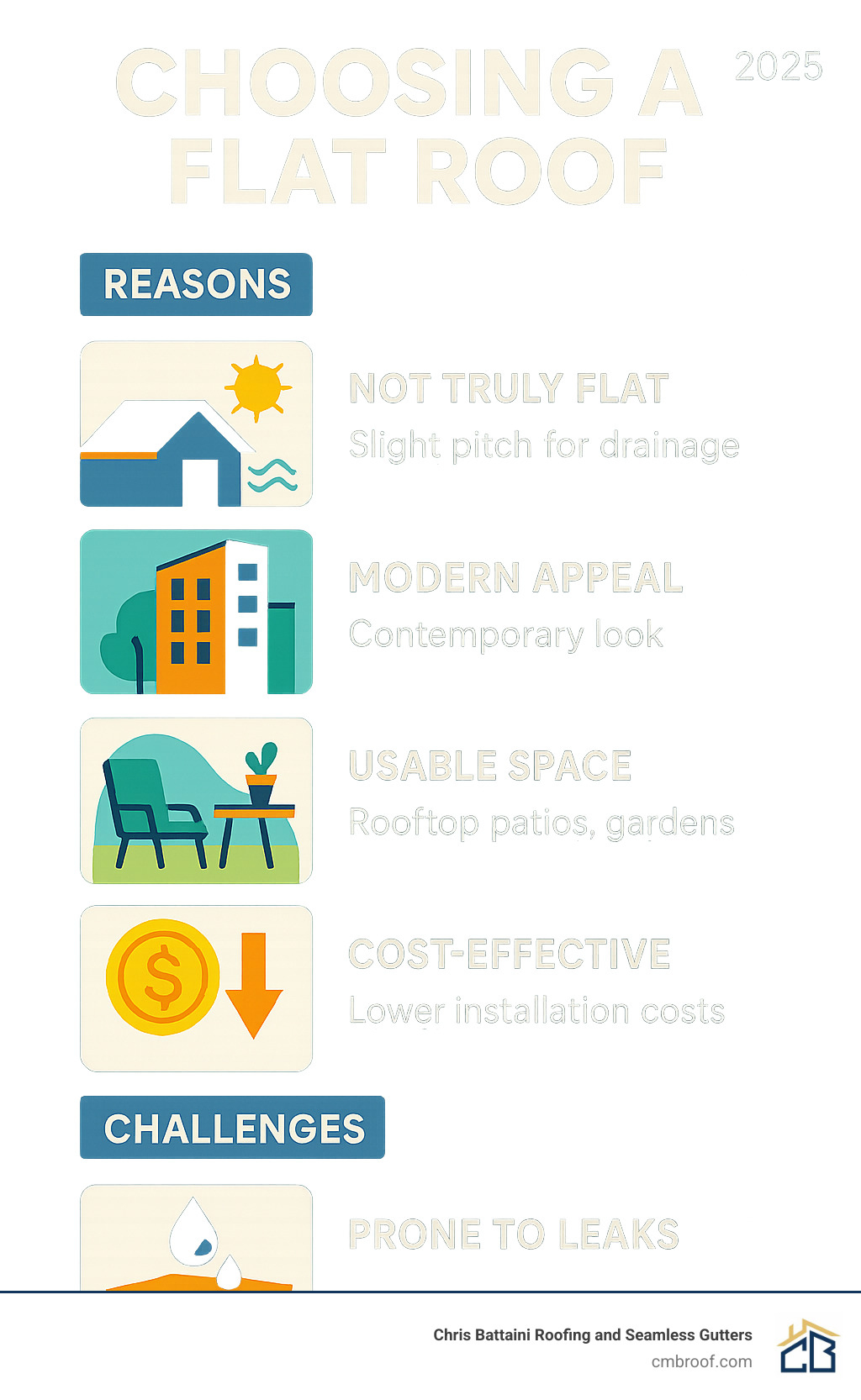
- Not Truly Flat: Despite the name, flat roofs have a slight pitch (typically 1/8 inch to 15 degrees per foot) to ensure proper water drainage and prevent standing water.
- Modern Appeal: Flat roofs are a hallmark of modern architecture, offering clean lines and a contemporary look.
- Usable Space: A key advantage is the potential for extra outdoor living space, such as rooftop patios, gardens, or a platform for solar panels.
- Cost-Effective: Flat roofs can be less expensive to install than pitched roofs, generally ranging from $4 to $13 per square foot for basic materials.
- Material Variety: Materials like Built-Up Roofing (BUR), Modified Bitumen, and EPDM rubber offer varying lifespans and performance.
While historically common on commercial buildings, advances in materials have made flat roofs a durable and practical choice for homes. This guide covers everything from types and components to maintenance and common questions.
Residential flat roof construction terms to know:
Key Components and Principles of Residential Flat Roof Construction
A roof is a vital system that protects your home. In residential flat roof construction, this system is composed of several key layers, each playing a crucial role in managing heat, water, and airflow.
A typical flat roof system includes:
- Load-Bearing Structure / Joists: These timber supports are the skeleton of the roof, typically spaced 16-24 inches apart. They must be strong enough to support the roof’s weight plus environmental loads like snow.
- Roof Deck: A layer of plywood or OSB (Oriented Strand Board) is placed over the joists, creating a smooth, solid surface for the subsequent roofing layers.
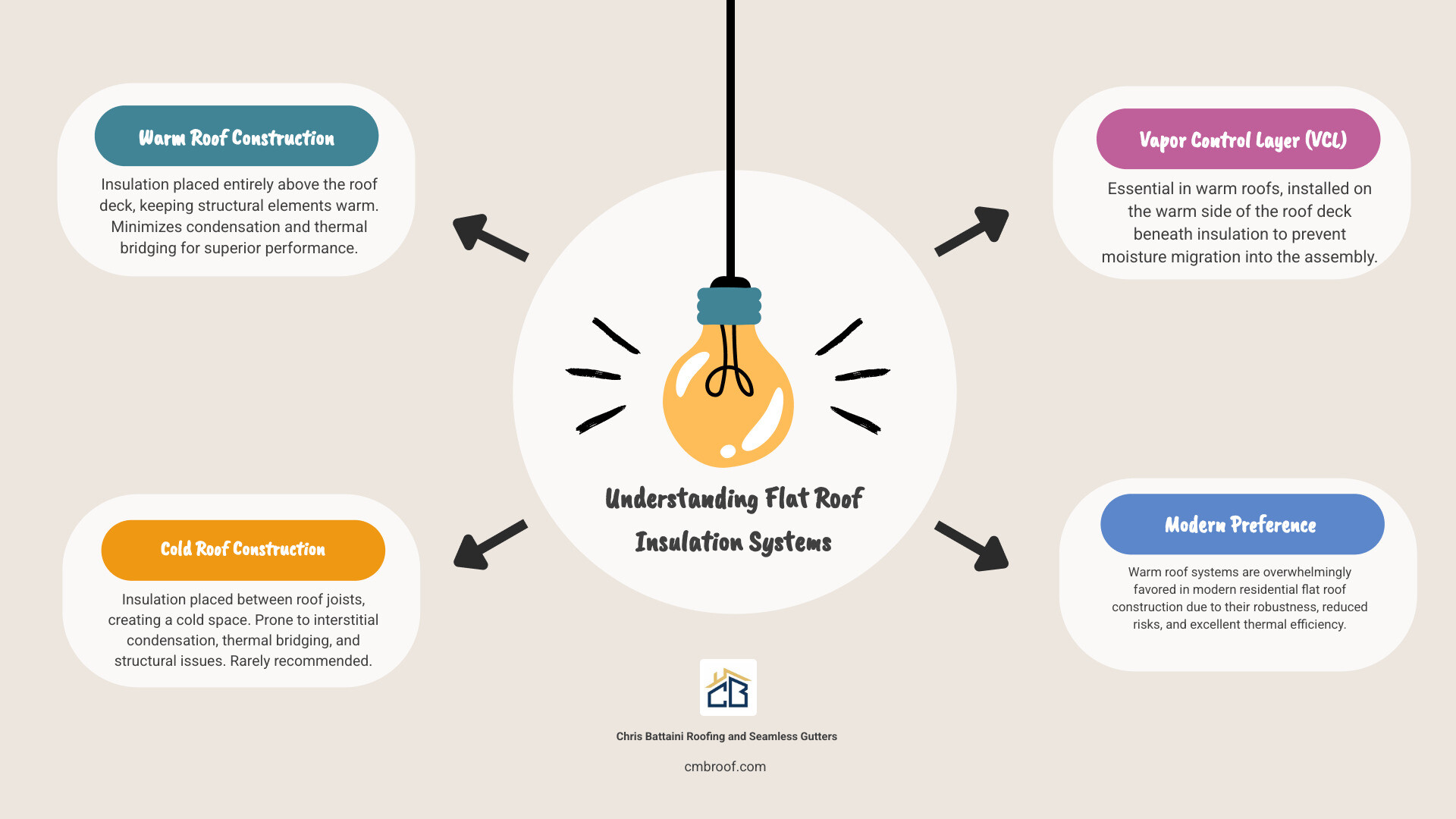
- Vapor Control Layer (VCL): Placed on the warm side of the insulation, the VCL prevents warm, moist interior air from reaching the colder roof structure, which would cause condensation and potential damage.
- Insulation: This layer provides thermal resistance (R-value), keeping your home comfortable, reducing energy bills, and offering some fire and sound protection. Its placement defines the type of roof system.
- Waterproof Membrane: The outermost layer and primary defense against rain, snow, and ice. Various materials are available, each with unique properties and installation methods.
- Drainage Systems: Flat roofs are not perfectly flat; they have a slight slope (at least 1/8 inch per foot) to direct water away and prevent ponding. This is crucial for the roof’s longevity. Common systems include:
- Scuppers: Openings in the low edges of the roof that let water flow into downspouts.
- Internal Drains: Drains located within the roof area that connect to internal pipes.
Other components like metal flashing, sealants, and protective coatings work together to ensure the roof is watertight and durable.
Understanding Warm vs. Cold Flat Roof Systems
One of the most important decisions in residential flat roof construction is the insulation strategy, especially in colder climates like Berkshire County, MA, and Southern Vermont.
- Cold Roof Construction: An older method where insulation is placed between the roof joists. A ventilation gap is left above the insulation, but it’s often insufficient, leading to condensation within the roof structure. This design is not recommended, especially in cold climates, due to the high risk of moisture damage.
- Warm Roof Construction: The modern, preferred method. Insulation is placed entirely above the roof deck, keeping the entire structure warm and dry. This design significantly reduces condensation risk and is highly energy-efficient. A vapor control layer is installed below the insulation.
- Inverted Roof Construction: A variation of the warm roof where insulation is placed on top of the waterproof membrane, often held down by gravel or pavers. This protects the membrane from UV rays and physical damage, extending its life. It’s ideal for rooftop patios but can make leak detection more difficult.
For any design, achieving the proper R-value (a measure of thermal resistance) is key. In some hybrid systems, it’s critical that at least two-thirds of the insulation’s R-value is on the outside of the roof deck to prevent condensation.
Types of Flat Roofing Materials and Their Application
Choosing the right material is a cornerstone of effective residential flat roof construction. Modern advancements offer a variety of durable and efficient options, each with its own characteristics and application methods.
For more detailed information on various roofing materials, you can explore resources like this guide on roofing materials.
Here’s a comparative overview of common residential flat roof materials:
| Material Type | Avg. Cost* (per sq. ft.) | Lifespan | Key Advantage |
|---|---|---|---|
| Built-Up Roofing (BUR) | $6 – $30 | 15-30 years | Durability, UV protection, proven track record |
| Modified Bitumen (Mod-Bit) | $19 – $40 | 20-30 years | Flexibility, puncture resistance, easier installation |
| Single-Ply Membrane (EPDM) | $11 – $50 | 25-50 years | Longest lifespan, flexibility, easy repair |
| Single-Ply Membrane (TPO/PVC) | $11 – $40 | 20-30+ years | Energy efficiency (white), recyclability, aesthetics |
Note: These are average costs based on internet data and not actual costs for Chris Battaini Roofing and Seamless Gutters. Prices can vary significantly based on material quality, roof complexity, regional labor rates, and specific project requirements. We always provide a detailed, customized estimate for your project.
Built-Up Roofing (BUR)
Built-Up Roofing (BUR), or “tar and gravel,” is a traditional, time-tested flat roofing material.
- Construction: Consists of multiple alternating layers of bitumen (asphalt) and reinforcing fabrics, applied hot. A top layer of gravel protects the membrane from UV rays and damage.
- Advantages: Highly durable, puncture-resistant, and offers excellent waterproofing due to its multiple layers and protective gravel surface.
- Disadvantages: Heavy, requiring a robust roof structure. Installation is slow, messy, and produces strong odors.
- Lifespan: 15 to 30 years with proper maintenance.
Modified Bitumen (Mod-Bit)
Modified Bitumen (Mod-Bit) is an evolution of BUR, adding polymers for improved flexibility and performance.
- Construction: Asphalt-based rolls modified with polymers (like SBS or APP) for flexibility. Applied via a torch-down method (heating the material to adhere it) or as a self-adhering (cold-applied) system.
- Advantages: More flexible and lighter than BUR, making it resistant to cracking. It offers good puncture resistance and is quicker to install.
- Disadvantages: Torch-down application requires skilled professionals due to fire risk. Self-adhering systems need specific temperatures for proper adhesion.
- Lifespan: Typically 20 to 30 years.
Single-Ply Membrane Roofing (EPDM, TPO, PVC)
Single-ply membranes are a modern advancement in residential flat roof construction, offering lightweight and durable solutions with fewer seams.
- EPDM (Ethylene Propylene Diene Monomer):
- Construction: A synthetic rubber membrane applied in large sheets to minimize seams. It is either fully adhered with bonding adhesive or mechanically fastened, with seams sealed using specialized tape.
- Advantages: Exceptionally durable, flexible, and resistant to UV radiation and hail. It is easy to repair and considered an eco-friendly option. More information is available at EPDM roofing here.
- Disadvantages: Standard black EPDM absorbs heat, though reflective white versions are available.
- Lifespan: Often the longest-lasting option, frequently 25 to 50 years.
- TPO (Thermoplastic Polyolefin):
- Construction: A single-ply thermoplastic membrane installed by mechanical fastening or adhesion. Seams are heat-welded to create a single, continuous membrane.
- Advantages: Highly energy-efficient (especially in white), reflecting sunlight to reduce cooling costs. It is puncture-resistant, recyclable, and available in various colors.
- Disadvantages: As a newer material, its long-term performance data is still being established. Requires specialized equipment for installation.
- Lifespan: Generally 20 to 30 years or more.
- PVC (Polyvinyl Chloride):
- Construction: A thermoplastic membrane similar to TPO, installed with heat-welded seams for a strong, watertight bond.
- Advantages: Excellent resistance to fire, chemicals, and punctures. The heat-welded seams are very strong, and the material is highly reflective for energy efficiency.
- Disadvantages: Can be more expensive than EPDM or TPO. Some formulations have raised environmental concerns.
- Lifespan: Typically 20 to 30 years or more.
Maintenance, Longevity, and Professional Installation
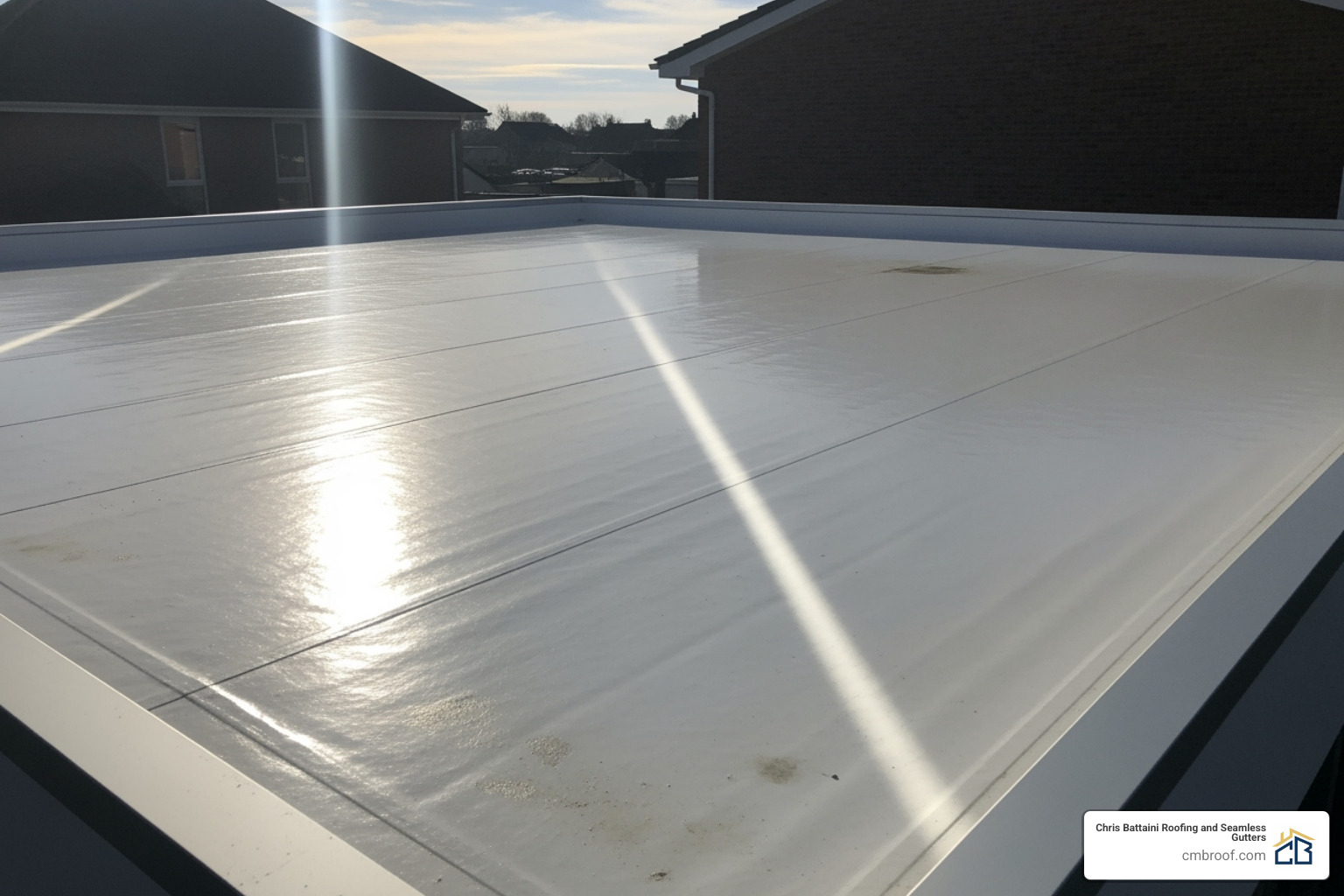
Regular maintenance is crucial for the longevity of your residential flat roof construction. We recommend biannual inspections (spring and fall) and checks after major storms to catch minor issues before they become significant problems. Proactive care saves you from major headaches and costly bills. For more details, see our flat roofing services.
For new installations or major repairs, professional installation is highly recommended. Flat roofs have specific requirements for slope, drainage, and sealing that demand expertise. A skilled team ensures your roof is installed correctly for maximum longevity, and professional work typically includes a warranty for your peace of mind.
Maintenance Best Practices for Residential Flat Roof Construction
Proactive maintenance is key to a long-lasting flat roof. Here is a seasonal checklist:
- Clear Debris: Regularly remove leaves, branches, and dirt that can trap moisture and degrade roofing materials.
- Check Drainage: Ensure drains and scuppers are completely clear of blockages to prevent standing water.
- Inspect Membrane: Look for cracks, blisters, punctures, or tears. Pay close attention to seams and flashing around chimneys, skylights, or vents.
- Verify Sealants: Check that all sealants are intact and not cracked, shrunken, or hardened.
- Address Ponding Water: Water that remains for more than 48 hours after rain indicates a drainage problem that needs immediate attention.
- Look for Interior Signs: Check for water stains on ceilings or dampness in the attic space, which could indicate a leak.
- Repair Promptly: Any damage found—such as punctures, tears, or separated seams—should be repaired immediately to maintain a watertight seal.
For a comprehensive look at what a roof inspection entails, this guide from NACHI is a useful resource. If you suspect a leak, learn more about our roof leak repair services here.
Understanding Flat Roof Costs and Lifespan
The cost of residential flat roof construction varies based on material, roof size and complexity, labor rates, and insulation needs. If an old roof must be removed, that will also be a factor.
Disclaimer: The prices shared here are general averages based on online data and are not actual quotes from Chris Battaini Roofing and Seamless Gutters. We provide a detailed, custom estimate for every project.
Generally, flat roofing projects can range from $4 to $50+ per square foot. Here’s a typical breakdown:
- Built-Up Roofing (BUR): $6 to $30 per square foot.
- Modified Bitumen (Mod-Bit): $19 to $40 per square foot.
- Single-Ply Membranes (EPDM, TPO, PVC): $11 to $50 per square foot.
- Specialty Metal Roofs: Can exceed $40 per square foot.
With proper installation and maintenance, flat roofs offer excellent longevity:
- BUR & Modified Bitumen: 20 to 30 years.
- TPO & PVC: 20 to 30+ years.
- EPDM: Often the longest-lasting, from 25 to 50 years.
Consistent maintenance is the single most important factor in a roof’s lifespan. A well-cared-for flat roof can often outlast its estimated lifespan, providing decades of reliable protection.
Frequently Asked Questions about Residential Flat Roofs
We often hear similar questions from homeowners about residential flat roof construction. Here are answers to the most common ones.
How do climate considerations influence the choice of a residential flat roof?
Climate is a critical factor in selecting the right flat roof material and design.
In hot, sunny climates, reflective materials like white TPO and PVC membranes are ideal. They reflect sunlight, reducing heat absorption and lowering cooling costs. Reflective coatings can also be applied to some Mod-Bit roofs.
In colder climates like Berkshire County, MA, and Southern Vermont, durability against snow, ice, and freeze-thaw cycles is paramount. EPDM is an excellent choice due to its flexibility, which allows it to expand and contract with temperature changes without cracking. Multi-layered BUR systems are also very durable against heavy snow and rain. In these regions, a “warm roof” design (insulation above the deck) is vital to prevent ice dams.
Can you put shingles on a flat roof?
The answer from roofing experts is a definitive no. Standard shingles are designed for sloped roofs (typically 4:12 pitch or greater) to shed water effectively. On a low-slope or flat roof, water would move too slowly and seep under the shingle overlaps, leading to leaks, rot, and structural damage.
For residential flat roof construction, you must use materials specifically designed for low-slope applications, such as:
- Built-Up Roofing (BUR)
- Modified Bitumen
- EPDM, TPO, or PVC membranes
Always consult a professional to ensure the correct material is used for your roof’s specific pitch.
What are the main challenges associated with residential flat roofs?
While modern flat roofs are highly effective, they have unique challenges that are manageable with proper design, installation, and maintenance.
- Potential for Leaks: Because water drains more slowly, any imperfections in the installation or membrane can become a leak point. However, leaks are most often caused by poor installation or lack of maintenance, not an inherent flaw in the design.
- Importance of Proper Drainage: Flat roofs require a slight slope and clear drains to prevent ponding water. Water that sits for more than 48 hours can accelerate material degradation, add stress to the structure, and increase leak risk.
- Repair Complexity: Locating the exact source of a leak can be difficult, as water can travel under the membrane before appearing inside. Repairs require specialized skills and materials.
- Need for Regular Inspections: Due to these factors, flat roofs benefit from more frequent inspections than pitched roofs to catch and address issues early.
With expert installation and regular care, a residential flat roof construction can be a durable, functional, and beautiful part of your home.
Your Trusted Partner for Flat Roof Construction
Choosing a qualified, experienced contractor is essential for the success of your residential flat roof construction project. Expert design, precise installation, and quality materials are critical to prevent costly future problems. Poor workmanship can lead to failure, regardless of the material quality.
At Chris Battaini Roofing and Seamless Gutters, we understand the unique intricacies of flat roof systems and the specific demands of our climate in Berkshire County, MA, and Southern Vermont. With decades of experience, we bring deep knowledge and a commitment to excellence to every project.
What truly sets us apart is our owner-led, on-site service. An owner is personally involved in your project from start to finish, ensuring meticulous attention to detail and the highest standards of quality. We stand behind our work with exceptional workmanship warranties, giving you peace of mind that your investment is protected. We are also a BBB A+ rated business and a Master Installer for industry leaders like OwensCorning & CertainTeed.
Whether you’re exploring options for a new flat roof, need a replacement, or require expert repairs, we are here to guide you. We’ll help you choose the best material for your climate and budget, ensuring your flat roof is beautiful, durable, and leak-free.
To learn more about our comprehensive residential roofing services, please explore our website.
Chris Battaini Roofing and Seamless Gutters proudly services Berkshire, Hampden, Hampshire, and Franklin Counties in Massachusetts.
