

When Disaster Strikes: Your Guide to Storm Damage Recovery
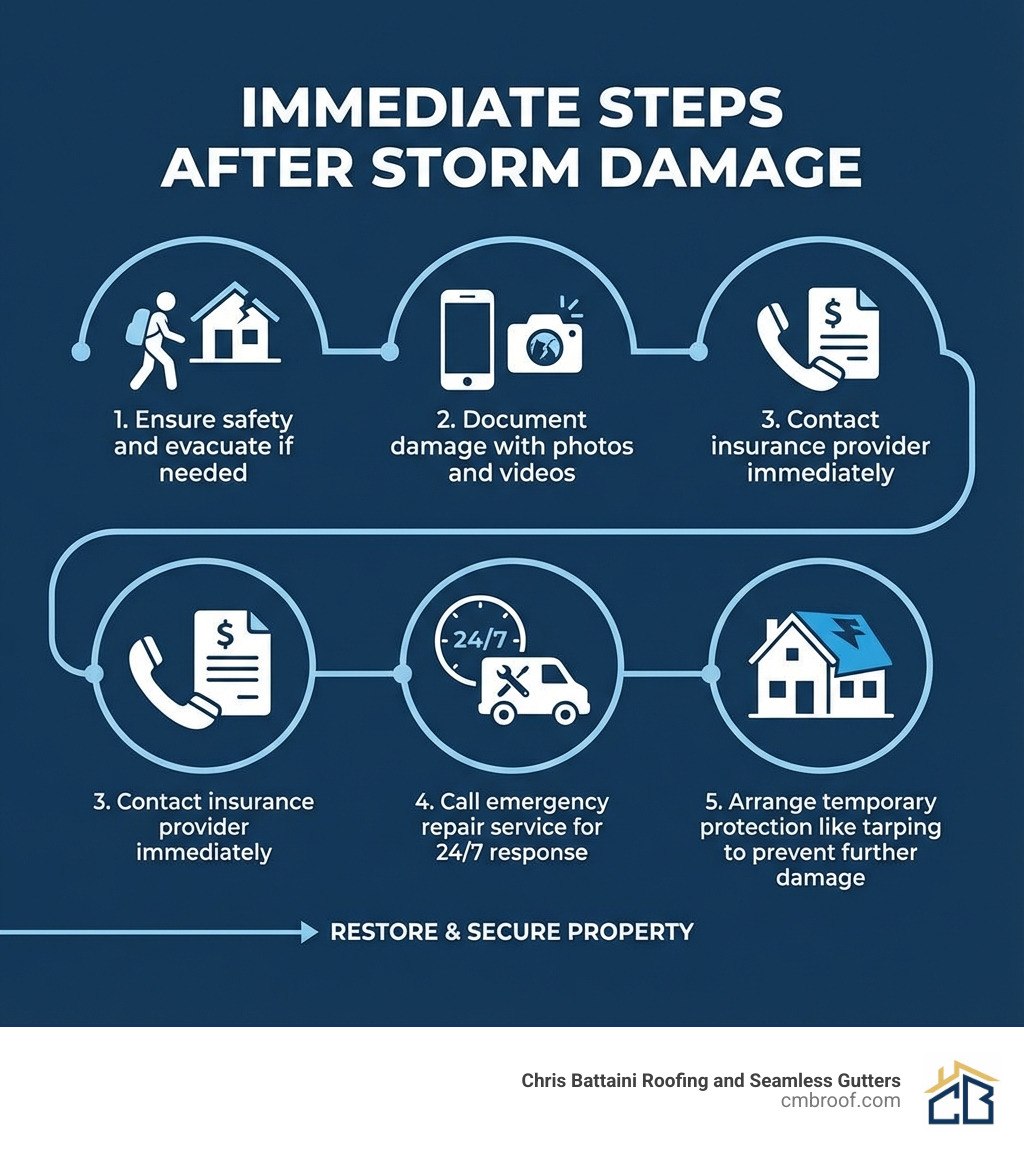
Emergency storm damage repair connects you with 24/7 professional services to secure your property, prevent further damage, and restore your home after severe weather. Here’s what you need to know immediately:
Quick Action Steps:
- Ensure safety first – Stay clear of downed power lines and unstable structures
- Document all damage – Take photos and videos from the ground
- Contact your insurance provider – Report the damage as soon as possible
- Call a professional – Most emergency repair companies respond within 2-4 hours
- Arrange temporary protection – Emergency tarping typically happens same-day
What Emergency Services Include:
- Emergency roof tarping and leak protection
- Water extraction and drying
- Debris removal and site safety
- Temporary structural support
- Board-up services for windows and doors
- Full damage assessment and repair plan
When a storm tears through your neighborhood, the damage can be overwhelming. Missing shingles, water pouring through your ceiling, fallen trees on your roof – these aren’t problems that can wait until Monday morning. Storm damage is one of the most common reasons for emergency service calls, and water damage can lead to mold growth within just 24 hours if not addressed quickly.
The good news? Professional emergency storm damage repair services are available 24/7 across the Greater Boston area and beyond, with response times typically within 2-4 hours. These teams provide immediate temporary protection like emergency tarping, followed by comprehensive restoration from initial assessment through final repairs.
I’m Christopher Battaini, owner of Chris Battaini Roofing & Seamless Gutters, and I’ve spent over two decades helping homeowners recover from storm damage across the North Shore and Greater Boston area. My team and I specialize in emergency storm damage repair, providing rapid response for roof emergencies, temporary protection, and complete restoration using quality materials and proven techniques.
Emergency storm damage repair terms simplified:
The Immediate Aftermath: What to Do When a Storm Hits
When a storm has just passed, and you’re surveying the damage, your immediate actions can significantly impact the safety of your home and the success of your repair process. Our priority is always the safety of you and your family.
Safety Assessment: Your First Priority
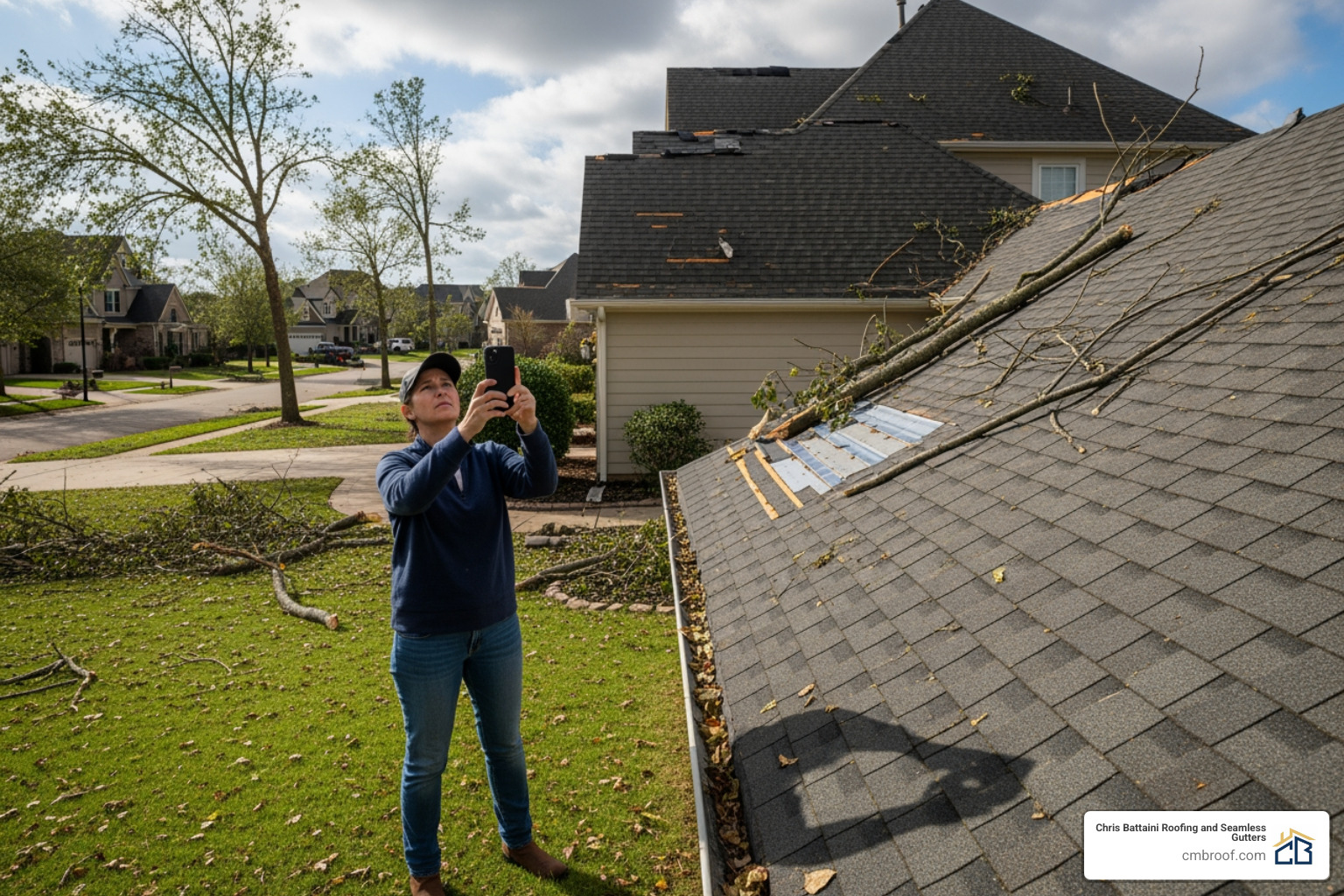
Before you even think about repairs, conduct a cautious safety assessment. This means staying alert for potential hazards. Look out for downed power lines, which are extremely dangerous and should never be approached. If you see any, contact your local utility company immediately. Be wary of unstable structures, such as leaning trees, damaged chimneys, or compromised walls, that could collapse without warning. If there’s any doubt about your home’s structural integrity, it’s best to evacuate and wait for professional assessment. Your safety is paramount.
Documenting the Damage for Future Claims
Once it’s safe, thoroughly document all visible storm damage. This step is crucial for your insurance claim. We recommend taking clear photos and videos of everything, from damaged shingles and siding to fallen trees and interior water leaks. Capture both wide shots showing the overall impact and close-ups of specific damaged areas. If you have active leaks inside, place buckets under them to prevent further water damage, and be sure to photograph these as well. The more evidence you have, the smoother your insurance claim process will be.
Contacting Your Insurance Provider
After documenting the damage, contact your homeowner’s insurance provider as soon as possible. They will guide you through their specific claims process and explain your coverage. Most standard homeowner’s policies cover wind and storm damage, but it’s important to understand your policy’s exclusions and limitations. Be prepared to share your documentation (photos, videos) with them.
Finding a Professional for Emergency Storm Damage Repair
Once you’ve assessed the situation and contacted your insurance, your next step is to call a professional emergency storm damage repair service. Many reputable companies offer 24/7 emergency response, understanding that disasters don’t adhere to business hours. For residents in Berkshire County, MA, and Southern Vermont, you can count on us to be there when you need us most.
Common Types of Storm Damage
Storms can release a variety of destructive forces, each leaving its unique mark on your property. Understanding these common types of damage can help you identify issues and communicate effectively with repair professionals.
- Wind Damage: High winds are a primary culprit in storm damage. We often see missing or curled shingles, where strong gusts have ripped them from the roof. Wind can also lift or crease shingle tabs, compromising their seal and leaving your roof vulnerable to water intrusion. Exposed roof deck or underlayment are clear signs of significant wind damage.
- Hail Damage: Hailstorms, even seemingly minor ones, can cause substantial damage. This often manifests as granule loss on asphalt shingles, which reduces their protective capabilities and lifespan. More severe hail can cause punctures in roofing materials, leading to immediate leaks.
- Water Damage: Water is often the most insidious consequence of a storm. From roof leaks caused by wind-driven rain to flash flooding, water can quickly penetrate your home, leading to extensive damage. Water damage can ruin insulation, drywall, flooring, and even compromise your home’s structural integrity. Mold can begin to grow within 24 hours of water damage, making rapid response crucial. If you’re experiencing a roof leak repair is likely your immediate concern.
- Debris Impact: Strong winds can turn ordinary objects into dangerous projectiles, and heavy rains can loosen soil, leading to fallen trees or large branches. These impacts can cause severe structural damage to roofs, walls, and foundations, creating punctures or even collapsing sections of your home.
- Siding and Gutter Damage: Beyond the roof, storms frequently damage other exterior components. We often see bent, cracked, or missing siding panels, as well as broken soffit, fascia, and loose eavestroughs. These components are vital for protecting your home’s exterior and directing water away from the foundation.
Your First Call: What to Expect from an Emergency Response
When you make that urgent call for emergency storm damage repair, you’re looking for swift, decisive action. Here’s what you can generally expect from a professional service like ours:
- 24/7 Availability: Storms don’t keep office hours, and neither do we. Reputable emergency repair companies operate around the clock, 365 days a year. This means you can reach us any time, day or night, for immediate assistance.
- Typical Response Times: While exact times can vary depending on the severity of the storm and widespread damage, many companies aim for a rapid response. For instance, in areas like Berkshire County, MA, and Southern Vermont, emergency response for storm damage typically arrives within 2–4 hours. This quick response is vital to prevent further damage.
- Initial Phone Consultation: Your first call will involve gathering crucial information. We’ll ask about the type of damage you’re seeing, the location, and any immediate hazards. This helps us understand the scope of the emergency and dispatch the appropriate team and equipment.
- Dispatching a Team: Based on your information, a specialized team will be dispatched to your location. These teams are equipped to handle various emergency situations, from roof punctures to water extraction.
- Temporary Protection: A key part of the initial response is to provide immediate temporary protection. This includes:
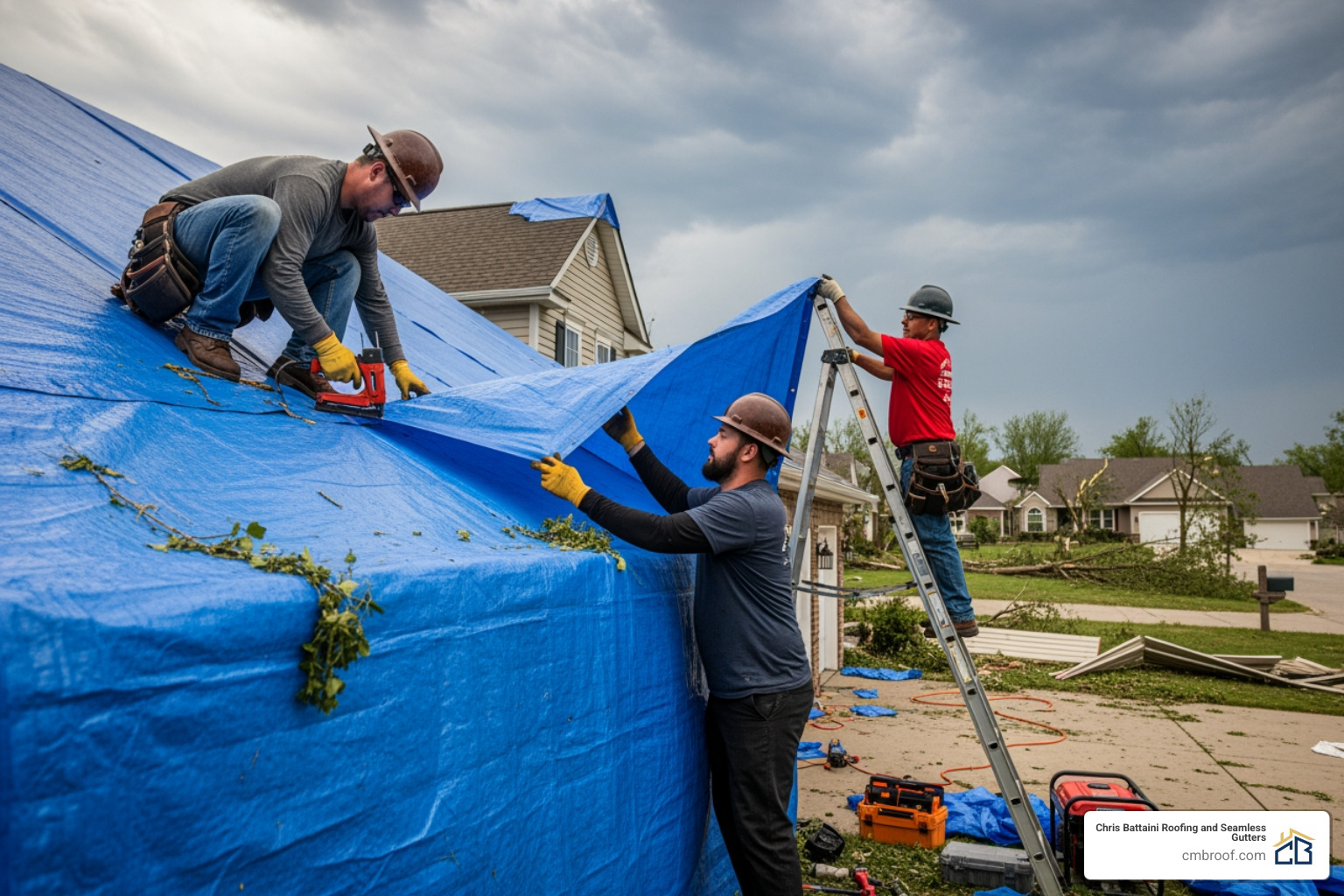
- Emergency Tarping: If your roof is damaged, heavy-duty waterproof tarps will be securely fastened over the affected areas to prevent any further water intrusion. A well-installed tarp can protect your home for several weeks to a few months until permanent repairs can be made.
- Board-Up Services: For broken windows or compromised doors, board-up services secure your property against weather and unauthorized entry.
The Professional Emergency Storm Damage Repair Process
Once the immediate crisis is under control, the journey from damage to full restoration begins. Our professional emergency storm damage repair process is designed to be thorough, transparent, and as stress-free as possible for you.
Step-by-Step Process
Here’s a typical breakdown of how we handle storm damage repair, from your initial call to the final inspection:
- Initial Contact: You reach out to us, often after experiencing a storm. We gather preliminary information about the damage and schedule an immediate response.
- On-Site Assessment: Our team arrives promptly to conduct a comprehensive assessment of your property. We carefully inspect all affected areas, taking detailed photos and notes. This assessment helps us understand the full extent of the damage, including issues that might not be immediately obvious.
- Emergency Mitigation: If necessary, we’ll perform immediate emergency services like roof tarping or board-ups to prevent further damage from weather exposure or security breaches.
- Repair Plan & Quote: Based on our assessment, we develop a detailed repair plan. This includes the scope of work, recommended materials, and a clear, itemized quote. We walk you through every step, answering any questions you may have.
- Permanent Repairs: Once the plan is approved and any insurance details are sorted, our skilled crew begins the permanent repairs. We use high-quality materials and proven techniques to restore your home to its pre-storm condition, or even better.
- Final Walkthrough & Documentation: After repairs are complete, we conduct a final walkthrough with you to ensure your complete satisfaction. We also provide all necessary documentation for your records and insurance claims.
Key Services Included in Emergency Repairs
When a storm hits, the immediate goal is to stabilize your property and prevent secondary damage. Our emergency storm damage repair services are comprehensive:
- Emergency Roof Tarping and Temporary Leak Protection: This is often the first and most critical step for roof damage. We secure heavy-duty tarps over compromised areas to stop water from entering your home.
- Water Extraction and Dehumidification: For interior water damage, we rapidly extract standing water and then use industrial-grade dehumidifiers and air movers to thoroughly dry out affected areas. This is crucial to prevent mold growth, which can start within 24-48 hours.
- Debris Removal: Safely clearing fallen trees, branches, and other storm debris from your property is essential for access and safety.
- Temporary Structural Support: If structural components like walls or ceilings are compromised, we can install temporary supports to ensure the safety of the building until permanent repairs can be made.
- Board-Up for Windows and Doors: Broken windows or doors leave your home exposed. We provide immediate board-up services to secure your property against the elements and potential intruders.
Here’s a quick look at common temporary vs. permanent repairs:
- Temporary Repairs:
- Roof tarping
- Window and door board-up
- Temporary shoring for structural elements
- Water extraction and initial drying
- Debris removal
- Permanent Repairs:
- Roof replacement or extensive shingle repair
- Siding replacement
- Window and door replacement
- Structural rebuilding
- Interior drywall, painting, and flooring
- Gutter and downspout installation
From Patch to Perfect: The Path to Full Restoration
Once the immediate crisis is handled, the focus shifts to full restoration. Our goal is not just to fix the damage, but to restore your home to its original beauty and integrity.
- Matching Materials: A crucial aspect of seamless repair is matching existing materials. Whether you have asphalt shingle roofing or a metal roofing system, we strive to use materials that blend perfectly with your home’s aesthetic. While new shingles might initially look slightly different due to aging, this difference usually blends in over time.
- Structural Repairs: If the storm caused structural damage, we work to repair or rebuild compromised elements, ensuring the long-term safety and stability of your home.
- Siding and Gutter Restoration: Damaged siding is replaced, and we ensure your seamless gutters are fully functional, directing water away from your foundation effectively.
- Interior Repairs: Water damage often extends inside. Our restoration includes repairing or replacing drywall, insulation, flooring, and paint to erase any signs of the storm.
- Final Inspection: We conclude with a thorough final inspection to guarantee every detail meets our high standards and your complete satisfaction.
Understanding the Costs and Navigating Insurance
Dealing with storm damage is stressful enough without having to worry about unexpected costs. We believe in transparency and helping you steer the financial aspects, especially when it comes to insurance claims.
Factors Influencing the Cost of Emergency Storm Damage Repair
The cost of emergency storm damage repair can vary widely, influenced by several key factors:
- Extent of Damage: Minor repairs, like replacing a few missing shingles, will naturally cost less than extensive damage requiring full roof sections or structural repairs.
- Materials Required: The type and quality of materials needed for repair or replacement (e.g., asphalt, metal, cedar shake, slate) will impact the overall cost.
- Accessibility: If the damaged area is difficult to access (e.g., a steep roof pitch, limited space for equipment), labor costs may be higher.
- Labor: The complexity of the repair and the time it takes for skilled professionals to complete the work directly contribute to the cost.
- Permit Fees: Depending on the scope of the repair, local building permits may be required, incurring additional fees. For instance, most like-for-like repairs might not need permits, but significant structural changes or full replacements often do.
Average Costs for emergency storm damage repair
Please note: The following costs are based on national averages and online data, not actual quotes. Costs can vary significantly based on your location, the extent of the damage, and materials used.
- Minor repairs (e.g., a few missing shingles, small flashing repair): Typically range from $350 – $2,500.
- Moderate damage (e.g., larger sections of shingles, siding panels, or gutter repair): Often falls between $2,000 – $7,500.
- Extensive damage or partial replacement (e.g., significant roof section replacement, major structural repair, water damage remediation): Can start from $5,000 and go upwards of $20,000+.
- Insurance Deductibles: Your homeowner’s insurance policy will have a deductible, which is the amount you pay out-of-pocket before your insurance coverage begins.
How a Repair Company Can Assist with Your Insurance Claim
Navigating insurance claims can be complex, but we’re here to help. Our role extends beyond just fixing the damage; we aim to streamline your insurance process:
- Providing Detailed Estimates: We furnish comprehensive, itemized estimates that clearly outline all necessary repairs, materials, and labor costs. These estimates are crucial for your insurance adjuster.
- Photo Documentation: As part of our assessment, we take extensive photos and videos of the damage before, during, and after repairs. This visual evidence is invaluable for substantiating your claim.
- Meeting the Adjuster On-Site: We can arrange to meet with your insurance adjuster at your property to discuss our findings and the proposed repair plan. This ensures that all damage is properly identified and accounted for.
- Explaining the Scope of Work: We clearly explain the scope of work to both you and your insurance provider, ensuring everyone understands the necessary steps for full restoration.
- Ensuring All Damage Is Accounted For: Our experienced team is adept at identifying all storm-related damage, including less obvious issues that might otherwise be overlooked, ensuring your claim is as complete as possible.
- Streamlining the Process: We aim to facilitate smooth communication between you and your insurance company, helping to expedite the approval and payment process so repairs can commence without unnecessary delays.
Choosing Your Repair Partner and Rebuilding for the Future
When your home has been hit by a storm, choosing the right emergency storm damage repair company is one of the most critical decisions you’ll make. This choice impacts not only the immediate repairs but also the long-term integrity and safety of your property.
What to Look for in an Emergency Repair Company
We advise homeowners to be diligent in selecting a repair partner. Here’s what to prioritize:
- Licenses and Insurance: Always verify that the company is fully licensed and insured. This protects you from liability in case of accidents or issues during the repair process.
- Certifications: Look for industry certifications, especially for water damage restoration. The Institute of Inspection, Cleaning and Restoration Certification (IICRC) is a recognized standard for professionals in water-damage restoration.
- Local Reviews and Reputation: Check online reviews on platforms like Google and HomeStars. A strong track record of customer satisfaction in your local area (Berkshire County, MA, or Southern Vermont) speaks volumes.
- Years of Experience: Experience matters, especially when dealing with complex storm damage. Companies with decades of experience have encountered a wide range of scenarios and developed effective solutions.
- Detailed Written Estimates: Insist on a clear, itemized written estimate that outlines all costs, materials, and the scope of work. Avoid companies that provide vague or verbal-only quotes.
- Strong Warranties: A reputable company stands behind its work. Inquire about the warranties offered on both labor and materials. You can find more info about our warranty on our website.
- Local Expertise: A company with local roots understands the specific weather patterns and building codes of Berkshire County, MA, and Southern Vermont. This local knowledge can be invaluable.
- In-house Crews vs. Subcontractors: Ask if the company uses in-house crews or subcontractors. In-house crews often lead to more consistent quality and accountability.
Ready to connect with a trusted expert? Contact us for an inspection.
Rebuilding Stronger: Long-Term Mitigation
After experiencing storm damage, it’s an opportune time to consider how you can make your home more resilient against future severe weather events. Rebuilding stronger means implementing mitigation measures that protect your property for years to come.
- Reinforcing Your Roof: The roof is your home’s first line of defense. Consider reinforcing roof-to-wall connections and gable roof ends to better withstand high winds. For areas prone to uplift, ensuring sheathing is properly secured is vital.
- Upgrading to Impact-Resistant Materials: If your budget allows, upgrading to impact-resistant roofing materials can significantly reduce damage from hail and wind-borne debris.
- Proper Installation Techniques: Ensure that all roofing and siding materials are installed according to manufacturer specifications and local building codes. Proper installation, including securing shingles correctly, is key to preventing wind damage.
- Securing Windows and Doors: Windows and exterior doors are often the weakest points in a home’s shell. Reinforcing garage doors, securing double-entry doors, and installing impact-resistant glass can prevent breaches that lead to extensive internal damage during high winds.
- FEMA Resources: The Federal Emergency Management Agency (FEMA) offers extensive guidance on making your home more resilient. You can find valuable information on Resources for Repairing, Retrofitting and Rebuilding After Severe Storms and specific FEMA guidance on mitigating tornado damage. These resources emphasize designing wind-resistant roofs and mitigating breach points.
Frequently Asked Questions about Storm Damage Repair
How quickly can mold grow after a storm causes a leak?
Mold can begin to grow within 24-48 hours of water intrusion. This rapid growth timeframe highlights why immediate water extraction and thorough drying are critical components of emergency storm damage repair services. Acting fast is essential to prevent secondary mold damage, which can be costly and impact indoor air quality.
Is it safe to stay in my home after storm damage?
This depends entirely on the severity of the damage. If there is any indication of structural damage (e.g., cracked walls, sagging ceilings), electrical hazards (e.g., exposed wires, power outages), major gas leaks, or significant water intrusion that compromises safety, it is safest to relocate temporarily. A professional assessment from an emergency storm damage repair company can accurately determine the habitability of your home and advise on safety precautions.
Will my insurance cover temporary repairs like roof tarping?
Most homeowner’s insurance policies do cover the cost of reasonable temporary repairs needed to prevent further damage to your property after a covered event. This typically includes emergency roof tarping and board-up services. Always keep detailed records and receipts for any temporary repairs you arrange, and confirm with your insurance provider about their specific requirements for reimbursement.
Secure Your Home with a Trusted Local Expert
Experiencing storm damage can be a daunting event, but with the right emergency storm damage repair partner, recovery can be a smooth and efficient process. The importance of a fast, professional response cannot be overstated, as immediate action can prevent further damage and significantly reduce overall restoration costs.
For homeowners in Berkshire County, MA, and Southern Vermont, the owner-led team at Chris Battaini Roofing and Seamless Gutters provides expert storm damage assessment and repair. We are dedicated to delivering exceptional workmanship and ensuring your peace of mind throughout the entire restoration journey. We stand ready to be your local lifesavers when disaster strikes. Learn more about our residential roofing services and how we can help protect and restore your most valuable asset.
Chris Battaini Roofing and Seamless Gutters proudly services Berkshire, Hampden, Hampshire, and Franklin Counties in Massachusetts.
Follow us on Facebook