-
10 Wendell Ave Extension Pittsfield, MA 01201
-
210 Columbia St., Lee, MA 01238

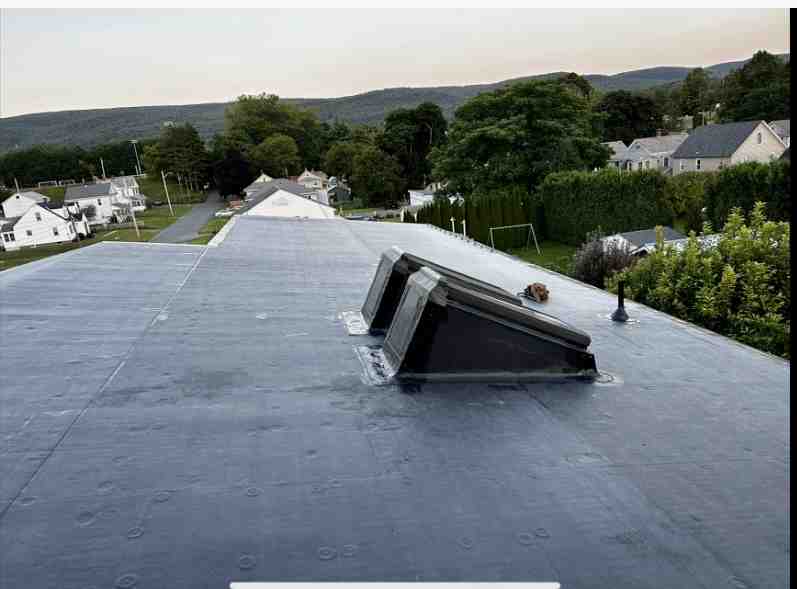
Flat Roofing (Residential) refers to low-slope roof systems that use a continuous waterproof membrane — rather than overlapping shingles — to protect your home. Despite the name, they’re never truly flat. They’re built with a slight pitch to direct water away from the surface.
Quick answer — what is residential flat roofing?
Flat roofs show up everywhere in commercial construction — but they’re becoming a popular choice for residential homes too. Homeowners are drawn to the clean, modern look, the extra usable space, and the potential energy savings. At the same time, questions about leaks, drainage, and long-term durability are common — and fair.
This guide walks you through everything you need to know before choosing a flat roof for your home: materials, costs, design options, maintenance, and more.
I’m Christopher Battaini, owner of Chris Battaini Roofing and Seamless Gutters, with over two decades of hands-on experience helping Massachusetts homeowners navigate Flat Roofing (Residential) decisions. I’ve seen what works, what fails, and what makes the difference between a roof that lasts and one that leaks — and I’m sharing all of it here.
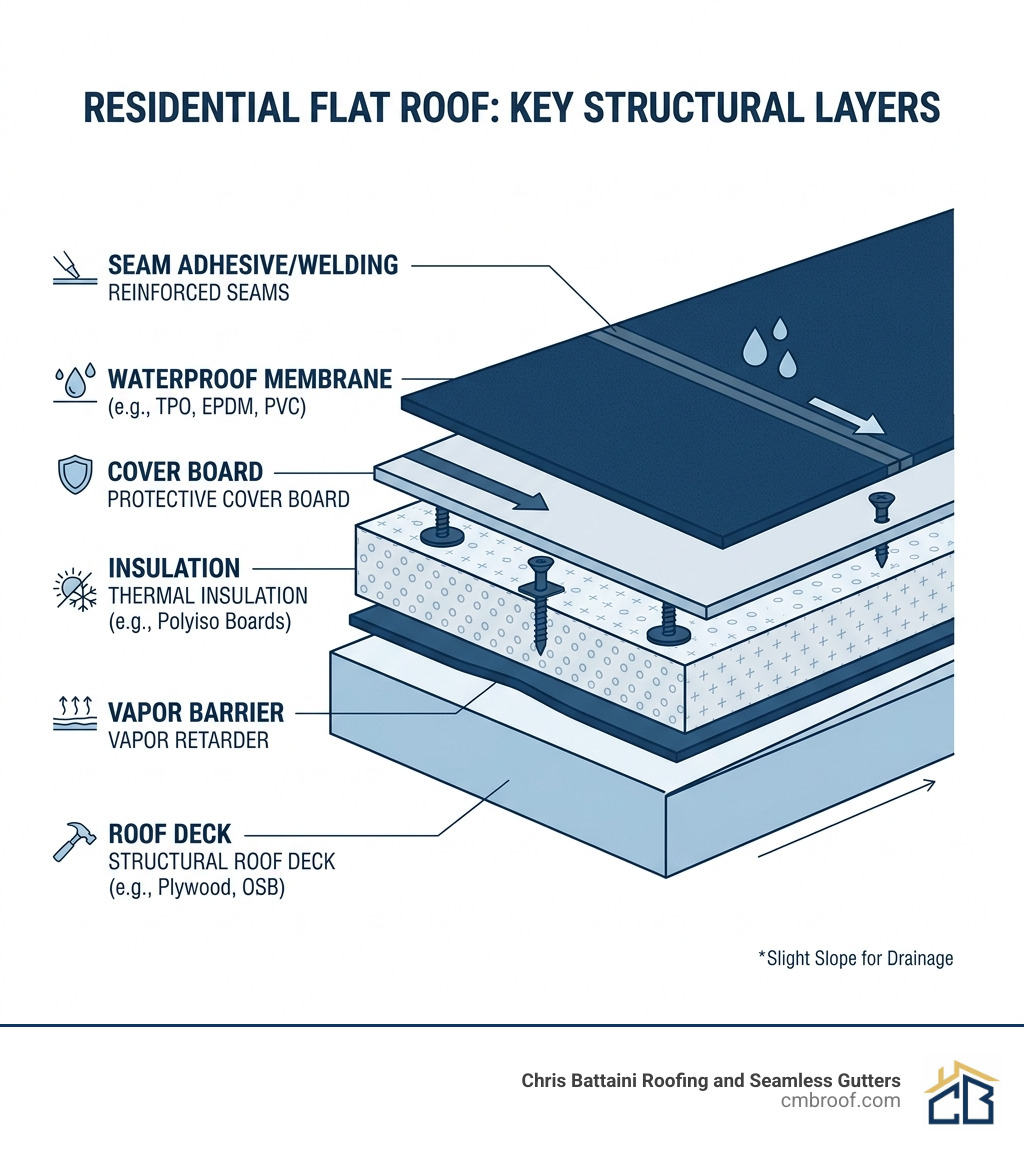
Key Flat Roofing (Residential) vocabulary:
One of the biggest surprises for homeowners in Berkshire County is learning that a “flat” roof isn’t actually flat. If it were perfectly level, water would just sit there, eventually finding a way into your living room. In the industry, we call these “low-slope” roofs.
To function correctly, Residential Flat Roofing must have a minimum slope of 1/4-inch per foot. This subtle grade is enough to encourage gravity to do its job, pulling rain and melting snow toward the edges. When we frame these roofs or install tapered insulation, we are essentially creating a path for water to escape.
Unlike a pitched roof where water just rolls off the shingles into a gutter, flat roofs rely on specific drainage mechanisms:
According to the Comprehensive Guide to Building a Flat Roof for a Home – This Old House, the goal is to move water from the center out to the edges. If water stays on the surface for more than 48 hours, it’s called “ponding,” and it’s the number one enemy of any flat roof system.
Choosing the right material is the most important decision you’ll make. Each has its own strengths, especially when considering the heavy snow loads and freeze-thaw cycles we experience in Western Massachusetts.
| Material | Primary Benefit | Typical Lifespan | Best For |
|---|---|---|---|
| EPDM (Rubber) | Extreme durability & cold weather flexibility | 30–50 years | Berkshire winters, garages, and additions |
| TPO (Thermoplastic) | Heat reflectivity & energy efficiency | 20–30 years | Modern designs, energy-conscious homes |
| Modified Bitumen | Multi-layer toughness & puncture resistance | 15–20 years | High-traffic areas or small additions |
| PVC | Chemical & fire resistance | 20–30 years | Residential roofs near kitchen vents or grease |
When exploring Flat Roof Material Options, we look at how the material handles expansion and contraction. In towns like Dalton or Williamstown, where temperatures can swing 50 degrees in a single day, the roof needs to breathe without cracking.
Single-ply membranes are the modern standard for Flat Roofing (Residential). These are large sheets of synthetic material that are rolled out and sealed at the seams.
When we look at the different Types of Flat Roofs, single-ply membranes are often the top choice because they are lightweight and provide a continuous, watertight barrier.
While membranes are popular, they aren’t the only options.
Modified Bitumen is an evolution of the old “tar and gravel” roofs. It uses layers of asphalt that have been modified with plastic or rubber polymers for extra flexibility. It’s often installed in two or three layers, providing a redundant “backup” if the top layer is ever damaged.
Built-Up Roofing (BUR) involves alternating layers of bitumen and reinforcing fabrics. It’s finished with a layer of gravel to protect against UV damage. While very heavy, it’s incredibly tough.
Standing Seam Metal can also be used on low-slope applications, though it requires a very specific installation to remain watertight at low angles. It’s often the most expensive option but offers a sleek, architectural look that many homeowners in Lenox and Stockbridge love. As noted in A Design & Materials Guide for Residential Flat Roofing Systems – IKO, metal is a non-chemical, stylish choice for those looking for longevity.
In Berkshire County, how you insulate your flat roof is just as important as the membrane you put on top. We generally categorize designs into “Warm Roofs” and “Cold Roofs.”
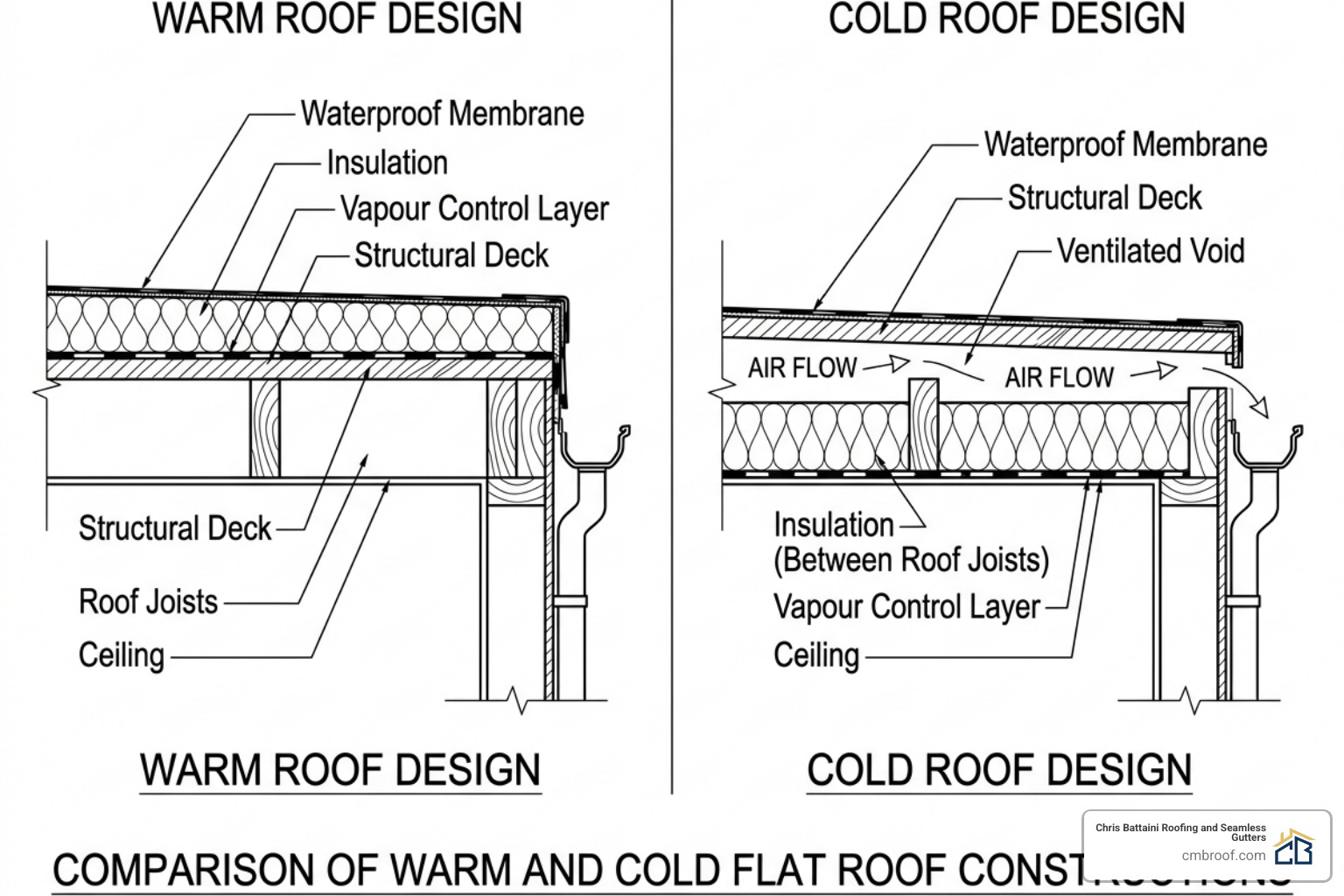
In a warm roof, the insulation is placed above the structural roof deck but below the waterproof membrane. This keeps the entire structure of the roof at a temperature similar to the inside of your home.
A cold roof has insulation placed between the rafters or joists, leaving a gap for air to flow above the insulation.
Understanding Residential Flat Roof Insulation is key to ensuring your home stays comfortable and your energy bills stay low. We always consider the specific R-value requirements for Massachusetts building codes when designing these systems.
One of the most exciting parts of Flat Roofing (Residential) is the versatility it offers. Because the surface is nearly level, you can turn your roof into a functional part of your home. We’ve seen homeowners in Great Barrington and Lee create stunning rooftop decks, urban gardens, or even install solar panels that are hidden from street view.
If you plan to use your roof as a deck or garden, we need to reinforce the structural deck to handle the “live load” of people and furniture. Solar panel integration is also easier on flat surfaces because we can use ballasted mounting systems that don’t require as many penetrations through the waterproof membrane.
When it comes to the budget, flat roofs have a wide range.
Note: Based on publicly available internet data, average flat roof costs typically range from $5.00 to $45.00 per square foot depending on material and complexity. These figures are national averages and do not represent specific company pricing.
Several factors will push you toward the higher or lower end of that range:
For more details, check out our Residential Flat Roof Cost Complete Guide. Generally, you can expect a well-maintained EPDM or PVC roof to last 25–30 years, while a premium metal roof might last 50 years or more.
We always tell our neighbors: a flat roof is not a “set it and forget it” system. Because it doesn’t shed water as quickly as a shingle roof, it needs a little more attention.
We recommend inspecting your roof twice a year—once in the spring after the snow melts and once in the fall before the first frost.
If you notice water sitting on your roof more than 48 hours after a rainstorm, you have a drainage issue. This might be caused by a clogged drain or a slight dip in the roof deck. Following Residential Flat Roof Maintenance Tips can save you thousands in the long run by catching these issues before they turn into leaks.
Our guide on Mastering the Low Slope offers a deeper dive into how to protect your investment through the harsh Massachusetts seasons.
We strongly advise against this. Standard asphalt shingles rely on gravity to shed water. On a roof with a slope less than 2:12 (about 10 degrees), water can easily blow up under the shingles or sit in the gaps, leading to immediate leaks. For low-slope areas, we use self-adhering membranes or single-ply systems that create a continuous seal.
Lifespans vary by material. EPDM rubber is often the “marathon runner” of flat roofs, frequently lasting 30 to 50 years if installed correctly. TPO and PVC typically offer 20 to 30 years. Modified bitumen usually falls in the 15 to 20-year range. The key to longevity is professional installation and keeping those drains clear!
This is a common myth. A flat roof is only “prone to leaking” if it’s poorly installed or neglected. Modern waterproofing membranes like TPO and EPDM are incredibly resilient. In fact, many commercial buildings—which house millions of dollars in inventory—rely on flat roofs because they are so effective when done right. The seam integrity and drainage efficiency are what matter most.
A flat roof can be a beautiful, modern, and highly functional addition to your home. Whether you’re looking to create a rooftop oasis or simply need a reliable solution for a new home addition, understanding your material and design options is the first step toward success.
At Chris Battaini Roofing and Seamless Gutters, we pride ourselves on providing owner-led, on-site service to ensure every detail of your flat roof is handled with precision. We understand the unique challenges of Berkshire County weather, and we’re here to help you choose a system that will protect your home for decades.
Chris Battaini Roofing and Seamless Gutters is an Owens Corning Platinum Preferred Contractor. This elite designation is earned only by the top tier of roofing professionals nationwide, ensuring you receive the highest level of expertise and access to exceptional workmanship warranties.
If you’re considering a replacement or a new installation, our Residential Flat Roof Replacement Complete Guide is a great next step in your research.
Chris Battaini Roofing and Seamless Gutters services Berkshire County, Massachusetts.
Follow us on Facebook — https://www.facebook.com/chrisbattainiroofing
Need a reliable roofer? CMB Roofing provides licensed, insured, and professional roofing services for homeowners and businesses.
We stand by a simple promise: Clear estimates. Quality workmanship. Clean job sites.
From roof repairs and full replacements to storm damage restoration, our team delivers dependable results with durable materials, expert installation, and complete site cleanup.