-
10 Wendell Ave Extension Pittsfield, MA 01201
-
210 Columbia St., Lee, MA 01238

Residential flat roof maintenance is crucial for protecting one of your home’s most vulnerable systems. Unlike sloped roofs that naturally shed water and debris, flat roofs face unique challenges that require proactive attention.
Essential Flat Roof Maintenance Tasks:
Most flat roofs last only 10-20 years before needing replacement, but proper maintenance can extend this significantly. EPDM rubber roofs, for example, can last up to 50 years with good care.
The reality is simple: flat roofs collect more water, debris, and stress than sloped systems. They’re prone to ponding, blistering, and membrane damage from UV exposure. But here’s the good news – regular maintenance prevents most serious problems.
As one roofing expert noted, “The only reason to build a flat roof is that it is cheaper to build” – but maintaining it properly protects that initial investment and prevents costly emergency repairs.
Your flat roof doesn’t have to be a constant worry. With the right maintenance approach, you can avoid the common pitfalls that lead to leaks, structural damage, and premature replacement.
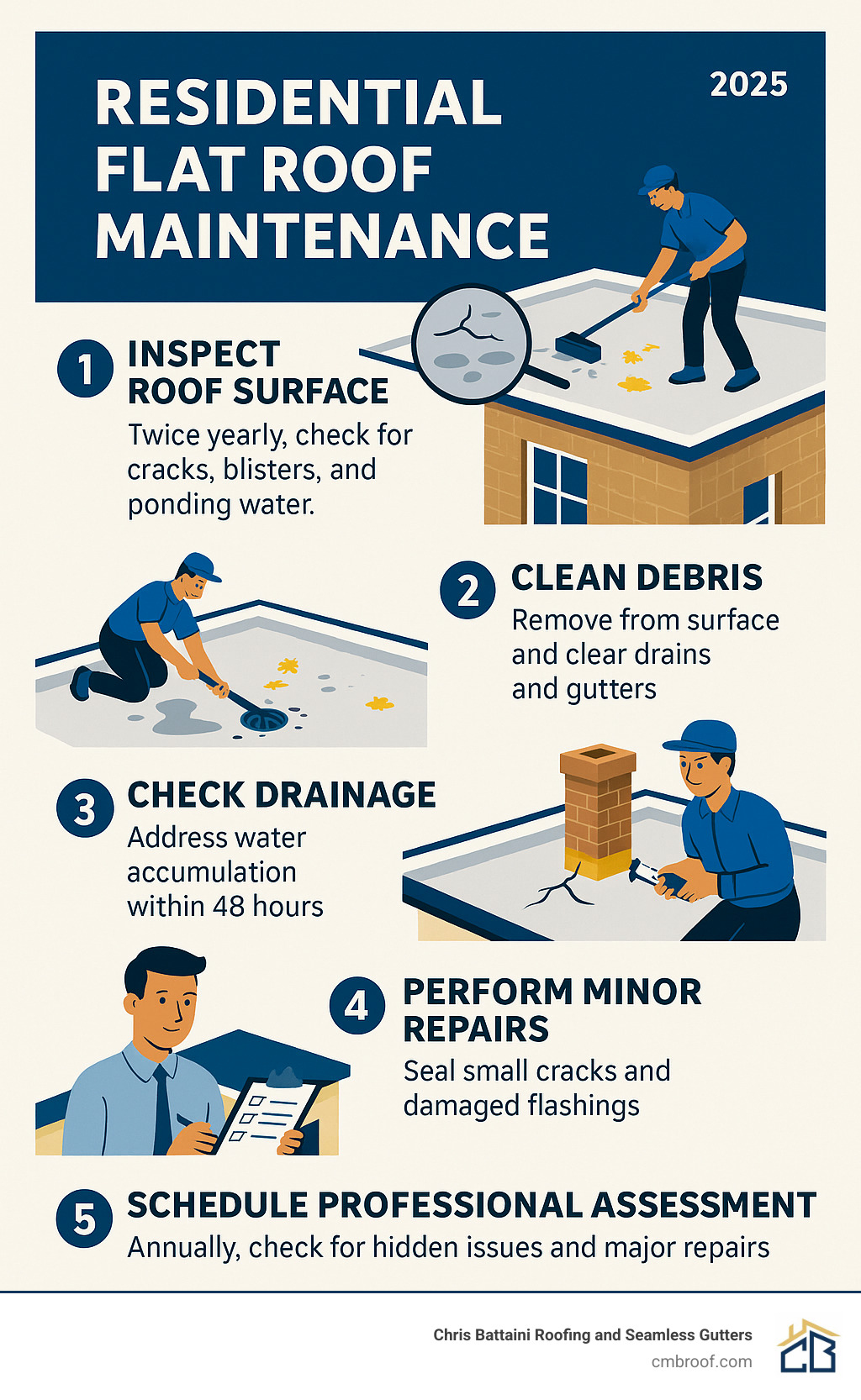
Simple guide to residential flat roof maintenance:
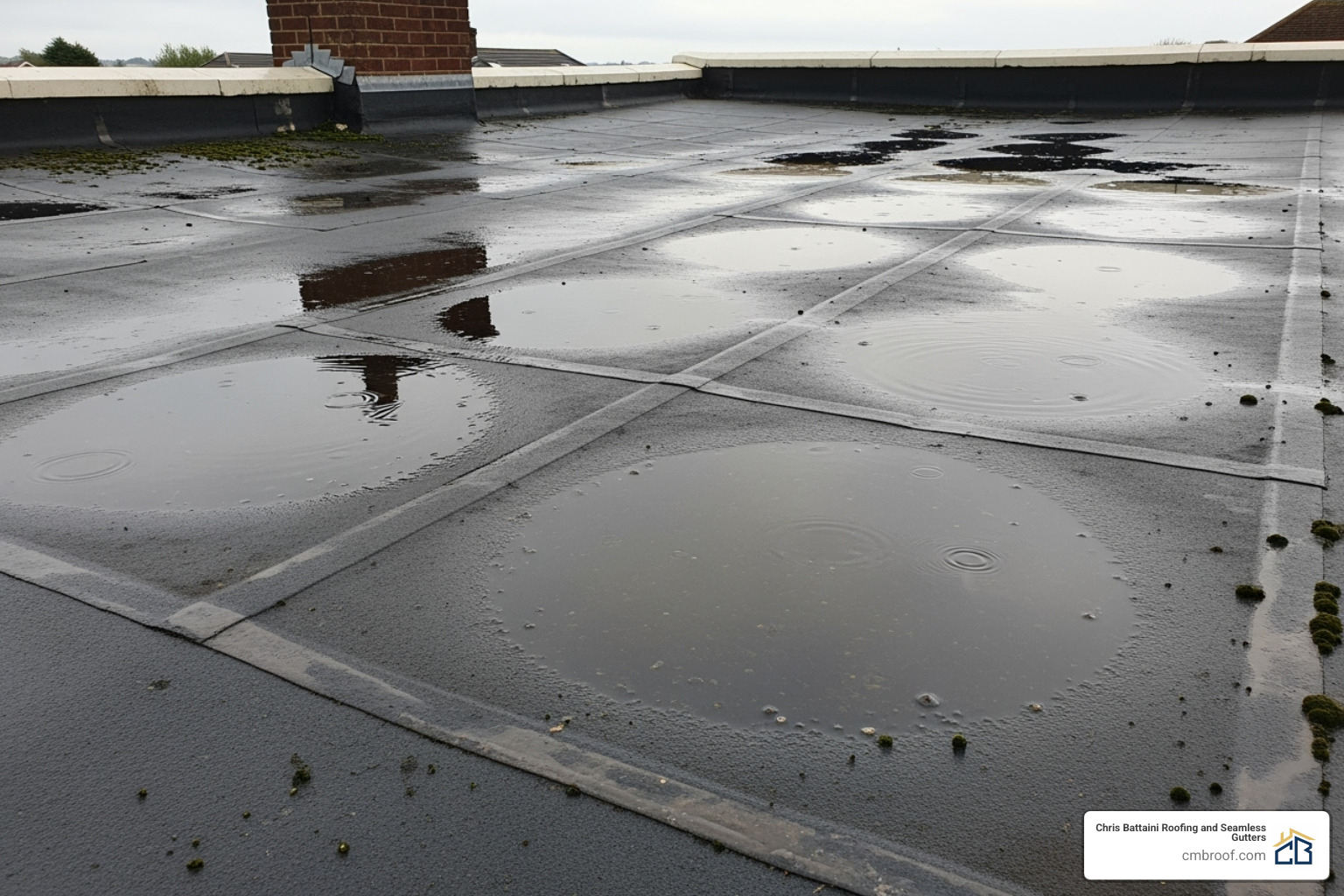
When it comes to residential flat roof maintenance, knowing what to look for can save you thousands in repairs. Flat roofs face unique challenges that sloped roofs simply don’t encounter, and understanding these problems helps you catch them early.
The biggest troublemaker? Ponding water. While your flat roof has a slight slope (about 1/4 inch per foot), it’s not enough to quickly shed water like a steep roof. When drainage gets blocked or the slope isn’t quite right, water sits there like an unwelcome guest who won’t leave.
Leaks and moisture intrusion often follow ponding water. These sneaky problems typically start around flashing, seams, or anywhere the membrane has taken a beating. What starts as a small issue can quickly become a major headache if water finds its way inside.
You might also notice blistering and bubbling on your roof surface – those raised, spongy spots that feel weird when you step on them. These happen when air or moisture gets trapped between roofing layers and expands with heat, kind of like a blister on your skin.
Cracks and punctures are another common sight. They can come from UV rays beating down on your roof, temperature swings causing materials to expand and contract, or debris falling from nearby trees. Sometimes poor installation is to blame.
Here’s something that might surprise you: debris buildup is actually a serious problem. Leaves, twigs, and dirt love to collect on flat surfaces, and this debris doesn’t just sit there looking messy – it traps moisture and blocks drainage.
When debris accumulates, clogged drains and scuppers are inevitable. Those drains and scuppers (the openings that let water off your roof) get blocked, creating a domino effect that leads right back to ponding water.
Damaged flashing around vents, chimneys, and skylights creates easy entry points for water. When flashing cracks, rusts, or pulls away from proper sealing, it’s like leaving your front door wide open during a rainstorm.
Finally, structural sagging can develop when excessive weight from standing water or heavy snow loads causes your roof deck to dip. These depressions then collect even more water, creating a cycle that gets worse over time.
For comprehensive solutions to these issues, check out more info about roof repair services.
Ponding water isn’t just unsightly – it’s your flat roof’s biggest enemy. When water sits on your roof for more than 48 hours after rainfall, you’re looking at a problem that needs immediate attention.
The damage happens faster than you might think. Water accumulation leads to material degradation as the constant moisture breaks down your roofing membrane and protective coatings. It’s like leaving a piece of paper in a puddle – eventually, it’s going to fall apart.
The weight issue is real too. Water is surprisingly heavy, and even a small ponding area adds significant structural stress to your roof framing. Over time, this can lead to sagging or worse structural problems.
Standing water also creates the perfect environment for mold and algae growth. These organisms don’t just look bad – they actively degrade your roofing materials and can make your roof dangerously slippery during inspections.
Most seriously, ponding water almost always leads to roof leaks as it finds weak spots in seams, cracks, or penetrations and works its way inside your home.
Blisters and cracks are like warning signs your roof is trying to send you. Understanding why they happen helps you prevent bigger problems down the road.
Trapped moisture is often the culprit behind blistering. When water or even humid air gets caught between roofing layers during installation or through small breaches, the sun’s heat causes it to expand. The result? Those telltale bubbles that feel spongy underfoot.
Air pockets work similarly – if installation wasn’t perfect and air got trapped, you’ll see the same blistering effect when temperatures rise.
Temperature fluctuations are particularly tough on flat roofs. Your roof expands in heat and contracts in cold, and this constant movement creates stress at seams and weak points. Over time, cracks are inevitable.
UV degradation is the slow, steady enemy. The sun’s ultraviolet rays gradually break down the chemical bonds in your roofing materials, making them brittle and prone to cracking. It’s why UV protection is so important in roofing materials.
Sometimes the problem starts with poor installation. If layers weren’t properly adhered, seams weren’t sealed correctly, or materials weren’t prepared right, you’ll see problems much sooner than you should.
Finally, there’s simple material aging. Every roofing material has a lifespan, and as materials age, they naturally become less flexible and more vulnerable to damage, even with excellent maintenance.
The secret to successful residential flat roof maintenance isn’t complicated – it’s consistency. Think of it like tending a garden. A little regular care prevents big problems down the road, and your wallet will thank you for it.
Before we dive into the checklist, let’s talk safety. Your roof doesn’t care if you’re in a hurry, and neither should you. Never step onto a wet, icy, or windy roof. Wear shoes with good grip, use a sturdy ladder, and if you’re not comfortable up there, that’s perfectly fine – call a professional instead.
The beauty of flat roof maintenance lies in its predictability. You’ll want to inspect your roof twice yearly – spring and fall work perfectly – plus after any major storms. Between professional visits, there are plenty of DIY tasks you can handle, while leaving the complex repairs to the experts.
For comprehensive guidance custom to your specific roof, check out our Roof Maintenance services.
Your roof tells a story, and regular inspections help you read it before the plot takes a dangerous turn. Spring and fall inspections are your best defense against costly surprises, along with a quick check after severe weather.
Start your inspection from the ground – sometimes the most obvious problems are visible from below. Look for sagging areas, visible debris, or damaged flashing around the roof edges. It’s amazing what you can spot without even climbing up.
When you do get on the roof safely, pay special attention to the seams and seals where membrane sections meet. These joints work hard and fail first, so look for any lifting, cracking, or separation. Flashing around vents, skylights, and HVAC units deserves extra scrutiny – these penetrations are like tiny windows of opportunity for water damage.
Don’t forget to check that your gutters and drains are clear and functioning. A blocked drain today becomes ponding water tomorrow. Walk the entire roof surface, scanning for blisters, bubbles, tears, or punctures – even small ones matter on a flat roof.
Here’s a pro tip: gently press on different areas as you walk. Soft or spongy spots often indicate trapped moisture or damaged insulation beneath the membrane. You’ll also want to inspect the integrity of the top layer of protection, whether that’s gravel, mineral coating, or another protective surface.
For thorough professional assessment, our Roof Inspections team knows exactly what to look for.
A clean flat roof is like a well-maintained car – it simply runs better and lasts longer. Since your roof can’t shed debris like its sloped cousins, you’ll need to lend a helping hand.
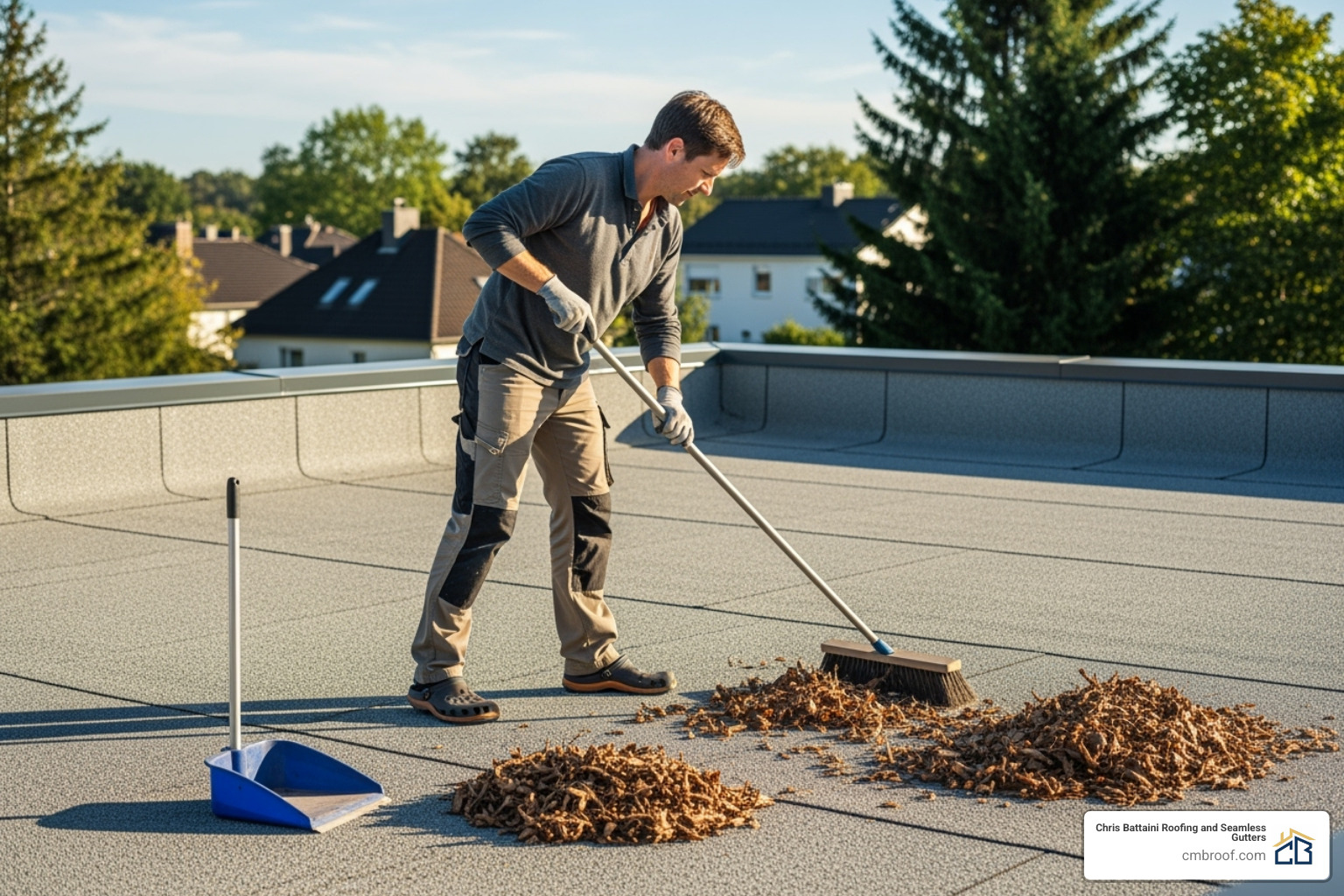
Regular debris removal should become second nature, especially in fall and spring. Use a soft broom rather than harsh tools that might damage the membrane. Leaf blowers work well too, just be careful not to blow debris into your drains – that defeats the whole purpose!
Those overhanging tree branches might look charming, but they’re dropping leaves, scratching your roof, and giving squirrels a highway to your home. Trim them back to reduce debris and prevent damage during storms.
Keep an eye out for moss and algae growth – these green invaders love damp, shaded spots created by debris buildup. Moss might look natural, but it holds moisture against your roof surface and can cause serious damage over time.
Your gutters and scuppers are the unsung heroes of flat roof drainage. Keep them clear of leaves and dirt so water can flow freely off your roof. When these get clogged, you’re essentially creating a dam on your roof – and that never ends well. Our Seamless Gutters are designed to minimize clogs, but they still need regular attention.
Each season brings its own personality to flat roof care, and smart homeowners learn to work with nature’s rhythm rather than against it.
Spring arrives with the great melt, revealing what winter left behind. This is prime time for a thorough inspection, looking for any damage from freeze-thaw cycles or heavy snow loads. Check for new cracks or stressed areas where winter took its toll.
Summer means serious UV exposure – think of it as your roof getting a suntan that never fades. The intense heat and UV radiation can accelerate material breakdown, especially on darker roofs. This is when protective coatings really earn their keep, reflecting heat and extending your roof’s life while potentially lowering your cooling bills.
Fall is crunch time – literally. All those beautiful autumn leaves end up on your roof, and if left alone, they’ll create a soggy mess that clogs drains and traps moisture all winter long. A thorough fall cleaning sets you up for success in the months ahead.
Winter brings the challenge of snow load management. While your roof is designed to handle typical snow loads, excessive accumulation can strain the structure. Use a roof rake to carefully remove snow from the edges, but if ice dams form, call a professional – DIY ice removal often causes more damage than it prevents.
Extreme weather preparation means having a plan before the storm hits. Know who to call, keep emergency contacts handy, and inspect your roof both before and after severe weather events.
You might not see your roof’s insulation and ventilation systems, but they’re working around the clock to protect your investment. Think of them as your roof’s respiratory and circulatory systems – when they’re healthy, everything else works better.
Warm roof versus cold roof design might sound like technical jargon, but it matters for your home’s comfort and your roof’s longevity. In a warm roof design, insulation sits directly above the roof deck, keeping the entire structure warm. Cold roof designs place insulation below the deck, creating an air space that must be properly ventilated to prevent problems.
Preventing condensation is crucial because trapped moisture is like kryptonite to roofing materials. When warm, moist air from your home meets cold surfaces, condensation forms. Poor ventilation can promote condensation buildup, leading to mold, mildew, and structural damage.
Energy efficiency improves dramatically with proper insulation. Your heating and cooling systems won’t have to work as hard, and you’ll see the difference in your utility bills. Temperature regulation also helps your roofing materials last longer by reducing the extreme expansion and contraction that leads to cracking and premature aging.
Most importantly, good insulation and ventilation work together for mold prevention, protecting both your roof structure and your family’s indoor air quality. It’s an investment that pays dividends in comfort, energy savings, and peace of mind.
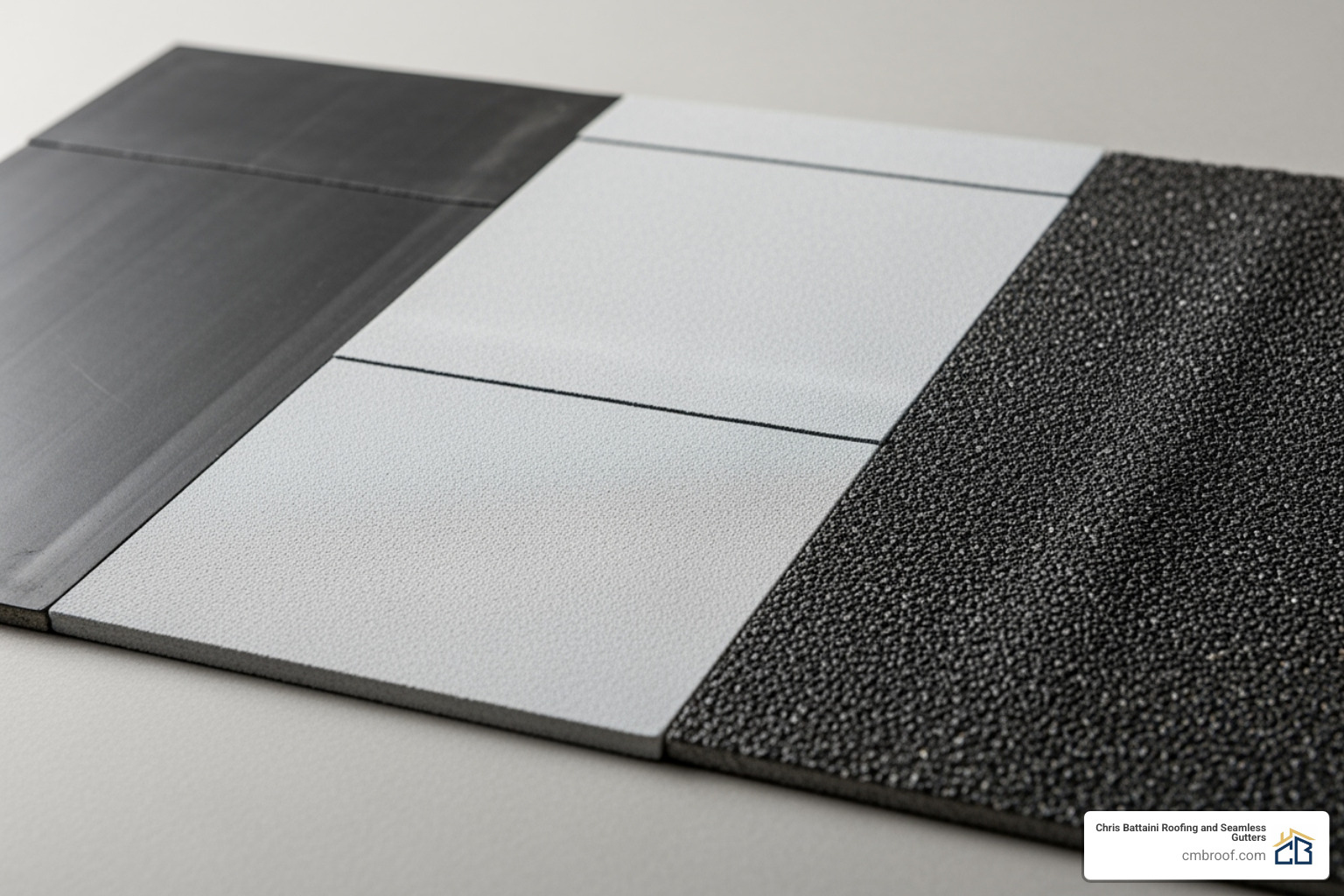
When it comes to residential flat roof maintenance, understanding your roofing material is like knowing what kind of car you drive – it completely changes how you care for it. Each flat roofing material has its own personality, quirks, and maintenance needs.
The material you choose affects everything from how often you’ll need repairs to how much you’ll spend on energy bills. Some materials are marathon runners, lasting decades with proper care, while others are sprinters that need more frequent attention.
Let’s be honest – flat roofing materials aren’t the most exciting topic at dinner parties. But choosing the right one can save you thousands of dollars and countless headaches down the road. The key factors to consider include material lifespan, durability against weather extremes, cost factors both upfront and long-term, and ongoing maintenance needs.
For a comprehensive overview of your options, our Flat Roofing Materials guide breaks down everything you need to know about making the right choice for your home.
EPDM (Ethylene Propylene Diene Monomer) is the marathon runner of flat roofing materials. This black rubber membrane can last up to 50 years with proper maintenance, making it a favorite among homeowners who want to install it and largely forget about it. EPDM handles temperature extremes beautifully and resists UV damage better than many alternatives. It’s also relatively affordable and easy to repair when issues do arise.
The downside? That black surface absorbs heat like nobody’s business, which can drive up your cooling costs in summer. It’s also more susceptible to punctures from sharp objects, so you’ll want to be careful during maintenance.
TPO (Thermoplastic Polyolefin) is the energy-saver of the group. Its white or light-colored surface reflects sunlight, keeping your home cooler and your energy bills lower. TPO typically lasts 10-20 years and offers good chemical resistance and flexibility. It’s also heat-weldable, which creates strong, permanent seams.
However, TPO can be finicky about installation – it requires skilled contractors to avoid problems. The material is also more sensitive to certain chemicals and can become brittle over time, especially in extreme temperature swings.
Modified Bitumen is the reliable middle-ground option, lasting around 20 years with proper care. This material combines the waterproofing qualities of traditional asphalt with modern polymer technology. It’s tough, handles foot traffic well, and can be installed with multiple methods including torch-applied, cold-applied, or self-adhering systems.
The trade-off is that modified bitumen requires more regular maintenance than EPDM and doesn’t offer the energy efficiency benefits of TPO’s reflective surface. It’s also heavier than membrane systems, which might require additional structural considerations.
Think of protective coatings as sunscreen for your roof – they’re not always necessary, but they can significantly extend your roof’s life in the right circumstances. Reflective coatings are particularly valuable for dark-colored roofs, bouncing sunlight away and reducing thermal stress on the membrane.
Waterproof sealants are your first line of defense against small leaks and can often buy you time before major repairs are needed. Elastomeric coatings are especially useful because they expand and contract with your roof, maintaining their seal through temperature changes.
The beauty of protective coatings is that they can extend the life of your flat roof by several years when applied correctly. They provide UV protection that prevents material degradation, create an additional waterproof barrier, and can deliver real energy savings through improved reflectivity.
Most coatings need reapplication every 2-4 years, but this relatively small investment can postpone the much larger expense of roof replacement. It’s like getting regular oil changes for your car – a little preventive maintenance goes a long way toward protecting your investment.
Chris Battaini Roofing and Seamless Gutters services Berkshire, Hampden, Hampshire, and Franklin Counties in Massachusetts.
Need a reliable roofer? CMB Roofing provides licensed, insured, and professional roofing services for homeowners and businesses.
We stand by a simple promise: Clear estimates. Quality workmanship. Clean job sites.
From roof repairs and full replacements to storm damage restoration, our team delivers dependable results with durable materials, expert installation, and complete site cleanup.