-
10 Wendell Ave Extension Pittsfield, MA 01201
-
210 Columbia St., Lee, MA 01238

How often does a roof need to be replaced depends mostly on the material it’s made from. Here’s a quick answer:
| Roofing Material | Average Replacement Timeline |
|---|---|
| 3-Tab Asphalt Shingles | Every 15-20 years |
| Architectural Asphalt Shingles | Every 25-30 years |
| Premium Asphalt Shingles | Every 30-50 years |
| Metal Roofing | Every 40-70 years |
| Clay or Concrete Tile | Every 50-100+ years |
| Natural Slate | Every 75-150+ years |
Most homeowners replace their roofs every 20-25 years. But material is just one piece of the puzzle. Climate, installation quality, and maintenance all affect how long your roof actually lasts.
In harsh climates like Berkshire County — with heavy snow, freeze-thaw cycles, and humid summers — a roof can wear out 5 to 10 years sooner than the manufacturer’s estimate.
The good news: knowing the warning signs early can save you thousands.
I’m Christopher Battaini, owner of Chris Battaini Roofing and Seamless Gutters, with over two decades of hands-on experience helping Massachusetts homeowners understand exactly how often does a roof need to be replaced — and what to do when that time comes. In this guide, I’ll walk you through everything you need to make a confident, informed decision about your roof.
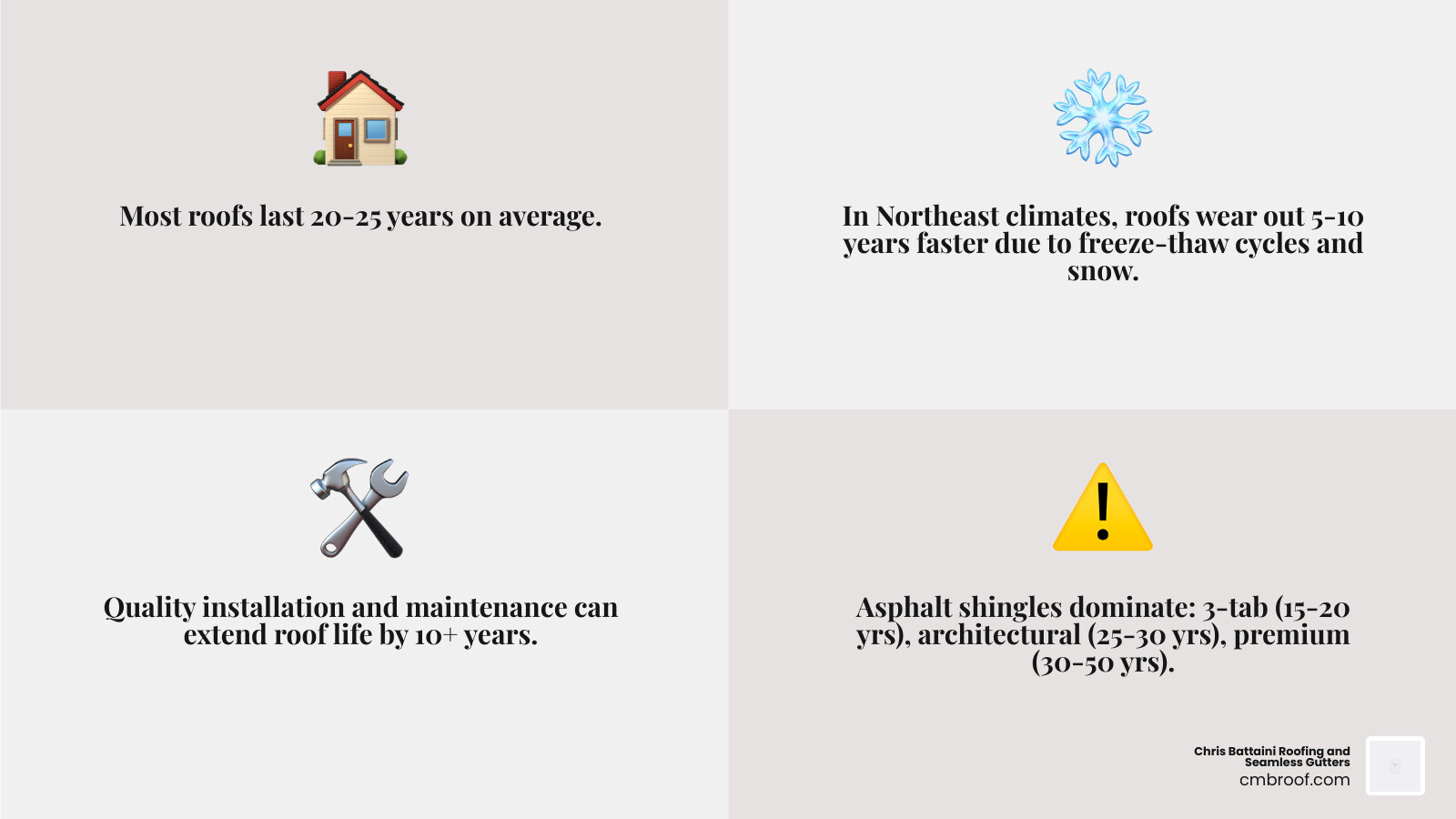
Quick how often does a roof need to be replaced definitions:
When we look at the average home, the question of how often does a roof need to be replaced is usually met with a range rather than a single number. While the table above gives you a baseline, real-world conditions act like a clock that can either slow down or speed up.
Asphalt shingles are the most common choice for residential homes, covering roughly 80% of houses in the United States. However, even within the “asphalt” category, there is a massive difference in longevity. A basic 3-tab shingle might only give you 15 sturdy years, whereas a high-end synthetic or premium shingle can push toward the 50-year mark.
If you have a metal roof, you are looking at a much longer Roof Replacement Timeline. These systems often last 40 to 70 years, making them a “once-in-a-lifetime” investment for many. For those with luxury materials like slate or clay tile, the roof might actually outlast the homeowner, with lifespans frequently exceeding a century.
To get a true sense of your timeline, we have to look closer at the specific type of shingle protecting your home.
Living in the Northeast, particularly in Berkshire County, means your roof is fighting a multi-front war. Our weather is notoriously tough on building materials.
First, we have the freeze-thaw cycle. During a typical winter in Pittsfield or Adams, water can seep under shingles during a sunny afternoon thaw, only to freeze and expand at night. This expansion can slowly pry shingles apart or crack the underlying seals. Then there is the snow load. A heavy Berkshire snowstorm puts thousands of pounds of pressure on your roof deck. If your roof is nearing the end of its life, this weight can cause structural sagging.
Humidity also plays a role. Our damp summers encourage the growth of moss and algae. Moss, in particular, acts like a sponge, holding moisture against the shingles and accelerating rot. Because of these factors, we often recommend a Roof Inspection Service Complete Guide 2026 to check for hidden damage that a homeowner might miss from the ground.
You don’t always need a calendar to know your roof is failing. Often, the roof will tell you it’s tired through visible “symptoms.”
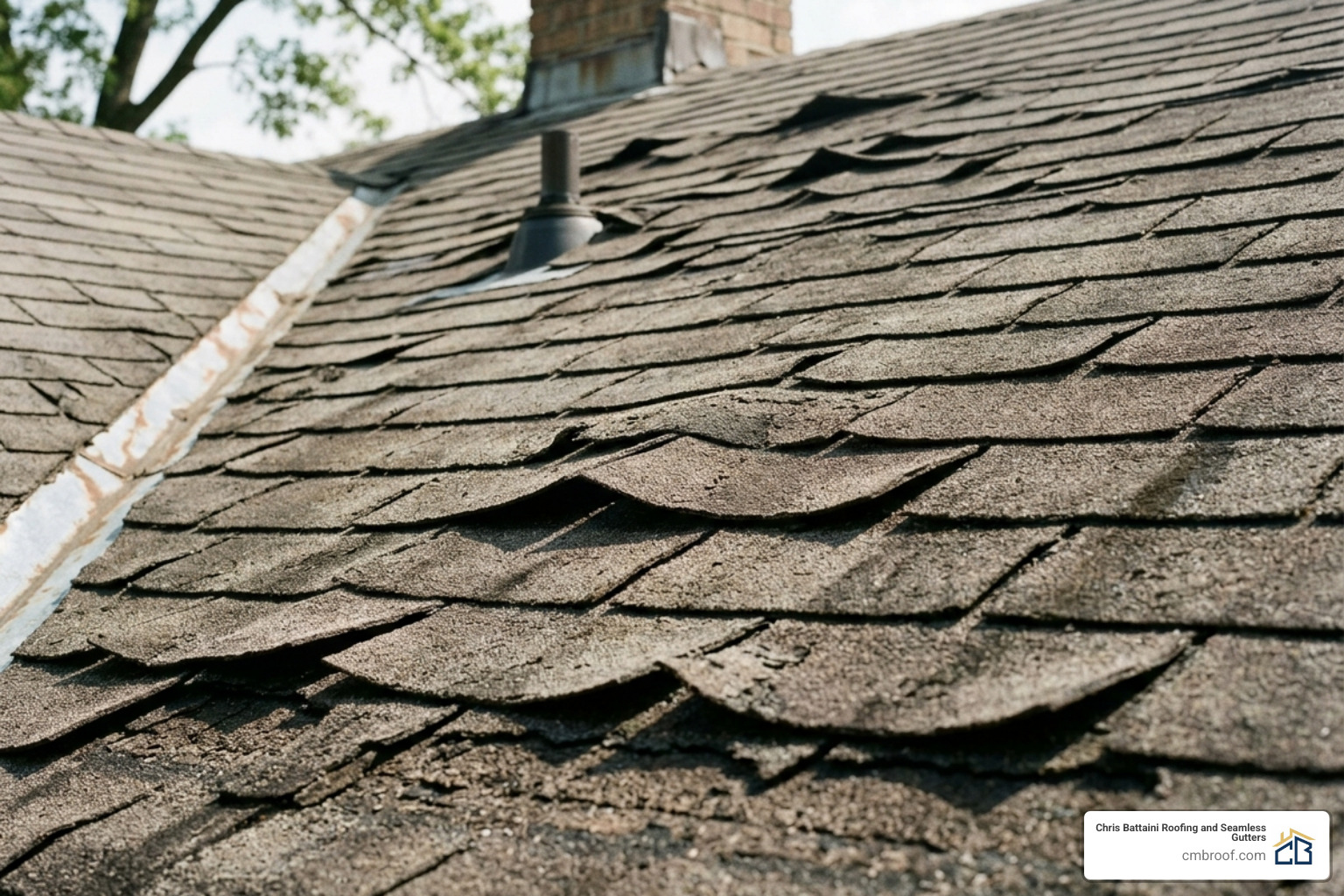
One of the most frequent questions we hear is: “Can I just patch it?” The answer depends on the “30% Rule.”
Generally, if the damage is localized to a small area—say, a few shingles blew off during a storm—a repair is the way to go. However, if more than 30% of the roof is showing signs of wear, or if the roof has reached 80% of its expected lifespan, a full Residential Roof Replacement Service is usually the more cost-effective choice. Continually patching an old roof is like putting a bandage on a sinking ship; eventually, the cost of multiple repairs will exceed the cost of a new, warranted system.
When planning for a new roof, it’s important to understand how insurance and costs work. Based on publicly available internet data, the average cost for a roof replacement can vary wildly. You might see ranges from $5,500 for a small, simple job to over $50,000 for large homes with premium materials like natural slate. Please note that these are average costs based on general research and are not our actual pricing.
When it comes to insurance, the distinction between Replacement Cost Value (RCV) and Actual Cash Value (ACV) is vital.
Homeowners insurance typically covers “covered perils” like hail, fire, or a tree falling on the house. It almost never covers a replacement due to “wear and tear” or neglect. This is why having a strong Roof Warranty Guarantee from a manufacturer is so important for your long-term protection.
While you can’t stop the clock on how often does a roof need to be replaced, you can certainly slow it down. Proactive maintenance is the secret to getting the full 30 years out of an architectural shingle.

Yes, but only under specific conditions. Insurance is designed to protect you against sudden, accidental damage—think of a major hailstorm or a limb crashing through the roof during a Nor’easter. It is not a maintenance plan. If your roof is leaking because it is 25 years old and the shingles are worn out, insurance will likely deny the claim. Always document storm damage with photos immediately to support your case. You can learn more about protection in our Warranty Guarantee.
In Massachusetts, timing is everything. Early fall is often considered the “golden window.” The temperatures are mild (ideally between 45°F and 85°F), which allows the thermal sealing strip on asphalt shingles to bond properly without the shingles becoming too brittle (as they do in winter) or too soft (as they can in mid-July). Spring is also a popular time, though rainy weather can sometimes cause scheduling delays.
This is called a “roof overlay.” While many building codes allow up to two layers of shingles, we generally advise against it. A “tear-off” is superior because it allows us to inspect the wooden roof deck for rot or soft spots. An overlay adds significant weight to your home’s structure and can trap heat, potentially shortening the life of the new shingles. Plus, most premium manufacturer warranties require a full tear-off to be valid.
Understanding how often does a roof need to be replaced is about more than just looking at a calendar; it’s about watching for the signs and knowing the unique challenges of our Berkshire County climate. Whether you are in Pittsfield, Lenox, or Great Barrington, your roof is your home’s first line of defense.
At Chris Battaini Roofing and Seamless Gutters, we take that defense seriously. We are proud to be an Owens Corning Platinum Preferred Contractor. This is an elite designation that we have earned through rigorous screening and a commitment to excellence. It is limited to the top tier of roofing professionals nationwide, allowing us to offer some of the strongest warranties in the industry.
If you’re unsure if your shingles have another five years or if they’re on their last legs, don’t guess. Check out our Roof Replacement Complete Guide or reach out to us for an owner-led, professional assessment. We’re here to ensure your home stays dry and protected for decades to come.
The company services Berkshire County, Massachusetts.
Follow us on Facebook — https://www.facebook.com/chrisbattainiroofing
Need a reliable roofer? CMB Roofing provides licensed, insured, and professional roofing services for homeowners and businesses.
We stand by a simple promise: Clear estimates. Quality workmanship. Clean job sites.
From roof repairs and full replacements to storm damage restoration, our team delivers dependable results with durable materials, expert installation, and complete site cleanup.