-
10 Wendell Ave Extension Pittsfield, MA 01201
-
210 Columbia St., Lee, MA 01238

Built-up roofing contractors are specialists who install, repair, and maintain multi-layer flat roof systems — most commonly used on commercial and industrial buildings.
If you need one fast, here’s what to know:
BUR is one of the oldest roofing systems still in wide use today — over a century of real-world performance on real buildings. That track record is exactly why so many building owners still choose it. But here’s the catch: not every roofer has the equipment, training, or experience to install it correctly. The wrong contractor can turn a proven system into a leaking, failing liability.
This guide walks you through everything you need to know — from how BUR systems are built, to what separates a qualified contractor from one you should avoid.
I’m Christopher Battaini, owner of Chris Battaini Roofing and Seamless Gutters, and with over two decades of hands-on roofing experience serving the North Shore and Greater Boston area, I’ve worked with flat and low-slope roofing systems including the built-up roofing methods covered in this guide. My goal here is to give you a clear, honest breakdown so you can hire the right built-up roofing contractors for your project with confidence.
Terms related to built up roofing contractors:
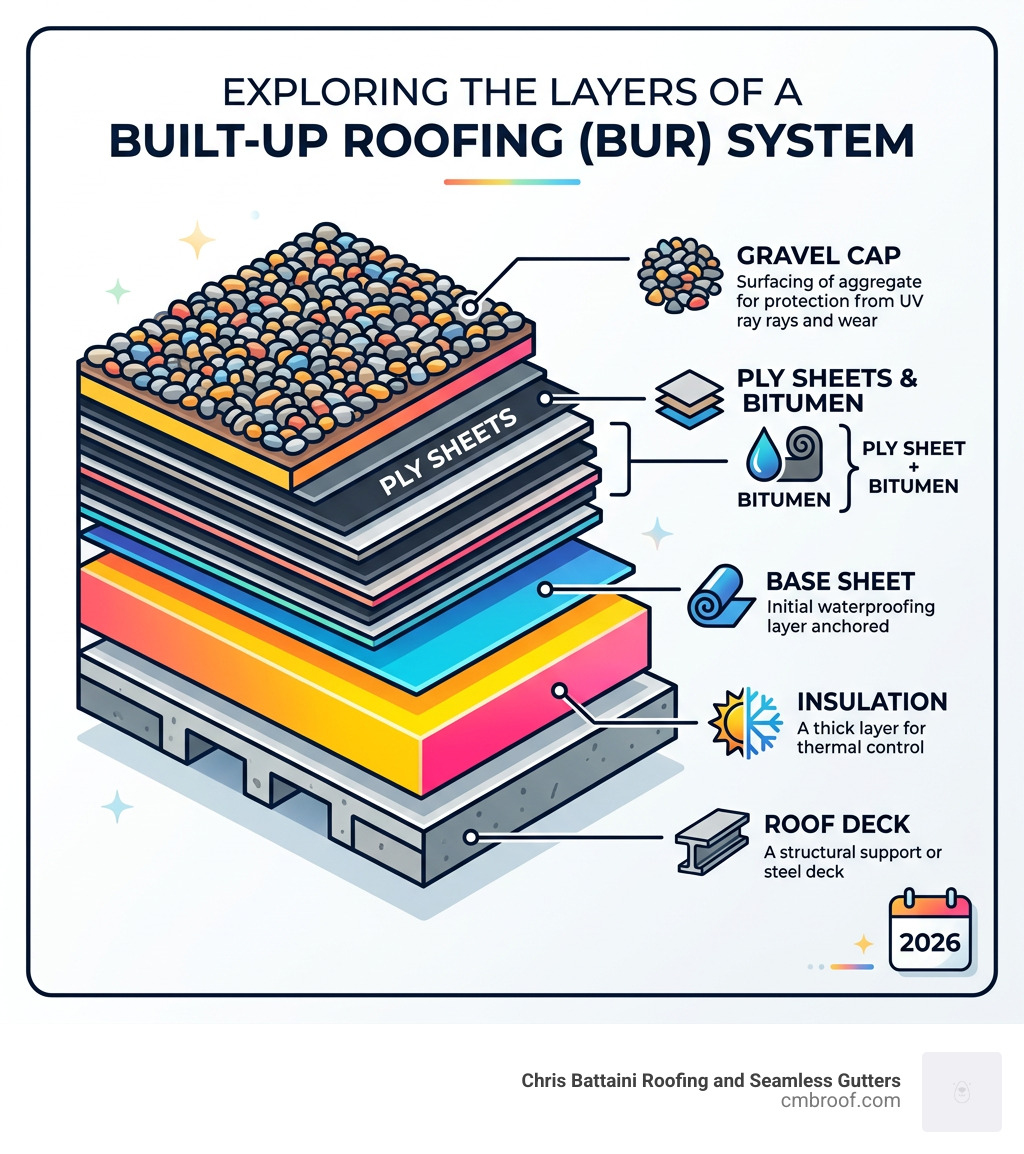
When we talk about a Built-Up Roof (BUR), we are describing a system that relies on the “strength in numbers” philosophy. Instead of a single sheet of material, BUR uses multiple layers of bitumen (asphalt or coal tar) alternated with reinforcing ply sheets. This creates a thick, cohesive membrane that offers redundant waterproofing. If one layer is nicked, there are several more underneath to keep the water out.
The construction of these systems is a precise science. It typically begins with a base sheet that is mechanically fastened over the roof deck or insulation. From there, built up roofing contractors apply several “plies” of felt. This layering process is why you often hear these roofs referred to as “three-ply” or “four-ply” systems.
Choosing the right flat-roofing-materials is essential for the longevity of the structure. BUR remains a heavyweight champion among types-of-flat-roofs because of this multi-layered armor.
A high-quality BUR system is only as good as its ingredients. Here are the core components:
Why do so many industrial and commercial-roofing projects still specify BUR? The answer lies in its sheer ruggedness. Because the system is built on-site, it creates a seamless, monolithic barrier over the entire roof surface.
Here are the primary advantages:
In regions with volatile weather, the “redundant layers” of a BUR system provide peace of mind. Whether it’s the heavy snow loads we see in the Northeast or the intense UV exposure of a summer heatwave, the multi-ply construction handles thermal expansion and contraction better than many single-ply alternatives. This proven performance is why it remains a staple for warehouses, hospitals, and schools.
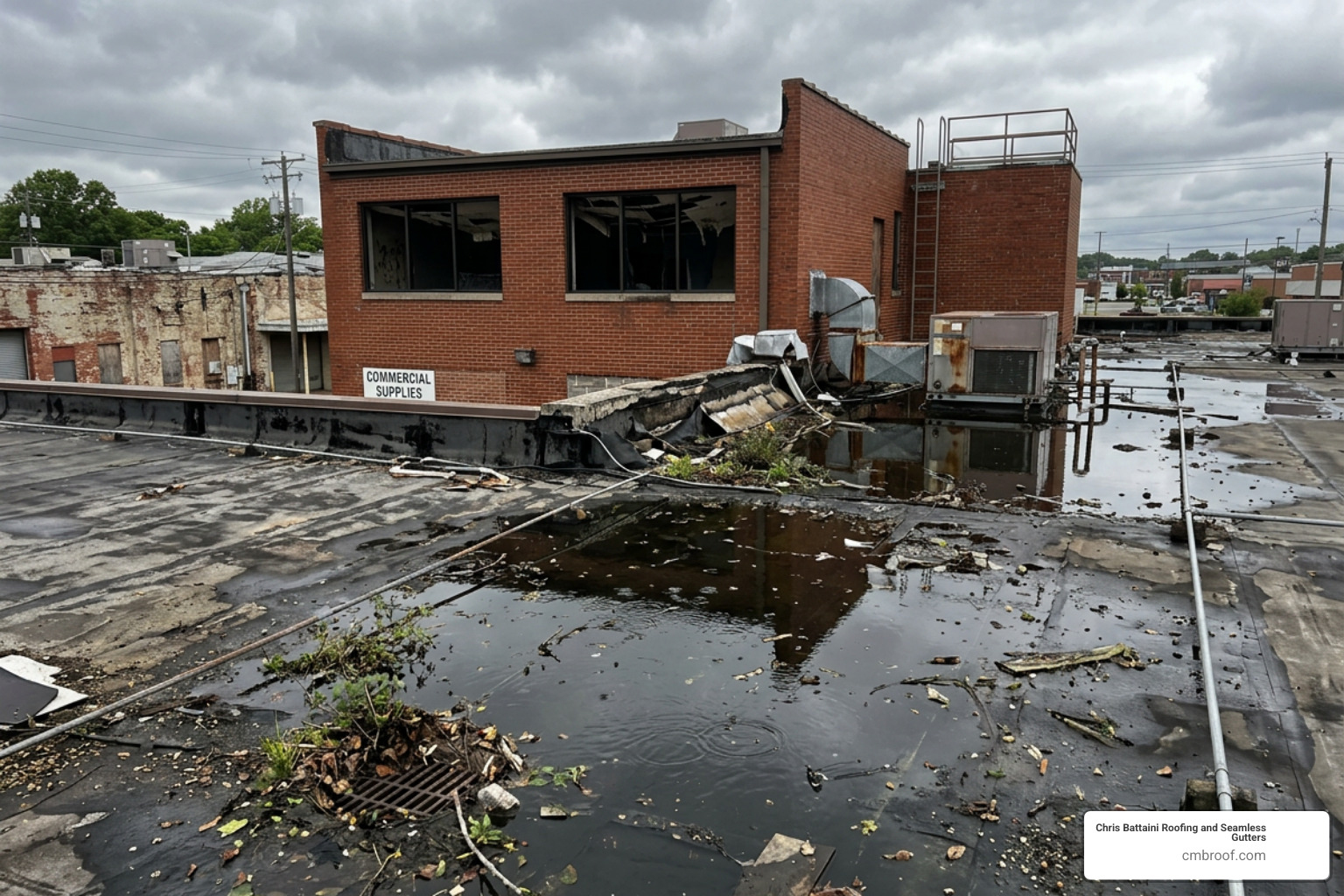
Even the toughest roofs aren’t invincible. Over time, traditional BUR systems can face specific challenges. If you notice “alligatoring” (cracking that looks like reptile skin) or ponding water that doesn’t evaporate within 48 hours, it’s time to call a flat-roof-repair-company.
Common issues include:
Today’s built up roofing contractors have more tools in their belt than just hot kettles of tar.
Installing a BUR system is a labor-intensive process that requires specialized equipment. For hot-applied systems, the bitumen must be heated to its Equiviscous Temperature (EVT). This is the exact temperature where the bitumen is thin enough to spread uniformly but thick enough to provide a proper waterproofing layer.
Professional built up roofing contractors use a “mopping” technique to embed the felts. They must carefully manage lap measurements — headlap, sidelap, and endlap — to ensure there are no gaps in the coverage. For those interested in the technical side, you can read more about flat-roofing-installation techniques.
| Feature | Built-Up Roofing (BUR) | Single-Ply (TPO/EPDM) |
|---|---|---|
| Number of Layers | Multiple (3-5) | Single |
| Installation Method | Hot/Cold Applied Bitumen | Adhered/Fastened/Ballasted |
| Puncture Resistance | Very High | Moderate |
| Lifespan | 20-30 Years | 15-25 Years |
| Repair Difficulty | Moderate | Easy |
When budgeting for a new roof, it is important to understand that costs vary wildly based on the size of the building, the number of layers, and whether the old roof needs to be removed.
Based on publicly available internet data, average costs for BUR installation typically range from $4.50 to $14.00 per square foot. Please note that these are national averages and not the actual pricing of Chris Battaini Roofing and Seamless Gutters.
Factors that influence the wide range in pricing include:
Because BUR requires specialized kettles, tankers, and safety protocols, you cannot simply hire any residential roofer. You need commercial-contractors-for-roofing who have a dedicated track record with this specific system.
A reliable contractor should be able to demonstrate:
When you are evaluating bids, don’t just look at the bottom line. Compare the “scope of work.” Does one contractor include new edge metal and drain inserts while another doesn’t? Are they providing a start-to-finish solution, including the disposal of old materials?
A good contractor will offer a free estimate and a detailed breakdown of the layers they intend to install. They should also discuss preventative maintenance programs to help you reach that 25-year lifespan goal.
With proper professional installation and annual maintenance, a BUR system typically lasts between 20 and 25 years. Factors like local climate and roof drainage play a huge role in this longevity.
In some cases, yes. This is often called a “recover.” However, building codes usually limit the number of roof layers allowed on a structure (typically two). A contractor must also verify that the building’s structure can handle the additional weight of a second BUR system.
Annual inspections are key. You should ensure that drains and gutters are clear of debris, check for areas where gravel has been displaced (exposing the bitumen), and inspect flashings around chimneys and HVAC units for signs of separation.
Choosing the right built-up roofing contractors is the difference between a roof that lasts for decades and one that becomes a constant source of stress. While BUR is an older technology, its multi-layered protection remains one of the most reliable ways to shield a commercial property from the elements.
At Chris Battaini Roofing and Seamless Gutters, we pride ourselves on owner-led service. This means you get expert oversight on every project, ensuring that the workmanship meets our high standards. Whether you need a minor repair or a complete roofing-contractor for a new installation, we are here to help.
Chris Battaini Roofing and Seamless Gutters is an Owens Corning Platinum Preferred Contractor. This earned, elite designation is limited to the top tier of roofing professionals nationwide.
The company services Berkshire County, Massachusetts.
Follow us on Facebook — https://www.facebook.com/chrisbattainiroofing
Need a reliable roofer? CMB Roofing provides licensed, insured, and professional roofing services for homeowners and businesses.
We stand by a simple promise: Clear estimates. Quality workmanship. Clean job sites.
From roof repairs and full replacements to storm damage restoration, our team delivers dependable results with durable materials, expert installation, and complete site cleanup.