-
10 Wendell Ave Extension Pittsfield, MA 01201
-
210 Columbia St., Lee, MA 01238

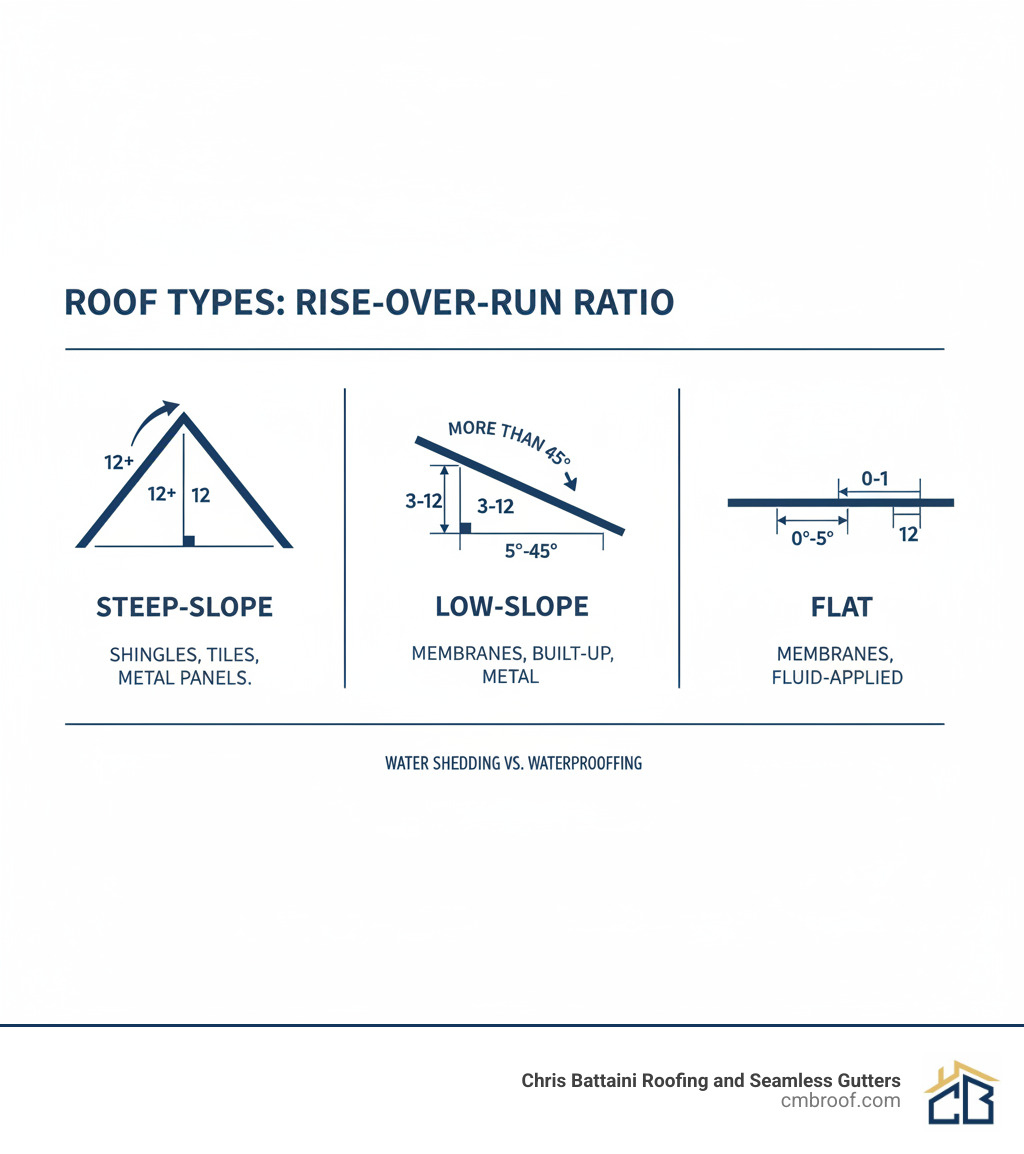
Low slope roofing options are systems for roofs with a pitch less than 3:12 (a 3-inch rise for every 12 inches of horizontal distance). Unlike steep-slope roofs that use gravity to shed water, low-slope roofs need a waterproof barrier to prevent leaks from standing water.
Common low slope roofing options include:
Common on commercial buildings and residential additions like garages, these roofs face a unique challenge: water pooling. When water sits instead of draining, it creates hydrostatic pressure that can force its way through tiny imperfections.
This is why traditional asphalt shingles don’t work on low-slope roofs. Shingles are designed for water-shedding, not waterproofing against standing water. Using them on a low-slope roof voids warranties and violates building codes. The pitch determines if your roof needs to shed water or provide a complete waterproof seal.
As Christopher Battaini, owner of Chris Battaini Roofing and Seamless Gutters, I’ve helped property owners across Berkshire County choose the right low slope roofing options for over two decades. I know that selecting the proper system and ensuring professional installation is key to long-term performance.
Traditional multi-ply systems have earned their reputation through decades of real-world performance. Instead of a single membrane, these systems use multiple layers to create a robust, protective barrier that stands up to the elements.
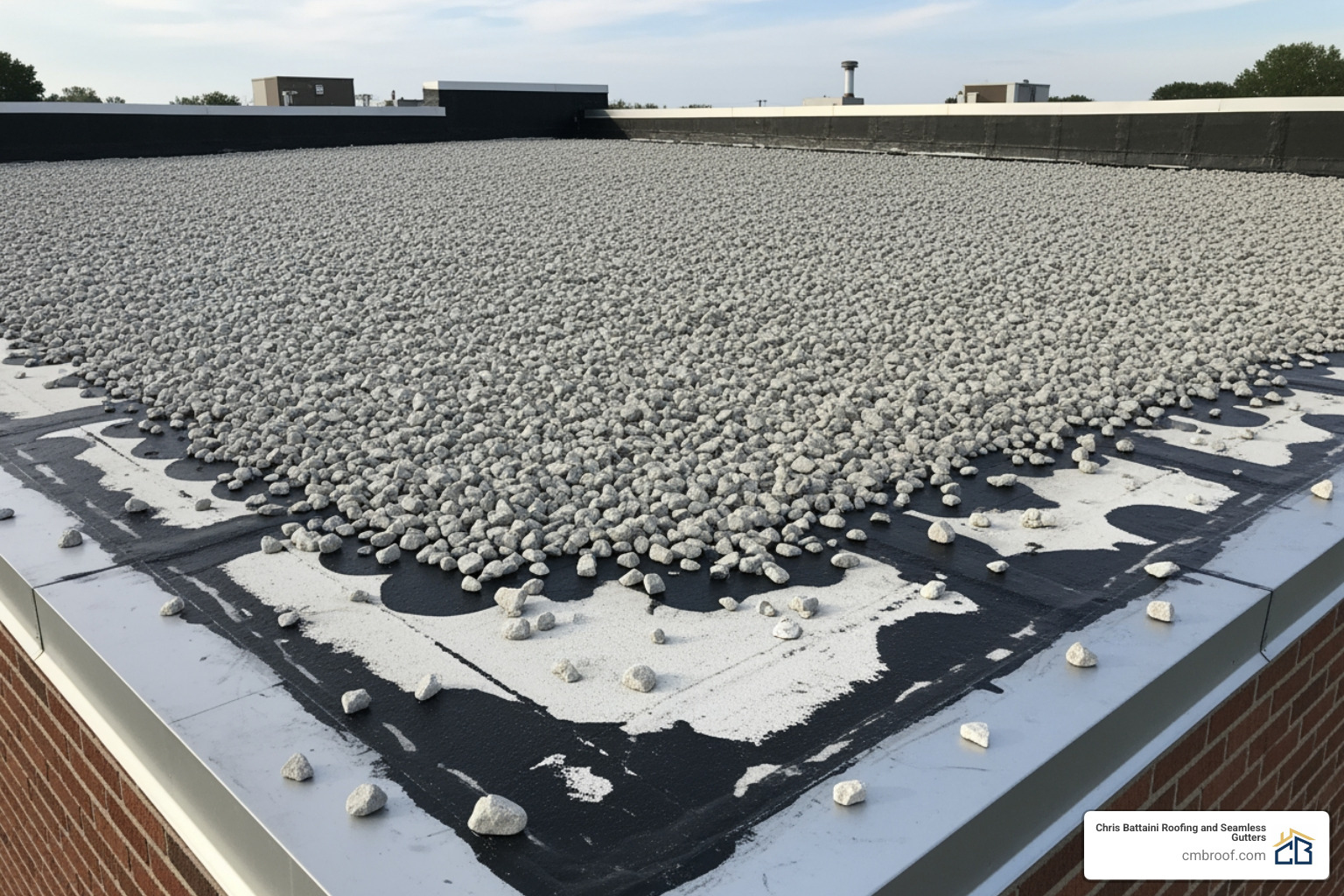
Built-Up Roofing, the classic “tar and gravel” roof, has been around for over a century. The process involves alternating layers of asphalt-impregnated felt with hot asphalt bitumen. The top layer is finished with a cap sheet or aggregate ballast like crushed stone or gravel.
The gravel layer shields the membrane from UV damage and impacts while adding weight to resist wind uplift. This extra protection is vital in Berkshire County and Southern Vermont, with our heavy snow and temperature swings.
BUR systems offer proven durability and exceptional puncture resistance, which is why you often see workers walking directly on them. They also provide good fire resistance and traction. However, BUR systems are very heavy, requiring a strong structure to support the weight. The installation is also labor-intensive, involving hot asphalt that creates strong odors and requires specialized equipment.
Leak detection can be tricky, as water can travel between layers before appearing inside. The crevices between gravel can also trap moisture. With proper installation and maintenance, a BUR system typically lasts 20 to 30 years, but poor workmanship can lead to failure in as little as 10 years.
Modified Bitumen is an evolution of BUR, where polymer modifiers are added to asphalt to create a more resilient, rubberized membrane. This helps it handle temperature extremes and building movement without cracking—a key advantage in our climate.
There are two main types of modifiers. SBS (Styrene-Butadiene-Styrene) provides rubber-like flexibility, which is valuable during our freeze-thaw cycles. APP (Atactic Polypropylene) adds plastic-like properties that resist UV radiation and heat.
Modified Bitumen offers multiple application methods, including torch-applied, self-adhered, cold-adhered, and mechanically fastened systems. The self-adhered method is faster, safer, and flame-free, making it ideal for sensitive locations like schools.
The improved weather resistance of Modified Bitumen makes it well-suited for our local conditions, handling snow, ice, and temperature swings well. It still provides good puncture resistance, and repairs are generally more straightforward than with BUR.
On the downside, it requires professional installation. Torch-applied systems produce strong fumes and carry fire risks that demand experienced installers. A Modified Bitumen roof can be expected to last 10-20 years, depending on the type, installation quality, and maintenance.
More info about our commercial roofing services
Modern materials bring new performance characteristics, faster installation, and energy-saving benefits. These contemporary low slope roofing options are often lighter and use innovative techniques to solve roofing challenges.
Single-ply membranes are a modern alternative to multi-layered systems. Applied in a single layer of flexible synthetic polymer, they are lighter, faster to install, and offer predictable performance.
EPDM (Rubber Roofing), made from ethylene propylene diene monomer, is a durable and flexible synthetic rubber membrane that has been an industry workhorse since the 1970s. It maintains its elasticity in harsh New England winters and resists UV radiation, ozone, and extreme weather. With proper installation, an EPDM roof can last 25 to 50 years. EPDM is one of the most affordable single-ply options, and repairs are straightforward. The main drawback is that traditional black EPDM absorbs heat, increasing cooling costs; a white version is available at a higher price. Its integrity relies on adhesive-based seams, making expert installation essential. It can also be more susceptible to punctures than other materials.
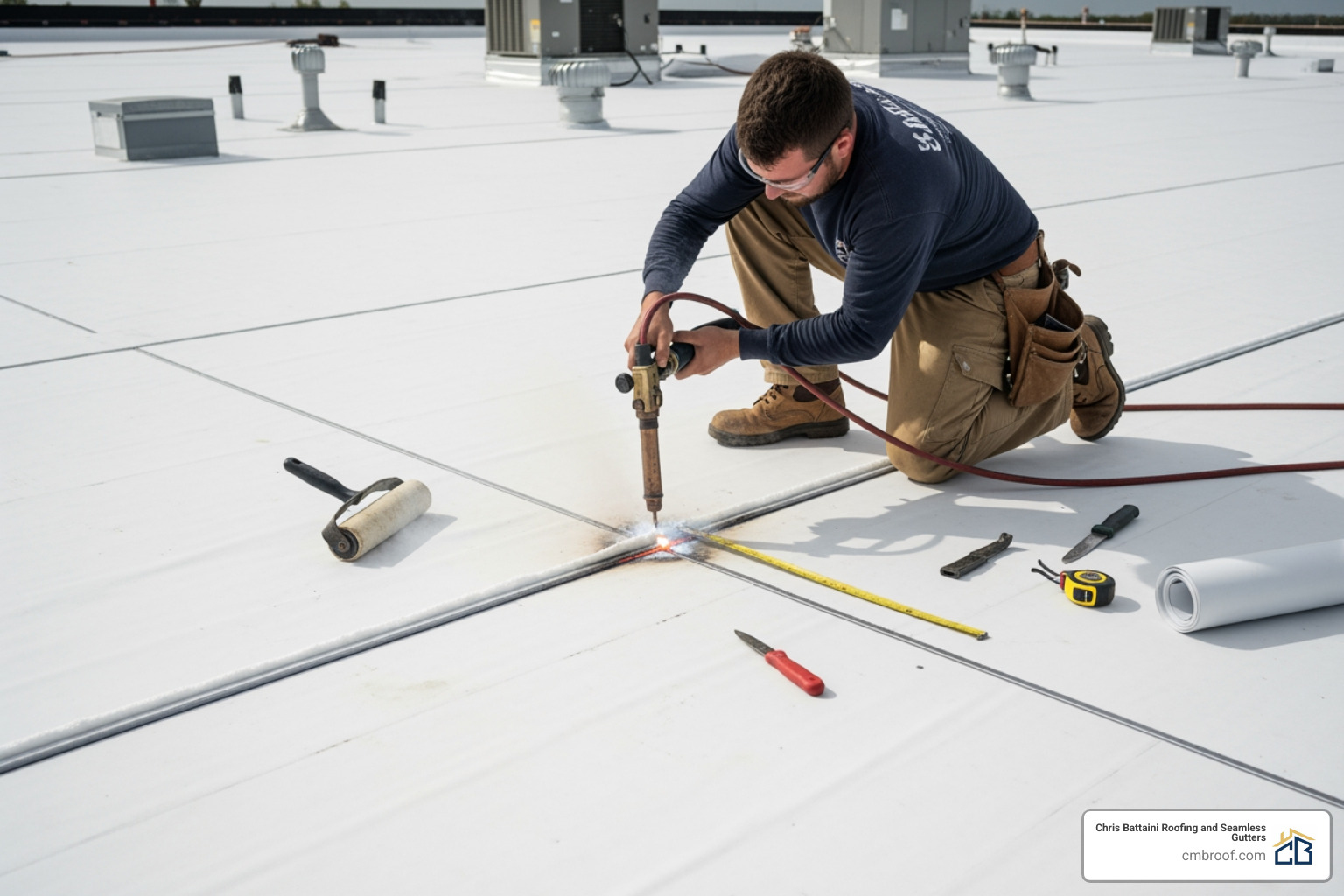
TPO (Thermoplastic Polyolefin) is a newer single-ply membrane combining rubber’s durability with heat-weldable seams. Its highly reflective white surface can significantly lower cooling costs. Unlike EPDM’s adhesive seams, TPO seams are heat-welded, creating a monolithic, watertight bond that offers excellent leak resistance. TPO offers a good balance of cost and performance, resisting UV radiation, chemicals, and punctures. A properly installed TPO membrane typically lasts around 25 years. The catch? Quality can vary between manufacturers, and proper heat-welding requires skilled technicians.
PVC (Polyvinyl Chloride) is a premium, plastic-based single-ply membrane. Reinforced with fiberglass or polyester, PVC offers exceptional strength, longevity, and resistance to tears, punctures, and impacts. Its resistance to chemicals and grease makes it an excellent choice for restaurants or industrial facilities. It is also highly fire-resistant. Like TPO, PVC is typically white and reflective, and its heat-welded seams provide a strong, watertight bond. A PVC roof can last 20 to 30 years. The downside is that PVC generally costs more upfront than EPDM or TPO and can show grime more easily.
Learn about cool roof standards from the CRRC
Metal Roofing (Standing Seam) can be expertly installed on low-slope roofs. These systems feature interlocking panels with raised seams, creating a robust, watertight surface with extreme longevity: 30 to 50 years is standard, and some systems can last 100 years or more. Metal roofs are highly resistant to fire, wind, and impact, and they excel at shedding snow and ice. The trade-off is a higher upfront cost and the absolute need for critical, expert installation. More info about metal roofing.
Fluid-Applied Membranes are liquid coatings that cure into a solid, seamless, monolithic roofing system. This makes them ideal for roofs with complex shapes, domes, or multiple penetrations. They are also excellent for restoration projects, as they can often be applied over existing roofs to extend their service life. They add minimal weight to the structure. However, their performance depends heavily on proper surface preparation, and installation can be sensitive to weather conditions, requiring experienced applicators.
Choosing the right low slope roofing options is a long-term investment in your building’s protection and energy efficiency. The best material is the one that fits your specific situation, especially in the demanding climate of Berkshire County and Southern Vermont.
Our New England climate demands careful consideration. Snow load capacity is critical; your roof must support heavy weight. Materials like BUR and metal are excellent choices. Freeze-thaw cycles require flexible materials like SBS modified bitumen and EPDM that resist cracking. Strong winds also necessitate robust attachment methods, such as those used for single-ply membranes and standing seam metal systems.
Think beyond the initial installation cost and consider the long-term investment. A cheaper material today might cost more over its lifespan in repairs and higher energy bills. Spending more upfront on a premium system like PVC or metal can pay for itself through longevity and reduced maintenance.
Your building’s intended use also matters. Rooftops with regular foot traffic or HVAC units need puncture-resistant materials like BUR or reinforced single-ply membranes. For buildings with chemical exposure, PVC’s resistance is invaluable.
Maintenance requirements vary widely. Be honest about the upkeep you’re willing to commit to. Metal roofs require minimal attention, while lighter-colored membranes may need cleaning to maintain reflectivity.
Here’s how the most popular low slope roofing options stack up:
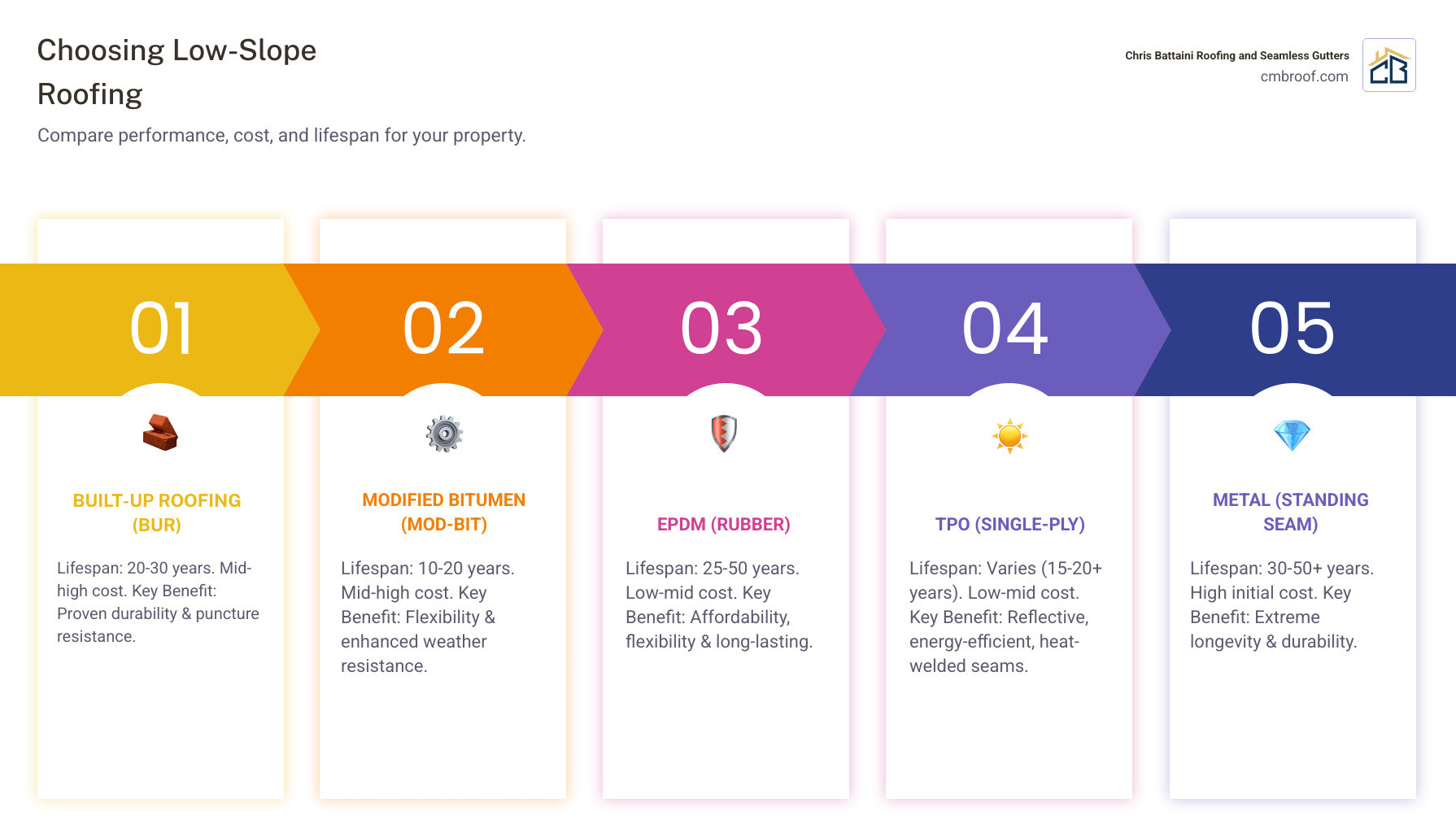
| Material | Lifespan (Years) | Relative Cost (1-5, 5 highest) | Key Benefit |
|---|---|---|---|
| Built-Up Roofing | 20-30 | 3-4 | Proven durability & puncture resistance |
| Modified Bitumen | 10-20 | 3-4 | Flexibility & improved weather resistance |
| EPDM (Rubber) | 25-50 | 2-3 | Affordability & flexibility |
| TPO | ~25 | 2-3 | Energy efficiency & strong heat-welded seams |
| PVC | 20-30 | 4-5 | Chemical & fire resistance, extreme durability |
| Metal (Standing Seam) | 30-100 | 5 | Extreme longevity & aesthetic appeal |
This question comes up often: “Can I just install asphalt shingles on my low-slope roof?” The answer is an emphatic no, for reasons of physics, manufacturer requirements, and building code.
The issue is water shedding versus waterproofing. Shingles are designed to shed water quickly on steep slopes using gravity. Low-slope systems must be completely waterproof because water drains slowly or pools.
When water pools, it creates hydrostatic pressure that forces water under shingle tabs and through nail holes. Shingles aren’t built for this and will fail, often within the first year.
Installing asphalt shingles on a roof with a pitch of 2:12 or less immediately voids your manufacturer’s warranty. When leaks occur, you’ll have no coverage for repair costs.
It’s also a building code violation. The International Residential Code (specifically R905.2.2 of the 2018 IRC) prohibits standard shingle installation on roofs below certain pitches. Code compliance protects your safety, property value, and insurance validity. While shingles are familiar and cost-effective for steep slopes, specialized low slope roofing options are essential for protecting your investment.
Check the International Residential Code for roofing requirements
Learn about our asphalt shingle roofing for steeper pitches
After two decades of helping property owners in Berkshire County and Southern Vermont, certain questions about low slope roofing options come up frequently. Here are the answers.
For longevity, metal roofing and EPDM membranes are top performers. Standing seam metal can last 30 to 50+ years, while EPDM often lasts 25 to 50 years.
However, proper installation is the most critical factor for longevity. Craftsmanship is more important than the material itself. A well-installed budget-friendly system will outperform a poorly installed premium one. Regular maintenance is also key to reaching a roof’s full potential lifespan.
It depends on the material. Some low slope roofing options handle foot traffic much better than others.
Regardless of the material, always use caution. Consult with us before accessing your roof so we can advise on the safest approach for your specific system.
Costs for low slope roofing options vary widely based on several factors. The chosen material is a significant driver, with EPDM and TPO being more budget-friendly than premium PVC and metal. The size and complexity of your roof—including penetrations, shape, and access—also play a major role.
Other factors include the condition of the existing roof deck, insulation needs, and local labor rates.
Based on average costs from various online data sources, low slope roofing installations can range from approximately $5 to over $25 per square foot. Specialty systems or complex projects can exceed this range. These are only estimates based on general internet data and not quotes for our services.
The only way to get an accurate cost is with an on-site inspection. We are happy to assess your unique situation and provide a detailed quote that reflects your actual needs.
If you suspect a leak, learn about roof leak repair
Choosing the right low slope roofing options doesn’t have to be overwhelming. As we’ve covered, each material—from traditional BUR and Modified Bitumen to modern TPO, EPDM, PVC, and metal—offers unique strengths.
There is no single “best” material. The ideal system depends on your budget, building use, our demanding local climate, and your maintenance preferences.
What matters most is professional installation. The quality of the installation is more critical to a roof’s long-term performance than the material itself. Craftsmanship makes all the difference, which is why I’ve seen modest systems outlast premium ones due to superior installation.
That’s why at Chris Battaini Roofing and Seamless Gutters, I personally oversee every project. When you work with us, you’re getting owner-led service. We stand behind our work with exceptional workmanship warranties because we believe in doing the job right the first time. Your investment deserves that commitment.
Our exceptional workmanship warranty guarantees peace of mind
Whether you need a residential garage roof or a full commercial replacement, we’re here to help you find the solution that fits your needs. Explore our residential flat roofing solutions to find the perfect fit for your home, or reach out to discuss your project. With over two decades of experience, we understand the challenges properties in our region face.
Chris Battaini Roofing and Seamless Gutters proudly services Berkshire, Hampden, Hampshire, and Franklin Counties in Massachusetts.
Need a reliable roofer? CMB Roofing provides licensed, insured, and professional roofing services for homeowners and businesses.
We stand by a simple promise: Clear estimates. Quality workmanship. Clean job sites.
From roof repairs and full replacements to storm damage restoration, our team delivers dependable results with durable materials, expert installation, and complete site cleanup.