-
10 Wendell Ave Extension Pittsfield, MA 01201
-
210 Columbia St., Lee, MA 01238

Commercial roof coatings as a solution for ponding water offer the most effective way to protect your building from water damage while extending your roof’s life. Here’s what you need to know:
Quick Solutions for Ponding Water:
If you’ve noticed water sitting on your commercial roof for more than 48 hours after rainfall, you’re dealing with what the National Roofing Contractors Association (NRCA) officially calls “ponding water.” This isn’t just a minor inconvenience – it’s a serious threat that can void warranties, cause structural damage, and lead to costly leaks.
The problem gets worse fast. Standing water accelerates membrane deterioration, creates breeding grounds for mosquitoes, and can cause freeze-thaw damage that literally tears your roof apart. Many building owners assume their only option is expensive re-roofing, but modern coating technology offers a smarter solution.
Commercial roof coatings create a seamless, waterproof membrane that can withstand permanent ponding while reflecting heat and extending your roof’s life by 5-15 years. The best part? Installation typically costs 50-70% less than full replacement and can be completed with minimal business disruption.
Find more about commercial roof coatings as a solution for ponding water:
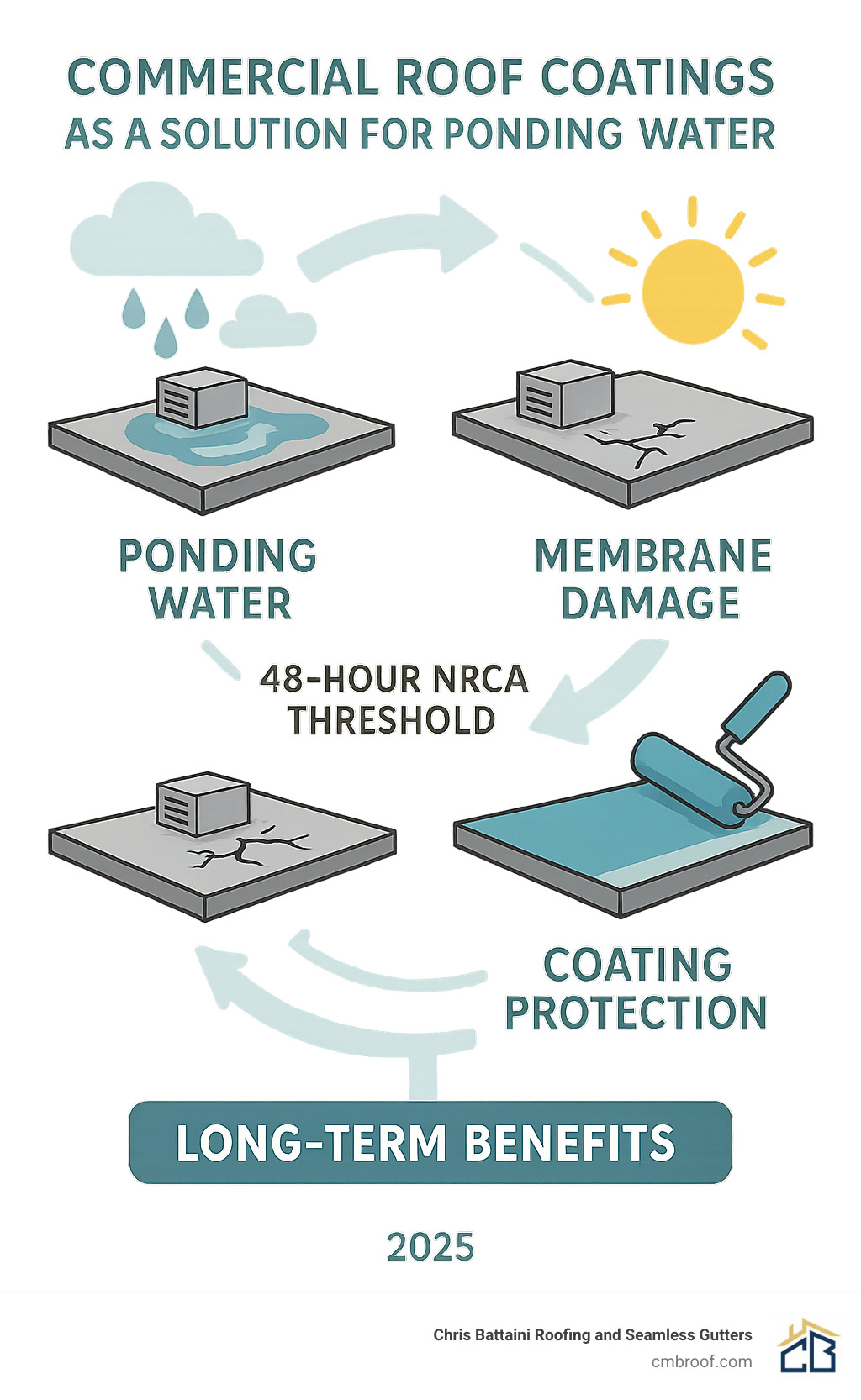
When you step onto your commercial roof after a rainstorm and see pools still there days later, you’re looking at what the National Roofing Contractors Association calls ponding water—water that remains on a roof more than 48 hours after precipitation stops.
That 48-hour point matters. Beyond it, most warranties allow manufacturers to walk away, and material breakdown begins in earnest. Common causes include an inadequate 0.25-inch-per-foot slope, clogged drains, deck deflection, or gradual building settlement that creates new low spots.
Ponding isn’t just an eyesore. The extra weight stresses your structure, accelerates membrane deterioration, fuels algae and mosquito growth, and—in winter—freeze-thaw cycles pry seams apart, leading to leaks that can shut down operations.
This is where commercial roof coatings as a solution for ponding water shine. Modern silicone, reinforced acrylic, and PMMA systems tolerate standing water while creating a seamless, waterproof skin that preserves your existing roof.
For a professional opinion, schedule one of our roof inspection services to pinpoint issues before they become emergencies.
Catching these indicators early can save thousands in repair costs and help determine whether coatings, drainage corrections, or localized repairs are the right next step.
When water sits on your commercial roof for days after a storm, you’re facing a problem that gets worse every hour. Traditional fixes like patching or even full replacement often feel like throwing money at a problem that just keeps coming back. But here’s the good news: commercial roof coatings as a solution for ponding water offer a smarter, more permanent way to protect your building.
Think of roof coatings as creating a brand-new skin for your existing roof. Unlike patches that cover individual problem spots, coatings create a completely seamless, waterproof membrane that turns your entire roof into one continuous barrier against water damage.
The numbers tell an impressive story. Modern roof coatings achieve waterproof ratings that put traditional roofing materials to shame. These coatings reflect 80-90% of the sun’s UV rays, which means your air conditioning won’t work as hard during those brutal summer months. Your energy bills drop while your roof gets the protection it needs.
Installation happens fast – usually in days, not weeks. While a full roof replacement might shut down your business operations and create chaos for weeks, coating applications let you keep your doors open and your business running normally.
The financial benefits are hard to ignore. Traditional roof replacement typically runs $12-$25 per square foot, while coating applications usually cost $4-$8 per square foot. These are average costs based on internet data and not actual costs for Chris Battaini Roofing and Seamless Gutters. Even better, many coating systems qualify for federal and state tax credits as energy-efficient improvements.
Here’s what really matters: properly applied roof coatings can extend your roof’s life by 5-15 years. That’s potentially more than a decade of protection at a fraction of replacement cost. You can learn more about the science behind these energy savings through scientific research on reflective roofs and urban heat island effects.
Not all roof coatings handle ponding water the same way. Understanding your options helps you choose the right solution for your specific situation.
Acrylic coatings work beautifully for energy efficiency and general roof protection. They reflect heat exceptionally well and work with most existing roof types. The catch? Standard acrylic coatings can actually curl up when exposed to standing water – unless you reinforce them properly.
Silicone coatings are the champions of ponding water protection. They’re specifically engineered to handle permanent standing water without breaking down. Some manufacturers even offer unlimited ponding water warranties with silicone systems.
Urethane coatings excel when your roof sees heavy foot traffic or equipment movement. They’re incredibly tough and handle ponding well, though the strong chemical odors during application might not work well if your building stays occupied during the project.
PMMA coatings tackle the toughest challenges. If your roof is completely flat with persistent ponding problems, PMMA systems are engineered to handle these extreme conditions.
| Coating Type | Ponding Performance | UV Resistance | Average Cost/sq ft | Warranty Years | VOC Level |
|---|---|---|---|---|---|
| Acrylic | Good (reinforced) | Excellent | $3-$9 | 5-15 | Low |
| Silicone | Excellent | Excellent | $4-$12 | 10-20 | Low |
| Urethane | Good | Good | $5-$15 | 5-15 | Medium |
| PMMA | Excellent | Excellent | $6-$18 | 10-20 | Medium |
Note: These are average costs based on internet data and not actual costs for Chris Battaini Roofing and Seamless Gutters
The waste problem alone makes coatings attractive. A typical re-roofing project creates massive amounts of waste – everything from the old roof has to go somewhere, usually a landfill. Coatings eliminate this waste by protecting and preserving your existing roof system.
Instead of installing expensive tapered insulation systems to fix ponding problems, coatings can level low areas and provide waterproofing at the same time. This approach saves both material costs and labor expenses.
Your daily operations stay normal during coating applications. No temporary relocations, no major disruptions to your employees or customers. It’s a clean, relatively quiet process that protects your investment without turning your business upside down.
The cost comparison speaks for itself. Average restoration costs of $4-$8 per square foot compare to re-roofing costs of $12-$25 per square foot (based on internet averages). Even at the high end, coatings typically cost 50-70% less than complete replacement.
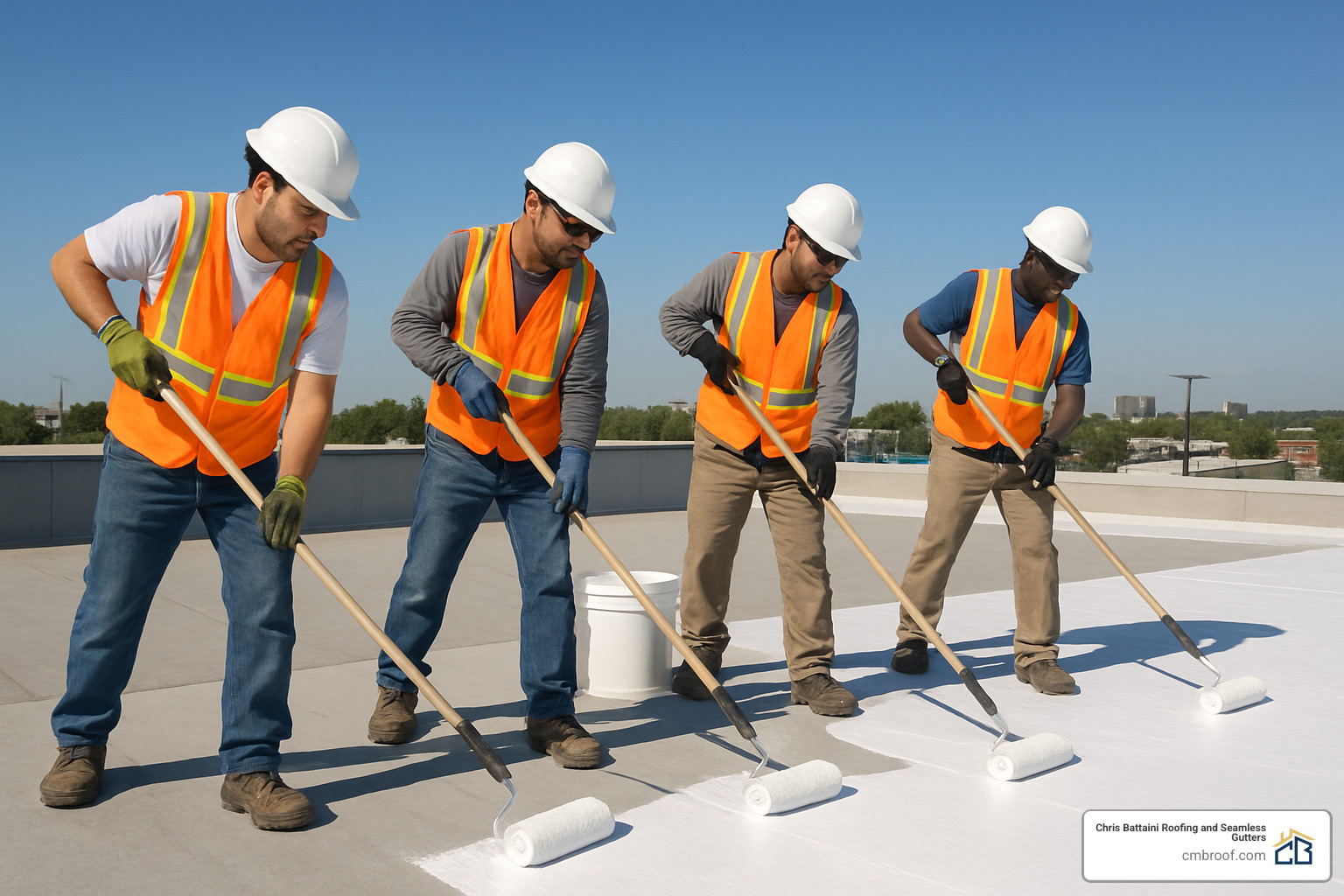
Think of roof coating like painting your house – you wouldn’t paint over peeling, rotting wood and expect good results. The same principle applies to commercial roof coatings as a solution for ponding water. Success depends entirely on proper evaluation and preparation.
We never recommend coating a failing roof system. Coatings are preservation tools, not magic fixes for roofs that are falling apart. If your roof is already leaking badly or structurally compromised, you’re better off replacing it entirely.
A comprehensive roof inspection starts our process every time. We walk every square foot, looking for membrane damage, open seams, compromised flashings, and any structural issues that could spell trouble down the road.
Moisture scanning with infrared technology reveals the hidden enemies lurking beneath your roof surface. Trapped moisture will cause coating failure faster than you can say “warranty void.” We use thermal imaging cameras to spot these wet areas that look perfectly fine to the naked eye.
Here’s our five-year watertight rule: If your roof can’t stay leak-free for at least five more years with basic maintenance, coating isn’t the right choice. We’d rather be honest about this upfront than have you disappointed later.
Our repair checklist covers everything that could compromise your coating: sealing open seams and laps, repairing membrane cracks or splits, fixing compromised penetrations, addressing flashing deterioration, clearing drainage systems, and replacing corroded fasteners. Each item gets checked off before we move forward.
Dry surface requirements are non-negotiable. Coatings must go on completely dry substrates or they simply won’t stick properly. We verify moisture levels with professional equipment – no guessing allowed.
For a detailed assessment of whether your roof is ready for coating, check out our Commercial Roof Repair Solutions to understand exactly what the preparation process involves.
Adding drains and scuppers provides the most permanent fix for ponding water problems. We evaluate your existing drainage capacity and recommend additional outlets where they’re needed most.
Clearing clogs from existing drains often solves ponding problems instantly. You’d be amazed what we find blocking drainage systems – leaves, debris, tennis balls, and yes, even bird nests.
Building crickets around rooftop equipment sounds funny, but these small ridges work wonders. They redirect water flow away from potential ponding areas and guide it toward drains instead of letting it sit and cause problems.
Localized spray foam build-up can correct minor depressions without tearing off your entire roof. We use spray-in-place polyurethane foam to build up low areas and create positive drainage.
Inspection costs typically range from $0.05-$0.15 per square foot for basic assessment, with detailed infrared moisture scanning adding to the total. Minor repairs average $1-$4 per square foot, depending on damage extent and materials required. Cleaning and preparation costs range from $0.30-$0.75 per square foot.
Important reality check: These are average costs based on internet data and not actual costs for Chris Battaini Roofing and Seamless Gutters. Real project costs vary dramatically based on your roof’s condition, access challenges, local labor rates, and specific requirements. We always provide detailed, job-specific quotes after thorough evaluation – no surprises, no hidden costs.
Timeline expectations help you plan around the work. Initial inspection takes 1-2 days, repair work requires 2-5 days depending on scope, coating application needs 3-7 days (weather permitting), and curing time between coats is 24-48 hours.
Proper application technique determines coating performance and longevity. We follow strict protocols to ensure optimal results for every project.
Pressure washing and drying begins every coating project. We remove all dirt, debris, and loose materials, then allow complete drying before proceeding. Moisture content must be below manufacturer specifications.
Primer selection depends on the substrate type and coating system. Some coatings require specific primers for proper adhesion, while others can be applied directly to clean, sound surfaces.
Fabric reinforcement goes into critical areas like seams, penetrations, and ponding zones. We embed polyester fabric into the base coat to provide additional strength and puncture resistance.
Field coating application uses squeegees, rollers, or spray equipment depending on the coating type and roof conditions. We maintain consistent application rates and thickness throughout the project.
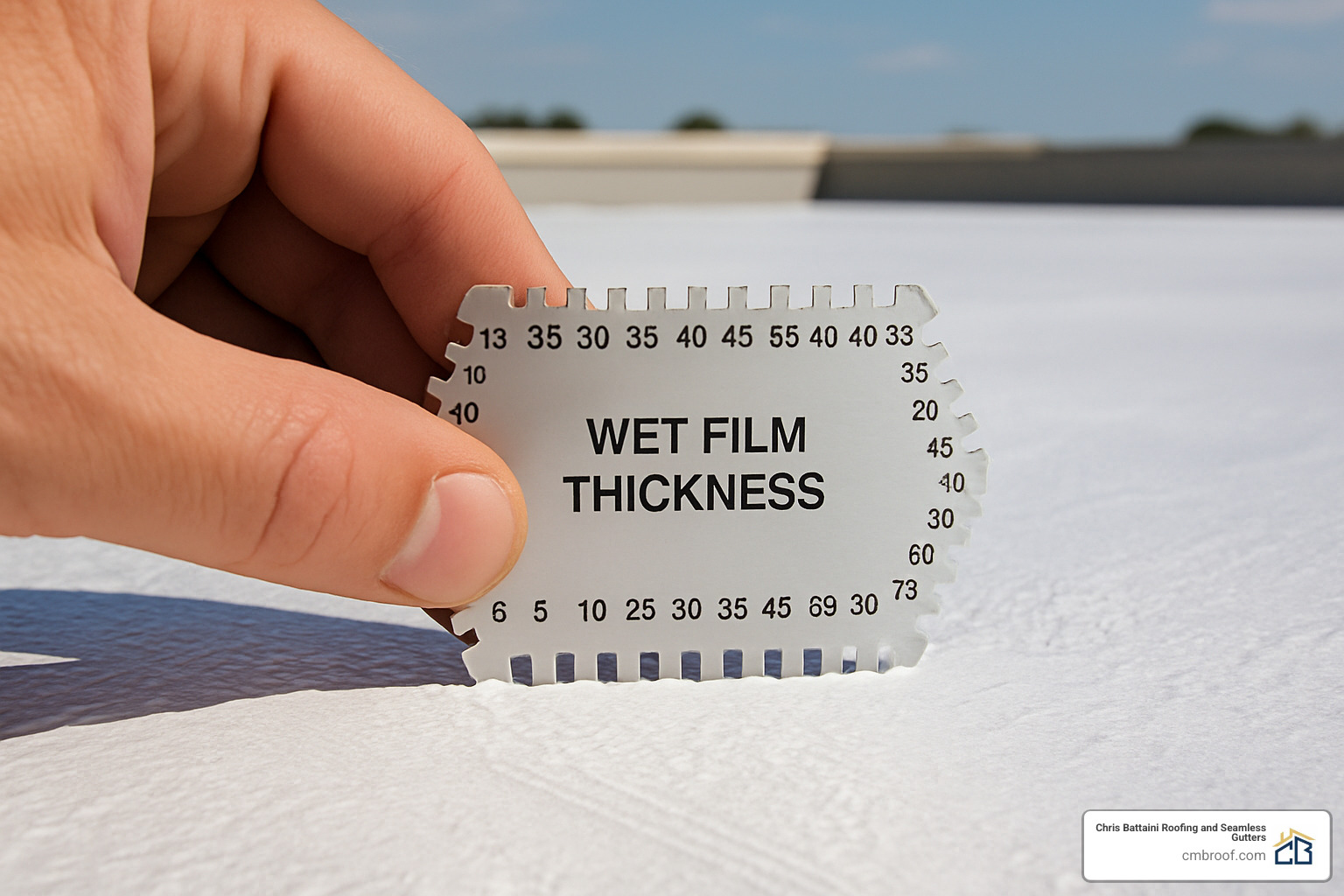
Millage targets vary by location and coating type. In ponding areas, we typically apply 40-80 mils of coating thickness to ensure adequate protection. Standard field areas receive 20-40 mils.
Cure times must be respected between coats. Rushing the process leads to poor adhesion and coating failure. We monitor weather conditions and adjust schedules accordingly.
Weather windows determine when coating work can proceed. Temperature, humidity, and precipitation forecasts all affect application timing and coating performance.
Ponding pocket filling requires specific techniques to ensure proper coverage and thickness. We use specialized application methods to achieve uniform coating thickness even in standing water areas.
Silicone “pancake” leveling involves applying thicker coats in low areas to create a more level surface. This technique helps reduce ponding while providing waterproof protection.
Reinforcing embeds go into all critical areas where ponding occurs. We use multiple layers of fabric reinforcement to create a bulletproof membrane in these vulnerable zones.
Edge terminations require careful attention to prevent water infiltration. We use specialized sealants and termination techniques to ensure watertight transitions.
Dry film thickness (DFT) verification ensures adequate coating thickness throughout the project. We use calibrated gauges to measure and document coating thickness in multiple locations.
Adhesion pull-testing verifies proper bonding between coating and substrate. We perform these tests according to manufacturer specifications to ensure warranty compliance.
Photographic documentation provides before, during, and after records of all work performed. This documentation supports warranty claims and helps with future maintenance planning.
Warranty registration must be completed promptly after project completion. We handle all paperwork and documentation to ensure full warranty coverage for our clients.
The real magic of commercial roof coatings as a solution for ponding water happens after installation. You’re not just getting immediate protection – you’re investing in years of ongoing benefits that keep paying dividends.
Energy savings hit your bottom line immediately. Most building owners see 10-30% reductions in cooling costs within the first year. Those white, reflective coatings work like a giant mirror, bouncing heat away from your building instead of letting it soak through.
Extended roof life gives you the biggest return on investment. Instead of replacing your roof in 5 years, you might get another 10-15 years of reliable service. That’s a massive cost deferral that frees up capital for other business needs.
Your HVAC equipment benefits too. When your roof isn’t absorbing and radiating heat like a giant oven, your cooling system operates more efficiently. Equipment lasts longer, needs fewer repairs, and runs more quietly.
Cool roof incentives can put money back in your pocket. Many utility companies offer rebates for energy-efficient improvements, and some states provide tax credits for reflective roofing systems.
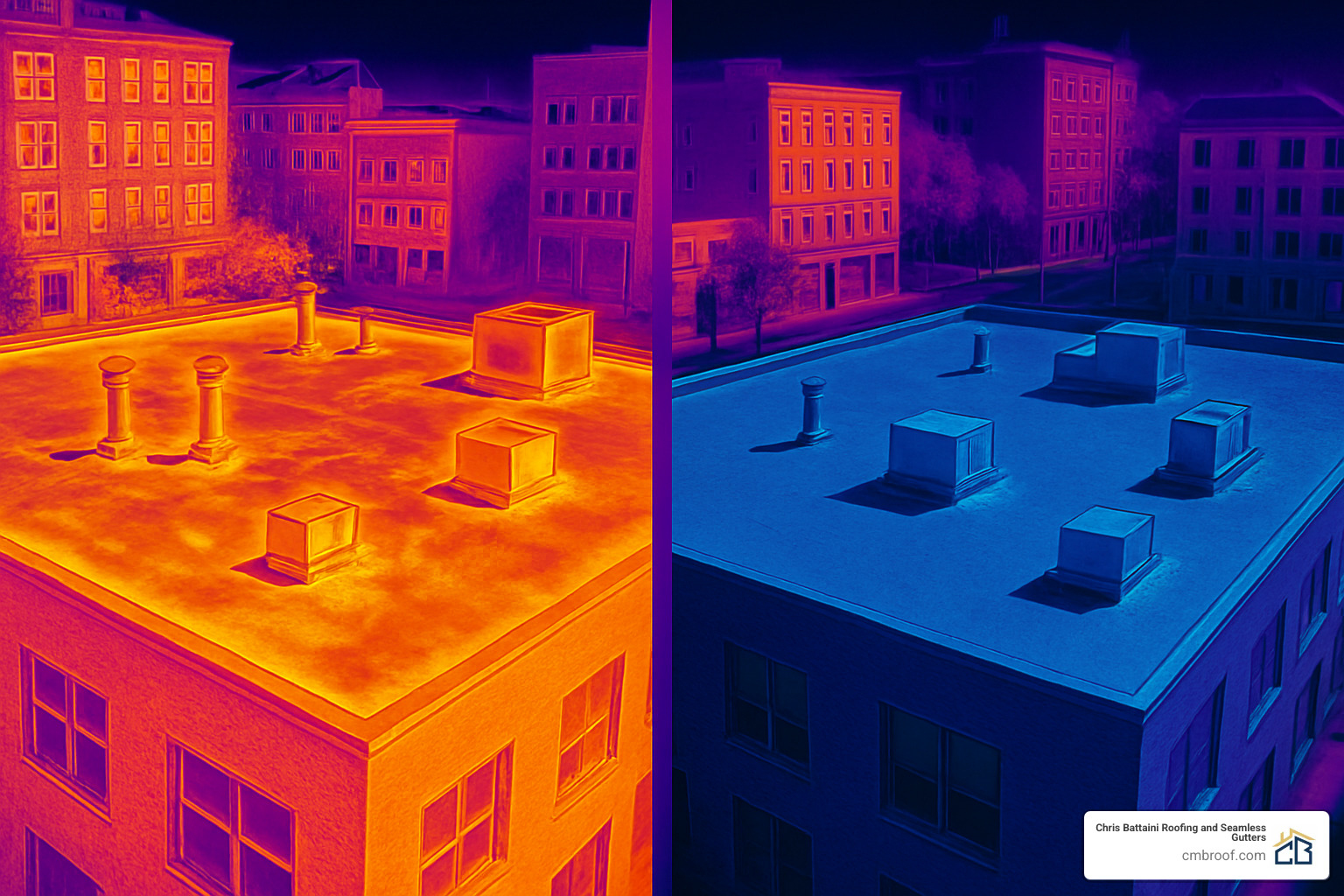
Annual cleaning keeps your coating performing at peak efficiency. Dirt and debris reduce reflectivity, which means less energy savings. A professional cleaning every year maintains that bright, reflective surface that saves you money.
Debris removal prevents new ponding problems from developing. Leaves, branches, and other debris can block drains and create new low spots where water collects.
Re-coat cycles typically happen every 10-12 years, depending on your coating type and local weather conditions. The good news? Re-coating costs much less than the original application because the prep work is minimal.
Smart maintenance protects your coating investment and ensures maximum performance. Semi-annual inspections in spring and fall catch issues early. Clear drains at least twice yearly, and more often if you have trees nearby. Touch-up damage immediately when you spot it. Small coating repairs cost very little and prevent water from getting underneath and causing bigger problems.
Recoat timing depends on your specific coating and local conditions. We monitor coating condition during regular inspections and recommend recoating when performance starts declining.
Your scheduled maintenance should include monthly visual checks for obvious problems, quarterly drain cleaning, semi-annual professional inspections, and annual coating condition assessments. This proactive approach prevents most problems and maximizes your coating’s lifespan.
The bottom line? A well-maintained coated roof provides decades of reliable service at a fraction of replacement costs. You get energy savings, extended roof life, and peace of mind knowing your building is protected from ponding water damage.
Here’s the honest truth: commercial roof coatings as a solution for ponding water are incredibly effective, but they’re not magic. While modern coatings can absolutely handle standing water without failing, they work best when you also address the underlying drainage issues.
Think of it this way – coatings are like a really good raincoat. They’ll keep you dry even if you’re standing in a puddle, but you’ll still be more comfortable if you step out of the puddle altogether.
We always recommend fixing drainage problems first whenever possible. Clear those clogged drains, add extra scuppers where needed, and correct any obvious slope issues. Then apply the coating as your insurance policy against future ponding water problems.
The beauty of this approach is that you get the best of both worlds: proper drainage prevents most ponding issues, while the coating protects against the occasional standing water that might still occur during heavy storms.
The compatibility between coatings and existing roof materials can make or break your project. Fortunately, most modern coatings are designed to work across multiple roof types.
Silicone coatings are the champions of compatibility. They stick beautifully to TPO, EPDM, metal roofs, built-up roofs, and modified bitumen – often without requiring any special primers. This makes them incredibly versatile for commercial buildings with mixed roofing materials.
Acrylic coatings perform excellently on metal, built-up, and modified bitumen roofs. For single-ply membranes like TPO and EPDM, they might need specific primers to ensure proper adhesion, but the results are worth it.
Urethane and PMMA coatings offer fantastic adhesion to most substrates, though they may require specific primers depending on your existing roof material. These premium coatings provide exceptional durability once properly applied.
Here’s what we always do: adhesion testing before starting any project. We apply small test patches to verify that the coating will bond properly to your specific roof material. This eliminates any guesswork and ensures your coating will perform as expected for years to come.
The lifespan of your coating depends on several factors, but most quality coatings will protect your roof for 8-20 years before needing renewal. It’s like asking how long your car will last – it depends on how you drive it and how well you maintain it.
Environmental conditions play a huge role. Roofs in harsh climates with extreme temperature swings, heavy UV exposure, or frequent storms will need recoating sooner than roofs in milder conditions. Foot traffic also matters – roofs with heavy equipment or frequent maintenance access wear out faster.
Coating quality makes a significant difference. Acrylic coatings typically last 8-12 years, while silicone coatings often perform well for 10-15 years. Premium PMMA coatings can last 10-20 years with proper maintenance.
Here’s how to know when it’s time to recoat: visible wear or thinning of the coating surface, reduced reflectivity that increases your energy costs, minor leaks or seepage in previously protected areas, or granule loss and chalking on the surface.
The smart approach is proactive recoating before problems develop. We recommend scheduling your next coating when the current one reaches about 80% of its expected lifespan. This maintains continuous protection and often costs less than waiting for failure and needing emergency repairs.
Regular inspections help us track your coating’s condition and recommend optimal recoating timing. Most of our clients find that planned recoating every 10-12 years keeps their roofs in excellent condition while spreading costs predictably over time.
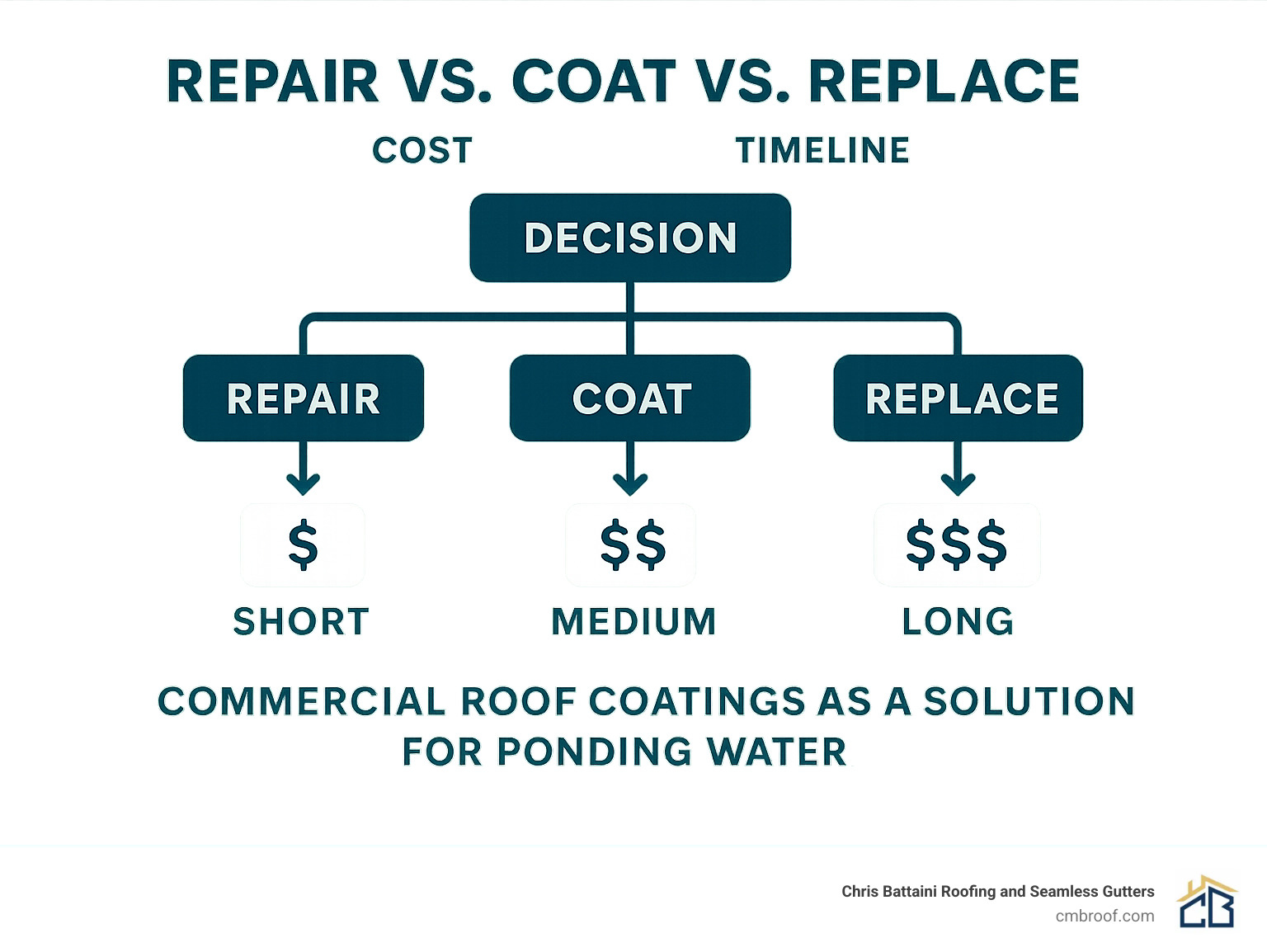
When water sits on your commercial roof for days after a storm, you’re facing a problem that won’t fix itself. The good news? Commercial roof coatings as a solution for ponding water offer a smart, cost-effective way to protect your building without the massive expense and disruption of full roof replacement.
We’ve seen too many building owners panic when they find ponding water, assuming they need to replace their entire roof. The truth is, modern coating technology can transform your problematic roof into a waterproof, energy-efficient system that handles standing water while saving you thousands of dollars.
Here’s what makes coatings so effective: They create a seamless membrane that can withstand permanent ponding while reflecting heat and extending your roof’s life by 5-15 years. Silicone coatings even come with unlimited ponding water warranties from manufacturers – something you’ll never get with traditional roofing materials.
The cost savings speak for themselves. While full roof replacement might cost $12-$25 per square foot, coating applications typically run $4-$8 per square foot (average internet data). Even better, most coating projects are completed in days, not weeks, so your business keeps running normally.
But here’s the important part – not every roof is a good candidate for coating. We never recommend coatings as a band-aid for failing roofs. They’re preservation tools that work best when applied to sound roof systems. That’s why professional evaluation is crucial for determining whether coating, repair, or replacement makes the most sense for your situation.
Energy savings, extended roof life, and minimal business disruption make coatings an intelligent choice for most commercial buildings experiencing ponding water issues. When combined with proper drainage improvements and regular maintenance, coated roofs provide decades of reliable protection at a fraction of replacement costs.
The technology has proven itself on over 2 billion square feet of commercial roofing nationwide. The combination of waterproofing, energy efficiency, and cost savings makes coatings one of the smartest building improvements you can make.
Ready to solve your ponding water problems without breaking the bank? We’ll provide an honest assessment of your roof’s condition and help you understand all your options. Sometimes coating is the perfect solution, and sometimes it’s not – but you’ll get straight answers either way.
Contact us today for a comprehensive evaluation and find how modern coating technology can protect your building while saving money. Learn more about our complete commercial roofing services and how we can help extend your roof’s life with owner-led, on-site service.
Chris Battaini Roofing and Seamless Gutters proudly serves Berkshire, Hampden, Hampshire, and Franklin Counties in Massachusetts.
Need a reliable roofer? CMB Roofing provides licensed, insured, and professional roofing services for homeowners and businesses.
We stand by a simple promise: Clear estimates. Quality workmanship. Clean job sites.
From roof repairs and full replacements to storm damage restoration, our team delivers dependable results with durable materials, expert installation, and complete site cleanup.