• 10 Wendell Ave Extension Pittsfield, MA 01201
  • 210 Columbia St., Lee, MA 01238

Choosing the Right Roofing Contractor for Your Home or Business

Chris Battaini Roofing in Berkshire County, Massachusetts and Beyond

Roofing Contractors: 5 Expert Steps to Hire the Best!


Why Choosing the Right Roofing Contractor Matters

Roofing Contractors are professionals who install, repair, and maintain the protective barrier between your property and the elements. Choosing the right one is crucial, as your roof is a major investment that protects everything underneath it. A quality roof installed by a skilled contractor can last 20-25 years or more, while a poor installation can fail in just a few years, costing you thousands in repairs.

Quick Guide to Choosing a Roofing Contractor:

  1. Verify credentials – State license, liability insurance, workers’ comp, and BBB rating
  2. Check certifications – Look for manufacturer certifications from GAF, CertainTeed, or OwensCorning
  3. Get multiple estimates – Request at least three detailed, written quotes
  4. Review warranties – Ensure both workmanship (from contractor) and material (from manufacturer) warranties
  5. Research reputation – Check online reviews, BBB ratings, and ask for local references

The roofing industry includes everyone from highly trained professionals to fly-by-night operators. According to the National Roofing Contractors Association (NRCA), reputable contractors undergo rigorous vetting and must maintain proper insurance, comply with safety legislation, and adhere to building codes.

This guide walks you through hiring a roofing contractor, from identifying your needs and understanding material options to vetting professionals and knowing what to expect during the project. Whether you need a simple repair or a complete roof replacement, you’ll have the knowledge to make an informed decision.
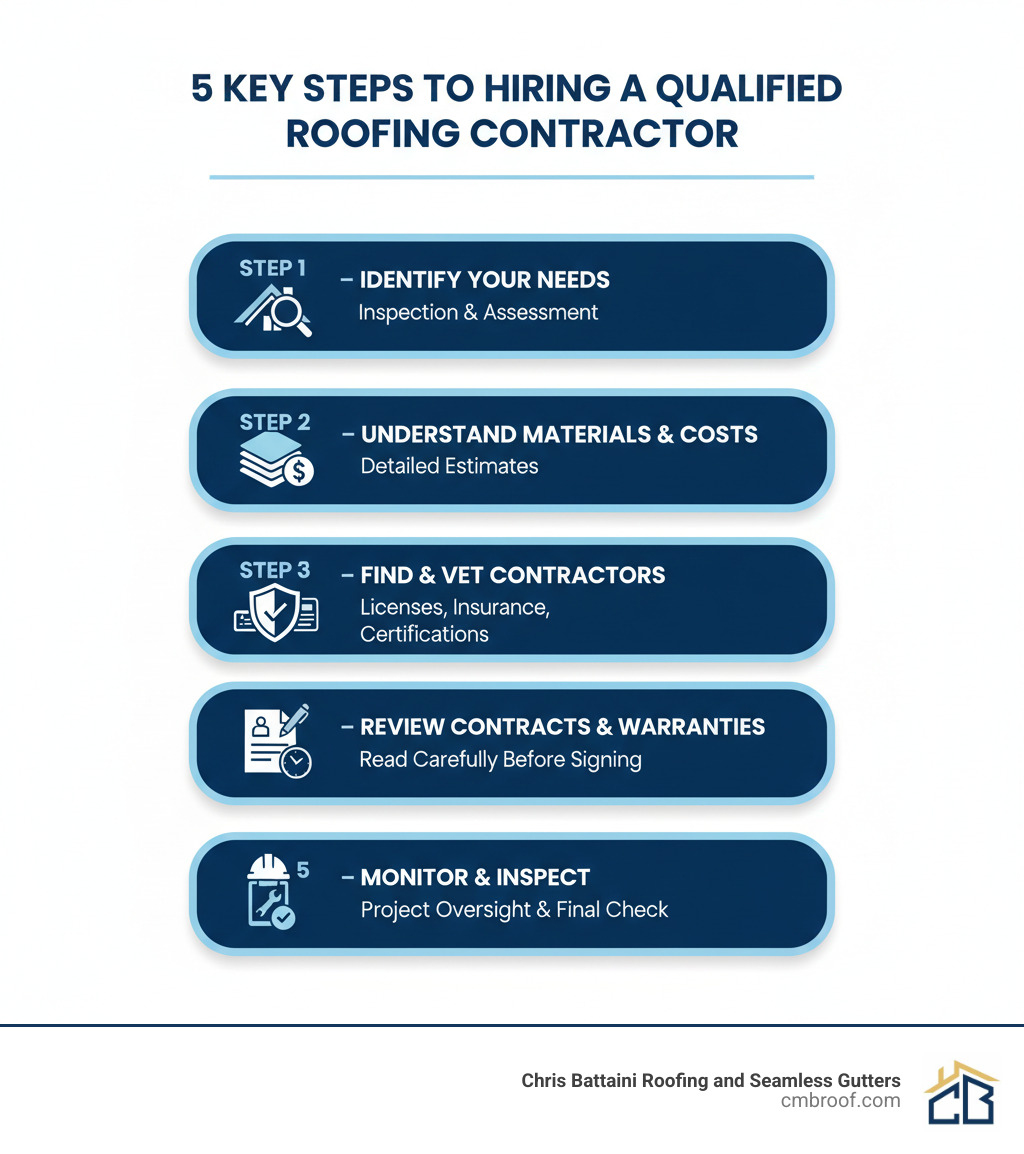
infographic showing the 5 key steps to hiring a qualified roofing contractor: Step 1 - Identify your roofing needs through inspection and assessment, Step 2 - Understand materials and get detailed cost estimates, Step 3 - Find and vet contractors by checking licenses insurance and certifications, Step 4 - Review contracts and warranties carefully before signing, Step 5 - Monitor the project and conduct final inspection - Roofing Contractors infographic

Step 1: Identifying Your Roofing Needs

Before calling roofing contractors, you need to understand what your roof needs. A thorough roof inspection is your starting point to determine whether you’re dealing with a minor repair, a significant overhaul, or a complete replacement. Getting this right saves you money and helps you communicate clearly with contractors.
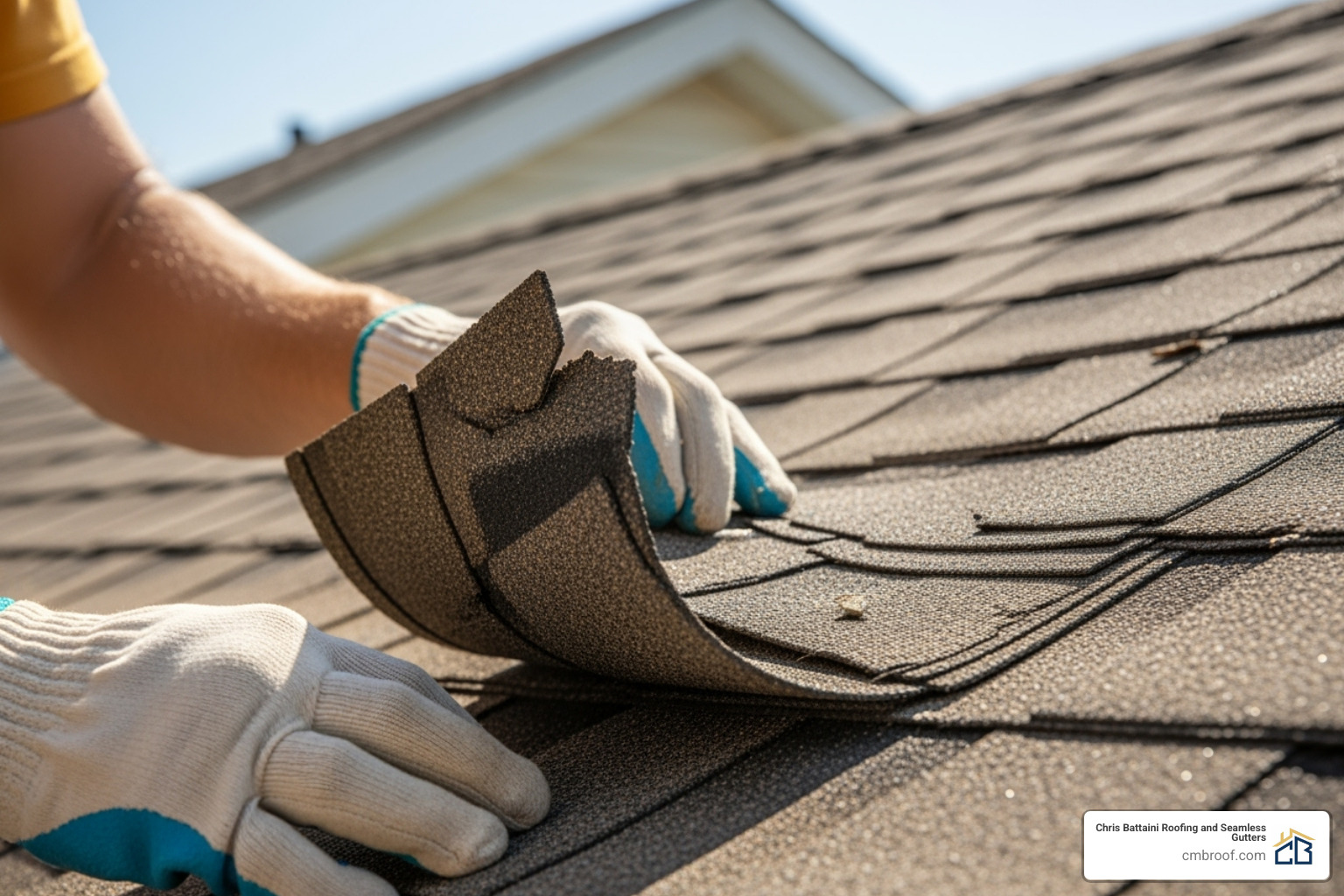
of a roofer carefully inspecting a damaged shingle roof. - Roofing Contractors

Your roof’s age is a huge factor. A typical asphalt shingle roof has a lifespan of about 20-25 years. If your roof is approaching this age, replacement often makes more financial sense than repeated repairs. Material lifespan varies: metal roofs can last 40-70 years, while cedar shakes last 20-30 years. Knowing what you have helps you choose between a Roof Repair and a full Roof Installation.

Common Signs of Roof Damage

Catching warning signs early can prevent a small problem from becoming an expensive disaster.

  • Missing or curling shingles: These are obvious red flags that expose the underlayment to the elements and indicate the shingles are past their prime.
  • Loose shingle granules: Finding excessive sand-like particles in your gutters means your shingles are deteriorating and losing their UV protection.
  • Ceiling water stains: Yellowish-brown marks on your ceiling or walls mean water has found its way inside. The leak’s source may be far from the stain.
  • Spongy or soft roof: If your roof feels soft when walked on, the underlying decking has likely absorbed moisture and started to rot. This is a structural issue requiring immediate professional attention.
  • Attic leaks: Check your attic with a flashlight for drips, especially after rain. Even small leaks can cause mold, insulation damage, and wood rot.

What to Do After Storm Damage

If a storm has damaged your roof, follow these steps:

  1. Prioritize safety. Stay away from downed power lines. If you see structural damage like sagging, evacuate and call a professional.
  2. Document the damage. Take photos from multiple angles, including close-ups and wide shots. Photograph any water intrusion in the attic. This is crucial for your insurance claim.
  3. Contact your insurance provider. Notify them of the damage promptly to start the claims process. If you need assistance, we offer Roof Insurance Claim Help.
  4. Arrange temporary tarping. Many roofing contractors provide emergency tarping to prevent further water damage while you await permanent repairs.

Residential vs. Commercial Roofing

Residential and commercial roofs are fundamentally different, requiring specialized contractors.

  • Slope: Homes typically have steep-slope roofs that shed water, while commercial buildings often have low-slope or flat roofs requiring different drainage and waterproofing systems.
  • Materials: Residential roofs use materials like asphalt shingles or metal panels. Commercial roofs use single-ply membranes (TPO, EPDM), modified bitumen, or built-up systems.
  • Scale and Complexity: Commercial projects are much larger and often involve navigating HVAC units, vents, and other rooftop equipment.
  • Building Codes: Commercial buildings face stricter regulations for fire resistance, energy efficiency, and maintenance access.

Whether you need residential services or Commercial Roofing Contractors, finding a contractor with the right expertise is key.

Step 2: Understanding Roofing Materials and Costs

Once you know what your roof needs, it’s time to explore material options and budget for your project. The material you choose impacts your home’s appearance, your roof’s longevity, and the total investment. We are always happy to provide a detailed New Roof Cost Estimate custom to your home and preferences.
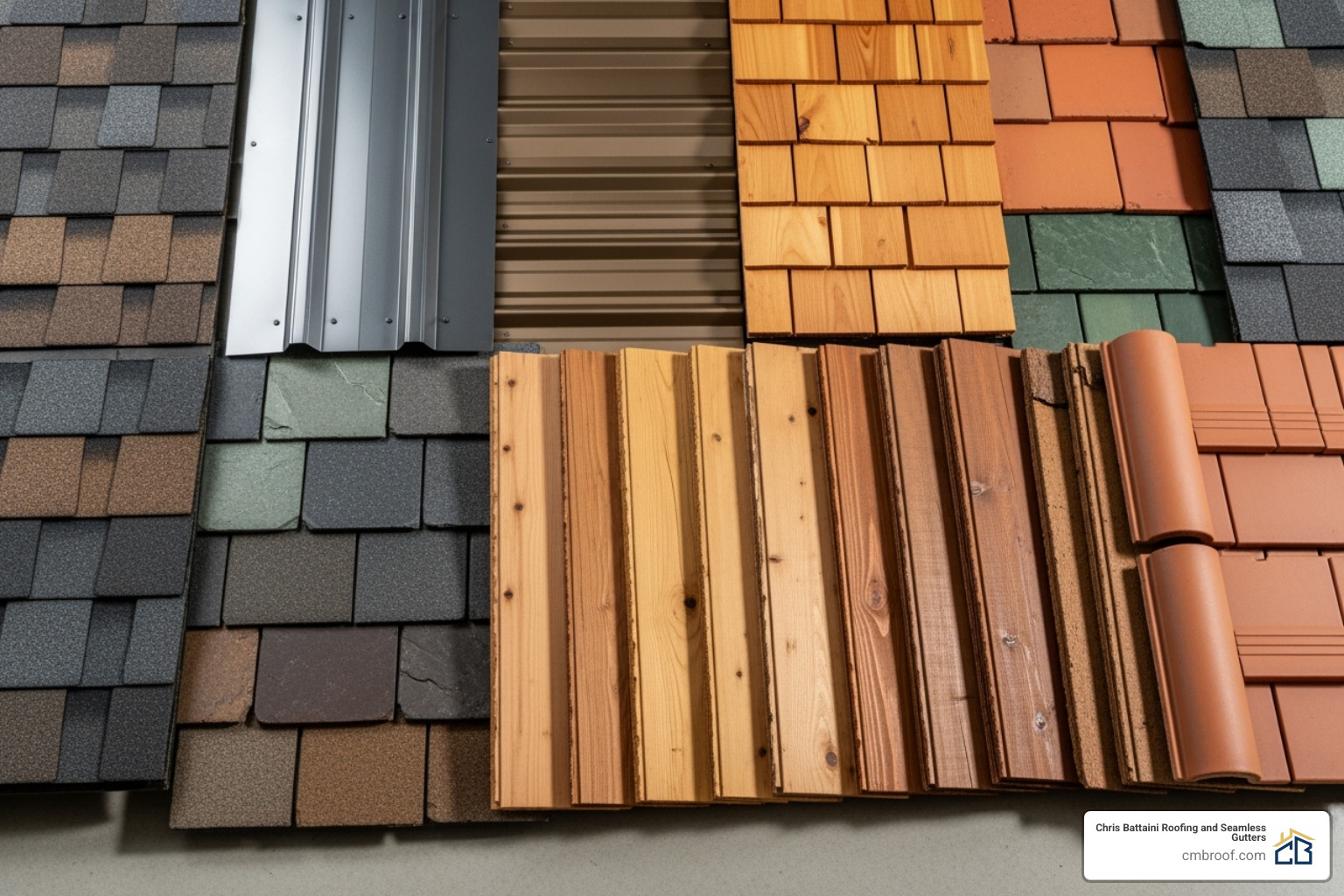
showing a variety of roofing material samples like asphalt shingles, metal panels, and cedar shakes. - Roofing Contractors

Each roofing material offers a different balance of cost, durability, and aesthetics.

  • Asphalt Shingles: The most popular choice, offering a great balance of affordability and versatility. They come in many styles, are easy for most roofing contractors to install, and last 20-25 years. However, they are less durable than premium materials in extreme weather. More info about asphalt shingle roofing
  • Metal Roofing: A durable option lasting 40-70 years, making it potentially the last roof you’ll ever install. Metal is excellent at shedding snow, resists fire and wind, and is energy-efficient. The upfront cost is higher, but the longevity and low maintenance often make it a worthwhile investment. More info about metal roofing
  • Cedar Shakes: Offer a natural, rustic charm and good insulation. They can last 30-50 years but require regular maintenance to prevent rot, insect damage, and fire risk.
  • Slate: A premium, natural stone that can last 75-150+ years. It’s fireproof, extremely durable, and beautiful. However, it is very expensive, heavy (may require structural reinforcement), and requires specialized installation.
Material Lifespan Average Cost (per square foot, installed) Pros Cons
Asphalt Shingles 20-25 years $4 – $8 Most common, affordable, easy to install, wide variety of colors and styles. Shorter lifespan than other options, less durable in extreme weather, not the most eco-friendly.
Metal Roofing 40-70 years $8 – $20 Highly durable, long lifespan, energy-efficient, resistant to fire/wind/hail, low maintenance. Higher upfront cost, can be noisy during rain/hail, requires specialized installation.
Cedar Shakes/Shingles 30-50 years $10 – $25 Natural aesthetic, good insulation, environmentally friendly. Requires more maintenance, susceptible to rot/insects if not properly cared for, higher fire risk without treatment.
Slate 75-150 years $15 – $40+ Extremely durable, very long lifespan, fire-resistant, beautiful and unique appearance. Very expensive, heavy (requires stronger roof structure), fragile during installation/repair, difficult to install.

How Much Does a New Roof Cost?

There’s no simple answer to this question, as every roof is unique. The prices discussed here are average costs based on internet data and are not actual costs for Chris Battaini Roofing and Seamless Gutters. We provide personalized estimates for accurate pricing.

Several factors influence the final cost:

  • Size and Pitch: Larger and steeper roofs require more materials and labor.
  • Material Choice: Costs vary significantly, from affordable asphalt to premium slate.
  • Location: Labor rates and material costs fluctuate by region.
  • Complexity: Roofs with valleys, dormers, chimneys, and skylights require more time and precision.
  • Old Roof Removal: Tearing off and disposing of old roofing layers adds to the cost.
  • Decking Damage: Rotted or damaged underlying wood must be repaired before new installation.
  • Permits and Inspections: Fees vary by municipality and are required to ensure code compliance.

For a new asphalt roof, a typical price range is $7,000 to $45,000 or more, while metal roofs generally run $15,000 to $70,000 or higher. These broad ranges reflect the many variables involved. The best way to budget is to get at least three detailed, written estimates from reputable roofing contractors.

Step 3: Finding and Vetting Reputable Roofing Contractors

With an understanding of your needs and material options, the next step is to find and vet the right roofing contractors. This process involves gathering evidence to make the smartest choice for your project. We encourage you to review our Ultimate Roof Contractors Guide for more tips.

of a friendly, professional contractor discussing a project with a homeowner. - Roofing Contractors

How to Find Local Roofing Contractors

Start with a wide search, then narrow it down. A search for “local roofing contractors near me” is a good first step, but don’t stop there.

  • Use reputable directories: The National Roofing Contractors Association (NRCA) maintains a NRCA Member Directory of contractors committed to high industry standards.
  • Check manufacturer websites: Major brands like GAF, CertainTeed, and Owens Corning list certified installers who are specially trained on their products.
  • Ask for recommendations: Friends, family, and neighbors can provide honest feedback about their experiences with local contractors.

Essential Credentials for Roofing Contractors

Once you have a list of potential contractors, verify their credentials to separate the professionals from the pretenders. A reputable contractor will readily provide this information.

  • State Licensing: Ensure the contractor is licensed by the state, which confirms they meet minimum standards. Verify the license number with your state’s licensing board.
  • Insurance: Confirm they carry both general liability insurance (to protect your property from damage) and workers’ compensation insurance (to cover injuries on the job). Without this, you could be held financially responsible for accidents.
  • Better Business Bureau (BBB) Rating: An A+ rating indicates a company that handles customer concerns professionally and maintains high ethical standards. You can also check our Licensed Roofers Near Me Guide for more details.

The Importance of Certifications and Warranties

Certifications and warranties demonstrate a contractor’s commitment to quality.

Manufacturer certifications (e.g., from GAF, CertainTeed) show that a contractor has completed specialized training and meets strict installation standards. Certified contractors can often offer improved material warranties that others cannot, giving you an extra layer of protection from the manufacturer.

Equally important is the workmanship warranty from the contractor. This is their guarantee on the quality of the installation. A strong workmanship warranty shows confidence in their work. It’s crucial to understand the difference:

  • Material Warranty: Covers defects in the roofing products themselves.
  • Workmanship Warranty: Covers errors made during the installation process.

You need both, in writing, before any work begins. A professional contractor will clearly explain their warranty coverage. We stand behind our work with an exceptional Warranty & Guarantee.

Step 4: The Roofing Project: What to Expect

After selecting your roofing contractors, understanding the project phases can help you feel prepared. We believe in keeping you informed every step of the way. You can View our past projects in our Photo Gallery to see examples of our work.

of a roofing crew safely installing new shingles on a residential roof. - Roofing Contractors

The Typical Roof Replacement Process

A professional roof replacement follows a clear sequence. Clear communication is our priority throughout this process.

  1. Initial Consultation & Estimate: We inspect your roof, discuss your needs, and provide a detailed, transparent cost breakdown.
  2. Contract Signing: We finalize a document outlining the scope of work, materials, timeline, payment schedule, and all warranties.
  3. Material Delivery & Tear-Off: Materials are delivered shortly before work begins. Our crew then carefully removes all old roofing materials down to the deck.
  4. Decking Inspection & Repair: We examine the underlying roof deck for rot or damage. Any necessary repairs are made to ensure a solid foundation for your new roof.
  5. New Roof System Installation: We install underlayment, flashing, and your chosen roofing material according to manufacturer specifications. Our owner-led, on-site service ensures meticulous attention to detail.
  6. Site Cleanup & Final Walk-Through: We remove all debris and use magnetic rollers to collect stray nails. We then conduct a final inspection with you to ensure your complete satisfaction.

Modern Technology in Roofing

Today’s professional roofing contractors use technology to improve safety, accuracy, and efficiency.

  • Drones: High-resolution cameras on drones allow for safe, fast, and precise inspections, especially on steep or hard-to-reach roofs. They provide detailed documentation of problem areas.
  • Thermal Imaging: These cameras detect temperature differences that can indicate trapped moisture or hidden leaks long before they cause visible damage.
  • Digital Software: Project management and estimating software helps us provide accurate quotes, keep our team on schedule, and maintain clear communication with you throughout the project.

Frequently Asked Questions about Hiring Roofing Contractors

It’s natural to have questions when hiring roofing contractors for a significant investment like a new roof. Here are answers to some of the most common concerns we hear.

How long does a typical asphalt shingle roof last?

A properly installed asphalt shingle roof should last 20-25 years. However, its actual lifespan depends on factors like local climate (e.g., heavy snow, severe storms), the quality of the original installation, and regular maintenance. Annual inspections are recommended to extend your roof’s life.

Should I get multiple quotes for my roofing project?

Yes, absolutely. We recommend getting at least three detailed, written estimates from different roofing contractors. This allows you to compare not just the price, but also the proposed scope of work, material quality, and offered warranties. The cheapest bid is not always the best value.

What’s the difference between a material warranty and a workmanship warranty?

Understanding this is crucial for protecting your investment. Both are essential.

  • A material warranty is from the product manufacturer (e.g., GAF, CertainTeed) and covers defects in the shingles or other roofing components.
  • A workmanship warranty is from your roofing contractor and covers errors made during the installation process, such as improper nailing or flashing that leads to leaks.

Even the best materials can fail if installed incorrectly, which is why a strong workmanship warranty is so important. You can learn more about our coverage on our Warranty & Guarantee page.

Conclusion

Choosing the right roofing contractors is the most critical factor in ensuring your roof will protect your property for decades. By identifying your needs, understanding your options, and thoroughly vetting professionals, you set your project up for success. Prioritize licensed, insured, and certified contractors who offer comprehensive warranties and communicate clearly.

At Chris Battaini Roofing and Seamless Gutters, we believe your home or business deserves peace of mind. That’s why we provide owner-led, on-site service and back our work with exceptional workmanship warranties. We are your local experts, committed to protecting what matters most to you. Whether you’re dealing with storm damage or planning a replacement, we’re here to help. Contact Us today for a free, no-obligation estimate for your residential roofing project.

Chris Battaini Roofing and Seamless Gutters proudly services Berkshire, Hampden, Hampshire, and Franklin Counties in Massachusetts.

Follow us on Facebook


Get Your Free Estimate Today

Need a reliable roofer? CMB Roofing provides licensed, insured, and professional roofing services for homeowners and businesses.

We stand by a simple promise: Clear estimates. Quality workmanship. Clean job sites.

From roof repairs and full replacements to storm damage restoration, our team delivers dependable results with durable materials, expert installation, and complete site cleanup.


roofing contractors ultimate guide image

Why Homeowners Trust Chris Battaini Roofing

  • Owens Corning Platinum Preferred Contractor
  • Licensed & Insured Roofing Company
  • Owner-Supervised Installations
  • Manufacturer-Backed Roofing Warranties
  • Workmanship Installation Guarantee
chris battaini roofing contractor berkshire county logo footer
  • 10 Wendell Ave Extension Pittsfield, MA 01201
  • 210 Columbia St., Lee, MA 01238
MA LIC #101201 / MA HIC #160959
Areas We Service
At Chris Battaini Roofing & Seamless Gutters, we specialize in residential and commercial roofing and gutter installation services across Southern and Northern Berkshire County in Massachusetts.
PPC Right Roof Right Roofer Proud black border Chris Battaini Roofing - BBB Accredited Business logo with A+ Rating displayed.