-
10 Wendell Ave Extension Pittsfield, MA 01201
-
210 Columbia St., Lee, MA 01238

When your home takes a hit from a storm, knowing where to get roof insurance claim help can feel overwhelming. It’s a complex process, but taking the right steps early on is crucial for a successful outcome. If you’re wondering what to do first, here are the essential initial actions:
For many homeowners, the roof is their home’s first line of defense. When that defense is breached by wind, hail, or a fallen tree, it can be a stressful time. You might have questions about what your policy covers, how much you’ll pay out of pocket, and if filing a claim will make your insurance rates jump.
This guide will simplify the journey, helping you understand your policy, steer the claims process, and choose the right professionals to get your home back in shape. Our goal is to empower you with knowledge, so you can handle your roof insurance claim with confidence and avoid common pitfalls.
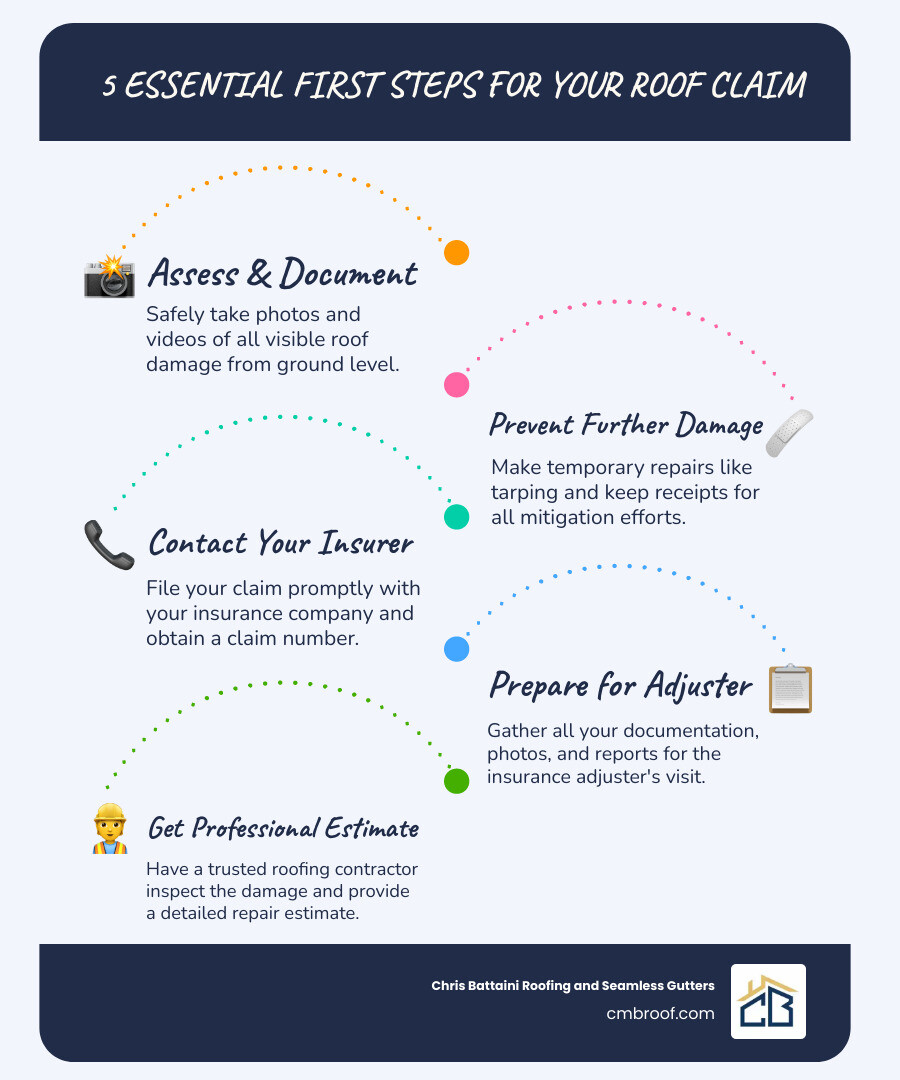
Roof insurance claim help terms you need:
Understanding your homeowners insurance policy is the first step. It outlines what damages are covered, what’s excluded, and your responsibilities. Most standard policies (like an HO-3) have “dwelling coverage” for your home’s structure, including the roof, against “perils”—sudden, accidental events. Knowing your policy’s limits and deductible is crucial before you file. For more detailed information about protecting your home, you can find More info about Residential Roofing Service on our website.
Understanding the distinction between covered and uncovered damage is key to a smooth roof insurance claim help process. Let’s break down what’s typically covered and what’s usually not:
When it comes to damage your insurance will likely cover, we’re generally talking about sudden, unexpected events. This often includes wind damage, where strong gusts rip off shingles or cause them to lift and crease. You’re also usually covered for hail damage, even if it looks minor at first, as those icy pellets can significantly shorten your roof’s life. If a fallen tree or heavy limb decides to make an uninvited visit to your roof, that’s typically covered, too. Other common perils include fire damage, the immense weight of snow or ice causing structural issues, and damage from a direct lightning strike. In general, your policy covers sudden & accidental events that aren’t your fault or due to neglect.
On the other hand, your insurance isn’t a maintenance fund. Damage that is generally not covered includes:
This is one of the most critical distinctions to understand in your policy, as it directly impacts how much money you’ll receive after a claim. It\u2019s the difference between getting a “used car” value for your roof and a “brand new car” value.
An Actual Cash Value (ACV) policy pays the depreciated value of your roof. The insurer subtracts for age and wear and tear, so you get what your old roof was worth, not what a new one costs. This often leaves you with significant out-of-pocket expenses.
A Replacement Cost Value (RCV) policy is generally preferred. It covers the full cost to replace your damaged roof with new, similar materials, without deducting for depreciation. It aims to restore your roof to its pre-loss condition.
Here’s a quick look at the differences:
| Feature | Actual Cash Value (ACV) | Replacement Cost Value (RCV) |
|---|---|---|
| Payout Basis | Original cost minus depreciation | Cost to replace with new materials at today’s prices |
| Out-of-Pocket | Higher, as you pay the difference due to depreciation | Lower, as depreciation is not factored in |
| Premium Cost | Generally lower | Generally higher |
| Goal | Covers current market value of old roof | Covers cost to restore to new condition |
It’s worth noting that RCV policies often involve a two-check process. You’ll receive an initial payment based on the ACV of your roof. Then, once the repairs are completed and you provide proof (like invoices from your roofing contractor), the insurance company will release the depreciation holdback, giving you the final payment. This ensures that the funds are used for the intended repairs. For a deeper dive into this, check out this Video explaining replacement cost vs actual cash value.
Your deductible is like your “skin in the game.” It’s the amount you agree to pay out of your own pocket before your insurance coverage kicks in. It’s a fundamental part of your policy agreement.
Deductibles can come in a couple of forms:
It’s absolutely essential to know your deductible and consider it before filing a claim. Why? If the repair cost for your roof damage is less than, or only slightly more than, your deductible, it might not be worth filing a claim. Filing a small claim might go on your insurance record, potentially impacting your future premiums without a significant benefit. For help estimating repair costs and understanding if your damage meets your deductible, we offer a Get a New Roof Cost Estimate.
Navigating a roof insurance claim can feel a bit like running a marathon – it’s not a quick dash! But don’t worry, with a clear plan and the right team by your side, you’ll cross that finish line successfully. The clock often starts ticking right after the damage occurs. The filing window for a roof damage claim can differ a lot, sometimes as short as 30 days or up to a year or two, depending on your policy and state laws. There are also statutes of limitations that can range from two to six years for legal action. That’s why taking prompt action is always your best bet. Throughout this entire process, keeping a detailed communication log and staying well-organized will be your secret weapons for smooth sailing.
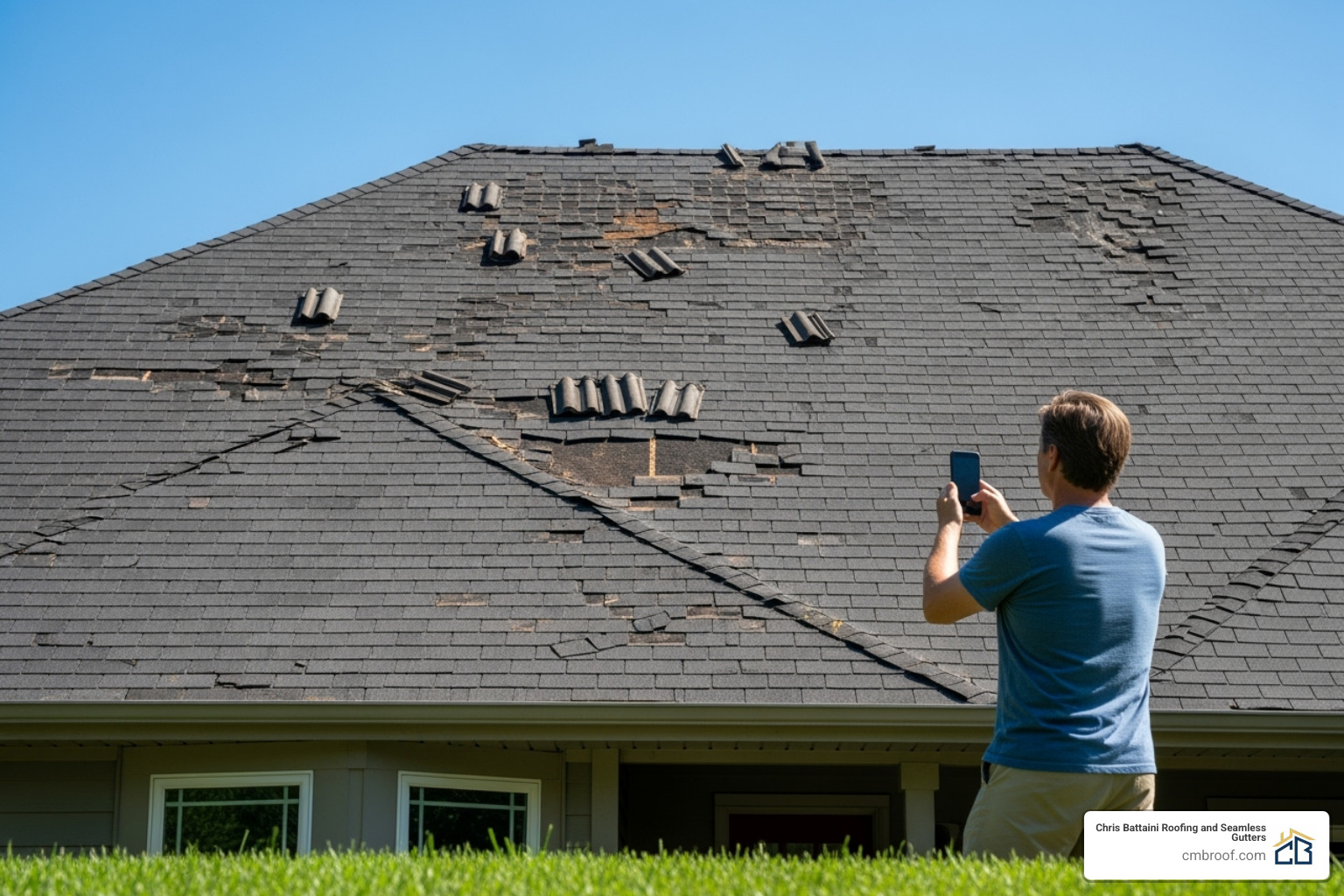
As soon as you suspect your roof has been damaged, your absolute top priority is safety first. Please, never climb onto a damaged roof yourself – it’s just not worth the risk. Instead, you can safely check things out from the ground.
Grab a pair of binoculars for a ground-level inspection. Look for obvious signs of trouble like missing shingles, or ones that are cracked or curled. Check your gutters and downspouts for any dented gutters or signs of impact. Don’t forget the areas around your chimney and vents, looking for cracked flashing. Also, keep an eye out for granule loss on asphalt shingles, which often shows up in your gutters, and any water spots or leaks inside your home.
This next part is super important for getting good roof insurance claim help: document everything. Take lots of high-quality photos and videos from different angles. Get a shot of the whole roof, then zoom in on every specific damaged spot. If you happen to have “before” pictures of your roof, they can be incredibly helpful for showing the change. While you’re at it, jot down detailed notes. Write down the exact date of loss (when the damage happened), the time you found it, what you think caused it (like a specific storm date), and a clear description of everything you observed.

Once you’ve safely checked things out and have your initial documentation, it’s time to bring in the pros. We really recommend getting a professional roof inspection before you even file your official claim. This way, you’ll have an accurate picture of the damage and can decide if it’s truly big enough to warrant a claim.
To stop things from getting worse inside your home, make temporary repairs as soon as you can. This might mean tarping over damaged areas or boarding windows if they’re broken. Make sure to keep all your receipts for any materials or labor for these temporary fixes, as your policy might cover these costs. Mitigating damage is often a requirement of your insurance policy, meaning you’re expected to do what you can to prevent further issues.
A qualified roofing contractor can give you a thorough Professional Roof Inspections. They’re experts at spotting subtle damage you might miss and can tell the difference between storm damage and older issues. They’ll also give you a detailed written report, which is incredibly valuable when you talk to your insurance company. Our team knows exactly what insurance companies look for and how to document it properly. If you’re looking for Find Roofing Repair Contractors in your area, we’re always here to lend a hand.
Once you have a clear idea of the damage and have taken steps to protect your home, it’s time to contact your insurer. The sooner you file, the better. You can usually do this by calling them, using their online portal, or through their mobile app.
When you file, always ask for a claim number. This number will be your go-to reference for every single step of the process. Have your policy number, the date of loss, and your initial documentation (photos, notes from your contractor’s inspection) ready. Remember to be completely honest and provide clarity in your descriptions. Just stick to the facts about the damage and how it happened. For example, if you’re a State Farm customer, they have resources to help you learn How to file a claim with State Farm.
After you file your claim, your insurance company will send an adjuster to look at the damage. This person is key because they’re the one who approves your claim. The adjuster’s role is to visit your home, verify the damage, figure out what caused it, and then create an estimate creation for the repair costs. They often use special software like Xactimate for this.
We highly recommend having your chosen roofing contractor there with you during the adjuster’s visit. A knowledgeable contractor can point out all the damages, explain what repairs are needed, and make sure nothing gets overlooked. They can also talk about specific industry standards and local building codes that might affect the repair costs. This teamwork can really boost your roof insurance claim help efforts. Be ready to share your detailed documentation review – those photos, videos, your contractor’s report, and temporary repair receipts – with the adjuster.
When talking to the adjuster, avoid saying anything that sounds like you’re taking blame (like “I should have cleaned my gutters more”) or downplaying the damage. Just stick to the facts. Also, it’s generally a good idea to avoid giving recorded statements without first talking to your contractor or a public adjuster. And please, don’t feel pressured to accept the first settlement offer without carefully reviewing it and getting a second opinion! You have the right to negotiation.
Picking the right roofing contractor is super important for a successful outcome. Your insurance company can’t tell you who to hire for repairs – that choice is completely yours.
Look for a local company that’s well-established and has a good reputation in your area. They’ll know the local building codes and what kind of storm damage is common. You can even Hire a qualified roof inspector to help you find a great fit. Always make sure the contractor is properly licensed and insured; ask for their certificates of insurance and double-check them.
Get detailed written estimates that show all the costs: tearing off the old roof, materials, labor, cleanup, disposal, and any necessary code upgrades. Check their references and read reviews online. A good contractor will have plenty of happy customers. A strong workmanship warranty also shows that a contractor stands behind their work. At Chris Battaini Roofing and Seamless Gutters, we’re proud to offer exceptional workmanship warranties because we believe in our quality. You can Learn about our Warranty Guarantee.
Finally, a quick word about avoiding scams: be careful of “storm chasers” who suddenly appear after a big storm. And this is a big one: never work with a contractor who offers to waive your deductible. That’s illegal and counts as insurance fraud. Your deductible is your responsibility, and any offer to “cover” it should be a major red flag.
Chris Battaini Roofing and Seamless Gutters services Berkshire, Hampden, Hampshire, and Franklin Counties in Massachusetts.
Even with good preparation, you might face challenges like a claim denial, a low settlement offer, or worries about premium increases. Understanding these common issues ahead of time can make all the difference in getting the roof insurance claim help you need. These situations are frustrating, but they’re not impossible. Let’s walk through how to handle them.
This is a valid concern, and the answer isn’t a simple yes or no\u2014it depends on several factors.
Your claim history is a major factor. Filing claims frequently can mark you as a higher risk, potentially leading to premium increases. The type of claim also matters. Insurers view damage from an “Act of God” event like a hailstorm differently than damage from neglect. Many states prohibit insurers from raising premiums for widespread weather-related claims.
Insurance companies also perform risk assessments. If severe weather becomes more common in your area, everyone’s rates might go up, regardless of individual claims. This is about the changing risk in your region, not you specifically.
Here’s the reality check: for significant damage requiring a full roof replacement (which can average around $15,000 to $20,000 but can range from $8,000 to $50,000 or more depending on materials and home size\u2014these are average costs based on internet data and not actual costs for Chris Battaini Roofing and Seamless Gutters), the benefit of your claim payout almost always outweighs a potential premium increase. Even with a modest rate increase, you’re still likely coming out ahead financially.
Making mistakes during the claims process can turn what should be straightforward roof insurance claim help into a lengthy, frustrating ordeal. Here are the pitfalls that trip up most homeowners.
A denied claim can feel like a punch to the gut, but it isn’t necessarily the end of the story. Many denied claims can be successfully appealed.
First, understand exactly why your claim was denied. Request a detailed written explanation from your insurance company. This gives you a roadmap for your appeal.
Next, gather additional evidence. This might mean getting a second, more detailed inspection from a different qualified contractor or finding clearer photos.
Write a formal appeal to your insurance company. Reference your policy, provide your new evidence, and clearly state why you believe the denial was incorrect. You can also request a re-inspection with a different adjuster.
If you’re still not getting anywhere, consider hiring a public adjuster. A public adjuster works for you to re-evaluate damage and negotiate on your behalf. For persistent denials, you can escalate your complaint to your state’s Department of Insurance.
As a last resort, if you believe your claim was wrongfully denied, consulting with an attorney who specializes in insurance law might be worthwhile. Persistence often pays off; don’t give up after the first “no”.
Got questions about getting roof insurance claim help? You’re not alone! It’s perfectly normal to have a few head-scratchers when dealing with insurance. Let’s tackle some of the most common ones right here.
This is a big one, and it’s super important to know. The truth is, there’s no single answer! The time you have to file a roof damage claim can vary a lot depending on your specific insurance policy and even the state you live in. We’ve seen deadlines as short as 30 days and others that stretch to a year or even more.
Our best advice? Don’t wait! As soon as you find damage, check your policy for its specific time limits. Filing your claim as quickly as possible is always the smartest move. Why? Because waiting too long could lead to your claim being denied just for late reporting, and nobody wants that!
Absolutely, yes! Think of it like this: would you go grocery shopping without a list? Probably not if you want to stay on budget! Getting a professional estimate from a trusted residential roofing contractor before you call your insurer is highly, highly recommended.
Why is this so important? Well, it gives you a clear picture of the scope and cost of the repairs. This way, you can figure out if the damage is significant enough to exceed your deductible. If it’s only a tiny bit more than what you’d pay out of pocket anyway, it might not be worth filing a claim. Skipping an unnecessary claim helps keep your insurance record cleaner, which can be a good thing down the road.
This is another really important point for any homeowner. Regular roof maintenance isn’t just about keeping your home looking good; it’s absolutely crucial for your insurance claims too!
Here’s why: Insurance companies can, and sometimes do, deny claims if they believe the damage was caused or made worse by neglect or pre-existing issues. For example, a minor leak that you ignored for months might turn into a big problem, and your insurer could say that’s on you.
So, what’s the solution? Be a responsible homeowner! Keeping good records of your regular roof inspections and any maintenance you’ve done shows you’ve been taking care of your roof. This kind of documentation can seriously strengthen your case when you file a claim for damage from a sudden, covered event, like a big storm. It proves you’re doing your part, and that your claim isn’t just about old wear and tear.

Whew! Navigating a roof insurance claim can certainly feel like a huge challenge. We get it – it’s a lot to take in. But here’s the good news: you absolutely don’t have to face it alone. With the right roof insurance claim help, you can turn a stressful situation into a successful outcome. Our goal is to help you achieve a fair settlement and ensure your home gets the quality repairs it deserves.
At Chris Battaini Roofing and Seamless Gutters, we truly understand the ins and outs of insurance claims. We know what it takes to get things done right and smoothly. Our unique owner-led service means Chris is often on-site, ensuring top-notch workmanship and a seamless experience for you. We combine this hands-on approach with deep local expertise, helping homeowners just like you throughout the region.
Choosing a trusted partner like us means your home is in truly capable hands. We’re here to guide you through every step of the claims process with confidence. Our aim is simple: to make sure your home is protected and your investment is secure for years to come.
Ready to get started? For expert guidance and superior workmanship on your residential roofing project, please don’t hesitate to contact us today.
Chris Battaini Roofing and Seamless Gutters services Berkshire, Hampden, Hampshire, and Franklin Counties in Massachusetts.
Need a reliable roofer? CMB Roofing provides licensed, insured, and professional roofing services for homeowners and businesses.
We stand by a simple promise: Clear estimates. Quality workmanship. Clean job sites.
From roof repairs and full replacements to storm damage restoration, our team delivers dependable results with durable materials, expert installation, and complete site cleanup.