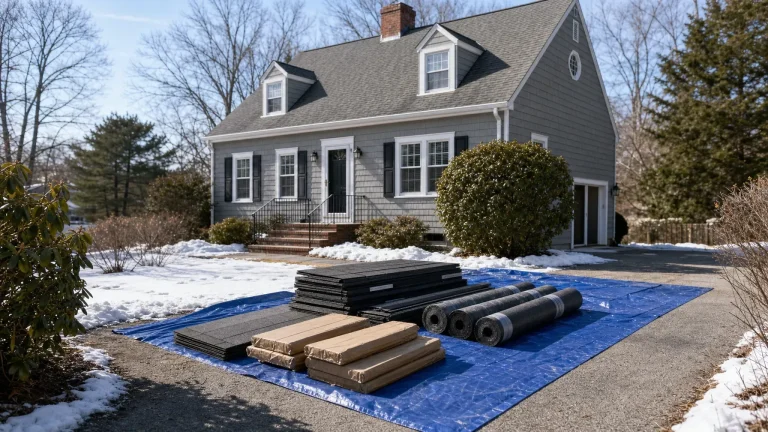



Can You Replace a Roof in Late Fall or Winter in the Berkshires?

Finding a roof leak as winter approaches leaves a homeowner with a difficult question: replace the roof now, or repair it and wait for spring? There is no single answer for every Berkshire home. The decision should bring together the diagnosed problem, the condition of the roof and a realistic plan for the weather.
The short answer: cold-weather replacement needs a roof-specific plan
Late fall or winter is not, by itself, a reason to rule out replacement. But a calendar opening or a clear-looking roof is not enough to establish that installation can proceed. Ask the roofer to explain whether the proposed products and actual site conditions allow the work under the manufacturers’ current instructions.
That discussion should cover the specific shingles, underlayment and adhesive products, as well as the condition of the surfaces receiving them. Request the applicable installation instructions and an explanation of any cold-weather requirements. Do not rely on a universal temperature cutoff or assume that clearing frost settles every installation question.
Chris Battaini Roofing installs Owens Corning and CertainTeed shingles. Its asphalt shingle roofing page is a starting point for discussing material choices; ask for the current instructions for the exact products proposed for your roof.
Why waiting until spring needs an assessment
Waiting should be an informed choice, not simply a response to the season. Ask a qualified roofer whether the water-entry problem is localized, whether surrounding materials remain serviceable and what could happen if the work is deferred. Widespread wear or repeated leaks deserve attention, but neither automatically proves that the entire roof needs replacing.
If leaking coincides with ice buildup at the eaves, ask for an assessment of the ice-dam causes as well as the damaged roofing. Even a newer roof can leak in these circumstances. Replacement alone does not necessarily resolve the underlying causes.
Note Observe from the ground or safely accessible interior areas. Do not climb onto the roof to check shingles or test for soft decking, especially in frost, snow or ice. Suspected soft or flexing decking is a condition for a qualified professional to assess.
When a repair can get you to spring
A professionally assessed repair may be a reasonable way to defer replacement when the cause is identifiable and the surrounding roof remains suitable for repair. The important distinction is between correcting the diagnosed defect and temporarily managing a leak while further work is arranged.
Before choosing to wait, ask the roofer to clarify:
- What is causing the leak, and what evidence supports that diagnosis?
- Will the proposed work correct the defect or provide temporary protection?
- What uncertainty remains about concealed damage or the condition of the rest of the roof?
- What changes should prompt another assessment before spring?
Keep a record of visible interior staining and report any changes. An expanding stain or a returning leak is a reason to contact the roofer again, not to assume the repair can continue to wait.
What a late-season tear-off involves
For seasonal planning, focus on how the house will be protected while the old roofing is removed and the new system is installed. Ask how much roofing the crew plans to open, how it will secure unfinished areas and what forecast changes would postpone the start or interrupt work.
Also discuss the possibility of concealed decking damage. Ask how discoveries during tear-off will be documented, approved and handled, and how additional work would affect weather protection and scheduling. A proposed start date should come with a contingency plan rather than an assumption that conditions will hold.
Does the roofing material change the answer?
The proposed roof system belongs in the scheduling discussion, but material names alone do not establish how long a job will take. Ask for a schedule based on your roof’s design, access, installation details and the crew’s plan. If you change materials after receiving an estimate, have the seasonal plan reassessed rather than carrying over the original schedule.
Warranty questions also belong in that discussion. Request the actual terms for the proposed products and installation, including any eligibility or registration requirements. A component list is not a substitute for confirmation of applicable coverage.
Questions to ask before you book a fall or winter replacement
- What conditions must be met before work starts? Ask how the forecast, substrate conditions and current product instructions inform that decision.
- What happens if the weather turns? Confirm protection of unfinished work, communication and rescheduling.
- How will concealed damage be handled? Get the approval process and its scheduling implications in writing.
- Which warranties apply? Distinguish manufacturer coverage from any contractor workmanship coverage, and request the written terms, exclusions and claim procedures.
- What supports waiting instead? If repair is an option, ask for the diagnosed cause, repair scope and follow-up plan.
Get a straight answer before the snow
If your roof is leaking or looks worn heading into winter, start with an assessment rather than choosing replacement or delay on the calendar alone. For a Pittsfield home, see Chris Battaini Roofing’s Pittsfield roofing page. Bring your observations and ask whether a repair can reasonably bridge the winter or whether replacement should be planned around suitable conditions.