

Why a Rehab Loan Could Be the Smartest Way to Finance Your Home Renovation
A rehab loan — also called a renovation loan — lets you finance both the purchase of a home and the cost of repairs in a single mortgage. Instead of juggling a home loan plus a separate personal loan or credit card, you roll everything into one.
Here’s a quick summary of the main rehab loan options:
| Loan Type | Down Payment | Max Renovation Cost | Best For |
|---|---|---|---|
| FHA 203(k) Limited | 3.5% (580+ credit) | $75,000 | Minor, non-structural repairs |
| FHA 203(k) Standard | 3.5% (580+ credit) | Up to county FHA limits | Major structural renovations |
| VA Renovation Loan | 0% (veterans only) | Varies by lender | Veterans buying fixer-uppers |
| Fannie Mae HomeStyle | 3% | Up to 97% LTV | Conventional borrowers |
| Freddie Mac CHOICERenovation | 3% | 75% of as-completed value | Conventional borrowers |
For most homeowners, the FHA 203(k) is the most accessible starting point — it’s government-backed, widely available, and accepts credit scores as low as 580 for a 3.5% down payment.
Roof replacements, gutter installations, structural repairs, and energy efficiency upgrades are all commonly covered expenses. That matters a lot, because exterior repairs like roofing are often the most urgent — and most expensive — part of any fixer-upper project.
I’m Christopher Battaini, owner of Chris Battaini Roofing and Seamless Gutters, with over two decades of hands-on experience helping Massachusetts homeowners tackle major exterior repairs — many of which are eligible under a rehab loan. In this guide, I’ll walk you through exactly how these loans work, what they cover, and how to use one without overpaying.
What is a Rehab Loan and How Does it Work?
At its core, a rehab loan is a “one-and-done” financial tool. If you’ve ever walked through a beautiful old home in Pittsfield or Adams and thought, “This place is perfect, but the roof is falling in,” then you already understand why these loans exist. Traditionally, a bank wouldn’t give you a mortgage for a house with a failing roof because the collateral (the house) isn’t in good enough shape.
A rehab loan solves this by using the as-completed value of the property. Instead of looking at what the house is worth today, the lender looks at what it will be worth after we install that new roof and those seamless gutters.
The Mechanics of Purchase-Renovation
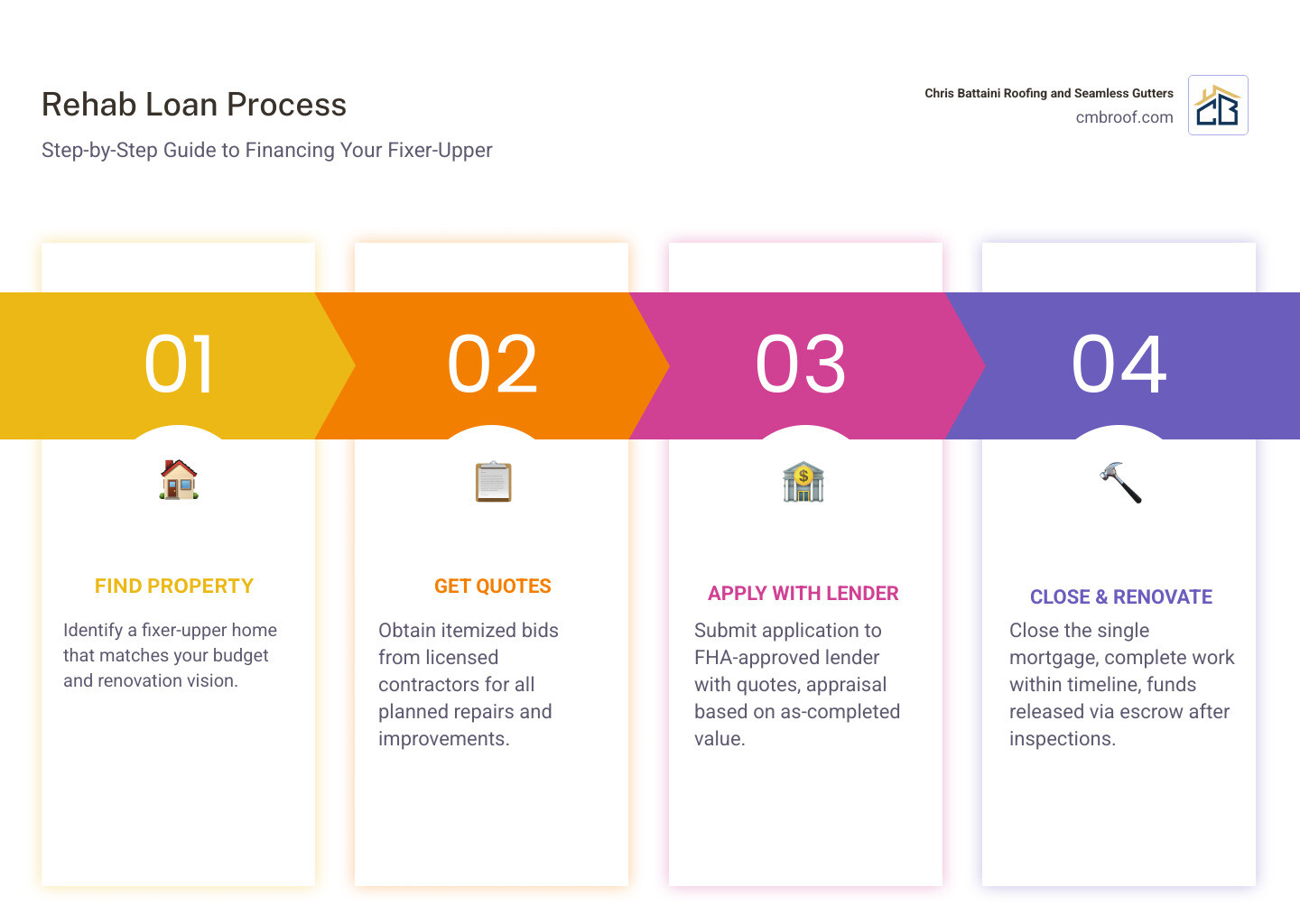
When you use this type of financing, the lender provides the funds to buy the home and places the renovation money into a specialized escrow account. You don’t get a lump sum of cash on closing day to go wild at the hardware store. Instead, the funds are released in “draws” as specific phases of work are completed and inspected.
For those of us living in Berkshire County, this is a fantastic way to revitalize our historic neighborhoods. Whether you are looking at a single-family home or a multi-unit property (up to four units), these loans can cover a massive range of repairs. To qualify, the home must typically be your primary residence, meaning you plan to live there for at least a year.
If you want to dive deeper into the basics, you can find more info about home renovation loans on our site. You can also explore the official 203(k) Rehabilitation Mortgage Insurance Program Types to see how the government categorizes these projects.

The FHA 203(k) Rehab Loan
The most popular rehab loan is the FHA 203(k). It is insured by the Federal Housing Administration, which makes it less risky for lenders and more accessible for you.
Limited vs. Standard 203(k)
There are two main flavors of the FHA 203(k), and choosing the right one depends on the “health” of your home:
- Limited 203(k): This is for minor, non-structural repairs. According to HUD guidelines, you can finance up to $35,000 (though some lenders may allow up to $75,000 depending on the project scope) for things like roof replacement, gutter installation, painting, or new appliances. The beauty of the Limited version is that it doesn’t require a HUD consultant, making the process faster.
- Standard 203(k): If the house needs major surgery — like moving walls, fixing a foundation, or a complete “gut” renovation — you need the Standard version. This requires a minimum of $5,000 in repairs and has no hard cap other than the FHA mortgage limit for Berkshire County.
Qualification and Credit
One of the biggest myths is that you need perfect credit for a rehab loan. In reality, you can qualify for an FHA 203(k) with a credit score of 580 and a down payment of just 3.5%. If your score is between 500 and 579, you might still qualify with a 10% down payment.
To get started, you’ll need to work with an FHA-approved lender list to ensure your financing is handled by someone who understands the extra paperwork involved.
Financial Benefits of a Rehab Loan
Why choose a rehab loan over a personal loan or a high-interest credit card? It usually comes down to the math.
Lower Interest Rates
Because a rehab loan is a mortgage, the interest rates are significantly lower than what you’d find with a personal loan. Plus, the repayment term is usually 15 or 30 years, making the monthly payments much more manageable.
Property Value Increase
By tackling major repairs like roofing right away, you are immediately building equity. A house with a leaky roof is a liability; a house with a brand-new, warranted roof is an asset.
Tax Advantages
In many cases, the interest you pay on your rehab loan is tax-deductible, just like a standard mortgage. Personal loans and credit cards don’t offer that perk. (Of course, we always recommend chatting with your tax professional about your specific situation!)
Comparison: Rehab Loans vs. Other Financing
| Feature | Rehab Loan | Personal Loan | Credit Card |
|---|---|---|---|
| Interest Rate | Low (Mortgage rates) | Medium to High | Very High |
| Term | 15–30 Years | 3–7 Years | Revolving |
| Tax Deductible | Usually Yes | No | No |
| Closing Costs | Single set of costs | Low to None | None |
Eligible Improvements: Focusing on Roofing and Gutters
As an Owens Corning Platinum Preferred Contractor, we’ve seen how a rehab loan can save a home from certain destruction. In our neck of the woods — from the snowy peaks of Florida, MA, to the rainy valleys of Great Barrington — the exterior envelope of your home is your first line of defense.
Health and Safety First
Lenders prioritize “health and safety” items. If your roof is leaking, it’s not just a cosmetic issue; it’s a structural threat that can lead to mold and rot. Most rehab loan programs require that you fix these “code violations” or safety hazards before you spend money on fancy granite countertops.
Roofing and Structural Integrity
A new roof is almost always an eligible expense. Whether it’s asphalt shingles or a more specialized material, ensuring the structural integrity of the home is a top priority for FHA and VA lenders.
Note: Based on publicly available internet data, average roofing costs range from $7,000 to $45,000 depending on materials and square footage. These are average costs and do not reflect specific company pricing.
If you’re curious about how to pay for these essential updates, check out more info about roofing financing options to see how we help our neighbors in Berkshire County.
Seamless Gutters and Weatherproofing
Don’t forget the gutters! Improper drainage can lead to basement flooding and foundation issues — two things that will definitely disqualify a home from standard financing. Including seamless gutters in your rehab loan is a smart move to protect your investment for decades.
Navigating the Application and Contractor Process
Getting a rehab loan requires a bit more legwork than a standard mortgage. You can’t just hire “some guy with a truck.”
Licensed Professionals are Mandatory
Lenders require that the work be performed by licensed and insured contractors. They want to know the job will be done right and that the permits are in order. For Standard 203(k) loans, you will also work with a HUD consultant who acts as an independent project manager to verify the work write-up and cost estimates.
The Timeline
Once your loan closes, the clock starts ticking. Most programs require that:
- Work begins within 30 days of closing.
- Work is completed within a 6-month timeline (though some Standard loans allow up to 12 months).
- The work cannot stop for more than 30 days at a time.
Itemized Quotes and Draw Inspections
You’ll need to provide your lender with itemized quotes. We provide these detailed breakdowns so your lender knows exactly what they are paying for — from the shingles to the flashing. Once the work is done, an inspector will visit the site to verify the completion, and then the lender releases the funds from the escrow account.
Frequently Asked Questions about Rehab Loans
Can I perform the roofing or gutter work myself?
This is a common question! Generally, the answer is no. Most rehab loan programs, especially FHA and VA, require professional contractors to ensure the work meets safety standards. While some lenders allow “self-labor” if you are a licensed professional by trade, you usually cannot be reimbursed for your own labor — only for materials. For something as critical as a roof, it’s almost always better to have a professional team handle it to ensure the warranty remains valid.
What credit score is required for a rehab loan?
As we mentioned, the FHA is the most flexible, starting at a 500 minimum (with 10% down) or 580 (with 3.5% down). If you are looking at a conventional rehab loan like Fannie Mae HomeStyle, you’ll typically need a 620 or higher. Lenders will also look at your debt-to-income (DTI) ratio, which usually needs to be below 43%.
Are luxury items like pools covered?
No. Rehab loans are designed for “livability” and “revitalization.” Luxury items like new swimming pools, outdoor fire pits, or gazebos are typically excluded. The focus is on health, safety, and structural integrity. However, you can use the funds for energy-efficient upgrades, accessibility features (like ramps), and modernizing kitchens or bathrooms.
Conclusion: Building a Stronger Berkshire County
At Chris Battaini Roofing and Seamless Gutters, we believe that every home in Berkshire County deserves to be safe, dry, and beautiful. A rehab loan is one of the most powerful tools available to help you achieve that without draining your life savings.
We are proud to be an Owens Corning Platinum Preferred Contractor. This is a designation we have earned through years of dedication to our craft. It is an elite status, limited to the top tier of roofing professionals nationwide. When you work with us, you aren’t just getting a roof; you’re getting peace of mind backed by exceptional workmanship warranties.
If you are ready to turn a fixer-upper into your dream home, we are here to help with the exterior portion of your project. For more info about roofing financing options or to get a quote for your rehab loan application, reach out to us today.
Chris Battaini Roofing and Seamless Gutters is a roofing and gutter installation company serving Berkshire County, Massachusetts. They specialize in residential and commercial roofing, with the unique selling point of owner-led, on-site service and exceptional workmanship warranties.
The company services Berkshire County, Massachusetts.
Follow us on Facebook — https://www.facebook.com/chrisbattainiroofing
