

Why Understanding New Roof Cost Estimates Matters for Homeowners
Getting an accurate new roof cost estimate is crucial before starting any roofing project. Based on current market data, homeowners can expect to pay anywhere from $6,700 to $80,000 for a complete roof replacement, with most projects averaging around $11,000 to $17,000 for a typical 2,000 square foot home.
Quick New Roof Cost Estimate Overview:
– National Average: $11,350 – $17,060
– Budget Range: $6,700 – $9,000 (basic asphalt shingles)
– Mid-Range: $10,000 – $20,000 (architectural shingles, some metals)
– Premium: $22,000 – $80,000+ (slate, copper, solar)
– Cost per Square Foot: $3.50 – $30.00
– Labor Percentage: 40% – 60% of total cost
Note: These are average costs based on internet data and not actual costs for Chris Battaini Roofing and Seamless Gutters.
Your roof protects everything you own. When it fails, you’re looking at potential water damage, mold issues, and structural problems that cost far more than a proactive replacement.
A quality roof replacement typically lasts 20-50+ years depending on materials chosen. It also boosts your home’s value and curb appeal while providing peace of mind during storms.
But here’s the challenge: roofing estimates can vary wildly. Some contractors lowball to win the job, then hit you with surprise costs. Others pad their quotes with unnecessary work. Understanding what goes into a fair estimate helps you spot red flags and make smart decisions.
Whether you’re dealing with storm damage, aging shingles, or planning ahead, this guide breaks down every cost factor so you can budget confidently and avoid surprises.
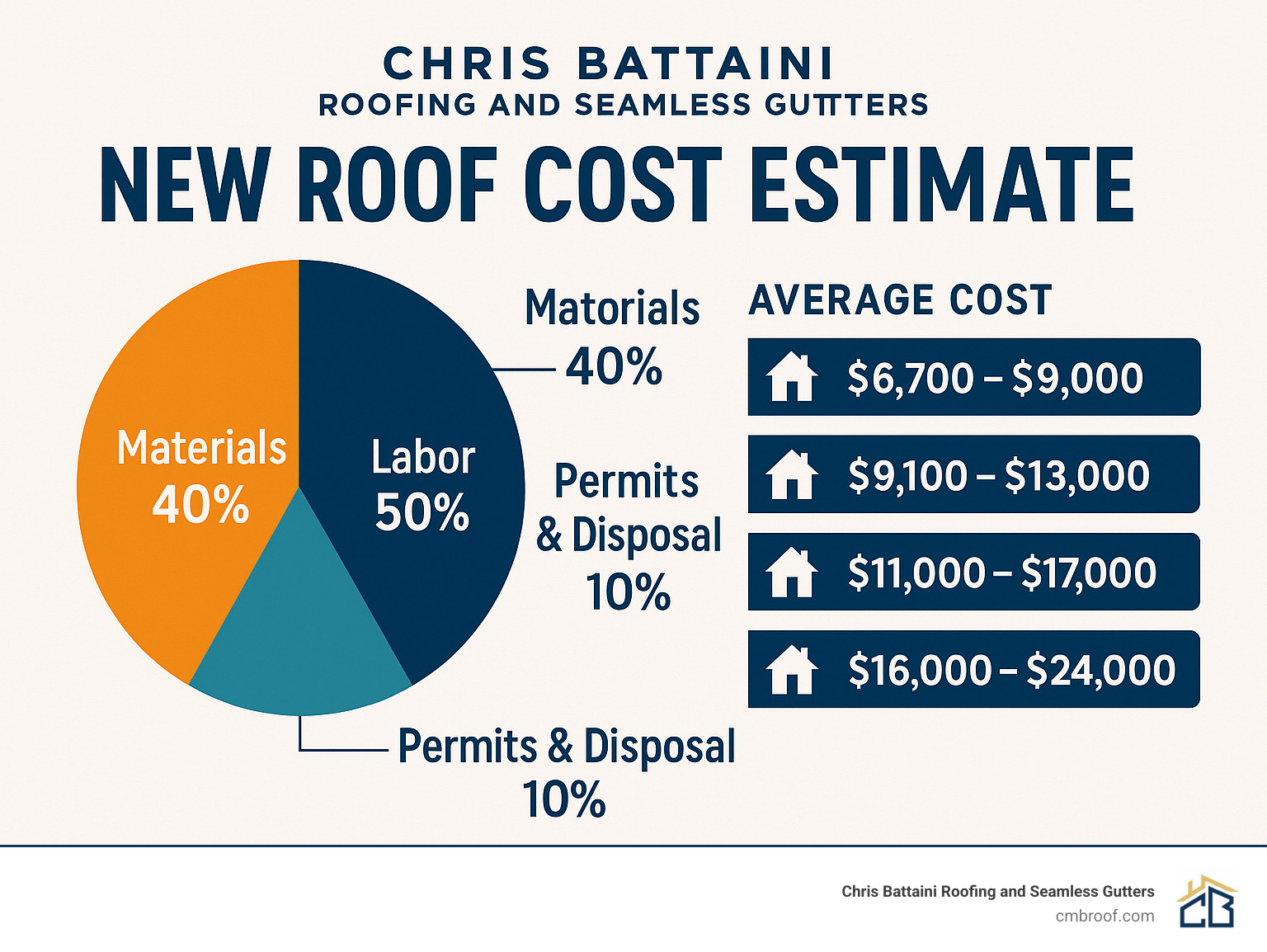
Basic new roof cost estimate glossary:
– residential roofing service
– residential roof replacement near me
New Roof Cost Estimate: 2024 Averages & Ranges
Let’s talk real numbers. A new roof cost estimate in 2024 typically falls between $6,000 and $80,000, with most homeowners investing around $11,000 to $17,000 for their project. That’s quite a range, isn’t it? The wide spread comes down to what you’re putting on top of your home and how complex the job gets.
Here’s something that trips up many homeowners: roofing contractors measure everything in “squares.” One roofing square equals 100 square feet of roof surface. So if you’ve got a typical 2,000 square foot home, you’re probably looking at about 20 squares once you account for roof pitch and overhangs.
Labor costs eat up a big chunk of your budget – usually 40% to 60% of the total project cost. The rest goes to materials, permits, tear-off work, and disposal fees. Removal of your old roof alone can add $1 to $5 per square foot to your bill, while permits might run anywhere from $100 to $1,000 depending on where you live.
Note: These are average costs based on internet data and not actual costs for Chris Battaini Roofing and Seamless Gutters.
Material choice makes the biggest difference in your final cost. Basic 3-tab asphalt shingles for a 2,000 square foot roof might cost $6,000 to $10,000 and last 15 to 25 years. Step up to architectural shingles, and you’re looking at $9,000 to $16,500 for 25 to 30 years of protection.
Want something that’ll outlast you? Metal roofing runs $17,500 to $30,000 but can last 40 to 70 years. Clay or concrete tile jumps to $15,000 to $45,000 territory but often lasts over 50 years. At the premium end, natural slate costs $35,000 to $120,000 but your great-grandchildren might still be enjoying the same roof.
Don’t forget about the extras that can surprise you. Structural repairs might add $500 to $5,000 if your roof deck needs work. New gutters can tack on another $1,000 to $3,000. These aren’t just nice-to-haves – they’re often necessary for a job done right.
Cost per Square Foot & by Home Size
Breaking it down per square foot makes budgeting easier. Materials typically cost $3 to $20 per square foot, while installation adds another $4 to $10 per square foot. Put it all together, and you’re looking at $7 to $30 per square foot for the complete job.
Your home’s size directly impacts your investment. A 1,000 square foot roof might cost $7,500 to $30,000, while a 2,000 square foot roof ranges from $15,000 to $60,000. Got a larger 3,000 square foot roof? Expect $22,500 to $90,000.
Here’s a key point many homeowners miss: your roof is bigger than your house footprint. That 2,000 square foot home probably has around 2,240 square feet of actual roofing surface once you factor in pitch and overhangs. The pitch multiplier for a moderate slope runs about 1.12 times your ground-level measurements.
Waste factor adds another 10% to 15% to your material needs. You can’t cut shingles to fit perfectly every time, and it’s smart to keep some extras for future repairs. Complex roofs with lots of angles, dormers, and valleys need even more material buffer.
High-End vs Budget Scenarios
Let’s look at the extremes. Budget-conscious homeowners choosing 3-tab asphalt shingles and an overlay installation (putting new shingles over old ones) might spend $8,500 to $11,500 for a 2,000 square foot roof. This approach saves on tear-off costs but isn’t always possible or recommended.
Premium scenarios tell a different story entirely. Copper roofing for a typical home runs $25,500 to $39,600, while solar shingles can hit $42,200 to $80,000 for the full installation. These premium options include complete tear-off, potential structural upgrades, high-end underlayment, and extended warranties.
The math is eye-opening: premium materials can cost 8 to 10 times more than budget options. But here’s the thing – they often last 3 to 4 times longer and can dramatically improve your home’s energy efficiency. When you factor in longevity and potential energy savings, the lifetime cost difference shrinks considerably.
Chris Battaini Roofing and Seamless Gutters services Berkshire, Hampden, Hampshire, and Franklin Counties in Massachusetts.
Key Factors That Influence Your Price Tag
Getting an accurate new roof cost estimate means understanding what drives the final number. Think of it like buying a car – the sticker price is just the starting point. Your roof’s unique characteristics, local market conditions, and material choices all play a role in determining what you’ll actually pay.

Material selection sits at the heart of your budget decision. Basic asphalt shingles might cost $4.25-$8.50 per square foot and handle most weather just fine, while premium slate can reach $30+ per square foot but last a century. There’s no “wrong” choice – just different trade-offs between upfront cost and long-term value.
Labor rates vary dramatically depending on where you live. Here in Berkshire County and Southern Vermont, you’ll typically see rates of $200-$350 per square, with labor making up nearly half your total cost. Urban areas with higher living costs often see even steeper rates, while rural locations might offer some savings.
Your roof’s pitch and complexity directly impact how long the job takes and how much safety equipment crews need. A simple ranch house with a moderate slope? That’s straightforward work. But add steep angles, multiple levels, dormers, and valleys, and you’re looking at 25-50% higher labor costs as crews work more carefully and slowly.
Location factors go beyond just wage rates. Some areas require expensive permits, have strict building codes, or make material delivery challenging. Weather patterns matter too – if you’re in an area prone to sudden storms, contractors might need to work faster or reschedule frequently.
Tear-off requirements can surprise homeowners who hoped to save money with an overlay. While installing new shingles over old ones costs less upfront, most manufacturers require complete tear-off for warranty coverage. That adds $1-$5 per square foot but ensures proper installation.
Structural repairs represent the biggest wild card in any new roof cost estimate. You won’t know if your decking has rot or if fascia boards need replacement until the old roof comes off. These findies can add anywhere from $500 to $5,000+ to your project, which is why smart contractors include contingency funds in their estimates.
Material Selection & Lifespan Trade-Offs
Choosing roofing materials feels overwhelming with so many options, but breaking down the real-world performance and costs helps clarify your decision. The key is matching your budget, climate, and long-term plans.
Asphalt shingles dominate the market for good reason – they’re affordable, reliable, and easy to repair. More info about Asphalt Shingle Roofing shows why they work well for most homes. Basic 3-tab shingles cost $3.50-$5.50 per square foot and last 15-25 years, making them perfect for tight budgets or homes you plan to sell soon.
Architectural shingles step up the game at $6-$10.50 per square foot. They’re thicker, more durable, and create attractive shadow lines that boost curb appeal. With 25-30 year lifespans, they often make financial sense for long-term homeowners. Premium designer shingles push into $8-$12 per square foot territory but can last 30-50 years and mimic the look of slate or wood.
Metal roofing offers compelling long-term value despite higher upfront costs. Steel panels run $5.50-$12 per square foot and can last 40-70 years with minimal maintenance. Aluminum costs slightly more at $7-$14 per square foot but resists corrosion better in coastal areas. Copper represents the ultimate investment at $15-$25 per square foot – it’ll outlast your house and develop a beautiful patina over time.
Tile roofing brings classic beauty and extreme durability, though the weight requires structural reinforcement in many homes. Concrete tiles cost $7-$15 per square foot and last 50+ years, while clay tiles run $12-$25 per square foot but can survive 75+ years of weather.
Natural slate sits at the premium end, costing $15-$30+ per square foot but lasting 75-100+ years. Synthetic slate offers similar looks at $8-$15 per square foot with 50+ year lifespans. Wood shakes provide rustic charm at $7-$15 per square foot and 25-40 year lifespans, though they require more maintenance.
Note: These are average costs based on internet data and not actual costs for Chris Battaini Roofing and Seamless Gutters.
Warranty considerations matter, but installation quality trumps material warranties every time. Premium materials often include 30-50 year manufacturer warranties versus 15-25 years for basic shingles, but poor installation voids any warranty protection.
Labor & Installation Variables
Understanding what drives labor costs helps you evaluate quotes and plan timing strategically. Latest research on labor costs confirms that regional variations can dramatically impact your final bill.
Regional wage differences reflect local living costs and contractor availability. High-cost coastal areas might see $300-$500 per square for labor, while moderate-cost areas like Berkshire County typically run $200-$350 per square. Rural locations sometimes offer savings at $150-$250 per square, though you might have fewer contractor options.
Seasonal timing affects both availability and pricing. Peak spring and summer months command 15-25% premiums as everyone wants work done in perfect weather. Off-season fall and winter scheduling can save 10-20%, though weather delays become more likely. Emergency repairs after storms cost 50-100% premiums due to high demand and urgent timelines.
Crew experience and size directly impact both speed and quality. Experienced crews work faster and safer, potentially saving money despite higher hourly rates. Larger crews complete projects quicker but cost more per day. Specialized installations like slate or solar require certified installers who command premium rates but ensure proper installation.
Safety requirements add costs but protect workers and your property. Steep roofs need extra safety equipment and slower, more careful work. Multi-story homes require scaffolding or lift equipment rental. OSHA compliance increases labor costs but prevents accidents that could delay your project or create liability issues.
Roof Pitch, Shape & Accessibility Costs
Your roof’s design significantly impacts installation difficulty and final costs. Simple rectangular roofs with moderate slopes represent the baseline, while complex designs with multiple features can easily double labor expenses.
Roof pitch directly affects how safely and quickly crews can work. Low-pitch roofs (3:12 or less) allow normal walking and standard rates. Moderate pitches (4:12 to 8:12) increase costs 10-20% as crews need more caution. Steep pitches (9:12 and up) require safety equipment and careful footing, adding 25-50% to labor costs. Very steep roofs (12:12+) might need special equipment and can double labor time.
Shape complexity creates challenges that slow installation. Simple gable roofs provide baseline pricing, while hip roofs add 10-15% due to more complex cuts and measurements. Multiple valleys where roof planes meet increase costs 15-25% because they require careful flashing and waterproofing.
Architectural features each add their own costs. Dormers typically add $500-$2,000 each depending on size and complexity. Skylights require careful work-around techniques, adding $300-$800 each. Chimneys need new flashing and careful sealing, typically costing $200-$500 each.
Accessibility challenges can significantly impact labor efficiency. Multi-story homes require equipment rental and slower material handling as crews can’t simply toss debris into dumpsters. Tight spaces with limited staging areas force crews to work in smaller sections. Landscaping protection requires tarps and plywood walkways that add setup time. HOA restrictions on work hours or noise levels can extend project timelines and increase costs.
How to Create Your Own New Roof Cost Estimate
While professional estimates provide the most accuracy, understanding how to calculate your own new roof cost estimate helps you budget and evaluate contractor quotes. Think of it as doing your homework before a big purchase – you wouldn’t buy a car without knowing the ballpark price, right?
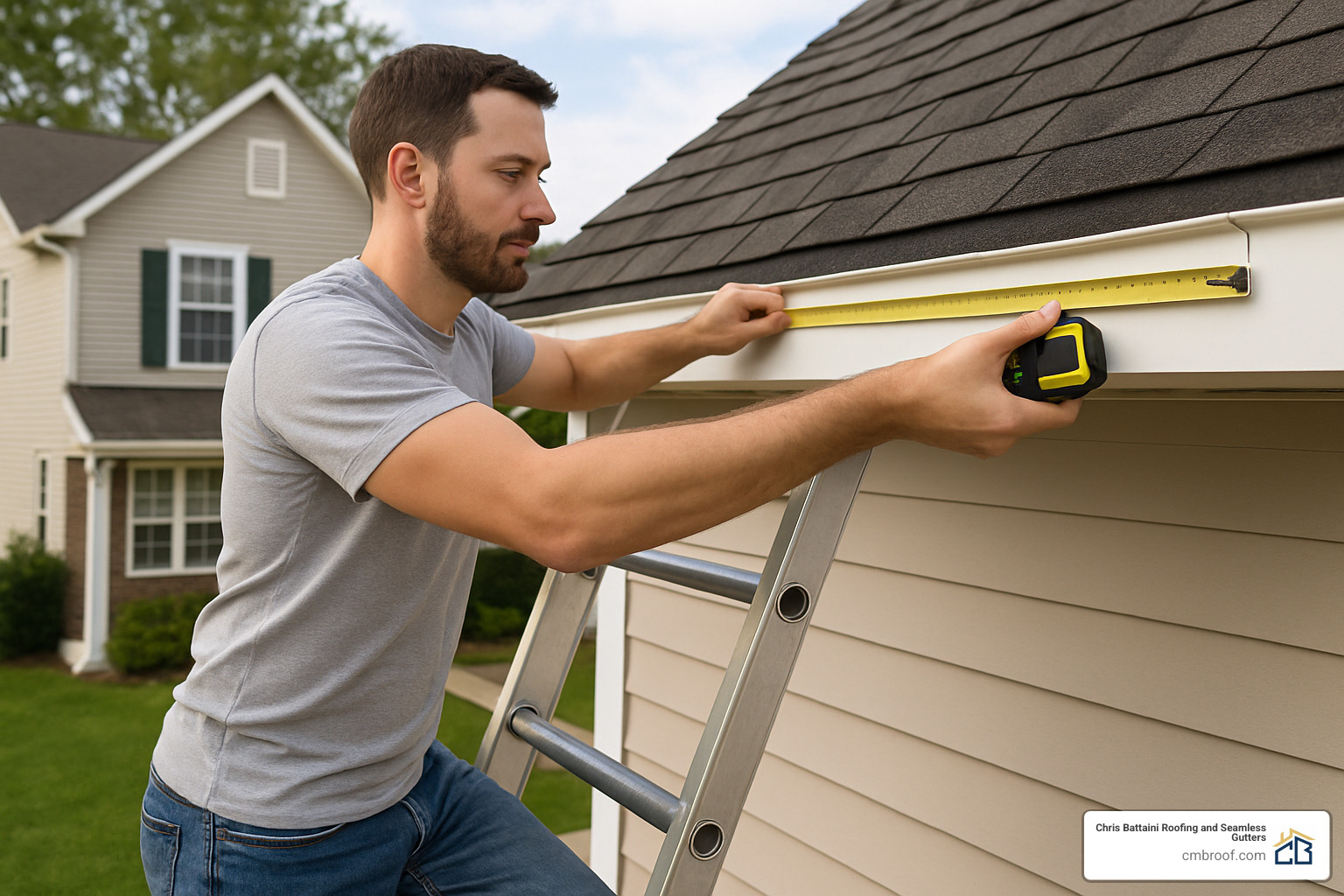
The DIY measurement approach starts with measuring your home’s ground footprint. Grab a tape measure and calculate the length times width of your house. Don’t forget to include overhangs and eaves – they add real square footage that needs covering.
Next comes the tricky part: accounting for roof pitch. A flat roof equals the ground footprint, but most roofs slope upward. Apply a pitch multiplier – use 1.05 for low-pitched roofs, 1.12 for moderate slopes, and 1.41 for steep roofs. Finally, add 10-15% extra for waste and cuts because roofing isn’t like laying carpet.
Modern technology makes this easier. Online satellite measurement tools can calculate your roof area with 97% accuracy, usually within 132 square feet of the actual measurement. Many roofing calculators automatically factor in pitch and estimate material quantities based on your roof type.
Professional measurement still wins for complex roofs. Contractors account for unusual angles, identify potential structural problems, and specify exactly what materials you’ll need. They also know local building codes and can spot issues that affect your final cost.
Step-by-Step New Roof Cost Estimate Calculator
Here’s a simple formula to estimate your project cost without getting overwhelmed by complicated math.
Start with your roof area. Take your ground footprint and multiply by the pitch factor. For example, a 2,000 square foot ranch with moderate pitch becomes 2,240 square feet of actual roof surface.
Convert to roofing squares by dividing your roof area by 100. That 2,240 square foot roof equals 22.4 squares, which you’d round up to 23 squares for ordering materials.
Choose your material cost per square. Basic asphalt shingles run $425-$825 per square, while architectural shingles cost $450-$1,250 per square. Premium materials like metal range from $450-$1,700 per square, and tile can reach $500-$1,800 per square.
Labor typically adds 40-60% to your material cost. If materials cost $10,000, expect labor to add another $4,000-$6,000. Regional differences matter here – Berkshire County rates differ from urban Boston pricing.
Don’t forget removal and disposal costs of $1-$5 per square foot for tearing off old roofing. Finally, add a 15% contingency buffer because roofing projects almost always reveal surprises once work begins.
Note: These are average costs based on internet data and not actual costs for Chris Battaini Roofing and Seamless Gutters.
When to Get a Professional New Roof Cost Estimate
DIY calculations work great for budgeting, but some situations definitely call for professional assessment. You wouldn’t diagnose your own medical condition, and complex roofing issues deserve expert evaluation.
Storm damage situations absolutely require professional inspection. Insurance companies want detailed reports from licensed contractors, and hidden damage often exceeds what’s visible from the ground. Roof Inspection Services can identify structural issues that dramatically affect replacement costs.
Complex roof designs with multiple levels, unusual shapes, or lots of features need expert measurement. A professional can accurately calculate the extra labor and materials needed for dormers, valleys, and tricky angles that online calculators miss.
Premium material installations often require certified installers. Solar shingles, slate, and some metal roofing systems have specific installation requirements that affect both cost and warranty coverage.
Quality professional estimates include detailed breakdowns showing exactly what materials you’re getting, how labor costs break down by task, and what permits and disposal will cost. They should provide clear timelines, warranty information, and payment schedules tied to project milestones.
Watch for red flags like estimates significantly lower than others, vague material descriptions, missing permit costs, or pressure to sign immediately. Large upfront payments are another warning sign – reputable contractors don’t need your money before starting work.
Ways to Save Money & Avoid Surprises
Nobody wants to overpay for a roof replacement, and with some smart planning, you can save thousands while still getting quality work. The key is understanding where costs come from and timing your project strategically.
Getting multiple bids is your best defense against overpricing. Aim for 3-5 detailed written estimates, but don’t just compare the bottom line numbers. Look at each line item carefully – materials, labor, disposal, permits. When one bid is significantly different, ask the contractor to explain why. Sometimes a lower bid means corners are being cut, while a higher bid might include extras you actually need.
Timing your project can lead to substantial savings. Fall and winter installations often cost 10-20% less because contractors have lighter schedules. Weather might cause some delays, but if you’re not dealing with leaks, the savings are worth it. Avoid the post-storm rush when everyone needs a roof at once – that’s when prices spike and quality contractors get booked solid.
Insurance coverage can be a game-changer if you have storm damage. File claims promptly and document everything with photos. Work with contractors who understand insurance processes and can help you get full coverage. Just remember that your new roof cost estimate from insurance might not cover upgrades to premium materials.
Financing options vary widely in cost and convenience. Home equity loans typically offer the lowest rates since your house secures the loan. Personal loans cost more but don’t require equity. Some contractors offer financing that looks attractive upfront but costs more long-term, so read the fine print carefully.
Negotiation & Hidden-Cost Checklist
The devil is in the details when it comes to roofing contracts. A thorough line-by-line review prevents those nasty surprises that can blow your budget. Warranty Guarantee terms should be crystal clear before you sign anything.
Material specifications matter more than you might think. “Standard shingles” could mean anything from basic 3-tab to architectural grade. Insist on brand names and specific product lines. The same goes for underlayment type – synthetic costs more than felt but performs much better. Flashing and drip edge replacement should be included, not treated as expensive add-ons finded during work.
Labor details help you understand what you’re paying for. Some contractors quote per square, others by hours. Both can work, but vague descriptions like “installation” don’t tell you much. Look for breakdown of tear-off, new installation, cleanup, and disposal.
Change order procedures protect you from surprise costs. Decking repairs are the most common unexpected expense – old roof removal often reveals rotted or damaged wood underneath. A good contract specifies how these findies get handled and priced. Permit responsibilities should be clearly assigned, along with who handles inspections.
Site protection and cleanup might seem minor but matter for your property. Daily cleanup prevents nails in your driveway and protects landscaping. Material storage areas should be agreed upon upfront, especially if space is tight.
Smart Financing & Tax Incentives
Roof replacement costs serious money, but smart financing and available incentives can ease the financial burden significantly. Scientific research on solar ROI shows that combining roof replacement with solar installation can provide long-term financial benefits.
Home equity loans typically offer the best rates, often 6-9% depending on your credit and equity position. The interest might even be tax-deductible if you itemize deductions. Personal loans approve faster and don’t require equity, but expect rates around 8-15%. Contractor financing can be convenient, especially with promotional 0% offers, but compare the total cost carefully.
Tax incentives can provide real savings beyond just financing. Solar installations qualify for a 30% federal tax credit, making the timing perfect if your roof needs replacement anyway. Some energy-efficient materials qualify for local utility rebates. Impact-resistant shingles might earn you insurance discounts that add up over time.
Cool roof materials that reflect heat can qualify for utility rebates in some areas and definitely reduce cooling costs. Metal roofing and light-colored shingles perform best for energy efficiency. The upfront premium often pays for itself through energy savings and potential rebates.
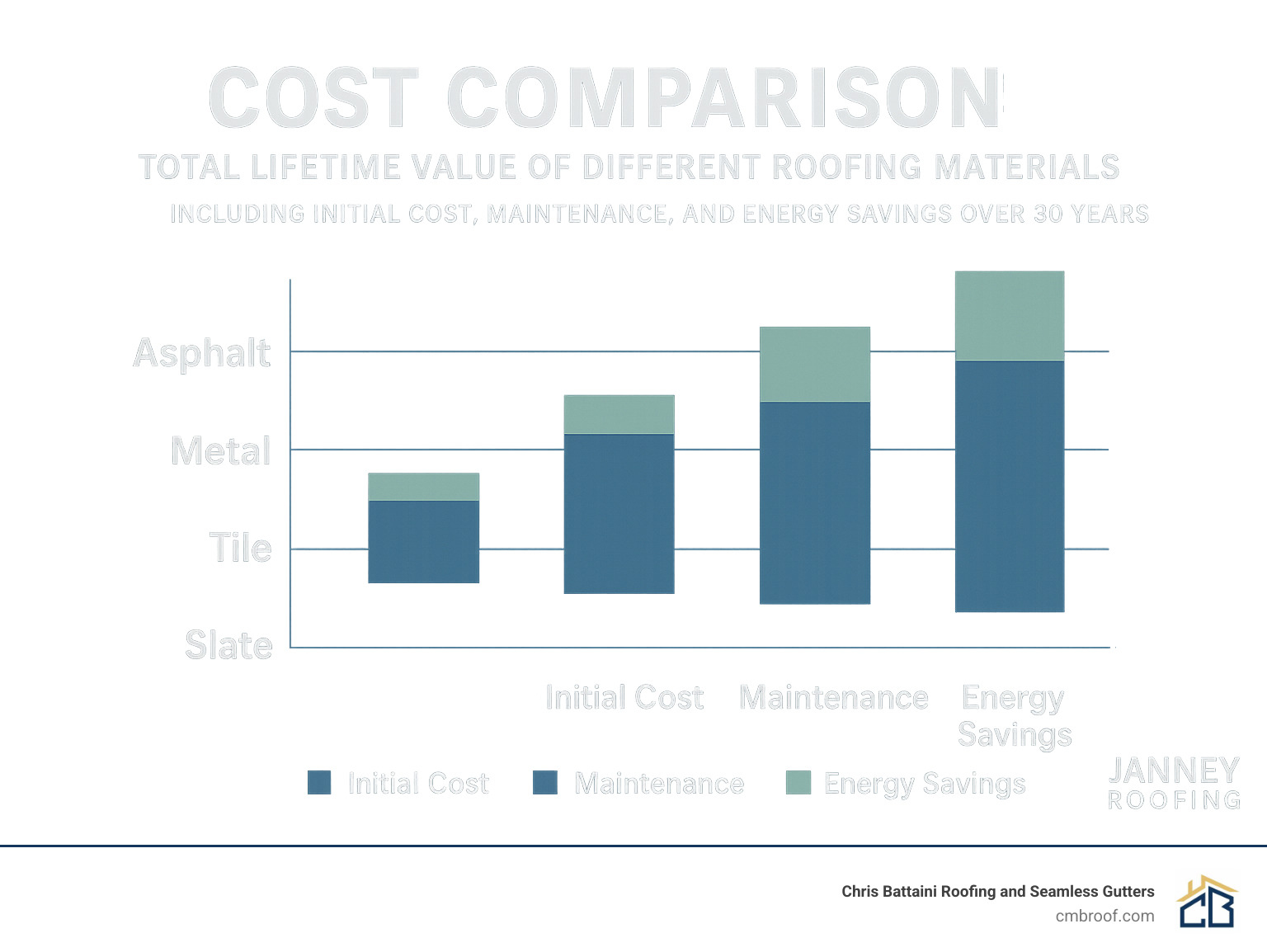
Note: These are average costs based on internet data and not actual costs for Chris Battaini Roofing and Seamless Gutters.
Return on investment varies by material choice and local energy costs. Premium materials like metal or slate cost more upfront but last much longer and often provide better energy performance. Factor in maintenance costs too – asphalt shingles need more frequent repairs and earlier replacement compared to metal or tile.
Frequently Asked Questions about New Roof Cost Estimate & Replacement
Homeowners have plenty of questions when facing a roof replacement. Let’s tackle the most common concerns that come up during the planning process.
What signs show I need a full replacement instead of repair?
Nobody wants to spend more than necessary, but sometimes repairs just don’t make financial sense. Age is often the biggest factor – if your asphalt shingles are over 20 years old and showing widespread granule loss, you’re likely looking at replacement territory.
The “multiple problems” rule is pretty reliable too. When you’re dealing with leaks in different areas, extensive missing or curling shingles, or can actually see daylight through your roof boards from the attic, repairs become like putting bandaids on a sinking ship.
Here’s a practical guideline: if repair costs exceed 25-30% of replacement cost, replacement usually makes more sense. You’ll also want to consider that most building codes limit you to two layers of roofing, so if you already have that, your next “repair” has to be a full tear-off anyway.
Structural red flags that point toward replacement include sagging roof decks, visible water damage or mold in your attic space, and multiple layers already installed. These aren’t just cosmetic issues – they’re safety concerns that repairs can’t adequately address.
When you’re unsure, getting an expert inspection is worth the investment, especially if you’re dealing with storm damage, buying or selling a home, or planning other major improvements. Sometimes what looks like a small problem from the ground reveals much bigger issues once a professional takes a closer look.
How long does a typical roof replacement take?
Most homeowners are pleasantly surprised by how quickly a professional crew can transform their roof. A typical 1,500-2,000 square foot ranch usually takes just 1-3 days from start to finish, assuming good weather cooperates.
Two-story homes with moderate complexity generally need 3-5 days, while more complex roofs with multiple dormers, valleys, and angles can stretch to 5-7 days. Large homes over 3,000 square feet might take 1-2 weeks, but that’s more about the sheer volume of work than difficulty.
Weather is the wild card that no contractor can control. Rain, high winds, or extreme temperatures can pause work for safety reasons. Smart contractors build weather delays into their scheduling, so don’t panic if Mother Nature doesn’t cooperate perfectly.
The process typically flows like this: Day one brings material delivery and setup, with tear-off beginning. Days two and three focus on completing tear-off, handling any deck repairs, and starting new installation. The final day covers cleanup, final inspection, and your walkthrough.
Planning makes everything smoother. Schedule during favorable weather seasons when possible, arrange temporary accommodations if you’re worried about noise or disruption, and ensure clear access for material delivery trucks. Your crew will appreciate being able to work efficiently, and you’ll appreciate getting your life back to normal faster.
Does a new roof really increase home value and ROI?
This is the question that helps many homeowners justify the investment, and the answer is genuinely encouraging. A quality roof replacement provides both immediate curb appeal and long-term financial benefits that make it one of the better home improvement investments.
The immediate impact on home value comes from improved curb appeal and buyer confidence. When potential buyers see a new roof, they’re not worried about immediate replacement costs or hidden water damage. That peace of mind translates directly into willingness to pay full asking price.
ROI studies consistently show solid returns. Asphalt shingle replacement typically recovers 60-70% of costs at resale, while metal roofing often sees 70-80% recovery. In high-end markets, premium materials sometimes exceed 100% cost recovery, especially when energy efficiency features are valued.
But here’s what the studies don’t capture: the prevented costs. A failing roof can lead to water damage, mold issues, and structural problems that cost far more than the roof itself. Your new roof is preventing these expensive disasters while providing 20-50+ years of protection.
Energy efficiency adds another layer of value through reduced utility costs. Modern roofing materials and proper installation can significantly impact your heating and cooling bills, providing ongoing savings that compound over time.
The actual value increase depends on local market conditions, the quality of installation, and timing of any sale. But even if you never sell, you’re getting decades of protection, improved comfort, and peace of mind during every storm.
Note: Cost recovery percentages are based on national averages and may vary by location and market conditions.
Conclusion & Next Steps
Getting an accurate new roof cost estimate is just the beginning of your roofing journey. Armed with the knowledge from this guide, you’re now equipped to spot red flags, ask the right questions, and make decisions that protect both your home and your wallet.
The cheapest bid often costs more in the long run. When you’re looking at estimates ranging from $6,700 to $80,000, it’s tempting to grab the lowest number. But think about it this way – your roof protects everything you own. Quality materials and expert installation aren’t expenses; they’re investments that pay dividends for decades.
The sweet spot for most homeowners falls between $11,000 and $17,000 for a typical 2,000 square foot home with architectural shingles. This range gives you solid materials, professional installation, and peace of mind without breaking the bank.
At Chris Battaini Roofing and Seamless Gutters, we believe in transparency from day one. Our detailed estimates account for every nail, every square foot of underlayment, and every hour of labor. No surprises, no hidden fees, no pressure tactics. Just honest assessments and owner-led quality that you can count on.
Here’s your roadmap forward: Start by honestly assessing your roof’s condition – those missing shingles and water stains won’t fix themselves. Research your material options based on your budget and long-term goals. Then gather detailed estimates from qualified contractors who take time to explain their recommendations.
When comparing proposals, focus on value rather than just price. Look for contractors who include proper permits, quality underlayment, and comprehensive cleanup. Ask about warranties – both on materials and workmanship. A contractor confident in their work won’t hesitate to guarantee it.
Planning your financing and timing can save thousands. Off-season scheduling, energy rebates, and smart financing choices all add up. Don’t forget to factor in a 15% contingency for unexpected issues – they’re more common than you’d think, especially on older homes.
Ready to move forward with confidence? Our experienced team serves homeowners throughout Berkshire County and Southern Vermont with the kind of personal attention you won’t find with larger companies. We’ll walk you through material choices, explain financing options, and create a timeline that works for your family.
More info about residential roofing services showcases our complete range of services and the exceptional warranties that back every installation. When you choose us, you’re not just getting a new roof – you’re getting decades of protection and a partner who stands behind their work.
Chris Battaini Roofing and Seamless Gutters proudly serves Berkshire, Hampden, Hampshire, and Franklin Counties in Massachusetts, bringing owner-led quality and exceptional warranties to every project.
