When you install metal roof on lean to shed, you’re choosing a solution that offers superior durability and long-lasting protection. A lean-to shed is a fantastic way to add storage without a large footprint, and topping it with a metal roof makes it a powerhouse of practicality and resilience. This DIY project is well within reach for a dedicated homeowner and promises a low-maintenance, aesthetically pleasing result.
Choosing the right roofing material is critical, and a metal roof stands out as the premier choice. Here’s why:
- Longevity and Durability: Metal roofs last 50 to 70 years, far outstripping asphalt shingles (15-30 years). They offer superior resistance to weather, fire, and rot.
- Low Maintenance: Once installed, metal roofs require very little upkeep beyond occasional inspections.
- Energy Efficiency: Metal reflects solar heat, which can help keep your shed’s contents cooler.
- Lightweight: Metal panels are surprisingly light, reducing stress on your shed’s structure.
- Moss and Mold Resistance: Unlike asphalt, metal surfaces are resistant to organic growths.
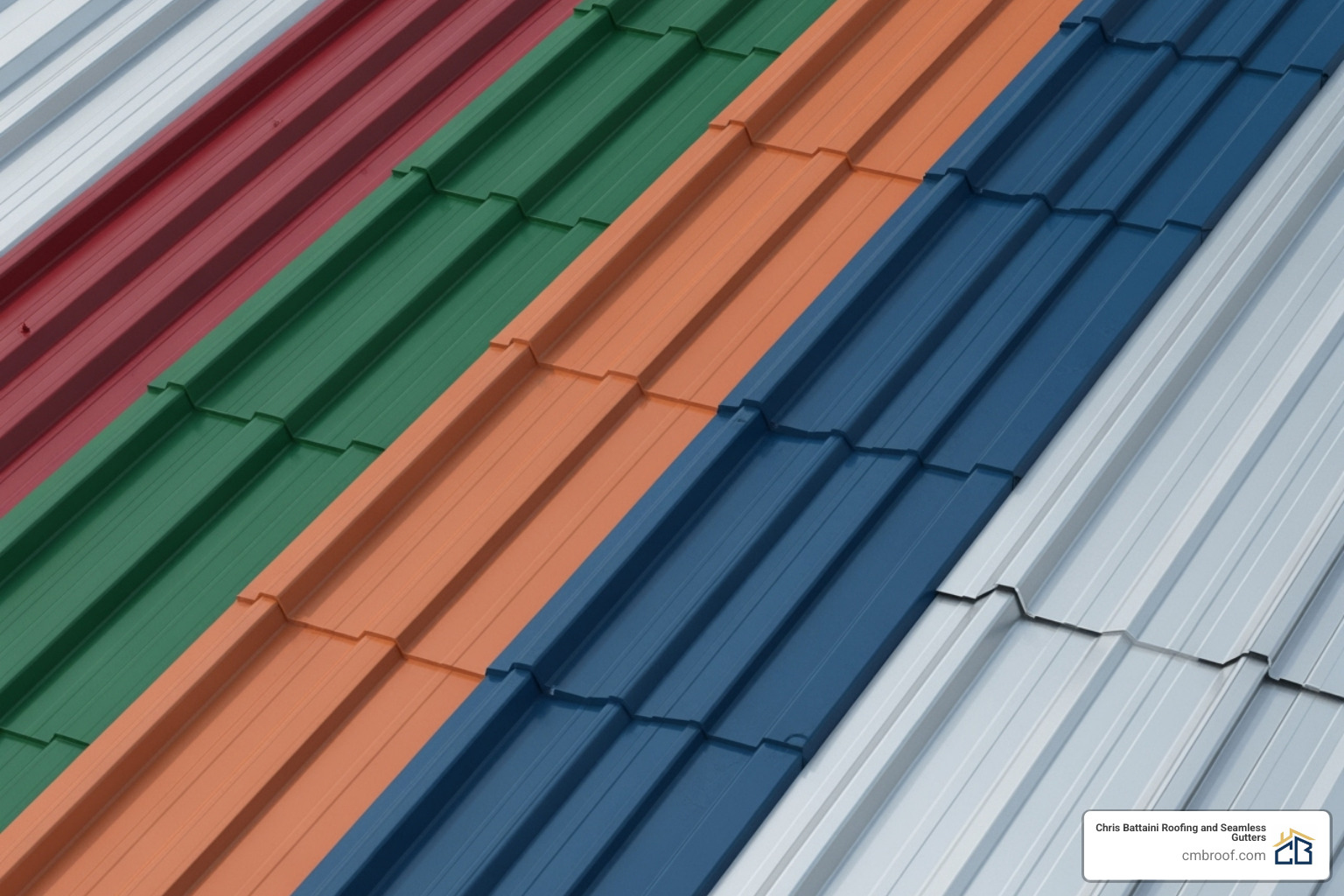
Types of Metal Roofing for Sheds:
- Steel: The most common and economical option, galvanized or galvalume-coated steel can last 30 to 50 years.
- Aluminum: Lightweight and rustproof, it’s ideal for coastal areas and lasts 30 to 50 years.
- Zinc: A premium option that develops a natural patina and can last 80 to 100 years.
- Copper: The most durable and expensive choice, potentially lasting up to 200 years.
Cost Considerations:
Metal roofing typically has a higher upfront cost than asphalt shingles. Please note, the following prices are general estimates based on national averages and do not represent a quote from Chris Battaini Roofing. Costs can vary widely based on material, location, and complexity. While basic asphalt roofing might start around $100 per square (100 sq. ft.), metal roofing can range from $115 to over $900 per square. However, the long-term benefits of durability and low maintenance often outweigh this initial investment.
| Feature |
Metal Roofing |
Asphalt Shingles |
| Lifespan |
50-70+ years |
15-30 years |
| Durability |
Excellent; resistant to high winds, fire, rot |
Good; susceptible to wind uplift, cracking, moss |
| Maintenance |
Very low |
Moderate |
| Energy Efficiency |
High; reflects heat |
Low; absorbs heat |
| Cost (Average) |
Higher upfront |
Lower upfront |
Proper planning is the key to a successful DIY project. Gathering your tools and materials and preparing the shed structure beforehand will save you time and prevent headaches when you install a metal roof on a lean-to shed.
Have everything on hand before you begin for a smooth workflow.
- Safety Gear: This is non-negotiable. You’ll need a helmet, safety glasses, gloves, and slip-resistant footwear. Ensure any ladder you use is stable and secured.
- Measuring & Marking Tools: A reliable measuring tape, a chalk line for straight guides, and a level are essential for precision.
- Cutting Tools: A circular saw with a metal-cutting blade is best for straight cuts. Use tin snips for detailed trimming. A jigsaw or angle grinder can also be useful.
- Fastening Tools: A drill with an adjustable torque setting is crucial for securing screws without over-tightening. You’ll also need a utility knife and a caulking gun.
- Roofing Materials:
- Metal Panels: Order panels cut to the full length of your roof to minimize seams and potential leaks.
- Underlayment: A protective moisture barrier. Options include synthetic underlayment or a self-adhering ice-and-water shield for superior protection.
- Fasteners & Trim: Use high-quality Galvalume screws with rubber washers. You will also need drip edge, gable trim, and sidewall flashing.
- Sealants: Have rubber sealant tape (butyl tape), silicone sealant, and foam closure strips on hand to create a watertight finish.
- Framing & Sheathing: If building new or reinforcing, you’ll need lumber (2x4s or 2x6s) and sheathing (1/2″ plywood or OSB).
Preparing the Shed Structure
A smooth, solid surface is essential for a professional result.
- Inspect the Frame: Check rafters and supporting walls for rot, insect damage, or instability. Reinforce any weak rafters by adding “sister joists” alongside them.
- Remove Old Roofing: A full tear-off is recommended. This allows you to inspect the underlying sheathing for hidden damage and provides a clean, level surface.
- Clean the Roof Deck: Sweep away all debris, dust, and dirt. Hammer down or remove any protruding nails.
- Check the Sheathing: Ensure your plywood or OSB sheathing is in good condition, flat, and securely fastened. Replace any damaged sections.
Framing and Ensuring Proper Roof Slope
The simple, single-sloping design of a lean-to roof is excellent for shedding water. The roof’s pitch is a critical factor for performance.
- Minimum Roof Pitch: While metal roofing can be installed on pitches as low as 1:12, a steeper slope of 3:12 or 4:12 is strongly recommended, especially in areas with heavy rain or snow. A steeper pitch improves water drainage and helps shed snow load.
- Rafter Cuts: To ensure a secure fit, you may need to make specific cuts. A “birdsmouth cut” is a notch that allows the rafter to sit flat on the wall’s top plate. Angled “plumb cuts” at the rafter ends allow them to sit flush against the fascia board.
- Squaring the Frame: A square frame is vital for a clean installation. Use the 3-4-5 rule to ensure all corners are true 90-degree angles: measure 3 units along one side and 4 units along the perpendicular side; the diagonal between these points must measure 5 units. Adjust the framing until it does. For a visual guide, watch a video on how to square up framing.
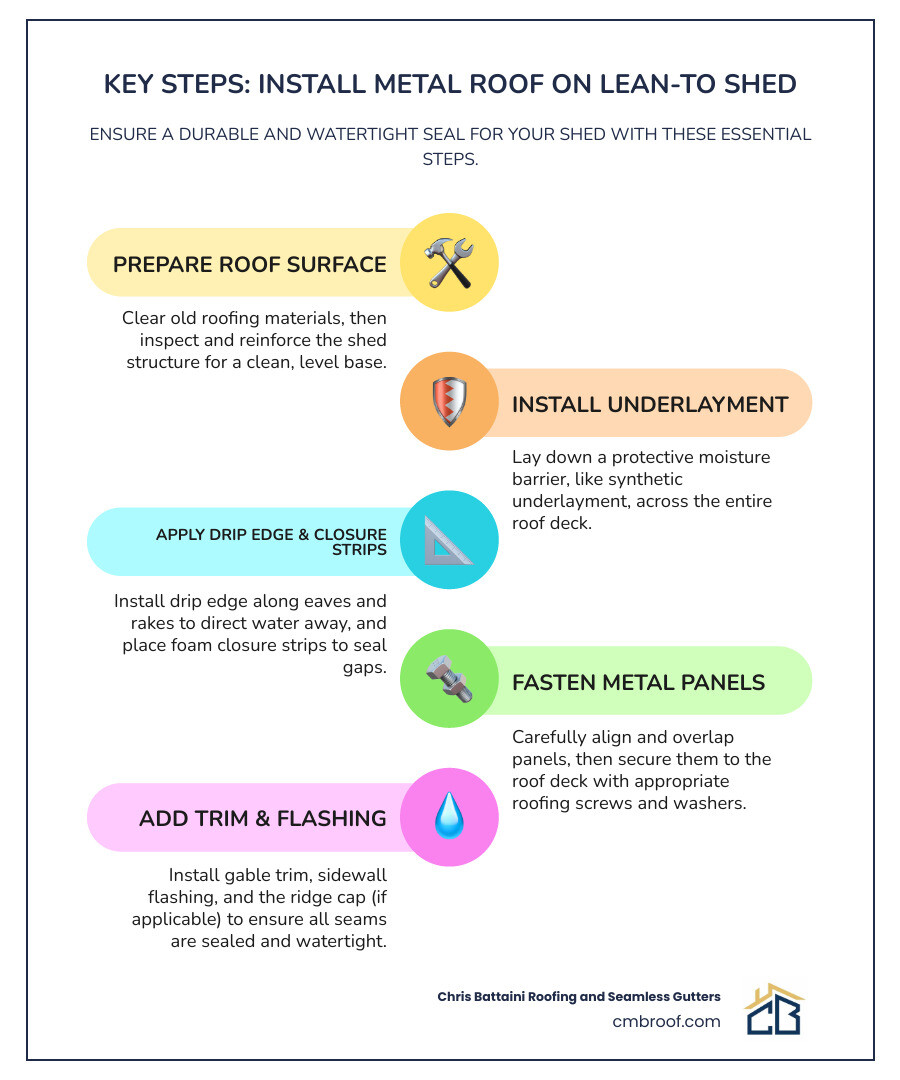
Now for the rewarding part. Learning how to install metal roof on lean to shed is a project that provides lasting satisfaction. Always follow the specific instructions from your panel manufacturer, as techniques can vary. Here is our proven approach based on years of Metal Roofing Installation experience.
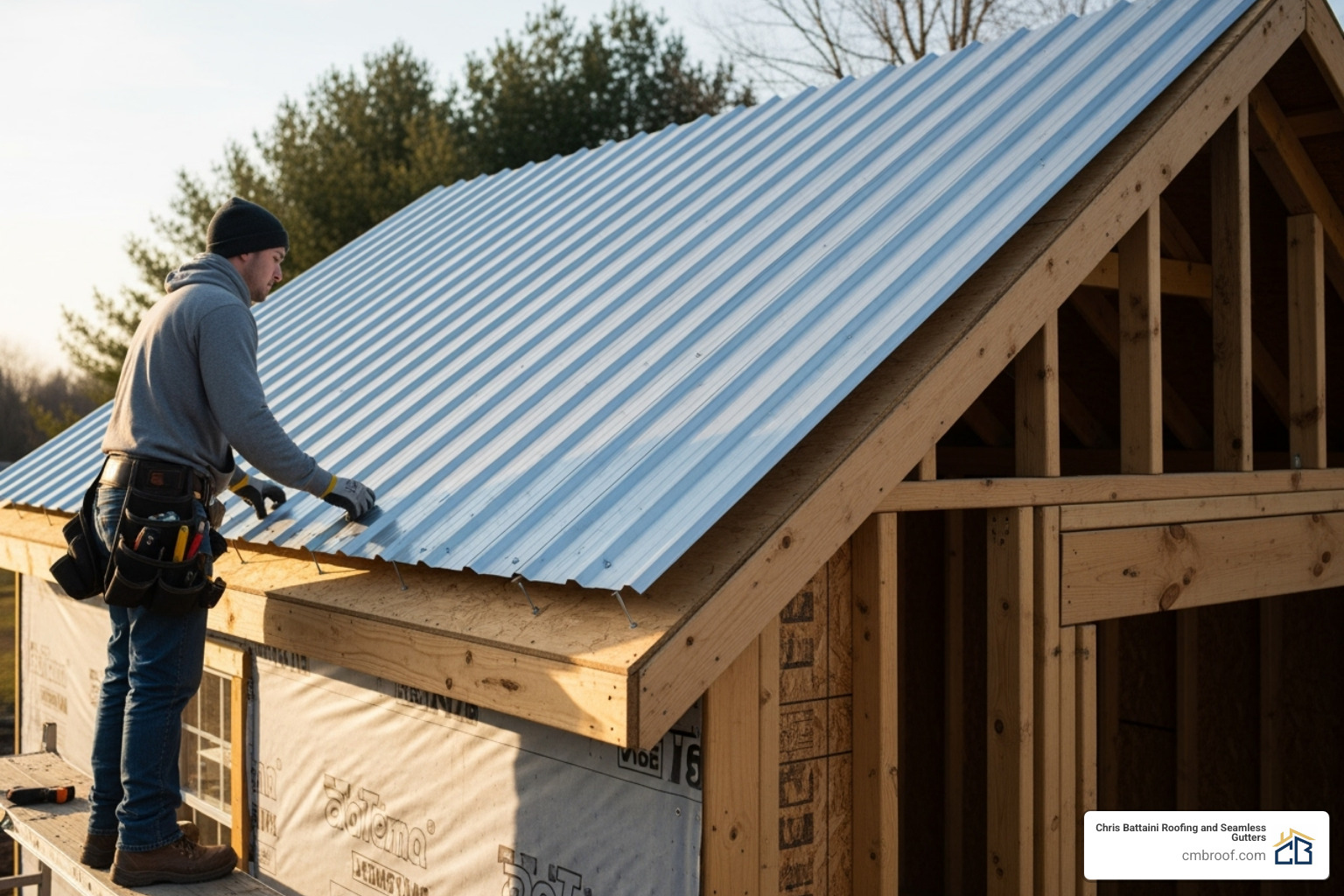
Step 1: Install Drip Edge and Underlayment for a Watertight Base
This step is your first line of defense against water. The drip edge directs water away from the fascia and foundation. Install it along the lower eave first, securing it with roofing nails every 16 inches. Overlap consecutive pieces by 1/2 inch. Next, install the drip edge along the sloped rake edges.
With the drip edge in place, install your underlayment. For superior protection, especially in climates with harsh winters, an ice and water shield is an excellent choice. Start at the eave and work your way up, overlapping each row by 4 to 6 inches. Secure the underlayment with roofing nails or staples, ensuring it is flat and free of wrinkles, which can show through the metal panels.
Precision is key to a professional result. Start installing panels at one edge of the roof, typically opposite the prevailing wind direction. Use a chalk line to ensure the first panel is perfectly square to the roofline.
- Overhang: Allow a 1 to 2-inch overhang at the eaves to ensure water drips clear of the edge.
- Panel Overlap: Metal panels are designed to interlock. The larger edge (female rib) of one panel should nest over the shorter edge (male rib) of the previous panel. Most panels require at least one corrugation of overlap. Many include an anti-siphon channel to prevent water from wicking underneath.
- Cutting: Use a circular saw with a metal-cutting blade for straight cuts and tin snips for detailed trimming.
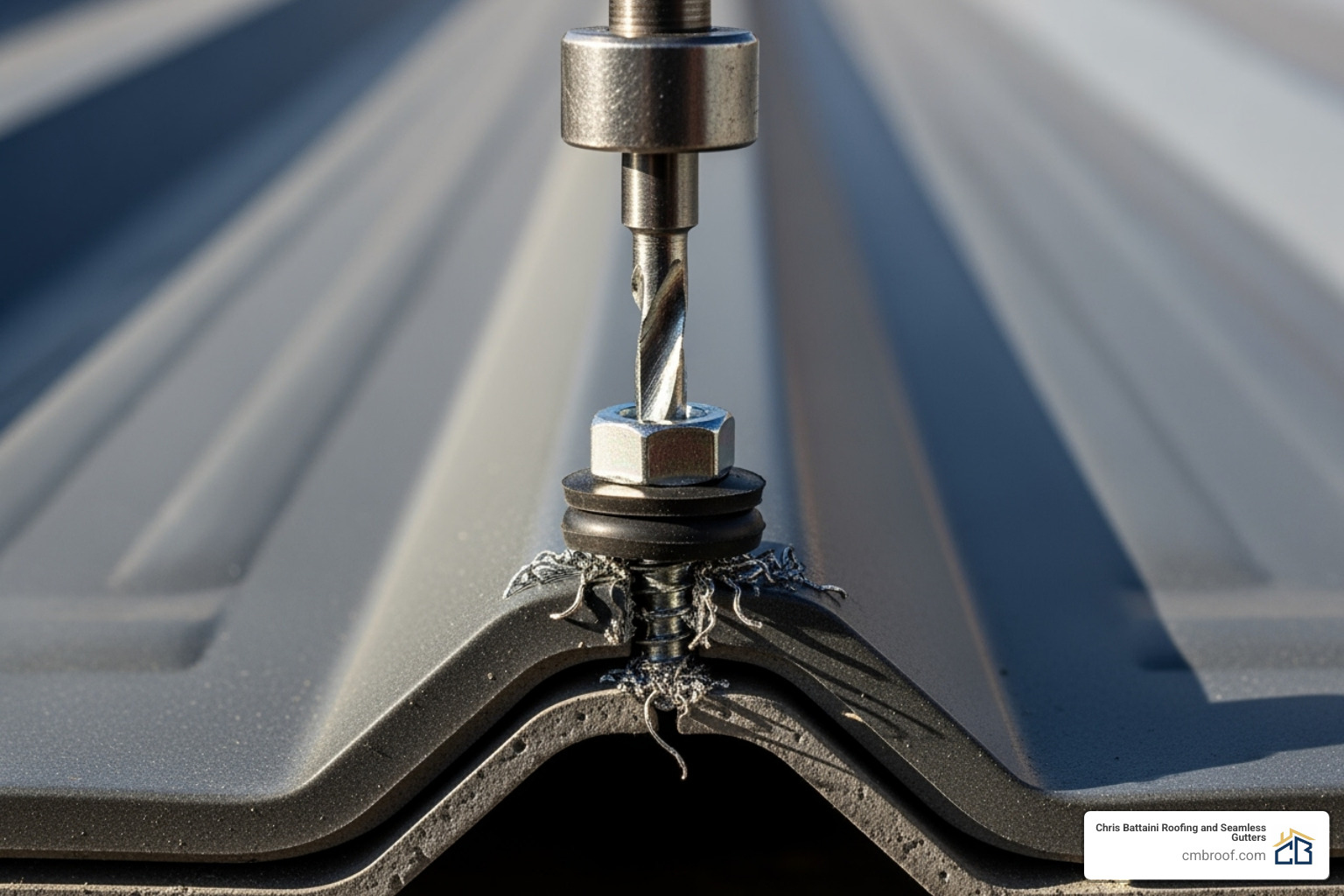
- Fastening: Use self-tapping screws with rubber washers to create a watertight seal. The ideal screw placement is often debated; some manufacturers recommend the flat areas next to the ribs, while some installers prefer the high point of the rib. Consistency is key. Use a drill with an adjustable torque setting to avoid over-tightening, which can damage the washer and dimple the panel. Tighten until the washer is snug but not crushed.
These final details provide a professional, watertight finish.
- Gable Trim: Install this trim along the sloped sides of the roof, over the metal panels. For an extra seal, apply butyl tape to the underside of the trim before fastening.
- Sidewall Flashing: This is the most critical flashing on a lean-to shed. It seals the joint where the high side of the roof meets the existing wall. The flashing must extend up the wall and over the roof panels to create a watertight barrier.
- Sealing: Use foam closure strips to fill the gaps at the eaves and where the roof meets the high wall. These strips match the panel profile and prevent pests and wind-driven rain from getting underneath. Apply butyl tape or silicone sealant at all overlaps, joints, and trim intersections to create a continuous watertight envelope. For detailed instructions, you can consult a manufacturer’s guide like this R-Panel Installation Manual.
Finally, conduct a thorough inspection. Check that all panels are aligned, screws are properly tightened, and every joint is sealed.
Common Mistakes to Avoid and Pro Tips for a Flawless Finish
When learning how to install metal roof on lean to shed, avoiding common pitfalls is as important as following the correct steps. Here are the most frequent errors we see, along with some pro tips for a perfect finish.
Common Mistakes to Avoid:
- Skipping Underlayment: Underlayment is a critical secondary moisture barrier. Skipping it to save a few dollars can lead to costly water damage later.
- Over-tightening Screws: Using too much force on your drill will crush the rubber washer, breaking the watertight seal and potentially dimpling the panel.
- Misaligned Panels: If the first panel isn’t perfectly square, every subsequent panel will be crooked. Take the time to snap a chalk line and measure carefully.
- Incorrect Panel Overlap: Panels must overlap correctly (usually by one full corrugation) and be sealed with butyl tape to prevent leaks in heavy rain.
- Forgetting Sealant: Every screw, overlap, and trim joint must be sealed. This tedious step is what separates a durable roof from a leaky one.
Pro Tips for a Flawless Finish:
- Order Panels to Length: Have your supplier cut panels to the exact length of your roof. This eliminates horizontal seams, creating a cleaner look and fewer potential leak points.
- Clean Up Immediately: Use a soft brush or leaf blower to remove metal shavings after cutting or drilling. These particles will rust and cause permanent stains on your new roof.
- Pre-Drill Holes: For thicker metal, pre-drilling holes makes screw installation easier and prevents the metal from buckling.
Specific Considerations for a Lean-To Shed
A lean-to’s single-slope design presents unique challenges:
- Flashing the High Wall: This is the most critical joint. Unlike a standard ridge cap, you need robust sidewall flashing that runs up the existing structure’s wall and over your new roof panels.
- Sealing Against the Structure: This joint requires more than just foam strips. A physical barrier must be properly integrated and sealed to direct water away from this vulnerable intersection.
- Managing Water Runoff: All water is directed to one eave. Consider installing gutters to manage runoff and prevent erosion around your shed’s foundation.
When planning to install metal roof on lean to shed, many homeowners have similar questions. Here are answers to some of the most common ones.
A properly installed metal roof is a long-term investment, typically lasting 50 to 70 years. This is significantly longer than asphalt shingles, which may need replacement in 15 to 30 years. The exact lifespan depends on the type of metal (steel, aluminum, zinc, or copper), installation quality, and local climate. Investing in quality Roofing Materials ensures maximum durability.
In many cases, yes, you can install a metal roof over a single layer of existing asphalt shingles, provided the old roof is relatively flat and in decent condition. However, for best results, consider these points:
- Inspect and Repair: Fix any soft spots or damage on the old roof first.
- Add Furring Strips: Installing wood strips (1x4s) over the shingles creates an air gap for ventilation and provides a solid base for your new roofing screws.
- Use Underlayment: We still strongly recommend installing a new layer of synthetic underlayment over the shingles for superior moisture protection.
Going over an old roof can sometimes trap moisture, so ensure your shed has adequate ventilation to prevent condensation.
Metal roofing is excellent for low-slope applications, making it ideal for lean-to sheds. The absolute minimum pitch is often as low as 1:12 (1 inch of rise for every 12 inches of run).
However, for better performance, especially in regions with heavy rain or snow, a steeper pitch of 3:12 or 4:12 is highly recommended. A steeper slope sheds water and snow more effectively, reducing the risk of leaks or structural strain. For very low slopes (below 3:12), standing seam metal panels are generally a better choice than corrugated panels with exposed fasteners, as their raised, sealed seams offer superior protection against water intrusion.
Conclusion: Enjoy Your Durable and Stylish New Shed Roof
By following these steps, you now have the knowledge to confidently install a metal roof on a lean-to shed. You’ve invested in superior durability, low maintenance, and a sleek aesthetic that will protect your belongings for decades to come. This project delivers immense satisfaction and long-term value.
While a DIY installation is rewarding, roofing can be complex and demanding. If you prefer the peace of mind that comes with professional installation, or if your project feels too big to tackle, we are here to help.
At Chris Battaini Roofing and Seamless Gutters, we pride ourselves on owner-led, on-site service and exceptional workmanship. If you’re in Berkshire, Hampden, Hampshire, or Franklin Counties in Massachusetts, we would be happy to discuss your project. Don’t delay, Contact Us today for a free estimate on your Metal Roofing needs and let’s give your shed the durable, stylish roof it deserves!