-
10 Wendell Ave Extension Pittsfield, MA 01201
-
210 Columbia St., Lee, MA 01238

Gutter install services protect your home from thousands of dollars in water damage, but choosing the wrong installer can leave you with costly repairs down the road. Professional installation ensures proper slope, secure mounting, and leak-free seams that DIY projects often miss.
Top Gutter Install Services at a Glance:
*Average costs based on internet data, not actual pricing for Chris Battaini Roofing and Seamless Gutters
Your gutters are more than just metal channels – they’re your home’s first defense against foundation erosion, basement flooding, and structural damage. Research shows that galvanized steel and aluminum gutters last about 20 years, while copper systems can protect your home for up to 50 years when professionally installed.
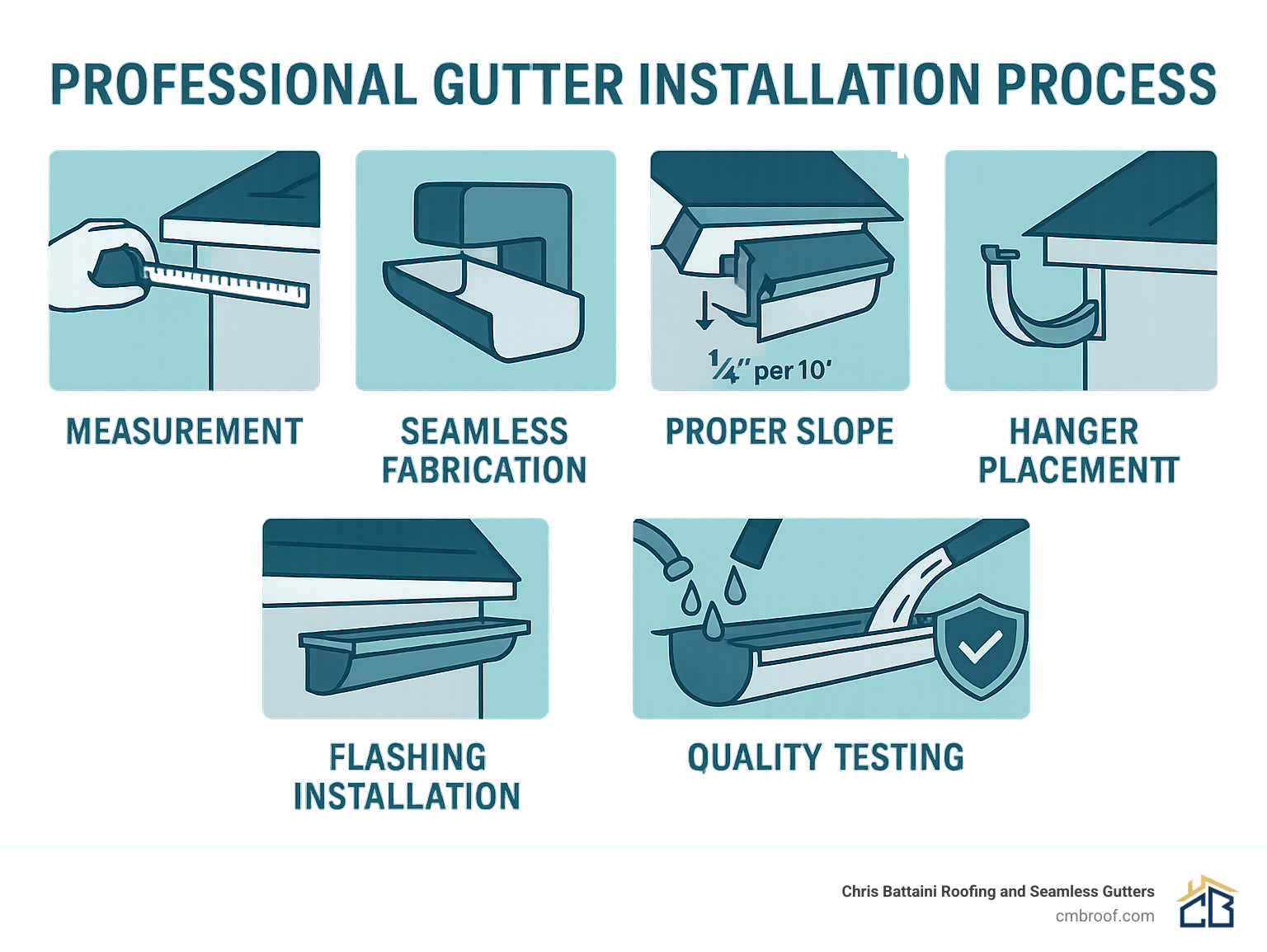
The difference between a $2,000 gutter project and a $20,000 foundation repair often comes down to proper installation. Professional crews understand critical details like hanger spacing every 2-3 feet, ¼-inch slope per 10 feet of run, and downspout placement every 20-30 feet – specifications that prevent the sagging, overflow, and water damage that plague DIY installations.
But not all gutter services deliver the same quality. Some cut corners on materials, skip proper flashing, or leave you with seams that fail after the first heavy storm.
Related content about gutter install:
– attaching gutter
– continuous gutter cost
– seamless gutter systems
Here’s something we see way too often in our work across Berkshire County and Southern Vermont: homeowners who thought they could skip proper gutters or put off that gutter install project “just one more year.” The stories don’t end well.
Let’s talk about what really happens when water has nowhere to go but straight down from your roof.
Foundation erosion is the silent destroyer that keeps us busy with emergency calls. Picture this: every rainstorm dumps hundreds of gallons of water right next to your foundation instead of being channeled safely away. That water doesn’t just disappear – it washes away soil, creates settling, and eventually leads to foundation cracks that can cost anywhere from $3,000 to $30,000 to repair properly.
We’ve walked through too many basement leaks that started as “just a small wet spot” during heavy rains. Without gutters directing water away from your home, that water finds every tiny crack in your foundation walls. Before you know it, you’re dealing with flooding that destroys furnaces, ruins finished basements, and creates the perfect environment for mold growth. Basement waterproofing projects typically run $2,500 to $15,000, depending on how bad things get.
Fascia rot might sound like a minor issue, but it’s anything but minor when water constantly overflows and soaks the wood behind where your gutters should be. We’ve seen entire sections of fascia boards that crumble when you touch them. Replacing rotted fascia and soffits costs $8 to $25 per linear foot, and that’s assuming the damage hasn’t spread into your roof structure.
Here in New England, ice dams turn missing gutters into a winter nightmare. Without proper downspout placement and adequate drainage, ice builds up and forces water right under your shingles. Ice dam removal and repairs easily cost $1,500 to $8,000 per incident – and that’s money you’ll spend every winter until you fix the root problem.
Your landscaping wash-out might seem cosmetic compared to foundation issues, but we’ve seen beautiful gardens and expensive hardscaping destroyed in a single storm season. Replacing washed-out mulch, plants, and stone work adds up faster than you’d think.
The technical details matter more than most people realize. Professional gutter install services understand that hanger spacing needs to be every 2 feet in our climate – not the 3-foot spacing that works in warmer areas. Our snow loads and ice conditions demand stronger support. Similarly, gutter slope of ¼-inch per 10 feet ensures water keeps moving even when leaves and debris partially block the flow.
Scientific research on water intrusion shows that homes with properly installed gutter systems experience 85% fewer water-related foundation problems compared to homes with missing or inadequate gutters. Those aren’t just numbers – they represent thousands of dollars in prevented damage.
The bottom line? That $2,000 to $8,000 you might spend on professional gutter installation looks pretty reasonable when you’re staring at a $20,000 foundation repair bill or dealing with a flooded basement for the third time.
Finding the right gutter install company can feel overwhelming, especially when you’re dealing with quotes that vary by thousands of dollars. After two decades of installing gutters across Western Massachusetts, we’ve learned what separates quality contractors from those who leave you with expensive problems.
The best gutter services start with genuine materials expertise. A knowledgeable contractor will walk your property, examine your roof pitch, and discuss your home’s specific drainage challenges before recommending materials. They understand that a colonial with steep roof lines needs different solutions than a ranch with gentle slopes, and they can explain why seamless fabrication works better for your situation than sectional gutters.
Warranties tell you everything about a company’s confidence in their work. Quality contractors offer comprehensive coverage that includes both materials and labor – typically one to two years on installation and decades on materials. Be wary of services that only warranty the gutters themselves but not the installation. Most gutter failures happen because of poor workmanship, not defective materials.
When you’re getting estimates, pay attention to whether you’re dealing with owner-on-site crews or subcontracted teams. Owner-operated businesses have skin in the game – their reputation depends on every job they complete. You’ll get better communication, faster responses to concerns, and workmanship that reflects personal pride rather than just another day’s work.
Here’s something most homeowners never think to ask about: hanger frequency. Professional installers space hangers every 18-24 inches in normal conditions, but our New England winters demand even closer spacing – sometimes every 16 inches. Companies that stretch hangers to 3 feet or more are setting you up for sagging gutters and ice damage.
Quality contractors also understand regional snow load requirements. Massachusetts and Vermont building codes exist for good reasons – our winters are tough on gutter systems. Professional installers select materials and mounting hardware designed for our climate, not just whatever’s cheapest at the supply house.
Don’t overlook safety protocols during your evaluation. Contractors with proper insurance, safety equipment, and training protect both their workers and your property. Companies that cut corners on safety often cut corners everywhere else too.
Modern gutter systems can even be designed for rainwater harvesting compatibility if you’re interested in collecting water for gardens or other uses. Forward-thinking contractors understand these options and can design systems that work with your long-term goals.
Finally, ask about gutter guards during the planning phase rather than as an afterthought. Quality contractors can integrate guard systems during installation for better performance and appearance than retrofit options.
More information about professional Gutter Installation Services can help you understand what to expect from quality contractors.
Before signing any contract, verify these essential elements that separate professional gutter install services from companies that create costly problems down the road.
Licensing and insurance aren’t just paperwork – they’re your protection. Verify that contractors hold proper licenses for your area and carry both liability and workers’ compensation coverage. Don’t take their word for it; ask to see certificates and call their insurance company to confirm active coverage.
Professional installers take slope verification seriously, using levels and measuring tools to ensure consistent drainage toward downspouts. The magic number is ¼-inch drop per 10 feet of gutter run. Contractors who “eyeball” the slope or rely on guesswork create systems that pool water and fail prematurely.
Quality installations use hidden hangers that mount inside the gutter channel and attach securely to fascia boards. These concealed brackets provide superior support and clean appearance compared to old-fashioned spike-and-ferrule systems that work loose over time.
Flashing installation might seem like a small detail, but it prevents thousands of dollars in water damage. Proper flashing directs roof runoff into gutters rather than behind them, protecting your fascia boards and home structure. Contractors who skip this step create perfect conditions for rot and mold.
Finally, professional services provide a cleanup guarantee that includes removing old gutters, disposing of debris, and leaving your property in better condition than they found it. Companies that expect you to handle cleanup often take shortcuts throughout the entire project.
Choosing the right gutter install system feels overwhelming with so many options available, but understanding what actually works in our New England climate makes the decision much clearer. After installing gutters across Berkshire County for years, we’ve seen which materials stand up to our harsh winters and which ones leave homeowners disappointed.
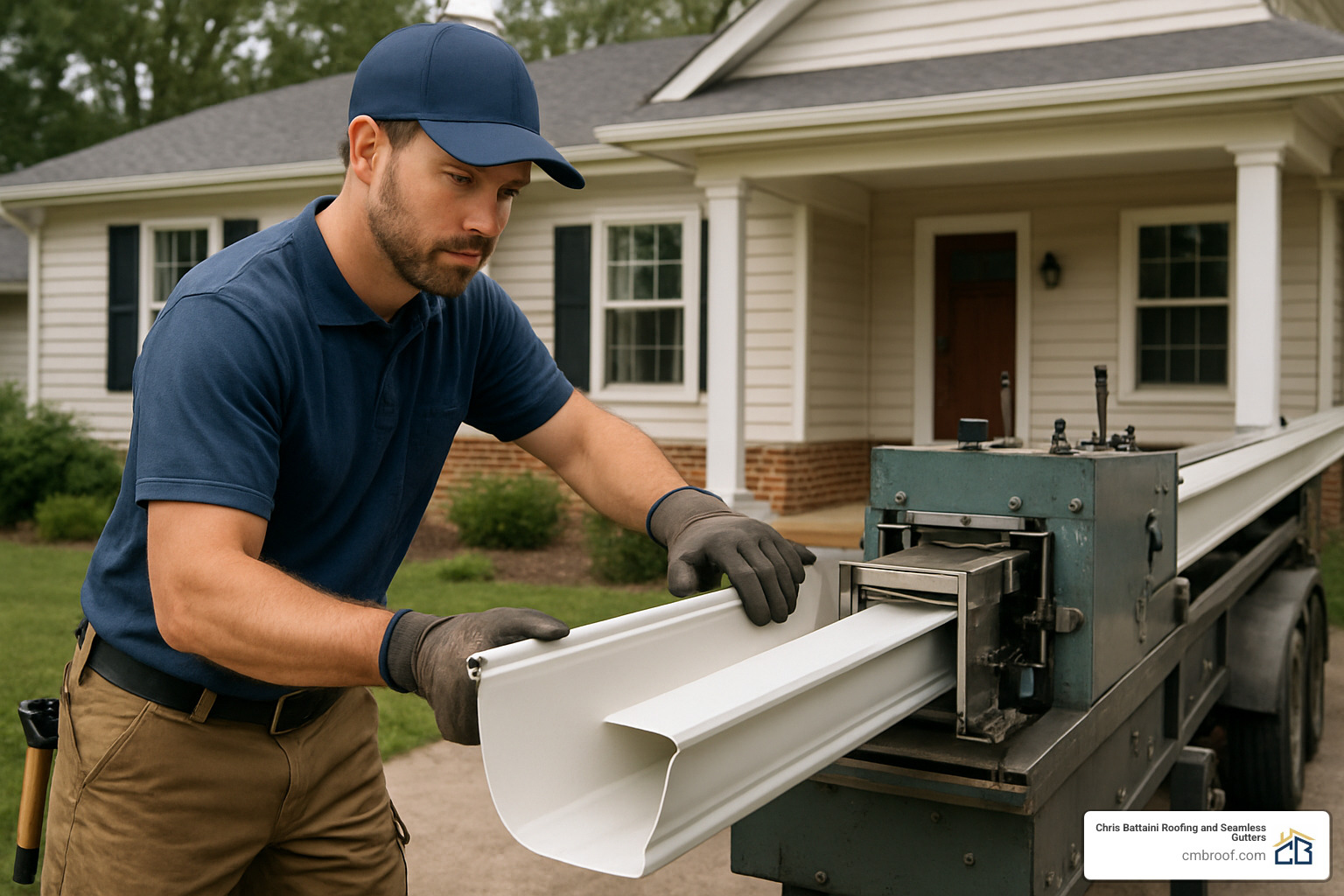
Seamless aluminum has earned its reputation as the most practical choice for most homes. These systems eliminate the weak points where sections connect, preventing the leaks that plague traditional gutters. The real magic happens when professional crews bring portable forming machines right to your property, creating custom lengths that match your roofline perfectly – no joints, no gaps, no problems.
For homeowners who want something truly special, copper luxury systems offer best beauty and durability. Yes, the upfront investment is significant, but copper gutters often outlast the homes they protect. The metal develops a gorgeous green patina over time that actually strengthens its weather resistance. Think of it as buying gutters once instead of replacing them every 20 years.
Steel half-round gutters bridge the gap between modern performance and classic looks. If you own a historic home or simply love traditional architecture, these systems provide the authentic appearance while handling our heavy snow loads better than lighter materials. The rounded shape also moves water more efficiently than angular designs.
Vinyl budget systems work fine in milder climates, but we rarely recommend them for Massachusetts and Vermont homes. The material becomes brittle when temperatures drop, and we’ve seen too many vinyl gutters crack during our typical winter freeze-thaw cycles.
The choice between K-style vs half-round profiles affects both function and appearance. K-style gutters hold more water and blend well with contemporary homes, while half-round systems offer superior water flow and complement traditional architecture beautifully.
Don’t overlook downspout sizing when planning your system. Standard 2×3-inch downspouts handle basic needs, but homes with steep roofs or large surface areas need 3×4-inch downspouts to manage heavy rainfall without overflow.
Professional installers also consider ice-rated brackets for our climate, ensuring your system won’t fail when winter ice adds hundreds of pounds of weight to each gutter run.
More info about Seamless Gutter Systems
| Service Tier | Material Options | Average Cost Range* | Warranty Coverage |
|---|---|---|---|
| Budget | Vinyl, Basic Aluminum | $3-$15/lf | 10-15 years parts |
| Standard | Seamless Aluminum, Steel | $8-$25/lf | 20-25 years parts |
| Premium | Copper, Heavy-Gauge Steel | $20-$75/lf | 30-50 years parts |
*Average costs based on publicly available internet data; actual project pricing varies and does not reflect Chris Battaini Roofing and Seamless Gutters pricing.
Aluminum 5-inch K-style systems hit the sweet spot for most homeowners who want reliable protection without premium pricing. These gutters handle typical roof runoff efficiently while resisting the corrosion that destroys cheaper materials. The 5-inch width provides adequate capacity for standard roof pitches, and the material accepts various accessories like guards and decorative downspout options.
Including basic guards in your initial installation saves money compared to adding them later. Simple perforated aluminum or mesh inserts won’t stop every leaf, but they prevent the major clogs that cause overflow problems. Think of them as insurance against the most common maintenance headaches.
Quality aluminum systems come with 20-year parts warranties that protect against manufacturing defects and premature failure. While these warranties don’t cover installation issues, they demonstrate the manufacturer’s confidence in their materials.
Budget-conscious homeowners can expect gutter install costs averaging $5-$15 per linear foot for complete aluminum systems including downspouts, hangers, and basic accessories. These are average costs based on internet data and not actual pricing for Chris Battaini Roofing and Seamless Gutters.
6-inch copper half-round systems represent the ultimate in gutter performance and curb appeal. The larger capacity handles extreme weather events that overwhelm smaller gutters, while copper’s natural properties prevent the algae and bacterial growth that can clog other materials. These systems don’t just protect your home – they improve its architectural character.
Modern premium installations often include rain barrel ready features like overflow valves and first-flush diverters. These additions cost little during initial installation but make rainwater harvesting simple and effective if you decide to add collection systems later.
Premium materials justify their cost with 50-year parts warranties that often exceed the length of typical mortgages. When you consider that copper gutters may never need replacement, the higher upfront investment often costs less per year than repeatedly replacing cheaper systems.
Premium gutter install services average $20-$60 per linear foot, with complex installations or custom copper work reaching $75+ per linear foot. These are average costs based on internet data and not actual pricing for Chris Battaini Roofing and Seamless Gutters.
When homeowners see quotes for professional gutter install services, the DIY route often looks tempting. After all, how hard can it be to hang some gutters? Well, after years of fixing weekend warrior disasters across Berkshire County, I can tell you the answer is “harder than it looks.”
Ladder injuries tell the first part of this story. Over 164,000 people end up in emergency rooms each year from ladder accidents, and gutter work contributes more than its fair share. Professional crews use proper safety equipment, stabilizers, and techniques that most homeowners simply don’t have access to.
But even if you manage to stay safe on the ladder, pitch miscalculation trips up nearly every DIY gutter project. That precise ¼-inch slope per 10 feet isn’t something you can eyeball. We regularly see gutters that look level but actually slope backward, creating perfect mosquito breeding pools. Professional installers use laser levels and years of experience to get this critical detail right.
Hanger over-spacing represents another classic money-saving mistake that costs more in the long run. DIY installers often space hangers 4-5 feet apart to buy fewer brackets, but this creates systems that sag under normal loads and often damage fascia boards when they eventually collapse. The recommended spacing exists for good reasons.
Leak-prone seams plague sectional gutter systems from hardware stores. These factory joints require perfect alignment and high-quality sealants that most homeowners struggle to achieve. Meanwhile, professional seamless systems eliminate these vulnerable connection points entirely.
Don’t forget about tool rental fees either. Proper gutter installation requires specialized equipment like brake benders and professional-grade crimpers that cost $100-$300 to rent for a weekend. And here’s the kicker – seamless gutter machines aren’t even available for rental, limiting DIY projects to inferior sectional systems.
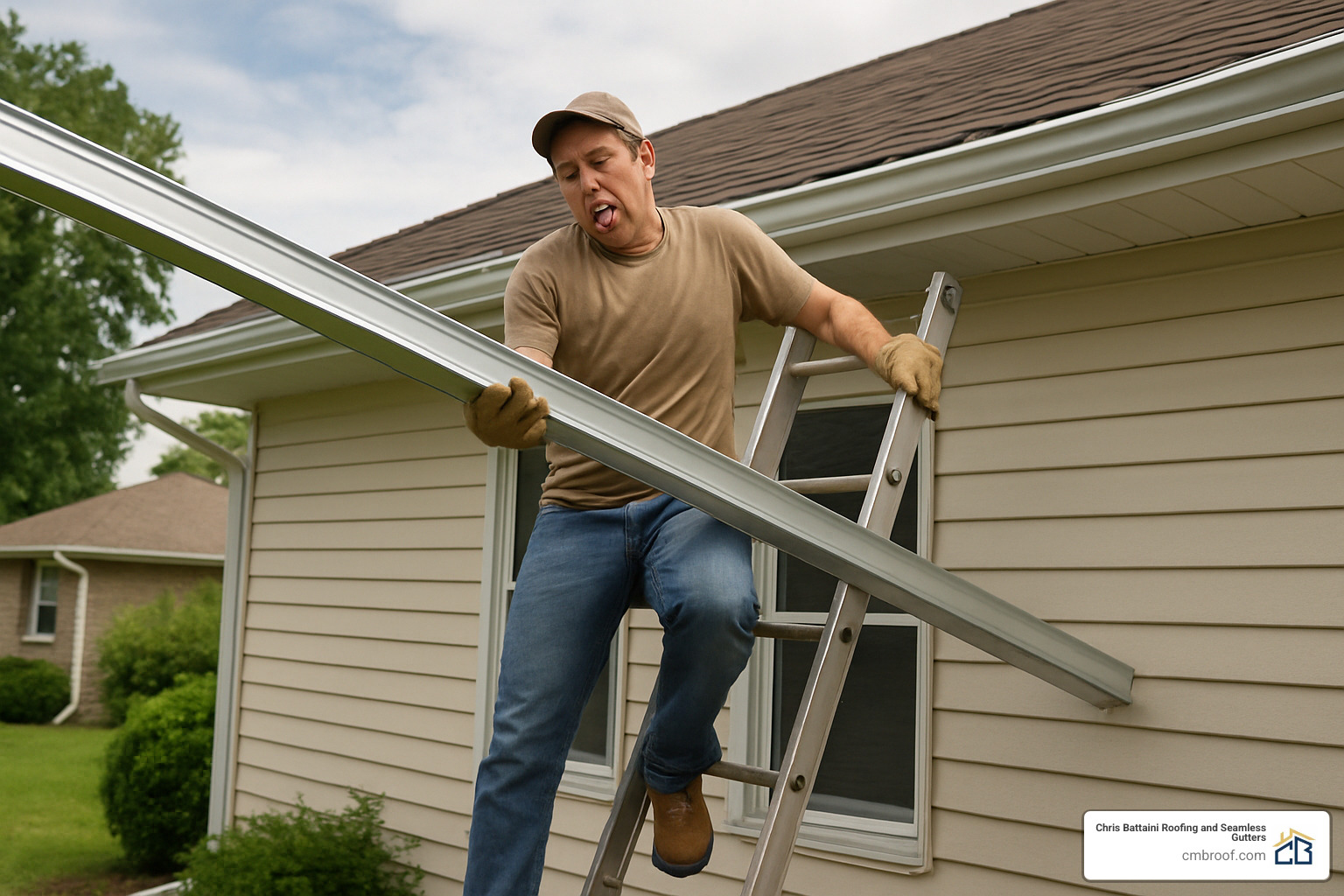
Latest research on cost vs value confirms what we see in practice – professionally installed gutters provide better return on investment than DIY alternatives when you factor in longevity, performance, and avoided repairs.
Let’s talk real numbers. Materials for DIY gutter install projects run $2-$8 per linear foot for basic aluminum systems from home improvement stores. That includes gutters, downspouts, hangers, and basic hardware.
Tool rental adds another $100-$300 to most DIY projects for essential equipment like proper ladders, levels, drills, tin snips, and crimping tools. You’re still stuck with sectional systems since seamless machines aren’t available for rent.
Professional labor averages $7-$25 per linear foot for complete installation including materials, with high-end installations reaching up to $75 per linear foot for complex projects or premium materials. These are average costs based on internet data and not actual pricing for Chris Battaini Roofing and Seamless Gutters.
The hidden costs in DIY projects often surprise homeowners. Fascia board repairs when improper installation causes damage. Cleanup and disposal fees for old gutters. Additional materials when your measurements prove optimistic. Emergency repairs when your DIY system fails during the first major storm.
Here’s where DIY projects can really bite you. Incorrect slope creates standing water that accelerates corrosion and turns your gutters into mosquito nurseries. When you file a warranty claim for premature rust, manufacturers often deny coverage once they find improper drainage angles.
Missing flashing allows water to sneak behind gutters, causing fascia rot and interior water damage. Most material warranties specifically exclude damage caused by improper installation techniques – and this is a big one.
Screws through gutter bottom create immediate leak points that only get worse over time. Professional installers never penetrate the gutter bottom, instead using side-mount hangers and proper fastening techniques that maintain the system’s integrity.
Mismatched metals cause galvanic corrosion when aluminum gutters contact steel fasteners or copper accessories. This electrochemical reaction rapidly destroys gutter systems and voids most material warranties. It’s chemistry working against you.
The bottom line? While DIY gutter install might save money upfront, the combination of safety risks, technical challenges, and warranty issues often make professional installation the smarter long-term choice.
When homeowners start researching gutter install services, they often have the same questions we’ve been answering for years. Let’s tackle the most common ones with straightforward answers based on what actually works in our Massachusetts and Vermont climate.
Here’s where many homeowners get confused – gutter sizing isn’t a one-size-fits-all decision. Your roof’s pitch, square footage, and our local rainfall patterns all play important roles in determining what works best for your home.
Most homes in our area do well with 5-inch gutters, which hold about 1.25 gallons per foot of length. But if you’ve got a steep roof or live in an area that gets hammered with heavy rains, 6-inch gutters make more sense. They hold nearly 2 gallons per foot, which means less overflow during those intense summer storms we get around here.
Downspout sizing needs to match your gutter capacity, or you’ll create a bottleneck that defeats the whole system. Those standard 2×3-inch downspouts work fine with 5-inch gutters, but if you’re going with 6-inch gutters, you’ll need 3×4-inch downspouts to handle the increased water flow.
Professional installers don’t guess at sizing – we actually calculate based on your specific roof measurements and local weather data. It’s one of those details that separates quality gutter install services from companies that use generic recommendations for every house.
This question comes up constantly, and the answer depends on your specific situation. The general rule we follow is one downspout for every 20-30 feet of gutter run, with each downspout handling about 600-800 square feet of roof area.
Corner placement works great for most homes because it naturally directs water away from your foundation and walkways. But sometimes your landscaping, driveway layout, or architectural features mean we need to get creative with downspout locations.
Longer gutter runs definitely benefit from multiple downspouts. It’s not just about preventing overflow – it also reduces stress on the entire gutter system. When water has to travel 40 or 50 feet to reach a single downspout, you’re asking for trouble during heavy rains.
We evaluate each home individually, considering your roof pitch, the way water flows off your particular roof design, and where we can direct that water to actually help your property rather than create problems.
Even with a professional gutter install, maintenance doesn’t disappear entirely. The good news is that quality installation makes maintenance much easier and less frequent.
Cleaning frequency really depends on what’s around your house. If you’ve got mature trees hanging over your roof, you’re probably looking at cleaning twice a year – once in late spring after everything leafs out, and again in fall after the leaves drop. Homes in more open areas might only need annual cleaning.
Professional inspection should happen every year regardless of how clean your gutters look. We check for loose hangers, small leaks that haven’t become big problems yet, and make sure everything’s still draining properly. Catching small issues early prevents those expensive emergency calls during the next big storm.
Gutter guards definitely reduce how often you need to clean, but they don’t eliminate maintenance completely. Even the best guard systems need periodic inspection and occasional cleaning to keep working at peak performance. The key is that quality guards turn a messy, dangerous job into something much more manageable.
The bottom line is that new, professionally installed gutters require much less maintenance than old, poorly installed systems. When everything’s properly sloped and securely fastened, your gutters can do their job with minimal intervention from you.
The difference between a successful gutter install and years of costly repairs comes down to choosing the right installation approach from the start. We’ve seen too many homeowners learn this lesson the hard way – after their DIY project fails during the first major storm or when a cut-rate contractor disappears after installing gutters that sag within months.
Professional installation transforms your home’s water management from a constant worry into a reliable system you can forget about. When crews arrive with seamless fabrication equipment, they’re not just installing gutters – they’re creating custom-fitted protection that matches your home’s exact measurements and drainage needs.
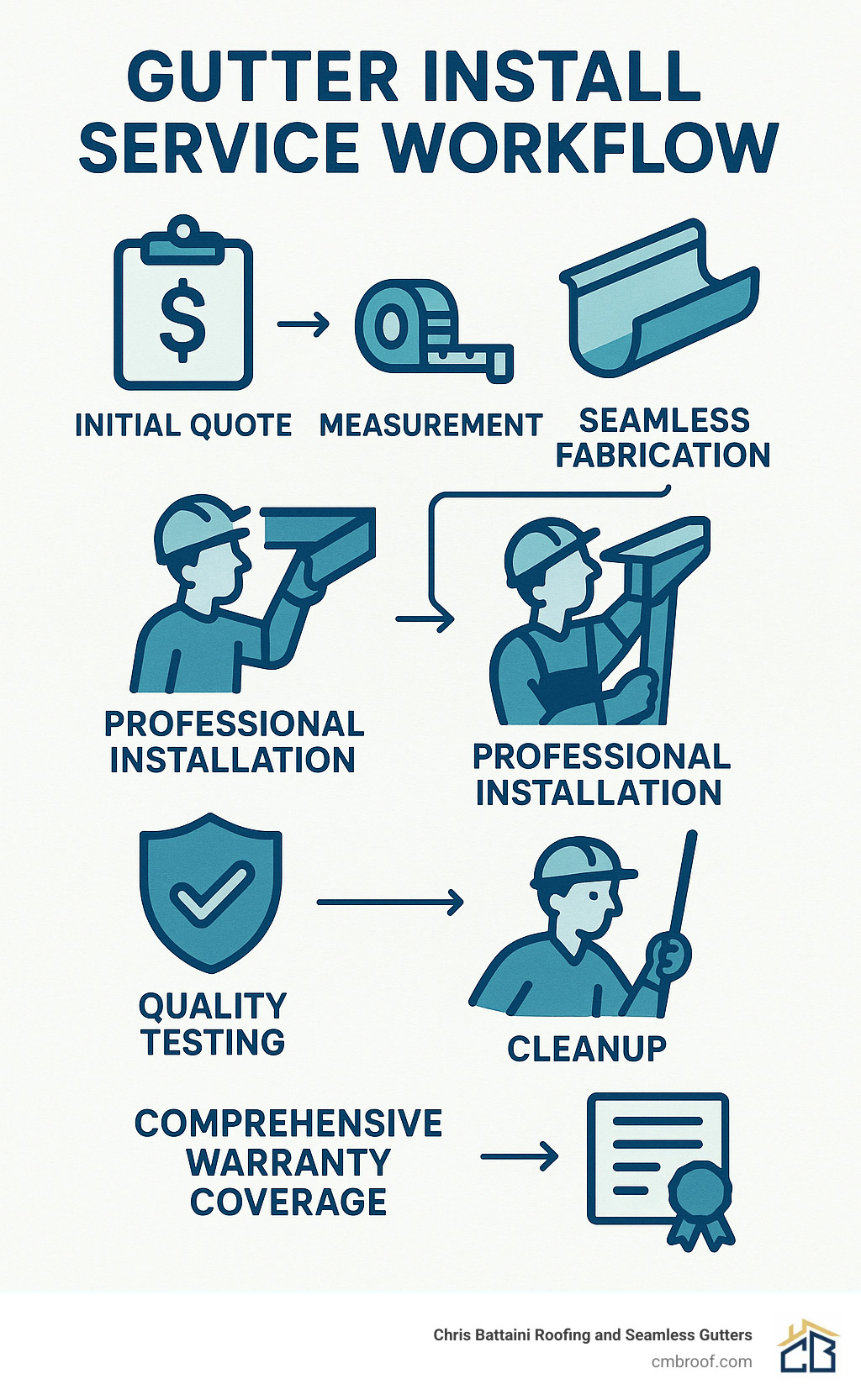
The single-day install process that quality contractors provide eliminates the weeks of ladder work and weekend frustration that plague DIY projects. Professional teams measure, fabricate, install, and clean up while you go about your normal routine. No tool rentals, no trips to the hardware store, and no emergency repairs when things go wrong.
Service warranties from established local companies provide peace of mind that material-only warranties can’t match. When your installer guarantees both the products and workmanship, you have someone to call if problems develop. Compare that to DIY installations where every issue becomes your responsibility to diagnose and fix.
The service workflow that professional companies follow – from initial assessment through final cleanup – ensures nothing gets overlooked. Proper flashing installation, precise slope calculation, and adequate hanger spacing happen automatically when experienced crews handle your project.
Your home deserves protection that lasts decades, not just until the next heavy rain. Professional gutter install services cost more upfront, but they eliminate the cycle of repairs, replacements, and water damage that poorly installed systems create.
Chris Battaini Roofing and Seamless Gutters provides owner-led, warrantied installations across Berkshire, Hampden, Hampshire, and Franklin Counties—find your custom solution today with our Seamless Gutters team.
*Average costs based on publicly available internet data; actual project pricing varies.
Need a reliable roofer? CMB Roofing provides licensed, insured, and professional roofing services for homeowners and businesses.
We stand by a simple promise: Clear estimates. Quality workmanship. Clean job sites.
From roof repairs and full replacements to storm damage restoration, our team delivers dependable results with durable materials, expert installation, and complete site cleanup.