

The Composite Cedar Revolution: Beauty Meets Durability
Composite cedar shingles have transformed the roofing landscape, offering homeowners the perfect marriage of traditional beauty and modern performance. These engineered marvels capture the timeless appeal of natural cedar while eliminating its historical drawbacks.
Standing in your driveway on a crisp Berkshire morning, gazing up at your home, you’re faced with a decision that will impact your property for decades. The rustic charm of cedar is calling your name—but so are the cautionary tales from neighbors about maintenance headaches and premature replacements.
This is where the composite cedar revolution truly shines. These innovative products solve the age-old dilemma that has frustrated homeowners for generations: how to enjoy cedar’s distinctive character without surrendering to its natural vulnerabilities.
“My friends still do a double-take when they visit,” chuckles Martha from Pittsfield. “They compliment our ‘beautiful cedar roof’ and are genuinely surprised when I tell them it’s composite—especially when I mention it’s already weathered two hailstorms without a single damaged shingle.”
| Feature | Natural Cedar | Composite Cedar |
|---|---|---|
| Lifespan | 15-30 years | 40-50+ years |
| Fire Rating | Class C (or unrated) | Class A (highest) |
| Impact Rating | Variable | Class 4 (highest) |
| Maintenance | High (regular treatment) | Minimal to none |
| Cost | $25-30 per sq ft | $14-40 per sq ft |
| Warranty | Limited (5-10 years) | 50-year to lifetime |
| Insurance Discounts | Rarely | Up to 20% |
What makes these modern marvels so compelling? The technology behind composite cedar shingles has advanced dramatically in recent years. Today’s options include lightweight polyurethane formulations, recycled polymers with environmental benefits, concrete-infused composites for extreme durability, and even metal-faced replicas that combine fire resistance with authentic appearances.
The benefits extend well beyond mere aesthetics. These products offer authentic appearance with deep grain patterns molded from actual cedar shakes. Their superior durability means resistance to the elements that plague natural cedar—rot, insects, moss growth, and UV damage. The safety improvements are substantial, with many products achieving the highest Class A fire rating and Class 4 impact resistance against hail and falling debris.
Many homeowners are also pleasantly surprised by the potential insurance savings—up to 20% with qualifying products. And for the environmentally conscious, the environmental benefits include recyclability and a significantly longer service life, reducing the resources needed for frequent replacements.
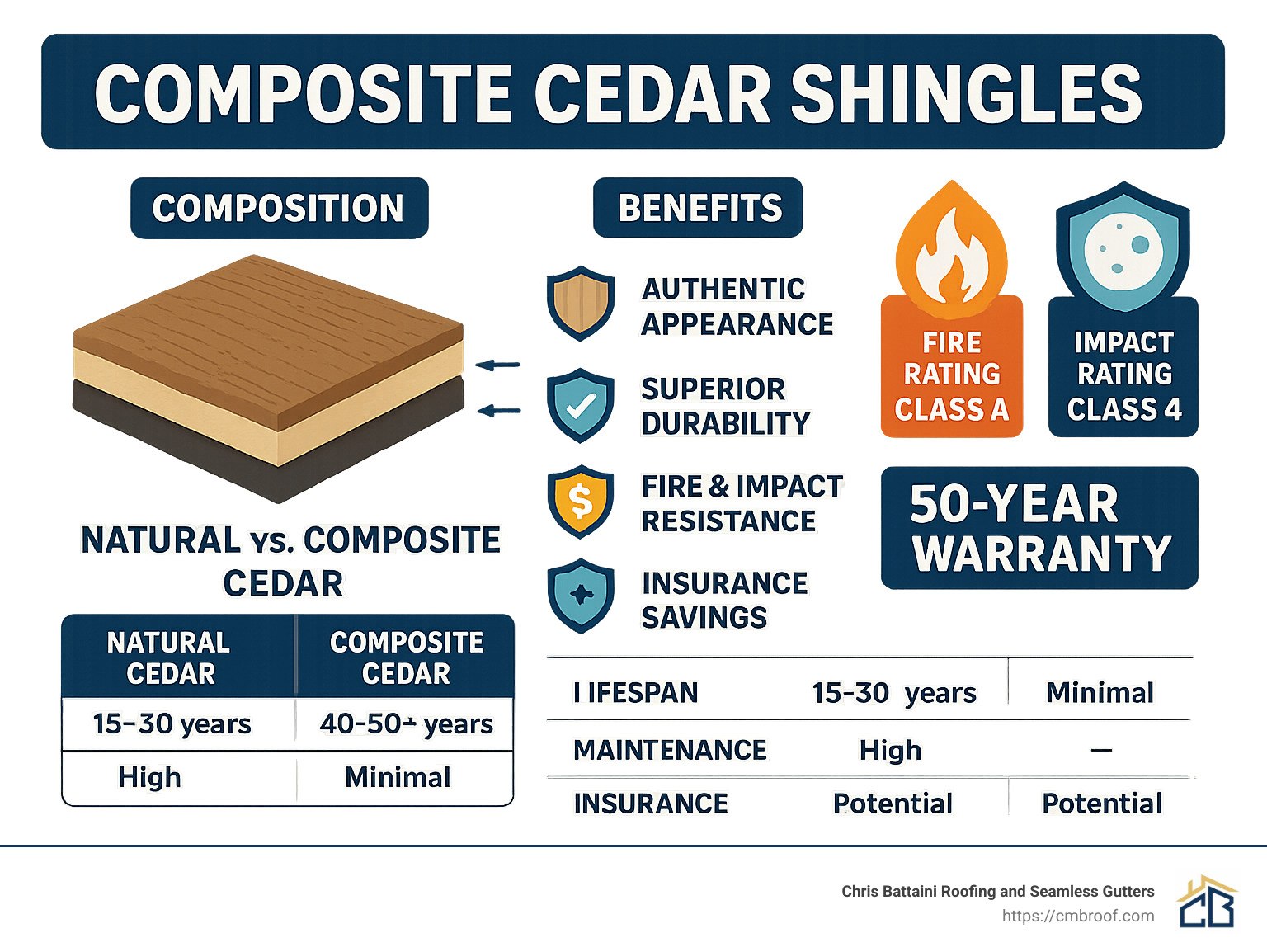
The best part? These benefits come with virtually none of the maintenance headaches that traditional cedar demands. No more seasonal treatments, no more worrying about moss or algae growth, and no more fretting during wildfire season.
Whether your home is a classic Colonial in Lenox or a modern retreat in Williamstown, there’s a composite cedar shingle option perfectly suited to improve both its appearance and protection. And when installed by experienced professionals who understand the nuances of these products, the results can be truly changeal.
Chris Battaini Roofing and Seamless Gutters services Berkshire, Hampden, Hampshire, and Franklin Counties in Massachusetts.
Composite Cedar Shingles 101—Key Facts & Benefits
Let’s talk about what composite cedar shingles really are. Imagine getting all the character and charm of natural cedar without the headaches that come with it. That’s the magic of these engineered marvels.
When you’re exploring roofing options, terminology matters. Traditional cedar shakes are hand-split, giving your home that rustic, varied texture with more dimensional character. Cedar shingles, on the other hand, are precisely sawn for a smoother, more uniform appearance. Today’s composite cedar shingles manufacturers have become incredibly skilled at recreating both looks—sometimes so convincingly that even contractors do a double-take!
The science behind these products is pretty remarkable. Most composites blend recycled or virgin polymers with mineral fillers and UV stabilizers. Some use polyurethane, others incorporate recycled polyethylene, and some even mix in concrete or fiberglass. This isn’t your grandfather’s roofing material.
What really makes composite cedar shingles stand out is their impressive performance ratings:
A Class A Fire Rating means these materials provide the highest possible fire resistance under ASTM E108 and UL 790 standards. While natural cedar ignites at around 375°F, many composites won’t catch fire even when exposed to temperatures over 1,400°F. That’s peace of mind you can’t put a price on. For the latest research on fire-rated roofing systems, check out Underwriters Laboratories.
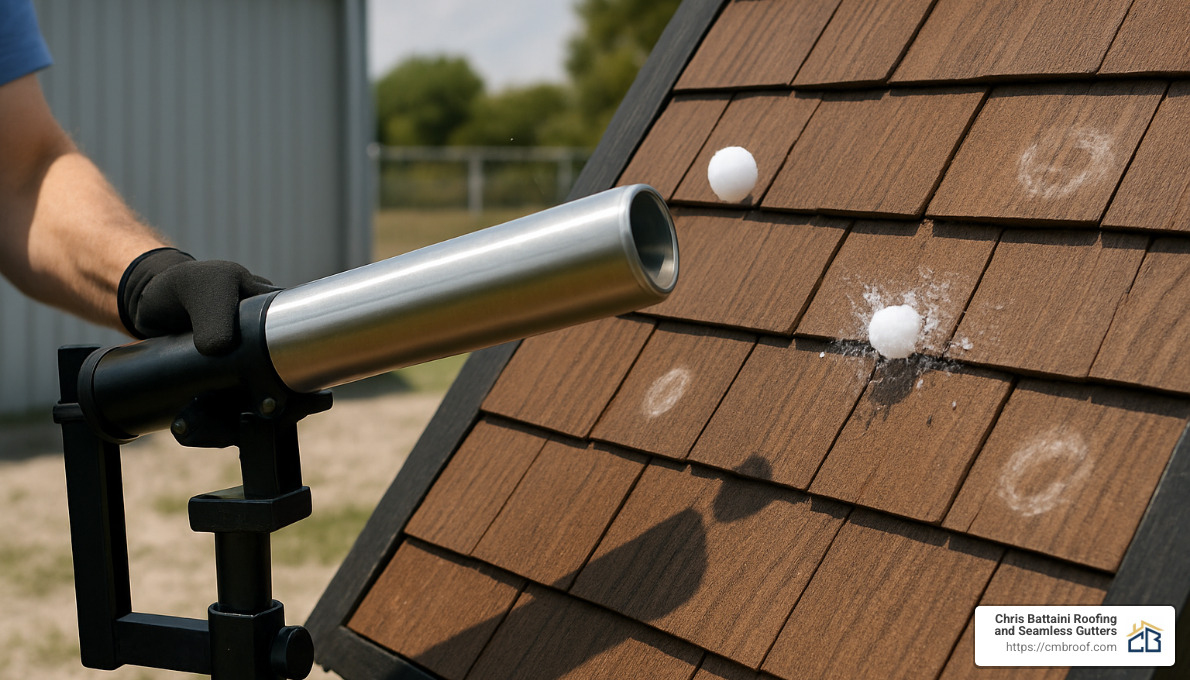
The Class 4 Impact Resistance rating is equally impressive. This is the highest rating under UL 2218, achieved by dropping a 2-inch steel ball from more than 20 feet onto the material without it cracking. Think about what that means during hail season!
Building code approvals are comprehensive too. Quality composites typically meet or exceed requirements for Miami-Dade County, Florida Building Code, Texas Department of Insurance, International Building Code, and International Residential Code.
The warranty difference is dramatic. Natural cedar might come with a modest 5-10 year limited warranty, while composite cedar shingles routinely offer 50-year coverage, with some extending to lifetime protection for the original homeowner.
Weight is another pleasant surprise. Many composite products weigh significantly less than natural cedar—for instance, some weigh just 170 pounds per square (100 square feet). This lighter weight often means you can install without expensive structural reinforcement.
Are Composite Cedar Shingles Better Than Natural Cedar?
When homeowners ask me this question (and they often do), I point to three key factors: how long they last, how much care they need, and what they mean for your insurance bill.
Lifespan tells a compelling story. Natural cedar typically lasts 15-30 years, and yes, premium straight-grain cedar might reach 50 years under perfect conditions. But composite cedar shingles routinely last 40-50 years, with some premium products projected to protect homes for 75+ years.
As roofing expert Bill Ragan puts it: “Both natural cedar shake and synthetic cedar shake have good lifespans, but a synthetic cedar shake roof should last longer.” That’s an understatement if I’ve ever heard one!
The maintenance difference is where many homeowners are truly sold. Natural cedar demands regular cleaning, moss removal, and treatments to prevent rot and warping. These costs can add up to thousands annually in damp climates. Composite cedar shingles, by contrast, generally need just occasional cleaning to remove leaves and debris.
Ragan notes, “Because cedar shake shingles are a naturally occurring material, there’s no manufacturer warranty on the shingles themselves.” That leaves you, the homeowner, holding the bag for upkeep.
Perhaps the most immediate financial benefit comes from insurance discounts. Many insurance companies offer premium reductions up to 20% for homes with Class 4 impact-resistant and Class A fire-rated roofing. These discounts rarely apply to natural cedar, which insurers often view as a fire hazard.
Composite Cedar Shingles vs Asphalt: Quick Comparison
Many homeowners also want to know how composite cedar shingles stack up against the most common roofing material in America: asphalt shingles.
When it comes to curb appeal, there’s simply no contest. Even the most premium architectural asphalt shingles can’t match the dimensional depth, texture variation, and natural appearance of quality composite cedar shingles. This visual distinction directly translates to that “wow factor” when people drive by your home.
The return on investment calculation might surprise you. Asphalt shingles typically cost $5-10 per square foot installed (based on internet data, not Chris Battaini Roofing and Seamless Gutters pricing), with a lifespan of 15-30 years. Composite cedar shingles cost more upfront—typically $14-40 per square foot installed—but their 50+ year lifespan and minimal maintenance requirements often result in better long-term value.
From a sustainability standpoint, modern composite cedar shingles often incorporate recycled materials and are themselves recyclable at the end of their long service life. Many are manufactured using closed-loop water systems and energy-efficient processes. Asphalt shingles, derived from petroleum, contribute millions of tons to landfills each year.
A recent customer from Williamstown shared with me: “We were torn between high-end architectural asphalt and composite cedar. The price difference seemed significant until we calculated the long-term cost. When we factored in the insurance discount and not having to replace the roof in our lifetime, composite cedar became the obvious choice.”
Chris Battaini Roofing and Seamless Gutters services Berkshire, Hampden, Hampshire, and Franklin Counties in Massachusetts.
Polyurethane Solid-Core Shingles – Heavyweight Look, Featherweight Feel
Ever picked up what looked like a hefty piece of wood only to find it weighs next to nothing? That’s the delightful surprise of polyurethane solid-core composite cedar shingles. These remarkable products, like CeDUR, give you all the visual heft of traditional cedar without weighing down your roof structure.
What makes these shingles special is their ingenious closed-cell foam construction. Unlike hollow or partially-filled alternatives, these shingles are solid throughout—providing exceptional durability while remaining surprisingly light. At just about 170 pounds per square (100 square feet), they’re among the lightest roofing options you’ll find—significantly lighter than natural cedar that might tip the scales at twice that weight.
This solid-core design delivers impressive insulation benefits too, with an R-value exceeding 2.0. That’s roughly 20% better than heavy natural cedar shakes, helping keep your home cooler in summer and warmer in winter. Your energy bills might thank you!
Installation is refreshingly straightforward with these shingles. They attach directly to your roof deck without needing special underlayments or complicated batten systems to achieve their Class A fire rating. This simplicity can reduce labor time and costs compared to some alternatives.
These composite cedar shingles truly shine in extreme environments. Living in a wildfire-prone area? Their self-extinguishing properties provide crucial protection. Dealing with heavy New England snow? Their lightweight nature won’t add unnecessary burden to your home while still providing the insulation you need during those frigid Berkshire winters.
Based on internet data (not Chris Battaini Roofing and Seamless Gutters pricing), polyurethane solid-core composite cedar shingles typically range from $14-$28 per square foot installed, with variables including roof complexity, accessibility, and regional labor costs.
Performance Snapshot
The technical achievements of polyurethane solid-core composite cedar shingles are genuinely impressive:
- Impact Resistance: Class 4 (UL 2218)—the highest rating possible. Imagine a 2-inch steel ball dropped from over 20 feet without causing cracks or breaks. That’s serious protection against hailstorms.
- Fire Rating: Class A (ASTM E108, UL 790)—again, the highest possible rating, achieved without special underlayment requirements. Peace of mind when wildfire season comes around.
- Wind Resistance: Certified to 115 mph, with warranties typically covering winds up to 90 mph. Those Nor’easters won’t stand a chance.
- Warranty: 50-year limited warranty, with many manufacturers covering material and labor for the first decade and offering transferability during the first 5 years.
A roofing contractor from Utah once told me, “CeDUR’s appearance is the closest thing to real shake I’ve ever seen. The look of hand-split cedar continues to be what customers ask for. It’s wonderful offering them a product with the look they want that can handle everything from severe heat to below-freezing conditions.”
Installation & Maintenance Tips
Working with polyurethane solid-core composite cedar shingles offers several practical advantages:
Score-and-snap cutting makes installation easier than you might expect. Unlike many roofing materials requiring specialized cutting tools, these shingles can be cut with a simple utility knife or standard skill saw. The color goes all the way through, so cut edges look just as good as the surface.
No battens needed is another time-saver. Installation goes directly onto the roof deck, similar to natural cedar but without needing special systems to achieve fire ratings.
Layout flexibility gives you creative options. Install these shingles in straight, consistent courses (typically with 10 inches exposed) or in staggered patterns with varied exposure (9-10 inches) for that more rustic, hand-crafted look.
The maintenance requirements are refreshingly minimal compared to natural cedar. The closed-cell structure naturally resists moss and lichen growth—a huge advantage in our damp Berkshire climate where natural cedar can become a veritable moss garden. These shingles also laugh off insect damage since the synthetic material offers no nutritional value to wood-boring pests. And water absorption? Not a concern. The closed-cell structure prevents the water uptake that leads to freeze-thaw damage in natural materials.
Most homeowners find that occasional cleaning to remove leaves and debris is all that’s needed to keep these roofs looking their best for decades to come.
Recycled Plastic Polymer Shingles – Green Roof, Lower Carbon Footprint
If you’re passionate about sustainability but don’t want to sacrifice style or performance, recycled plastic polymer composite cedar shingles might be your perfect match.
These eco-friendly roofing champions are typically crafted from 100% recycled polyethylene—yes, the same material as those plastic bottles and containers that would otherwise end up in landfills. Talk about giving plastic a noble second act! Manufacturers like Brava have perfected multi-width tiles that beautifully mimic the varied dimensions of natural cedar shakes, creating that authentic, rustic charm.
What’s particularly impressive is how these shingles are colored. Unlike some products with just a surface coating, these incorporate variegated coloring throughout the entire material. This “color-through” technology means that even if your roof takes a hit from a falling branch, the scratch won’t reveal a different color underneath. Twenty years from now, your roof will still maintain its authentic cedar appearance.
“I was skeptical at first,” admits a homeowner from Great Barrington. “But after seeing samples and touching them, I was sold. Three years in, and my neighbors still think I splurged on premium cedar.”
The wind resistance of these products will blow you away (though your roof certainly won’t). When properly installed with screws, some recycled polymer composite cedar shingles can withstand astonishing wind speeds up to 211 MPH. That’s well beyond Miami-Dade County’s stringent building codes for High Velocity Hurricane Zones—making them perfect for coastal New England properties that face nor’easters and occasional hurricanes.
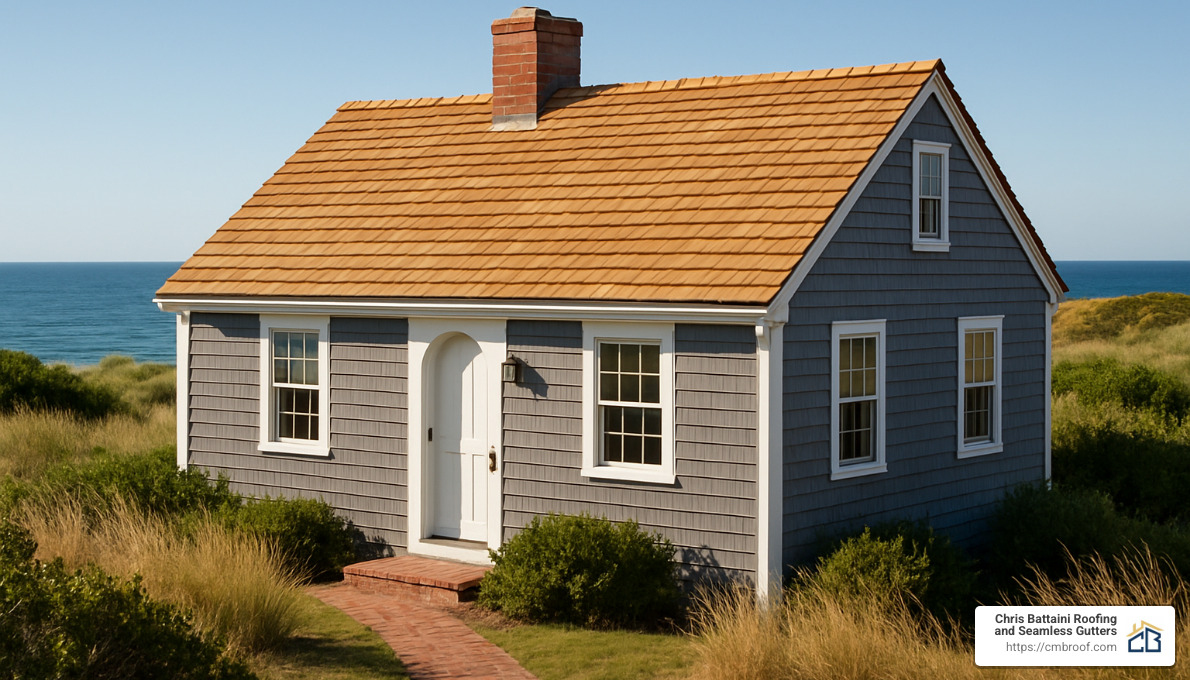
Unlike natural cedar, which inevitably surrenders to UV rays and fades to gray within a few years, these innovative shingles incorporate UV inhibitors that block up to 99% of harmful radiation. Your roof’s rich color isn’t just a temporary phase—it’s here to stay.
Cost & Warranty
Based on internet data (not Chris Battaini Roofing and Seamless Gutters pricing), recycled polymer composite cedar shingles typically range from $12-$24 per square foot installed. This price varies depending on your specific product choice, roof complexity, and regional labor costs.
The warranty coverage is where these products really shine. Most manufacturers offer limited lifetime warranties for homes and 50-year warranties for commercial buildings. These robust guarantees typically cover material defects, color fading beyond specified tolerances, and resistance to common problems like rot, cracking, and splitting.
Here’s a pleasant surprise for your wallet: many homeowners qualify for up to 20% off their insurance premiums after installing these Class 4 impact-resistant and Class A fire-rated roofing materials. While discount availability varies by company and region (always check with your insurance provider), this potential saving can significantly offset the initial investment over time.
Style Palette
The color options for recycled polymer composite cedar shingles thoughtfully mimic cedar at different stages of its natural aging process:
Aged Cedar captures that coveted silver-gray patina that natural cedar develops after years of weathering—without the wait or deterioration. Aspen Gray offers a lighter, warm brown tone reminiscent of freshly installed cedar, while Weathered Brown delivers a pre-aged look with sophisticated gray undertones.
For those who prefer richer tones, Natural Cedar provides that warm honey-brown of new cedar, and Canyon Brown blends deep earth tones with subtle variations for dimensional depth. Many manufacturers also offer custom color blends to match specific architectural styles or neighborhood aesthetics.
“Natural cedar shingles look great to start, but fade in such a short period of time and I just didn’t like the effect that time had on them,” shares a homeowner from Bay Shore, NY. “Beach House Shake will stay looking new so I can relax and not worry. When people come to see our home, they tell us they love our eastern white cedar shingles.”
The best part? They have no idea it’s actually an environmentally-friendly recycled product that will look this good for decades to come.
Mineral-Polymer Laminate Shingles – Slate-like Strength, Cedar Charm
Imagine combining the rugged durability of slate with the timeless charm of cedar. That’s exactly what mineral-polymer laminate composite cedar shingles deliver to your home. These innovative roofing materials blend limestone and other minerals with advanced polymer resins, creating a product that stands up to Mother Nature while maintaining exceptional curb appeal.
Walking around neighborhoods in Berkshire County, you might notice homes with roofs that look like beautiful cedar but somehow seem more pristine than their age would suggest. Chances are, you’re looking at mineral-polymer laminates.
“After researching every option on the market,” says Daniel, a residential architect who regularly specifies these products, “I can confidently say it is one of the most flawlessly replicating products out there, and we’ve looked at all of them, believe me.”
What makes these shingles particularly impressive for New England homes is their energy efficiency. Many incorporate cool-roof pigment technology that reflects solar radiation rather than absorbing it. During our hot summer months, this can reduce attic temperatures by up to 30°F, potentially qualifying you for energy efficiency rebates while lowering your cooling costs.
The rigid-tile panel design excels in our region’s notoriously unpredictable weather. When properly installed, these composite cedar shingles can withstand winds exceeding 110 mph—perfect for those unexpected nor’easters that seem to blow through with increasing frequency. For more information about residential roof replacement options, visit our detailed guide at More info about residential roof replacement.
Durability & Codes
When it comes to performance, mineral-polymer laminate composite cedar shingles deliver impressive specs across the board:
Class 4 impact resistance means these shingles can take a beating from hailstorms without cracking or breaking. This is the highest possible rating under UL 2218 standards.
Class A fire rating provides maximum protection against external fire spread—crucial for homes in more wooded areas of Berkshire County and Southern Vermont.
Wind resistance up to 211 mph with proper screw fastening makes these shingles virtually hurricane-proof, far exceeding our regional building code requirements.
The durability advantage extends beyond extreme weather resistance. Unlike natural cedar, which gradually surrenders to UV radiation, these mineral-polymer blends stand firm against sun exposure. Their inorganic composition also naturally resists mold, mildew, and insects—common challenges in our humid summers and wet springs.
Perhaps most importantly for local homeowners, these products meet or exceed building codes throughout Massachusetts and Vermont, including areas with increasingly strict fire and wind requirements.
Aesthetic Notes
The manufacturers of these composite cedar shingles understand that authenticity is everything. Using molds taken directly from hand-split cedar, they capture the deep grain patterns and dimensional variations that give natural cedar its character.
One significant improvement over earlier composite products is the sophisticated matte finish. Gone is the telltale plastic sheen that once made synthetic roofing materials so easy to spot. Today’s mineral-polymer laminates have a natural-looking surface that, from street level, convincingly mimics cedar—even to trained observers.
Color options typically include traditional cedar tones that range from honey amber to rich chestnut, pre-weathered gray blends that simulate years of natural aging, and even custom color options for specific architectural requirements.
What really sells the authentic look is the subtle color variation from piece to piece. Unlike the uniform appearance of many synthetic materials, these shingles exhibit the same natural inconsistencies that make cedar so visually interesting. The result is a roof with depth and character that improves your home’s architectural style rather than detracting from it.
Chris Battaini Roofing and Seamless Gutters services Berkshire, Hampden, Hampshire, and Franklin Counties in Massachusetts.
Concrete-Infused Composite Shingles – Cedar Texture with Tile Toughness
Looking for a roof that might outlast your mortgage? Concrete-infused composite cedar shingles might be your answer. These remarkable products blend fiber-cement or concrete components with polymers to create something truly special – roofing that captures cedar’s beautiful texture while delivering almost indestructible performance.
What makes these shingles particularly valuable for New England homes is their impressive thermal mass. This natural insulation property helps keep your home cooler in summer and warmer in winter – something we all appreciate during those bitter January nights or humid August afternoons in Berkshire County and Southern Vermont.
For homeowners near the coast, these shingles offer another significant advantage: exceptional resistance to salt air. While traditional materials deteriorate rapidly in coastal environments, concrete-infused composites stand strong against salt spray, making them perfect for waterfront properties or homes near the ocean.
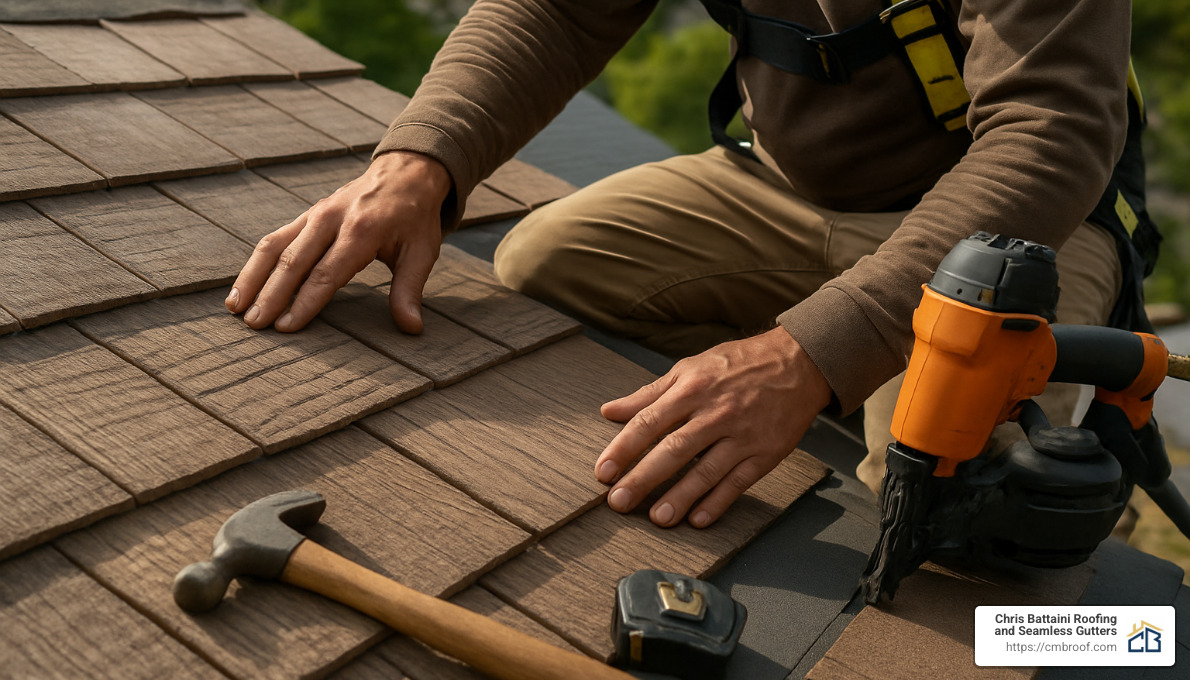
There is, however, one important consideration before you commit: weight. These are the heavyweights of the composite cedar shingles family. At approximately 600 pounds per square (100 square feet), they’re substantially heavier than other options. This means your home’s structural capacity needs careful evaluation before installation. Many older homes in our region weren’t designed with such weighty roofing materials in mind, so structural reinforcement might be necessary.
“We always recommend a thorough structural assessment before installing concrete-composite shingles,” explains a local structural engineer. “The investment in reinforcement is worth it for the decades of performance you’ll get, but know what you’re getting into from the start.”
Pros & Cons
When considering concrete-infused composite cedar shingles, weighing the advantages against the challenges helps make an informed decision.
On the positive side, exceptional longevity tops the list – with some products carrying warranties up to 75 years. That’s potentially the last roof you’ll ever need to install. Their thermal performance provides natural insulation that can contribute to energy savings year after year. The salt resistance makes them ideal for coastal properties, and despite their concrete components, they achieve a remarkably authentic cedar appearance that maintains curb appeal.
The challenges primarily revolve around their substantial weight – at about 600 pounds per square, they’re significantly heavier than alternatives. This often necessitates structural upgrades to ensure your home can safely support them. Additionally, the installation complexity due to their weight and handling characteristics can make the process more challenging and potentially more costly.
A homeowner from Lenox shared: “The upfront cost was higher than we initially budgeted, especially with the rafter reinforcements our contractor recommended. But knowing we’ll never have to worry about our roof again? That peace of mind is priceless.”
Cost Estimate
Based on internet data (not Chris Battaini Roofing and Seamless Gutters pricing), concrete-infused composite cedar shingles typically range from $18-$40 per square foot installed. This price varies depending on your roof’s complexity, accessibility, and any structural modifications required.
While this represents a premium price point, the value proposition becomes compelling when you consider the extraordinary durability. Most products come with 75-year transferable warranties – essentially promising performance that might extend beyond your lifetime in the home.
For many homeowners, especially those planning to stay put for decades or those building their “forever home,” the long-term mathematics makes sense. When you divide that initial investment across 75 years of service, plus factor in the minimal maintenance requirements and potential energy savings from improved thermal performance, concrete-infused composites can represent excellent value despite their higher upfront cost.
As one homeowner put it: “It’s not cheap, but neither is replacing your roof every 20 years. We did the math and realized we’d actually save money in the long run – not to mention avoiding the hassle of multiple roof replacements.”
Metal-Faced Cedar Replicas – Steel Core, Wood Silhouette
Imagine having the classic beauty of cedar with the virtually indestructible nature of metal. That’s exactly what metal-faced composite cedar shingles deliver – a perfect marriage of strength and style that’s winning over homeowners across New England.
These innovative products feature steel panels with deeply stamped cedar grain patterns that capture the dimensional shadows and textures of natural cedar. What sets them apart is their core construction – actual metal that provides unparalleled durability while maintaining the silhouette homeowners love.
Fire safety is perhaps the most compelling advantage. Unlike other materials that need special treatments to resist flames, metal-faced composite cedar shingles are naturally non-combustible. This makes them an excellent choice for homes in wooded areas of the Berkshires where wildfire concerns are real.
The environmental benefits are impressive too. When your roof eventually reaches the end of its long life, these panels are 100% recyclable – no landfill contribution necessary. Many products also feature special cool-roof coatings that reflect solar energy instead of absorbing it, potentially trimming your summer cooling costs.
Installation proceeds much faster than with individual shingles, as these products typically come in larger panels (often 48″×20″). This efficiency can reduce both labor costs and project duration – meaning less disruption to your home life.
For Berkshire County and Southern Vermont residents familiar with heavy winter snowfall, there’s another significant advantage: snow shedding. The smooth surface of metal-faced composites naturally helps snow slide off before it can build up and form troublesome ice dams or put stress on your home’s structure.
Performance Highlights
When it comes to standing up to New England’s famously unpredictable weather, metal-faced composite cedar shingles truly shine. Their technical specifications tell the story:
The Class A fire rating comes built-in – no special underlayments or additional treatments required. This is the highest possible fire resistance classification, giving homeowners valuable peace of mind.
Wind resistance is equally impressive, with typical ratings up to 110 mph – more than enough to handle the nor’easters that occasionally blow through our region.
Protection against falling debris and hail comes from the Class 4 impact rating – the highest possible. This means these roofs can take a beating from Mother Nature without showing the damage that would dent or crack other materials.
Longevity is another significant advantage, with expected service life of 40-50 years with minimal maintenance. Many homeowners appreciate that this may be the last roof they’ll ever need to install.
The energy efficiency benefits shouldn’t be overlooked either. Many metal-faced products feature cool-roof coatings that can reduce attic temperatures by up to 25°F during summer heat waves – a difference you’ll feel in both comfort and potentially lower cooling costs.
“We installed metal-faced cedar replicas last summer,” shares a homeowner from Great Barrington. “Not only did they handle last winter’s heavy snow perfectly, but we noticed our second floor stays much cooler on hot days. The roof just looks like cedar shake – nobody can tell the difference from the street.”
Color & Finish Options
Today’s metal-faced composite cedar shingles offer a surprisingly wide range of aesthetic options to complement any architectural style:
The natural cedar blend finish provides warm brown tones that perfectly mimic freshly installed cedar, giving your home that classic New England character without the maintenance headaches.
For those who prefer the weathered look, driftwood gray options deliver that silvery, aged appearance from day one – no waiting years for natural weathering.
Homeowners seeking something distinctive often gravitate toward the copper patina look with its unique green-blue tones that evoke the appearance of aged copper roofing – a premium look at a more approachable price point.
Modern homes benefit from charcoal and black options that provide a sleek, contemporary aesthetic while maintaining the textural interest of cedar grain patterns.
What makes these finishes truly convincing is their multi-tone application. Unlike early generations of synthetic roofing with flat, uniform color, today’s products feature subtle variations that mimic the natural color differences in real wood. Some manufacturers even offer custom color matching for historic restoration projects or unique design requirements.
As with all roofing materials discussed in this guide, pricing for metal-faced composite cedar shingles varies widely based on internet data (not Chris Battaini Roofing and Seamless Gutters pricing). Homeowners can typically expect costs ranging from $15-$45 per square foot installed, depending on product selection, roof complexity, and regional factors.
Chris Battaini Roofing and Seamless Gutters services Berkshire, Hampden, Hampshire, and Franklin Counties in Massachusetts.
Frequently Asked Questions about Composite Cedar Shingles
How long do composite cedar shingles last in New England weather?
In the varied and often harsh New England climate, composite cedar shingles typically last 40-50 years, with some premium products projected to last 75 years or more. This exceptional longevity is due to their resistance to the specific challenges of our region.
Unlike natural cedar, quality composites don’t absorb water, preventing the expansion and contraction that leads to cracking during our notorious freeze-thaw cycles. The materials contain UV inhibitors and feature color-through technology that maintains their appearance despite the intense summer sun that beats down on our homes.
When winter arrives, the strength and flexibility of composite materials easily handle the weight of snow and the stress of ice dams that plague so many New England roofs. And during our humid summers and damp springs, these synthetic materials resist the growth of moss and algae that can quickly overtake traditional roofing.
“We’ve been installing composite cedar for over a decade now, and the early installations still look great,” notes a roofing contractor serving the Berkshires. “Natural cedar in this climate typically shows significant wear after just 10-15 years, but the composites maintain their appearance and performance.”
Will my homeowners insurance premium drop with a Class 4 roof?
Many homeowners are delighted to find that insurance companies offer premium discounts for homes with impact-resistant roofing materials. Class 4 impact-rated composite cedar shingles can qualify for discounts of up to 20% on homeowners insurance premiums—a significant saving that helps offset the initial investment.
However, these discounts aren’t guaranteed and vary by insurance provider, state regulations, property location, and your overall policy structure. Some companies offer more generous discounts than others, and some states regulate these discounts differently.
To maximize your potential savings, contact your insurance agent before installation to confirm discount eligibility. Once your new roof is installed, obtain documentation of the product’s Class 4 rating from your roofing contractor and submit this proof to your insurance company. Finally, request a policy review to ensure all applicable discounts are applied.
One Lenox homeowner shared: “Our insurance premium dropped by 15% after we installed composite cedar shingles. Over the expected life of the roof, we’ll save almost as much on insurance as we spent on the upgrade from asphalt.”
Can composite cedar shingles be recycled at end of life?
The recyclability of composite cedar shingles depends on their specific composition, with manufacturers increasingly designing their products with end-of-life considerations in mind.
Products made from recycled polyethylene are typically recyclable at specialized facilities, though not always through standard curbside recycling programs. The material can often be processed and turned into new composite products, keeping it out of landfills.
Polyurethane-based products have varying degrees of recyclability. Some can be processed through specialized methods that break down the material for reuse, while others may have more limited recycling options.
Metal-faced composites offer excellent recyclability for their metal components, which can be processed as standard scrap metal. The composite backing materials may require separate processing, but the valuable metal ensures these products are rarely landfilled.
Concrete-infused composites can often be crushed and used as aggregate in new concrete products, giving them a second life in construction applications.
Many manufacturers now offer take-back programs or partnerships with recycling facilities to ensure their products don’t end up in landfills. When replacing a roof, ask your contractor about recycling options for the old materials. At Chris Battaini Roofing and Seamless Gutters, we’re committed to responsible disposal and recycling practices whenever possible.
Conclusion
The evolution of composite cedar shingles represents a true roofing revolution, offering homeowners in Berkshire County and Southern Vermont an ideal combination of traditional aesthetics and modern performance.
When you stand back and look at your home, few elements make as dramatic an impact as your roof. The distinctive shadow lines and rich texture of cedar have captivated homeowners for generations. Now, thanks to innovative composite materials, you can enjoy that timeless beauty without the traditional drawbacks.
Whether you prioritize lightweight installation, maximum fire resistance, environmental sustainability, or authentic appearance, there’s a composite cedar option engineered to meet your specific needs. From polyurethane solid-core shingles that weigh next to nothing while delivering impressive insulation, to recycled polymers that give plastic waste new purpose, to mineral-polymer laminates that stand up to hurricane-force winds – the choices are truly remarkable.
While the initial investment in composite cedar shingles typically exceeds that of conventional roofing materials, the long-term value proposition makes perfect sense. Think about enjoying 40-75 years of roof life with minimal maintenance requirements. Consider the potential insurance premium savings of up to 20% with Class 4 impact-resistant materials. Factor in improved energy efficiency from better insulation and cool-roof technology. And don’t forget the significant boost to curb appeal and property value that these premium materials provide.
“The peace of mind is what really sells these roofs,” notes Chris Battaini. “When a nor’easter is barreling in, our customers with composite cedar sleep soundly knowing their roof can handle whatever Mother Nature throws at it.”
At Chris Battaini Roofing and Seamless Gutters, we pride ourselves on owner-led, on-site service and exceptional workmanship warranties. Our experienced team can help you steer the various composite cedar shingle options to find the perfect solution for your home’s architectural style, your performance priorities, and your budget.
We understand the unique challenges of roofing in Berkshire County and Southern Vermont, from heavy snow loads in winter to summer storms and everything in between. Our expertise ensures your new roof will not only look beautiful but will provide reliable protection for decades to come.
For more information about Cedar Shake Roofing options, visit our dedicated page at More info about Cedar Shake Roofing.
Chris Battaini Roofing and Seamless Gutters services Berkshire, Hampden, Hampshire, and Franklin Counties in Massachusetts.
