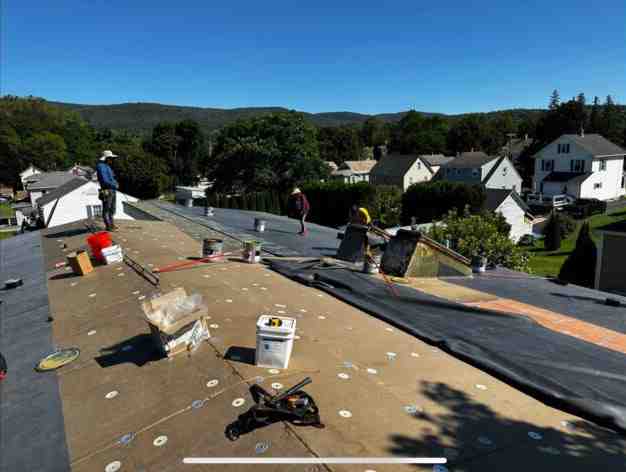

Commercial Roof Protection: What Every Building Owner Should Know
Let’s face it—the roof over your business isn’t something you think about every day… until there’s a problem. But understanding commercial roof installation could save you thousands in the long run.
Think of your commercial roof as the silent guardian of everything beneath it. Unlike the pitched, shingle-covered roofs we have on our homes, commercial roofing systems play by a different set of rules.
Quick Commercial Roof Installation Facts:
* Timeline: Typically takes 5 days to 4 weeks depending on size, materials, and weather
* Most Common Systems: Single-ply membranes (TPO, EPDM), metal, built-up roofing (BUR)
* Average Lifespan: 20-30 years with proper installation and maintenance
* Cost Range: $5-$7 per square foot for single-ply systems, with total costs varying based on size, accessibility, and complexity
Your commercial roof does more than just keep the elements out. It protects valuable inventory, creates comfortable working conditions for your team, supports heavy HVAC equipment, and can significantly impact your monthly energy bills. That’s a lot of responsibility for one building component!
What makes commercial roofing so different from what’s on your house? For starters, most commercial roofs are flat or low-slope designs, not the steep peaks you see in residential neighborhoods. They’re also built to cover much larger areas and must comply with stricter building codes and fire safety regulations.
Commercial roofs require specialized materials too—you won’t find standard asphalt shingles here. Instead, these workhorses use industrial-grade membranes and multi-layer systems installed by specially trained crews with equipment you wouldn’t see on a typical home roofing job.
Here in Berkshire County, your commercial roof faces some serious challenges. Our snowy winters put heavy loads on roofing structures, while summer heat and UV exposure can deteriorate roofing materials over time. That’s why choosing the right system and installer is particularly important for local business owners.
What Is Commercial Roof Installation?
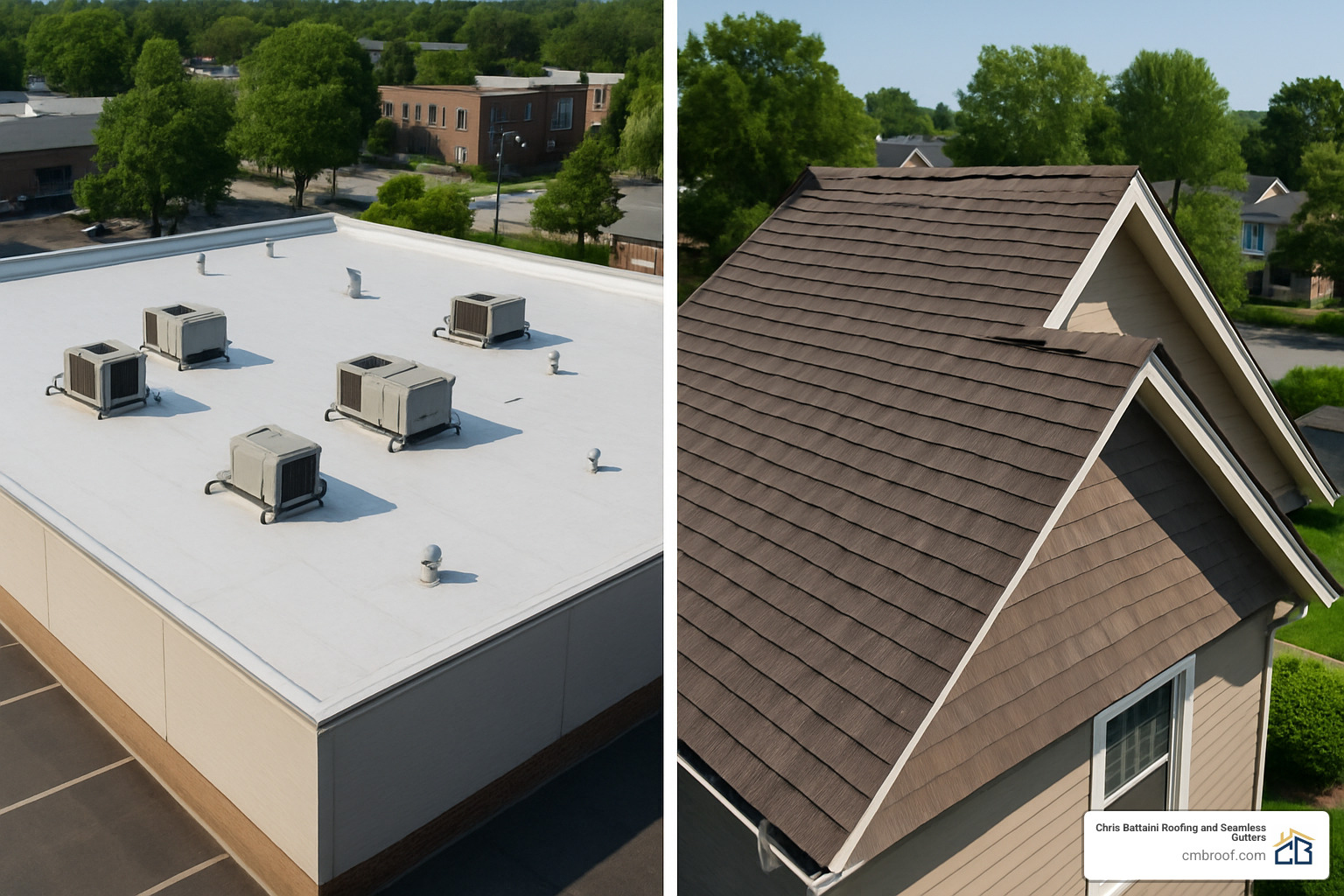
Commercial roof installation is a specialized process that involves applying roofing systems specifically engineered for non-residential buildings. Unlike residential roofing, which typically features steep slopes and asphalt shingles, commercial roofing systems are designed to cover larger areas, often with minimal slope.
When you think about the roof on your home versus the roof on your office building or local shopping center, they’re worlds apart. Residential roofs tend to be steep and showy—they’re part of your home’s curb appeal with pitches of 4:12 or greater. Commercial roofs, on the other hand, are practical workhorses with low-slope or flat designs (less than 3:12 pitch), where function trumps appearance every time.
Commercial roofing isn’t just different in appearance—it must meet stricter building codes, especially for fire resistance. Take metal roofing systems, for example. They’re highly valued in the commercial world because they offer superior fire resistance ratings that often exceed what’s required for homes.
Industry standards demand that commercial roofing systems support heavier loads (think HVAC equipment and maintenance foot traffic), withstand tougher use conditions, meet specific wind uplift ratings, and satisfy energy efficiency requirements that vary depending on where you’re located in the country.
Key Benefits of a Purpose-Built Commercial Roof
A properly installed commercial roof isn’t just overhead protection—it’s a crucial business investment that delivers several important benefits:
Asset Protection is job number one. Your commercial roof shields everything inside—from expensive equipment and inventory to daily operations—from weather damage. When we install a quality commercial roof, we’re helping prevent water damage that could shut down your business and lead to costly repairs.
Energy Efficiency matters to your bottom line. Modern commercial roofing systems, especially white or light-colored single-ply membranes like TPO and PVC, act like giant reflectors, bouncing heat away rather than absorbing it. This simple property can dramatically reduce your summer cooling costs. As one building manager told us, “Switching to a TPO membrane cut our summer electric bill by nearly 20%.”
HVAC Hosting is a unique advantage of commercial flat roofs. They provide valuable real estate for housing air conditioning units and other mechanical equipment, freeing up ground space for parking, landscaping, or other business needs. It’s a practical benefit you simply don’t get with residential design.
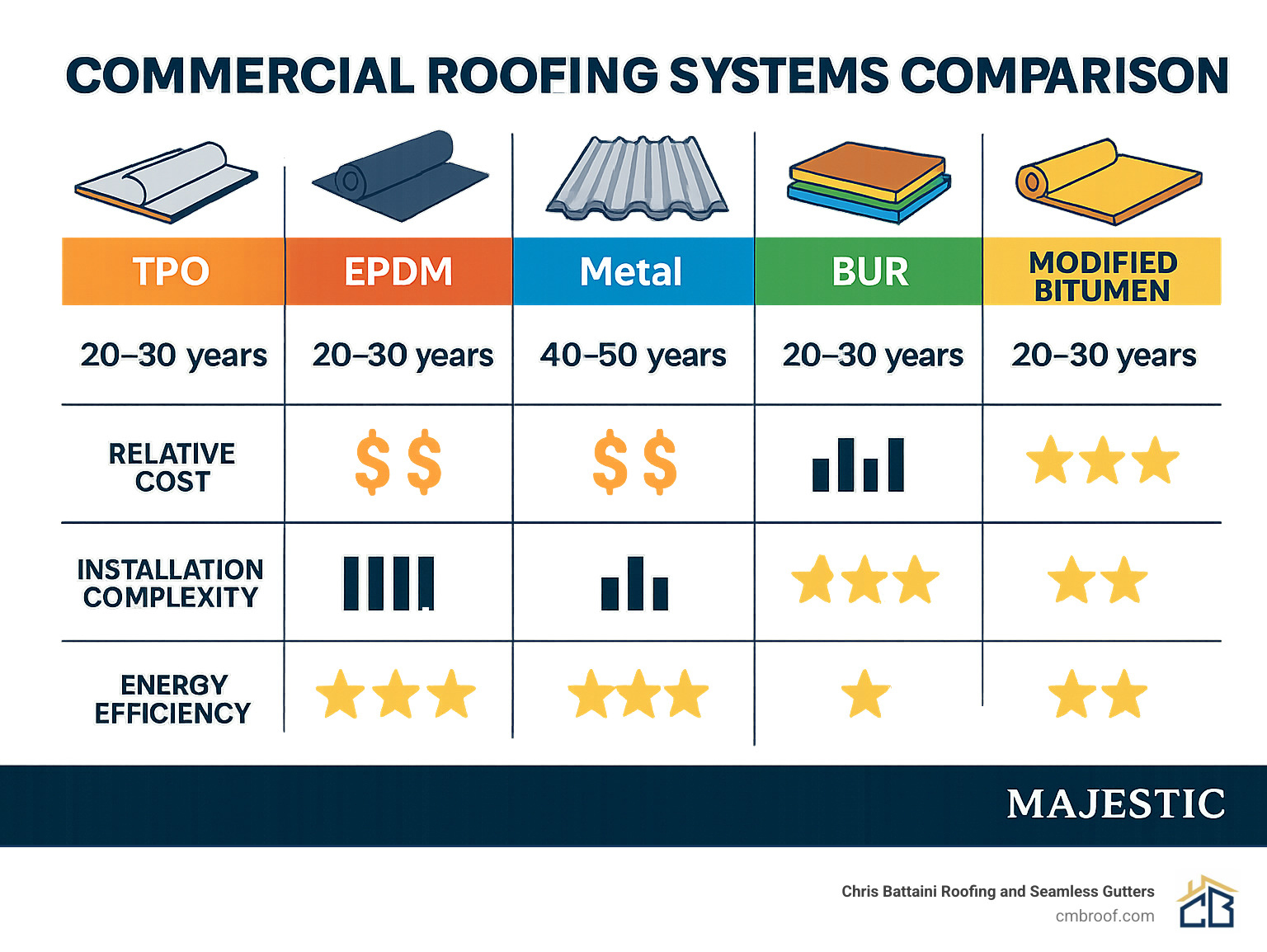
Extended Lifespan gives you peace of mind. With proper installation and regular maintenance, commercial roofing systems typically serve faithfully for 20-30 years, with some metal systems protecting your building for 40+ years.
Common Misconceptions About Commercial Roof Installation
Let’s clear up some confusion about commercial roofing:
“Commercial roofing is just like residential roofing, only bigger.” This couldn’t be further from the truth! Commercial roofing involves entirely different materials, techniques, and code requirements. The installation process requires specialized knowledge, equipment, and experience that residential roofers often don’t possess. That’s why choosing a contractor with specific commercial experience, like our team at Chris Battaini Roofing, is so important.
“All commercial roofs are basically the same.” Not even close. There are numerous commercial roofing systems, each designed for specific applications. What works perfectly for a retail store might be completely wrong for a manufacturing facility or warehouse. Your building’s use, location, and structure all influence which system will perform best.
“Quick fixes save money on commercial roofs.” This is penny-wise but pound-foolish. Those temporary patches often lead to more extensive damage and significantly higher costs down the road. Professional assessment and proper repairs are always more cost-effective than quick fixes that fail prematurely.
“Commercial roofing costs are through the roof.” While the initial investment may be higher than residential roofing, the cost per square foot is often competitive when you consider the larger surface area. Plus, the longer lifespan and energy savings provide excellent long-term value that improves your building’s overall operating costs.
When you understand what commercial roof installation truly involves, you can make better decisions about protecting one of your business’s most valuable assets—the roof over your head.
Comparing Commercial Roofing Systems & Materials
When planning a commercial roof installation, understanding your material options isn’t just helpful—it’s essential for making a choice you’ll be happy with for decades to come. Let’s explore the different systems that might be right for your building, each with their own unique strengths.
Single-Ply Membrane Systems
TPO (Thermoplastic Polyolefin) has become something of a rock star in the commercial roofing world, and for good reason. This heat-weldable membrane gives you excellent protection against UV rays, ozone, and even chemical exposure. With a lifespan of 20-30 years, its bright white surface reflects heat like a champ, helping to keep your cooling costs in check. It’s lightweight, resists dirt buildup, and when its long life is finally over, it can be fully recycled. TPO shines on retail centers, warehouses, and manufacturing facilities where energy efficiency matters.
EPDM (Ethylene Propylene Diene Monomer) might sound like something from a chemistry textbook, but this synthetic rubber membrane is actually quite straightforward. Known for incredible durability, EPDM can last up to 30 years when properly installed and maintained. It handles weather extremes beautifully—from scorching heat to frigid cold—and won’t break your budget. The simple installation and low maintenance requirements make it perfect for large commercial buildings, especially in areas where the temperature likes to swing between extremes.
PVC (Polyvinyl Chloride) offers exceptional resistance to chemicals, grease, and oils, making it the go-to choice for restaurants and industrial facilities. Its heat-welded seams create a watertight bond that stands the test of time, and the material itself resists fire, adding an extra layer of protection. With a 20-30 year lifespan, PVC can even be fabricated to mimic the look of standing seam metal roofs when aesthetics matter.
Multi-Ply Systems
Built-Up Roofing (BUR) is the veteran of commercial roofing—it’s been around longer than any of us have been alive. This system alternates layers of bitumen (asphalt) with reinforcing fabrics to create a tough, waterproof surface. With proper maintenance, BUR systems can last up to 30 years, providing excellent UV protection and standing up well to foot traffic. Schools, hospitals, and government buildings often benefit from BUR’s robust construction and reliable performance.
Modified Bitumen takes the traditional BUR approach and kicks it up a notch with polymer modifiers for improved flexibility and strength. With a lifespan of approximately 20 years, it excels in cold climates and resists hail damage admirably. Its versatile installation methods make it adaptable to various building types, particularly those in colder regions or with moderate foot traffic requirements.
Metal Roofing Systems
Metal roofing delivers exceptional longevity—often 40+ years—making it a wise long-term investment. Extremely fire resistant and requiring minimal maintenance, these systems shed snow efficiently and can be installed on steeper slopes than membrane options. While the initial investment might be higher, the extended lifespan often results in lower lifetime costs. For a deeper dive into our metal options, visit our Metal Roofing page.
Green Roofing Systems
Vegetative or “green” roofs bring nature to your building top by incorporating living plants and growing media. Beyond their obvious aesthetic appeal, these systems provide excellent insulation, manage stormwater runoff, and help reduce the urban heat island effect. The waterproofing membrane beneath can last 40+ years when properly maintained, while creating valuable green space for building occupants. Urban office buildings, hospitals, and educational institutions often find these systems align perfectly with sustainability goals.
Pros & Cons Cheat-Sheet
| System | Pros | Cons |
|---|---|---|
| TPO | Energy efficient, cost-effective, lightweight | Seam quality depends on installation expertise |
| EPDM | Excellent durability, weather resistant, simple installation | Dark color absorbs heat (unless coated) |
| PVC | Chemical resistant, strong seams, fire resistant | Higher initial cost than some alternatives |
| BUR | Multi-layer protection, traffic resistant, proven history | Heavy, labor-intensive installation, odor during application |
| Modified Bitumen | Cold-weather performance, hail resistant, versatile | Moderate lifespan compared to other options |
| Metal | Extremely durable, fire resistant, long lifespan | Higher initial cost, potential for noise during rain |
| Green | Excellent insulation, stormwater management, aesthetic | Higher initial cost, complex installation, maintenance requirements |
Innovations & Trends
The commercial roofing world doesn’t stand still—new technologies continue to emerge that make roofs smarter and more efficient than ever before.
Solar-ready membranes are changing the game for buildings looking to generate their own power. These specially designed TPO and PVC systems include reinforced areas that can support solar panels without compromising roof integrity. It’s a forward-thinking approach that prepares your building for future energy needs.
Cool roof coatings offer an affordable way to transform existing roofs into energy-saving assets. These advanced coatings reflect solar radiation rather than absorbing it, which can significantly reduce cooling costs during hot Berkshire County summers while extending your roof’s overall lifespan.
Vegetative systems continue to gain traction not just for their environmental benefits but as valuable amenities for building occupants. A rooftop garden or green space can become a sought-after feature while simultaneously handling stormwater management challenges.
Hybrid systems combine different roofing technologies to get the best of all worlds. Imagine the durability of a modified bitumen base paired with the energy efficiency of a reflective coating—these combinations often deliver performance that exceeds what any single system could provide.
For more in-depth information about innovative roof coatings that can extend your roof’s life and improve energy efficiency, check out our latest research on roof coatings and energy efficiency.
The right commercial roofing system for your building depends on several factors—your budget, building use, local climate, and long-term plans all play important roles in this decision. Working with an experienced commercial roofer who understands the unique challenges of our Western Massachusetts climate can help ensure you select the perfect system for your specific needs.
Planning Your Project: Key Considerations & Contractor Selection
Proper planning is essential for a successful commercial roof installation. Before you jump into a project that will protect your business for decades to come, let’s walk through the critical factors you’ll need to consider.
Building Type Considerations
Your building’s purpose dramatically influences the right roofing solution. A warehouse in Pittsfield has very different needs than a restaurant in Great Barrington.
Warehouses and manufacturing facilities typically need workhorse roofing systems—durable, low-maintenance options that can handle HVAC equipment and occasional maintenance traffic. Office buildings often prioritize energy efficiency and appearance, while restaurants require special attention to resisting the grease and oils that exhaust systems expel. Retail centers benefit tremendously from reflective roofing that keeps cooling costs manageable during summer months.
We’ve worked with every type of commercial building in Berkshire County, and we’ll help you determine the ideal system for your specific needs.
Climate Zone Factors
Anyone who’s lived through a Western Massachusetts winter knows our region presents unique roofing challenges. Our local climate demands thoughtful material selection:
The heavy snowfall we experience in Berkshire County and Southern Vermont requires roofing systems with excellent structural support and proper drainage design. Our significant seasonal temperature swings—from below-zero winter nights to 90-degree summer days—demand materials that can expand and contract without damage. And while we’re not Florida, our summer UV exposure is still intense enough to degrade inferior roofing materials prematurely.
Having served this region for decades, we’ve learned which systems perform best in our unique climate conditions. We’ll never recommend a system better suited for the Southwest or Deep South.
Permitting and Code Compliance
Commercial roofing projects require proper permits and must comply with increasingly complex building codes. Today’s energy codes specify minimum R-values for roof insulation. Fire ratings for commercial buildings are non-negotiable safety requirements. Wind uplift resistance ratings vary based on your building’s height and location.
Don’t worry—our team handles all permitting processes from start to finish, ensuring your project meets or exceeds local requirements. We stay current on code changes so you don’t have to.
Budget Planning
Establishing a realistic budget means understanding all potential costs before work begins. Material costs vary significantly between system types, with TPO, EPDM, and metal all falling in different price ranges. Labor typically represents 40-60% of your total project cost.
If we’re replacing an existing roof, removal and disposal costs must be factored in. Sometimes structural modifications become necessary to support new roofing systems. We always recommend including a 10-15% contingency for unexpected issues—especially on older buildings where surprises often hide beneath the existing roof.
Learn more about our approach to Roof Installations and how we work within your budget constraints without compromising quality.
Warranty Considerations
Understanding warranty options protects your investment for decades. Manufacturer’s material warranties cover defects in the roofing materials themselves, typically for 20-30 years. Workmanship warranties cover the quality of installation—and ours are exceptional in the industry. System warranties provide the most comprehensive coverage, protecting both materials and installation.
We’re proud to offer some of the strongest warranties in the business. Visit our Warranty & Guarantee page for details on the protection we provide for your investment.
How to Choose a Qualified Contractor
Selecting the right contractor is perhaps the most critical decision you’ll make. Unfortunately, the roofing industry attracts its share of fly-by-night operators. Here’s how to identify a true professional:
Proper licensing and insurance isn’t just paperwork—it’s your protection. Verify that any contractor you consider has appropriate state licensing and carries both liability insurance and workers’ compensation coverage.
Manufacturer certifications separate the professionals from the pretenders. Top manufacturers like GAF only certify contractors who meet rigorous standards. In fact, only 1% of roofing contractors in the US achieve GAF Master Select status.
Local experience matters tremendously. A contractor familiar with Berkshire County weather patterns and building codes will deliver better results than a company from outside the region.
Verified references tell the real story. Ask for and check references from similar commercial projects to gauge reliability and quality.
Clear communication indicates professionalism. Your contractor should explain options, processes, and timelines in language you can understand.
Written proposals protect both parties. All aspects of your project should be detailed in writing before work begins.
We’re confident we meet and exceed these qualifications. To discuss your project, check our contact information.
Questions to Ask Before Signing
Before finalizing your contractor selection, arm yourself with these essential questions:
“Who will supervise my project?” At Chris Battaini Roofing, the answer is often Chris himself. Owner supervision is increasingly rare in our industry, but we believe it’s essential for quality control.
“What size crew will be assigned, and what is the expected timeline?” This helps you understand the project duration and how it might impact your operations.
“What roofing material options do you recommend for my building, and why?” Their answer reveals their expertise and attention to your unique needs. Be wary of contractors who push a single solution for every building.
“How will you protect my property during installation?” We have clear protocols for protecting your building interior, exterior, and surrounding landscape during construction.
“What is your cleanup process?” Proper cleanup is essential, especially for businesses that remain open during installation. Our crews clean the site daily, not just at project completion.
“What are the details of your workmanship warranty?” Understand exactly what’s covered and for how long. Our warranties are among the most comprehensive in the industry.
“Do you pull all required permits?” Professional contractors handle all permitting requirements without burdening you with paperwork.
The answers to these questions will quickly separate quality contractors from those you should avoid. We welcome these questions and any others you might have about your commercial roof installation project.
Step-by-Step Commercial Roof Installation Process
Ever wonder what actually happens during a commercial roof installation? Understanding this process helps you know what to expect when your business undergoes this important upgrade. Let’s walk through how the professionals transform your building’s first line of defense.
1. Comprehensive Site Inspection
Before a single tool comes out, we conduct a thorough inspection of your property. Think of this as the “detective work” phase where we examine:
Your existing roof’s condition, the structural integrity underneath, any moisture issues lurking below the surface, current drainage patterns, and the best access points for equipment and materials.
This critical first step informs everything that follows – from deciding whether we need to remove your old roof or can build over it, to identifying potential challenges before they become problems.
2. Decision: Tear-Off vs. Overlay
Now comes an important choice with two primary approaches:
Complete Tear-Off means removing everything down to the deck. This gives us a clean slate to work with and allows us to address any hidden problems. While it costs more initially and takes longer, it often provides better long-term results and is sometimes required by building codes after multiple layers have accumulated.
Overlay involves installing new roofing directly over existing materials. This approach creates less disruption and waste while costing less upfront. However, it adds weight to your structure and prevents us from addressing any deck issues that might exist.
Most building codes limit you to two roof layers total, so if you’re already at that limit, a tear-off becomes your only option.
3. Substrate Preparation
Think of the substrate as the foundation for your new roof. We carefully prepare this surface by cleaning away debris, repairing damaged sections, ensuring everything is properly dried, and installing any needed substrate materials.
This step is particularly crucial for single-ply membrane systems, where the quality of what lies beneath directly impacts how well your roof performs and how long it lasts. We take our time here because rushing substrate prep leads to problems down the road.
4. Insulation Placement
Proper insulation doesn’t just keep your energy bills in check – it’s a fundamental component of your roofing system. We typically install insulation in multiple layers with staggered joints, which prevents thermal bridging (heat transfer) and maximizes energy efficiency.
Common insulation materials include polyisocyanurate (offering the highest R-value per inch), expanded polystyrene (with excellent moisture resistance), and extruded polystyrene (known for its compression strength). We also use cover boards – high-density panels that protect the insulation and create the ideal surface for attaching your new roof membrane.
5. Membrane Application
This is where your roof really takes shape. The application method varies depending on what system we’re installing:
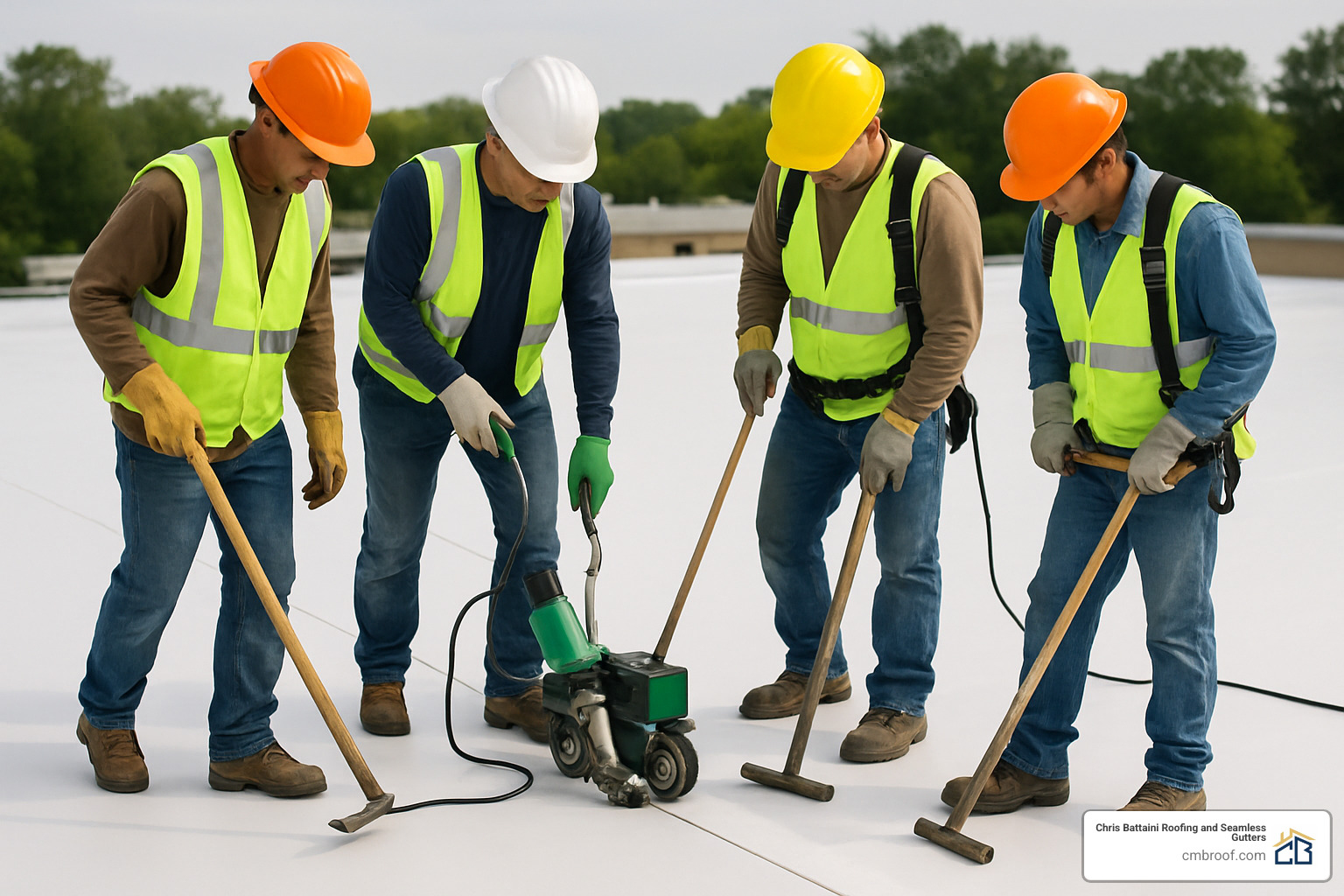
For single-ply membranes like TPO, EPDM, or PVC, we might mechanically fasten them with specialized hardware, fully adhere them with industrial adhesives, use self-adhered membranes with factory-applied adhesive backing, or occasionally use a ballasted system where the membrane is held in place with stone or pavers.
Multi-ply systems like BUR or modified bitumen might be hot-applied using heated asphalt, cold-applied with special adhesives, or torch-applied using direct flame (with rigorous safety measures in place).
The seaming process is particularly important with single-ply systems. TPO and PVC membranes require heat-welded seams that, when properly executed, create bonds stronger than the membrane itself. EPDM typically uses special adhesives or tape systems to create watertight seals.
6. Flashing Installation
Flashing is your roof’s first line of defense against leaks at transitions and penetrations. These are the areas most vulnerable to water infiltration, including:
Roof-to-wall transitions, equipment curbs, drains and scuppers, pipes and vents, and expansion joints.
Professional flashing installation requires experience and attention to detail. This is often where amateur installations fail, making professional expertise particularly valuable. Our team takes extra care with these critical components.
7. Quality Assurance Inspection
Before considering any project complete, we perform rigorous quality checks. This includes visual and physical testing of all seams, water testing in critical areas, infrared scanning to detect any trapped moisture, verification of proper attachment, and detailed inspection of all flashing work.
At Chris Battaini Roofing and Seamless Gutters, we believe this step is non-negotiable. Our reputation depends on getting every detail right, and our quality assurance process ensures we deliver on that promise.
8. Final Cleanup and Site Restoration
We finish by thoroughly cleaning up, removing all debris and excess materials, restoring the surrounding areas to their original condition, conducting a final walkthrough with you, providing maintenance recommendations, and activating your warranty coverage.
We pride ourselves on leaving your property cleaner than we found it. Learn more about our approach to Flat Roofing installation and the quality measures we take.
Commercial Roof Installation Best Practices
The best commercial roofers follow these essential practices:
Safety first, always. We maintain strict OSHA compliance with proper fall protection, fire safety measures, and thoroughly trained personnel.
Weather awareness matters. We carefully monitor conditions because temperature, humidity, and wind all affect installation quality. Sometimes waiting a day for better conditions makes all the difference.
Moisture testing prevents future problems. We test existing roofing components for moisture before installation to prevent trapping water in your new system.
Manufacturer specifications guide our work. We strictly adhere to manufacturer guidelines to ensure warranty validity and optimal performance.
Our crews receive system-specific training. Every team member understands the specific techniques required for your particular roofing system.
Commercial Roof Installation Timeline Factors
Wondering how long your project will take? Several factors influence the timeline:
Roof size naturally affects duration – a small commercial building might take 5 days, while a large warehouse could require 3-4 weeks of work.
System complexity impacts scheduling too. Single-ply membranes typically install faster than built-up systems. Flat roofs generally average about 5 days for installation, while metal roofs might take 12 days or more.
Weather conditions can cause unavoidable delays. Rain, extreme temperatures, or high winds might temporarily halt work to ensure quality installation.
Permit processing varies by municipality. Sometimes inspections and potential revisions add time to the schedule.
Material availability can affect timelines, especially in today’s fluctuating supply chain environment. We work proactively to mitigate these challenges.
Building occupancy considerations may extend the timeline. When your business remains open during installation, we often work in sections and take extra precautions to minimize disruption.
Chris Battaini Roofing and Seamless Gutters proudly serves Berkshire, Hampden, Hampshire, and Franklin Counties in Massachusetts.
Budget, Timeline & ROI: Understanding Cost vs Value
Planning a commercial roof installation isn’t just about finding the lowest bid – it’s about balancing upfront costs with long-term value. Let’s break down what you can expect financially and how to evaluate the true return on your roofing investment.
Average Cost Range
Like most major building improvements, commercial roofing represents a significant investment that varies widely based on your specific situation. Based on internet data (not actual costs for Chris Battaini Roofing and Seamless Gutters), you might expect these general ranges:
- Single-Ply Membranes (TPO, EPDM, PVC): $5-$15 per square foot
- Built-Up Roofing (BUR): $6-$18 per square foot
- Modified Bitumen: $6-$20 per square foot
- Metal Roofing: $7-$25 per square foot
- Green Roofing: $15-$45 per square foot
These figures reflect nationwide averages with considerable variation based on material quality, building complexity, and regional factors. That’s why we always recommend getting a personalized assessment for your specific building.
Labor vs. Material Cost Split
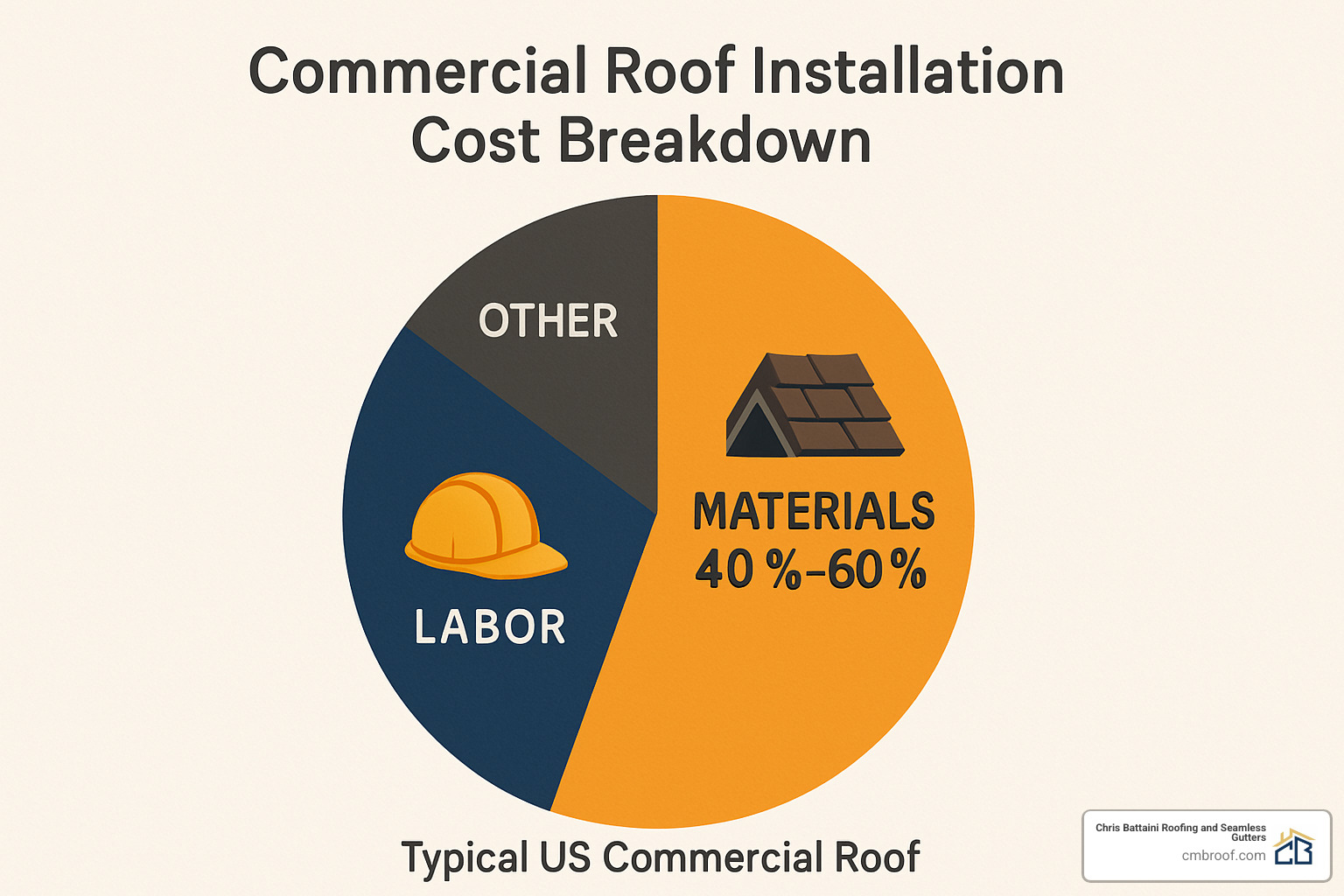
Understanding where your money goes helps with budgeting and comparing quotes. Typically, commercial roofing costs break down into three main categories:
Materials generally account for 40-60% of your total investment. This includes the roofing membrane or system, insulation, fasteners, adhesives, flashing materials, and drainage components. Premium materials cost more upfront but often deliver better longevity and performance.
Labor usually represents 40-50% of the project cost. This is one area where cutting corners can be penny-wise but pound-foolish. Skilled installation from experienced professionals makes all the difference in how your roof performs over decades.
Overhead and profit make up the remaining 10-20%. This covers business expenses, insurance, warranties, and the contractor’s livelihood.
It’s worth noting that labor costs can fluctuate significantly based on roof accessibility (is it a simple one-story building or a complex multi-level structure?), installation complexity, and seasonal demand. In Western Massachusetts, we sometimes see higher labor costs during the peak summer building season when demand outpaces the supply of qualified crews.
Energy Savings and ROI
The true value of your commercial roof goes far beyond keeping the rain out. A modern, well-designed roofing system can dramatically impact your bottom line through:
Energy efficiency savings that start immediately and compound yearly. Cool roofing systems like white TPO membranes can slash summer cooling costs by 20-30%. For a typical 20,000-square-foot commercial building in Berkshire County, this could mean thousands in annual utility savings.
Reduced maintenance expenses keep more money in your pocket year after year. New, properly installed commercial roofing systems require minimal maintenance compared to aging, deteriorating roofs that demand constant attention.
Potential tax incentives may be available for energy-efficient commercial roofing. These programs change regularly, so it’s worth investigating current options when planning your project.
Extended building protection preserves your entire property investment. Water intrusion from a failing roof can damage inventory, equipment, structural components, and even lead to mold problems – all expensive issues that a quality roof prevents.
Business continuity has real financial value. Avoiding disruptions from roof leaks keeps your operations running smoothly and your customers happy.
When calculating your return on investment, look beyond the initial price tag to consider these long-term benefits. A quality commercial roof is less of an expense and more of an investment that pays dividends over decades.
Cost Influencers You Shouldn’t Overlook
Several factors can significantly impact your project budget that might not be obvious at first glance:
Access difficulty can substantially affect labor costs. Buildings with limited roof access, multiple levels, or tight urban locations often require specialized equipment and additional labor hours, driving up the overall price.
Insulation thickness requirements have increased with modern energy codes. Each additional inch of insulation adds to material costs but improves energy performance. This is typically a worthwhile investment that pays for itself through reduced heating and cooling expenses.
Warranty upgrades provide valuable protection and peace of mind. While extended or comprehensive warranty coverage adds to the initial project cost, it often delivers excellent long-term value by protecting your investment.
Disposal fees for removing old roofing materials can be surprisingly substantial, especially in regions with high landfill costs. These fees vary widely by location and material type.
Structural modifications are sometimes necessary to support a new roofing system, particularly when upgrading from a lighter to heavier material or addressing existing structural issues. These additional carpentry or engineering costs should be factored into your budget planning.
Drainage improvements might be recommended during your roof replacement. While this represents an additional investment, proper drainage is absolutely essential for maximizing roof lifespan and preventing costly water damage.
Frequently Asked Questions about Commercial Roof Installation
Q: How long will my commercial roof last?
A typical commercial roof’s lifespan varies significantly by material type and quality of installation. With proper maintenance, you can generally expect:
– Single-ply membranes like TPO and EPDM: 20-30 years
– Built-up roofing (BUR): 15-30 years
– Metal roofing: 40+ years
– Modified bitumen: 20-25 years
The quality of installation makes an enormous difference in these numbers. That’s why we emphasize craftsmanship and proper techniques on every project.
Q: How long does commercial roof installation take?
Most commercial roof installations take between five days and four weeks to complete, depending on several factors. Simpler flat roof projects using single-ply membranes might finish in about a week, while more complex metal roofing systems typically require around two weeks or more.
Weather conditions, permit processing times, building complexity, and material availability all impact the timeline. We’ll provide you with a realistic schedule during the consultation process so you can plan accordingly.
Q: When should I replace rather than repair my commercial roof?
While we believe in repairing when practical, there are clear situations when replacement makes more financial sense:
– Your existing system has reached the end of its expected lifespan
– Repair costs would exceed 30% of a full replacement
– You have widespread damage rather than isolated issues
– You’re seeking significant energy efficiency improvements
– You’ve experienced persistent leaks despite multiple repair attempts
We’re always happy to provide an honest assessment of whether repair or replacement is the more cost-effective approach for your specific situation.
Chris Battaini Roofing and Seamless Gutters proudly serves Berkshire, Hampden, Hampshire, and Franklin Counties in Massachusetts.
Maintenance, Coatings & When to Upgrade
Protecting your commercial roof installation doesn’t end once the last worker leaves the site. In fact, what you do after installation can be just as important as the installation itself.
Essential Maintenance Schedule
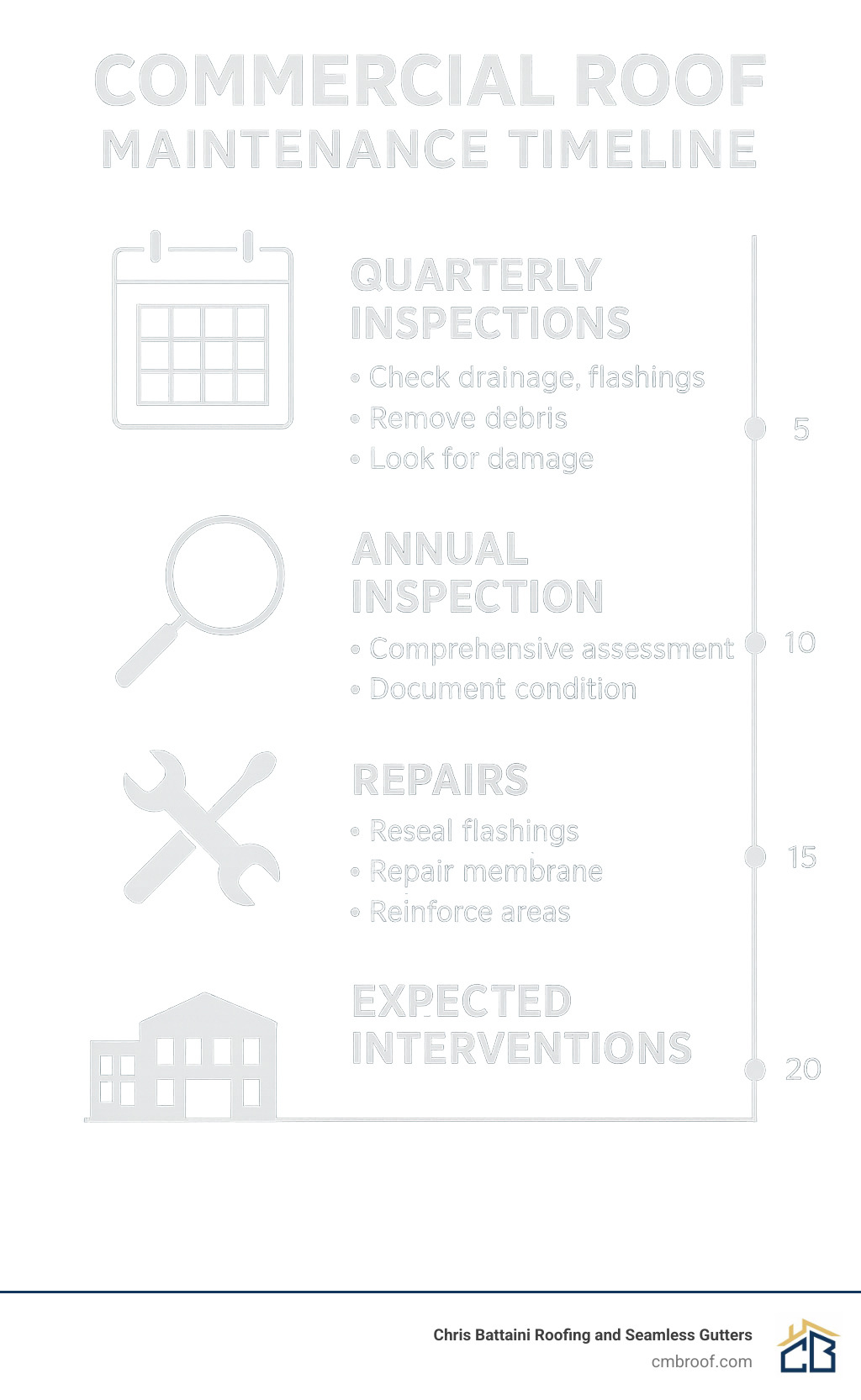
Think of your commercial roof like a high-performance vehicle – regular check-ups prevent breakdowns and extend its life. After installation, you’ll want to implement a thoughtful maintenance program:
Your roof needs quarterly attention – simple visual inspections where you or your maintenance team checks drainage systems for leaves and debris that could cause water to pond. Take time to examine flashings and penetrations where most leaks begin. Remove any debris that’s accumulated on the roof surface, as even small items can damage membranes over time.
Once a year, bring in professionals for a comprehensive evaluation. These experts will examine all roofing components, often using infrared scanning to detect hidden moisture that could be silently damaging your building. They’ll assess how well your insulation is performing and document the overall condition of your roof, giving you a clear picture of its health.
When small issues appear – and they will – address them promptly. Resealing aging flashings, repairing minor membrane damage, and reinforcing vulnerable areas prevents small problems from becoming major headaches.
This proactive approach typically costs just 1-3% of your original roof installation price annually but can extend your roof’s life by 25% or more – that’s real value that protects your investment.
Roof Coatings & Restoration Systems
Before replacing your aging commercial roof, consider the middle-ground option that’s gaining popularity: roof coating systems. These specialized products can breathe new life into an existing roof at a fraction of replacement cost.
Silicone coatings shine in harsh environments, with outstanding UV resistance and weathering characteristics. They maintain their reflectivity over time, which keeps your building cooler and energy bills lower. When Western Massachusetts summer heat beats down on your building, silicone stands strong.
For businesses watching their budget, acrylic coatings offer good reflectivity and easy application at a more affordable price point. They perform best in our moderate Northeast climate, though they may need more frequent reapplication than silicone.
Liquid-applied membranes create a seamless waterproof barrier that conforms perfectly to irregular surfaces – ideal for complex roofs with lots of equipment or unusual shapes. They can be applied over many existing roof types and typically extend roof life by 10-15 years.
The beauty of these coating systems goes beyond their immediate performance. They typically cost 50-70% less than full replacement, cause minimal disruption to your day-to-day operations, and keep tons of roofing material out of landfills. Many building owners also benefit from energy rebates and tax incentives when choosing reflective coatings.
At Chris Battaini Roofing and Seamless Gutters, we’ll honestly evaluate whether your roof is a good candidate for restoration or truly needs replacement. Visit our Commercial Roofing page to learn more about our approach to extending roof life.
Signs It’s Time for a New Commercial Roof
Even with excellent maintenance, every roof eventually reaches retirement age. Recognizing the signs early gives you time to plan rather than react to a crisis.
Persistent leaks that continue despite repairs often signal systemic failure of the membrane. When your maintenance team seems to be chasing leaks from one spot to another, it’s usually time for a conversation about replacement.
Ponding water that remains 48+ hours after rainfall indicates more than just drainage issues – it often points to structural deflection that’s allowing the roof to sag. This standing water accelerates deterioration and increases the risk of catastrophic failure.
Watch for membrane deterioration like cracking, splitting, blistering, or shrinking material. These visible signs of aging mean your roof’s protective abilities are compromised. Similarly, if you notice increasing energy costs without other explanation, moisture may have infiltrated your insulation, reducing its effectiveness.
The most obvious sign – visible light through the deck – means you have serious integrity issues that need immediate attention. If you can see daylight from inside, water isn’t far behind.
When repair frequency increases, replacement often becomes more cost-effective than continuing to patch an aging system. And of course, if your roof is approaching or has exceeded its expected lifespan (20-30 years for most commercial systems), proactive replacement prevents emergency situations.
Many building owners benefit from professional thermal scanning, which can detect moisture trapped within the roofing system before visible damage occurs. This technology allows for planned replacement rather than emergency response – saving money and preventing interior damage.
Chris Battaini Roofing and Seamless Gutters proudly serves Berkshire, Hampden, Hampshire, and Franklin Counties in Massachusetts.
Conclusion
Commercial roof installation represents one of the most significant investments you’ll make in your building’s protection and performance. When you choose the right system and have it properly installed and maintained, you’re setting yourself up for decades of reliable service. A quality roof doesn’t just protect your building—it contributes to energy efficiency and keeps your business running smoothly, rain or shine.
At Chris Battaini Roofing and Seamless Gutters, we’ve walked alongside countless commercial property owners throughout Berkshire County and Southern Vermont. We understand the unique challenges you face in our region, from heavy snow loads to dramatic seasonal temperature swings. That’s why we take an owner-led approach to every project—ensuring your roof receives the attention to detail it deserves from start to finish.
What truly sets us apart isn’t just our technical expertise (though we have plenty of that). It’s our commitment to exceptional workmanship warranties and our deep understanding of local climate challenges. We don’t believe in one-size-fits-all solutions. Instead, we create roofing systems custom to your building’s specific needs and your business priorities.
Whether your commercial building would benefit most from the energy efficiency of TPO, the durability of EPDM, the longevity of metal, or another commercial roofing system altogether, our team will guide you through the selection process. We’ll handle all the technical details—permitting, code compliance, and efficient installation—so you can focus on what matters most: running your business.
A quality commercial roof is more than just protection from the elements. It’s peace of mind knowing your inventory, equipment, employees, and customers are safe beneath a reliable shield. It’s the comfort of predictable maintenance rather than emergency repairs. And it’s the satisfaction of making a sound investment in your property’s long-term value.
Ready to discuss how we can help with your commercial roofing needs? Reach out today for a thorough assessment and detailed proposal. Your building deserves nothing less than a roofing solution that truly stands the test of time—and we’re here to deliver exactly that.
More info about commercial services
Chris Battaini Roofing and Seamless Gutters proudly serves Berkshire, Hampden, Hampshire, and Franklin Counties in Massachusetts, as well as Southern Vermont.