
The Growing Wildfire Threat to Cedar Shake Roofs
Are cedar shake roofs a fire hazard? Yes, untreated cedar shake roofs are a significant fire hazard, especially in wildfire-prone areas. They are highly flammable, have a low ignition temperature (378°F), and can generate firebrands that spread fires to neighboring structures.
| Cedar Shake Roof Fire Risk Factors | Details |
|---|---|
| Fire Rating (Untreated) | Non-rated (highest fire risk) |
| Fire Rating (Treated) | Can achieve Class B or C with proper treatment |
| Increased Wildfire Destruction | 2-21× higher destruction rates compared to fire-resistant roofs |
| Ignition Temperature | 378°F (Western Red Cedar) |
| Firebrand Travel | Up to 0.5 miles during high winds |
| Insurance Impact | Higher premiums or coverage denial in high-risk areas |
When I drive through the Berkshires in autumn, the beauty of cedar shake roofs against the fall foliage is undeniable. Yet behind that rustic charm lies a sobering reality that many homeowners don’t fully understand until it’s too late.
The data is clear and concerning: nearly 1 million buildings in the United States have combustible wood shake or shingle roof coverings in areas of medium to very high wildfire risk. This isn’t just a western states problem anymore – climate change has expanded the wildfire risk zone across the country.
In fire-prone regions, the statistics are even more alarming. Studies show that homes with untreated wood roofs were 2 to 21 times more likely to be destroyed by wildfire than those with fire-resistant roofing materials. The reason? Cedar’s natural oils and fibers make it highly combustible, and its low ignition temperature of just 378°F means it can catch fire easily from windblown embers.
Many municipalities have recognized this danger. After the devastating Hayman Fire in 2002, Colorado Springs banned new wood roofs entirely. Similar restrictions are spreading across the country as wildfire risks increase.
Insurance companies are also responding – in fire-prone states like California, finding coverage for a cedar shake roof has become nearly impossible, or prohibitively expensive.
For homeowners with existing cedar roofs, understanding this risk is the first step toward making informed decisions about maintenance, treatment, or replacement.

Why Fire Risk Is a Growing Homeowner Concern
The threat to homes from wildfires has dramatically increased in recent decades, particularly in what fire experts call the wildland-urban interface (WUI) – areas where homes and wilderness meet. As development pushes further into previously undeveloped lands, more properties find themselves in these vulnerable zones.
Climate change has exacerbated this problem. Extended drought periods, higher temperatures, and changing precipitation patterns have created conditions where wildfires burn hotter, spread faster, and occur more frequently – even in regions that historically saw minimal wildfire activity.
This evolving threat landscape has put “home hardening” at the forefront of property protection strategies. Home hardening refers to making physical improvements to your home that increase its resistance to wildfire damage. And when it comes to home hardening, the roof is arguably the most critical component.
Why? Because during a wildfire, your roof represents the largest surface area exposed to falling embers – the primary cause of home ignitions during wildfires. A vulnerable roof can be the difference between a home that survives and one that becomes a total loss.
What Exactly Is a Cedar Shake Roof? Old-World Craft Meets Modern Code
There’s something undeniably charming about a cedar shake roof. When sunlight hits those natural wood surfaces, it creates a warmth and character that simply can’t be replicated by modern materials. But what exactly are you looking at when you admire one of these traditional roofing systems?
Cedar shake roofs are crafted from western red cedar trees, each piece individually split or sawn into what we call “shakes” or “shingles.” Though many folks use these terms interchangeably (and I hear it all the time from homeowners), they actually refer to slightly different products:
Cedar shakes have that rugged, hand-crafted look—typically split by hand, giving them varied thicknesses and a distinctly textured appearance. Traditional shakes show their natural character with a rough, split face and a cleanly sawn back.
Cedar shingles, by contrast, are precision-sawn on both sides, creating a smoother, more uniform appearance and consistent thickness throughout.
Tapersawn shakes offer the best of both worlds—machine-cut for consistency while maintaining enough texture to provide that authentic, rustic charm many homeowners crave.

These beautiful roofing materials aren’t a modern invention—they’ve been sheltering American homes since colonial times, when settlers valued cedar for its lightweight nature and ready availability in the forests around them. Today, homeowners choose cedar primarily for its distinctive appearance and natural beauty rather than necessity.
When we install a cedar shake roof, we’re actually creating a multi-layered system:
- First comes the roof deck or sheathing—either solid plywood or spaced boards
- Next, an underlayment (typically felt or modern synthetic material)
- Then the star of the show: the cedar shakes themselves
- In many installations, especially in wetter climates, we’ll add interlayment felt between courses of shakes for extra weather protection
How these layers come together varies depending on your local building codes, climate considerations, and whether your roof needs to meet specific fire ratings—which, as we’ll discuss later, is becoming increasingly important in many regions.
From Forest to Rooftop: How Shakes Are Milled & Installed
The journey of a cedar shake begins in the majestic forests of the Pacific Northwest, home to the western red cedar (Thuja plicata). This remarkable tree produces wood prized for its natural resistance to decay, insects, and moisture damage. I’m pleased to tell environmentally-conscious homeowners that many of today’s cedar shakes come from sustainable sources—often salvage logging operations or responsible forest management activities.
Quality control in the cedar shake industry falls under the watchful eye of the Cedar Shake & Shingle Bureau (CSSB), which has been setting standards since 1915. Their Certi-label program grades shakes by quality:
Premium Grade shakes are the cream of the crop—100% edge grain and 100% clear of defects.
Number 1 Grade maintains 100% clear wood but allows mixed grain patterns.
Number 2 Grade permits limited knots and defects while still providing excellent performance.
Installing a cedar roof is truly a specialized craft. When I’m training new team members, I emphasize that proper technique makes all the difference in both appearance and longevity:
Cedar shakes need breathing room—typically installed with 3/8″ to 5/8″ spacing between them to allow for natural expansion and contraction with weather changes.
Each course must properly overlap the one below, with the exposure (the visible portion) typically ranging from 5″ to 10″ depending on shake length and local building requirements.
Fastening requires specific corrosion-resistant nails—stainless steel or hot-dipped galvanized—placed precisely to secure the shakes without splitting them.
In regions with significant rainfall, we install felt interlayment between courses as an extra defense against moisture intrusion.
This complexity in both materials and installation explains why cedar shake roofs typically command a premium price compared to conventional asphalt shingle roofs. The craftsmanship involved simply requires more time and expertise.
Beauty vs. Durability: The Trade-offs Homeowners Accept
When homeowners ask me about cedar shake roofs, I always make sure they understand both the rewards and responsibilities that come with this beautiful roofing option.
The aesthetic appeal is undeniable. Over time, cedar weathers to a distinguished silver-gray patina that seems to capture the essence of New England charm. This natural, organic look complements many architectural styles—particularly craftsman, rustic, and traditional designs that grace our Berkshire County landscape.
Beyond their good looks, cedar shakes offer impressive performance benefits:
Natural insulation is a significant advantage—cedar has excellent thermal properties that help regulate attic temperatures, potentially reducing energy costs in both summer and winter.
Weather resistance is another strong point. When properly installed and maintained, cedar stands up admirably to harsh weather conditions, including the high winds and heavy snow we frequently experience in Massachusetts and Vermont.
Longevity potential is impressive. Under ideal conditions and with proper care, cedar shake roofs can last 30-40 years—sometimes even reaching the 50-year mark in milder climates.
But I always make sure homeowners understand the commitment they’re making. Cedar roofs demand more from their owners than modern alternatives:
High maintenance requirements are unavoidable. Cedar needs regular cleaning, treatment, and individual shake replacement to maintain its performance and appearance over decades.
Susceptibility to moss and mildew becomes an issue, particularly in humid or shaded areas where biological growth can compromise the roof’s integrity if left unchecked.
Vulnerability to insects can develop over time. Despite cedar’s natural resistance, wood-boring insects may eventually find an aging roof attractive.
And perhaps most critically, are cedar shake roofs a fire hazard? The answer is yes—cedar’s flammability represents a serious safety concern that many homeowners underestimate until they face insurance challenges or building code restrictions.
This last point deserves closer examination, as it represents the most significant drawback of cedar shake roofing in today’s increasingly fire-prone environment—a topic we’ll explore thoroughly in the next section.
Are Cedar Shake Roofs a Fire Hazard? Hard Truths Behind the Charm
Let me be direct with you – are cedar shake roofs a fire hazard? Yes, they absolutely are, especially when untreated. I’ve seen the aftermath of wildfires where homes with cedar roofs were reduced to ashes while neighboring properties with fire-resistant roofing remained standing. This isn’t just my observation – it’s backed by decades of scientific research and real-world evidence.
When fire scientists from the National Fire Protection Association (NFPA) analyzed 1,850 homes in Southern California wildfire zones, they finded something alarming. Houses with untreated cedar roofs were anywhere from 2 to 21 times more likely to be destroyed compared to homes with fire-resistant roofing. That’s not just a slight increase – it’s a dramatic difference that could mean losing everything you own.
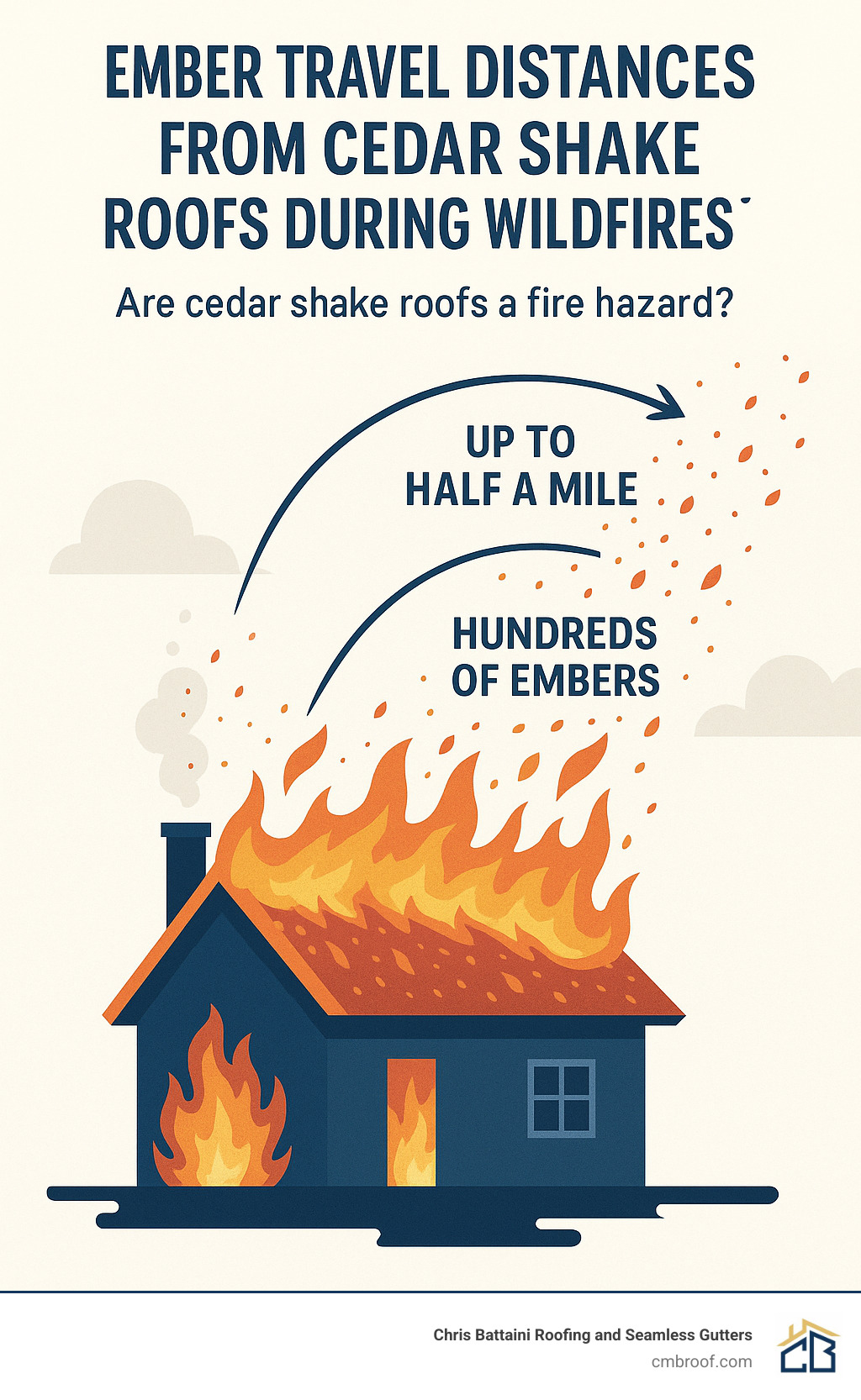
The fire hazard comes down to several key factors that make cedar particularly vulnerable. Western red cedar ignites at just 378°F – a temperature easily reached by a stray ember or radiant heat during a wildfire. The rough, textured surface creates countless nooks where embers can nestle and smolder. And perhaps most concerning, burning cedar shakes can break apart into firebrands – burning pieces that winds can carry up to half a mile, spreading the fire far beyond the original flame front.
As your cedar roof ages, the situation only worsens. Those beautiful shakes dry out over time, developing cracks and fissures that make them increasingly ready to catch fire with minimal provocation.
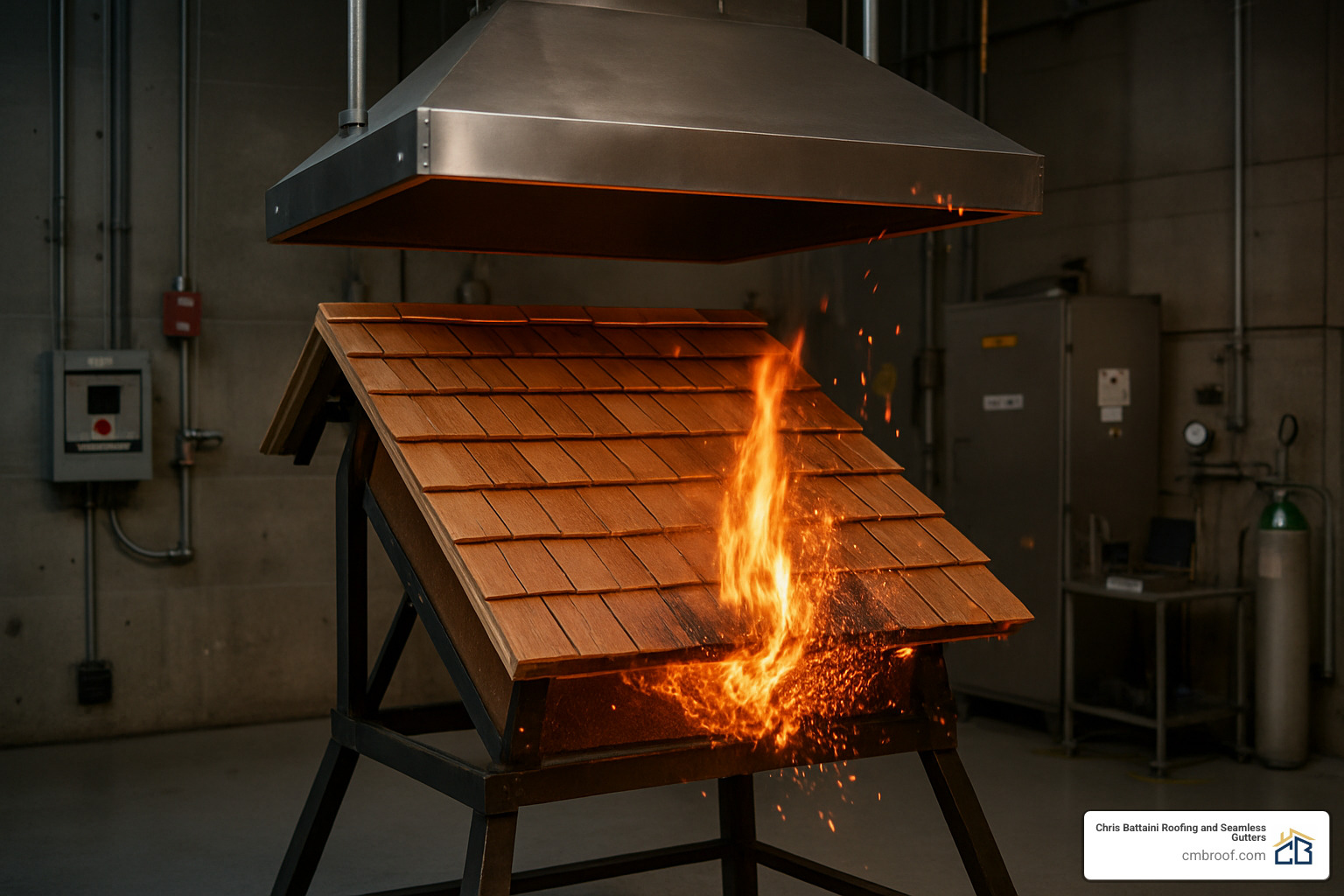
Untreated Cedar Shakes: 2-21× Higher Loss Rates—Here’s Why
When it comes to fire safety ratings, untreated cedar shake roofs fall into the “Non-Rated” category – essentially failing to meet even minimal fire resistance standards. This isn’t some arbitrary classification but reflects their documented performance when faced with fire.
Why do homes with cedar roofs burn at such alarming rates? The natural oils and resins that give cedar its wonderful scent and weather resistance also serve as excellent fuel when exposed to heat. A new cedar roof starts with about 20% moisture content, providing some initial fire resistance. But within a few years, that moisture content can drop below 10%, leaving you with what amounts to kindling above your living space.
The physical deterioration of cedar creates perfect conditions for fire. As your roof ages, it develops raised edges, splits, and cracks – all creating more surface area for potential ignition. The spaces between shakes, part of the traditional installation method, allow embers to penetrate below the surface where they can smolder undetected until it’s too late.
Most homeowners don’t realize that direct flames rarely cause home ignitions during wildfires. Instead, it’s those windblown embers – sometimes called “ember showers” – that pose the greatest threat. Cedar’s texture and installation style create the perfect landing spots for these embers, explaining why these roofs fare so poorly during wildfire events.
Fire-Retardant-Treated Shakes: How Much Safer Are They Really?
If you love the look of cedar but worry about the fire risk (as you should), you might consider fire-retardant-treated shakes. These undergo pressure impregnation with chemicals designed to reduce ignition potential and slow flame spread.
When properly treated and installed according to manufacturer specifications, these products can achieve better fire ratings:
- Class B rating (moderate fire resistance)
- Class C rating (light fire resistance)
- Class A assembly rating (highest fire resistance, but only with specific underlayment and installation methods)
But here’s the honest truth – while treated cedar is certainly better than untreated, it still comes with significant limitations. The effectiveness of these treatments diminishes over time as the chemicals leach out with rainfall or degrade from UV exposure. Think of it like sunscreen that gradually washes away, leaving you vulnerable again.
There’s also a practical challenge during wildfires – firefighters can’t easily tell which cedar roofs are treated and which aren’t. This can affect split-second decisions about which homes they can reasonably try to save.
Research from scientific studies on roof treatments shows that while treated shakes produce fewer firebrands than untreated ones, they can still generate dangerous embers under the right conditions. And achieving the rated fire resistance depends entirely on proper installation with specific underlayment materials and techniques – cut corners during installation, and the protection disappears.
Even with treatment, cedar roofs still require vigilant maintenance to remove debris, repair damaged shakes, and monitor the roof’s condition. The bottom line? While fire-retardant cedar is better than untreated cedar, it still doesn’t match the fire resistance of non-combustible materials like metal, tile, or specially designed composite products.
For homeowners in the Berkshires and Southern Vermont where wildfire risks are increasing due to climate change, these considerations shouldn’t be taken lightly. The charming aesthetic of cedar comes with serious safety trade-offs that deserve careful thought before installation or during decisions about replacement.
Factors That Tip the Scale: When a Pretty Roof Becomes a Liability
Several factors can transform a cedar shake roof from a manageable risk to an acute liability. Understanding these factors is crucial for homeowners with existing cedar roofs or those considering this roofing option.

Aging Roofs & Drying Wood: The Clock That Ticks Toward Combustion
That beautiful cedar roof isn’t static – it’s actually changing over time, and unfortunately not for the better when it comes to fire safety.
When cedar shakes are new, they contain about 15-20% moisture, giving them some natural resistance to catching fire. But as they age, this moisture steadily disappears, sometimes dropping below 10%. The drier they get, the more readily they’ll ignite.
Physical changes happen too. Walking around Berkshire neighborhoods, I often spot older cedar roofs with telltale signs of deterioration – cracks forming along the grain, edges curling upward, and corners lifting. Each of these changes creates more surface area exposed to potential ignition and perfect little pockets where windblown embers can nestle.
In our humid New England climate, moss and lichen love to grow on cedar. While they might add a certain rustic charm, these organic hitchhikers trap moisture against the wood, speeding up decay and creating uneven drying patterns that promote more cracking. When they dry out, they become additional kindling.
The spaces between shakes become collection points for leaves, pine needles, and small twigs – creating what fire experts call “fine fuels” that ignite easily. Even with regular cleaning, debris accumulates in hard-to-reach areas.
For homeowners who invested in fire-retardant-treated shakes, there’s another concern: those protective chemicals don’t last forever. Weather exposure, UV radiation, and regular rainfall gradually reduce their effectiveness, leaving even “treated” roofs increasingly vulnerable as they age.
Without professional cleaning every 2-3 years and regular maintenance, these age-related fire risks compound quickly. What might have been an acceptable risk when new becomes significantly more dangerous with each passing year.
Codes, Bans & Insurance: Reading the Fine Print Before You Renew
The regulatory landscape around cedar shake roofs has shifted dramatically in recent years, catching many homeowners by surprise.
Building codes have tightened significantly. Many jurisdictions have implemented strict limitations on wood roofing materials. Some communities have banned new cedar shake installations entirely, particularly in high fire risk zones. Others require Class A or B fire ratings even in moderate risk areas, effectively eliminating untreated cedar as an option.
Even if you already have a cedar roof, these changing codes can affect you. Some areas restrict repairs on existing wood roofs to less than 10-20% of the total roof area, meaning a partially damaged roof might require complete replacement with a different material.
Insurance challenges have become a major headache for cedar roof owners. I’ve spoken with many Berkshire homeowners shocked by premium increases of 10-30% simply because of their roof material. Some face even worse situations – policy non-renewals or outright cancellations. Finding new coverage after being dropped can be extremely difficult, and often comes with requirements for annual professional inspections and certifications.
If you’re selling a home with a cedar shake roof, be prepared for additional problems. Many states now require specific disclosures about wood roofing, including any known fire code violations and insurance issues related to the roof. This can impact your property value and complicate sales.
The financial implications extend beyond just higher premiums. In many cases, the cumulative cost of increased insurance over several years can exceed what you’d pay to replace the cedar with a fire-resistant alternative – an equation worth considering carefully.
Ember Showers & Firebrand Spread—The Hidden Threat Above Your Gutters
When we think about wildfire threats, we often picture walls of flame moving through forests. But the reality of how homes actually ignite is quite different – and cedar shake roofs play a particularly dangerous role in this process.
Are cedar shake roofs a fire hazard during community wildfires? Research shows they’re not just vulnerable themselves; they actively help spread fires throughout neighborhoods.
The primary culprits are firebrands – those burning pieces that break off during a fire and travel on wind currents. Studies reveal that up to 90% of homes that burn during wildfires are ignited not by direct flame contact, but by these windblown embers landing on vulnerable materials.
Cedar shake roofs are problematic on both sides of this equation. Their rough, uneven surfaces provide perfect landing spots for embers from nearby fires. Once ignited, they become prolific producers of new firebrands, creating a dangerous chain reaction.
Laboratory testing shows the alarming reality: a single burning cedar shake roof can generate hundreds of firebrands that may travel up to half a mile under moderate wind conditions. This means one home with an ignited cedar roof can potentially endanger dozens of surrounding properties.
The design of your roof matters too. Those charming architectural features – multiple valleys, dormers, and intersections – create natural collection points where windblown embers concentrate. These protected areas allow fires to smolder undetected, sometimes for hours before bursting into visible flames.
This is why fire officials view cedar shake roofs not just as individual homeowner risks but as community-level hazards. In densely built neighborhoods, a single vulnerable roof can threaten the entire area.
Fire-Smart Paths Forward: Upgrades, Maintenance & Alternatives
Living with a cedar shake roof doesn’t mean you’re powerless against fire risk. Whether you’re committed to preserving your existing roof or considering alternatives, there are practical steps you can take to protect your home and family.
Maintenance Moves That Actually Cut Risk (and Myths That Don’t)
If you love your cedar shake roof too much to part with it, a diligent maintenance routine can significantly reduce—though never completely eliminate—the fire hazard.
Regular cleaning is your first line of defense. I recommend a thorough cleaning 2-3 times per year, focusing on removing all leaves, pine needles, and debris that naturally collect on your roof surface. Pay special attention to valleys, gutters, and roof-to-wall intersections where embers typically collect during a fire event. Those hidden corners that you can’t see from the ground? They’re often the most dangerous spots.
Creating defensible space around your home dramatically improves your odds of surviving a wildfire. Trim tree branches to maintain at least 10 feet of clearance from your roof—those overhanging limbs might look picturesque, but they create a direct path for fire to reach your home. The 5-foot zone immediately surrounding your house should ideally contain only non-combustible materials—no mulch, no decorative grasses, no wooden structures.
When it comes to repairs, procrastination is your enemy. Replace cracked, cupped, or missing shakes immediately, as these damaged areas create perfect entry points for embers. A single compromised shake can put your entire home at risk during a wildfire.
Annual professional inspections provide peace of mind and documentation that may be required by your insurance company. A trained eye can spot developing issues before they become serious problems.
But let’s also clear up some misconceptions. DIY fire-retardant sprays might seem like an affordable solution, but their effectiveness is questionable at best and potentially dangerous at worst. These surface treatments typically wash away with the first heavy rain, leaving you with a false sense of security.
Similarly, roof-watering systems sound logical but have significant limitations. During a wildfire, power outages are common, rendering electric pumps useless exactly when you need them most. And even when operational, these systems do little to prevent ember intrusion beneath shakes.
Perhaps most surprisingly, painting cedar shakes can actually increase fire risk by trapping moisture that accelerates decay while adding a new fuel source to your roof.
If you have a fire-retardant-treated cedar roof, the protection diminishes over time. Professional re-treatment every 5-7 years is typically necessary to maintain effectiveness, though you should always follow the manufacturer’s specific recommendations.
Cost & Logistics of Swapping Roofs—What Homeowners Should Expect
For many Berkshire homeowners, replacing a cedar shake roof with a fire-resistant alternative is the most definitive solution. While this represents a significant investment, understanding the process and options helps make an informed decision.
The removal of existing cedar shakes typically costs between $2-$5 per square foot, with additional disposal fees ranging from $500-$1,500 depending on local regulations. If your roof deck requires structural modifications to support a heavier material, this could add $2,000-$10,000 to the project.
Note: These are average costs based on internet data and not actual costs for Chris Battaini Roofing and Seamless Gutters.
When selecting a fire-resistant alternative, you have several excellent options:
Asphalt composition shingles offer affordability ($4-$8 per square foot installed) and solid fire protection with a Class A rating when properly installed. Modern architectural shingles provide impressive dimensionality that mimics the shadow lines of cedar, with a respectable 25-30 year lifespan.
Metal roofing represents a premium option ($8-$14 per square foot installed) with best longevity (40-70 years) and Class A fire protection. Today’s metal roofs come in styles that beautifully complement historic Berkshire homes, including profiles that convincingly mimic the texture and appearance of wood shakes.
Synthetic (composite) shake delivers the most authentic wood-like appearance ($10-$18 per square foot installed) while offering Class A fire protection and minimal maintenance requirements. These products have advanced dramatically in recent years, with realistic textures and color variations that age naturally like cedar—but without the fire risk.
Concrete or clay tile provides exceptional durability ($10-$30 per square foot installed) with Class A fire protection. While not traditionally associated with New England architecture, modern tiles come in profiles that complement various architectural styles.
The replacement process typically takes 1-2 weeks, depending on your home’s size and roof complexity. Most jurisdictions require building permits, and you should notify your insurance provider about the upgrade—many offer premium discounts for fire-resistant roofing that can help offset the initial investment over time.
Many of our Berkshire County customers find that the peace of mind from improved fire safety, combined with reduced insurance premiums and lower maintenance costs, makes replacing a cedar shake roof a wise long-term investment in their home’s future.
Frequently Asked Questions About Cedar Shake Fire Risk
Are cedar shake roofs a fire hazard during small backyard fires too?
Absolutely. That beautiful cedar roof overhead isn’t just vulnerable during wildfires—even small fires on your property can pose significant risks. Those sparks dancing upward from your weekend bonfire or family barbecue? They’re potential ignition sources if they land on your cedar shakes, especially if your roof is older or has been baking in the sun for weeks.
I’ve seen homeowners who were diligent about wildfire preparation completely overlook the dangers of their own recreational fires. The risk multiplies dramatically with older, drier shakes that have developed cracks and curling edges—perfect landing spots for wayward embers.
If you’re determined to enjoy backyard fires with a cedar roof overhead, please take these precautions: position fire pits at least 20 feet from your home, always use spark arrestors on fire pits and chimneys, avoid fires during windy conditions, and never—I mean never—use fireworks near a cedar-roofed home. That momentary celebration isn’t worth the risk to your home.
Do fire-retardant sprays work on older cedar roofs?
This is one of those questions where homeowners often hope for a simple “yes,” but the reality is more complicated. Are cedar shake roofs a fire hazard even after spray treatments? Unfortunately, in most cases, yes—they remain vulnerable.
Aftermarket fire-retardant sprays applied to existing cedar roofs offer limited protection at best. The science simply doesn’t support their effectiveness, especially on weathered cedar. These sprays typically only penetrate the outermost layer of the wood, leaving the bulk of the material untreated. Rain, snow, and sun exposure quickly degrade whatever protection they might initially provide.
Think about it: those aged cedar shakes have rough, weathered surfaces with deep cracks and splits. Getting uniform coverage is nearly impossible, and those cracks create pathways for fire to bypass the treated surface entirely. It’s like putting a raincoat over a sieve and expecting to stay dry.
It’s telling that the Cedar Shake & Shingle Bureau—the industry’s own trade association—doesn’t endorse topical fire retardant sprays. They only recommend factory pressure-impregnated treatments that penetrate the entire shake.
If you’re still considering a spray treatment, request documentation of independent testing to ASTM E108 or UL 790 standards, understand you’ll need regular reapplications, and be aware that your insurance company likely won’t recognize these treatments for premium discounts.
Will installing metal gutters reduce my cedar roof’s fire risk?
I wish I could tell you that swapping out your gutters would significantly reduce your cedar roof’s fire risk, but I’d be doing you a disservice. Metal gutters alone provide minimal protection against the inherent fire vulnerability of cedar shakes.
While metal gutters won’t ignite like plastic varieties might during a fire, they still collect the same leaves, pine needles, and debris that serve as perfect kindling for windblown embers. That accumulation of dry material creates a linear fire hazard right along your roofline.
The real threat to cedar shake roofs comes primarily from above—those windblown embers landing directly on the rough, textured surface of your shakes. Your gutters are secondary concerns at best.
That said, proper gutter maintenance can be part of a comprehensive fire safety approach. Regular cleaning (at least quarterly in wooded areas), installing metal mesh guards to prevent debris buildup, ensuring proper flashing where gutters meet the roofline, and adding mesh screens at downspout openings all help reduce potential ignition points.
Remember though—these measures complement, rather than replace, the more critical need to address the primary fire hazard: those beautiful but flammable cedar shakes covering your home.
Chris Battaini Roofing and Seamless Gutters proudly helps homeowners across Berkshire, Hampden, Hampshire, and Franklin Counties in Massachusetts—and Southern Vermont—make fire-smart roofing choices with owner-led workmanship you can trust.
Conclusion
The rustic charm of cedar shake roofs is undeniable—there’s something magical about how they weather to that perfect silver-gray patina, especially against our beautiful Berkshire landscapes. But as we’ve explored throughout this article, that charm comes with a serious reality check: are cedar shake roofs a fire hazard? The answer is an emphatic yes.
The numbers tell a sobering story. Homes with untreated cedar shake roofs are 2-21 times more likely to be destroyed during a wildfire than those with fire-resistant alternatives. With climate change expanding wildfire risk zones across the country—including here in Massachusetts and Vermont—this isn’t just a western states problem anymore.
For homeowners who already have cedar shake roofs, understanding your options is crucial. Fire-retardant treatments can certainly improve your roof’s resistance, but they require diligent maintenance and regular reapplication to remain effective. Even then, they don’t eliminate the risk entirely—just reduce it.
Many of our customers have found that transitioning to a Class A fire-rated roofing system brings tremendous peace of mind. Beyond the obvious safety benefits, they’re often pleasantly surprised by the reduced insurance costs and lower maintenance requirements. Today’s synthetic shake alternatives can deliver that cedar look you love without the fire risk that keeps you up at night.
Home hardening against wildfire isn’t just about protecting your own property—it’s about being a good neighbor too. When one home generates firebrands during a wildfire, entire neighborhoods can be at risk. By choosing fire-resistant roofing, you’re helping create a more resilient community where neighbors protect neighbors.
At Chris Battaini Roofing and Seamless Gutters, we’ve guided countless homeowners through the process of evaluating their roofing options. Whether you’re maintaining an existing cedar roof or considering a transition to something safer, our owner-led approach ensures your project receives the detailed attention it deserves. We believe in straightforward advice and exceptional craftsmanship—the kind that stands the test of time.
For more information about transitioning to a safer roofing option, we invite you to explore our roofing replacement services.
Chris Battaini Roofing and Seamless Gutters proudly helps homeowners across Berkshire, Hampden, Hampshire, and Franklin Counties in Massachusetts—and Southern Vermont—make fire-smart roofing choices with owner-led workmanship you can trust.
