-
10 Wendell Ave Extension Pittsfield, MA 01201
-
210 Columbia St., Lee, MA 01238

A new roof is one of the most significant investments you’ll make as a homeowner. It’s not just about curb appeal—it’s your home’s first line of defense against rain, snow, ice, and wind. A properly installed roof can last 20 years or more, but its lifespan depends on the materials, your local climate, and proper maintenance.
If you’re researching a new roof, here’s what you need to know:
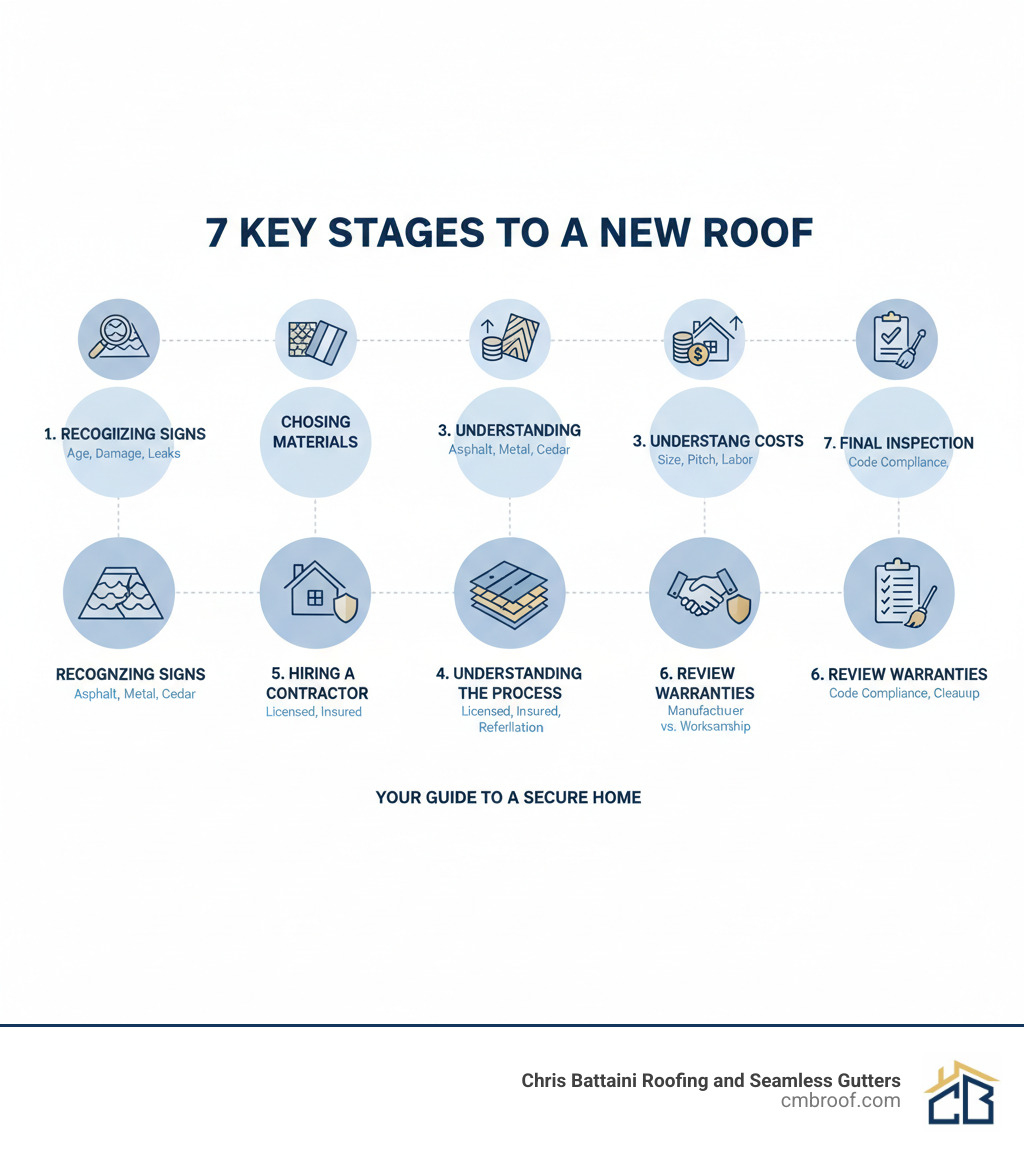
The process can feel overwhelming, so we created this guide to walk you through every step, from recognizing warning signs to choosing a contractor you can trust. A new roof is a complete system of decking, underlayment, flashing, and ventilation. Each part must work together to protect your home, as a single mistake can lead to leaks or premature failure.
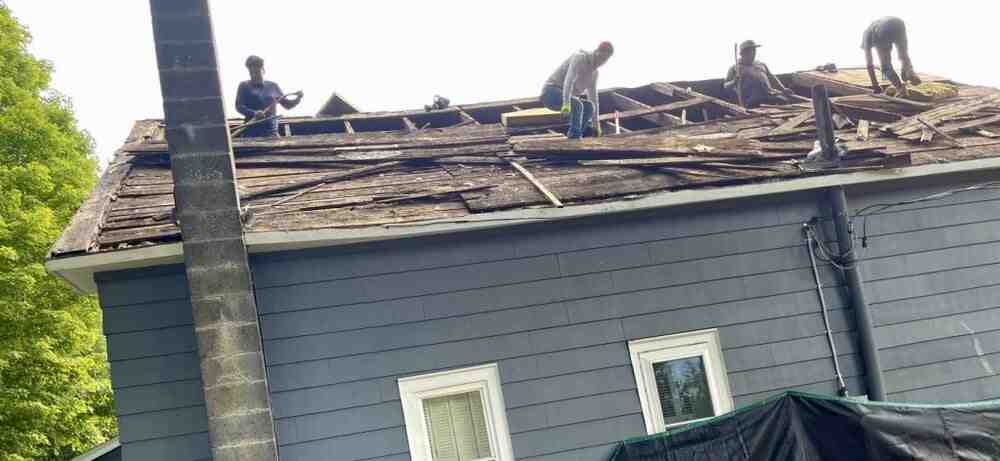
Your roof gives you warning signs before it fails completely. We recommend checking your roof twice a year from the ground and taking a quick look in your attic. If you spot any of these key indicators, it’s time to call a professional.
If any of these signs sound familiar, don’t wait until you have a major leak. Our professional Roof Inspection Services can give you an accurate assessment of your roof’s condition.
A new roof is a sophisticated system. While shingles are the visible part, several components work together to protect your home.

For more details, visit our page on More on Roofing Materials.
Your choice of material affects your roof’s appearance, longevity, and cost.
| Material Type | Typical Lifespan (Years) | Average Cost (per sq ft, installed) | Pros | Cons |
|---|---|---|---|---|
| Asphalt | 20-30 years (3-tab: 20-25, Architectural: 30-50) | $3.50 – $6.00 (per sq ft) | Most affordable, widely available, variety of colors, good durability, popular in the U.S. | Shorter lifespan than other premium materials, can shed granules, susceptible to wind damage. |
| Metal | 40-80 years | $6.00 – $24.50 (per sq ft) | Extremely durable, long lifespan, energy-efficient (reflects heat), fire-resistant, low maintenance, can withstand harsh weather. | Higher initial cost, can be noisy during rain/hail, specialized installation required, dents possible. |
| Cedar Shake | 40-50 years | $6.00 – $15.00 (per sq ft) | Natural aesthetic, good insulation properties, environmentally friendly, can be very durable if properly maintained. | Higher initial cost than asphalt, requires more maintenance (cleaning, treatments), fire risk (unless treated), susceptible to rot/insects without care. |
| Clay/Concrete Tiles | 50-100+ years | $10.00 – $20.00 (per sq ft) | Very long lifespan, excellent fire resistance, great noise isolation, unique aesthetic, low maintenance. | Heavy (may require structural reinforcement), higher initial cost, brittle (can break), limited color options. |
| Slate | 60-150 years | $10.00 – $30.00 (per sq ft) | Longest lifespan, extremely durable, neat appearance, fire-resistant, very low maintenance. | Very high initial cost, extremely heavy (requires structural support), brittle (can break), specialized installation and repair. |
| Synthetic | 25-50 years | $5.00 – $12.00 (per sq ft) | Mimics natural materials (slate, shake) without the weight or maintenance, durable, often made from recycled materials, good warranty. | Can be more expensive than asphalt, relatively newer technology (long-term performance still being observed). |
Note: The costs listed are average internet data and not actual costs for Chris Battaini Roofing and Seamless Gutters.
Asphalt shingles are America’s most popular choice, offering a great balance of affordability, durability, and style. We specialize in Asphalt Shingle Roofing and can walk you through your options.
Metal roofing is a premium option with a lifespan of 40-80 years. It’s extremely durable, fire-resistant, and energy-efficient. The higher upfront cost of Metal Roofing is often offset by its longevity.
Cedar shake offers natural beauty and good insulation but requires more maintenance to prevent rot. Learn more about Cedar Shake Roofing.
A new roof is an opportunity to improve your home’s efficiency. “Cool roof” shingles reflect sunlight, keeping your attic cooler and reducing A/C costs. The Cool Roof Rating Council rates these products. A roof replacement is also the perfect time to plan for future solar panels or add skylights, ensuring proper integration and waterproofing from the start.
Chris Battaini Roofing and Seamless Gutters proudly services Berkshire, Hampden, Hampshire, and Franklin Counties in Massachusetts.
A new roof is a major investment, and understanding the cost factors helps you budget wisely and avoid sticker shock.

Important: The costs we’re sharing here are national averages pulled from internet sources like Angi and NerdWallet. These are not actual costs for Chris Battaini Roofing and Seamless Gutters. Your specific quote will depend on your unique project details, materials, and local factors.
Based on internet data, most homeowners pay between $5,800 and $13,116 for a roof replacement, with the national average hovering around $10,000. However, costs can range anywhere from $5,800 to $47,000 or even higher for premium materials and complex projects.
For a personalized estimate, visit our New Roof Cost Estimate page.
Sometimes, unexpected issues are found after the old roof is removed.
Several options can help spread out the cost of a new roof.
Chris Battaini Roofing and Seamless Gutters proudly services Berkshire, Hampden, Hampshire, and Franklin Counties in Massachusetts.
Once you’ve decided on materials and hired your contractor, it’s time for your new roof installation. Here’s a typical step-by-step overview.

For a deeper dive, see our Complete Roof Replacement Guide 2025.
A building permit is almost always required for a roof replacement. It ensures the work meets local safety and structural standards, such as those outlined in guidelines like the Minnesota Department of Labor and Industry’s Guidelines for asphalt shingle roofing. As your contractor, we handle the entire permit and inspection process, coordinating with local officials to ensure your new roof is safe, compliant, and built to last.
Chris Battaini Roofing and Seamless Gutters proudly services Berkshire, Hampden, Hampshire, and Franklin Counties in Massachusetts.
Choosing the right roofing contractor is the most important decision you’ll make in the new roof process. A skilled, reputable contractor ensures quality workmanship and provides peace of mind.

For more guidance, check out our Licensed Roofers Near Me Guide.
Never proceed without a comprehensive written contract. It protects both you and the contractor and should clearly outline the detailed scope of work, a specific materials list, the payment schedule, a project timeline, cleanup details, and all warranty information.
There are two types of warranties for your new roof:
Understand if warranties are prorated (coverage decreases over time) and if they are transferable to a new homeowner. Our commitment to quality is backed by our robust Warranty Guarantee.
We know you might have more questions, so let’s address some common ones we hear from homeowners considering a new roof.
The typical timeframe for a residential roof replacement is 1 to 4 days. This can vary based on the roof’s size and complexity, weather conditions, and whether unexpected repairs (like deck replacement) are needed after the tear-off.
Yes, in most cases, you can stay in your home. However, it’s important to be prepared for the experience:
We work to minimize disruption and ensure your safety throughout the project.
This is a crucial distinction when considering a new roof:
A new roof is far more than just shingles—it’s a complete system designed to protect your most valuable asset. From recognizing the signs of wear to understanding materials and costs, being an informed homeowner is your best defense against future problems.
Choosing quality materials and ensuring expert installation are paramount for the longevity of your roof. Critically, selecting the right contractor makes all the difference. We believe in transparent communication and meticulous workmanship, and our owner-led, on-site service and exceptional warranties are a testament to our commitment to your peace of mind.
When you’re ready to invest in a durable, high-quality new roof that will protect your home for decades, we’re here to help. For a professional consultation, we invite you to explore our Roof Installation services.
Chris Battaini Roofing and Seamless Gutters proudly services Berkshire, Hampden, Hampshire, and Franklin Counties in Massachusetts.
Need a reliable roofer? CMB Roofing provides licensed, insured, and professional roofing services for homeowners and businesses.
We stand by a simple promise: Clear estimates. Quality workmanship. Clean job sites.
From roof repairs and full replacements to storm damage restoration, our team delivers dependable results with durable materials, expert installation, and complete site cleanup.