

Why Proper Gutter Installation Protects Your Home

Proper gutter installation steps are crucial for protecting your home from water damage. Here is the complete process at a glance:
- Plan and measure – Determine gutter layout, downspout locations, and proper slope (1/4 to 1/2 inch per 10 feet).
- Inspect fascia – Check for rot or damage and repair before installation.
- Attach hangers – Secure brackets to fascia every 16-32 inches, aligned with your slope line.
- Cut and assemble – Size gutter sections, cut downspout holes, and seal all joints.
- Mount gutters – Lift sections into hangers and connect at corners.
- Install downspouts – Attach elbows, secure to walls, and direct water away from the foundation.
- Test the system – Run water through gutters to check for leaks and proper drainage.
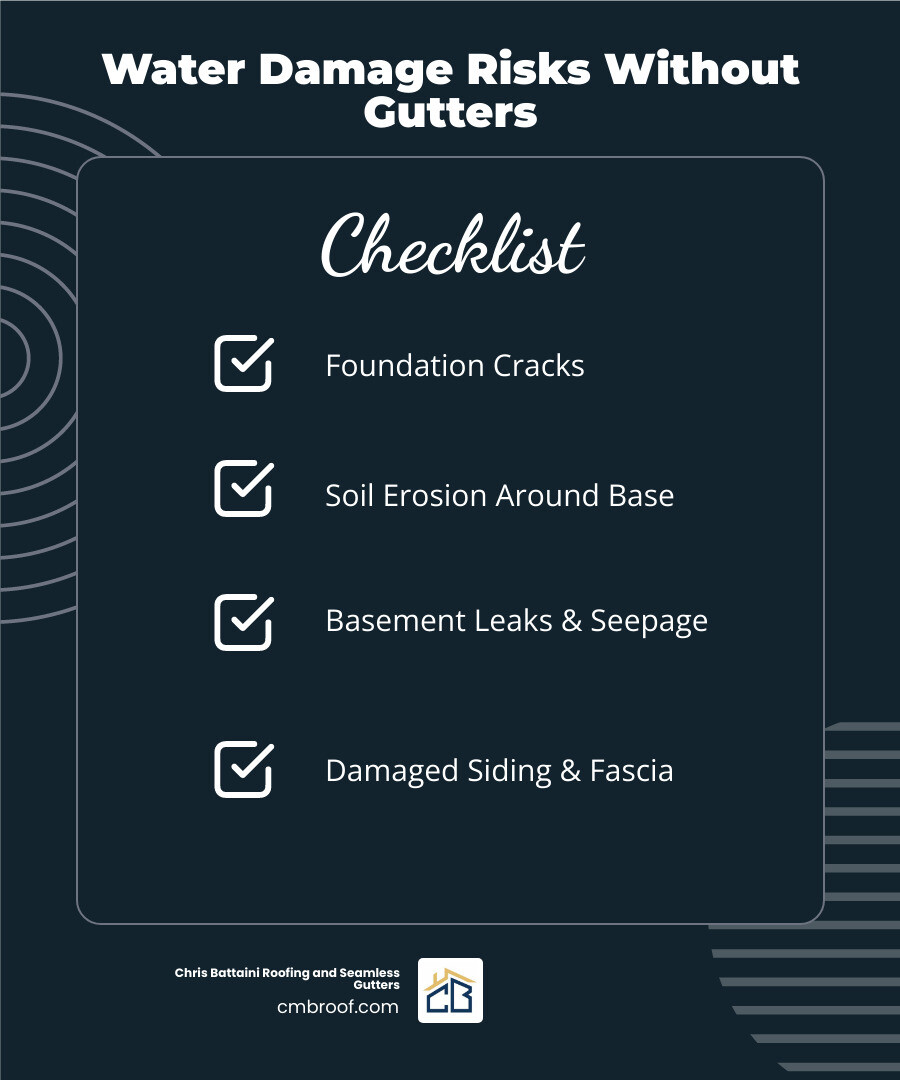
Without a proper gutter system, rainwater cascades off your roof, leading to soil erosion, foundation cracks, basement leaks, and damaged siding. A well-designed system channels thousands of gallons of water safely away from your property each year.
The installation process requires careful planning and the right tools. While manageable for some DIYers on single-story homes, mistakes can be costly. An improper slope causes standing water and rust, poor sealing leads to leaks, and weak attachments result in sagging gutters.
I’m Christopher Battaini, and I’ve been installing seamless gutters across the North Shore and Greater Boston area for over 20 years. I’ve refined the gutter installation steps to ensure long-lasting, leak-free systems that protect homes through New England’s harshest weather.
Before You Begin: Planning Your Gutter Installation
The difference between a gutter system that lasts 20 years and one that fails in five is planning. A little preparation now saves hours of frustration later.
Gathering Your Tools and Materials
To ensure your gutter installation steps go smoothly, gather everything you need from the start.
Essential tools include:
- Safety Gear: Gloves, safety glasses, sturdy boots.
- Measuring & Marking: Tape measure, chalk line, level.
- Cutting: Hacksaw or miter saw, aviation snips, hole saw.
- Fastening: Cordless drill/driver, socket set, twist drill bits, pop rivet gun, caulking gun.
- Working at Height: Extension ladder, ladder brackets, aluminum scaffold plank.
Gutter components include:
- Gutter sections, downspouts, end caps, and hangers/brackets.
- Downspout outlets, elbows, and 100% silicone gutter sealant.
- Galvanized or stainless steel screws and rivets.
- Couplers or miters, downspout straps, and splash blocks or extensions.
Choosing the Right Gutters for Your Home
Not all gutters are created equal, and what works in a mild climate may not be best for New England winters.
Aluminum gutters are the most popular choice. They are lightweight, rust-resistant, cost-effective, and come in many colors. We install seamless aluminum gutters, which dramatically reduce leak points. Their main downside is that they can dent.
Steel gutters are incredibly strong, making them ideal for areas with heavy snow loads like Berkshire County. They are heavier and require robust hangers. If their coating is scratched, rust can form.
Copper gutters are a stunning, luxury option. They last 50 years or more, never rust, and develop a beautiful green patina over time. However, copper is the most expensive material and installation requires specialized knowledge.
| Material | Pros | Cons |
|---|---|---|
| Aluminum | Lightweight, rust-resistant, wide color selection, cost-effective, seamless options, durable. | Can dent more easily than steel or copper. |
| Steel | Very strong, excellent for heavy snow loads, good durability. | Heavier, more prone to rust if coating is scratched, limited color options, often requires professional installation. |
| Copper | Extremely durable, long lifespan (50+ years), develops unique patina, high aesthetic appeal, no rust. | Most expensive option, installation can be specialized, can be a target for theft. |
For gutter styles, K-style gutters are common on modern homes, resembling crown molding and handling high water volume. Half-round gutters offer a classic look, often seen on historic homes.
Sizing is also important. Most homes use 5-inch or 6-inch gutters. Steeper roofs and areas with heavy rain need wider gutters and more downspouts (generally one per 20-30 feet). For our harsh winters, stronger materials like steel or aluminum with closer hanger spacing are recommended to handle ice and snow weight.
Note: These are average costs based on internet data and not actual costs for Chris Battaini Roofing and Seamless Gutters. Material costs range from $3 to $40+ per linear foot. Aluminum is typically $3 to $7, steel $9 to $20, and copper $15 to $40+ per linear foot.
Inspecting and Preparing the Fascia Board
Your fascia board is the foundation of the gutter system. If it’s compromised, your new gutters will fail. When replacing old gutters, look for leaks, sagging, rust, or water stains on the fascia and siding.
Inspect the fascia board by looking for discoloration or soft spots. Gently poke questionable areas with a screwdriver; healthy wood is firm, while rotted wood will feel spongy or crumbly.
For minor rot, use wood hardener and filler, then sand smooth. For extensive rot, you must replace the damaged sections with new, treated lumber. Installing gutters over rotted wood is a recipe for failure. Once repairs are complete, prime and paint all bare wood to protect it from future moisture.
For more insights, check out our roofing and guttering services.
Planning the Layout and Slope
A well-planned layout is essential for a system that works.
First, measure the length of each fascia board where gutters will be installed. Next, plan downspout locations strategically, placing one every 20-40 feet. Position them to direct water away from the foundation, windows, and walkways.
The most critical part is marking the proper slope. Gutters must slope down toward the downspouts to prevent standing water. The standard is a 1/4 to 1/2 inch drop for every 10 feet of gutter. Mark your high point (about 1.25 inches below the roof flashing), calculate and mark the low point, and snap a chalk line between them. This line is your guide for attaching all hangers.
For runs over 40 feet, pitch the gutter from the middle toward downspouts at both ends for efficient drainage.
Follow us on Facebook to see our latest projects and installation tips!
The Complete Gutter Installation Steps
With planning complete and materials gathered, it’s time to begin the installation. This is where preparation pays off.

Step 1: Attaching Gutter Hangers to the Fascia
Hangers are the backbone of your gutter system. First, locate the rafter tails behind the fascia, which are the strongest attachment points (typically spaced every 16 inches). You can often find them by looking for existing nail heads.
Space hangers every 18 to 24 inches along the fascia. In areas with heavy snow and ice, closer is better. Position the top of each hanger along the chalk line you snapped earlier to maintain the correct slope. Secure each hanger with stainless steel lag screws that penetrate at least 2 inches into the rafter tails. Always pre-drill pilot holes to prevent splitting the wood. Each hanger must be rock-solid.
For more guidance, see our page on attaching gutters.
Step 2: Cutting Gutter Sections and Downspout Outlets
For safety and precision, do as much cutting as possible on the ground. Measure each gutter section carefully and use a hacksaw or miter saw for clean, straight cuts. Use aviation snips for detailed work.
For corners, cut gutter sections at a 45-degree angle to create a mitered joint. To create downspout holes, trace the outlet’s outline on the bottom of the gutter. Use a 4-inch hole saw for round outlets or aviation snips for rectangular ones. After cutting, smooth all sharp edges with a file.
Step 3: Assembling Gutters and Sealing Joints
Assembling sections on the ground is safer and easier. Attach end caps by applying a generous bead of 100% silicone gutter sealant and securing them with pop rivets or screws.
When connecting sections, overlap them by 3 to 8 inches. Critically, the “uphill” section must fit inside the “downhill” section so water flows over the seam. Apply sealant between the overlapping pieces and secure with rivets or screws on the sides, not the bottom.
My golden rule: seal everything. Use 100% silicone gutter sealant on all joints, connections, and fasteners. Proper sealing is the best defense against leaks.
Step 4: Mounting the Gutters and Handling Corners
This step is much safer and easier with a helper. Carefully lift the assembled gutter sections and rest them in the hangers. Snap the gutter into the hangers, ensuring the back edge is tucked under the roof’s drip edge to catch all runoff.
Corners are high-stress points prone to leaks. Use pre-formed corner pieces (strip miters) and apply plenty of sealant to both gutter ends and the miter. Secure with rivets, and for extra waterproofing, rivet and caulk an aluminum strip around the outside of the joint.
Step 5: Installing Downspouts and Water Diversion
Downspouts are crucial for directing water away from the foundation. Attach two elbows to bring the downspout from the gutter outlet down along the wall. Secure these connections with screws and sealant.
Measure and cut the downspout sections to length. Crimp the upper end of each section for a snug fit inside the piece below it. Secure the downspout to the wall with downspout straps, using two straps for every 10 feet of length to prevent rattling.
The final, most important step is to direct water at least 4 feet away from the foundation. Use splash blocks or downspout extensions to carry water out into the yard. In some cases, underground drainage pipes offer the most comprehensive solution.
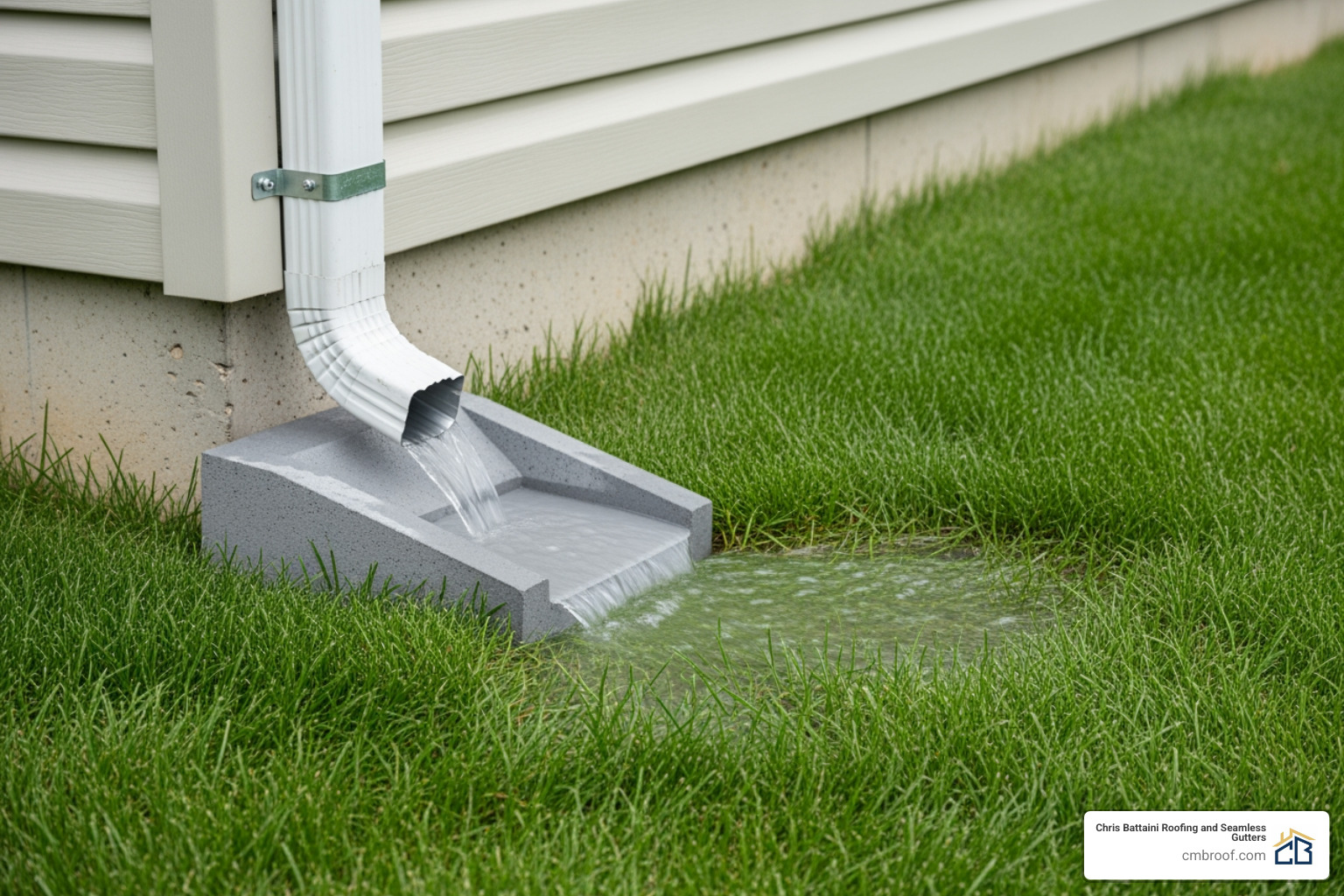
Proper water diversion is what protects your home from basement leaks, foundation cracks, and soil erosion.
Post-Installation, Safety, and Professional Help
With the gutters installed, a few final steps ensure safety and longevity. This includes testing, understanding maintenance, and knowing when to call a professional.
Essential Safety Precautions for Your Gutter Installation Steps
Working at heights is dangerous, so safety must always come first.
- Ladder Safety: Always place your ladder on stable, flat ground. Maintain three points of contact (two feet and one hand, or one foot and two hands) at all times.
- Avoid Overreaching: Keep your body centered between the ladder rails. If you can’t reach, climb down and move the ladder. A few extra seconds is better than a fall.
- Use a Helper: Have someone steady the ladder. For long runs, an aluminum scaffold plank provides a much more stable platform.
- Wear Safety Gear: Gloves protect from sharp metal, and safety glasses shield your eyes from debris.
- Power Lines: Be extremely cautious around overhead power lines. Use a non-conductive fiberglass ladder and consider calling a professional if lines are close to your roof.
For more tips, This Old House offers an excellent guide on how to install gutters safely.
Testing, Maintenance, and Gutter Guards
Before finishing, test your new gutters. Run a garden hose through the system, starting at the high end. Watch for leaks at seams and ensure water flows smoothly to the downspouts without pooling. If you find leaks, add more sealant. If water pools, adjust the slope.
Regular maintenance is key to a long lifespan. Clean gutters at least twice a year—in late spring and late fall. During cleaning, inspect for rust, loose fasteners, or sagging sections. Catching issues early prevents costly repairs.
If you dislike cleaning gutters, consider gutter guards. These covers let water in but keep debris out, significantly reducing maintenance. They add to the initial cost but can cut cleaning frequency from twice a year to once every few years.
For larger properties, learn more about our commercial gutter maintenance.
DIY vs. Professional Installation: A Cost and Benefit Analysis
Deciding between DIY and professional installation depends on your skills, time, and the project’s complexity.
DIY installation can save on labor costs, with materials for an average home costing between $200 and $500. It’s a satisfying project if you are handy and comfortable with heights. However, it requires specialized tools, time, and carries safety risks.
Professional installation costs more upfront but offers expertise, efficiency, and peace of mind. Note: These are average costs based on internet data and not actual costs for Chris Battaini Roofing and Seamless Gutters. Professional installation typically ranges from $3 to $40+ per linear foot, with total costs for an average home between $1,000 and $2,500 for aluminum gutters. Professionals bring specialized equipment for seamless gutters, which are custom-made on-site for superior leak protection, and offer warranties on parts and labor.
When should you call a professional?
- Two-story homes where height increases safety risks.
- Complex rooflines that require precision cutting.
- If you find extensive rotted fascia that needs structural repair.
- If you simply prefer a guaranteed, worry-free result.
For a custom-fit system, learn more about our Seamless Gutters and Gutter Installation Services.
Chris Battaini Roofing and Seamless Gutters services Berkshire, Hampden, Hampshire, and Franklin Counties in Massachusetts. We’re committed to owner-led service and exceptional workmanship warranties. Follow us on Facebook to see recent projects and customer testimonials.
Frequently Asked Questions about Gutter Installation Steps
Over my 20 years installing gutters in Berkshire County and Southern Vermont, I’ve heard just about every question. Here are the most common ones:
What is the most important step in the gutter installation process?
From my experience, establishing the correct slope is the most critical step. If the slope is wrong, water will pool in your gutters, leading to rust, overflows, and the very water damage you’re trying to prevent. A brand-new system can fail in months without the proper slope. Taking the time to measure a 1/4 to 1/2 inch drop per 10 feet is essential for success.
How do you connect two pieces of gutter?
Proper technique is key to a leak-free system. We connect sections by overlapping them by 3 to 8 inches. The crucial detail is that the “uphill” piece must fit inside the “downhill” piece, allowing water to flow over the seam. We then apply a generous bead of 100% silicone gutter sealant between the sections and secure the joint with pop rivets or screws on the sides, not the bottom, to avoid creating leak points.
Can I install new gutters if my fascia board is rotted?
No. Installing gutters on rotted fascia will lead to system failure. The lag screws that hold the gutters need solid wood to anchor into. Attempting to install on deteriorated wood will cause the new gutters to sag, detach, or pull away from the house, especially under the weight of rain or snow. You must repair or replace any rotted fascia sections with solid, treated lumber before installing your new gutter system. It’s a necessary step to protect your investment.
Got more questions about gutter installation steps? Don’t hesitate to reach out. We’re always happy to share what we’ve learned from years in the field.
Conclusion: Protecting Your Home for Years to Come
Understanding the gutter installation steps, whether for a DIY project or when hiring a pro, empowers you to protect your home. A properly installed gutter system is a critical defense against costly water damage, protecting your foundation, preventing leaks, and avoiding soil erosion.
For single-story homes with simple rooflines, a DIY installation can be a rewarding project. However, for two-story homes, complex roofs, or the superior performance of seamless gutters, professional installation is the wisest choice. The expertise, efficiency, and warranty that come with a professional job provide invaluable peace of mind.
Here in Berkshire, Hampden, Hampshire, and Franklin Counties in Massachusetts, our weather puts gutter systems to the test. At Chris Battaini Roofing and Seamless Gutters, I personally oversee every job to ensure the highest quality workmanship. We stand behind our work with exceptional warranties because we know how vital a proper installation is to your home’s health.
If you’re ready to protect your home with a professionally installed gutter system, we’d love to help. Learn more about our Gutter Installation Services and experience the difference that owner-led service makes.
Chris Battaini Roofing and Seamless Gutters services Berkshire, Hampden, Hampshire, and Franklin Counties in Massachusetts.
Follow us on Facebook to see our latest projects and seasonal maintenance tips.