• 10 Wendell Ave Extension Pittsfield, MA 01201
  • 210 Columbia St., Lee, MA 01238

From Repair to Replacement: Mastering Multi-Family Roof Care

Chris Battaini Roofing in Berkshire County, Massachusetts and Beyond

From Repair to Replacement: Mastering Multi-Family Roof Care

Why Multi-Family Roof Maintenance Protects Your Most Critical Asset

multi family roof maintenance

Multi family roof maintenance is the practice of systematically inspecting, cleaning, and repairing roofing systems on apartment buildings, condominiums, townhomes, and other properties housing multiple families. For property owners and managers, it’s not just routine upkeep—it’s a strategic investment that protects multiple families, preserves property value, and prevents costly emergency repairs.

Essential Multi-Family Roof Maintenance Tasks:

  1. Bi-annual professional inspections (spring and fall)
  2. Post-storm assessments to identify weather damage
  3. Regular gutter and drain cleaning to prevent water backup
  4. Debris removal from roof surfaces and valleys
  5. Flashing and penetration checks around vents, HVAC units, and edges
  6. Documentation of all inspections and repairs for warranty compliance

Key Benefits:

  • Extends roof lifespan when combined with consistent, professional maintenance
  • Helps prevent many premature roof failures that come from deferred maintenance
  • Reduces overall lifecycle costs by addressing issues early instead of relying on emergency repairs
  • Maintains tenant satisfaction and property value

When you’re responsible for protecting multiple families under one roof, the stakes are higher than with a single-family home. A small leak that goes unnoticed can affect several units, leading to interior damage, mold growth, and unhappy tenants. The difference between a minor repair and a major crisis often comes down to regular inspection and prompt action.

Neglecting routine care frequently leads to roofs being replaced earlier than necessary, with deferred maintenance being a primary culprit. An inexpensive sealant patch today can often prevent extensive interior water damage later. Yet too often, roofs become “out of sight, out of mind” assets—until symptoms of failure force disruptive emergency responses.

Multi-family properties face unique challenges that single-family homes don’t encounter. Larger roof areas mean more potential failure points. Complex drainage systems serving multiple units can create cascading problems if one component fails. Coordinating maintenance work around tenant schedules requires planning and clear communication. And in regions like Berkshire County, Massachusetts, heavy snow loads, ice dams, and freeze-thaw cycles add extra stress to roofing systems.

As Christopher Battaini, owner of Chris Battaini Roofing and Seamless Gutters and an Owens Corning Platinum Preferred Contractor—a distinction earned by only the top tier of roofing professionals in the country—I’ve helped dozens of multi-family property owners in Berkshire County develop proactive multi family roof maintenance programs that protect their investments and keep their tenants safe. My team understands the unique challenges these properties face and the importance of minimizing disruption while maximizing roof performance.
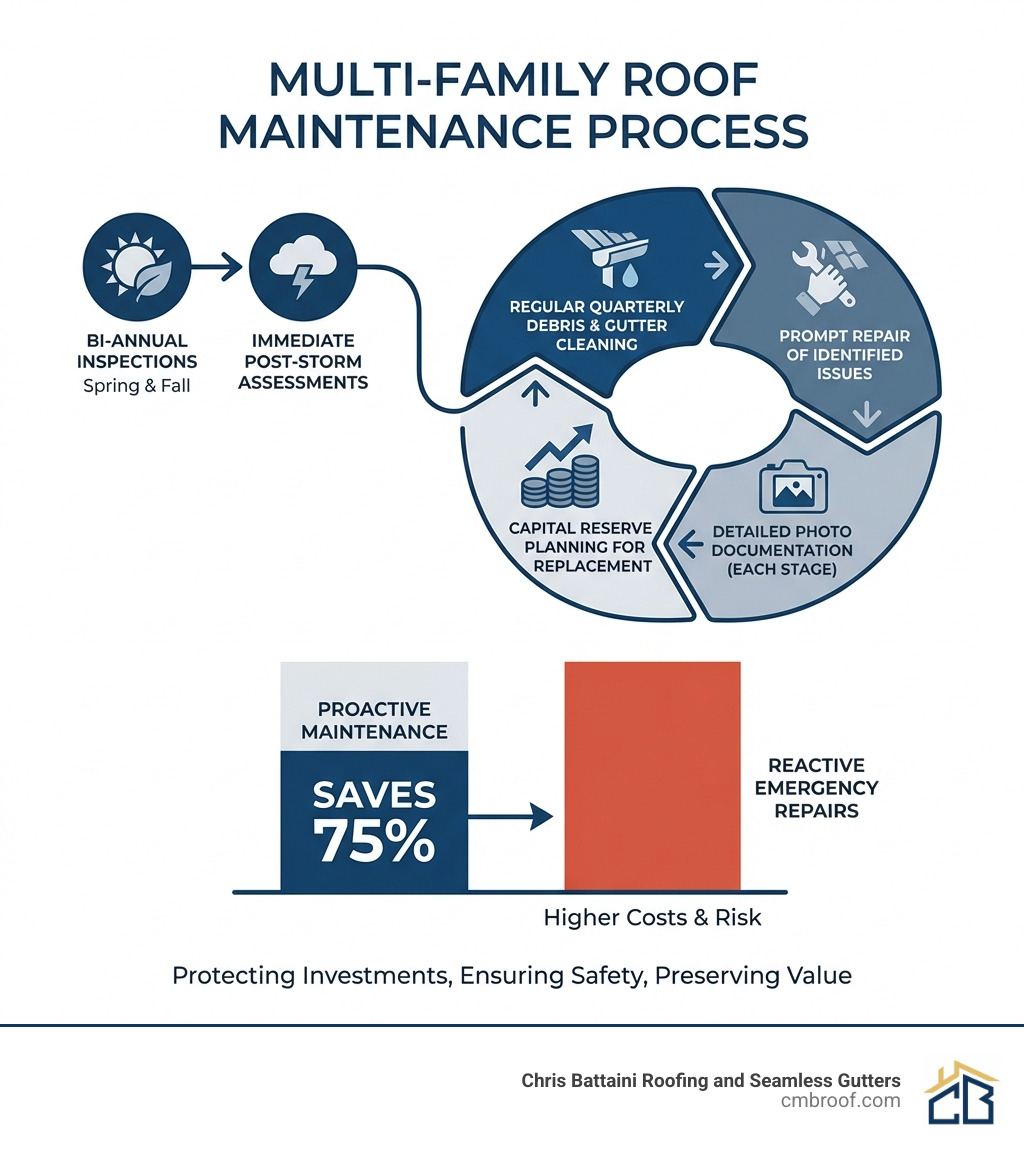
Infographic showing the multi family roof maintenance process: starting with bi-annual inspections in spring and fall, followed by immediate post-storm assessments, regular quarterly debris and gutter cleaning, prompt repair of identified issues, detailed photo documentation at each stage, and capital reserve planning for eventual replacement, with cost comparison showing proactive maintenance saves 75% compared to reactive emergency repairs - multi family roof maintenance infographic

Multi family roof maintenance terms at a glance:

Why Proactive Roof Care is Non-Negotiable for Multi-Family Properties

For property owners and asset managers, a roof is a critical asset that impacts operating income and property value. A strong multi family roof maintenance strategy defers capital expenditure, supports appraisal value, and helps preserve insurance coverage, protecting your entire investment.

Complex multi-family roof with various features like vents and HVAC units - multi family roof maintenance

The Unique Challenges of Multi-Family Roofs

Maintaining roofs on multi-family properties presents a distinct set of challenges that go far beyond those of a single-family home. The sheer scale is often the first hurdle. Multi-family buildings typically have significantly larger roof areas, which means more materials, more seams, more penetrations for vents and HVAC units, and ultimately, more potential points of failure.

  • Larger Scale: More surface area means more exposure to weather and wear.
  • Complex Systems: Intricate designs with multiple slopes and rooftop units (HVAC, vents) require specialized maintenance.
  • Tenant Coordination: Work must be planned around residents to minimize disruption, noise, and access issues.
  • Safety Logistics: Larger, taller buildings with more foot traffic require strict OSHA compliance and safety protocols.
  • Shared Drainage: A single clog in a shared drainage system can cause widespread water damage.
  • Multiple Stakeholders: Coordination is needed between property managers, landlords, homeowner associations (HOAs), and investors.

Roof repairs on multi-family properties can be particularly complex due to these factors and demand specialized expertise and a meticulous approach.

Protecting Your Investment and Enhancing Property Value

A well-maintained roof is a cornerstone of a healthy multi-family property. It directly impacts your bottom line and the long-term value of your asset.

  • Energy Efficiency: A well-maintained roof can support insulation performance and energy efficiency, helping to lower heating and cooling demands. Materials like TPO, cool roofs, and reflective metal roofs may further reduce heat absorption when properly maintained.
  • Curb Appeal: A clean, well-kept roof improves curb appeal and attracts desirable tenants, while a neglected one can be a deterrent.
  • Avoiding Liability: Proactive multi family roof maintenance helps prevent leaks and mold, reducing the risk of liability claims from tenants related to water intrusion.
  • Maintaining Property Value: Extending the roof’s life through maintenance preserves the building’s structural integrity and aesthetic appeal, supporting a stronger long-term return on investment.

Our beautiful Berkshire County, Massachusetts, comes with its own unique set of climate challenges that significantly impact multi family roof maintenance. We experience all four seasons in their full glory, and each brings specific stressors for roofing systems:

  • Heavy Snow Loads: Heavy winter snow places weight on roofs, risking structural stress or sagging if not properly maintained.
  • Ice Dams: Freeze-thaw cycles create ice dams, which block drainage and cause water to back up under shingles, leading to leaks and damage.
  • Freeze-Thaw Cycles: The constant freezing and thawing of moisture within roofing materials causes them to expand and contract, leading to cracking and accelerated degradation.
  • High Winds: Strong winds during storms can lift shingles, damage flashing, and dislodge rooftop equipment, creating vulnerabilities.

These environmental factors make it important to have a robust and custom multi family roof maintenance plan to ensure properties in Berkshire County remain protected year-round.

Crafting Your Proactive Multi-Family Roof Maintenance Strategy

A proactive multi family roof maintenance strategy is one of the best defenses against unexpected costs and premature roof failure. It involves smart financial planning, extending your roof’s lifespan, and maintaining warranty compliance. Preventative maintenance generally increases a roof’s useful life, while a purely reactive approach often leads to higher long-term costs.

The Core Components of a Maintenance Schedule

A comprehensive multi family roof maintenance plan should be built around regular, systematic inspections and upkeep.

  • Bi-Annual Professional Inspections: Schedule professional inspections twice a year (spring and fall) to catch minor issues before they escalate. You can find more info about our inspection process on our website.
  • Post-Storm Checks: An immediate inspection after major storms is vital to catch subtle damage. This may be covered by insurance.
  • Debris Removal: Regularly remove leaves, branches, and other debris that can trap moisture, block drains, and cause leaks.
  • Gutter and Drain Cleaning: Keep gutters, downspouts, and roof drains clear to help prevent water overflow, fascia damage, and ponding water. We also recommend having a plumber check roof drain lines every two years.
  • Flashing and Penetration Checks: Inspect flashing around chimneys, vents, and HVAC units for cracks, rust, or failed sealant, as these are common leak points.

Budgeting and Long-Term Financial Planning for multi family roof maintenance

Effective budgeting is key to successful multi family roof maintenance. Ignoring the roof until disaster strikes can lead to financial strain.

  • Capital Reserves: Establish a capital reserve for eventual roof replacement based on its age and material. This helps prevent the financial shock of a large, unplanned expense.
  • Operating Budgets: Include annual maintenance and inspection costs in your operating budget to cover routine upkeep.
  • Cost-Benefit Considerations: A proactive approach is typically much less expensive over the life of the roof than repeated emergency repairs. An inexpensive repair today can often prevent extensive interior water damage later. By being proactive, you can budget for repairs, extend the roof’s life, and defer the large cost of replacement.
  • Avoiding Special Assessments: For condominium associations, a well-funded maintenance plan helps avoid unpleasant special assessments that can impact resident satisfaction.

We can help you develop a comprehensive budget and plan for your multi-family property’s roofing needs. You can get help with your budget planning by contacting us for an estimate and consultation.

Essential Documentation and Reporting

Detailed documentation is the unsung hero of effective multi family roof maintenance. It provides a clear history, aids in decision-making, and is valuable for insurance and warranty claims.

  • Maintenance Logs: Log all inspections, findings, and repairs with dates and details.
  • Photo Documentation: Take before-and-after photos for every job to track changes, show that work was completed, and support any claims.
  • Leak Mapping: For properties with historical leak issues, a “leak map” can help track patterns and identify persistent problem areas.
  • Warranty Records: Keep all manufacturer warranty documents, as regular maintenance is often required to keep them valid.
  • Insurance Claim Support: Detailed maintenance reports with photos can serve as documentation to show the roof’s condition prior to an event and help prevent claim denials based on alleged pre-existing damage.

Common Issues and How Roofing Materials Influence Your Approach

Understanding the common issues facing multi-family roofs and how different materials react to wear and tear is crucial for effective multi family roof maintenance.
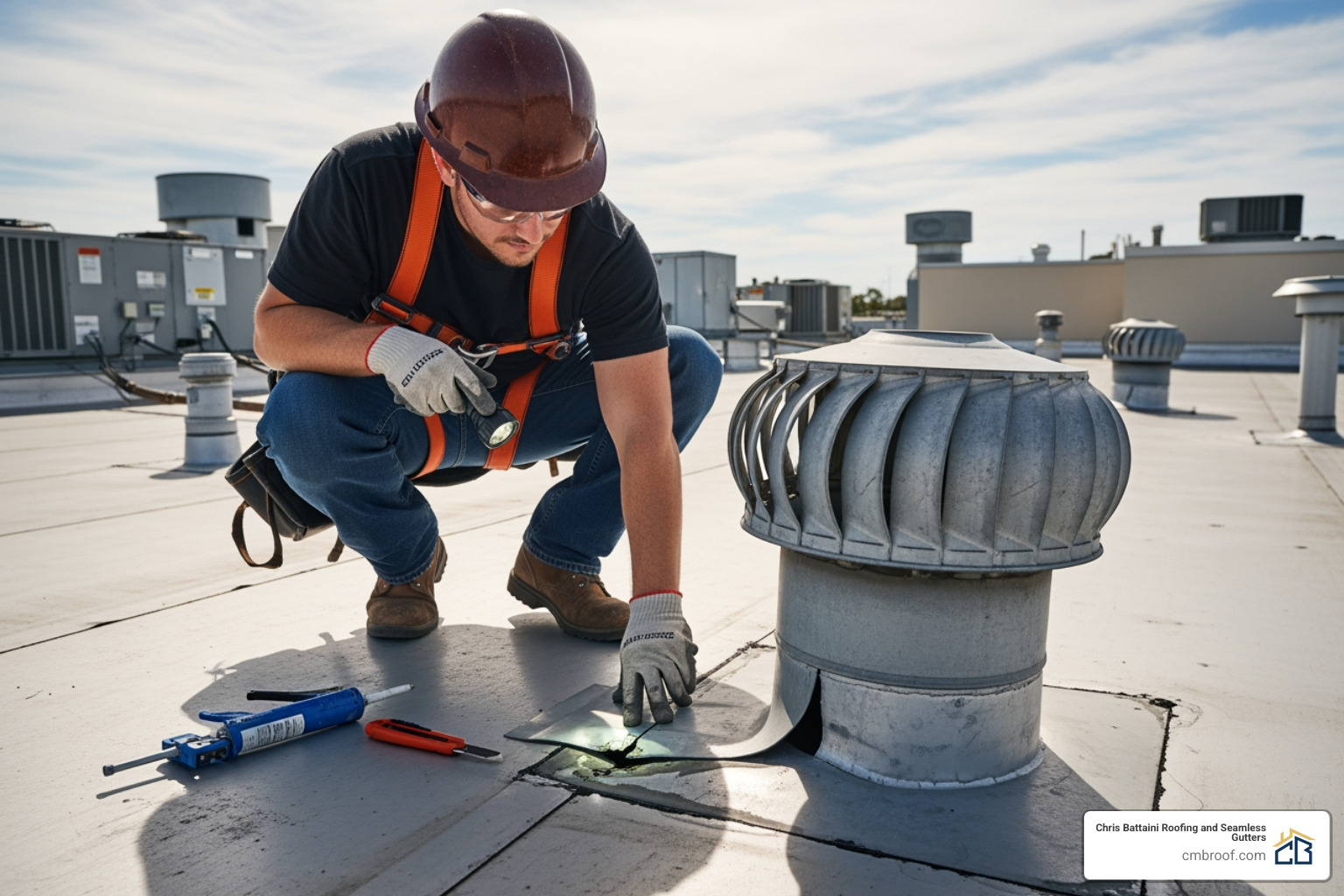
Roofer inspecting damaged flashing on a commercial roof - multi family roof maintenance

How Roofing Materials Influence Your multi family roof maintenance approach

The type of roofing material your multi-family property uses significantly dictates its maintenance needs, lifespan, and susceptibility to certain issues. Learn about commercial roofing options to better understand these differences.

Roofing Material Typical Lifespan (with maintenance) Common Maintenance Needs
EPDM or TPO About 20–30 years Inspect seams for integrity, check for punctures, and clean the surface to help maintain performance.
Modified bitumen About 15–25 years Check for cracks, blisters, and deteriorating seams or flashing.
Built-up roofing (BUR) About 20–30 years Look for blisters, open laps, and ensure gravel surfacing is even.
Asphalt shingles About 15–25 years Check for damaged or missing shingles, granule accumulation in gutters, and inspect all flashing.
Metal roofing About 40–70 years Inspect for loose panels, failed fasteners, and signs of rust or corrosion.

From Minor Leaks to Major Wear: Identifying Problems Early

The key to effective multi family roof maintenance is early detection. We actively look for signs of minor issues before they become significant problems.

  • Water Stains: Water stains on ceilings or walls are a clear sign of a leak needing prompt attention.
  • Damaged Shingles: On sloped roofs, check for missing, curled, or cracked shingles and granule loss, which signal wear.
  • Ponding Water: Ponding water on flat roofs (lasting over 48 hours) accelerates wear and can cause leaks.
  • Blistering or Cracking: Blisters, cracks, or punctures in membrane roofs compromise the waterproofing.
  • Flashing Issues: Loose, rusted, or poorly installed flashing around vents and edges is a primary cause of leaks.
  • Sagging Roof Areas: A sagging roof deck can indicate serious structural damage from water or weight.
  • Mold or Algae Growth: Widespread mold or algae suggests trapped moisture and can speed up material decay.
  • Higher Energy Bills: An unexplained increase in energy use for heating or cooling can point to poor roof insulation or ventilation.

Promptly addressing these issues is critical. We can fix that leak and other minor repairs, helping prevent them from escalating into costly structural damage.

Recognizing the Signs: When to Repair vs. Replace

Deciding whether to repair or replace a multi-family roof is a critical decision that impacts your budget and your residents. Several factors guide this choice:

  • Age of the Roof: Roof lifespan varies by material:
    • EPDM or TPO: about 20–30 years
    • Modified bitumen: about 15–25 years
    • Built-up roofing (BUR): about 20–30 years
    • Asphalt shingles: about 15–25 years
    • Metal roofing: about 40–70 years
      If your roof is nearing its expected service life, replacement may become more economical than continuous repairs.
  • Frequency of Repairs: If you’re constantly making repairs, the cumulative cost may justify a replacement, as it can indicate a failing system.
  • Extent of Damage: Widespread damage, like extensive blistering, many missing shingles, or a damaged roof deck, usually requires replacement.
  • Sagging Structure: A sagging roof is a red flag for potential structural failure and requires immediate professional assessment.
  • Cost Analysis: If anticipated repair costs are approaching a substantial percentage of a new roof’s price, replacement is often the smarter long-term investment. We can help you perform a cost-benefit analysis.

Choosing the Right Professional for Your Multi-Family Property

When it comes to multi family roof maintenance and repair, the contractor you choose is as important as the materials used. It’s a partnership that should maximize your ROI and ensure tenant safety and comfort.

Vetting Your Roofing Contractor: What to Look For

Selecting the right roofing contractor for a multi-family property requires careful consideration. You’re entrusting them with a significant asset and the well-being of many residents.

  • Multi-Family Experience: Choose contractors with proven experience in multi-family properties who understand the unique challenges.
  • Proper Licensing and Insurance: Verify that the contractor is fully licensed and insured to protect you from liability.
  • Local Reputation: Check reviews and ask for local references. A contractor with a strong reputation in Berkshire County is more likely to deliver quality work.
  • Strong References: Request and contact references from previous multi-family clients to verify their experience with communication and project management.
  • Clear Communication: A good contractor communicates clearly about every project stage, from inspection to completion.
  • Warranty Options: Inquire about the warranties offered on both materials and workmanship.

For guidance on finding qualified professionals, refer to our guide to finding licensed roofers.

The Value of Certified Professionals and Premium Brands

Partnering with certified roofing professionals and utilizing leading roofing brands offers significant advantages for multi-family properties.

  • Manufacturer Certifications: Certifications, such as being an Owens Corning Platinum Preferred Contractor, mean the roofing company has met rigorous standards for expertise, financial stability, and customer service. This distinction signifies a high level of professionalism and reliability.
  • Access to Premium Materials: Certified contractors have access to high-quality materials from top manufacturers, ensuring superior performance and longevity.
  • Improved Warranties: Certified installers can offer extended manufacturer warranties with superior coverage for both materials and workmanship, giving you greater peace of mind.
  • Quality Assurance: Certified professionals are held to higher standards and receive ongoing training, ensuring their work adheres to the latest industry best practices and building codes.

For more industry insights, publications like Roofing Contractor Magazine often highlight the importance of these partnerships.

Ensuring Safety on an Occupied Property

Safety during roof work on an occupied multi-family property is paramount. We prioritize the well-being of your residents, their visitors, and our crew.

  • Tenant Communication Plan: We develop a clear communication plan to inform residents well in advance of project timelines, expected noise, and any access restrictions.
  • Site Safety Protocols (OSHA): Our crews strictly adhere to OSHA safety regulations, including fall protection and safe equipment operation, as multi-family roofs present increased risks.
  • Controlled Access Zones: We establish clearly marked safety zones around the work area to protect residents from falling debris or equipment.
  • Minimizing Disruption: We work efficiently and cleanly, coordinating with property management to minimize impact on daily routines, parking, and common areas.
  • Noise Management: We schedule noisy work during reasonable hours to minimize disruption.

Frequently Asked Questions about Multi-Family Roof Maintenance

How often should a multi-family roof be inspected?

We recommend professional inspections twice a year (spring and fall) and after any major weather event, like the heavy snow or thunderstorms common in Berkshire County. For roofs over five years old, annual inspections are a minimum. This proactive approach catches small issues before they become expensive problems and is essential for long-term planning.

Who is responsible for roof maintenance in a condo or HOA?

In most cases, the condominium association or homeowner association (HOA) is responsible for roof maintenance, as the roof is considered a common element. The association’s board or management company oversees and funds repairs and replacements, typically through HOA fees. These responsibilities are detailed in the association’s governing documents. Proper budgeting for a reserve fund helps avoid large, unexpected special assessments for residents. For more information, resources like the Community Associations Institute can be helpful.

Can preventative maintenance really save money?

Absolutely. Proactive multi family roof maintenance is a smart investment. It can extend your roof’s life by up to 50%, delaying a costly replacement. A reactive approach, waiting for problems, can be four times more expensive than preventative care. A small, inexpensive repair today can prevent thousands of dollars in interior water damage later. Furthermore, regular maintenance is often required to keep manufacturer warranties valid and can strengthen insurance claims by proving the roof was well-cared-for. It’s not an expense; it’s a strategy to protect your asset and reduce long-term costs.

Conclusion: Secure Your Investment with Expert Roof Care

Mastering multi family roof maintenance is a comprehensive endeavor that requires a proactive mindset, meticulous planning, and the right professional partnership. It’s about understanding the unique challenges of multi-family properties, from coordinating with multiple tenants to navigating the specific climate demands of Berkshire County. By prioritizing regular inspections, timely repairs, and strategic budgeting, you can extend the life of your roof, protect your significant investment, and help ensure the safety and satisfaction of your residents for years to come.

As an Owens Corning Platinum Preferred Contractor—a distinction earned by only the top tier of roofing professionals in the country—Chris Battaini Roofing and Seamless Gutters brings certified expertise, premium materials, and a commitment to exceptional workmanship to every project. We understand the local conditions and the specific needs of multi-family properties across Berkshire County. Let us partner with you to develop a custom multi family roof maintenance plan that safeguards your property and optimizes your long-term returns.

Explore our multi-family roofing services and find how we can help you achieve peace of mind with a well-maintained, high-performing roof.

Chris Battaini Roofing and Seamless Gutters proudly serves all of Berkshire County, Massachusetts, including North Berkshire County (Adams, Cheshire, Clarksburg, Dalton, Drury, Florida, Hancock, Lanesborough, New Ashford, North Adams, Peru, Pittsfield, Savoy, Williamstown, Windsor, Washington) and South Berkshire County (Alford, Ashley Falls, Becket, Berkshire, East Otis, Glendale, Great Barrington, Hinsdale, Housatonic, Lee, Lenox, Lenox Dale, Mill River, Monterey, North Egremont, Otis, Richmond, Sandisfield, Sheffield, South Egremont, Southfield, Stockbridge, Tyringham, West Stockbridge).

Follow us on Facebook — https://www.facebook.com/chrisbattainiroofing

Get Your Free Estimate Today

Need a reliable roofer? CMB Roofing provides licensed, insured, and professional roofing services for homeowners and businesses.

We stand by a simple promise: Clear estimates. Quality workmanship. Clean job sites.

From roof repairs and full replacements to storm damage restoration, our team delivers dependable results with durable materials, expert installation, and complete site cleanup.


Keeping Your Multi Family Roof Happy: A Comprehensive Guide for Owners

Why Homeowners Trust Chris Battaini Roofing

  • Owens Corning Platinum Preferred Contractor
  • Licensed & Insured Roofing Company
  • Owner-Supervised Installations
  • Manufacturer-Backed Roofing Warranties
  • Workmanship Installation Guarantee
chris battaini roofing contractor berkshire county logo footer
  • 10 Wendell Ave Extension Pittsfield, MA 01201
  • 210 Columbia St., Lee, MA 01238
MA LIC #101201 / MA HIC #160959
Areas We Service
At Chris Battaini Roofing & Seamless Gutters, we specialize in residential and commercial roofing and gutter installation services across Southern and Northern Berkshire County in Massachusetts.
PPC Right Roof Right Roofer Proud black border Chris Battaini Roofing - BBB Accredited Business logo with A+ Rating displayed.