
Why Cedar Shake Replacement is Critical for Your Home
When to Repair vs. Replace: Key Signs of Cedar Shake Damage
Cedar shakes rarely fail without warning, and catching problems early prevents costly interior damage. Use this quick checklist:
- Missing shingles – open gaps expose underlayment and decking to rain and snow.
- Warped or curling shakes – lifted edges allow water to sneak under adjoining shakes.
- Splitting, cracking, or soft spots – structural weaknesses that let moisture deep into the wood.
- Persistent leaks or ceiling stains – proof the roof’s protective barrier has already failed.
- Moss, algae, or rot – trapped moisture speeds up decay, especially on shaded slopes.
- Recent storm or hail impact – even small dents can create micro-cracks that shorten roof life.
Small spot repairs (typically $100–$400 based on industry averages) make sense when only a handful of shakes are affected. If repair costs approach 25–30 % of a full replacement, investing in a new roof is usually the smarter long-term decision.
Ground-level inspections tell only half the story; hidden decking and ventilation problems reveal themselves only during an on-roof assessment.
Get a professional opinion with our Roof Inspection Services.
Your Cedar Shake Replacement Options: Natural Wood vs. Modern Alternatives
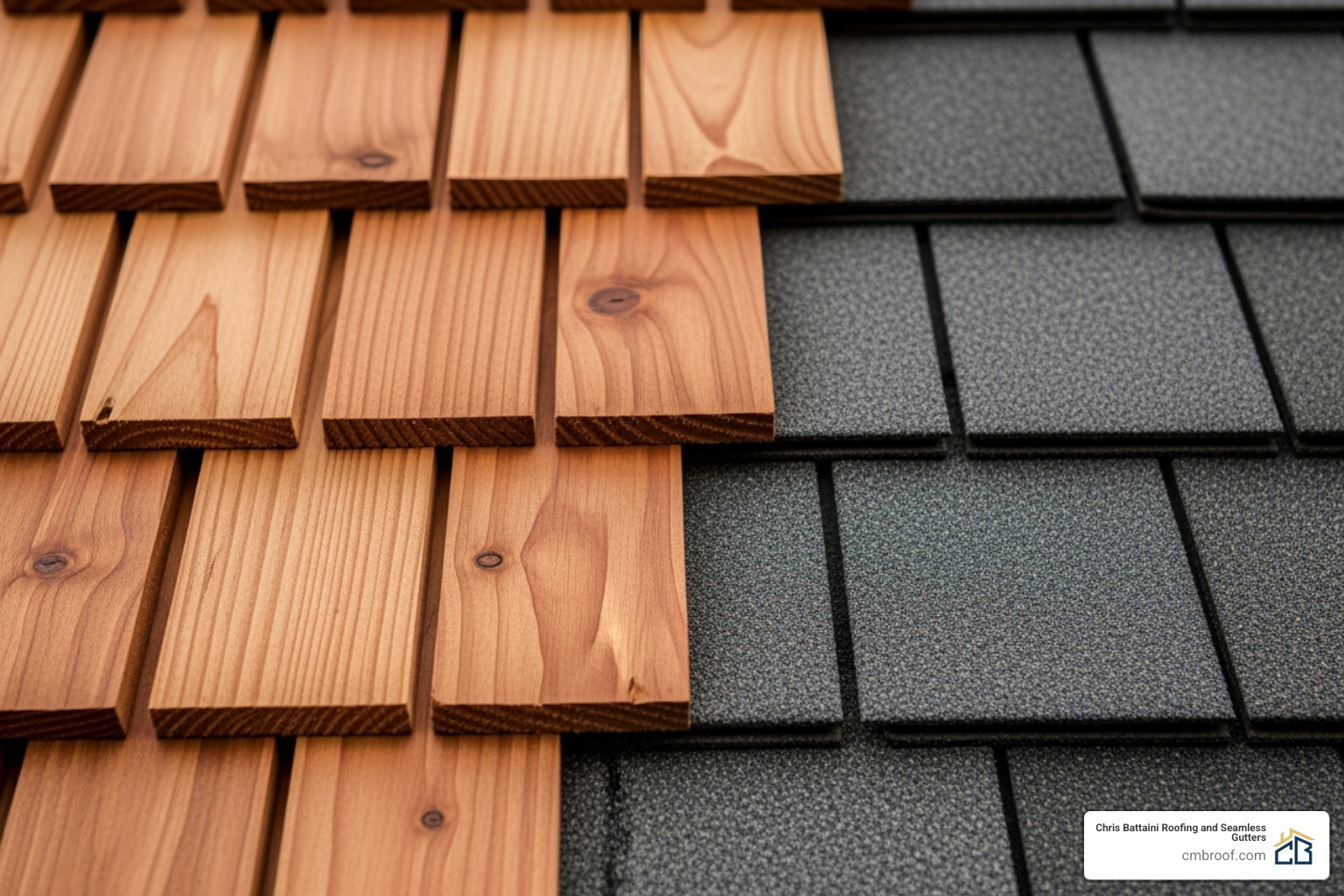
Choosing between traditional cedar and modern engineered products comes down to appearance, upkeep, and how long you plan to stay in your home.
The Classic Choice: Natural Cedar Shakes
Nothing matches cedar’s authentic grain and the silver-gray patina it develops over time. It also offers insulation benefits and allows individual shake replacement. The trade-offs: maintenance every 2–4 years, higher fire risk without treatment, and susceptibility to insects and standing moisture.
Learn more about the pros and cons of cedar
Find certified cedar products from the Cedar Shake & Shingle Bureau
High-Performance Alternatives to Cedar
Today’s composite and fiber-cement shakes are molded from real cedar, giving them a remarkably authentic look while delivering 50-year life expectancies, built-in Class A fire ratings, and minimal upkeep. Consistent color, hail resistance, and strong warranties make them ideal for homeowners who prefer a “set it and forget it” solution.
| Feature | Natural Cedar | Composite/Synthetic |
|---|---|---|
| Lifespan | 30+ yrs (with maintenance) | 50+ yrs |
| Maintenance | Every 2–4 yrs | Very low |
| Fire Resistance | Requires treatment | Class A standard |
| *Cost (per square) | $600–$700 | Comparable |
| Appearance | Authentic wood grain | Nearly identical |
These are average prices found online and are not actual quotes from Chris Battaini Roofing and Seamless Gutters.
Explore modern Composite Cedar Shingles
Understanding the Cost of Cedar Shake Replacement
Disclaimer: The following costs are based on industry averages from online data and are for informational purposes only. They do not represent actual pricing from Chris Battaini Roofing and Seamless Gutters. For an accurate quote, a professional inspection is required.
Key Factors Influencing Your Final Price
When homeowners ask about cedar shake replacement costs, I always explain that it’s like asking “How much does a car cost?” The answer depends on so many variables that we need to see your specific situation before giving you real numbers.
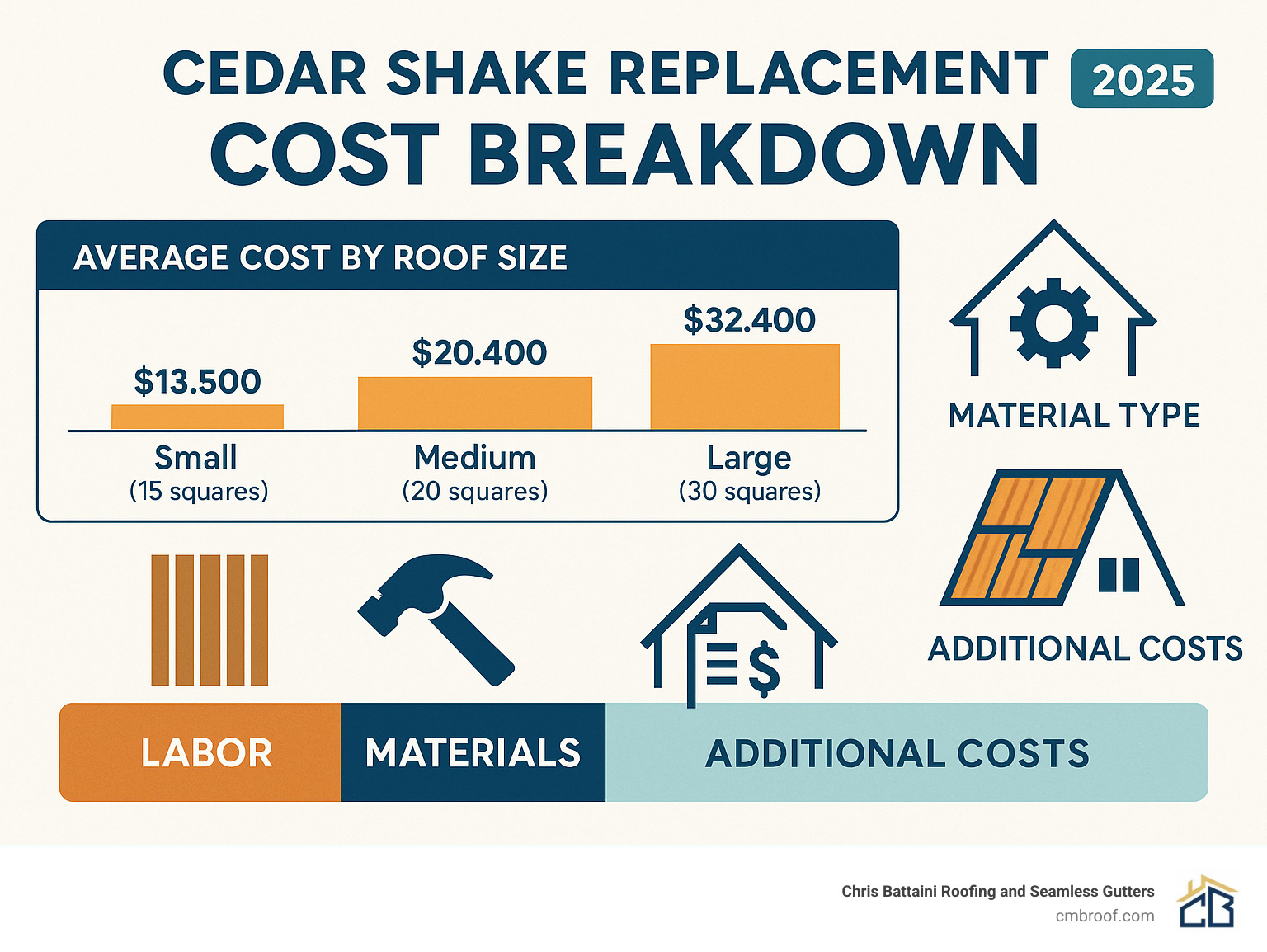
Roof size is your starting point. Industry data shows cedar shake installation typically ranges from $600-$2,100 per hundred square feet (what we call a “square”). For a typical 2,000 square foot home, you’re looking at anywhere from $12,000 to $42,000 for materials and labor. That’s a wide range because every roof tells a different story.
Material choice significantly impacts your final investment. Natural cedar varies dramatically by grade – premium heartwood costs substantially more than standard grades, while synthetic alternatives may have comparable upfront costs but deliver long-term savings through reduced maintenance needs.
Roof complexity can make or break your budget. A simple ranch-style gable roof costs far less than a Victorian home with multiple dormers, valleys, and architectural details. Every angle, penetration, and ridge line adds both labor time and material costs.
The tear-off process adds $2-$15 per square foot to your project, but skipping this step is false economy. We’ve seen too many problems from installations over old roofing – it’s simply not worth the risk to your investment.
Decking repairs often surprise homeowners, but they’re frequently necessary after removing old cedar shakes. Damaged or rotted decking replacement can add $3-$24 per square foot depending on the extent of damage finded during tear-off.
Geographic location affects labor rates, and our service area in Berkshire County, MA, and Southern Vermont typically offers competitive pricing compared to major metropolitan areas. Roof pitch also matters – steeper roofs require more safety equipment and take longer to complete safely.
Other factors include underlayment upgrades, ventilation improvements, building permits ($100-$1,500), and disposal fees ($300-$2,400) for old materials.
Find out more about Cedar Shake Roof Replacement Cost
Getting an Accurate Estimate for your cedar shake replacement
Here’s something that might surprise you – we never give quotes over the phone. Every roof has its own personality, and hidden issues only reveal themselves during thorough inspection. We’ve learned that accurate estimates require getting up on your roof and seeing what’s really happening.
Our estimation process starts with a complete roof and attic inspection where we measure every surface, assess decking condition, and evaluate your current ventilation system. We document everything and discuss your options in detail, from material choices to upgrade opportunities.
You’ll receive a detailed written estimate that breaks down materials, labor, and timeline. Because we’re owner-led, you’ll work directly with experienced professionals who understand the unique challenges of New England weather and older home construction.
We believe in transparency – no surprise charges or hidden fees. Our estimates include material specifications, labor warranties, and cleanup procedures so you know exactly what to expect from start to finish.
Request a New Roof Cost Estimate
The Installation Process: DIY or Hire a Professional?

When it comes to cedar shake replacement, the question of DIY versus professional installation is one we hear almost daily. While we admire the can-do spirit of New England homeowners, roofing work presents unique challenges that can turn a weekend project into a costly nightmare.
The reality is that roofing consistently ranks as one of the most dangerous home improvement activities. Beyond safety concerns, proper cedar shake installation requires specific techniques, tools, and knowledge of building codes that most homeowners simply don’t possess.
The DIY Approach to Cedar Shake Replacement
Small repairs involving just a handful of damaged shakes can be manageable for experienced DIYers who are comfortable working at heights. If you’re dealing with storm damage to a few isolated shakes and have proper safety equipment, this might be within your wheelhouse.
The process involves using a flat crowbar to carefully remove damaged shakes, cutting replacements to size with a miter saw, and securing them with galvanized nails. You’ll need to line up the bottom of replacement shakes perfectly with the existing row and feather them in seamlessly to avoid obvious patch lines.
However, the safety risks are significant. Even experienced contractors respect the dangers of roof work, and we’ve seen too many homeowners injured attempting repairs. Improper installation can void manufacturer warranties, create leak pathways, and fail to meet local building codes.
The time commitment is often underestimated. What looks like a simple afternoon project can stretch into days when you factor in learning curves, multiple trips to the hardware store, and working around weather conditions.
Why Professional Installation is Recommended
Professional cedar shake replacement ensures your project is completed safely, efficiently, and to manufacturer specifications. Our owner-led service means you’re working directly with experienced professionals who understand the unique challenges of roofing in our New England climate.
Expertise makes all the difference. We understand proper exposure requirements, spacing, fastening techniques, and local building codes. Our crews complete projects faster with less disruption to your daily life, and we carry comprehensive insurance to protect both our workers and your property.
Safety protocols are non-negotiable in our business. We use proper fall protection equipment, maintain current safety certifications, and follow OSHA guidelines on every job site. This isn’t just about protecting our team – it’s about protecting your family and property.
Workmanship warranties provide peace of mind that extends far beyond project completion. We stand behind our installations with comprehensive warranties that cover both materials and labor. This protection is something you simply can’t get with DIY work.
The efficiency of professional installation often surprises homeowners. What might take a weekend warrior weeks to complete, our experienced crews can finish in days. We have the right tools, proper techniques, and workforce to handle tear-off, decking repairs, and new installation without the learning curve.
Most importantly, manufacturer warranties often require professional installation to remain valid. When you’re investing thousands in premium materials, protecting that warranty is crucial for long-term value.
Trust the experts for your Roof Installation.
Maximizing the Lifespan of Your New Cedar Shakes

Getting the full 30+ year lifespan from your cedar shake replacement investment requires consistent care and attention. After decades of working with cedar roofs throughout New England’s challenging climate, we’ve learned that the difference between a roof that lasts 20 years versus one that lasts 40 years often comes down to how well it’s maintained.
Standing moisture is your cedar roof’s biggest enemy. Everything we do for maintenance focuses on keeping water moving off your roof quickly and preventing conditions that trap moisture against the wood. When moisture lingers, it creates the perfect environment for rot, fungus, and decay.
Annual inspections should become part of your home maintenance routine. Walk around your property and look up at your roof, checking for missing, cracked, or curling shakes. Pay special attention to shaded areas where moss growth tends to start. These green patches might look harmless, but they act like sponges, holding moisture against your cedar shakes long after rain stops.
Debris removal is absolutely critical, especially during autumn when leaves accumulate. Those colorful fall leaves that look so beautiful in your yard become a serious threat when they pile up on your roof. Leaves, sticks, and other organic matter trap moisture and create the perfect breeding ground for moss and algae. A simple leaf blower or roof rake can save you thousands in premature replacement costs.
Gutter maintenance goes hand-in-hand with roof care. Clogged gutters cause water to back up and sit against your roof edge, leading to rot in the most vulnerable areas. During heavy leaf season, we recommend checking your gutters monthly. It’s a small investment of time that pays huge dividends in roof longevity.
Tree management often gets overlooked, but overhanging branches create multiple problems for cedar roofs. They drop debris, block sunlight, prevent proper airflow, and create constant moisture conditions. Trimming branches back from your roof line improves air circulation and reduces fire risk – two critical factors for cedar shake longevity.
Professional cleaning can help maintain your cedar shakes, but it requires the right approach. Light pressure washing removes dirt, mold, and surface algae without damaging the wood. However, too much pressure can actually damage the cedar fibers, so this work is best left to professionals who understand the proper techniques.
Protective treatments like fungicides and algaecides can extend your roof’s life and maintain its appearance. These topical treatments improve water resistance and help prevent moss and algae growth. Most treatments need reapplication every 2-4 years, depending on your specific environment and exposure conditions.
The key to successful cedar shake maintenance is consistency. Weekly visual inspections for debris buildup, monthly gutter cleaning during peak seasons, and annual professional inspections create a maintenance schedule that catches problems early when they’re still affordable to fix.
Watch for warning signs that require immediate attention: soft or spongy shakes indicate moisture damage that’s already progressing, green moss or algae growth shows moisture problems, and curling or splitting shakes create entry points for water. Missing or loose shakes after storms need prompt replacement to prevent water damage to your home’s interior.
Learn more about caring for Cedar Roofs
Frequently Asked Questions about Cedar Shake Replacement
How long does a cedar shake roof last?
A natural cedar shake roof can last 30 years or more with consistent, proper maintenance. High-quality synthetic alternatives can have a useful life of up to 50 years. The key to longevity for natural cedar is protecting it from moisture and debris.
The lifespan of your cedar shake replacement depends heavily on several factors. Quality of materials makes a huge difference – premium grade heartwood lasts significantly longer than lower grades, though it costs more upfront. Installation quality is equally important, as proper exposure, spacing, and fastening are crucial for long-term performance.
Maintenance consistency is where many homeowners fall short. Regular 2-4 year maintenance programs can significantly extend your roof’s life, while neglect can cut it short by a decade or more. New England’s climate conditions present unique challenges – our freeze-thaw cycles and moisture can accelerate aging compared to drier climates.
Even roof design affects longevity. Simple designs with good drainage last longer than complex roofs with multiple valleys and dormers where water and debris can accumulate.
Are cedar shake roofs a fire hazard?
Untreated natural cedar shakes are flammable, igniting at around 375 degrees Fahrenheit. However, many are available with factory-applied, pressure-impregnated fire retardants to achieve a Class A, B, or C fire rating. Modern synthetic alternatives are engineered for fire resistance, with many achieving a Class A rating without any special treatments.
Fire safety considerations vary significantly between natural and synthetic options. Treated cedar shakes can achieve excellent fire ratings when properly manufactured and installed. Synthetic alternatives often achieve Class A ratings inherently, making them an excellent choice for fire-prone areas.
Proper installation with fire-resistant underlayment improves safety regardless of material choice. That local building codes may restrict cedar shake installation in high-risk areas, so check with your local building department before making your final decision.
Read more on if Cedar Shake Roofs are a Fire Hazard
Can you install new roofing over old cedar shakes?
It is strongly recommended to perform a full tear-off of the old cedar shakes before installing a new roof. This allows for a thorough inspection of the underlying roof deck for rot or damage, ensures a flat and stable surface for the new material, and is often required by manufacturers to validate the new roof’s warranty.
Why tear-off is recommended becomes clear when you consider the hidden issues that overlay installation can mask. The inspection opportunity allows us to assess decking condition and structural integrity – problems that won’t be visible once new materials are installed. Warranty requirements from most manufacturers specifically require tear-off for warranty coverage, protecting your investment.
Proper installation demands a flat, stable surface for optimal performance. Old cedar shakes create an uneven base that can lead to premature failure of new materials. Weight considerations also matter – adding new materials over old increases structural load beyond what many homes can safely handle.
Code compliance in many areas requires tear-off for safety reasons. While there are rare exceptions where metal roofing can be installed over existing materials using wood strips for support, this approach isn’t recommended for cedar shake replacement and should only be considered after professional evaluation.
What’s the difference between cedar shingles and cedar shakes?
Cedar shingles are typically thin and smooth, sawed for a uniform look. Cedar shakes are thicker and more textured, offering greater durability and a rustic appearance. Shakes are hand-split or sawn on one side, creating the characteristic rough texture that many homeowners prefer for its authentic, rustic charm.
How much does cedar shake replacement cost?
Based on industry averages, cedar shake replacement costs range from $600-$2,100 per square (100 square feet), with most projects falling between $12,000-$42,000 for a typical home. However, costs vary significantly based on roof size, complexity, material choice, and local labor rates. These are average costs based on internet data and not actual costs for Chris Battaini Roofing and Seamless Gutters.
The wide range reflects the many variables involved in roofing projects. A simple ranch home with natural cedar will cost much less than a complex Victorian with premium synthetic materials. The only way to get accurate pricing is through a professional on-site inspection that accounts for your specific situation.
Do I need permits for cedar shake replacement?
Most municipalities require permits for complete roof replacement. We handle all permit applications and inspections as part of our service, taking the hassle out of the process for you. Permit costs typically range from $100-$500 depending on local requirements and project scope.
The permit process ensures your cedar shake replacement meets local building codes and safety standards. While it adds time to the project, it protects you by ensuring proper installation and can be required for insurance claims and home sales.
Conclusion
Making the right choice for your cedar shake replacement protects both your home and your wallet for decades to come. We’ve walked through the key decisions you’ll face – from spotting the warning signs that replacement is needed, to choosing between natural cedar and modern alternatives, to understanding the costs and installation process.
The beauty of cedar shakes lies in their timeless appeal, but your specific situation will determine which path makes the most sense. Natural cedar shakes offer that authentic rustic charm and can serve your home well for 30+ years with consistent maintenance every 2-4 years. However, if you’re looking for a “set it and forget it” solution, synthetic alternatives deliver the same classic look with 50+ year lifespans and minimal upkeep requirements.
Professional installation isn’t just recommended – it’s essential for safety, warranty protection, and proper performance. We’ve seen too many DIY projects that started as cost-saving measures but ended up costing more due to mistakes, safety issues, and voided warranties. The complexity of proper tear-off, decking inspection, and precise installation techniques requires experienced hands and professional-grade equipment.
Cost considerations extend far beyond the initial installation price. While natural cedar might seem more affordable upfront, factor in the ongoing maintenance costs, potential repairs, and eventual replacement timeline. Synthetic alternatives often provide better long-term value despite comparable initial investment.
Proper maintenance is your roof’s best friend, regardless of which material you choose. Regular debris removal, gutter cleaning, annual inspections, and professional treatments can add years to your roof’s life and prevent costly water damage to your home’s structure.
The unique challenges of New England weather – from ice dams to summer storms – require roofing solutions that can handle extreme temperature swings and heavy precipitation. Our experience throughout Berkshire County has taught us which materials and techniques perform best in our climate.
For expert guidance and flawless cedar shake replacement that stands the test of time, trust the owner-led team at Chris Battaini Roofing and Seamless Gutters. Our comprehensive approach includes thorough inspection, quality materials, professional installation, and ongoing support to ensure your investment provides reliable protection for decades.
We understand that every home is unique, and we take the time to recommend solutions that fit your specific needs, budget, and aesthetic preferences. Whether you’re dealing with storm damage, aging shakes, or simply want to upgrade to a more durable alternative, we’re here to help you make the right choice.
Chris Battaini Roofing and Seamless Gutters proudly serves Berkshire, Hampden, Hampshire, and Franklin Counties in Massachusetts.
Learn more about our Cedar Shake Roofing services
