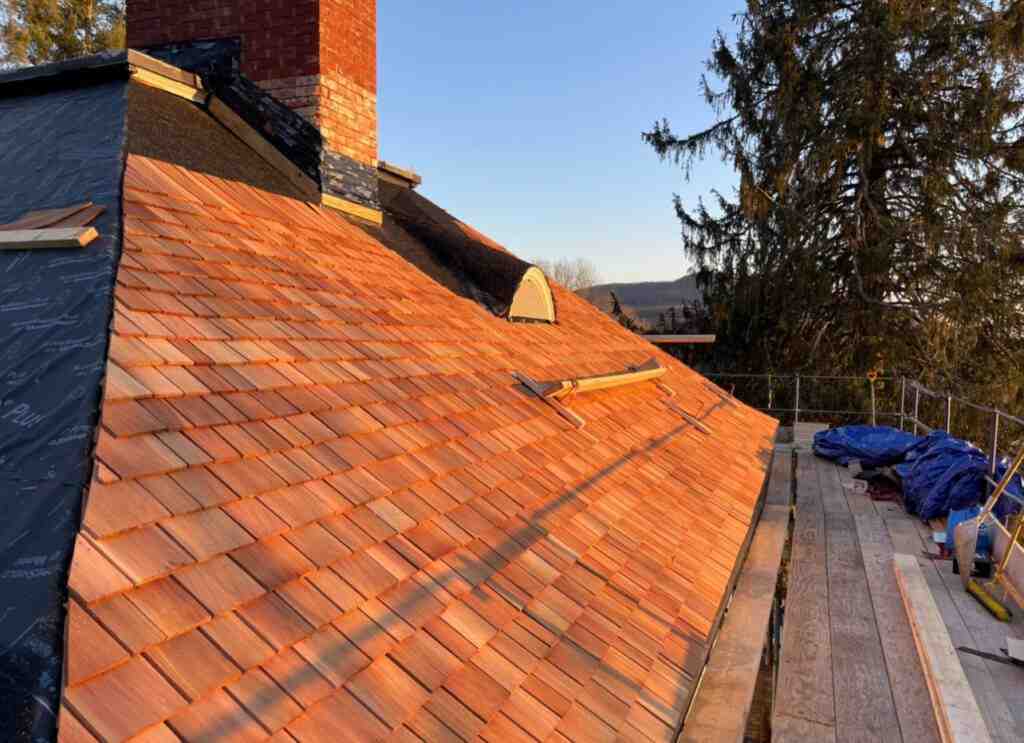

Why Cedar Roofs Are Making a Comeback in New England
Cedar roofs are premium roofing systems made from naturally rot-resistant wood that can last 30-50 years with proper maintenance. Here’s what makes them special:
Key Cedar Roof Features:
- Durability: 30-50 year lifespan (some last 90+ years)
- Energy Efficiency: Up to 2x better insulation than asphalt
- Storm Resistance: Withstands hurricane-force winds and heavy snow
- Natural Beauty: Ages to distinctive silver-gray patina
- Sustainability: 100% biodegradable, renewable resource
If you’re a homeowner in Berkshire County tired of replacing your roof every 15-20 years, cedar might be your answer. These aren’t your grandfather’s wood shingles – modern cedar roofs combine centuries-old craftsmanship with today’s building science.
Cedar roofing has protected New England homes since the 1600s. The famous Fairbanks House in Massachusetts, built in 1637 with hand-split cedar, still stands today. That’s nearly 400 years of proven performance.
But cedar isn’t just about longevity. It’s about getting a roof that actually improves your home’s value while cutting energy costs. The natural oils in cedar wood repel moisture, insects, and decay without chemical treatments.
The reality? Cedar costs more upfront than asphalt – sometimes 3-5x more. But when you factor in energy savings, fewer replacements, and increased home value, the math often works out.
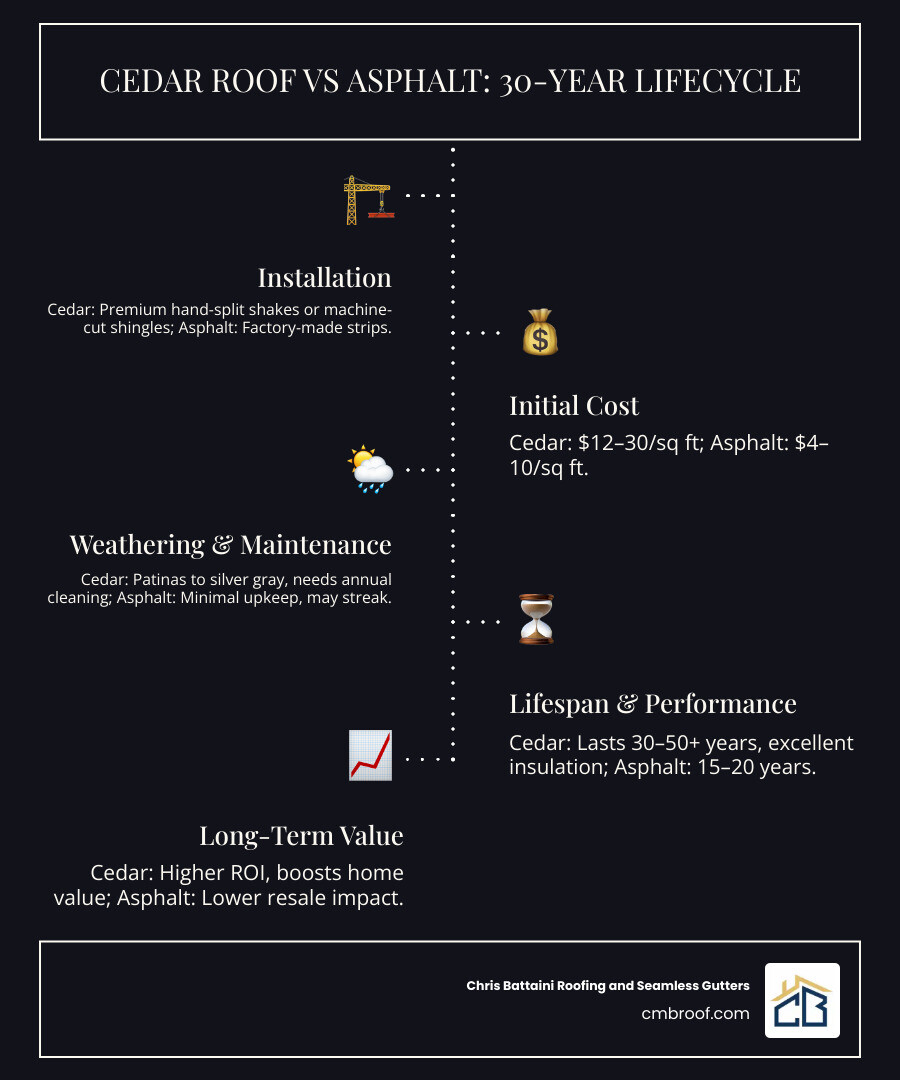
Quick cedar roofs terms:
Cedar Roof Fundamentals: Species, Styles & Construction
When it comes to cedar roofs, the wood species you choose can make or break your investment. After installing hundreds of cedar roofs across the Berkshires, I’ve learned that not all cedar performs the same way in our challenging New England climate.
Western Red Cedar is hands down the champion for residential roofing. These Pacific Northwest giants can tower over 200 feet tall with trunks stretching 13 feet across. What makes Western Red Cedar special? It’s packed with natural preservative oils that fight off rot, decay, and insects without any chemical treatments. The wood starts with beautiful yellow-gold to reddish-brown tones, then gracefully weathers to that signature silver-gray patina that makes neighbors stop and stare.
Alaskan Yellow Cedar is the premium choice for homeowners who want the absolute best. Technically not a true cedar, this incredibly dense wood has been documented living over 1,000 years. It’s tougher and more durable than Western Red Cedar, but you’ll pay a premium for that performance. If you’re building your forever home, Alaskan Yellow Cedar is worth every penny.
Eastern White Cedar has deep New England roots – early sailors called it the “tree of life” after it cured scurvy on long voyages. While lighter and less expensive than its western cousins, it still delivers solid performance for budget-conscious projects. It’s a good middle ground if Western Red Cedar stretches your budget too thin.
What Makes Cedar Unique?
Cedar’s superpowers come from its unique cellular structure and natural chemistry. The wood contains special compounds called extractives – natural oils that act like built-in preservatives. These aren’t just surface treatments that wear off; they’re distributed throughout every wood fiber.
Dimensional stability is where cedar really shines. Most woods expand and contract dramatically with moisture changes, causing gaps, splits, and warped boards. Cedar barely moves at all. This means your roof maintains its weather-tight seal year after year, even through our brutal New England freeze-thaw cycles.
The natural insulation properties of cedar can cut your energy bills too. Cedar provides up to twice the R-value of asphalt shingles, helping keep your home cooler in summer and warmer in winter. In our climate, that translates to real savings on your heating and cooling costs.
Building a Cedar Roof Layer-by-Layer
Installing cedar roofs properly is like building a high-performance system where every layer matters. We start with quality underlayment – usually a synthetic membrane that provides backup water protection. This isn’t optional; it’s your insurance policy if individual shakes ever fail.
Ventilation is absolutely critical with cedar. The wood needs to breathe to stay healthy. We typically use spaced sheathing (1×4 boards with gaps between them) rather than solid plywood decking to promote airflow. This lets moisture escape naturally instead of getting trapped and causing rot.
Flashing around chimneys, valleys, and roof penetrations requires extra attention with cedar. Since the wood naturally expands and contracts, our flashing systems must accommodate that movement without creating leaks.
Ridge and hip caps crown the installation. These specialized pieces shed water while allowing the roof to breathe at its highest points – crucial for long-term performance.
The difference between shakes vs shingles often confuses homeowners. Taper-sawn shakes are machine-cut for consistency, while hand-split shakes have that rustic, irregular texture. Shakes are thicker (5/8″ to 3/4″ butt thickness) and more durable than shingles (3/8″ to 1/2″ thick). Shakes cost more upfront but typically last longer.
| Feature | Cedar Shakes | Cedar Shingles |
|---|---|---|
| Manufacturing | Hand-split or taper-sawn | Machine-cut |
| Thickness | 5/8″ to 3/4″ | 3/8″ to 1/2″ |
| Texture | Rustic, irregular | Smooth, uniform |
| Cost | Higher | Lower |
| Lifespan | 30-50+ years | 25-40 years |
| Appearance | Traditional, rustic | Clean, modern |
Blue Label grading from the Cedar Shake & Shingle Bureau is your quality guarantee. This certification means the cedar meets strict standards for grain orientation, moisture content, and defects. It costs a bit more, but it’s worth every penny for the peace of mind. Latest research on Western Red Cedar confirms what we’ve seen in the field – properly graded cedar consistently outperforms lower grades.
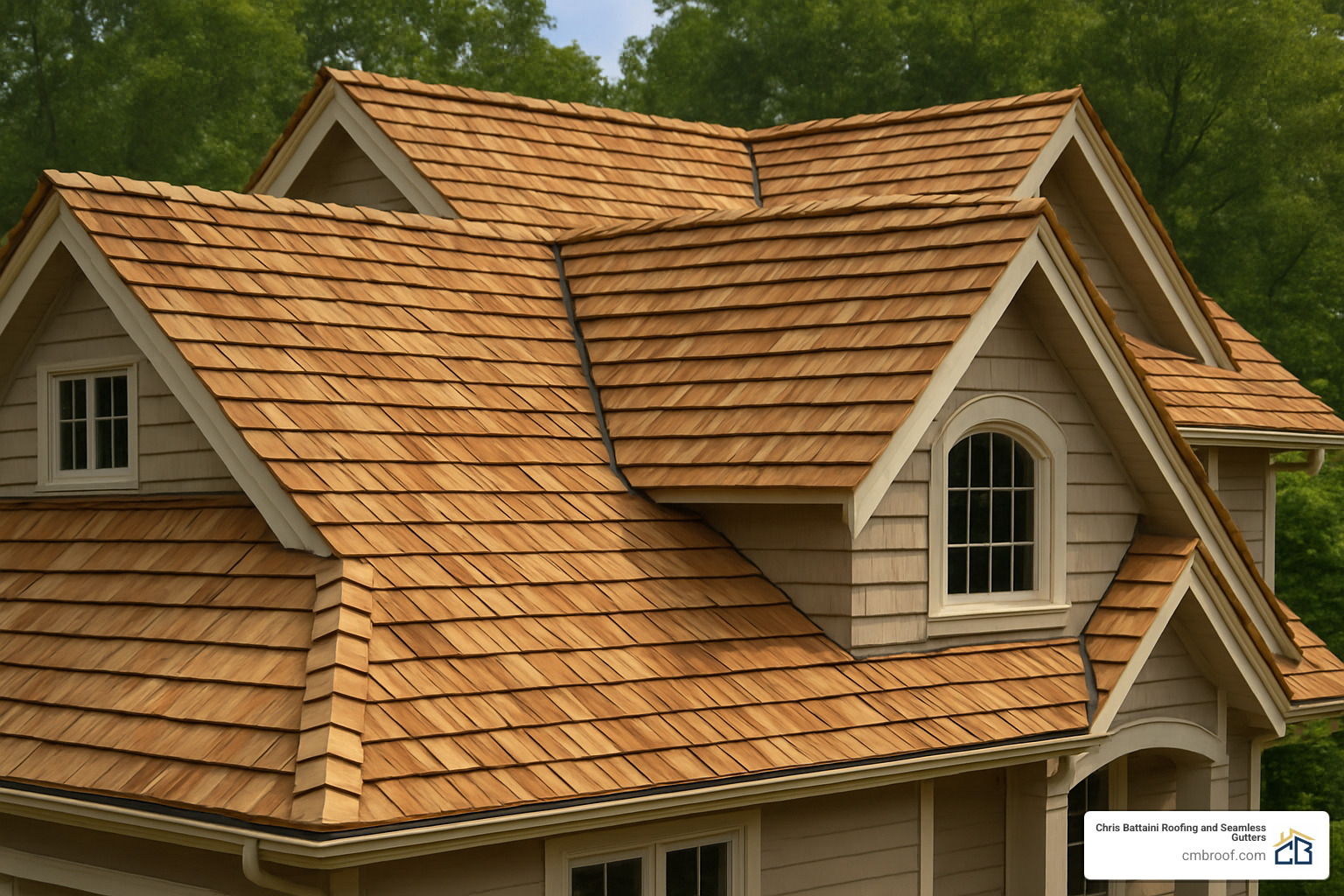
Benefits, Drawbacks & Natural vs Synthetic Comparison
Let’s have an honest conversation about cedar roofs – they’re absolutely beautiful, but they’re not the right choice for every homeowner. After thirty years in the roofing business, I’ve learned that the best roof is the one that fits your lifestyle, budget, and long-term goals.
The Good News About Cedar
When properly installed and maintained, cedar roofs deliver impressive longevity. Most quality cedar installations last 30-50 years, with some exceptional examples pushing past 90 years. That’s potentially two or three asphalt roof replacements you’ll never have to worry about.
The energy efficiency is real and measurable. Cedar provides natural insulation that can cut your heating and cooling costs significantly. In our New England climate, where we deal with everything from scorching summers to brutal winters, that extra R-value makes a noticeable difference on your utility bills.
Storm performance is another cedar strength. I’ve seen cedar shakes survive hurricane-force winds and heavy snow loads that would destroy other roofing materials. The individual pieces flex and move with the weather rather than fighting it.
Then there’s the curb appeal factor. A cedar roof transforms a house into a home with character. The natural aging process creates that distinctive silver-gray patina that screams “quality” and “craftsmanship.” Your neighbors will notice, and so will potential buyers if you ever decide to sell.
From an environmental standpoint, cedar is a renewable resource that actually stores carbon while it’s protecting your home. When it eventually reaches the end of its life, it biodegrades completely. No landfill guilt here.
The Reality Check
Now for the not-so-fun part. Cedar costs more upfront – sometimes significantly more. Based on internet averages, cedar shingles run $4-$7.25 per square foot installed, while premium shake installations can reach $25-$30 per square foot. These are average internet costs, not our actual pricing, but they give you a ballpark for budgeting.
Maintenance is non-negotiable. Cedar roofs need annual inspections, regular debris removal, and periodic treatments to maintain their fire resistance and appearance. Skip the maintenance, and you’ll pay for it later with premature replacement.
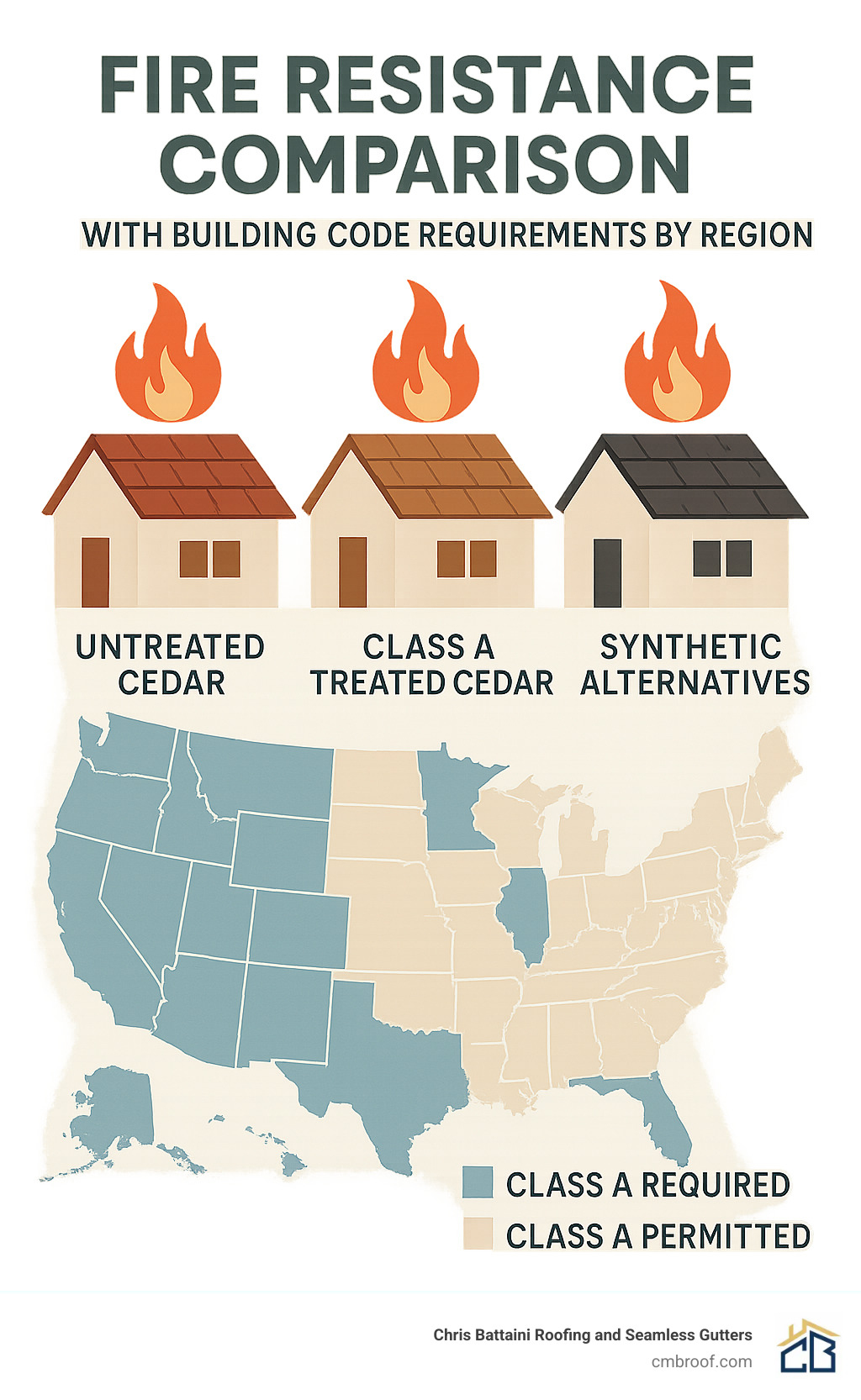
Fire risk is the elephant in the room. Untreated cedar is naturally flammable, though Class A fire-rated treatments are available and required by many building codes. Some insurance companies charge higher premiums for wood roofing, while others won’t cover it at all in high-risk areas.
Climate matters tremendously. Very wet climates can promote moss and rot, while extremely dry conditions can cause excessive cracking and splitting. Our New England climate is actually pretty ideal for cedar, with its seasonal variation and moderate humidity.
Natural vs. Synthetic: The Great Debate
The synthetic cedar market has exploded recently, and for good reason. Polyurethane shakes and composite alternatives offer some compelling advantages: Class A fire resistance right out of the box, Class 4 impact resistance, and virtually no maintenance requirements.
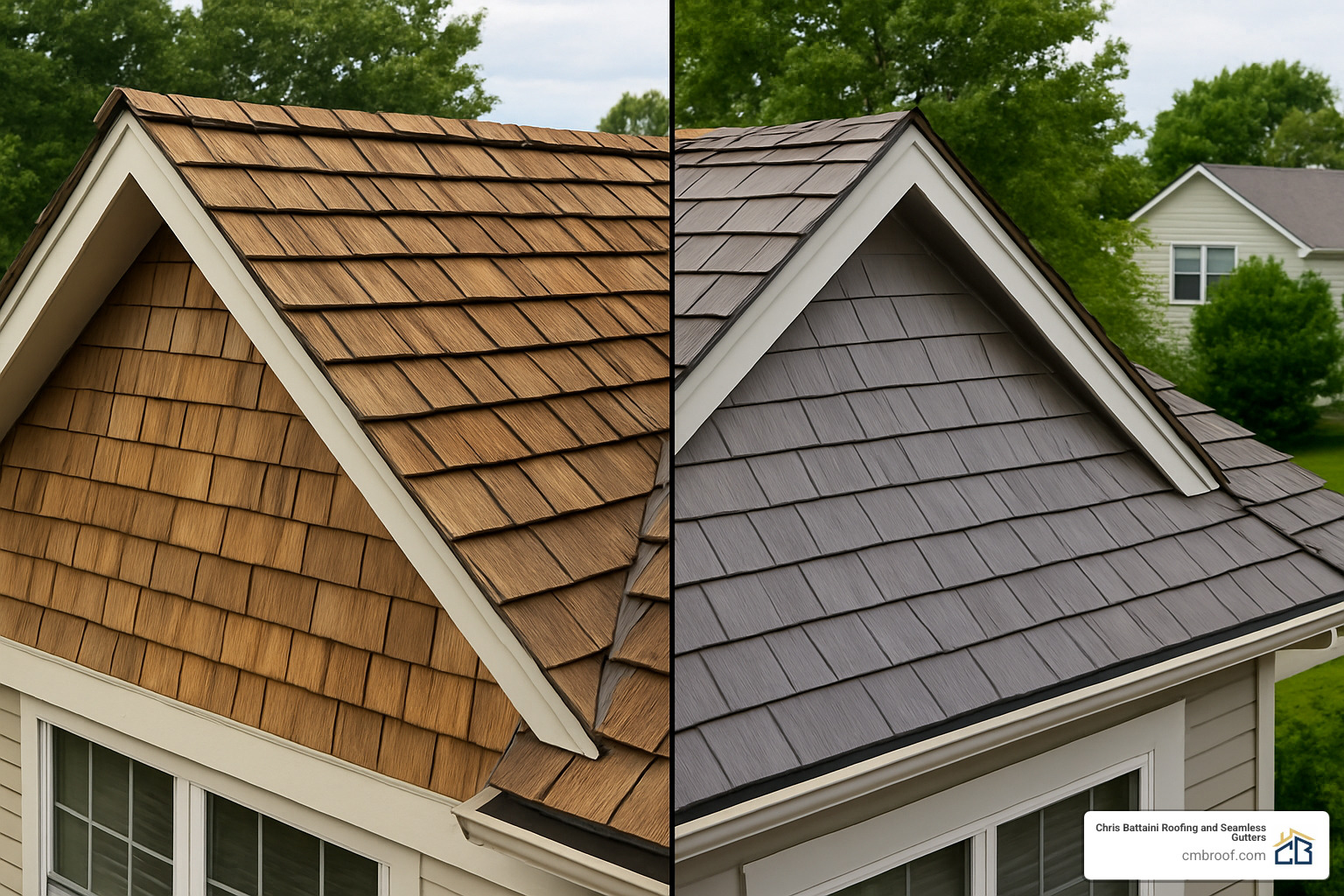
But here’s what synthetic products can’t replicate: the natural insulation properties of real wood, the authentic aging characteristics that make cedar so beautiful, and that indefinable quality that comes from using a material that’s been protecting homes for centuries.
Synthetic options are also typically more expensive upfront than natural cedar, though they may save money over time through reduced maintenance needs.
Making the Right Choice
Are Cedar Shake Roofs Good? The answer isn’t yes or no – it’s “it depends.” If you’re someone who appreciates natural materials, doesn’t mind regular maintenance, and wants a roof that will age gracefully over decades, natural cedar might be perfect.
If you live in a wildfire-prone area or simply want the cedar look without the maintenance commitment, synthetic alternatives deserve serious consideration. The Cedar Shake & Shingle Bureau insights can help you steer the options and find products that meet your local building codes.
The key is being honest about your priorities and realistic about your commitment to maintenance. A well-maintained cedar roof is a thing of beauty that can last for generations. A neglected one becomes an expensive headache.
Cedar Roofs Installation & Maintenance Best Practices
Installing cedar roofs properly is both an art and a science. After 20+ years in the roofing business, I’ve learned that the installation method you choose can literally add or subtract decades from your roof’s lifespan.
Spaced sheathing is hands-down our preferred method for cedar installations. Instead of solid plywood, we install 1×4 boards with gaps between them. This allows air to circulate freely under the shakes, preventing that dreaded moisture buildup that can turn your beautiful cedar roof into expensive firewood.
Think of it this way – cedar needs to breathe just like you do. Trap it under solid decking without proper ventilation, and you’re asking for trouble. The wood can’t dry out naturally, leading to rot, mold, and premature failure.
Cost factors for cedar roof installation are more complex than most homeowners realize. The material grade makes a huge difference – you can choose from Common, Select, or 100% straight grain cedar. Each step up in quality adds cost but also adds years to your roof’s life.
Roof complexity affects pricing significantly. A simple ranch with minimal penetrations costs far less than a Victorian with multiple dormers, valleys, and chimneys. Tear-off requirements can double your labor costs if you’re removing multiple layers of old roofing.
Don’t forget about flashing and ventilation upgrades. These aren’t optional extras – they’re essential components that protect your investment. Skimping here is like buying a Ferrari and filling it with cheap gas.
Based on internet averages, expect to pay $4-$30 per square foot for cedar roofing, with premium installations reaching $50+ per square foot in some markets. These are general ranges based on online data, not our actual pricing. Your specific project requirements will determine the final cost.
Warranties for cedar roofs typically range from 20-30 years for materials. Workmanship warranties vary by contractor, but quality installation is crucial. Poor workmanship can void material warranties faster than you can say “water damage.”
Here’s the reality about cedar roof maintenance – it’s non-negotiable. Skip it, and you’ll be replacing your roof decades earlier than necessary.
Annual maintenance starts with debris removal. Those innocent-looking leaves and pine needles? They’re moisture traps waiting to cause problems. Clear them off regularly, especially from valleys and gutters.
Inspection should happen every year, preferably in spring after winter’s assault. Look for loose, cracked, or missing shakes. Catching problems early saves thousands later.
Moss and mildew control is particularly important in our New England climate. That green stuff growing on your roof isn’t just unsightly – it’s actively working to destroy your cedar. Remove it promptly to prevent decay.
Fire retardant retreatment becomes critical if you live in fire-prone areas. Reapply every 5-10 years to maintain Class A fire resistance. It’s an investment in both safety and insurance compliance.
More info about Cedar Shake Roofing covers our installation techniques in detail, while our Cedar Shake Roof Cost Calculator helps estimate project costs based on your specific requirements.

How Long Do Cedar Roofs Last?
The million-dollar question every homeowner asks: “How long will my cedar roof actually last?” The honest answer is – it depends on several critical factors that are largely within your control.
Climate plays the starring role in your roof’s lifespan. Cedar performs best in moderate climates with regular wet-dry cycles. Good news for us in New England – our climate is actually ideal for cedar. We get enough moisture to keep the wood stable but enough dry periods to prevent constant dampness.
Grade choice matters more than most people realize. 100% straight grain shakes resist curling and splitting far better than lower grades. Yes, they cost more upfront, but the extra investment pays dividends in longevity. Think of it as buying the extended warranty that actually works.
Installation quality can make or break your cedar roof’s future. Proper spacing, ventilation, and flashing aren’t suggestions – they’re requirements. I’ve seen poorly installed cedar roofs fail in 15 years and expertly installed ones still going strong after 60+ years.
Maintenance consistency is the wild card in this equation. Cedar roofs that receive annual attention and periodic treatments can last 40-60 years. Neglected roofs might need replacement in 20-25 years. The choice is yours.
Are Cedar Roofs Environmentally Friendly?
Environmental impact matters. Cedar roofing scores surprisingly high on the green building scorecard, though it’s not perfect.
Carbon storage is cedar’s environmental superpower. Those massive cedar trees sequester carbon throughout their decades of growth, and that carbon remains locked in the wood for decades after installation. Your roof is literally storing carbon that would otherwise be in the atmosphere.
Biodegradability sets cedar apart from synthetic roofing materials. At the end of its life, your cedar roof can be composted or used as mulch. No landfill impact, no environmental guilt.
Sustainable forestry has improved dramatically in recent decades. Responsible cedar harvesting replaces every tree cut with new plantings. The industry learned from past mistakes and now operates with long-term sustainability in mind.
Energy efficiency provides ongoing environmental benefits. Cedar’s natural insulation properties reduce heating and cooling energy consumption throughout your roof’s life. Less energy use means lower carbon footprint.
Transportation is the environmental downside for East Coast installations. Most cedar comes from the Pacific Northwest, so transportation emissions are a consideration. It’s the price we pay for accessing the world’s best cedar.
What About Fire & Building Codes?
Let’s address the elephant in the room – fire safety. This is the biggest concern most homeowners have about cedar roofing, and rightfully so.
Class A fire-rated cedar is available through pressure treatment with fire-retardant chemicals. This achieves the highest level of fire resistance and meets the strictest building codes. The treatment process has improved significantly over the years, maintaining cedar’s natural beauty while adding crucial fire protection.
Wildfire zones often prohibit untreated wood roofing entirely. California banned untreated wood roofing in 2001, and other states are following suit. If you live in a high-risk area, treated cedar or synthetic alternatives might be your only options.
Building codes vary dramatically by location. Some areas require Class A ratings for all wood roofing, others allow untreated cedar with proper clearances and maintenance protocols. Always check local requirements before making your final decision.
Insurance implications are real and immediate. Some insurers charge higher premiums for wood roofing, while others won’t cover it at all in high-risk areas. Call your insurance agent before committing to cedar – surprises at renewal time are never pleasant.
Are Cedar Shake Roofs a Fire Hazard? addresses these concerns in detail and explains how modern treatments effectively mitigate fire risk.
Frequently Asked Questions about Cedar Roofs
These are the three questions we hear most often from homeowners considering cedar roofs for their New England homes. Let’s clear up the confusion:
What’s the difference between cedar shakes and cedar shingles?
Think of it this way: cedar shakes are the rugged, outdoorsy cousin, while cedar shingles are the polished city dweller. Both come from the same tree, but their personalities are completely different.
Cedar shakes get their character from being hand-split or taper-sawn. This creates that beautiful, irregular texture that makes each shake unique. They’re substantially thicker too – typically 5/8″ to 3/4″ at the butt end compared to shingles’ 3/8″ to 1/2″. This extra thickness means better durability and weather resistance, but you’ll pay more for that performance.
Cedar shingles are machine-cut for uniformity. They have a smoother, more refined appearance that works beautifully on colonial or contemporary homes. The thinner profile makes them less expensive initially, but they may not weather the storms quite as well as their thicker shake cousins.
Here’s the good news: both options weather to that same gorgeous silver-gray patina over time. Your neighbors won’t be able to tell the difference after a few years of New England weather have worked their magic.
How much does a cedar roof cost compared to asphalt or metal?
Let’s talk numbers – but remember, these are average costs from internet sources, not our actual pricing at Chris Battaini Roofing and Seamless Gutters.
Cedar roofing typically runs $4-$30 per square foot installed, with premium installations reaching $50+ per square foot. That’s a wide range because cedar quality varies dramatically. Asphalt shingles cost $3-$15 per square foot installed, while metal roofing falls between $5-$25 per square foot installed.
Yes, cedar costs more upfront – sometimes significantly more. But here’s where the math gets interesting for the ROI calculation. Cedar roofs last 2-3 times longer than asphalt, provide better insulation that cuts energy bills, and increase your home’s resale value. Many homeowners find that when they spread the cost over the roof’s 30-50 year lifespan, cedar actually becomes competitive with “cheaper” alternatives.
The real question isn’t whether cedar costs more – it’s whether the extra investment makes sense for your specific situation and budget.
What routine maintenance does a cedar roof need?
Here’s the truth about cedar roof maintenance: it’s not complicated, but it does require consistency. Think of it like taking care of a classic car – regular attention prevents major headaches.
Your annual to-do list should include removing debris from the roof and gutters, inspecting for loose or cracked shakes, checking for moss or mildew growth, and trimming any overhanging branches. Most homeowners can handle the visual inspection themselves, but leave the actual roof work to professionals.
Every 3-5 years, your cedar roofs will benefit from a penetrating stain or preservative treatment. This isn’t always necessary, but it can extend the roof’s life in harsh climates. A professional inspection during this timeframe can catch small problems before they become expensive repairs.
Every 5-10 years, you’ll need to reapply fire retardant treatment if your area requires it, and handle any major maintenance like replacing damaged sections.
The key is consistency over intensity. Cedar roofs that receive regular attention can last 40-60 years. Neglected ones might need replacement in 20-25 years. It’s really that simple.
Conclusion
Cedar roofs offer something special that modern materials just can’t match – they’re living, breathing roofing systems that actually get more beautiful with age. Yes, they cost more upfront than asphalt shingles, and they need regular attention to perform their best. But when you’re looking at a roof that can protect your home for 40-50 years while adding real value and character, the investment makes sense.
The silver-gray patina that develops over time isn’t just pretty – it’s proof that your roof is working exactly as nature intended. Those natural oils in the cedar are still doing their job, repelling water and resisting decay decades after installation.
At Chris Battaini Roofing and Seamless Gutters, we’ve seen too many roofing projects where the owner never meets the person actually doing the work. That’s not how we operate. When you choose us for your cedar roof installation, you’re working directly with Chris Battaini himself. No middleman, no miscommunication – just honest, skilled craftsmanship backed by our exceptional workmanship warranties.
We’ve been installing cedar roofs in New England’s challenging climate long enough to know what works and what doesn’t. The freeze-thaw cycles, the ice dams, the nor’easters – we design every installation to handle whatever our weather throws at it.
More info about Residential Roofing Service covers our complete approach to roofing, from initial consultation through final cleanup.
The truth is, cedar isn’t right for every home or every budget. But when it fits your situation, few roofing materials can match its combination of durability, energy efficiency, and natural beauty. A properly installed cedar roof doesn’t just protect your home – it becomes part of its character.
Whether you’re drawn to the rustic charm of hand-split shakes or the clean lines of machine-cut shingles, the key is getting it installed right the first time. Poor installation can turn a 50-year roof into a 20-year headache.
If you’re considering cedar for your home, we’d love to discuss whether it’s the right fit. We’ll give you straight answers about costs, maintenance requirements, and realistic expectations. No pressure, no sales pitch – just honest guidance from someone who’s been doing this work for decades.
Chris Battaini Roofing and Seamless Gutters proudly serves Berkshire, Hampden, Hampshire, and Franklin Counties in Massachusetts.