-
10 Wendell Ave Extension Pittsfield, MA 01201
-
210 Columbia St., Lee, MA 01238

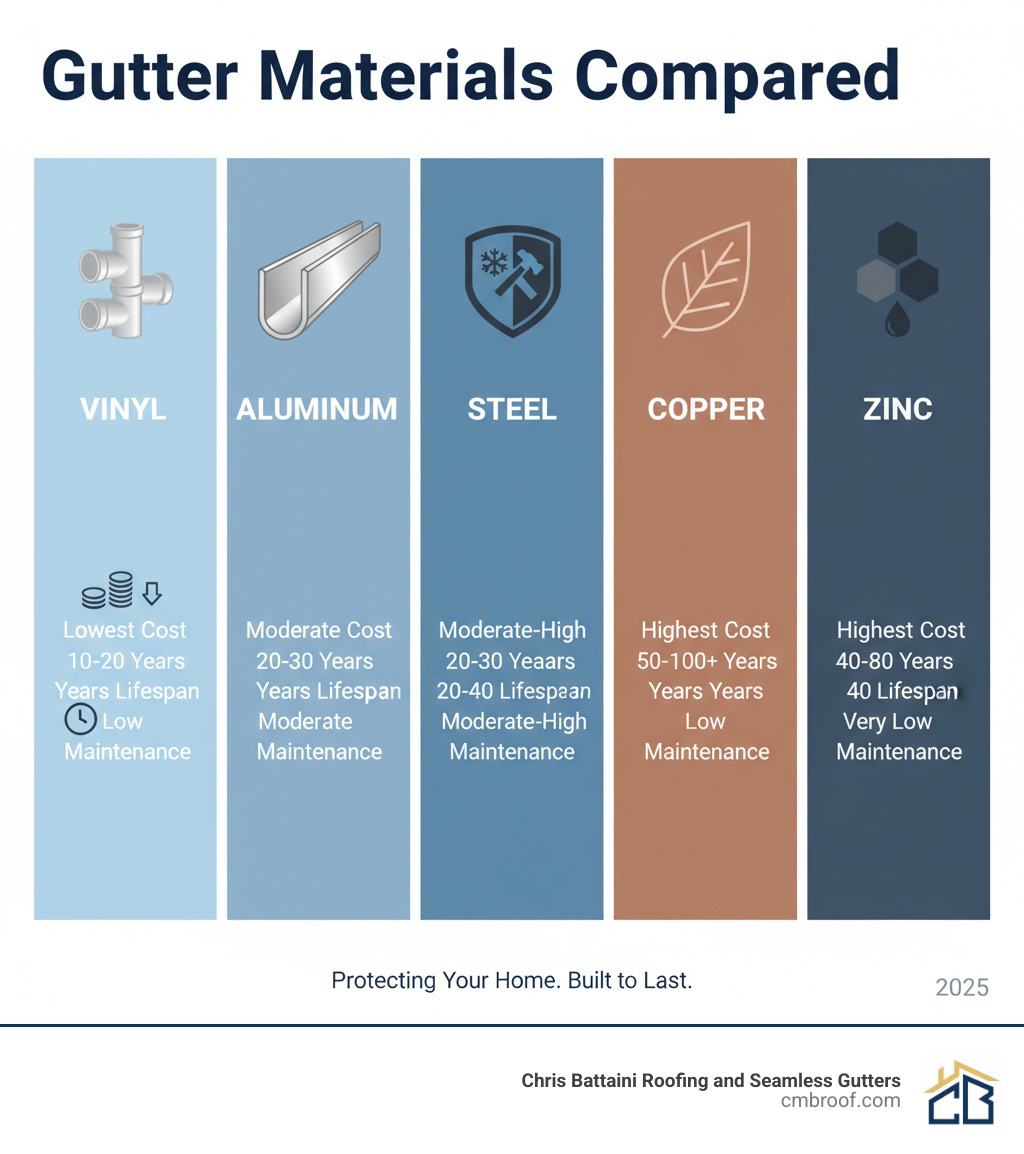
Choosing the best gutter materials depends on your budget, climate, and home style. Here’s a quick overview:
Top Gutter Materials at a Glance:
| Material | Best For | Lifespan | Key Advantage |
|---|---|---|---|
| Aluminum | Most homes, all-around value | 20-30 years | Rust-resistant, affordable, many colors |
| Copper | Luxury homes, historic properties | 50-100+ years | Extremely durable, beautiful patina |
| Steel | Heavy snow/ice regions | 20-40 years | Strongest, handles extreme weather |
| Vinyl | Budget projects, mild climates | 10-20 years | Lowest cost, DIY-friendly |
| Zinc | Modern architecture, long-term investment | 40-80 years | Eco-friendly, develops protective patina |
Your gutters have one critical job: move water away from your home’s foundation, walls, and landscaping. When they fail, the results are expensive: foundation cracks, basement flooding, and rotted siding. The material you choose determines whether your gutters last 10 years or 100 years. It affects maintenance, repair costs, and whether they’ll survive a harsh New England winter.
A cheap vinyl system might save money now but require early replacement. In contrast, copper gutters cost more upfront but can outlast your roof by decades. What works in a mild climate won’t necessarily hold up in Massachusetts, where freeze-thaw cycles and heavy snow put immense stress on your gutter system.
This guide breaks down the five main gutter materials so you can make an informed decision for your home’s needs and budget.
Gutters are a vital defense system for your home. They catch roof runoff and channel it safely away, preventing a cascade of problems. Without them, water can erode soil around your foundation, leading to structural instability, or seep into your basement, causing floods and mold. Overflowing gutters can also damage your roof, fascia, and siding. Choosing the right material is a long-term investment in your home’s integrity, as reliable gutters prevent water damage and protect your property value.
Before choosing from the best gutter materials, it’s important to understand their shape (style) and assembly (construction). The style affects water capacity and aesthetics, while the construction method determines its durability and potential for leaks.
The shape of your gutter determines how well it channels heavy rainfall away from your foundation.
Your choice of style depends on your home’s architecture, local rainfall, and personal preference. You can learn more info about seamless gutters and how these styles work with different construction methods.
Even the best material will fail if assembled poorly. The construction method is just as critical as the material itself.
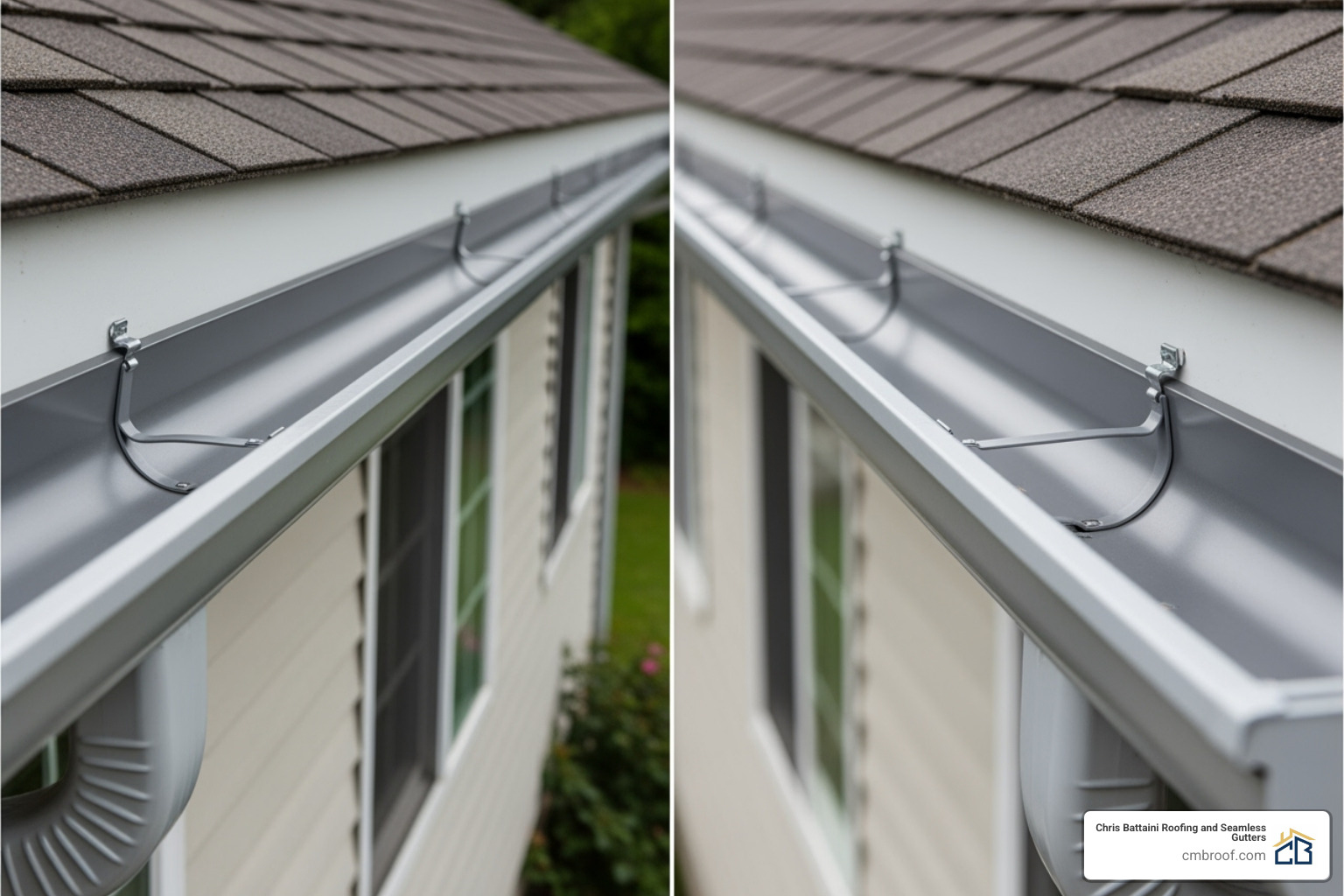
Sectional gutters are sold in pre-cut 10- to 20-foot pieces and joined together on-site. While cheaper upfront and available at hardware stores for DIY projects, every joint is a potential leak point. Over time, sealant fails and seams collect debris, leading to frequent repairs.
Seamless gutters are the modern, professional standard. A specialized machine fabricates a single, continuous piece of gutter on-site to the exact length of your roofline. The only seams are at corners and downspouts. Fewer seams mean fewer leaks, less debris buildup, and a cleaner look. In a climate with heavy snow and ice, this durability is a significant advantage. Understanding what are seamless gutters? makes it clear why they are a superior long-term investment.
For maximum protection and minimal future repairs, pairing seamless construction with the right material is the best approach.
Choosing your gutter material is the most critical decision, dictating lifespan, durability, maintenance, and cost. You’re not just buying gutters; you’re investing in your home’s protection for decades.
Here’s a comparison of the most common gutter materials. Note: The cost estimates provided are averages based on internet data and are not actual quotes from Chris Battaini Roofing and Seamless Gutters. Always get a personalized quote for accurate pricing.
| Material | Average Lifespan | Durability | Maintenance | Average Cost per Linear Foot (Internet Data) |
|---|---|---|---|---|
| Vinyl (PVC) | 10-20 years | Low (brittle in cold, UV degradation) | Low upfront, higher over time (replacement) | $3-$10 |
| Aluminum | 20-30 years | Medium (prone to dents, expansion/contraction) | Low (cleaning, occasional repainting) | $6-$20 |
| Steel | 20-40 years | High (very strong, handles heavy loads) | Moderate (rust prevention, coatings) | $8-$30 |
| Copper | 50-100+ years | Very High (corrosion-resistant, strong) | Very Low (self-protecting patina) | $25-$80+ |
| Zinc | 40-80 years | Very High (corrosion-resistant, self-healing) | Very Low (self-protecting patina) | $30-$90+ |
Vinyl is the budget-friendly, DIY option found at big-box stores. It’s inexpensive (around $3-$10 per linear foot based on internet data) and won’t rust. However, vinyl becomes brittle and cracks in the extreme cold of New England winters. It’s prone to sagging, and its sectional joints often leak. With a lifespan of only 10-20 years, it’s a short-term solution we rarely recommend for our climate.
Best for: Mild climates, temporary solutions, or tight budgets where longevity isn’t the primary concern.
Aluminum is the most popular choice in the U.S., offering an excellent balance of cost, performance, and durability. It’s lightweight, rust-resistant, and comes in many factory-baked colors. With a lifespan of 20-30 years and minimal maintenance, it provides great value. The main drawback is that it can dent. When installed as a seamless system, it’s a reliable choice for most homeowners.
Best for: Most homes seeking the best all-around value. It’s a cost-effective, low-maintenance, and long-lasting solution. You can find more info about aluminum gutters to see why they are so widely used.
For sheer strength against heavy snow, ice, and falling branches, steel is the answer. It won’t bend or sag under the weight of a New England winter. Galvanized steel is affordable but requires maintenance to prevent rust if scratched. Stainless steel is rust-proof but more expensive. With a lifespan of 20-40 years, steel is a workhorse material, though it’s heavy and requires professional installation.
Best for: Homes in regions with heavy snow and ice, where durability is the top priority.
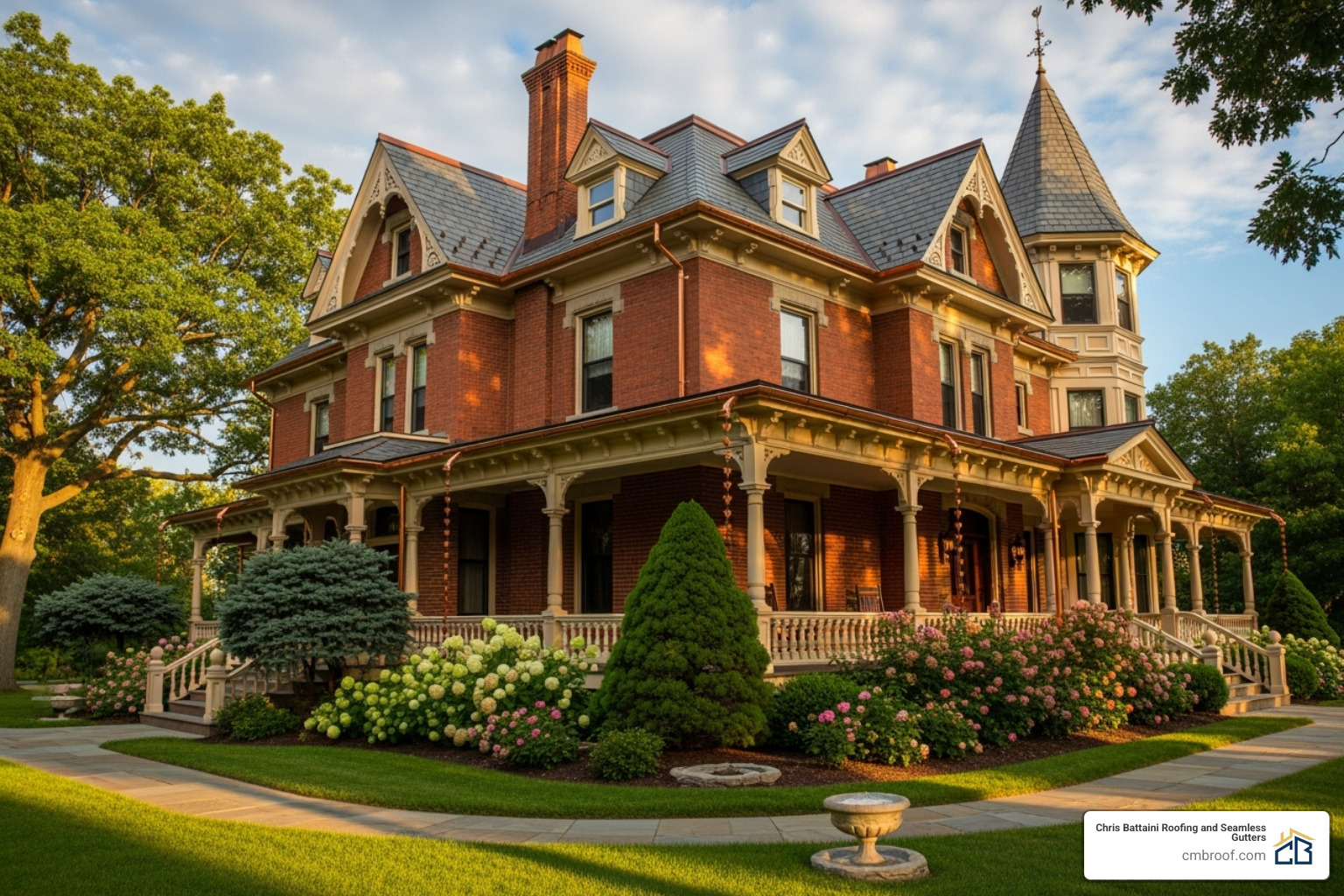
Copper is a luxury material, prized for its beauty and extreme durability. It doesn’t rust; instead, it develops a beautiful green patina that protects the metal. Copper is also a natural algaecide and fungicide, which helps keep it clean. With a lifespan of 50-100+ years, these gutters can last for generations. The primary downside is the high cost ($25-$80+ per linear foot based on internet data) and the need for expert installation.
Best for: Luxury homes, historic restorations, and homeowners seeking a lifetime solution with best curb appeal.
Zinc offers durability similar to copper but with a modern, matte gray aesthetic. It develops a protective patina that is self-healing, meaning minor scratches disappear over time. Zinc is eco-friendly and requires almost no maintenance. With a lifespan of 40-80 years, zinc gutters are built for the long haul. Like copper, it is expensive ($30-$90+ per linear foot based on internet data) and requires specialized installation.
Best for: Modern and contemporary homes where a sophisticated, long-term, low-maintenance system is desired.
To discuss which of these best gutter materials is right for your home, Follow us on Facebook or contact us for a consultation. Chris Battaini Roofing and Seamless Gutters services Berkshire, Hampden, Hampshire, and Franklin Counties in Massachusetts.
Choosing the best gutter materials is a personal decision based on your home’s style, your budget, and your local climate.
Gutters should complement your home’s architecture. The right choice improves curb appeal, while the wrong one can look out of place.
Budgeting requires thinking long-term. Vinyl is cheap upfront but may need replacement in 10-15 years, especially in New England. Materials like copper or zinc are a significant initial investment, but their 50-100 year lifespan makes them more cost-effective over time. When creating a budget for home improvements, consider the total cost of ownership, not just the purchase price. As part of our residential roofing services, we help homeowners find this balance every day.
In Berkshire County and Southern Vermont, weather is a deciding factor. Our climate demands materials that can withstand specific challenges:
Choosing a material that can handle New England weather is essential for protecting your home.
While a DIY approach can be tempting, gutter installation is often best left to professionals.

A professional ensures the job is done right the first time, calculating the correct slope and using proper fasteners for a system built to last. This peace of mind is often worth more than the savings from a DIY attempt. Learn more about why proper installation is critical in our guide to roof installations.
Follow us on Facebook for more tips. Chris Battaini Roofing and Seamless Gutters services Berkshire, Hampden, Hampshire, and Franklin Counties in Massachusetts.
Even the best gutter materials require some maintenance to perform correctly and protect your home from water damage. Regular attention helps you catch small problems before they become costly disasters.
Knowing when to repair versus replace is key. Look for these warning signs that your gutter system is failing:
If you see these signs, don’t wait for a flooded basement. Sometimes gutter issues are linked to roofing problems, which our roof leak repair services can address.
Gutter guards can be a smart addition to any gutter system, especially for homes surrounded by trees. They are designed to keep leaves, twigs, and other debris out while allowing water to flow through.
The primary benefit is reduced maintenance. Instead of climbing a ladder for cleanings twice a year or more, you’ll only need to periodically brush debris off the top of the guards. This prevents the clogs that lead to overflow, water damage, and added weight that can strain your gutter system.
There are several types, including mesh screens, reverse-curve hoods, and foam inserts. Gutter guards are compatible with all gutter materials, from vinyl to copper. They are a particularly wise addition when investing in premium materials like copper or zinc, as they help protect your long-term investment by preventing clogs and water buildup.
However, guards are not a “set-it-and-forget-it” solution. They reduce maintenance but don’t eliminate it entirely. Periodic inspections are still necessary to ensure they are functioning correctly.
Chris Battaini Roofing and Seamless Gutters services Berkshire, Hampden, Hampshire, and Franklin Counties in Massachusetts. Follow us on Facebook to stay updated on our latest projects and seasonal maintenance tips.
Choosing the best gutter materials can be confusing. Here are answers to some of the most common questions we hear from homeowners.
Lifespan varies significantly by material, especially in a climate with harsh winters and hot summers. Here are typical estimates:
Proper installation and regular maintenance are crucial for maximizing the lifespan of any gutter system.
For the heavy snow and ice common in our region, strength is paramount.
Steel gutters are the strongest and most resistant to damage from heavy loads. They will not bend or sag under the weight of snow and ice.
Thicker-gauge aluminum is also an excellent and popular choice, offering a great balance of strength, rust resistance, and cost-effectiveness for New England winters.
Copper is also very strong and durable, making it a high-end option that performs well in harsh weather.
Vinyl is not recommended, as it becomes brittle in the cold and can easily crack under the weight of ice and snow.
Even the best gutters will fail if they are clogged. Regular cleaning is essential.
As a minimum, clean your gutters twice a year: once in the spring and again in the late fall after most leaves have dropped.
If your home is surrounded by trees, especially pines, you may need to clean them more frequently—perhaps three to four times a year—to prevent clogs.
Regular cleaning is also an opportunity to inspect your system for loose hangers, leaks, or other damage, allowing you to catch small problems before they become big ones. Investing in quality gutter guards can significantly reduce this cleaning frequency.
If you have questions about your specific situation, we’re here to help. Chris Battaini Roofing and Seamless Gutters services Berkshire, Hampden, Hampshire, and Franklin Counties in Massachusetts. Follow us on Facebook for seasonal tips.
By now, you understand that choosing the best gutter materials isn’t about finding a single “best” option, but the right option for your home, budget, and climate. A historic Victorian may call for copper, while a modern ranch looks sharp with seamless aluminum. What matters most is that your gutters effectively protect your home from water damage.
In our New England climate, this means selecting a durable material that can handle heavy snow, ice, and intense rain. A smart investment in a quality, professionally installed gutter system today prevents costly repairs to your foundation, siding, and landscaping tomorrow. It’s a decision that protects your home’s value and improves its curb appeal for decades.
If you’re still weighing your options, we’re here to help. At Chris Battaini Roofing and Seamless Gutters, our owner-led approach means you get personalized guidance for your home in Berkshire County or Southern Vermont. We’ll help you find a solution that fits your needs and budget.
Contact us for a consultation today, and let’s find the perfect gutter system to protect your home for years to come.
Chris Battaini Roofing and Seamless Gutters services Berkshire, Hampden, Hampshire, and Franklin Counties in Massachusetts.
Follow us on Facebook to see our latest projects and seasonal maintenance tips.
Need a reliable roofer? CMB Roofing provides licensed, insured, and professional roofing services for homeowners and businesses.
We stand by a simple promise: Clear estimates. Quality workmanship. Clean job sites.
From roof repairs and full replacements to storm damage restoration, our team delivers dependable results with durable materials, expert installation, and complete site cleanup.