

When Your Roof Becomes an Indoor Water Feature
That unexpected drip from your ceiling isn’t just annoying – it’s your home sending you an urgent message. When your peaceful evening gets interrupted by the “plink, plink” of water hitting your floor, it’s time for asphalt shingle roof leak repair before small problems become big headaches.
Here’s what every homeowner needs to know right away:
| Asphalt Shingle Roof Leak Repair Quick Guide |
|---|
| 1. Safety First: Never attempt repairs during rain, snow, or on wet/icy roofs |
| 2. Find the Source: Check attic for water stains and trace upslope from interior damage |
| 3. Common Repair Costs: $750-$1,250 for pipe boots, $1,550-$3,200 for valleys, $550 for nail pops* |
| 4. Simple Repairs: Replace damaged shingles, seal curled corners, repair flashing |
| 5. When to Call Pros: For steep roofs, large damage areas, or if you’re uncomfortable with heights |
*Average costs based on internet data, not actual costs from Chris Battaini Roofing and Seamless Gutters
I’ve seen the worry in homeowners’ eyes when they find that first ceiling stain. One Berkshire County resident told me, “I woke up to a ceiling stain after just 2-3 inches of rain, despite no visible shingle damage. The leak had traveled 15 feet from its actual entry point!” This scenario isn’t uncommon – water is sneaky, and your home’s structure can channel it far from where it first entered.
Why timing matters: That small drip today can become a major structural issue tomorrow. Water doesn’t politely stay in one spot – it travels along rafters and framing, soaking insulation, promoting mold growth, and potentially causing electrical hazards. What might be a simple $550 repair now could balloon into thousands if ignored.
The good news? Many asphalt shingle roof leak repairs are manageable DIY projects if you’re comfortable with heights and have a relatively shallow-pitched roof. For steeper roofs or more extensive damage, professional repair is both safer and more reliable.
Your asphalt shingle roof, while durable and cost-effective, faces constant challenges from Berkshire County’s weather extremes. From winter ice dams to summer storms, water is constantly looking for any weakness to exploit – aging shingles, improper flashing, damaged pipe boots, or valleys where two roof sections meet.
When it comes to protecting your home, early action saves both stress and money. Whether you tackle the repair yourself or call in professionals, addressing leaks promptly preserves your home’s structure, your belongings, and your peace of mind.
Why Asphalt Shingle Roofs Leak & How to Diagnose
That telltale water stain on your ceiling isn’t just annoying – it’s a mystery that needs solving. After seeing hundreds of leaky roofs across Berkshire County, we’ve learned that finding the true source of an asphalt shingle roof leak often feels like detective work.
Water is sneaky. It finds the tiniest openings in your roof’s armor and then travels far from its entry point before making itself known inside your home. Let’s uncover why these leaks happen and how to track them down.
Common Causes of Asphalt Shingle Roof Leaks
Your asphalt shingles might be surrendering to the elements for several reasons. Aging shingles naturally become brittle over time, losing their protective granules and curling at the edges after 12-20 years of battling the Massachusetts weather.
Storm damage is another frequent culprit. Those gusty Berkshire winds can lift shingle edges while hail leaves behind subtle punctures you might not notice from the ground.
As one of our customers finded after a particularly wet spring: “I never would have guessed my leak was coming from a tiny nail hole until Chris pointed it out – it was barely visible!”
Improper installation haunts many homeowners years later. As we often tell clients, “Your roof install day is the most important day for preventing future leaks.” Misplaced nails or poorly aligned shingles create vulnerability from day one.
Flashing failures around chimneys, skylights, and roof-to-wall transitions often lead to persistent leaks. Similarly, those rubber pipe boots protecting your plumbing vents typically dry out and crack after just 5-10 years – long before your shingles need replacement.
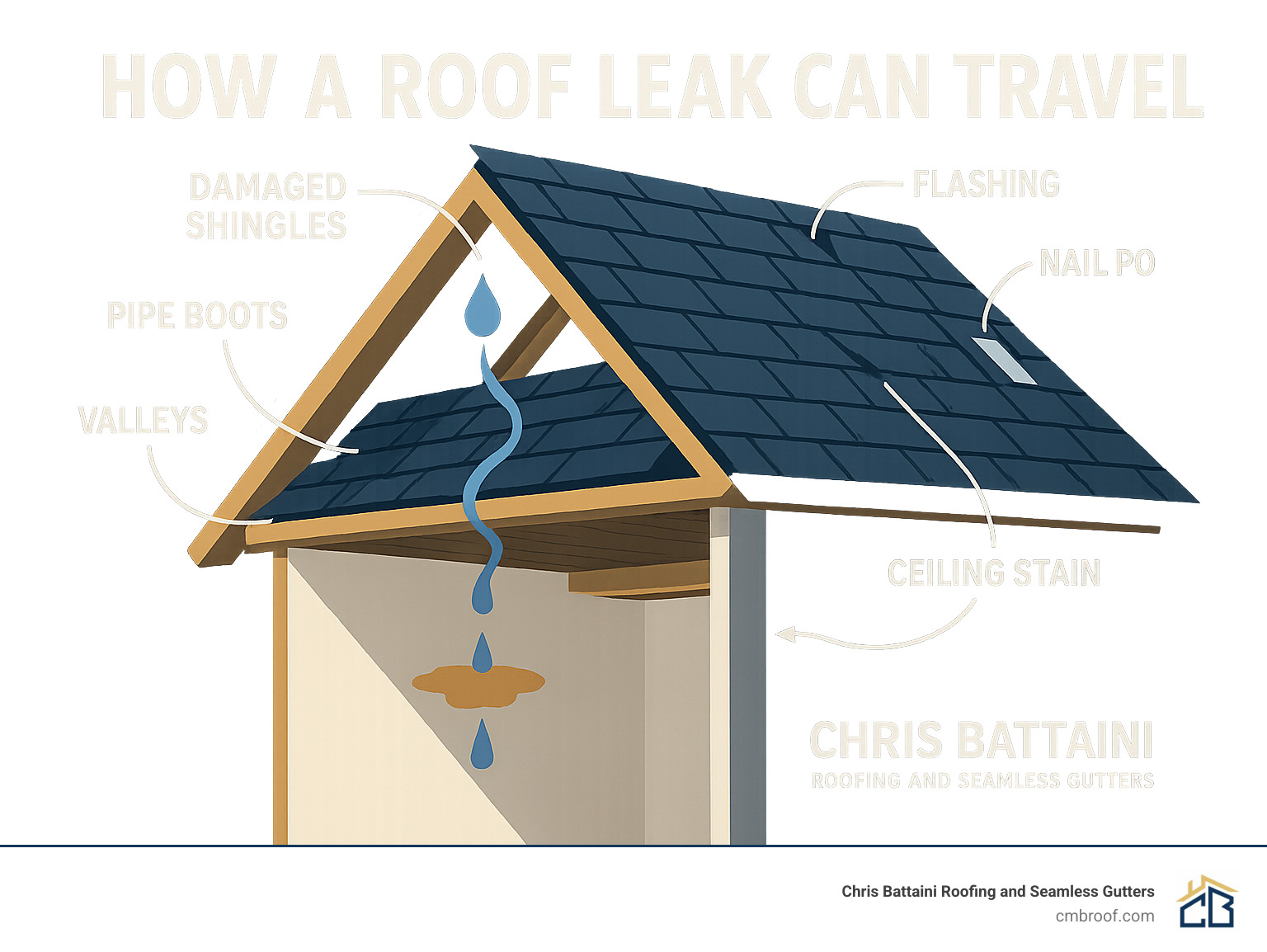
Don’t overlook your roof’s valleys where two slopes meet. These natural water channels need proper protection, as they handle more water than any other part of your roof. And those innocent-looking nail pops – where nails gradually back out of the roof deck – can create dozens of tiny entry points for water.
Even clogged gutters can force water to back up under your shingles, creating leaks where none should exist.
Hidden-Path Water Travel
Here’s the truly frustrating part about roof leaks: the water spot on your ceiling rarely aligns with the actual roof damage. One experienced contractor in our network shared this insight:
“I have found leaks to travel as much as 15′ from the origin and I could not see it! How did I find it? A FLIR camera.”
Water is guided by gravity but follows paths of least resistance. It slides along your roof decking, travels down rafters, follows electrical wires, and seeps through wall framing before finally dripping onto your ceiling – often far from where it first entered.
This capillary action means you should always look upslope from interior water damage. That stain above your dining room table? The actual roof problem might be near your chimney 10 feet away.
Leak-Finding Checklist
To effectively diagnose an asphalt shingle roof leak, we recommend this methodical approach:
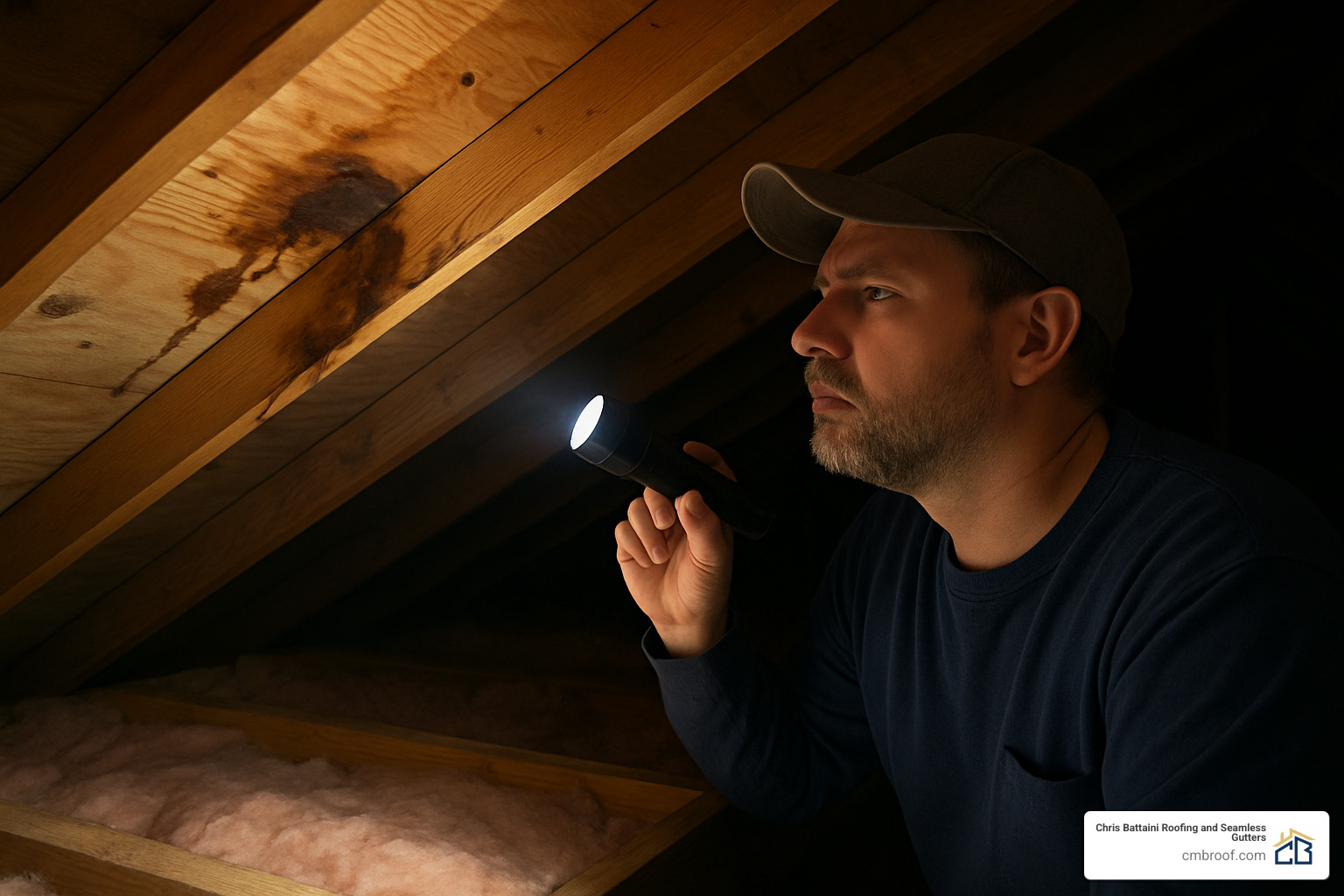
Start in your attic with a powerful flashlight, preferably at the end of a rainstorm when leaks are active. Look for wet insulation, water stains on rafters, or actual drips. Dark mold spots indicate long-term moisture issues that need immediate attention.
For exterior inspection, examine your roof for missing or damaged shingles, compromised flashing, or debris buildup in valleys. Those small rust spots on your shingles? They’re often nail pops creating tiny punctures.
When nature won’t provide rain for your investigation, create your own with the garden hose test. Start low on the roof and work upward, with a helper in the attic watching for water entry. This methodical approach helps isolate exactly where water penetrates your roof’s defenses.
For stubborn leaks, try dusting rafters with chalk dust to reveal water tracks, or use a moisture meter to detect dampness in wood that appears dry to the touch. Professional roofers often use thermal cameras to spot hidden moisture that’s impossible to see with the naked eye.
Here’s a clever tip we’ve used on tricky leaks: “Use rare-earth magnets taped under the roof and a compass on top to pinpoint leak location.” This technique helps locate specific damage points from inside the attic when the exterior shows no obvious problems.
Finding the true source of your leak is half the battle in asphalt shingle roof leak repair. With proper diagnosis, you can address the real problem rather than wasting time and money on patches that won’t solve the issue.
More info about Roof Leak Repair
Gear Up & Stay Safe: Tools, Materials, Costs
Ready to tackle that asphalt shingle roof leak repair? Before you climb that ladder, let’s make sure you’ve got everything you need for a safe, successful project. Think of this as your pre-flight checklist – skipping any of these items could leave you stranded halfway through the job!
Essential Tools
That dripping ceiling won’t fix itself, but you don’t need a contractor’s warehouse of tools either. Most homeowners already have some of these basics, and the rest can be borrowed or purchased affordably.
Your toolbox for asphalt shingle roof leak repair should include a flat pry bar (perfect for gently lifting shingles without breaking them), a sharp utility knife for precise cuts, and a reliable hammer for driving roofing nails. A quality caulk gun will help you apply sealant smoothly, while a simple trowel spreads roofing cement evenly where needed.
Don’t forget about access and safety gear too – a ladder tall enough to reach your roof safely (not stretched to its maximum height), a ladder stabilizer to protect your gutters, and comfortable gloves to protect your hands from sharp edges and hot shingles.

The materials list is equally straightforward: replacement shingles that match your existing roof (bring a sample when shopping if possible), 6d galvanized roofing nails that won’t rust through, quality roofing cement (avoid standard latex caulk – it won’t hold up to the elements), and 30# roofing underlayment for any deck repairs (the thinner 15# tears too easily to be reliable).
For catching debris and protecting your landscaping, a simple plastic tarp can save hours of cleanup time. And if you’re repairing a valley, invest in ice and water shield – this self-adhering membrane provides extra protection where water concentrates.
Ladder & Fall Protection Basics
I can’t stress this enough: gravity always wins. The CDC reports that over 100 people die annually from ladder accidents alone, with thousands more injured. These sobering statistics are why every asphalt shingle roof leak repair should begin with safety planning.
Never climb alone – always have a helper steady your ladder and keep an eye on you. Your ladder should extend at least 3 feet above the roof edge to provide a secure handhold when transitioning on and off the roof.
For steeper roofs (anything over a 6/12 pitch), a safety harness isn’t optional – it’s essential. Anchor it to a secure point like a chimney or roof truss. And regardless of pitch, soft-soled shoes with good traction can prevent a slip that sends you sliding.
The golden rule of roof work: if it’s wet, icy, or even covered in morning dew, postpone your repair. No leak is worth a trip to the emergency room.
Materials Budget Snapshot
Let’s talk dollars and cents. DIY asphalt shingle roof leak repair costs vary widely based on damage extent, but here’s what you might expect to spend (remember, these are average costs based on internet data, not actual costs from Chris Battaini Roofing and Seamless Gutters):
A tube of quality roofing sealant runs $4-12, while a bundle of asphalt shingles (covering about 33 square feet) ranges from $15 for basic three-tabs to $75 for architectural or premium options. You’ll need roofing nails ($3-9 per pound), and possibly some 30# underlayment ($20-60 per roll) or ice and water shield ($50-150 per roll) for more extensive repairs.
If you’re working on a steeper section, that safety harness will be $50-300 well spent.
Professional repairs naturally cost more due to expertise, proper equipment, and warranty protection. Based on internet data, here’s what homeowners might expect to pay a professional:
Pipe boot repair typically runs $750-$1,250, while metal pipe collar repairs range from $950-$1,650. Valley repairs, which address one of the most leak-prone areas, generally cost $1,550-$3,200. For chimney leak repairs, expect to pay $2,250-$4,250, while skylight leak repairs average $2,125-$4,300. Even a simple nail pop repair averages around $550.
These are just averages – the high end can easily reach 3x these figures depending on your roof’s complexity, materials used, and other factors specific to your home.
When weighing DIY versus professional repair, consider not just the immediate cost savings but also the long-term value of proper installation and warranty protection that comes with professional work. Sometimes the cheapest repair ends up being the most expensive in the long run.
Roofing and Guttering Services
Asphalt Shingle Roof Leak Repair – Step-by-Step
Ready to tackle that roof leak? Let’s explore the hands-on process of asphalt shingle roof leak repair. With the right approach, many homeowners can successfully handle this project themselves.
Prepare for Asphalt Shingle Roof Leak Repair
Timing matters when fixing your roof. Choose a warm, dry afternoon when shingles are more pliable and less likely to crack. As one of our seasoned roofers often tells customers, “Early summer mornings are best for removing shingles when they’re cool and less prone to breakage.”
Before climbing up, clear away any leaves, branches, and debris from the repair area. This gives you a clean workspace and prevents accidents. Using measurements from your attic inspection, mark the approximate leak position on your roof – this saves you time hunting for the damaged area once you’re up there.
Safety comes first! Position your ladder on level ground with a helper to steady it, and don’t forget your gloves, knee pads, and soft-soled shoes. For steeper roofs, that safety harness isn’t optional – it’s essential.

Remove & Replace Shingles for Asphalt Shingle Roof Leak Repair
Start by gently lifting the tabs of shingles above the damaged one using your pry bar. Work slowly – cold or aging shingles can be brittle. Once you’ve loosened the surrounding area, carefully remove the nails holding both the damaged shingle and the row above it. You’ll typically find four nails in each shingle, though some installers use six for high-wind areas.
After removing all nails, slide out the damaged shingle. Now for a pro tip: take your replacement shingle and round the back corners with your utility knife. This small step makes installation much smoother as the shingle slides into place without catching.
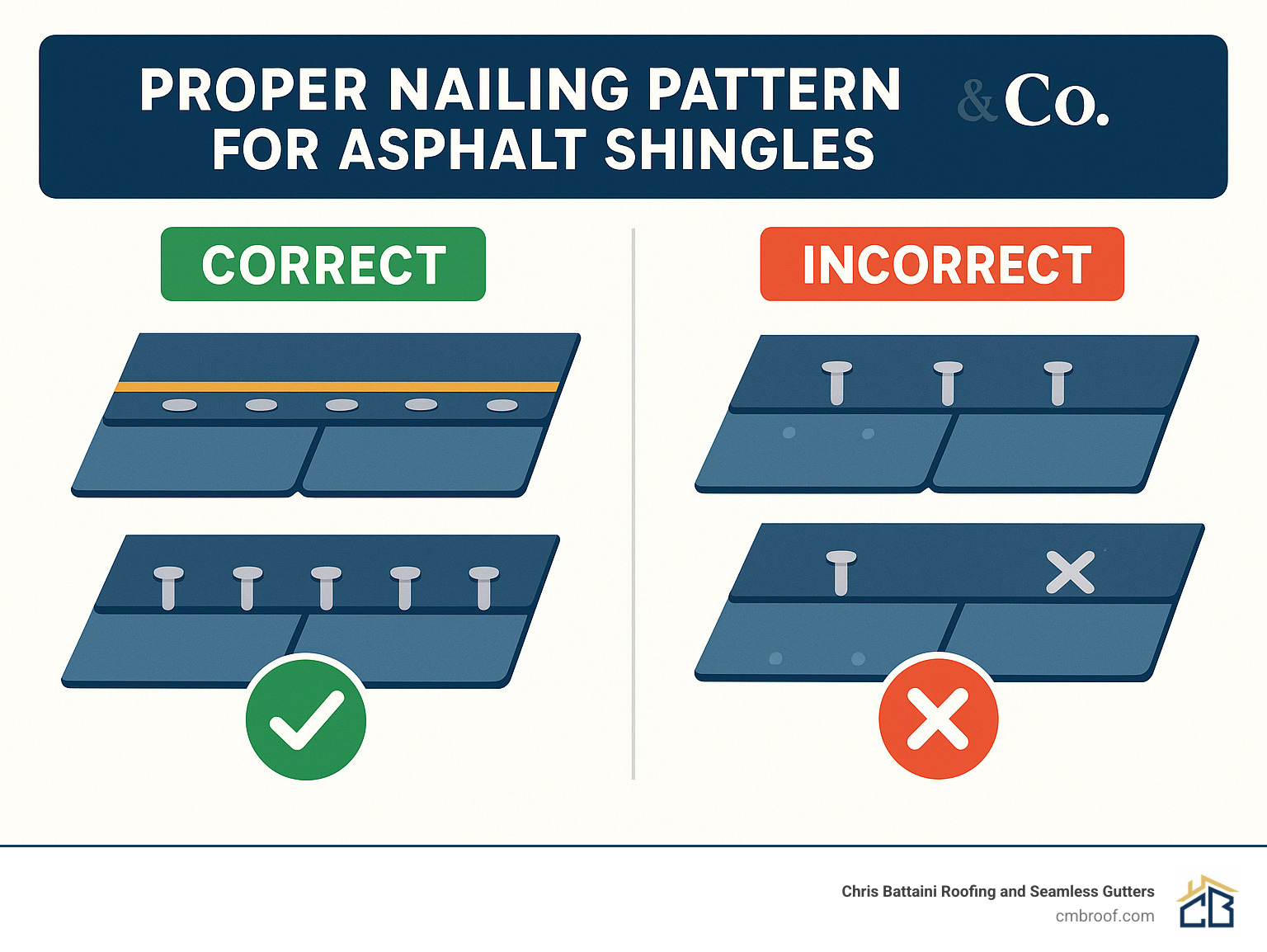
Position your new shingle, ensuring it aligns perfectly with surrounding rows. Secure it with 6d galvanized roofing nails, placing them just below the adhesive strip of the shingle above. Then, seal those nail heads with a dab of roofing cement to prevent water intrusion.
Don’t forget to reseal the tabs of surrounding shingles you lifted earlier. Apply a small amount of roofing cement under their edges and press down firmly to restore the water-tight seal.
Seal Curled or Cracked Shingles
Not every damaged shingle needs replacement. For those with curled corners but still structurally sound, apply roofing cement under the curled portion, press it down, and weight it with a brick for 24 hours until the adhesive sets.
For cracked shingles, the fix is similar – apply roofing cement under the crack, press the shingle down, then add another layer over the top of the crack. One of our Berkshire County customers shared: “A good dollop of roof cement at each corner is usually enough, and the repair should last about five years.”
Want your repair to blend in? Here’s a little trick we use: collect granules from your gutters or loose ones from your roof and sprinkle them over the fresh sealant. This camouflages the repair and adds UV protection to the exposed sealant.
Patch Deck & Underlayment
Sometimes the damage goes deeper than just the shingles. If you find rotted or damaged decking underneath, you’ll need to address that too.
Remove additional shingles to fully expose the damaged area. Using a saw, cut out the rotted OSB or plywood, making your cuts at the centers of the rafters on either side for proper support. Cut a replacement piece to fit and secure it with appropriate nails or screws.
Next comes the underlayment – always opt for 30# roofing felt rather than 15#. As our crew foreman explains, “30# underlayment is stiffer and can slide under existing layers without tearing.” For valley repairs, install ice and water shield at least 3 feet wide up the entire valley for maximum protection against future leaks.
Once your deck and underlayment are sound, replace the shingles following the steps outlined above.
Check Your Work & Water-Test
After completing your asphalt shingle roof leak repair, take a moment to visually inspect your work. Make sure all shingles are properly aligned and sealed with no loose edges.
Clean up all debris and old materials from the roof – leaving them can clog gutters or cause future damage. Then comes the moment of truth: the water test. Use a garden hose to simulate rainfall over the repaired area, starting at the bottom and working your way up. Have someone check the attic for any signs of continued leaking.
Smart homeowners also document their repairs with photos. These can be invaluable for your records and potential insurance claims down the road.
What NOT to Use: Flex-Seal Myth Bust
You’ve probably seen those dramatic TV commercials showing amazing results with spray-on sealants like Flex Seal. While tempting for a quick fix, these products have serious drawbacks for asphalt shingle roof leak repair.
First, using these products will likely void both manufacturer and workmanship warranties. In fact, Flex Seal’s own FAQ states, “Flex Seal is not intended for use by Professional Roofers.” That should tell you something!
These products provide only a temporary fix because they’re UV resistant but not UV stabilized, meaning they’ll dry out and crack over time. They can actually accelerate the deterioration of surrounding shingles and create unsightly black spots that hurt your home’s curb appeal.
Perhaps worst of all, these sealants make proper repairs more difficult later when a professional needs to address the real problem. As one of our project managers puts it: “No reputable roofer will recommend Flex Seal for roof leak repairs. It’s like putting a bandaid on a broken arm.”
For lasting protection of your Berkshire County home, stick with traditional repair methods that address the root cause of your leak, not just its symptoms. Learn more about why Flex Seal isn’t recommended for roof repairs.
More info about Roof Leak Repair
DIY vs Hiring a Pro: Costs, Warranties & Timing
When facing an asphalt shingle roof leak repair, you’re standing at a crossroads: roll up your sleeves or call the professionals? Both paths have their merits, and your choice depends on several factors that go beyond just saving a few dollars.
When DIY Makes Sense:
That ladder in your garage looks mighty tempting when you’re facing a simple repair. DIY can be appropriate when you’re dealing with a gentle-sloped roof (4/12 pitch or less), the damage is limited to just a few shingles, and you’ve got a decent comfort level with heights. If you already own the necessary tools, have proper safety equipment, and the weather’s cooperating, a DIY repair might make perfect sense – especially if your roof is still relatively young (under 15 years old).
As one homeowner shared: “I fixed three damaged shingles myself after a windstorm. It took about two hours and cost me less than $30 in materials. The repair has held up perfectly for three years now.”
When to Call Professionals:
Some situations clearly call for expert hands. If your roof resembles a ski slope (6/12 pitch or steeper), the damage extends beyond a few simple shingles, or you break into a cold sweat just climbing the second rung of a ladder – it’s time to call the pros. Similarly, if the leak involves flashing, structural components, or your roof is showing its age at 15+ years, professional evaluation is your wisest choice.
Professional roofers bring specialized equipment, years of experience identifying hidden issues, and perhaps most importantly, the ability to maintain your roof’s warranty coverage – something easily voided by DIY repairs.

Average Repair Price Ranges
The cost spectrum for asphalt shingle roof leak repair is wider than many homeowners expect. Based on internet data (not actual costs from Chris Battaini Roofing and Seamless Gutters), here’s what you might encounter:
For the brave DIYer, materials typically run between $10-$120 depending on the extent of damage. Professional repairs, however, reflect the training, equipment, warranty, and liability insurance that come with expert service:
Basic repairs: Nail pop fixes average around $550, while pipe boot replacements typically range from $750-$1,250.
Moderate repairs: Metal pipe collar repairs generally cost $950-$1,650, and roof-to-wall flashing repairs run $1,750-$3,800.
Complex repairs: Valley repairs, critical to your roof’s watershed system, typically range from $1,550-$3,200. Chimney leak repairs often cost $2,250-$4,250, while skylight repairs generally fall between $2,125-$4,300.
High-end repairs can cost at least three times these average prices, depending on complexity, materials used, and other factors like roof accessibility and pitch.
Warranty Implications
This crucial factor often gets overlooked until it’s too late. Your roofing decisions today can have significant impacts on your coverage tomorrow:
Manufacturer warranties typically require professional installation and repair to remain valid. That tube of caulk in your hands might save $500 today but could void coverage on a $15,000 roof replacement later.
Workmanship warranties provide additional peace of mind. When professionals like Chris Battaini Roofing and Seamless Gutters complete your repair, you receive guarantees on the work performed – something no DIY project can offer.
Insurance considerations matter too. Many homeowners insurance policies specify professional repairs to maintain coverage for future claims. As one unfortunate homeowner finded: “I tried fixing my leak with store-bought sealant. Not only did it fail within months, but when more serious damage occurred, my insurance denied the claim because of my ‘unapproved repair methods.'”
The Cost of Delay
Perhaps the most expensive decision isn’t between DIY and professional repair – it’s choosing to wait. Postponing your asphalt shingle roof leak repair can lead to cascading expenses:
Water intrusion quickly damages insulation, reducing your home’s energy efficiency and potentially leading to mold growth. Mold remediation alone can cost thousands, far exceeding what you’d pay for prompt roof repairs.
Moisture in your attic can warp structural components, damage drywall, and create electrical hazards where water contacts wiring. What begins as a minor annoyance can evolve into a major renovation project.
As one roofing contractor bluntly puts it: “A $500 repair ignored today becomes a $5,000 problem six months from now.”
For peace of mind and protection of your largest investment, consider reaching out to professionals like us at Chris Battaini Roofing and Seamless Gutters. Our owner-led, on-site service ensures exceptional quality, and our workmanship warranties provide lasting protection for Berkshire County homeowners.
Frequently Asked Questions about Asphalt Shingle Roof Leak Repair
How long can I safely delay a small roof leak?
That drip in your ceiling might seem minor today, but no leak should ever be ignored. Water is sneakier than you might think – it doesn’t politely stay in one spot but travels along your home’s structure, causing damage far from where it first entered.
“A leak that starts as a ceiling stain can turn into a major repair bill within just one season,” notes a Berkshire County contractor with 20+ years of experience.
While it’s fine to place a bucket under an active drip as a temporary measure, you should schedule a proper inspection and asphalt shingle roof leak repair as soon as possible. Our New England climate, with its freeze-thaw cycles and heavy snow loads, can accelerate water damage dramatically.
The longer you wait, the more you risk:
– Rotting roof decking and structural framing
– Saturated insulation (which loses its effectiveness and becomes heavy)
– Mold growth (which can spread throughout your attic)
– Interior damage to ceilings, walls, and belongings
– Higher eventual repair costs – what might start as a $750 repair could balloon into thousands
Is asphalt shingle roof leak repair a weekend DIY project?
For the right person and the right situation, absolutely! Many Berkshire homeowners successfully tackle asphalt shingle roof leak repair themselves. The key is honestly assessing a few critical factors before climbing that ladder.
First, consider your roof’s pitch. A shallow-pitched roof (4/12 or less) can be relatively safe to work on with proper precautions. However, anything steeper than 6/12 becomes significantly more challenging and dangerous – those roofs are best left to professionals who have the proper safety equipment and experience.
Your comfort level with heights matters too. Be honest with yourself – if climbing a ladder makes your palms sweat, DIY roof repair probably isn’t for you. And that’s perfectly okay!
Weather plays a crucial role as well. Choose a warm, dry day when shingles are more pliable and less likely to crack. Working on a wet or icy roof is extremely dangerous, even for professionals.
Finally, consider your roof’s age. If your asphalt shingles are over 15 years old, what looks like a simple leak might actually be a sign that more comprehensive work is needed. In these cases, a professional evaluation can save you time and money in the long run.
Will homeowner’s insurance pay for my leak repair?
The answer isn’t always straightforward and depends largely on what caused your leak in the first place.
Most homeowner’s insurance policies will cover asphalt shingle roof leak repair when the damage results from sudden, unexpected events like:
– Storm damage (wind, hail, falling branches)
– Accidents (like a tree falling on your roof)
– Vandalism or other unexpected damage
However, your claim might be denied if the leak stems from:
– Normal aging and wear of your shingles
– Lack of regular maintenance
– Pre-existing damage you didn’t address
– Improper installation (though you might have recourse with the installer)
“Document everything,” advises a local insurance adjuster. “Take photos after storms, keep receipts from all repairs, and have regular inspections. This creates a paper trail that can make insurance claims much smoother.”
Before filing a claim, consider your deductible amount. If your asphalt shingle roof leak repair will cost less than your deductible, it probably doesn’t make sense to file a claim, as it could potentially affect your future premiums.
A professional assessment from Chris Battaini Roofing and Seamless Gutters can help determine if your damage warrants an insurance claim. We can provide the detailed documentation you’ll need and guide you through the often confusing claims process.
Chris Battaini Roofing and Seamless Gutters proudly serves Berkshire, Hampden, Hampshire & Franklin Counties in Massachusetts.
Conclusion
When it comes to asphalt shingle roof leak repair, timing isn’t just important—it’s everything. That small drip from your ceiling today could mean thousands in repairs tomorrow if left unchecked. Whether you’re a confident DIYer tackling a simple shingle replacement or you’re calling in the professionals for a more complex issue, addressing leaks promptly protects both your home and your wallet.
Remember what matters most as you consider your repair options:
Your safety comes before anything else. No roof repair is worth risking a fall—proper equipment and safe weather conditions aren’t optional, they’re essential. Those CDC ladder statistics aren’t just numbers; they represent real people who thought “it won’t happen to me.”
That mysterious ceiling stain? It’s playing hide-and-seek with you. Water loves to travel, sometimes 15 feet or more from its entry point, making leak detection something of a detective game. This is why proper diagnosis matters so much before you start ripping up shingles.
Quality materials make all the difference between a repair that lasts years and one that fails with the next rainstorm. That bargain caulk might save you $5 today but cost you hundreds when it fails prematurely. And those spray-on “miracle” products? They’re usually just expensive ways to void your warranty.
Speaking of warranties—they matter. Before you climb that ladder, understand what your DIY repair might mean for your manufacturer’s coverage. Some things are worth paying a professional to handle, especially when warranty protection is at stake.
At Chris Battaini Roofing and Seamless Gutters, we bring more than just tools to your roof. We bring an understanding of Berkshire County’s unique weather patterns, from summer thunderstorms to winter ice dams. Our owner-led approach means you’re getting craftsman-quality work, not rushed corner-cutting from an unsupervised crew.
Your home deserves protection from someone who understands that a roof isn’t just shingles and nails—it’s your family’s shelter and one of your largest investments. Whether you need a simple repair or advice about extending the life of your entire roofing system, we’re here to help.
Don’t let today’s small leak become tomorrow’s major headache. Learn more about our Asphalt Shingle Roofing services and how we can help keep your home dry and secure for years to come.
Chris Battaini Roofing and Seamless Gutters proudly serves Berkshire, Hampden, Hampshire & Franklin Counties in Massachusetts.
