-
10 Wendell Ave Extension Pittsfield, MA 01201
-
210 Columbia St., Lee, MA 01238

Looking at your aging roof and wondering what comes next? You’re not alone. Most Berkshire County homeowners will face an asphalt roof replacement at least once during their homeownership journey. Here’s what you need to know at a glance:
| Aspect | Details |
|---|---|
| Average Cost | $4.41-$5.76 per square foot (2024) |
| Typical Timeline | 1-3 days for average homes |
| Materials Included | Decking, underlayment, ice & water shield, drip edge, shingles, flashing, ridge caps, pipe boots, vents |
| When to Replace | Age 15-20+ years, visible damage, leaks, or 2+ existing layers |
| Lifespan | 20-30 years with proper installation and maintenance |
As America’s most popular roofing material, asphalt shingles protect millions of homes across the country—but even the best materials have a lifespan. Your roof works tirelessly as your home’s first defense against everything Mother Nature throws at it, from scorching summer heat to heavy winter snowfall.
“I like to say a roof replacement is like putting a puzzle together; you simply put the right pieces in the right places,” notes roofing expert Bill Ragan. This straightforward approach explains why asphalt shingle roofs remain so popular—they offer an excellent balance of affordability, durability, and relatively simple installation.
For those of us in Berkshire County and Southern Vermont, our roofing needs are unique. Our homes endure heavy snow loads, intense freeze-thaw cycles, and summer storms that can accelerate wear on roofing materials. Finding a contractor who understands these regional challenges is crucial for a successful asphalt roof replacement.
Whether you’re replacing due to age, storm damage, or to boost your home’s value before selling, this guide will walk you through the entire process—from recognizing when it’s time, to understanding materials, navigating costs, and setting proper expectations for your project.
Your roof isn’t just another component of your home—it’s your primary shield against the elements. When it fails, the consequences can quickly cascade into serious problems: water damage that ruins ceilings and walls, mold growth that threatens your family’s health, structural deterioration that compromises safety, and repair costs that can run into thousands of dollars.
Here in Berkshire County, our homes face distinctive challenges that homeowners in other regions might not understand. Our heavy winter snow loads put tremendous pressure on roofing systems, while the frequent freeze-thaw cycles we experience can accelerate shingle deterioration and create ice dams. Understanding the asphalt roof replacement process isn’t just helpful—it’s essential for protecting your biggest investment.
Being informed means you’ll recognize warning signs before they become emergencies. You’ll know what questions to ask potential contractors, understand the materials being used, and set realistic expectations for both timeline and budget. This knowledge empowers you to make confident decisions rather than rushed ones during what can otherwise be a stressful home improvement project.
This guide aims to explain the entire process, from the first curling shingle to the final inspection of your beautiful new roof. Because when it comes to keeping your family safe and dry, knowledge truly is power.
That moment when you realize your roof might need more than a simple patch can be stressful. Your roof silently protects your home day after day, year after year—until suddenly, it doesn’t. Let’s talk about how to recognize when it’s time for a full asphalt roof replacement rather than another repair.
Most asphalt shingle roofs faithfully serve for 15-30 years, depending on quality and installation. As your roof approaches the 20-year milestone, it’s wise to start planning for replacement even if problems aren’t obvious yet.
Look up at your roof from your yard. Do you see shingles that are curling at the edges or buckling in the middle? These are clear signs your roof is entering its final chapter. Similarly, if you spot dark patches where protective granules have worn away, or find these tiny granules collecting in your gutters after rain, your shingles are actively deteriorating.
“No fixed expiration date exists for asphalt shingles,” explains roofing experts. “Their condition and lifespan depend on factors like weather conditions, UV exposure, moisture levels, and manufacturing quality.”
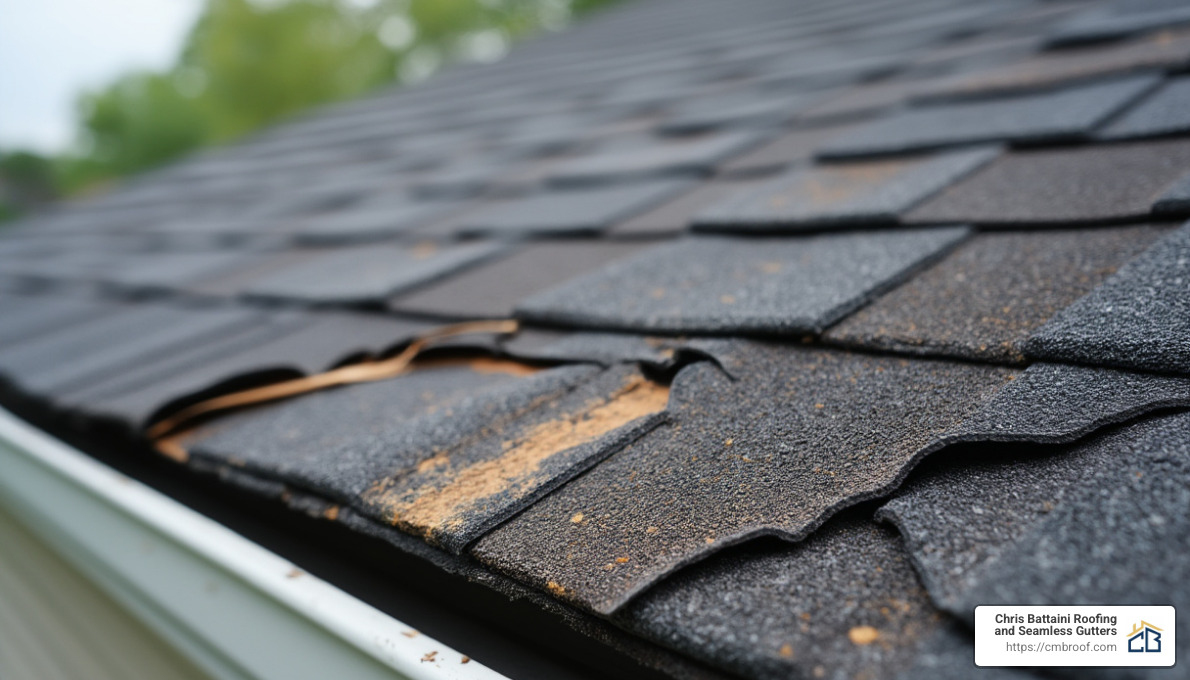
For homes in our service area of Berkshire County and Southern Vermont, harsh winter conditions can accelerate roof aging. The cycle of ice dams, heavy snow loads, and rapid temperature swings puts extraordinary stress on roofing materials, potentially shortening their lifespan by several years.
Interior water stains on your ceiling or walls tell a troubling story—your roof is no longer providing adequate protection. And if you’ve already got two layers of roofing materials up there, most building codes will require a complete tear-off for your next project.
After severe weather blows through, widespread damage might make replacement more economical than multiple repairs. When repair costs start approaching 30% of replacement, it’s usually smarter to invest in a new roof.
More info about Roof Leak Repair
Some roof problems announce themselves more dramatically than others. If your roof deck is sagging or drooping in areas, this is a serious red flag that the supporting structure may be compromised by moisture damage. This isn’t just an aesthetic issue—it’s structural.
Step into your attic on a sunny day and look up. Can you see daylight peeking through the roof boards? If light can get in, water can too. This indicates significant deterioration that patches simply won’t fix.
Have your energy bills mysteriously climbed? A failing roof often loses its insulating properties, forcing your heating and cooling systems to work overtime. This hidden cost of a deteriorating roof can add up quickly.
When large sections of your roof appear noticeably darker from the ground, you’re seeing areas where protective granules have worn away completely. These “bald spots” leave your home vulnerable to water intrusion and accelerated deterioration.
Even flat-lying shingles that show cracking signal trouble—they’ve become brittle from age and UV exposure. While moss or algae growth might seem merely cosmetic, extensive growth traps moisture against your shingles, speeding up their breakdown.
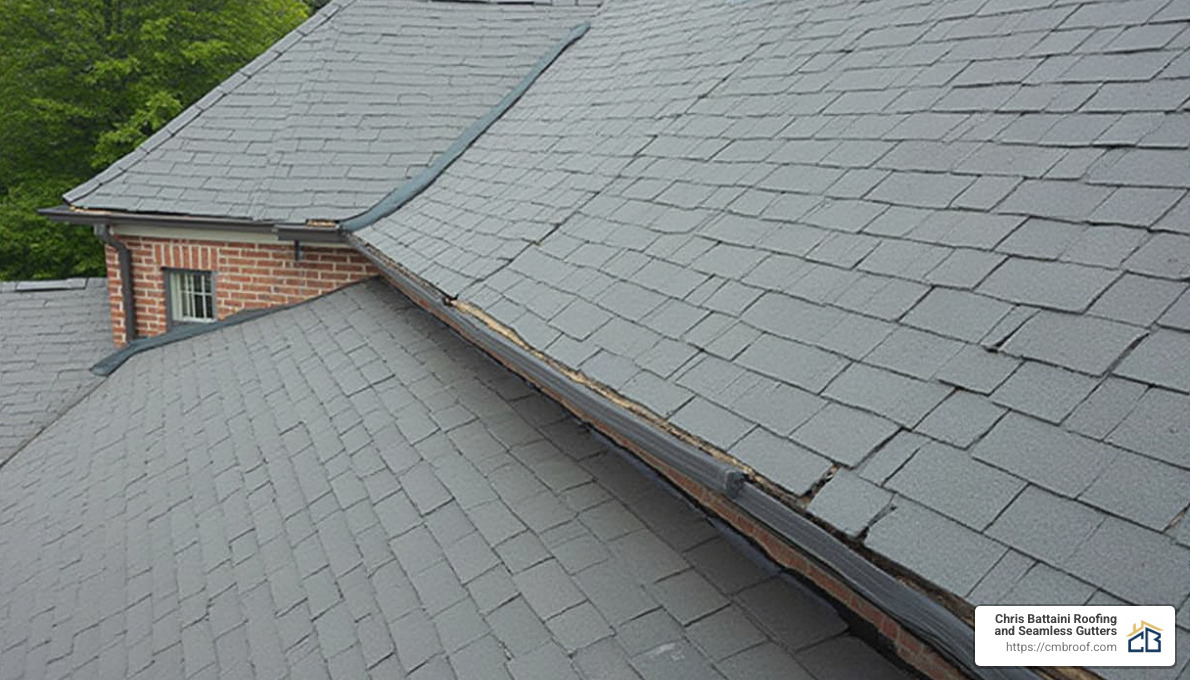
Don’t overlook your flashing—those metal pieces around chimneys, vents, and valleys. When flashing becomes damaged or rusted, it creates entry points for water that spot repairs often can’t adequately address.
At Chris Battaini Roofing and Seamless Gutters, we’ve witnessed how postponing necessary roof replacement can transform minor issues into major headaches. When we inspect homes throughout Berkshire County and Southern Vermont, we carefully look for these warning signs to give you honest advice about whether repair or replacement makes more sense for your situation and budget.
A quality asphalt roof replacement is much more than just slapping new shingles on your home. Think of it as a complete protection system with multiple layers working together to keep your family safe and dry. Understanding these components helps you make smarter decisions when it’s time to replace your roof.
When I visit homes across Berkshire County, I often find homeowners surprised by how many elements go into a proper roof installation. Let’s break down what makes up a complete roofing system.
Your roof is like a well-designed sandwich, with each layer serving a crucial purpose. A complete asphalt roof replacement includes decking (the structural foundation of your roof), underlayment (the water-resistant barrier that protects your deck), and ice & water shield (extra protection in vulnerable areas like eaves and valleys).
You’ll also need proper drip edge (the metal flashing that directs water away from fascia boards), various types of flashing (for chimneys, vents, and other roof penetrations), the asphalt shingles themselves, ridge capping to protect the peaks, ventilation components, and pipe boots to seal around plumbing vents.
“I tell my customers to think of their roof as a team where every player has an important job,” says Bill Ragan, roofing expert. “Skip one component, and the whole system becomes vulnerable.”
Here in our snowy corner of Massachusetts and Vermont, certain components like ice & water shield deserve extra attention. We’ve repaired too many homes where inadequate ice dam protection led to interior damage during our harsh winters.

When comparing synthetic versus traditional felt underlayment, we generally recommend synthetic for its superior water resistance and durability. Don’t forget about starter strips either – these specialized first-row shingles provide crucial wind resistance at the roof’s edge, where uplift forces are strongest during storms.
Walking through the shingle aisle at a home improvement store can feel overwhelming. Let me simplify your options:
| Feature | 3-Tab Shingles | Architectural Shingles | Designer/Premium Shingles |
|---|---|---|---|
| Appearance | Flat, uniform pattern | Dimensional, textured look | Distinctive, premium appearance |
| Weight | Lightest (2.0-2.3 lbs/sq ft) | Medium (2.3-2.6 lbs/sq ft) | Heaviest (2.7-3.0+ lbs/sq ft) |
| Lifespan | 15-20 years | 25-30 years | 30-50 years |
| Wind Rating | 60-70 mph | 110-130 mph | 110-150 mph |
| Cost | Lowest ($) | Medium ($$) | Highest ($$$) |
| Warranty | Basic (15-25 years) | Better (30+ years) | Best (Lifetime) |
| Installation | Easiest | Moderate | Most complex |
3-Tab Shingles are the economy option – flat, uniform, and basic. They’ll do the job, but with shorter lifespans and less wind resistance. Think of these as the compact car of roofing – functional but basic.
Architectural Shingles (also called dimensional or laminate) offer that beautiful textured look that mimics wood shakes. Their multi-layer construction provides better durability and wind resistance – crucial for our Berkshire County winters. These are the SUVs of roofing – a perfect balance of performance and value.
Designer/Premium Shingles pull out all the stops with distinctive appearances and maximum durability. With features like extra-wide tabs and special color blends, they’re the luxury vehicles of the shingle world – impressive to look at and built to last.
For homes in our region, we typically recommend at least architectural shingles. The extra wind and impact resistance is invaluable during those January nor’easters and summer thunderstorms that roll through our mountains. The modest price increase over basic 3-tabs pays for itself with longer life and better protection.
When Chris is on-site for your asphalt roof replacement, he’ll help you steer these options based on your home’s specific needs, your aesthetic preferences, and your budget constraints. Having the owner directly involved means you get expert guidance custom to your situation, not a one-size-fits-all sales pitch.
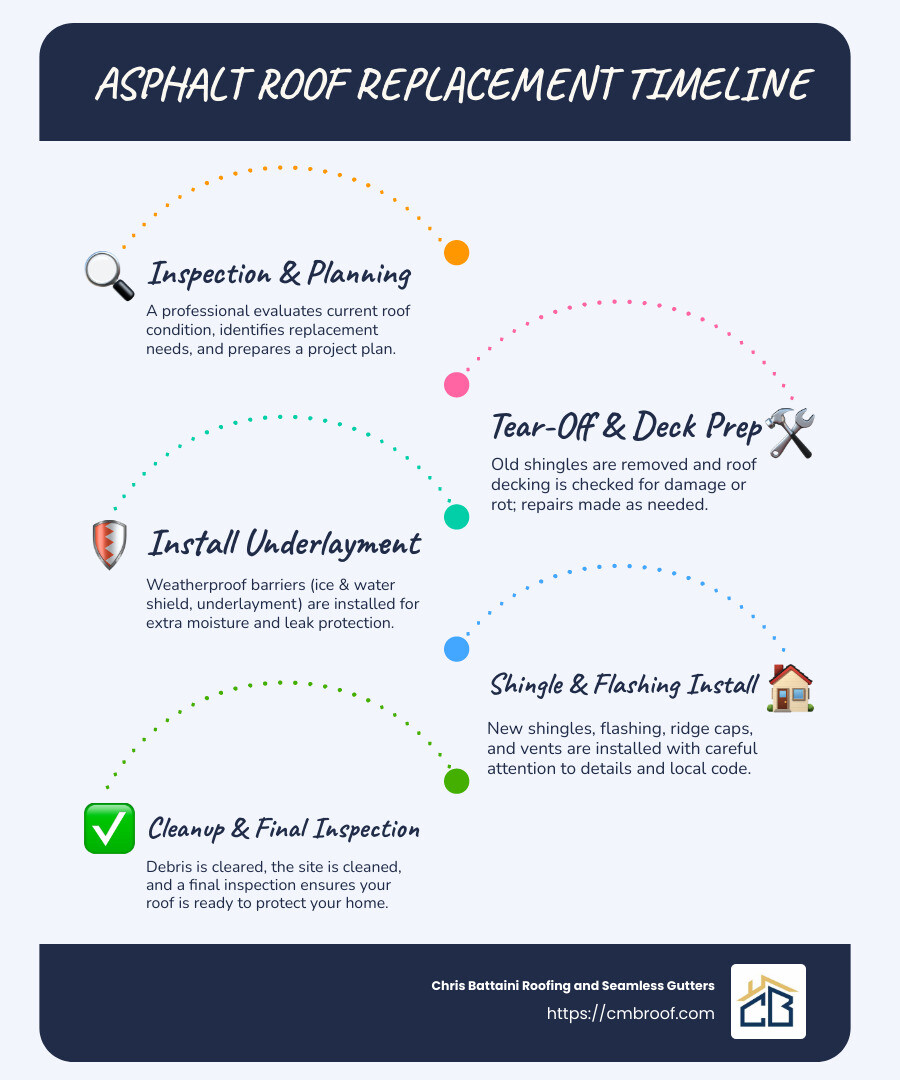
Understanding what happens during an asphalt roof replacement helps you prepare for the project and know what to expect. Here’s how we transform your old, worn roof into a beautiful, protective new one at Chris Battaini Roofing and Seamless Gutters:
The journey begins with preparation and protection. Before a single shingle is removed, we carefully shield your landscaping, siding, and other vulnerable areas with tarps and plywood. Your property’s protection is our priority from day one.
Next comes the tear-off – admittedly the messiest and noisiest part of the process. Our crew systematically removes all existing roofing materials down to the deck, including old shingles, underlayment, and flashing. This clean slate approach ensures we can properly assess and address any underlying issues.
With the roof deck exposed, we perform a thorough deck inspection, looking for signs of damage, rot, or structural weaknesses. “This step is critical,” Chris often tells homeowners. “What’s hiding under those old shingles tells us a lot about what your home needs.” Any compromised sections are promptly repaired or replaced to provide a solid foundation.
The rebuilding begins with drip edge installation along the eaves – that metal flashing that directs water away from your fascia and into the gutters, protecting your home from potential water damage.
Next, we apply the weather barrier – first laying ice and water shield along eaves, in valleys, and around penetrations (those spots most vulnerable to leaks), followed by underlayment across the entire roof surface. This critical moisture barrier provides an extra layer of protection beneath your shingles.
Proper flashing installation follows, with new flashing carefully placed around chimneys, vents, skylights, and in valleys. These metal pieces are your roof’s first line of defense against water intrusion at transition points.
The starter strip application comes next – special shingles installed along the eaves and rakes that provide proper sealing and crucial wind resistance. Think of these as the foundation for your visible shingles.
Now for the main event – shingle installation. Working methodically from bottom to top, we lay each shingle with precise nailing patterns to ensure maximum wind resistance. “Each shingle is secured by two rows of nails to achieve rated wind resistance,” as industry experts confirm. This attention to detail makes all the difference in your roof’s performance and longevity.
For proper ventilation, we install ridge vents along the peaks if included in your system design. These allow your attic to breathe properly, extending the life of both your roof and your home.
We finish the shingle work with ridge cap application, placing specialized ridge cap shingles over the peaks and hips to protect these vulnerable areas while providing a finished, polished look.
Once all roofing components are in place, we conduct a meticulous clean-up. All debris is removed, powerful magnets sweep the area for nails, and we restore your property to its original condition – often leaving it cleaner than we found it!
Finally, we perform a final inspection, examining every detail to ensure all components are properly installed and the job site is spotless. Only when everything meets our exacting standards do we consider the job complete.
Most residential asphalt roof replacements take 1-3 days to complete, though several factors affect this timeline.
Roof size and complexity plays a major role – a simple ranch-style home goes much faster than a Victorian with multiple dormers and steep pitches. Weather conditions can also impact our schedule; while we monitor forecasts carefully, Mother Nature occasionally forces brief delays for safety and quality reasons.
The extent of repairs needed once we expose your roof deck can add time, which is why we build some flexibility into our scheduling. Our crew size – always adequate for your specific project – helps us work efficiently, while roof accessibility (how easily we can reach all areas) can sometimes add challenges.
For an average home in Berkshire County (around 1,700-2,000 square feet of roof area), we typically complete the replacement in 1-2 days with our experienced crew. We believe in clear communication about timelines – you’ll know what to expect before we start and we’ll keep you updated as work progresses.
Knowing what to expect during your asphalt roof replacement helps you prepare your home and family for the brief disruption:
Noise levels are something to plan for – roof replacement is undeniably loud, especially during tear-off. If you work from home or have young children or sensitive pets, you might want to make alternative arrangements during the noisiest parts of the project.
Debris management is a priority for our teams. We use tarps and debris chutes to control waste, but the nature of the work means some dust and small debris is inevitable. We minimize this as much as possible.
Our crews typically arrive early (7-8am) and work until late afternoon, maximizing daylight hours to complete your project efficiently. The hammering and nail guns can cause minor vibrations throughout your home, so consider removing or securing fragile items beforehand.
A roll-off dumpster will be placed in your driveway or yard for debris disposal, and we establish clear safety zones around work areas to protect both your family and our crew.
For pet owners, we recommend keeping your pets indoors or off-site during the project. The unfamiliar noise and activity can be stressful for animals, and their safety is important to us too.

At Chris Battaini Roofing and Seamless Gutters, our owner-led approach means Chris is on-site supervising your project, ensuring quality craftsmanship and addressing any concerns immediately. This hands-on leadership is rare in the industry but standard practice for us – because we believe your home deserves nothing less than personal attention.
Let’s talk dollars and cents – because we all know a new roof is a significant investment in your home. The good news? Understanding what drives costs helps you budget smarter and spot real value in the quotes you receive.
As of April 2024, you can expect to pay between $4.41 and $5.76 per square foot for a quality asphalt roof replacement. In roofing lingo, we measure in “squares” (each being 100 square feet), so that’s about $441-$576 per square.
What does this mean for your actual home? Let’s make it real:
For an average 1,700 square foot roof (17 squares), you’re looking at approximately $7,497-$9,792. If you have a larger home with about 3,000 square feet of roof area (30 squares), the range jumps to $13,230-$17,280.
Your final price depends on several key factors. Higher-quality architectural shingles will cost more than basic 3-tab options, but they also last longer and look better. Roof complexity matters too – those steep pitches, multiple levels, and skylights all add labor time and materials. And don’t forget about tear-off costs – removing your old roof (especially if there are multiple layers) adds to the bottom line.
Here in Berkshire County and Southern Vermont, our weather demands some extra considerations. We typically recommend additional ice and water shield protection and improved ventilation solutions to handle our heavy snow loads and temperature swings.
“Most homeowners find peace of mind worth the investment,” Chris often tells clients. “Cutting corners on your roof usually means paying more down the road.”
At Chris Battaini Roofing and Seamless Gutters, we believe in transparent pricing. Our detailed estimates show exactly what you’re paying for – no surprises, no hidden fees.
Latest research on asphalt shingle costs
Your new asphalt roof replacement typically comes with two distinct types of protection, and understanding the difference is crucial.
First, there’s the manufacturer’s material warranty. This covers defects in the shingles themselves and typically ranges from 25 years to “lifetime” (which usually means about 50 years in warranty-speak). These warranties often become prorated after the first few years, meaning the coverage gradually decreases over time. Many are transferable to a new homeowner once, which can be a nice selling point if you move.
Just as important is your contractor’s workmanship warranty. This covers installation errors and can vary dramatically between roofing companies – from as little as 1 year to 25+ years. This warranty is only as good as the company behind it. A lifetime warranty from a company that’s been in business for six months isn’t worth much!
We’ve seen too many Berkshire County homeowners left hanging when their roofing contractor disappeared after problems developed. That’s why at Chris Battaini Roofing and Seamless Gutters, we provide exceptional workmanship warranties backed by our longstanding presence in the community.
When reviewing warranty paperwork, pay special attention to what might void your coverage. Common pitfalls include improper attic ventilation, unauthorized repairs, or neglecting basic maintenance. We’ll walk you through all the details and provide clear documentation for both warranties.
The bottom line? A quality roof installed by professionals should protect your home for decades. We’re committed to being here throughout that time, standing behind our work long after the final nail is driven.
The performance and longevity of your new roof depend not just on the shingles, but on a complete system working together. When you’re planning your asphalt roof replacement, these components deserve careful consideration—they’re the difference between a roof that just looks good and one that truly protects your home for decades.
Choosing the right shingles isn’t just about picking a color you like (though that matters too!). Think of your shingles as both your home’s armor and its crown—they need to be both functional and beautiful.
Color and appearance should complement your home’s architectural style and neighborhood aesthetics. A charming colonial might look best with traditional colors, while a modern home might benefit from something more contemporary. Lighter colors reflect more heat, potentially saving on cooling costs during Berkshire County summers.
Performance features are where the real value lies. If you’ve ever seen those ugly black streaks on roofs around the neighborhood, you’ll appreciate algae-resistant shingles with copper-infused granules. For homes in windier areas of Southern Vermont, higher wind ratings provide peace of mind during those blustery nor’easters. And if you’re concerned about energy efficiency, look for ENERGY STAR® rated options that reflect more of the sun’s rays.
“The right shingle choice pays dividends for decades,” says Chris Battaini. “We help homeowners balance appearance, performance, and budget to find their perfect match.”
Weight and durability go hand-in-hand—heavier shingles typically offer better wind resistance and longer lifespans. And always pay attention to warranty coverage, as manufacturers stand behind their better products with more comprehensive protection.

Proper attic ventilation is the unsung hero of roof performance. Think of it as your roof’s respiratory system—when it works well, everything else functions better too.
A properly ventilated roof stays cooler in summer and drier in winter. This extends shingle life by reducing heat buildup that can literally cook your shingles from below. It prevents moisture accumulation that can rot your roof structure over time. Many homeowners are surprised to learn that proper ventilation can even reduce energy costs and is often required to keep shingle warranties valid.
In our Berkshire County homes, ventilation takes on added importance because of our cold winters. Without proper airflow, warm air from your living spaces rises into the attic, melts the snow on your roof, and creates those destructive ice dams that can force water under your shingles.
The most effective systems combine ridge vents (running along the peak) with soffit vents (installed in the eaves) to create natural convection. This balanced approach ensures fresh air enters at the lowest point and exits at the highest, creating continuous airflow without any operating costs.
If shingles are your roof’s first line of defense, underlayment is the crucial backup plan. It’s like insurance—you hope you never need it, but you’ll be grateful for quality coverage when you do.
Traditional felt underlayment has been used for generations. It’s economical upfront and familiar to all roofers. But it has limitations—it can tear during installation, absorb moisture, and break down faster over time.
Synthetic underlayment has become our standard recommendation for asphalt roof replacement projects. Though it costs a bit more initially, the benefits are substantial: it’s lighter yet stronger, more tear-resistant during installation, and provides superior water resistance in extreme weather. In our sometimes unpredictable Berkshire County weather, that extra protection can be invaluable.
Ice and water shield deserves special mention for our climate. This self-adhering waterproof membrane is essential along eaves, in valleys, and around penetrations like chimneys and vents. While building codes typically require it along eaves, we often recommend extending coverage further up the roof—especially on north-facing slopes or homes with a history of ice dams.
“I recommend spending the extra money for synthetic underlayment for better protection,” advises Bill Ragan, and we wholeheartedly agree. For homes in our service area, that additional protection is well worth the investment.
More info about Residential Roofing
Berkshire County and Southern Vermont homes face specific climate challenges that influence roofing choices. Your roof needs to handle everything from summer heat to winter snow loads that would make southern homeowners shudder.
Snow load considerations are particularly important here. Architectural or premium shingles generally perform better under repeated snow loads due to their multi-layered construction and weight. We typically recommend extending ice and water shield 6-9 feet up from the eaves—well beyond code minimums—to provide extra protection against ice dams. Proper attic insulation and ventilation complete the defense system by keeping your roof deck cold and preventing the freeze-thaw cycles that create ice dams.
If your home sits in a high-wind zone—perhaps on a mountain ridge or in an open field—you’ll want shingles with improved wind ratings. We improve wind resistance with special nailing patterns, proper starter strips, and six-nail installation patterns that provide maximum protection when those gusts come howling.
Even in our northern climate, UV intensity affects shingles. Higher-quality shingles with UV-resistant granules maintain their protective qualities longer, and proper ventilation reduces the heat buildup that accelerates UV damage.
At Chris Battaini Roofing and Seamless Gutters, our deep knowledge of local conditions helps us recommend the right materials for your specific location. What works in downtown Pittsfield may be different from what’s needed in the higher elevations of Southern Vermont. It’s this attention to regional details that ensures your new roof will stand up to everything our New England weather can throw at it.
When planning an asphalt roof replacement, you’ll face an important decision right at the start: should you remove your existing shingles completely (tear-off) or simply install new ones over what’s already there (recover)? This choice affects everything from cost to longevity, so let’s break it down in simple terms.
First things first—what do local building codes allow? Most regulations don’t permit more than two layers of roofing materials on a structure. This means if you already have two layers up there, the decision is made for you—a complete tear-off is your only legal option.
Even with just one existing layer, many towns throughout Berkshire County and Southern Vermont have specific requirements that might mandate removal. We’ve worked in communities across the region and can help steer these local regulations to ensure your project meets all requirements.
“When the time comes to reroof a building with an existing asphalt shingle roof, a decision must be made whether to remove the old shingles or apply new shingles on top of the existing layer,” notes the Asphalt Roofing Manufacturers Association. This industry guidance reflects the importance of this initial decision.
Recovering your roof—installing new shingles directly over the old ones—might seem appealing at first glance. It typically costs less upfront since you avoid tear-off labor and disposal fees. The project timeline is shorter, there’s less mess around your home, and you’re sending less material to the landfill.
However, the drawbacks often outweigh these short-term benefits. When you recover a roof, you can’t inspect or repair the underlying deck, which might have hidden damage. Many manufacturers reduce or even void their warranties for recover installations. The additional weight can stress your home’s structure, especially concerning during our heavy Berkshire County snow seasons.
Beyond these issues, recovered roofs often have a less even appearance and typically don’t last as long due to increased heat buildup between the layers. Perhaps most critically, you can’t properly address existing flashing issues, which are common failure points in any roofing system.
At Chris Battaini Roofing and Seamless Gutters, we generally recommend a complete tear-off for most homes we service. This approach allows us to thoroughly inspect your roof deck, repair any damage, upgrade your underlayment and ice and water shield protection, and ensure you receive full manufacturer warranty coverage. The end result is not just a better-looking roof, but one that will protect your home more effectively for years to come.
Scientific research on reroofing best practices
While we evaluate each home individually, certain conditions make the decision clear-cut. If your ceiling shows water stains or your roof has soft spots or sagging areas, these are signs of deck problems that require inspection and likely repair—impossible without a tear-off.
Severely damaged existing shingles create an uneven surface that’s not suitable for recovering. Those curling, cracking, or buckling shingles you might see from the ground tell us that the foundation for new shingles would be compromised from the start.
Moisture issues in your existing roof need addressing before adding more layers—trapped water leads to rot and mold that can spread throughout your home. Similarly, multiple existing repairs or patches create an uneven surface that will telegraph through to your new shingles, affecting both appearance and performance.
Flashing problems around chimneys, vents, and roof valleys almost always require proper reinstallation, which means removing surrounding shingles. And if you have heavy or oversized existing shingles, adding another layer might exceed your roof’s weight capacity—a particular concern in our snow-prone region.
Finally, if you’re planning to sell your home in the coming years, a single-layer, properly installed roof is typically more attractive to potential buyers and will likely sail through home inspections more easily than a multi-layer solution.
The freeze-thaw cycles and substantial snow loads we experience in Berkshire County and Southern Vermont make proper installation particularly important. A complete tear-off provides the best foundation for a roof that will stand up to our challenging climate while protecting your home and investment for decades to come.
Choosing the right contractor might just be the most critical decision you’ll make for your asphalt roof replacement project. I’ve seen it time and again – even the highest quality materials can fail prematurely when installed incorrectly. The craftsmanship behind your roof matters more than almost anything else.
When we talk with homeowners across Berkshire County, I always recommend starting with the basics: make sure any contractor you’re considering has proper licensing and insurance. This includes a valid state contractor’s license, general liability insurance (at least $1 million), and workers’ compensation coverage. Don’t just take their word for it – ask to see the certificates and verify they’re current.
Local reputation speaks volumes in our communities. A contractor who’s been serving Berkshire County or Southern Vermont for years has weathered our unique climate challenges and understands local building codes. They’ve built a track record you can research through reviews and references. Don’t hesitate to ask for references from projects similar to yours – reputable contractors are proud to showcase their work.
Clear communication sets professional roofers apart from the rest. Your estimate should be thorough and written, detailing specific materials, project timeline, and exactly what to expect during installation. If a contractor seems vague or reluctant to put things in writing, that’s a red flag waving in the wind.
Manufacturer certifications aren’t just fancy titles – they represent specialized training and commitment to proper installation methods. These certified contractors often can offer improved warranty options that add significant value to your investment.
Speaking of warranties, make sure you understand both the manufacturer’s material warranty and the contractor’s workmanship warranty. A quality contractor will clearly explain both, including how to address any issues that might arise in the future.
At Chris Battaini Roofing and Seamless Gutters, our approach is refreshingly straightforward – Chris personally oversees each project on-site. This hands-on leadership ensures direct communication and quality control that has earned us trust throughout our service area.
More info about Warranty & Guarantee
Be cautious of unusually low bids. They’re tempting, but significantly lower estimates usually mean corners will be cut somewhere. Common shortcuts include omitting critical drip edge (which prevents fascia rot), using substandard underlayment, employing improper nailing patterns, or skimping on ice and water shield coverage. These savings might look good initially but can cost thousands in premature repairs.
Vague specifications should immediately raise concerns. Professional estimates clearly detail specific materials (including brand, model, and color), underlayment type, flashing details, ventilation improvements, and clean-up procedures. Without this clarity, you’re essentially giving the contractor a blank check to use whatever materials they choose.
Watch out for high-pressure sales tactics like demanding immediate decisions or offering “today-only” special pricing. Quality roofing contractors understand this is a significant investment that deserves thoughtful consideration.
Inadequate insurance coverage puts you at serious risk. If a contractor cannot provide insurance certificates, asks you to pull permits yourself, or lacks workers’ compensation, you could be liable for injuries or damages that occur during your project.
Poor communication early in the process only gets worse once work begins. If you’re experiencing delayed responses, reluctance to answer questions, or vague timelines before hiring, imagine how difficult things might become when issues arise during installation.
I’ve seen homeowners make the same mistakes repeatedly when selecting contractors. Choosing solely on price without considering value is perhaps the most common. Getting multiple estimates isn’t about finding the cheapest option – it’s about understanding the range of solutions available and identifying the best value. Reading contracts thoroughly before signing and being cautious about large upfront deposits (more than 30% is rarely necessary) protects your investment.
“Some roofers omit drip edge entirely to lower estimates, which leads to rot and leaks,” industry experts warn. These seemingly small corners cut during installation often lead to the most expensive repairs down the road.
When you choose Chris Battaini Roofing and Seamless Gutters, you’re selecting a company that believes in doing things right the first time. Our transparent approach to asphalt roof replacement eliminates surprises and delivers lasting results that protect your home through the challenging Berkshire County seasons.
Congratulations on your new asphalt roof replacement! While you can breathe easy knowing your home is now well-protected, a little ongoing attention will keep it performing beautifully for decades to come. Think of your roof like a car – regular check-ups prevent bigger problems down the road.
When I visit homes across Berkshire County after completing installations, I often tell homeowners that their new roof isn’t completely “set it and forget it.” The good news? The maintenance is minimal but makes a huge difference in longevity.
Your roof quietly protects you day and night, through scorching summers and freezing winters. Showing it a little love twice a year keeps it in fighting shape.
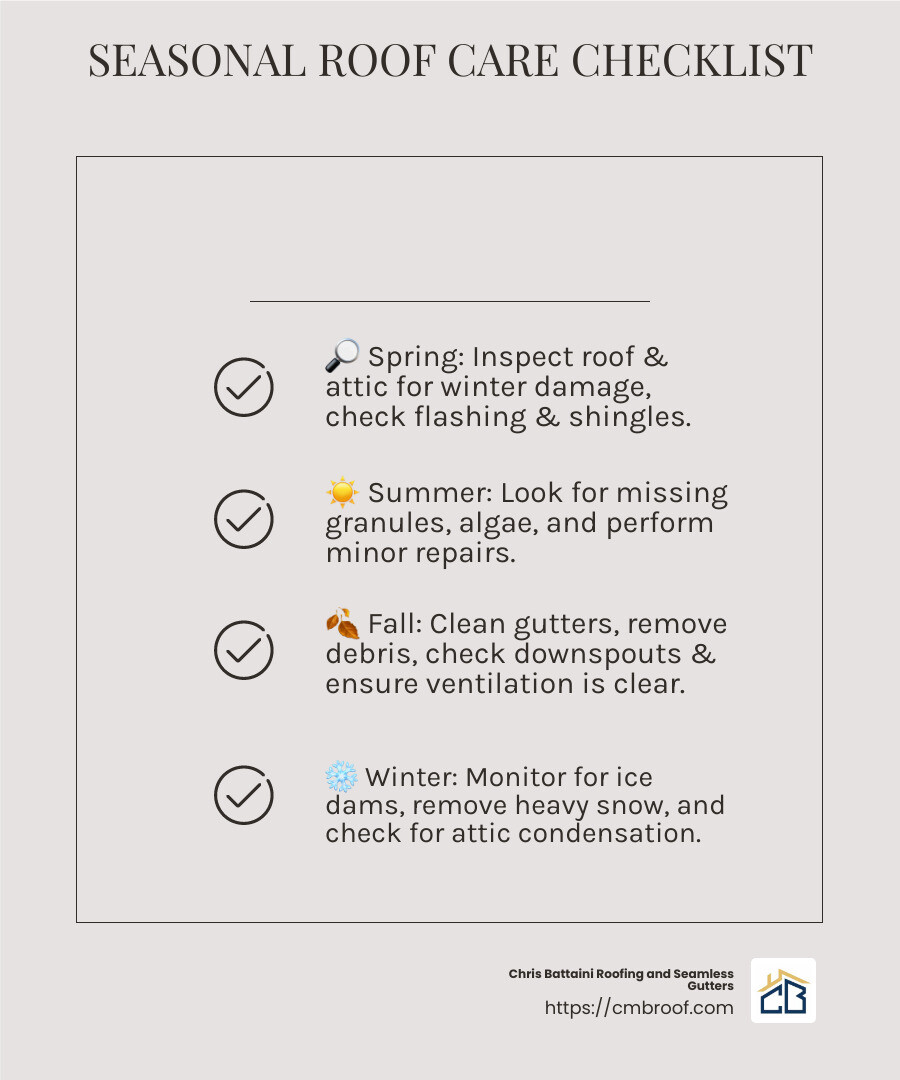
Spring and fall are perfect times for a roof check-up. Look for cracked or missing shingles, examine flashing around chimneys and vents, and keep an eye out for unwelcome animal visitors who might try making your roof their home. Those sealants around penetrations? They’re worth a quick inspection too.
Your gutters and downspouts deserve special attention – when they clog, water backs up under your shingles, potentially causing damage. Clean them at least twice yearly (more if you have overhanging trees), ensure they’re draining properly away from your foundation, and fix any sagging sections promptly.
Speaking of trees, those branches hanging over your roof might look picturesque, but they’re potential troublemakers. Trim them back to prevent scratching your shingles and to reduce debris buildup. Moss and algae love shady, damp spots – keeping trees trimmed allows sunlight to reach your roof, creating a less hospitable environment for these unwanted guests.
Don’t forget to peek in your attic occasionally! Check that ventilation is working properly, insulation isn’t blocking soffit vents, and there are no signs of moisture or pests. Your attic can reveal roof issues before they become visible from inside your home.
“Properly installed asphalt shingle roofs typically require very little maintenance,” note industry experts. However, that “very little” maintenance is crucial to achieving the full potential lifespan of your roof.
More info about Asphalt Shingle Roofing
Here in the Berkshires and Southern Vermont, our winters can be particularly tough on roofing systems. Ice dams – those pretty icicles with destructive tendencies – are a common enemy of even the best roofs. Prevent them by ensuring proper attic insulation and ventilation. In problem areas, heat cables can help, and when safe to do so, removing excessive snow buildup can prevent issues.
When you spot a potential problem – perhaps a shingle that blew off in a storm or damaged flashing – addressing it promptly can prevent water infiltration that leads to bigger headaches. Small repairs are always less expensive than major ones!
Every 3-5 years, consider having a professional inspection. After major storms, it’s also wise to have a qualified roofer check for damage that might not be visible from the ground. At Chris Battaini Roofing and Seamless Gutters, we’re always happy to come out and make sure your roof is still performing as it should.
Those dark streaks that sometimes appear on asphalt roofs? That’s usually algae growth. While primarily an aesthetic issue, it can eventually lead to premature aging of your shingles. Installing zinc or copper strips near the ridge creates a natural deterrent as rainwater washes over them. If cleaning becomes necessary, use appropriate solutions and never power wash your roof – the force can damage shingles and wash away protective granules.
Your asphalt roof replacement was a significant investment in your home. With these simple maintenance practices, you’ll maximize that investment and enjoy decades of worry-free protection. We’ve seen properly maintained roofs in our area last well beyond their warranty periods, even with our challenging New England weather.
At Chris Battaini Roofing and Seamless Gutters, we don’t just install and disappear. We’re your neighbors, and we’re always here to answer questions or provide guidance on keeping your roof in top condition for years to come.
If you’re planning your schedule around your upcoming asphalt roof replacement, you’ll be happy to know most projects wrap up pretty quickly. For the average home here in Berkshire County (about 1,700-2,000 square feet of roof), we typically finish in just 1-2 days with our experienced crew.
“When will you be done?” is probably the question we hear most often, and the honest answer is—it depends. Several factors influence the timeline:
The size and complexity of your roof makes a big difference. A simple ranch-style home goes much faster than a Victorian with multiple dormers and steep pitches. Weather conditions can either help us move quickly or slow us down—we never compromise safety during challenging conditions. If we find your roof deck needs extensive repairs, that will add some time to the project.
For larger homes or more complex roofing systems, the project might stretch to 3 days or sometimes longer. Rest assured, we’ll always provide a realistic timeline before we start and keep you in the loop as work progresses.
You’re welcome to stay in your home during the roof replacement—most of our customers do—but it’s good to know what you’re in for!
The honest truth is that roof replacement is noisy business, especially during the tear-off phase when we’re removing old materials. The hammering and nail guns create vibrations you’ll feel throughout your house, and there will be crew members working all around your property.
If you work from home, have important video meetings, or need a quiet environment, you might want to make alternative arrangements during working hours. Many of our customers find a coffee shop for a few hours during the noisiest parts of the day, or schedule important calls when the crew breaks for lunch.
Families with young children sometimes plan activities away from home during the day, as the noise can disrupt nap schedules. Sensitive pets might also appreciate a brief vacation with a friend or family member—the constant movement and noise overhead can be stressful for some animals.
That said, many homeowners prefer to be present for at least part of the project. We’re always happy to answer questions and show you our progress as we work.
After a big storm rolls through Berkshire County or Southern Vermont, we often get calls about insurance coverage for asphalt roof replacement. The good news is that yes, homeowner’s insurance frequently covers roof replacement when damage results from specific covered events.
Insurance typically covers damage from sudden, unexpected events like:
What’s not usually covered? The slow deterioration that comes with age, normal wear and tear, or damage to roofs that have already outlived their expected lifespan.
If you think you have storm damage, here’s the typical process:
First, document everything. Take clear photos and videos of the damage before anything is moved or repaired. Then file a claim with your insurance company—they’ll usually send an adjuster to inspect your roof in person. This inspection results in an estimate and scope of work for repairs or replacement.
Once approved, you’ll select your contractor (hopefully us!) and get the work completed. Final documentation goes to the insurance company to close out your claim.
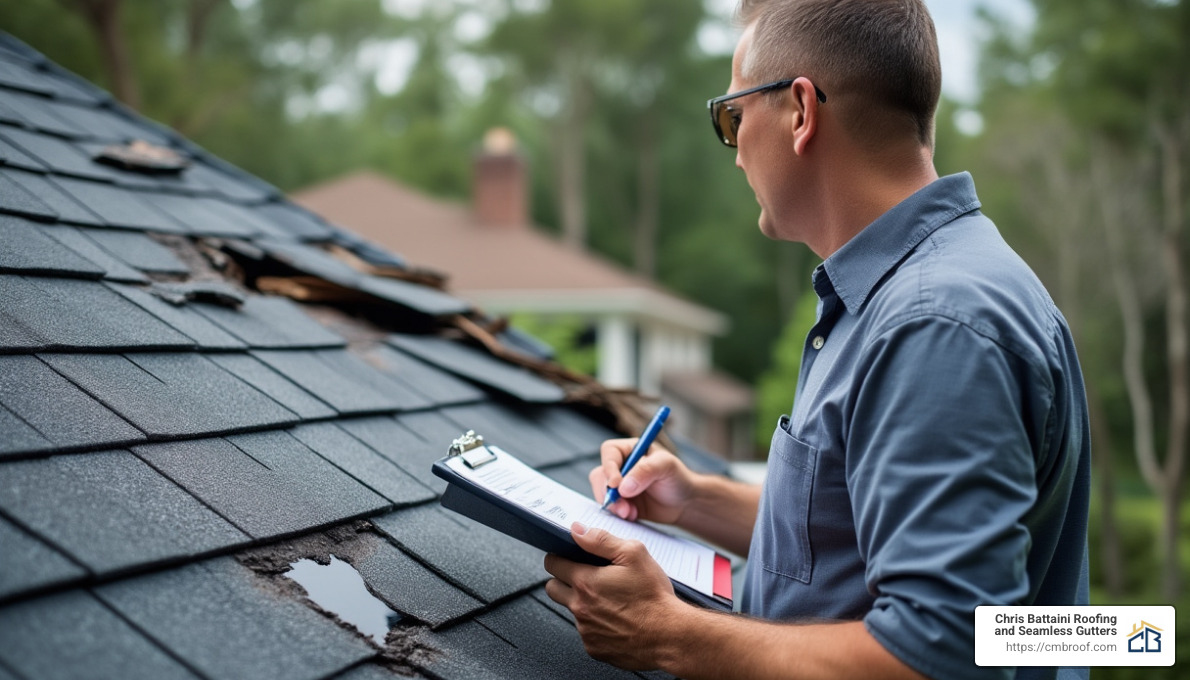
At Chris Battaini Roofing and Seamless Gutters, we’ve guided countless homeowners through this process. We can help identify storm damage during our inspection, provide the detailed documentation your insurance company needs, meet with your adjuster to point out all damage areas, and even work directly with your insurance company when you authorize us to do so.
Insurance claims can feel overwhelming, but you don’t have to steer them alone. We’re here to help make the process as smooth as possible while ensuring your home gets the quality roof replacement it needs.
Investing in an asphalt roof replacement is one of the most significant home improvement projects you’ll undertake as a homeowner. It’s not just about fixing a problem—it’s about protecting your most valuable asset for decades to come.
When you choose quality materials and expert installation, your new roof becomes a shield against nature’s harshest elements while enhancing your home’s curb appeal and potentially boosting its market value.
Don’t wait until water is dripping onto your dining room table to think about roof replacement. The warning signs we’ve discussed throughout this guide—from curling shingles to granule loss—give you time to plan ahead rather than react to an emergency.
Your roof isn’t just shingles—it’s a complete system working in harmony. The decking, underlayment, ice and water shield, drip edge, flashing, shingles, ridge caps, and ventilation all play crucial roles in protecting your home. Skimping on any component can compromise the entire system.
Even the highest-quality materials will fail prematurely if they’re installed incorrectly. That’s why choosing an experienced, reputable contractor is perhaps the most important decision you’ll make. Here in Berkshire County, where winter throws everything from heavy snow to ice dams at our homes, proper installation is absolutely critical.
Taking time to understand the replacement process and prepare your home and family will make the project go much more smoothly. And once your beautiful new roof is installed, regular maintenance will help it reach its full potential lifespan—potentially saving you thousands in premature replacement costs.
At Chris Battaini Roofing and Seamless Gutters, we believe in building relationships, not just roofs. Our owner-led approach means you’ll work directly with Chris throughout your project, ensuring clear communication and exceptional craftsmanship from first estimate to final inspection.

We understand that replacing your roof is a significant investment—one that protects everything beneath it. That’s why we take the time to educate our customers, provide detailed estimates, use only quality materials, and stand firmly behind our work with industry-leading warranties.
Ready to discuss your asphalt roof replacement project? We’d love to help. Contact us today for a comprehensive inspection and estimate. We proudly serve communities throughout Berkshire County, MA and Southern Vermont, including Pittsfield, Great Barrington, Lenox, Adams, Williamstown, Bennington, Brattleboro, and surrounding areas.
More info about our Asphalt Shingle Roofing services
Need a reliable roofer? CMB Roofing provides licensed, insured, and professional roofing services for homeowners and businesses.
We stand by a simple promise: Clear estimates. Quality workmanship. Clean job sites.
From roof repairs and full replacements to storm damage restoration, our team delivers dependable results with durable materials, expert installation, and complete site cleanup.
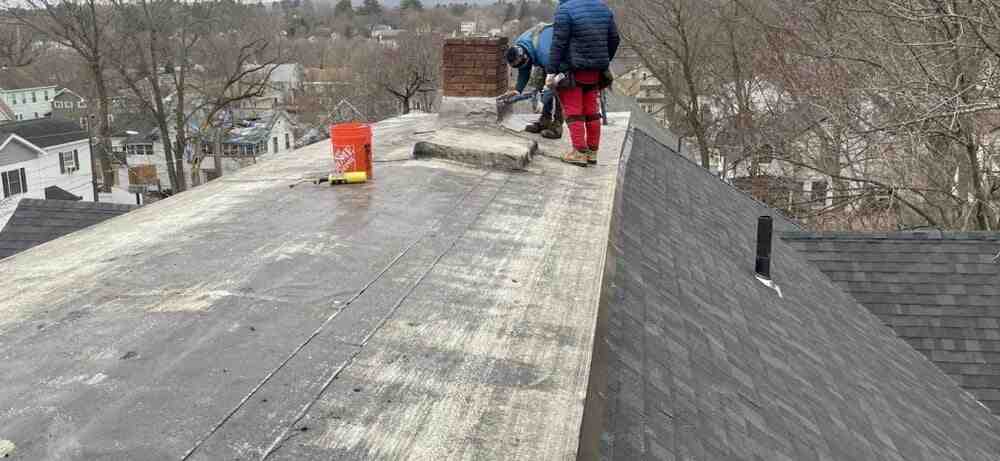



Book your Spring installation now and save $500 on a complete roof and seamless gutter system.
Spring booking required for discount eligibility.
Mention code SPRING2026 during your estimate to qualify.
Valid for complete roof + gutter system installations only. Must book by April 1, 2026. Mention SPRING2026 at the estimate to qualify. Not combinable with other offers.