

Why Slipped Slate Repair Matters for Your Home
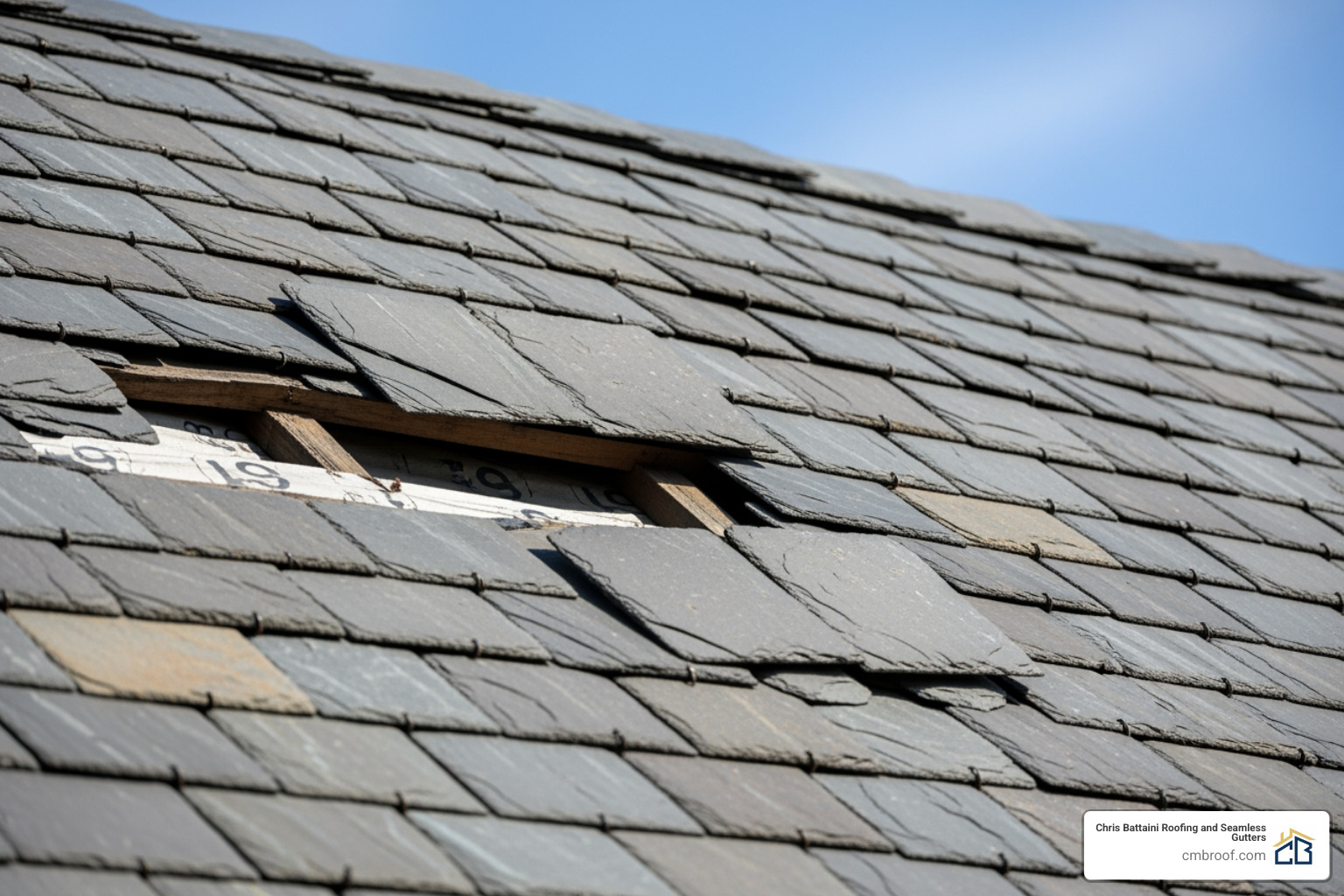
Slipped slate repair is a critical maintenance task that protects your home from water damage, preserves your property value, and extends the life of your roof. When slate tiles slip out of position, they create gaps that allow water to infiltrate, leading to leaks, damaged underlayment, and costly interior repairs.
Quick Answer: How to Address a Slipped Slate
- Identify the problem – Look for visible gaps, uneven roof lines, or slates on the ground
- Assess the damage – Check if less than 20% of slates need repair (repair is cost-effective) or more than 20-25% (full replacement may be needed)
- Choose a repair method – Use either the slate hook method or nail-and-bib technique
- Never face-nail or use caulk – These create permanent leak points and trap moisture
- Call a professional for steep roofs – Any pitch over 8/12 requires expert intervention
Understanding the Urgency
A slipped slate isn’t just an aesthetic issue—it’s a direct pathway to serious problems. When these durable tiles shift from their original position, they compromise the overlapping design that makes slate roofs waterproof. The result? Water stains on your ceiling, moisture in your attic, and potential structural damage that only gets worse with time.
The good news is that slate roofs are remarkably repairable. Hard slate varieties can last 100-200 years, and if less than 20% of your slates need attention, individual repairs are almost always more cost-effective than a complete tear-off. Metal components like flashing typically need replacement every 30-40 years, even when the slate itself remains sound.
Why Proper Repair Technique Matters
Here’s a troubling fact from industry experts: slate repairs are often done incorrectly and carelessly. A slate should never be face-nailed or caulked in place—these shortcuts create permanent leak points and work against the roof’s natural design. When done correctly using quality materials like copper nails or stainless steel slate hooks, a proper repair can last 60-80 years or more.
I’m Christopher Battaini, owner of Chris Battaini Roofing & Seamless Gutters. Over the past two decades, I’ve seen countless slate roofs in Berkshire County damaged by improper slipped slate repair attempts. My team specializes in preserving these remarkable roofs using time-tested techniques that honor the original installation’s craftsmanship.
Why Slates Slip: Identifying Root Causes and Telltale Signs
The enduring beauty of a slate roof is undeniable, but even these robust systems can experience issues. Understanding why a slate might slip is the first step toward effective slipped slate repair. It’s rarely a sudden event; often, it’s a gradual process influenced by several factors.
Common Causes of Slipped Slate Tiles
Several culprits can contribute to a slate tile losing its grip and sliding out of place:
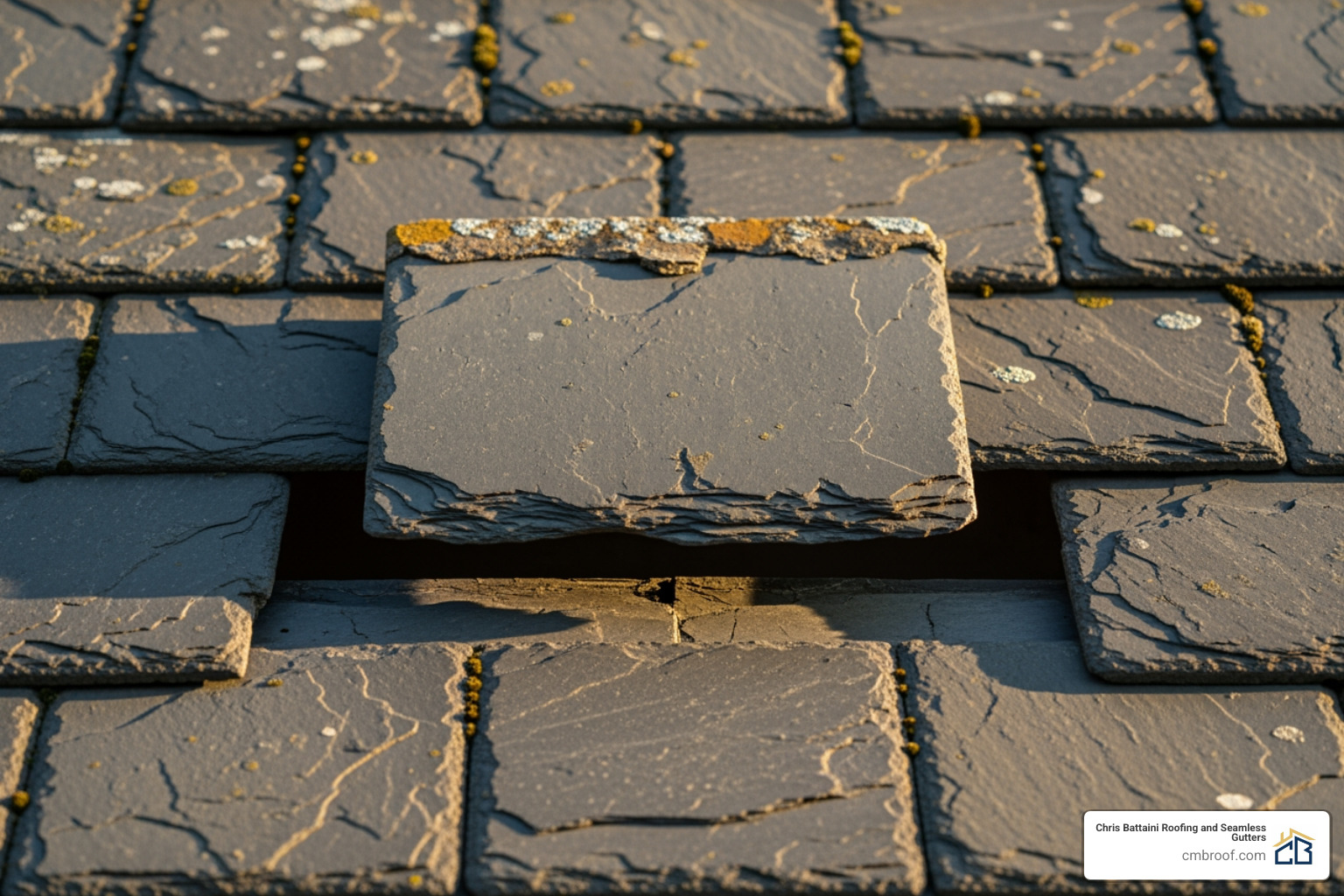
- Corroded Fasteners: The most common reason we see for slipped slates is the failure of the nails holding them in place. Over decades, galvanized nails can rust and degrade, especially in our climate with its freeze-thaw cycles. This corrosion weakens their hold, allowing the slate to slip. Slipped slates often occur due to rust corrosion of metal fasteners or degradation of the roof deck around attachment points.
- High Winds: Our New England weather can be unforgiving. High winds can get underneath the edges of slate tiles, lifting them slightly and putting stress on the fasteners. Repeated stress can loosen nails and eventually cause slates to shift or dislodge.
- Foot Traffic: While slate is incredibly durable, it’s not meant to be walked on without proper precautions. Inexperienced contractors or homeowners walking directly on slate tiles can cause cracks or dislodge slates, especially if they step on unsupported sections. Human factors, such as foot traffic from inexperienced contractors, cause more damage than weather.
- Fallen Tree Limbs: Direct impact from falling branches, common in our wooded areas, can crack or dislodge slates.
- Age of Slate and Nails: While hard slates can last up to 200 years, soft slates typically serve faithfully for 50-125 years. The nails, however, often have a shorter lifespan. Metal components like flashing generally need replacement every 30-40 years, even when the slate remains sound. As nails age and corrode, their ability to secure the slate diminishes.
- Slate Quality and Installation: Inferior quality slate or poor installation practices, such as incorrect nail spacing, improper overlaps, or misaligned tiles, can lead to premature slippage. We believe in doing the job right the first time to prevent these headaches down the road.
- Freeze-Thaw Cycles: The constant expansion and contraction of slate tiles and the underlying roof structure due to temperature fluctuations can loosen fasteners and degrade supporting wood over time. This is particularly relevant in Berkshire County’s varied climate.
Signs You Have a Slipped or Loose Slate
Catching a slipped slate early can save you a lot of trouble and expense. Here are the telltale signs to look for:
- Visible Gaps or Uneven Lines: From the ground, use binoculars to scan your roof for any tiles resting at an odd angle, sliding downward, or creating an uneven line. Dark patches can also indicate a missing or slipped tile.
- Slates in the Garden: Finding a slate tile on the ground around your home is a clear indication that one has slipped or fallen from your roof.
- Interior Water Stains: Faint water stains on your ceiling, damp spots on walls, or peeling paint below your roofline are classic indicators of a roof leak, often caused by a slipped or missing slate.
- Damp Attic Insulation or Musty Odors: If you notice moisture in your attic insulation or a persistent musty smell, it suggests water intrusion.
- Pinpoints of Daylight: In your attic, look for any pinpoints of daylight visible through the roof boards. This is a direct sign that the protective barrier of your slate is compromised.
- Dull Sound When Tapped: While not always practical for homeowners, professionals can often test the soundness of slates. Sound slates ‘ring’ when lightly tapped with a small hammer, while a dull sound can indicate delamination or porosity issues.
The Role of Underlayment and Flashing in Roof Stability
A slate roof is a system, and each component plays a vital role in its stability and watertightness. The underlayment and flashing are unsung heroes in preventing slippage and leaks.
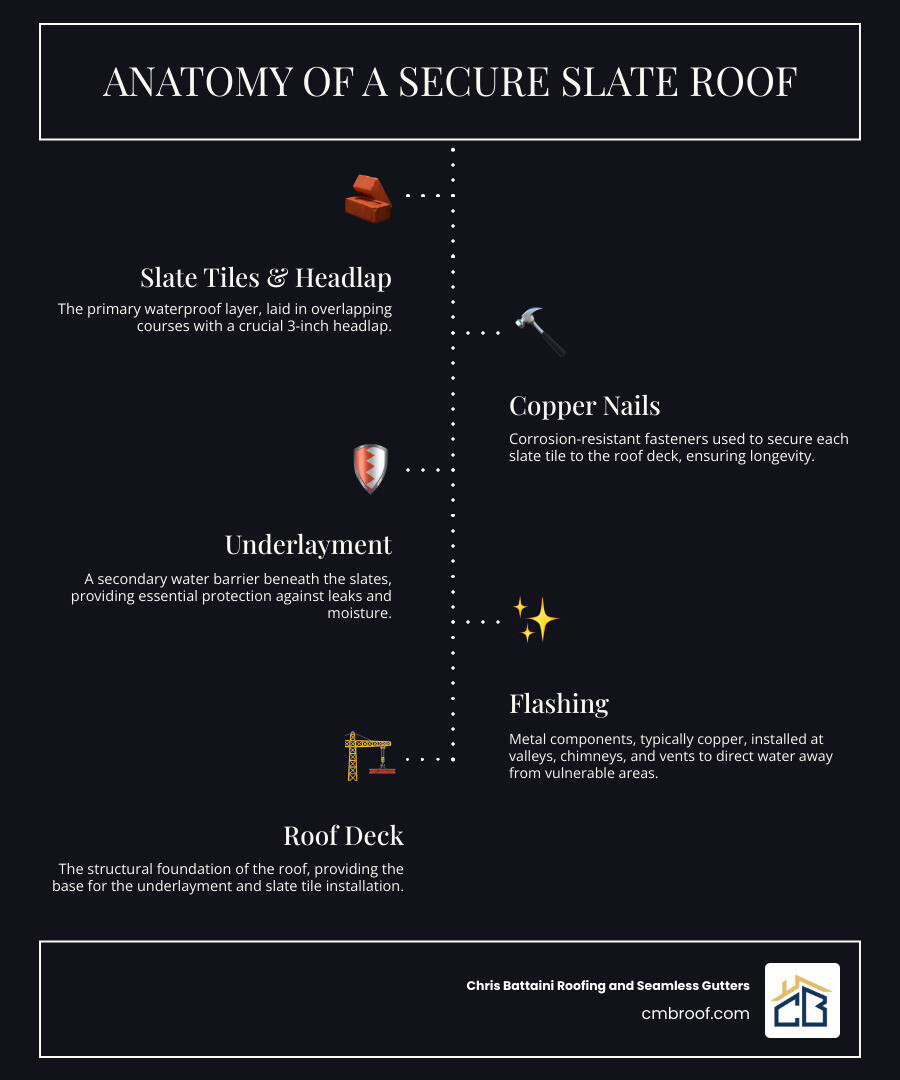
- Underlayment: This material, typically roofing felt or a synthetic membrane, is installed directly on the roof deck beneath the slates. It acts as a secondary water barrier, offering protection if water manages to get past the primary slate layer. A compromised underlayment can lead to water reaching the roof deck, causing rot and further destabilizing the slate.
- Flashing: Flashing refers to thin pieces of impervious material, usually metal, installed to prevent water penetration at junctions and penetrations like valleys, chimneys, dormers, and skylights. The overlapping design of slate creates a waterproof barrier, but flashing ensures these vulnerable points are equally protected. Because metal components generally need replacement every 30-40 years, even when the slate remains sound, regular inspection of flashing is crucial. We often use lead-coated copper and stainless steel for fasteners and flashings due to their longevity.
Properly installed and maintained underlayment and flashing are essential. They work in conjunction with your slate to direct water away from your home’s interior, protecting your entire roofing system and preventing the conditions that can lead to slipped slate repair needs.
Gearing Up: Essential Tools and Materials for a Proper Fix
Before we dive into the “how-to” of slipped slate repair, let’s talk about getting prepared. Just like any skilled craft, working on a slate roof requires the right tools and, crucially, a steadfast commitment to safety. We always prioritize safety on our job sites, and you should too.
Your Safety and Repair Toolkit
Working on a roof, especially one as steep as many slate roofs in Berkshire County, carries inherent risks. Your safety is paramount.
- Safety Gear:
- Safety Harness: According to OSHA fall protection guidelines, proper harnesses and anchors are required when working 6+ feet above ground level. This isn’t just a suggestion; it’s a non-negotiable safety measure.
- Ladder Stabilizers: Always secure your ladder with stabilizers before climbing.
- Non-Slip Shoes: Wear soft-soled, non-slip shoes with good traction to minimize the risk of slipping and to protect the slates.
- Work Gloves and Safety Glasses: Protect your hands from sharp slate edges and your eyes from debris.
- A Helper on the Ground: Having someone assist you, hold the ladder, and be aware of your presence on the roof is an invaluable safety measure.
- Repair Tools:
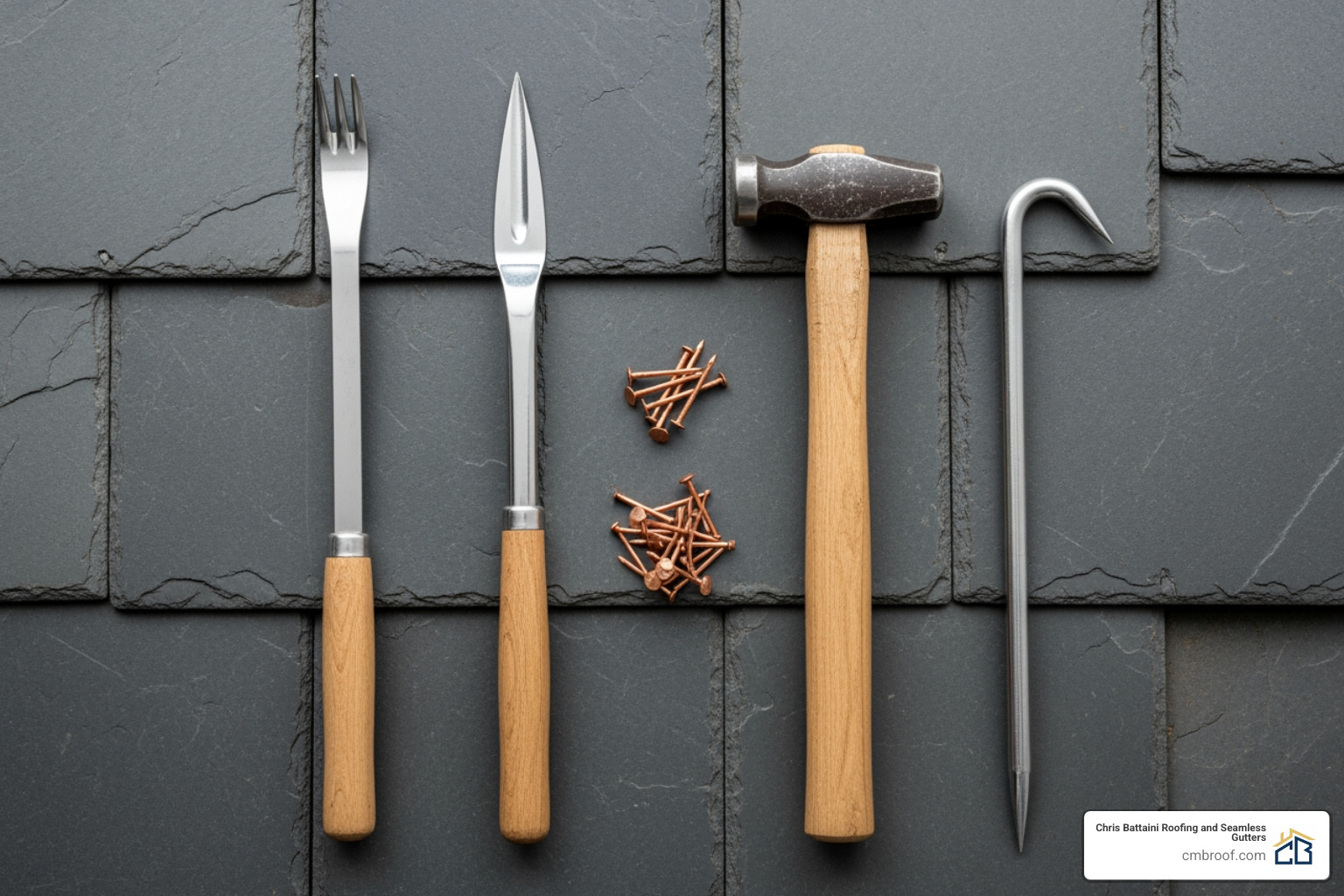
- Slate Ripper: This specialized tool is essential for slipped slate repair. It’s designed to slide under slates, hook onto the nails, and either pull them out or cut their shanks without damaging adjacent tiles. A slate ripper is typically made of carbon steel, weighing about 3 lbs and measuring around 30.5 inches long.
- Slate Hammer: A unique hammer with a pointed end for punching holes in new slates and a striking face for driving nails.
- Pry Bar: Useful for general roof work or carefully coaxing out stubborn slate fragments.
- Utility Knife and Measuring Tape: For various tasks like trimming copper bibs or measuring replacement slates.
Choosing the Right Materials for a Lasting Repair
The longevity of a slate roof repair hinges not just on technique, but on the quality and compatibility of the materials used. We always aim to use materials with service lives equal to or greater than that of the slate itself.
- Replacement Slates: New slates must match the existing ones in type, color, weathering characteristics, size, shape, and texture. It’s wise to buy a few extra replacement slates to account for breakage during installation and for future needs.
- Copper Nails: We highly recommend copper nails for slate repair due to their exceptional corrosion resistance. They will last significantly longer than galvanized options, which can rust and stain your beautiful slate.
- Stainless Steel Slate Hooks: These are a fantastic solution, especially for securing slates where traditional nailing is difficult or impossible. They are corrosion-resistant and provide a strong, lasting hold.
- Copper Bib Material: For the nail-and-bib repair method (which we’ll discuss shortly), you’ll need an 8-inch by 3-inch piece of copper sheet to create a “bib” that protects the nail head from water.
How to Identify and Match Your Existing Slate
Matching your existing slate is paramount for a seamless and long-lasting repair that maintains your roof’s aesthetic and integrity. Here’s what we consider:
- Type and Origin: Most existing American slate roofs originated from East Coast US quarries. For example, Vermont and New York slates can last around 100 years and come in specific colors. Pennsylvania Chapman slate should last about 125 years. Identifying the original quarry region can help in sourcing appropriate replacements.
- Color and Weathering Characteristics: Slates come in “Unfading” (least likely to change color) and “Semi-Weathering” (will likely show some color change) varieties. The underside of a removed slate often best depicts its original, historical color. Matching the weathering characteristics is key to how the repair blends in over time.
- Size, Shape, and Texture: Replacement slates must match the existing ones in length, width, shape, and texture to ensure proper headlap (the amount of overlap between courses) and offset for weathertightness.
- Thickness: Standard slate thicknesses range from 3/16 inch to over 1 inch. An exact match is crucial for a flush, watertight repair.
- Hard vs. Soft Slate: Slate is categorized by its hardness. Soft slates typically begin failing after 50-75 years, while hard slates can last 100-200 years. Knowing your slate’s hardness (often indicated by ANSI Hardness Ratings S1, S2, S3) helps in understanding its expected lifespan and selecting appropriate replacements.
- Reclaimed vs. New Slate: For older roofs, reclaimed slate often provides the best color and weathering match. New slate from reputable suppliers can also be an excellent choice, provided it meets all matching criteria.
The Step-by-Step Guide to Slipped Slate Repair
Now that we’re equipped and knowledgeable, let’s walk through the process of performing a proper slipped slate repair. Safety first, always!
Step 1: Safely Removing the Damaged or Slipped Slate
This is where your slate ripper shines.
- Secure Your Position: Ensure your ladder is stable and, if applicable, your safety harness is anchored.
- Locate the Problem: Identify the slipped or damaged slate.
- Insert the Slate Ripper: Gently slide the thin blade of your slate ripper under the slate two courses above the damaged one. You’ll need to guide it until it hooks onto the nails holding the slipped slate in place.
- Cut or Pull the Nails: Once the ripper is engaged with the nail, use a slate hammer to strike the ripper’s handle. This action will either cut the nail’s shank or pull it out. You might need to do this for two nails per slate.
- Remove the Slate: Once the nails are severed or removed, the damaged slate should slide out easily. If it’s stubborn, gently pry it with the ripper or a pry bar.
- Clean the Area: After removing the slate, use the ripper to clean out any remaining nail fragments, debris, or old underlayment pieces from the roof deck. This creates a clean space for your new slate.
Step 2: Permanent Slipped Slate Repair Methods
With the old slate gone, it’s time to install the new one using methods designed for longevity. We never face-nail; instead, we use either the slate hook method or the nail-and-bib method.
- The Slate Hook Method: This is a robust and popular method for slipped slate repair.
- Prepare the Hole: Slide the new slate into the opening. Mark the point on the roof deck where the bottom edge of the slate will rest. Remove the slate.
- Install the Hook: Pre-drill a small hole in the sheathing at your mark. Drive your copper or stainless steel slate hook into position, ensuring it’s securely fastened and the hook faces upward to support the bottom edge of the new slate.
- Insert the New Slate: Slide the new slate upward into its position, ensuring it sits flush and aligns perfectly with its neighbors. The bottom edge of the slate should engage with the hook. Give it a gentle pull down with your ripper to ensure it’s snug.
- Ensure Headlap: Always maintain at least a 3-inch headlap, meaning the top of your new slate is covered by at least 3 inches of the slate course above it.
- The Nail-and-Bib Method: This traditional method is also very effective.
- Insert the New Slate: Slide the new slate upward into the opening, ensuring it’s perfectly aligned.
- Nail the Slate: Using a copper nail, secure the new slate near its top edge, driving the nail through the joint between the two slates in the course directly above it. The nail head should be flush but not driven so hard as to crack the slate.
- Install the Copper Bib: Cut an 8-inch by 3-inch piece of copper sheet. Create small cuts or bends at one end to help it slide. Slide this copper “bib” upward under the slate course above, ensuring it completely covers the newly driven nail head. The bib acts as a mini-flashing, directing water over the nail and preventing leaks. The bib should extend 2-3 inches above the butt end of the upper course.
Properly executed slate repairs using quality materials should last 20-50 years, and with copper components, potentially 60-80 years or more.
Step 3: What Not to Do: Temporary Fixes That Cause More Harm
We’ve seen too many well-intentioned but misguided attempts at slipped slate repair that end up causing more damage than good. Please avoid these shortcuts:
- Face-Nailing: Never, ever drive a nail directly through the exposed face of a slate. This creates a permanent leak point that will inevitably fail. A veteran slater once told us, “If a roofer advises face-nailing slates, tell him to leave immediately and never return.” We couldn’t agree more.
- Caulk and Adhesives: While tempting for a quick fix, caulk, roofing cement, or other adhesives are not suitable for slate roofs. They break down quickly, crack, shrink, and trap moisture, leading to rot and further damage. These shortcuts work against the roof’s natural design, inviting water where it doesn’t belong.
- Cement or Mortar: Unless your slate roof was specifically designed for a mortar bed (which is rare in our area), using cement or mortar to secure slates can hinder the roof’s natural movement and cause widespread cracking.
These temporary fixes inevitably fail and can make the eventual, proper repair much more complicated and costly. Investing in the right technique from the start is always the best approach.
When to Call a Professional vs. DIY Repair
While we’ve provided a step-by-step guide for slipped slate repair, it’s crucial to understand when DIY is appropriate and when it’s time to call in the experts. Your safety and the integrity of your roof are not worth risking.
Assessing the Risks of DIY Slipped Slate Repair
We admire the DIY spirit, but some jobs are best left to professionals. Here’s why:
- Personal Injury: Working on a roof, especially a steep or high one, is inherently dangerous. Falls can lead to serious injury or worse. OSHA guidelines on fall protection are there for a reason.
- Damaging Adjacent Slates: Slate can be brittle. Stepping on the wrong tile or applying incorrect pressure can easily crack adjacent slates, turning a small repair into a larger, more expensive problem.
- Incorrect Repairs Causing Leaks: As mentioned, improper techniques like face-nailing or using caulk will lead to future leaks and damage. We’ve seen how half of our annual work involves correcting other contractors’ botched repairs, let alone DIY attempts.
- Voiding Warranties: Using improper materials or repair methods can void warranties on your roofing components.
- Roof Pitch: If your roof pitch exceeds 8/12 (meaning it rises 8 inches vertically for every 12 inches horizontally), it’s considered very steep and is extremely dangerous for DIY work. Professionals have specialized equipment and training for safe navigation and repair on steep slopes.
Signs It’s Time to Call a Slate Roofing Expert
For homeowners in Berkshire County, knowing when to contact us is key to maintaining your slate roof’s longevity and performance.
- Widespread Damage: If more than approximately 20-25% of your slates are damaged or missing, a full strip and re-slate will likely be necessary. While repairing less than 20% is almost always more cost-effective, extensive damage often indicates underlying issues that require a comprehensive solution.
- Steep Roof Pitches: As discussed, if your roof is steeper than 8/12, please call us. We have the specialized safety equipment and expertise to handle these challenging conditions.
- Rotted Roof Deck or Compromised Flashing: If you suspect rot in your roof deck, or if flashing around chimneys, valleys, or dormers needs replacement, these are complex jobs that require professional assessment and repair.
- Lack of Proper Tools or Experience: If you don’t have the specialized tools (like a slate ripper and hammer), the right materials, or the experience to work safely and effectively on a roof, calling a professional is the smartest choice.
- Structural Concerns: If you notice significant sagging, widespread cracking, or other structural issues, these are clear indicators that a professional assessment is needed immediately.
While DIY can save money, don’t hesitate to consult professionals for complex issues or when safety concerns arise. We are an Owens Corning Platinum Preferred Contractor, a distinction earned by only the top tier of roofing professionals in the country, ensuring you receive the highest quality service.
Long-Term Care and Prevention for Your Slate Roof
A well-maintained slate roof can last 150 years or more, making it a truly remarkable investment in your home. The key to this longevity? Proactive, consistent care. Preventing future problems is far easier and less costly than dealing with extensive slipped slate repair.
Preventative Maintenance to Avoid Future Problems
Here are the best practices we recommend for homeowners in Berkshire County to keep their slate roofs in top condition:
- Biennial Professional Inspections: We advise scheduling a professional roof inspection at least once every couple of years, or annually if your area experiences particularly harsh weather. These inspections can catch minor issues like hairline cracks or slightly loose slates before they escalate into major problems. A professional eye can spot delamination, powdering surfaces, or widespread porosity that indicates end-of-life for some slates.
- Gutter Cleaning: Keeping your gutters clear of debris is crucial. Clogged gutters can cause water to back up, leading to fascia damage, ice dams in winter, and water overflowing onto your roof where it can cause premature wear and even contribute to slipped slates.
- Trimming Overhanging Trees: Regularly trim any tree branches that hang over or are close to your roof. This reduces the amount of debris (leaves, twigs) that accumulates on your roof and in your gutters, and significantly lowers the risk of impact damage from falling limbs during storms.
- Snow Guard Installation: In snowy regions like ours, snow guards are an excellent addition to a slate roof. They help prevent large, dangerous snow slides that can damage slates, gutters, and landscaping below.
- Flashing Maintenance: Regularly inspect all flashing around chimneys, valleys, and dormers. While metal components like copper and lead are durable, they can still be damaged. Terne-coated steel flashings benefit from repainting every 5-7 years to maintain their protective coating.
- Gentle Cleaning: If moss or algae begin to grow, address it gently. Use a soft brush and a mild, non-acidic cleaning solution. Avoid power washing, which can damage slate and push water under the tiles.
- Document Repairs: Keep a “roof journal” with dates of inspections, repairs, and any significant weather events. This helps track the roof’s history and predict future maintenance needs.
By following these preventative maintenance strategies, you’re not just caring for your roof; you’re protecting your entire home and preserving its value for decades to come.
Conclusion: Protecting Your Investment with Proper Care
Slipped slate repair might seem daunting, but as we’ve explored, with the right knowledge and tools, it’s a manageable task that can significantly extend the life of your beautiful slate roof. From understanding the common causes like corroded fasteners and harsh weather to knowing the signs of trouble and mastering the proper repair techniques, you’re now better equipped to tackle these challenges.
Proper technique is crucial. Never resort to face-nailing or using caulk, as these shortcuts only lead to bigger problems down the line. Safety should always be your top priority when working at heights, and knowing when to call a professional for complex repairs or steep pitches is a sign of a smart homeowner.
A well-maintained slate roof is a testament to timeless quality and craftsmanship. It not only protects your home but also improves its curb appeal and value. We believe in preserving these remarkable roofs with the utmost care and expertise.
For expert assessment and professional slate roofing repair, contact us today. As an Owens Corning Platinum Preferred Contractor, Chris Battaini Roofing and Seamless Gutters offers owner-led, on-site service and exceptional workmanship warranties, ensuring your roof is in the most capable hands.
Follow us on Facebook — https://www.facebook.com/chrisbattainiroofing
Chris Battaini Roofing and Seamless Gutters proudly serves Berkshire County, Massachusetts.
