

Gutter Cleaning Frequency: 2 Crucial Times Annually
Why Gutter Cleaning is a Crucial Part of Home Maintenance
Gutter cleaning frequency matters more than most homeowners realize. Your gutters work year-round to channel water away from your roof, walls, and foundation—but only when they’re clear of debris.
Quick Answer: How Often Should You Clean Your Gutters?
- Minimum: Twice a year (spring and fall)
- Homes near trees: Every 3-4 months
- Pine trees nearby: Every 3 months (year-round shedding)
- With gutter guards: Once a year (with annual inspection)
- After severe storms: Check and clean as needed
Many homeowners don’t think about gutters until there’s a problem. By then, water may already be overflowing, pooling around your foundation, or seeping into your roof. One homeowner in the research noticed rain overflowing from gutters after a storm—a clear sign that waiting too long had already caused issues.
The truth is simple: clogged gutters are the number one cause of water damage to homes. When leaves, twigs, and debris block your gutters, water has nowhere to go. It backs up onto your roof, runs down your siding, and pools around your foundation.
This isn’t just about aesthetics. Neglected gutters can lead to:
- Roof rot and leaks
- Foundation cracks and basement flooding
- Mold growth (as noted in the EPA’s guidelines on mold)
- Pest infestations from standing water
- Ice dams in winter that damage gutters and roofs
The good news? A consistent cleaning schedule prevents all of this. The right frequency depends on your specific situation—your trees, your climate, and your gutter system.
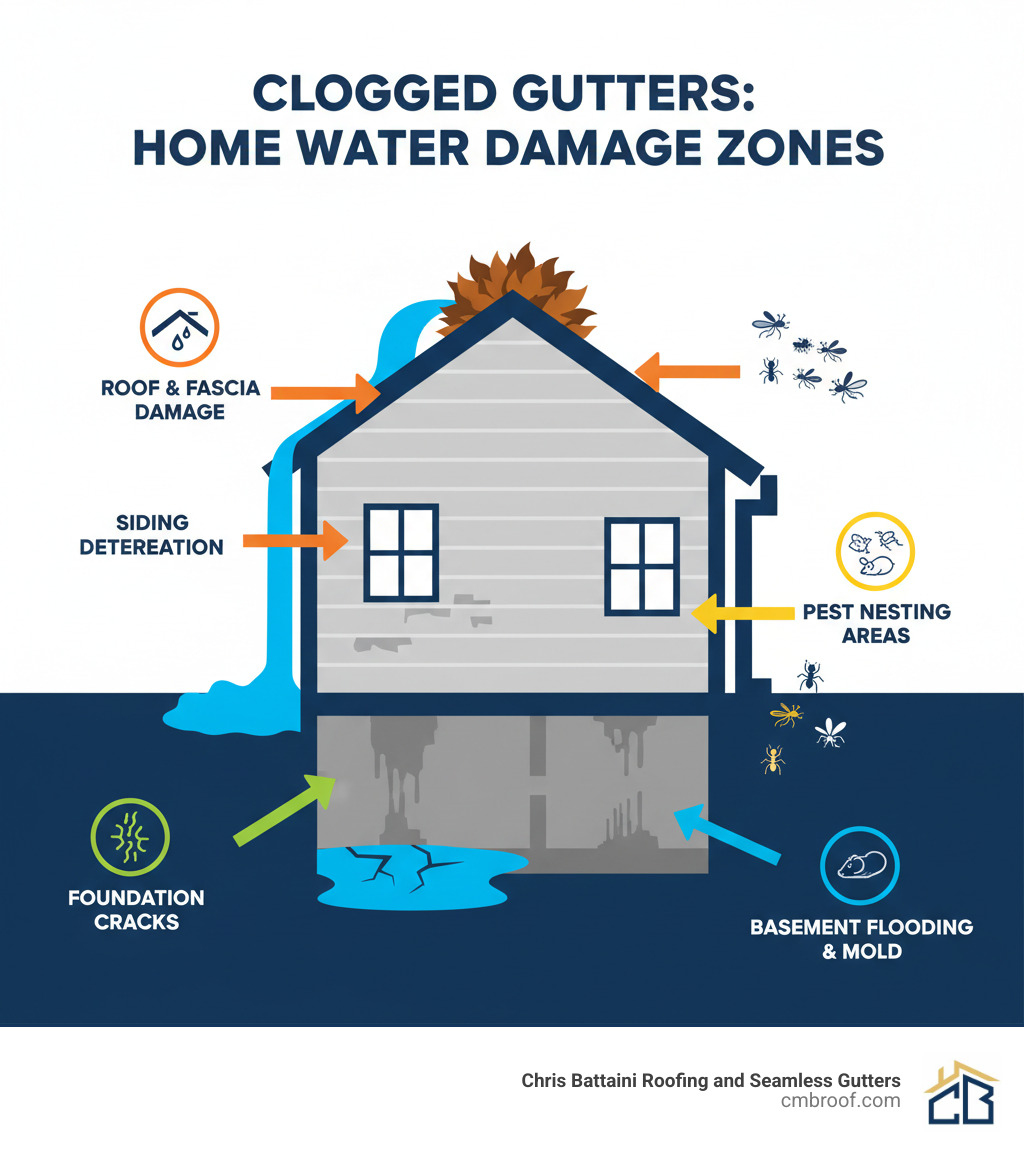
The Consequences of Clogged Gutters
It’s easy to overlook something that’s out of sight, out of mind, like the gutters on your home. But neglecting your gutters can be a costly mistake, leading to a cascade of problems that impact your home’s structural integrity and even your family’s health. We’ve seen the damage that can ensue when homeowners postpone this seemingly simple chore.
When gutters are clogged, they can’t do their job of diverting water away from your home. Instead, water overflows, causing:
- Water Damage to your Foundation and Basement: This is perhaps the most serious consequence. When water constantly pools around your home’s foundation, it can seep into cracks, leading to costly foundation repairs and even basement flooding. Just imagine the headache and expense!
- Roof Rot and Leaks: Water that backs up in clogged gutters can seep under your roof shingles, causing wood rot in your fascia, soffits, and even your roof decking. This can lead to interior leaks, damaged ceilings, and expensive roof repairs.
- Siding Stains and Damage: Overflowing water runs down your home’s siding, leaving unsightly water stains or “gutter striping.” Over time, this constant moisture can cause siding to rot, warp, or become discolored.
- Pest Infestations: Clogged gutters create a damp, debris-filled environment—a perfect breeding ground and nesting site for unwanted guests. Mosquitoes love stagnant water, while rodents, cockroaches, and even birds can make a cozy home in the accumulated leaves and twigs. We’ve even seen carpenter ants and termites attracted to the damp wood near clogged gutters, using nearby branches as a pathway to the roof.
- Mold Growth: As the EPA’s guidelines on mold emphasize, “Moisture control is the key to mold control.” Clogged gutters lead to excessive moisture, which can encourage mold growth on your roof, siding, and even inside your home if water infiltrates.
- Ice Dams in Winter: In colder climates, like our service areas in Berkshire County, MA, and Southern Vermont, clogged gutters are a primary culprit behind ice dams. When snow on your roof melts and then refreezes in the clogged, icy gutters, it creates a dam. This forces meltwater back under your shingles, causing leaks and significant damage to your roof, gutters, and even the interior of your home.
- Damaged Gutters Themselves: The sheer weight of wet leaves, debris, and standing water can cause your gutters to sag, pull away from your house, or even completely detach. In winter, freezing water can expand and crack your gutters, turning a minor cleaning issue into a full-blown replacement project.
Ignoring your gutters is a bit like ignoring a small leak in your boat – eventually, you’re going to have a much bigger, more expensive problem on your hands. A proactive approach to gutter cleaning frequency is truly an investment in your home’s long-term health and your peace of mind.
The Ideal Gutter Cleaning Frequency: A General Guideline
So, how often should we actually roll up our sleeves (or call a pro) to tackle those gutters? While there’s no single magic number that fits every home, experts generally agree on a solid baseline to keep things running smoothly.
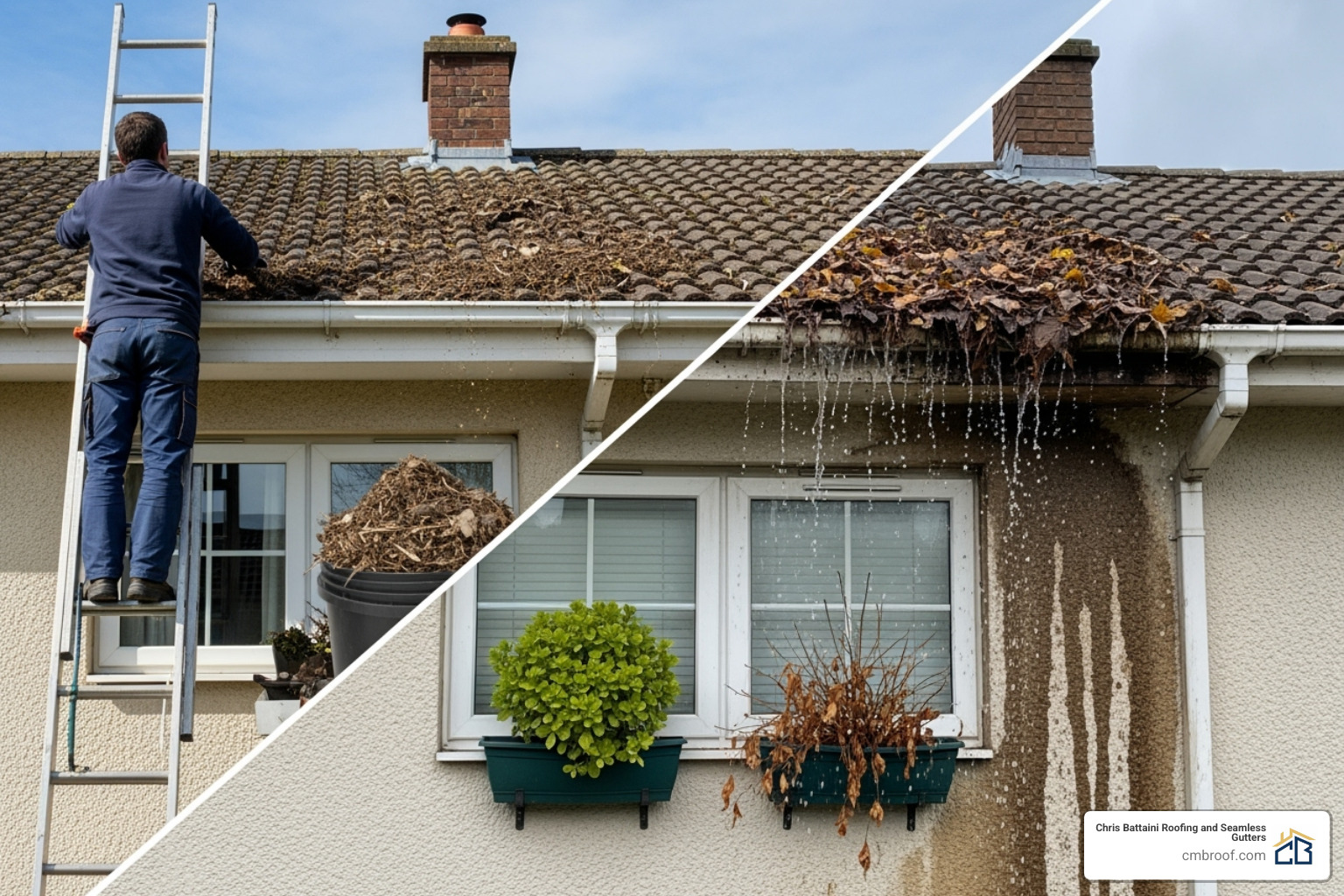
The general recommendation for gutter cleaning frequency is to do it at least twice a year—once in the spring and again in the fall. Think of this twice-a-year rhythm as your home’s essential seasonal cleaning. It’s a great starting point for most homeowners, making sure that the biggest seasonal debris is cleared out before it can cause trouble.
This seasonal approach is all about tackling the main waves of debris. In the fall, we’re dealing with the huge amount of falling leaves. In the spring, we’re clearing out anything that built up over winter, plus spring blossoms and early pollen. By sticking to this schedule, you can be sure your gutters are ready to handle whatever Mother Nature sends your way, protecting your home all year long.
Best Times of Year for Gutter Cleaning
If we’re aiming for that twice-a-year sweet spot, when exactly should we mark our calendars? Timing really is everything when it comes to keeping your gutters working their best.
Late Spring Cleaning
As winter finally lets go and spring blossoms, it’s the perfect time for a thorough gutter cleaning. This usually means sometime in late spring or early summer, after the last of the winter’s mess has settled and before the really heavy spring rains hit.
Cleaning your gutters in late spring gets them ready for summer rain. Spring often brings its own big storms. A clear gutter system will efficiently move rainwater away from your home, stopping overflows during those sudden downpours. It’s also a chance to assess any winter damage. Winter can be tough on homes, especially here in Berkshire County, MA, and Southern Vermont. A spring cleaning lets you check for any sagging, cracks, or loose parts caused by ice or snow that might need fixing before they get worse.
Late Fall Cleaning
Without a doubt, the most important time for gutter cleaning is in the late fall. This is after most of the leaves have fallen from nearby trees, but before the first big snowfall.
This is when you remove fallen leaves. Deciduous trees drop tons of leaves in the fall, and these are the main reason for clogged gutters. Waiting until most leaves have fallen means you can clear them all in one go, instead of needing to clean them many times. Clearing leaves and debris before winter is also key for preventing ice dams. If gutters are full, melted snow has nowhere to go. It refreezes and builds up, creating those damaging ice dams we talked about earlier. A clean gutter system is a must for your home’s winter defense. It makes sure any snowmelt can drain properly, lowering the risk of water damage and keeping your foundation dry through the colder months.
By scheduling these two key cleanings, you’re doing more than just a chore. You’re actively protecting your home from the weather all year long.
Factors That Influence Your Gutter Cleaning Schedule
While twice a year is a great general guideline, we know that every home is unique. Just like we wouldn’t use a one-size-fits-all approach for roofing, we can’t for gutter cleaning either. Your ideal gutter cleaning frequency is a personalized schedule, influenced by a few key environmental and home-specific variables.

Think of it as creating a custom maintenance plan for your home. Are you nestled among towering oaks? Do thunderstorms roll through regularly? These factors help us figure out when and how often those gutters need attention.
Factor 1: Tree and Foliage Coverage
Trees are beautiful, provide shade, and add tremendous value to your property. They’re also your gutters’ biggest challenge.
The more trees you have—especially those that overhang your roof—the more frequently you’ll need to clean your gutters. We’ve worked on homes completely surrounded by mature trees where gutters need cleaning every three to four months just to keep up with the constant debris.
Deciduous trees are the usual suspects. Maples, oaks, and birches create that gorgeous fall foliage we all love, but they also dump massive amounts of leaves into your gutters every autumn. If your yard is full of these trees, you might even need to clean your gutters more than once during the fall to stay ahead of the leaf drop.
Here’s something that surprises many homeowners: pine trees can actually be worse than deciduous trees. While they don’t have that dramatic fall leaf drop, evergreens shed needles year-round. Those pine needles are notorious for creating dense, stubborn clogs that are harder to clear than regular leaves. If you’re surrounded by pine trees, plan on cleaning your gutters every three months throughout the year.
And it’s not just leaves and needles. Trees shed seeds, blossoms, twigs, and all sorts of natural debris that finds its way into your gutters. The closer your trees are to your roofline, the more of this “tree confetti” you’ll be dealing with.
Bottom line? Heavy tree coverage means a more frequent, likely quarterly cleaning schedule is your best bet.
Factor 2: Local Climate and Weather
Living in Berkshire County, MA, and Southern Vermont, we’re no strangers to dramatic weather. Our four distinct seasons each bring their own challenges for gutter maintenance.
Heavy rainfall is one of the biggest factors. When it pours, your gutters need to handle a lot of water quickly. Even a partially clogged gutter can overflow during a downpour, sending water cascading down your siding or pooling around your foundation. Areas with frequent heavy rain need gutters that are consistently clear.
Frequent storms with high winds are another concern. Those winds strip leaves, small branches, and debris from trees and deposit them directly into your gutters. After any severe weather event—even if you just cleaned your gutters last month—it’s smart to do a quick inspection and clean them if needed.
Our snow and ice present unique challenges. While snow itself doesn’t clog gutters, the freeze-thaw cycles we experience can create serious problems. As snow melts off your roof, it carries debris into the gutters where it can freeze solid, creating blockages and contributing to those destructive ice dams we mentioned earlier. This is exactly why that late fall cleaning is so critical in our region—we need to clear everything out before winter arrives.
The weather doesn’t follow a strict schedule, and neither should your gutter maintenance. A particularly stormy season might mean an extra cleaning is necessary, even if it’s “off schedule.”
Factor 3: Gutter System and Roof Type
The type of gutters and roofing you have also plays a role in how often you’ll need to clean.
Gutter guards can be real game-changers. These systems keep larger debris like leaves and twigs out while allowing water to flow through. With quality gutter guards installed, you might only need to clean your gutters once a year, typically with an annual inspection to make sure everything’s working properly. But here’s the honest truth: they’re not completely maintenance-free. Smaller debris, pollen, and shingle grit can still accumulate, so don’t skip those periodic checks entirely.
Your roof type matters too. Shingle roofs shed granules over time—those small, gritty particles that protect the asphalt shingles. These granules wash into your gutters and can accumulate at the bottom of downspouts, contributing to clogs. Older shingle roofs that are shedding more granules may need more frequent attention.
Metal roofs tend to shed debris more easily than shingle roofs, which can mean slightly less buildup in your gutters. That said, they don’t eliminate the need for cleaning—your gutters still collect whatever falls from the trees above.
At Chris Battaini Roofing and Seamless Gutters, we specialize in seamless gutters, and there’s a good reason we recommend them. Unlike traditional sectional gutters, seamless gutters have fewer joints and seams. Fewer seams mean fewer places for debris to catch and fewer potential leak points. While they still require regular cleaning, their design promotes better water flow and can help reduce the frequency of severe clogs.
Understanding these factors helps you move beyond that basic twice-a-year schedule to create a maintenance plan that truly fits your home’s needs.
DIY vs. Professional Cleaning: Making the Right Choice
When it comes to gutter cleaning, many homeowners face a common dilemma: should I do it myself or hire a professional? It’s a question of weighing safety, efficiency, and cost. While tackling the job yourself can save money, it often comes with significant risks and time commitments.
For us, safety is always paramount. While some homeowners are perfectly capable of cleaning their own gutters, especially on single-story homes with easy access, there are compelling reasons to consider calling in the experts.
Comparing DIY and Professional Gutter Cleaning
Let’s break down the pros and cons to help you decide what’s best for your home:
| Feature | DIY Gutter Cleaning | Professional Gutter Cleaning |
|---|---|---|
| Pros | – Cost savings – Flexible scheduling |
– Safety and peace of mind – Efficiency and thoroughness – Proper tools and equipment – Inspection for potential issues |
| Cons | – High risk of injury – Can be time-consuming – May not be as thorough – Requires purchasing or renting equipment |
– Higher upfront cost |
Frequently Asked Questions about Gutter Maintenance
Even with a solid maintenance plan in place, homeowners often have specific questions about their gutters. We’ve been in this business long enough to hear just about every gutter question imaginable! Let’s tackle some of the most common ones we receive from folks in Berkshire, Hampden, Hampshire, and Franklin Counties in Massachusetts.
What are the signs my gutters need to be cleaned immediately?
Your gutters have a way of telling you when they’re in trouble—you just need to know what to look for. Sometimes, they’ll send you urgent signals that mean you need to act now, regardless of when you last cleaned them.
- Water overflowing during a rainstorm: This is the most obvious red flag. If you see water spilling over the sides instead of flowing through the downspouts, there’s a blockage preventing proper drainage.
- Sagging or pulling away from the house: Gutters filled with wet debris become surprisingly heavy. That weight can cause them to bend, sag, or even detach from your fascia boards.
- Water stains on your siding: Look for telltale streaks (sometimes called “gutter striping”) or puddles near your home’s base. This means water is overflowing and not being properly diverted away from your house.
- Plants growing in your gutters: If you spot weeds, grass, or even small tree seedlings sprouting up there, it means organic material has been decomposing in your gutters long enough to create soil.
- Pests making themselves at home: Birds building nests, mosquitoes breeding in stagnant water, or rodents scurrying around your roofline all point to gutters that need immediate attention.
- Visible debris from the ground: If you can see debris overflowing or sticking out from your gutters while standing on the ground, it’s definitely time for a cleaning.
Do gutter guards eliminate the need for cleaning?
We get this question all the time, and we completely understand why. Gutter guards sound like the perfect solution—install them once and never worry about cleaning again, right? Well, not quite, but they do help tremendously.
The truth is that gutter guards are excellent at what they’re designed to do: keep large debris out of your gutters. Leaves, twigs, and pine cones are the primary culprits of gutter clogs, and quality gutter protection systems do a fantastic job of blocking these items. This means you’ll see a significant reduction in debris buildup, which can cut your gutter cleaning frequency dramatically. Many homeowners with effective gutter guards only need to clean their gutters once a year instead of twice or more.
However, and this is important: gutter guards are not maintenance-free. Smaller debris still finds its way in or accumulates on top of the guards. Shingle grit from your roof, fine pine needles, pollen, and silt can all slip through or build up over time. This gradual accumulation can eventually impede water flow if left unchecked.
That’s why we always recommend an annual inspection, even if you have gutter guards. This checkup ensures everything is functioning as it should, allows us to spot any small buildups before they become problems, and verifies that the guards themselves are still in good condition.
Think of gutter guards as a fantastic helper that makes your life easier, but not as a complete replacement for all maintenance. They’re absolutely worth the investment if you want to reduce how often you’re up on a ladder, but they work best when paired with periodic professional assessment. If you notice any overflow or drainage issues despite having guards, give us a call for a professional evaluation.
Can I just remove my gutters?
We’ve had homeowners ask us this, usually after dealing with yet another clogged gutter situation. If gutters are such a hassle, why not just take them off and be done with it? We get the frustration, but removing your gutters is almost never a good idea.
Here’s the thing: gutters exist for a crucial reason. They’re not just decorative trim on your roofline. Their primary job is to collect all the water coming off your roof and channel it safely away from your home’s foundation. Without gutters, every raindrop and melted snowflake would simply cascade straight down from your roof edges.
Where does all that water go? Directly around your foundation—and that’s where the real problems begin. Uncontrolled water runoff erodes the soil around your foundation, can cause foundation cracks, and dramatically increases your risk of basement flooding. Foundation repairs are among the most expensive home repairs you can face, often costing thousands or even tens of thousands of dollars.
But it’s not just your foundation at risk. Water pouring directly off your roof can damage your siding, splash back onto windows and doors, cause wood rot in your fascia and soffits, and destroy your landscaping. The constant moisture exposure compromises your home’s structural integrity in multiple ways.
Gutters are essentially a defense system protecting your home from water damage. Yes, they require maintenance, but that maintenance is infinitely less expensive and time-consuming than repairing the damage caused by not having them. It’s definitely not recommended to remove your gutters.
Instead, consider ways to make gutter maintenance easier—like installing gutter guards or setting up a regular professional cleaning schedule. Your home’s long-term health depends on proper water management, and gutters are a critical part of that system. Trust us, the small investment in maintaining them is well worth it.
If you have more questions about your specific gutter situation, follow us on Facebook or reach out directly. We’re always happy to help homeowners in Berkshire, Hampden, Hampshire, and Franklin Counties in Massachusetts make the best decisions for their homes!
Protect Your Home with a Consistent Gutter Plan
Your gutters work hard every day, quietly protecting your home from water damage. Now that we’ve covered everything from gutter cleaning frequency basics to the specific factors that affect your schedule, you have the knowledge to create a maintenance plan that actually works for your home.
Think of regular gutter maintenance as preventive medicine for your house. Yes, it takes some time and effort—or a call to professionals like us—but it’s nothing compared to the cost of repairing foundation damage, replacing rotted fascia boards, or dealing with basement flooding. We’ve seen too many homes suffer expensive damage that could have been prevented with a simple cleaning schedule.
The investment you make in proactive gutter care pays dividends year after year. You’re not just avoiding problems; you’re actively extending the life of your roof, protecting your foundation, and keeping your home looking great. That’s real value.
Here’s the thing: every home is different. Your neighbor might need their gutters cleaned twice a year, while your tree-covered property might need attention every three months. There’s no shame in that—it’s just the reality of homeownership. The important part is knowing what your home needs and staying on top of it.
At Chris Battaini Roofing and Seamless Gutters, we understand the unique challenges that come with our New England climate. From heavy spring rains to winter ice dams, we’ve seen it all in Berkshire County, MA, and Southern Vermont. Our owner-led, on-site service means you get experienced eyes on your gutter system, not just a quick once-over.
Whether you’re considering seamless gutter installation, need a professional cleaning, or just want expert advice on maintaining your current system, we’re here to help. Our exceptional workmanship warranties give you peace of mind that the job is done right.
Don’t wait until you notice water stains on your siding or see gutters sagging under the weight of debris. Contact us for a professional assessment and let’s create a gutter maintenance plan that protects your home for years to come. Chris Battaini Roofing and Seamless Gutters proudly services Berkshire, Hampden, Hampshire, and Franklin Counties in Massachusetts.
Want to stay up-to-date with seasonal maintenance tips and special offers? Follow us on Facebook for helpful advice year-round. Your gutters—and your home—will thank you.
